What the U.S. Immigration Halt Means for You in 2026
Understand current U.S. immigration halt policies and how they affect you in 2026. Get expert insights and protect your rights. Contact Vasquez Law for a free consultation.
Published on March 6, 2026
Talk to an immigration attorney
Free call. A clear plan for your case.
Free & confidential · Se habla espanol · 24/7

Have questions? Talk to an attorney - free evaluation.
Call 1-844-967-3536Worried how the latest immigration news affects you?
Schedule a confidential case review with an immigration attorney - know exactly where you stand.
What the U.S. Immigration Halt Means for You in 2026
The landscape of U.S. immigration law is constantly shifting, and understanding the implications of any potential U.S. immigration halt is crucial for individuals and families in 2026. Whether due to policy changes, executive orders, or global events, a pause in immigration processes can create significant uncertainty and stress. This comprehensive guide from Vasquez Law Firm aims to clarify what an immigration halt might entail, how it could impact various visa categories, and the steps you can take to protect your immigration journey. We focus on providing up-to-date information for residents of North Carolina, Florida, and across the nation, helping you navigate these complex federal regulations.
Need help understanding the latest immigration policies? Our experienced attorneys are ready to fight for you. Se Habla Español.
Schedule Your Free Case Evaluation
Or call us now: 1-844-967-3536
Quick Answer
A U.S. immigration halt, as of 2026, refers to temporary suspensions or restrictions on certain immigration processes, such as visa issuance or entry for specific groups. These halts are typically enacted by executive order or presidential proclamation in response to economic, public health, or national security concerns. Their impact can range from delayed processing to complete cessation of particular immigration pathways.
- Halt impacts vary by visa type, nationality, and reason for the pause.
- Existing visa holders or those with approved petitions may still be affected.
- Legal guidance is critical to determine individual eligibility and next steps.
- Delays in immigrant visa processing are common during such periods.
Understanding U.S. Immigration Halts and Suspensions
A U.S. immigration halt or suspension refers to a temporary cessation or significant restriction on certain immigration processes. These can be broad, affecting many types of visas and nationalities, or highly specific, targeting particular categories or countries. Historically, such halts have been implemented for various reasons, including economic protection, public health emergencies, or national security concerns. The legal authority for these actions often stems from the Immigration and Nationality Act (INA), specifically sections that grant the President power to suspend or restrict entry of non-citizens into the United States when deemed detrimental to the national interest (8 U.S.C. § 1182(f)).
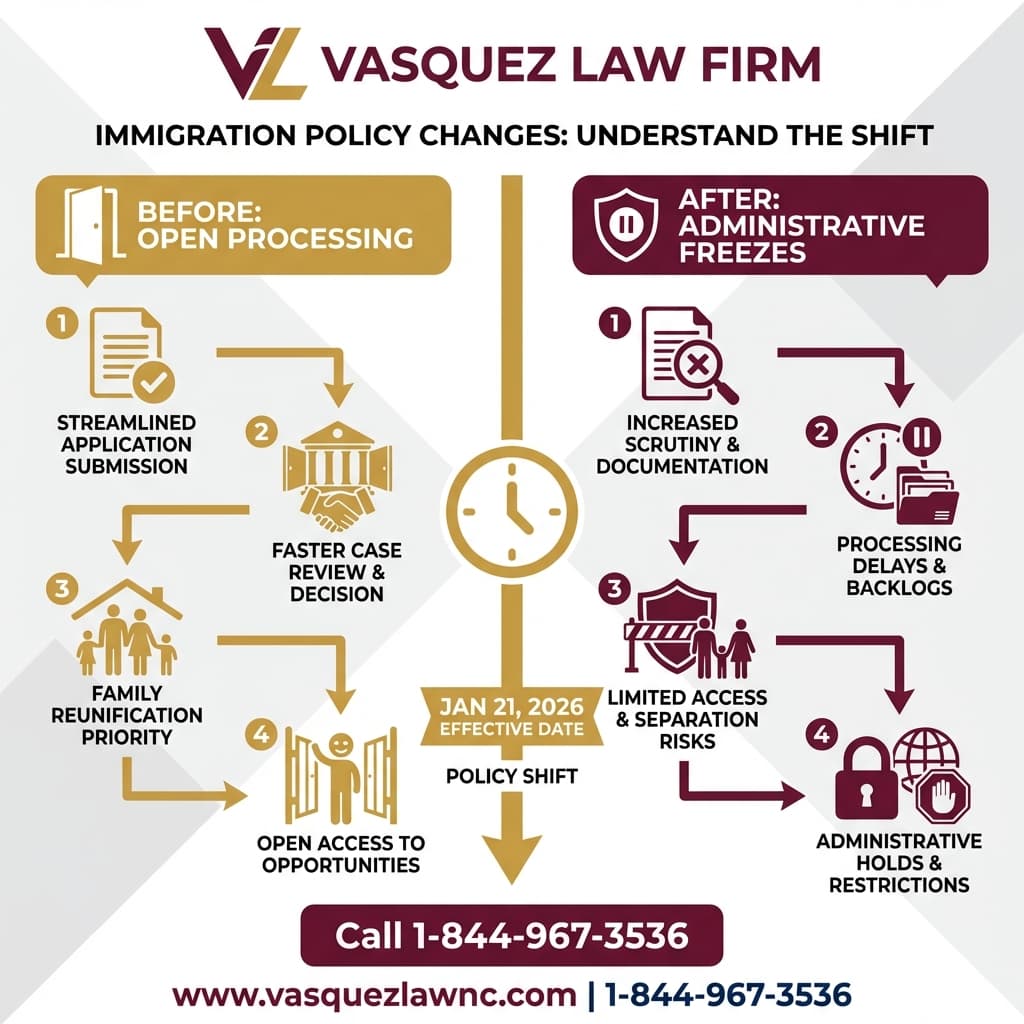
In 2026, the potential for a U.S. immigration halt remains a significant concern for many. These pauses can impact everything from family-sponsored visas to employment-based green cards, often leading to considerable backlogs and uncertainty. For instance, a halt might suspend the issuance of new visas, prevent individuals from entering the country even with approved petitions, or delay the processing of adjustment of status applications. Understanding the specific scope and duration of any announced halt is paramount, as the details can vary widely and directly influence an applicant's strategy. Our team at Vasquez Law Firm closely monitors these developments to provide timely advice.
The implications of an immigrant visa suspension extend beyond just new applications. Individuals already in the pipeline, perhaps awaiting an interview at a U.S. embassy or consulate, could find their cases indefinitely postponed. Furthermore, certain travel bans or restrictions on specific countries might accompany a broader immigration halt, adding layers of complexity for affected nationals. These measures underscore the dynamic nature of U.S. immigration policy and the need for vigilant legal counsel. Seeking advice from an experienced immigration attorney in Orlando or anywhere in North Carolina or Florida is crucial to navigate these challenging times effectively.
Types of Immigration Pauses and Their Scope
Immigration pauses can manifest in several forms, each with distinct implications. A presidential proclamation might declare a suspension of entry for certain nonimmigrants or immigrants, effectively freezing visa issuance for those categories. Alternatively, administrative actions by agencies like USCIS or the Department of State could lead to processing delays or temporary closures of offices, impacting all types of applications. The key distinction lies in the legal basis and the specific instructions provided by the government.
For example, a U.S. visa freeze list of countries might specifically target nationals from certain regions due to security concerns, while a broader U.S. travel ban update today could affect anyone traveling from areas with high rates of a communicable disease. Understanding whether a measure impacts immigrant visas, nonimmigrant visas, or both, is critical. These nuances determine who is affected and what, if any, recourse is available. Staying informed through official channels and expert legal analysis is the best defense against misinterpretation and potential missteps.
Impact on Different Visa Categories and Applicants
A U.S. immigration halt can have a varied impact across different visa categories, affecting everyone from family members seeking reunification to essential workers. For family-sponsored immigrant visas, a halt might mean indefinite delays in petition approvals or interview scheduling, leaving families separated for longer periods. Employment-based visas, crucial for many businesses, could also face severe restrictions, impacting workforce planning and economic growth. The specific language of any proclamation or executive order will dictate which categories are affected and to what extent, making careful review essential.
For individuals already in the U.S. on nonimmigrant visas, such as H-1B or L-1, a halt could complicate their ability to adjust status to permanent residency or even extend their current status if related processes are suspended. Asylum seekers and refugees, often the most vulnerable, may also experience significant changes to their processing timelines or eligibility criteria. The government's stated rationale for a halt usually provides clues about its target, whether it's to protect the domestic labor market, safeguard public health, or address national security threats. Each U.S. immigrant visa suspension brings unique challenges.
Furthermore, the U.S. visa suspension latest news often highlights specific groups that are exempt from the restrictions, such as healthcare workers during a public health crisis or immediate relatives of U.S. citizens. Identifying these exemptions is critical for those who might still have a path forward despite a general halt. Regardless of the category, the uncertainty generated by an immigration pause necessitates proactive legal consultation. An attorney can assess your specific situation, determine if you fall under any exemptions, and advise on alternative strategies to keep your immigration journey on track, even if temporarily delayed.
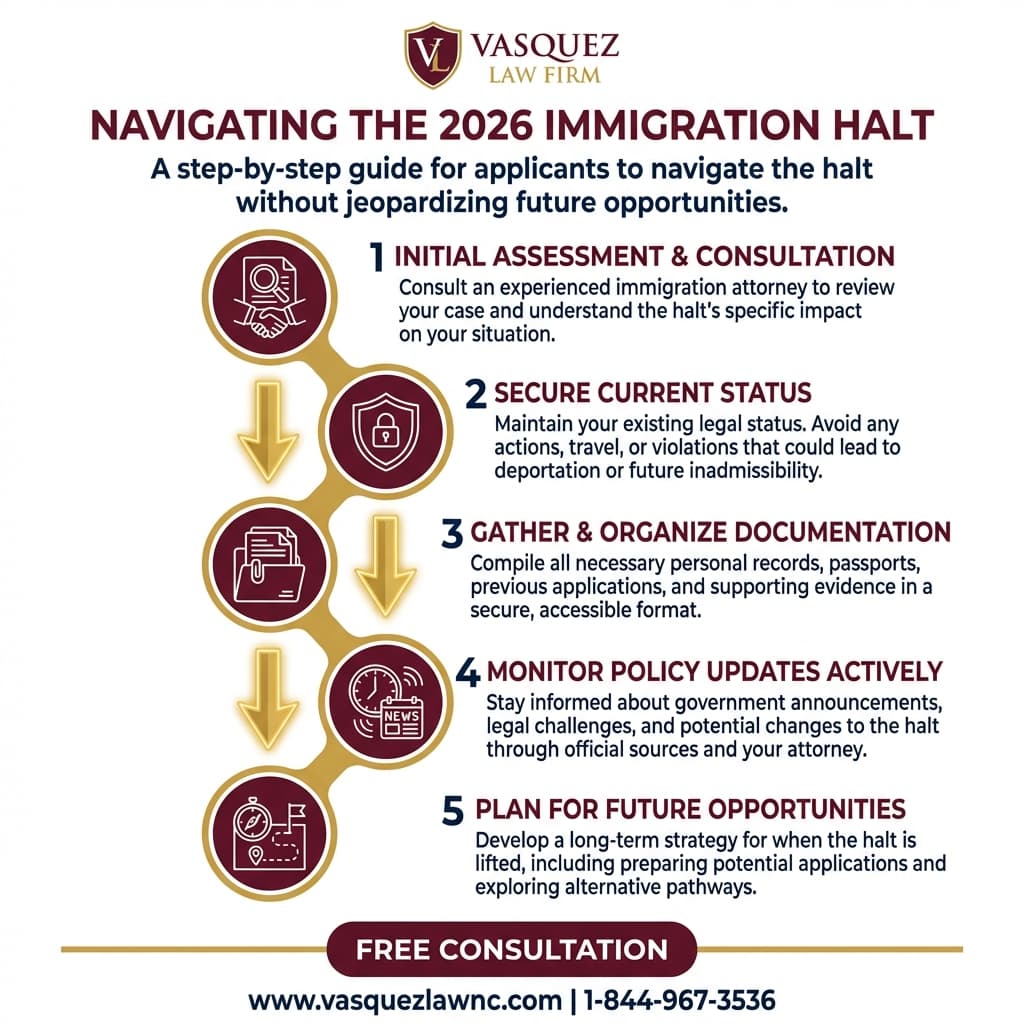
Key Steps to Take During a U.S. Immigration Halt
Navigating a U.S. immigration halt requires a proactive and informed approach. The first crucial step is to stay updated through official government sources like USCIS (U.S. Citizenship and Immigration Services) and the U.S. Department of State (travel.state.gov). Relying on rumors or unofficial news can lead to misinformation and potentially detrimental decisions. Always verify information directly from the agencies responsible for implementing immigration policies. This ensures you have the most accurate U.S. immigration visa News today.
- Consult an Immigration Attorney: This is arguably the most important step. An experienced immigration lawyer can analyze the specific details of any halt, assess how it applies to your unique case, and advise on the best course of action. They can help clarify the U.S. visa freeze list of countries or any specific immigrant visa processing updates.
- Review Your Current Immigration Status and Documents: Understand your current visa type, its expiration date, and any pending applications. Ensure all your documents are in order and readily accessible.
- Do Not Overstay Your Visa: If you are in the U.S. on a nonimmigrant visa and your ability to extend or adjust status is affected, do not let your legal status lapse. Consult an attorney immediately about potential options, even if a halt is in effect.
- Consider Alternative Pathways (if applicable): Depending on the nature of the halt, there might be alternative immigration pathways or waivers available. An attorney can explore these options with you.
- Gather All Necessary Documentation: Even if your case is paused, use the time to meticulously gather all required documents for your application. This includes birth certificates, marriage licenses, financial records, and any other supporting evidence. Being prepared will expedite your case once the halt is lifted.
- Maintain Communication with USCIS or Department of State: If you have an active application, monitor its status online and respond promptly to any Requests for Evidence (RFEs) or notices you receive, even during a pause.
- Seek Mental Health Support: The uncertainty of an immigration halt can be incredibly stressful. Remember to prioritize your mental well-being and seek support if needed.
Common Mistakes to Avoid During an Immigration Halt
During periods of a U.S. immigration halt, misinformation and panic can lead individuals to make critical errors that jeopardize their immigration future. Avoiding these common mistakes is as important as taking the right steps to protect your case. Being informed and cautious can make a significant difference in the outcome of your immigration journey, especially with ongoing immigrant visa processing updates.
- Ignoring Official Announcements: Relying on social media or unofficial news sources instead of checking USCIS, Department of State, or Executive Office for Immigration Review (EOIR) websites. Always cross-reference information with government portals.
- Overstaying Your Visa: Assuming that a U.S. immigration halt automatically grants you an extension to remain in the country. This can lead to unlawful presence and severe bars to future immigration benefits. Always consult an attorney if your status is expiring.
- Traveling Internationally Without Legal Advice: Leaving the U.S. during a halt, especially if you have a pending application or are from a country on a U.S. travel ban update today, can lead to denial of re-entry. Always seek legal counsel before making travel plans.
- Failing to Respond to RFEs: Neglecting to respond to Requests for Evidence (RFEs) or other notices from USCIS or the Department of State, even if your case seems stalled. These deadlines are often still in effect.
- Applying for the Wrong Visa: Attempting to apply for a visa category that is explicitly suspended or restricted, wasting time and money on a futile application. Ensure your chosen path is unaffected by any immigration pause countries list.
- Providing Incomplete or False Information: Submitting applications with missing information or, worse, fraudulent details, which can lead to permanent bans from the U.S.
- Giving Up Hope Too Early: Becoming discouraged and abandoning your immigration efforts entirely. While halts are challenging, they are often temporary, and legal strategies can help you prepare for when they are lifted.
- Failing to Seek Legal Counsel: Attempting to navigate complex halt policies without the guidance of an experienced immigration attorney. The nuances of federal law and policy require expert interpretation.
If you only remember one thing: Do not make assumptions about your immigration status or eligibility during a U.S. immigration halt. Always consult with a qualified attorney to understand the specific impact on your case and explore all available legal options.
Timeline: What to Expect During an Immigration Halt
The timeline during a U.S. immigration halt can be highly unpredictable, making it one of the most stressful aspects for applicants. Unlike standard processing times, a halt introduces an element of indefinite delay, with specific start and end dates often subject to change or extension. Typically, an immigration halt begins with a presidential proclamation or executive order, which outlines the scope, duration, and any exemptions. This initial announcement might cause immediate confusion and a rush for clarification, often leading to a surge in inquiries to legal firms and government agencies.
- Immediate Impact: Upon announcement, visa interviews at consulates may be canceled, and certain applications might be put on hold. Travel for affected individuals may be restricted or prohibited.
- Uncertain Duration: Halts are usually issued for a specific period (e.g., 60 or 90 days), but they can be extended, modified, or even allowed to expire without further action. This creates a fluid situation where planning is difficult.
- Backlogs Accumulate: Even after a halt is lifted, the processing of applications does not immediately return to normal. Significant backlogs accumulate, meaning that even once eligible, it could take many additional months for cases to move forward.
- Policy Changes: The period of a halt might also be used to implement new immigration policies or adjust existing regulations, further complicating the landscape for future applicants.
- Monitoring and Advocacy: During the halt, immigration advocates and legal professionals actively monitor the situation, challenge policies where appropriate, and push for clarity and resolution.
- Post-Halt Resumption: When the halt is eventually lifted, USCIS and the Department of State will issue guidance on how processing will resume. This might involve new procedures or prioritization schemes.
Given this unpredictable timeline, maintaining continuous legal counsel is vital. An attorney can help you understand the latest immigrant visa processing updates, anticipate potential delays, and strategize for the eventual resumption of normal operations. This proactive approach helps mitigate stress and ensures you are ready to proceed the moment the U.S. immigration halt is lifted.
Don't face your legal challenges alone. Our team is here to help you every step of the way.
Call today: 1-844-967-3536 | Se Habla Español
NC, FL, and Nationwide Immigration Notes
Immigration law in the United States is primarily federal, meaning that a U.S. immigration halt or any national policy change applies uniformly across all states, including North Carolina and Florida. The agencies responsible for implementing these federal laws, such as USCIS, ICE, and the Department of State, operate under national mandates. Therefore, whether you are in Orlando, Charlotte, or anywhere else in the country, the direct impact of a federal immigration halt on visa processing, entry, and status adjustment will be the same.
Federal Framework and Local Impact
While the laws are federal, the practical implications can vary slightly based on local resources and specific enforcement priorities. For example, local ICE field offices in North Carolina or Florida might adjust their enforcement strategies in response to a national directive, even if the underlying immigration halt is federal. Similarly, the capacity of USCIS field offices in different states to process applications might influence local wait times, even if the overall policy is consistent. However, the core legal restrictions of an immigrant visa suspension remain nationwide.
North Carolina Considerations
In North Carolina, individuals affected by a U.S. immigration halt may experience increased demand for legal services, leading to longer wait times for consultations. Local community organizations often play a vital role in disseminating information and providing support, but they are also subject to the federal policies. For those in North Carolina, staying connected with local resources while seeking federal legal expertise is a balanced approach. Vasquez Law Firm serves clients across North Carolina, offering guidance on navigating these federal changes.
Florida Considerations
Florida, with its large immigrant population, can be particularly sensitive to changes in immigration policy. A U.S. travel ban update today or a national immigration pause can have a broad impact on families and businesses throughout the state, including in Orlando. The presence of numerous international airports and seaports means that federal entry restrictions can be felt acutely. Our firm also assists clients throughout Florida, ensuring they receive tailored advice in response to national immigration policy shifts.
Nationwide Uniformity and the Need for Federal Expertise
Ultimately, the key takeaway is that a U.S. immigration halt is a federal issue. This underscores the importance of consulting with attorneys who possess deep expertise in federal immigration law, regardless of your specific location. Vasquez Law Firm's extensive experience across North Carolina, Florida, and nationwide immigration services ensures that our clients receive comprehensive and up-to-date advice on all federal immigration matters, including navigating complex immigrant visa suspension and processing updates in 2026.
When to Call an Immigration Lawyer Now
The complexities surrounding a U.S. immigration halt mean that timely legal advice is not just beneficial, but often critical. If you find yourself in any of the following situations, contacting an experienced immigration attorney at Vasquez Law Firm immediately is strongly recommended. Our team is dedicated to providing clear guidance and aggressive representation for individuals and families in North Carolina, Florida, and nationwide.
- Your visa or authorized stay is nearing expiration, and you are affected by a U.S. immigration halt.
- You have a pending visa petition or application that has been delayed or denied due to a halt.
- You are considering international travel and are concerned about re-entry under current U.S. travel ban updates.
- You received a Request for Evidence (RFE) or Notice of Intent to Deny (NOID) while an immigration pause is in effect.
- You are from a country that has been added to a U.S. visa freeze list of countries.
- You believe you might qualify for an exemption to an immigration halt or suspension.
- You have received a deportation order or notice to appear in immigration court.
- You are a U.S. citizen or green card holder trying to bring family members to the U.S. during a halt.
- You are an employer whose workforce planning is impacted by an immigrant visa suspension.
- You simply need clarification on how the current U.S. immigration halt affects your specific circumstances.
Don't navigate these uncertain times alone. The legal landscape of immigration can be daunting, but with Vasquez Law Firm, you have a powerful advocate on your side. We are committed to fighting for your rights and helping you find the best possible path forward.
About Vasquez Law Firm
At Vasquez Law Firm, we combine compassion with aggressive representation. Our motto "Yo Peleo" (I Fight) reflects our commitment to standing up for your rights and tirelessly pursuing favorable outcomes for our clients. We understand the profound impact immigration challenges can have on individuals and families, and we are here to provide dedicated support and expert legal counsel.
- Bilingual Support: Se Habla Español - our team is fully bilingual, ensuring clear and effective communication throughout your case.
- Service Areas: We proudly serve clients across North Carolina, Florida, and offer comprehensive nationwide immigration services.
- Experience: With over 15 years of dedicated experience, Attorney Vasquez has a proven track record of helping clients navigate complex legal matters.
- Results: We are committed to achieving thousands of successful outcomes across multiple practice areas, always prioritizing our clients' best interests.
Attorney Trust and Experience
Attorney Vasquez holds a Juris Doctor degree and is admitted to practice in both the North Carolina State Bar and Florida Bar. With over 15 years of dedicated legal experience, he has built a reputation for providing personalized attention and achieving favorable outcomes for his clients. His deep understanding of immigration law, coupled with a compassionate approach, makes him a trusted advocate for Dreamers and all those seeking to build a life in the United States. He is known for his aggressive representation and unwavering commitment to justice, always fighting for those who need a voice.
Don't face your legal challenges alone. Our team is here to help you every step of the way.
Call today: 1-844-967-3536 | Se Habla Español
Frequently Asked Questions
What exactly constitutes a U.S. immigration halt?
A U.S. immigration halt is a temporary suspension or restriction on certain immigration processes, often enacted by presidential executive order or proclamation. These halts can affect visa issuance, entry into the U.S., or the processing of various immigration applications. The specific scope and duration vary depending on the underlying rationale, which can include economic concerns, public health crises, or national security considerations as of 2026.
How does an immigration halt affect existing visa holders?
The impact on existing visa holders depends entirely on the specific terms of the halt. Some halts may only affect new applications or entries, while others might restrict travel for those already with visas. It is crucial to review the exact language of any proclamation or consult with an immigration attorney to understand how your specific visa status and travel plans might be affected in 2026.
Can a U.S. immigration halt be challenged legally?
Yes, U.S. immigration halts can be, and often are, challenged in federal courts. Legal challenges typically argue that the halt exceeds presidential authority, violates statutory law, or infringes upon constitutional rights. The success of such challenges varies widely based on the specific legal arguments and the judicial interpretation. Consulting a legal expert is essential to understand the ongoing litigation and its potential impact.
What should I do if my visa application is pending during a halt?
If your visa application is pending during a U.S. immigration halt, you should first consult an immigration attorney to understand the specific implications for your case. Continue to monitor official USCIS and Department of State websites for updates. Ensure all your documents are current and be prepared to respond promptly to any requests for evidence, as deadlines may still apply even during a pause in 2026.
Are there any exemptions to a U.S. immigration halt?
Often, a U.S. immigration halt includes specific exemptions for certain categories of individuals. These might include U.S. citizens' immediate relatives, healthcare workers, or those whose entry is deemed to be in the national interest. The exact exemptions are detailed in the proclamation or executive order initiating the halt. An attorney can help determine if you qualify for any such exceptions.
How long do immigration halts typically last?
The duration of U.S. immigration halts can vary significantly. Some are initially set for a short period, like 60 or 90 days, but can be extended multiple times. Others may be tied to specific conditions, such as a public health emergency, and last until those conditions subside. There is no standard length, making it difficult to predict. Always refer to the latest official announcements in 2026.
Will an immigration halt affect my ability to adjust status from within the U.S.?
Yes, a U.S. immigration halt can potentially affect your ability to adjust status from within the U.S. If the halt specifically targets the immigrant visa category you are seeking, or if it impacts the processing capacity of USCIS, your adjustment of status application could be delayed or put on hold. Legal guidance is vital to assess the specific impact on your individual case.
What is the difference between an immigration halt and a travel ban?
An immigration halt typically refers to a suspension of certain visa processing or entry for specific immigration categories. A travel ban, while sometimes overlapping, usually focuses on restricting entry from specific geographic regions or countries, often regardless of immigration status, for reasons like public health or security. Both can be enacted by presidential authority and may occur simultaneously, impacting different aspects of immigration and travel.
How can Vasquez Law Firm help me during a U.S. immigration halt?
Vasquez Law Firm offers comprehensive legal support during a U.S. immigration halt. We provide up-to-date information, analyze how policies affect your specific case, and advise on the best strategies to protect your rights and advance your immigration goals. Our bilingual team can help prepare and file applications, respond to RFEs, and explore all available legal avenues, ensuring you are well-represented.
What are the long-term consequences of an immigration halt?
The long-term consequences of a U.S. immigration halt can include significant backlogs in visa processing, prolonged family separations, and economic impacts on industries reliant on immigrant labor. Individuals may face extended periods of uncertainty, and some may need to reassess their immigration pathways entirely. These halts can also shape future immigration policies and priorities, influencing the landscape for years to come.
Sources and References
- U.S. Citizenship and Immigration Services (USCIS)
- U.S. Department of State
- Executive Office for Immigration Review (EOIR)
- 8 U.S. Code § 1182 - Inadmissible aliens
Need immigration help? Our immigration attorneys can review your case.
Ready to take the next step? Contact Vasquez Law Firm today for a free, confidential consultation. We're committed to fighting for your rights and achieving the best possible outcome for your case.
Start Your Free Case Evaluation Now
Call us: 1-844-967-3536
Se Habla Español - Estamos aquí para ayudarle.


William Vasquez
Founder & CEO, Vasquez Law Firm, PLLC
William Vasquez is the founder and CEO of Vasquez Law Firm, PLLC, a results-driven firm specializing in immigration, criminal defense, personal injury, and workers' compensation. A U.S. Air Force veteran and recipient of the Joint Service Achievement Medal, William is dedicated to fiercely fighting for his clients' rights.
Related Legal Services
Need legal help? Learn more about speak with an immigration lawyer, or contact us for a free evaluation.
You can also visit our North Carolina immigration practice for more information.