ICE Enforcement Priorities and Immigrant Rights in 2026
ICE enforcement priorities in 2026 focus on individuals posing public safety risks. Immigrant families in Raleigh, NC and Orlando, FL have rights if ICE comes to their door, including the right to remain silent and refuse entry without a judicial warrant. Learn what to do during ICE encounters and how federal laws like 8 U.S.C. § 1255 affect adjustment of status. Contact Vasquez Law Firm for guidance.
Published on May 27, 2026
Talk to an immigration attorney
Free call. A clear plan for your case.
Free & confidential · Se habla espanol · 24/7

Have questions? Talk to an attorney - free evaluation.
Call 1-844-967-3536Worried how the latest immigration news affects you?
Schedule a confidential case review with an immigration attorney - know exactly where you stand.
This article provides general legal information, not individualized legal advice. Reading does not create an attorney-client relationship. For advice specific to your situation, contact Vasquez Law Firm.
What should I do if ICE comes to my door in 2026?
ICE encounter or deportation risk?
Time-sensitive cases need quick action. We answer 24/7 for emergency immigration matters. Free 15-min call.
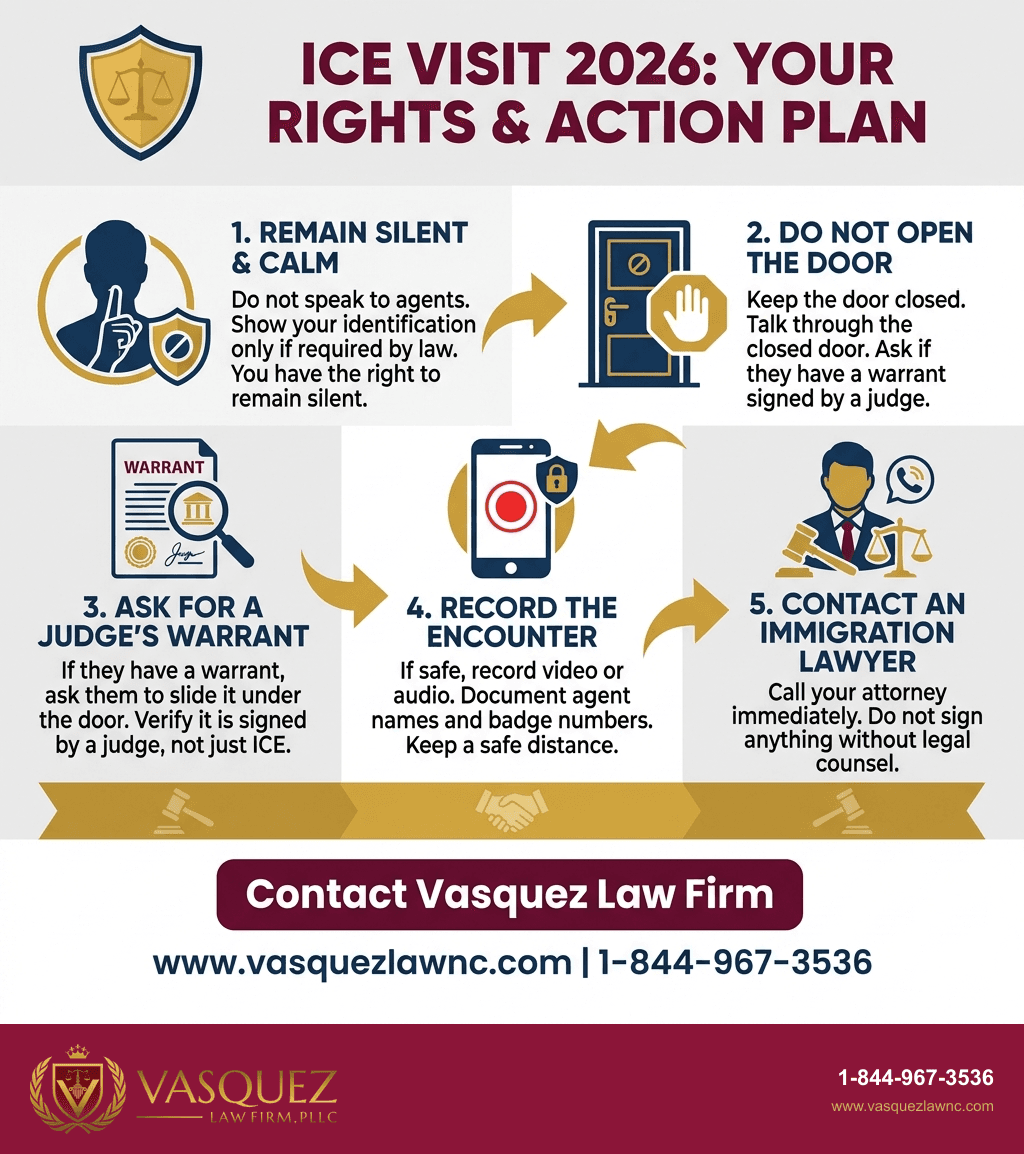
If Immigration and Customs Enforcement (ICE) agents come to your home, you have the right to remain silent, the right to refuse entry without a judicial warrant, and the right to an attorney. Do not open the door unless ICE presents a valid warrant signed by a judge. You may calmly ask to see the warrant through a window or door before deciding whether to allow entry.
ICE officers do not have the authority to enter your home without your permission or a judicial warrant. If they only have an administrative warrant, which is not signed by a judge, you can refuse entry. It is important to remain calm and avoid confrontation. You should clearly state that you do not consent to a search or entry.
Document the agents’ names and badge numbers if possible, and contact an immigration attorney immediately. You should also inform family members and trusted community organizations about the visit. Knowing your rights can prevent unlawful searches and detentions.
ICE’s website emphasizes the importance of understanding your rights and provides resources through the Victims Of Immigration Crime Engagement (VOICE) Office, which assists families impacted by immigration-related crimes. The VOICE Office can be a resource for victims but does not replace legal counsel for immigration enforcement matters.
Remember, you have the right to remain silent and the right to refuse entry without a judicial warrant. Exercising these rights calmly and clearly is your best protection if ICE comes to your door.
Who is affected by ICE enforcement priorities in Raleigh, NC and Orlando, FL?
ICE enforcement priorities in 2026 focus primarily on individuals who pose a threat to public safety, national security, or have serious criminal convictions. This includes those identified as "criminal aliens" and individuals involved in gang activity or other serious offenses. Families and community members in Raleigh, NC and Orlando, FL are impacted by these priorities, especially given the significant immigrant populations in these cities.
According to ICE, recent arrests highlight their focus on individuals with serious criminal backgrounds, including convictions for violent crimes, drug offenses, and human trafficking. For example, ICE Newark arrested an international fugitive wanted for murder in Honduras, and ICE HSI arrested a suspected MS-13 gang member convicted of robbery attempt in New York. These examples illustrate the agency’s targeting of individuals deemed threats to public safety.
In Raleigh, NC and Orlando, FL, immigrant families often live in mixed-status households where some members may be at risk of enforcement actions. ICE’s 287(g) program allows local law enforcement to partner with ICE to identify and detain individuals who meet enforcement criteria. This can affect community trust and willingness to report crimes or cooperate with police.
ICE’s enforcement actions are also influenced by federal immigration laws such as 8 U.S.C. § 1227 which defines deportable aliens. Those who have violated immigration laws or committed deportable offenses are subject to removal proceedings. It is important for families in Raleigh, NC and Orlando, FL to understand who falls under these priorities to better protect themselves and seek legal assistance.
Community organizations and legal advocates in these cities work to educate immigrants about their rights and provide support during enforcement encounters. Awareness of ICE’s focus on criminal aliens and fugitives can help families assess their risk and plan accordingly.
What does the law say about ICE enforcement and immigrant rights?
Federal immigration law governs ICE enforcement priorities and the rights of immigrants facing removal. The Immigration and Nationality Act (INA) sets the legal framework for deportation and adjustment of status. For example, 8 U.S.C. § 1255 (INA § 245(a)) allows certain individuals to apply for adjustment of status to become lawful permanent residents if eligible.
ICE enforcement actions are authorized under statutes such as 8 U.S.C. § 1227, which lists the grounds for deportation. These include criminal convictions, immigration violations, and security threats. However, the law also protects certain rights for individuals during enforcement, including the right to due process and legal representation.
The ICE website outlines enforcement priorities and programs like 287(g), but the actual legal authority comes from federal statutes and regulations. The Code of Federal Regulations (CFR) also provides rules on employment authorization (8 CFR § 274a.12) and eligibility for adjustment (8 CFR § 245.1).
"ICE established the VOICE Office to provide assistance and resources to victims and their families impacted by crimes linked to immigration." (Source: ICE, https://www.ice.gov/)
This statement from ICE highlights the agency’s role in addressing victims’ needs while enforcing immigration laws. However, it is critical to recognize that enforcement actions must comply with constitutional protections, including the Fourth Amendment’s prohibition on unreasonable searches and seizures.
Legal protections also include the right to remain silent and the right to counsel during removal proceedings. These rights are essential for immigrants to defend themselves against removal and to seek relief such as asylum (8 U.S.C. § 1158).
What should immigrant families in Raleigh, NC and Orlando, FL do to protect their rights in 2026?
At our Raleigh, NC and Orlando, FL offices, we typically see that immigrant families benefit most from early legal consultation and clear knowledge of their rights during ICE encounters. The most common mistake is not having a plan or understanding what to do if ICE agents arrive.
Here are practical steps immigrant families should take to protect their rights:
- Know your rights: You have the right to remain silent and the right to refuse entry without a judicial warrant. Do not open the door to ICE agents unless they present a valid warrant signed by a judge.
- Prepare a "Know Your Rights" card: Carry a card that states your rights in English and your native language. This can help communicate your rights calmly and clearly during an ICE encounter.
- Have an attorney’s contact information ready: Keep the phone number of a trusted immigration attorney accessible to call immediately if ICE arrives.
- Do not sign documents without legal advice: ICE agents may ask you to sign forms. Always consult an attorney before signing anything.
- Inform family and community members: Let trusted people know about your situation and your rights so they can assist if needed.
Below is a comparison table summarizing key actions during an ICE encounter:
| Situation | Recommended Action | Legal Basis |
|---|---|---|
| ICE arrives without a judicial warrant | Do not open the door; ask to see a warrant | Fourth Amendment protections |
| ICE presents a judicial warrant | Verify the warrant; allow entry if valid | Judicial warrant authority |
| Asked to sign documents | Refuse until counsel reviews | Right to legal counsel |
| Questioned by ICE agents | Exercise right to remain silent | Fifth Amendment protections |
Contacting an experienced immigration attorney early can make a significant difference in the outcome of enforcement actions. Our firm provides consultations to help families understand their options, including eligibility for relief under federal statutes such as 8 U.S.C. § 1255 and asylum under 8 U.S.C. § 1158.
What happens next with ICE enforcement and immigrant rights in 2026?
ICE enforcement priorities will continue to focus on individuals who pose threats to public safety, but immigrant families should remain vigilant and informed about their rights. The agency’s programs, such as the 287(g) partnership with local law enforcement, may expand or shift depending on federal policy changes.
Families and communities in Raleigh, NC and Orlando, FL should monitor official ICE communications and updates on enforcement actions. The ICE website provides news releases and resources, including information on the VOICE Office for victims and their families.
"State and local law enforcement agencies can partner with ICE to keep their communities safer through the 287(g) program." (Source: ICE, https://www.ice.gov/)
This partnership means local police may assist ICE in identifying individuals for removal, which can affect community dynamics and immigrant interactions with law enforcement.
What's Your Immigration Situation?
Answer 3 questions - we'll tell you your options
Question 1 / 3
What best describes your situation?
Keep Reading
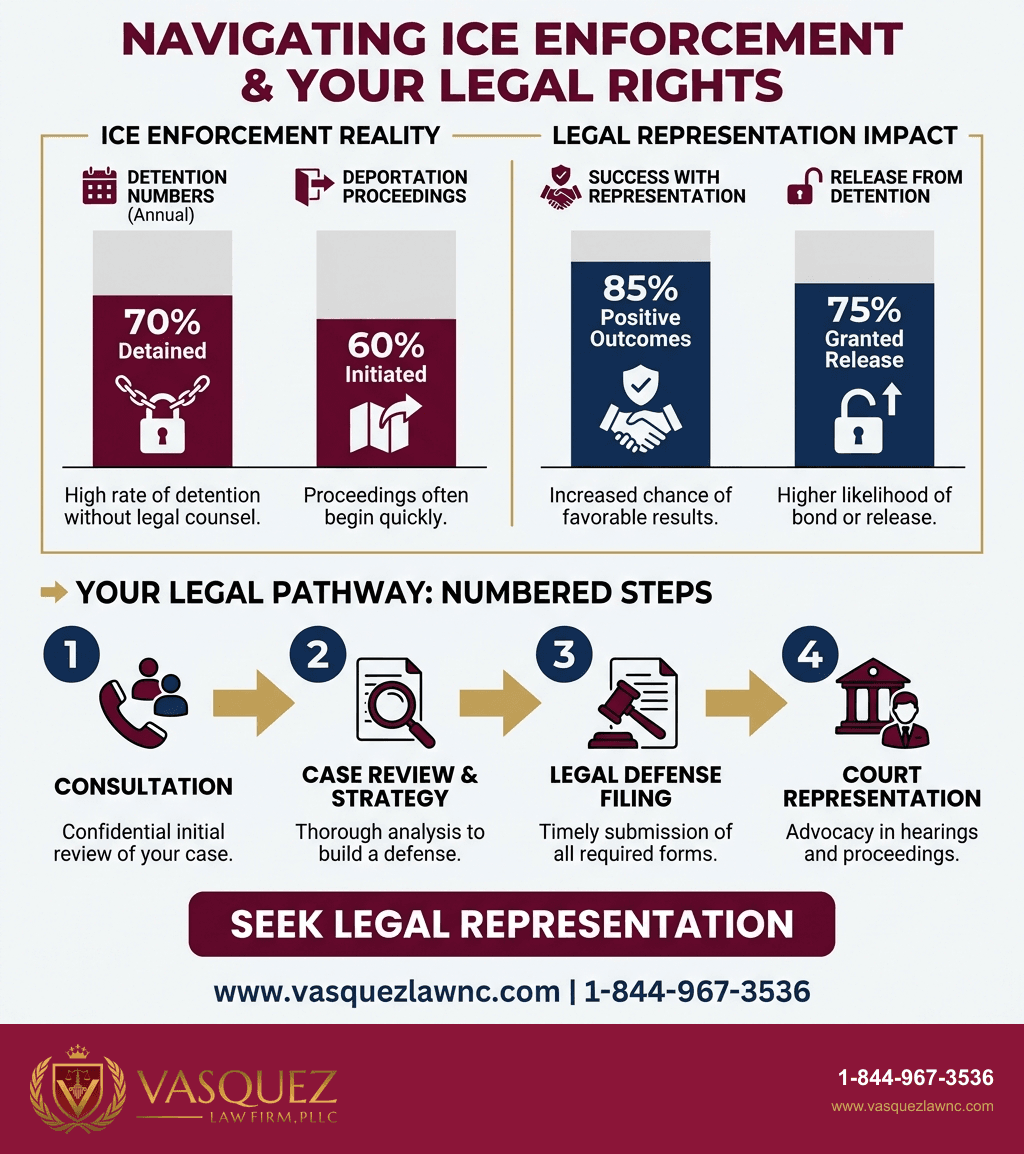
Legal advocates expect continued emphasis on protecting the rights of immigrants during enforcement, including ensuring due process and access to counsel. Families should maintain updated legal plans and seek assistance promptly if enforcement actions occur.
Staying informed and prepared is the best way to protect immigrant families in Raleigh, NC and Orlando, FL from unexpected ICE enforcement encounters in 2026 and beyond.
Frequently Asked Questions about ICE enforcement and immigrant rights in 2026
What is the difference between a judicial warrant and an administrative warrant?
A judicial warrant is signed by a judge and authorizes ICE to enter a home to make an arrest or search. An administrative warrant is issued by ICE itself and does not have the same legal force to enter a home without consent. You have the right to refuse entry if ICE only has an administrative warrant.
Can ICE arrest someone without showing identification?
ICE agents are required to identify themselves and show official badges when conducting enforcement actions. If you are unsure, you can ask to see their credentials before cooperating.
What should I do if I am detained by ICE?
If detained, you should remain silent and ask to speak with an attorney immediately. Do not sign any documents without legal advice. Contact family or your attorney as soon as possible.
Are there any protections for immigrant victims of crime?
Yes, ICE has the Victims Of Immigration Crime Engagement (VOICE) Office to provide assistance and resources to victims and their families. Additionally, some immigrants may qualify for special visas or relief if they cooperate with law enforcement.
How can I apply for adjustment of status?
Adjustment of status allows eligible individuals to become lawful permanent residents without leaving the U.S. Eligibility criteria and procedures are governed by 8 U.S.C. § 1255. Consulting an immigration attorney can help determine eligibility and guide the application process.
This article provides general legal information, not individualized legal advice. Reading does not create an attorney-client relationship. For advice specific to your situation, contact Vasquez Law Firm.
Reviewed by William Vasquez, Founder & CEO, Vasquez Law Firm, PLLC.
Need immigration help? Our immigration attorneys can review your case.
Related Topics

William Vasquez
Founder & CEO, Vasquez Law Firm, PLLC
William Vasquez is the founder and CEO of Vasquez Law Firm, PLLC, a results-driven firm specializing in immigration, criminal defense, personal injury, and workers' compensation. A U.S. Air Force veteran and recipient of the Joint Service Achievement Medal, William is dedicated to fiercely fighting for his clients' rights.
Related Legal Services
Need legal help? Learn more about NC immigration legal team, or contact us for a free evaluation.
You can also visit immigration legal services throughout NC for more information.