What Happens During a Traffic Stop in Smithfield NC in 2026
Wondering what to expect during a traffic stop in Smithfield NC? Learn the procedures, your rights, and how to defend yourself. Contact us for a free consultation.
Published on May 22, 2026
Protect your record and your freedom
Free, confidential review. 24/7.
Free & confidential · Se habla espanol · 24/7
Have questions? Talk to an attorney - free evaluation.
Call 1-844-967-3536Protect Your Record and Your Freedom
A confidential case review - available 24/7 for emergencies.
What Happens During a Traffic Stop in Smithfield NC in 2026
If you have recently experienced or expect to face a traffic stop in Smithfield, NC, understanding what happens during this encounter is crucial. A traffic stop can happen anywhere and may involve questions, searches, or citations. This article explains the traffic stop procedure, legal rights, common mistakes to avoid, and when to seek a criminal defense lawyer’s help. Updated for 2026, we include specific North Carolina laws, examples of police conduct, and guidance on how to handle police interactions safely and confidently.
Need help with your case? Our experienced attorneys are ready to fight for you. Se Habla Español.
Or call us now: 1-844-967-3536
Quick Answer
A traffic stop is when a police officer signals you to pull over your vehicle to check for violations or investigate suspicion. During the stop, the officer may ask for your license, registration, and proof of insurance. You have legal rights, including the right to remain silent and the right to refuse unlawful searches. Understanding these rights helps you defend yourself effectively.
- Police must have reasonable suspicion to stop your vehicle
- Drivers must provide license and registration when asked
- You can refuse consent to vehicle searches without a warrant
- Unconstitutional traffic stops may violate your rights
- Legal defense can challenge improper stops or searches
Understanding Traffic Stops
Imagine you are driving through Smithfield, NC, and suddenly see police lights flashing behind you. A traffic stop occurs because the officer believes you committed a traffic violation or has reasonable suspicion of a crime. The law in North Carolina requires that police have a valid reason for the stop under N.C. Gen. Stat. § 20-28. This could be speeding, running a stop sign, or even a defective headlight.
The traffic stop procedure involves police safely signaling you to pull over, approaching your vehicle, and explaining the reason for stopping. The officer will request your driver’s license, vehicle registration, and proof of insurance. While these documents are legally required, you also have rights during this interaction.
Traffic stop police conduct must comply with constitutional limits. For example, if a stop is deemed unconstitutional—meaning no valid reason existed—it can be challenged in court to suppress evidence obtained. This is important because unconstitutional traffic stops violate the Fourth Amendment protection against illegal searches and seizures. For more about your rights and how to defend yourself, consider our criminal defense services in North Carolina.
Types of Traffic Stops
- Consensual Stops: Police ask for cooperation without legal obligation; you can leave at any time.
- Investigative Stops: Police stop based on reasonable suspicion of criminal activity.
- Arrest Stops: Police have probable cause for arrest, often resulting after initial questioning.
Legal Grounds for Stops
Under N.C. Gen. Stat. § 20-28, an officer may stop a vehicle if there is a traffic violation or reasonable suspicion of criminal conduct. This prevents random stops or racial profiling. However, if the stop lacks legal grounds, any evidence found may be inadmissible in court.
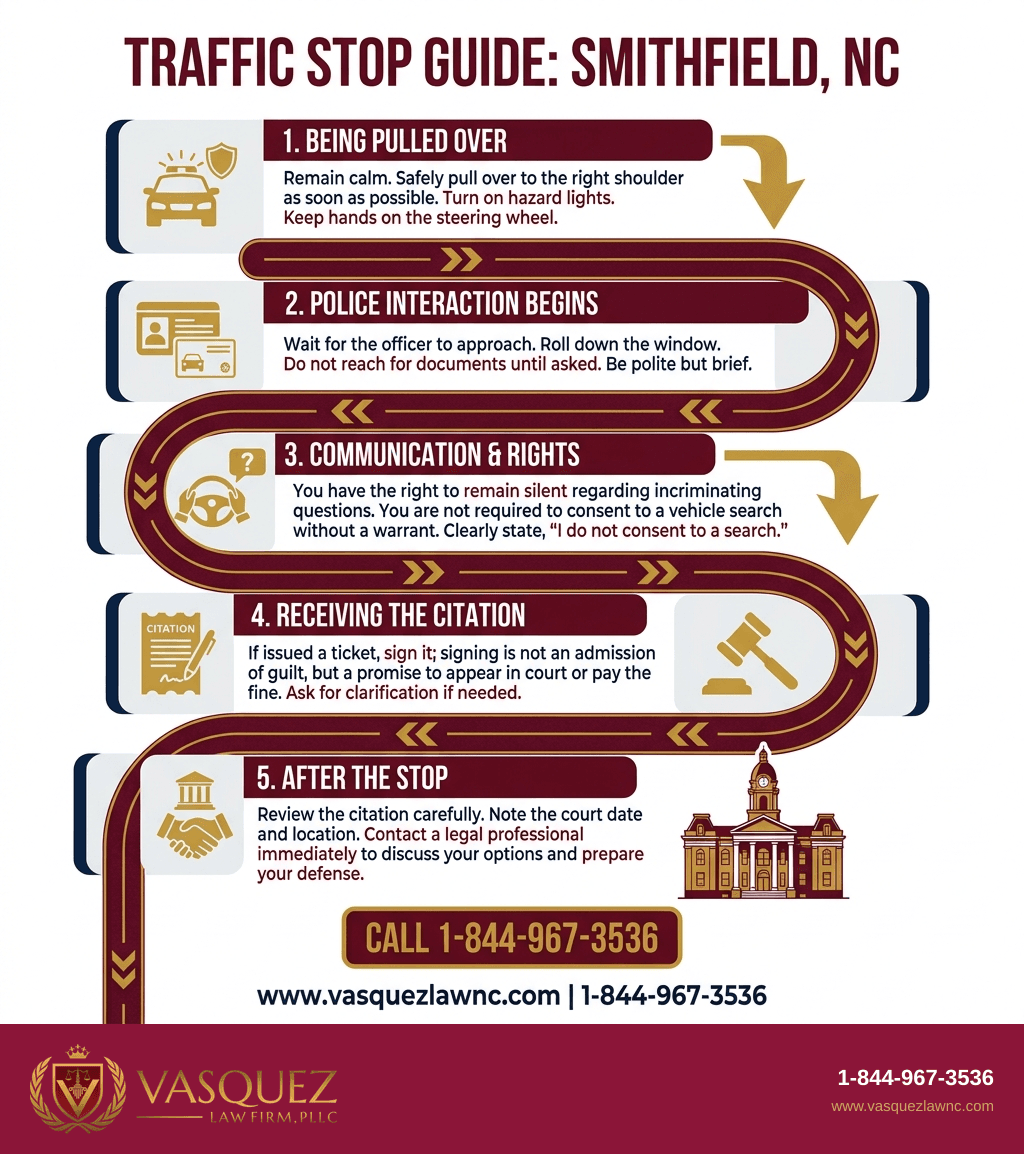
Step-by-Step: What to Do During a Traffic Stop
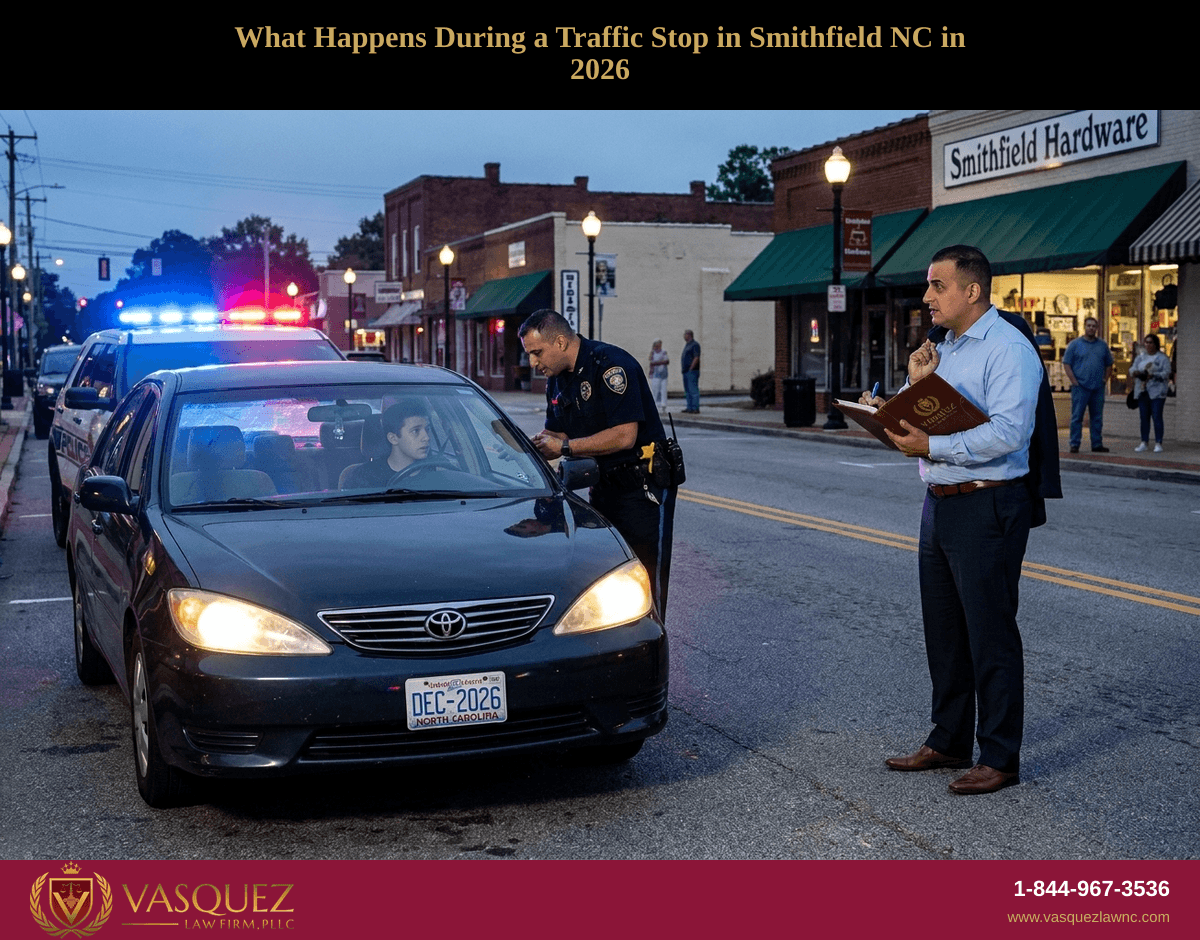
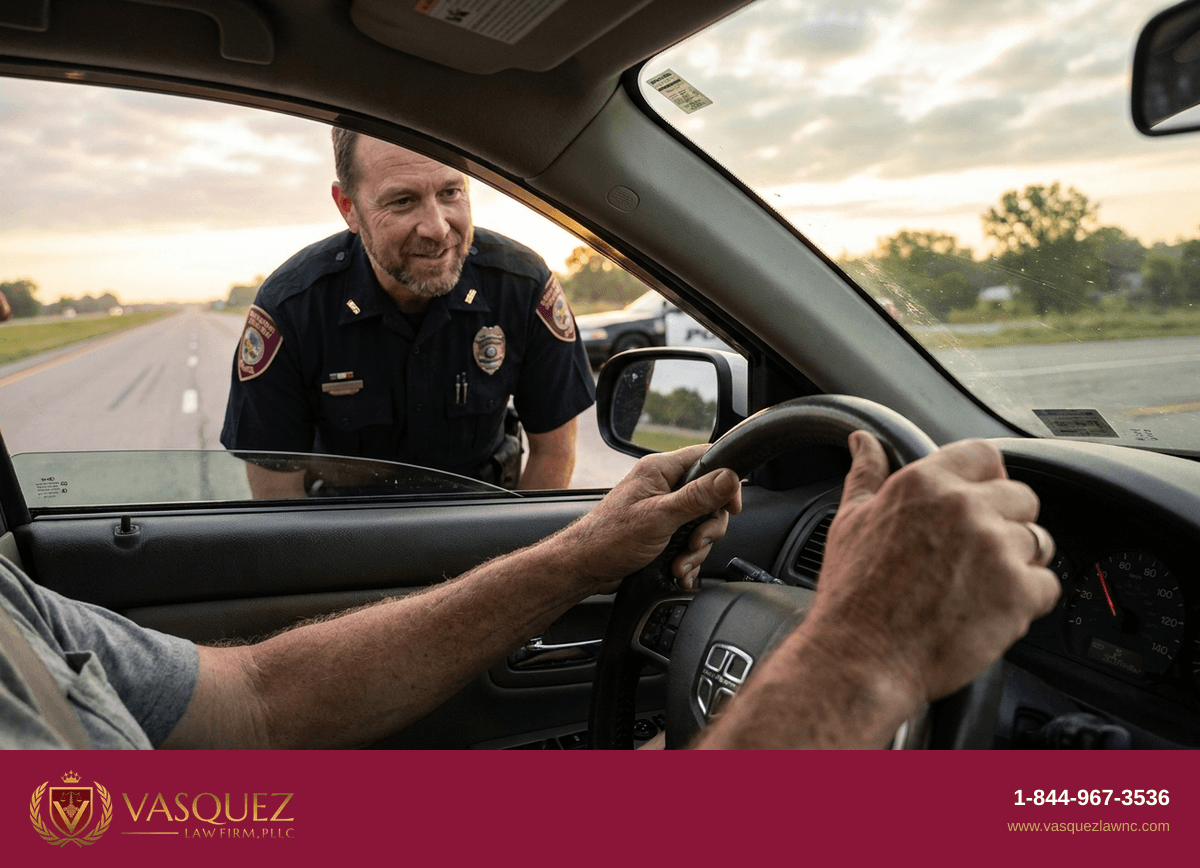
Suppose you see flashing lights behind you at night on Main Street in Smithfield. It is important to know the proper steps during the traffic stop to protect your rights.
- Pull Over Safely: Signal and move to the right side safely, stopping anywhere the officer can approach without danger.
- Stay Inside Your Vehicle: Unless asked otherwise, remain seated with hands visible, preferably on the steering wheel.
- Roll Down Your Window: In North Carolina, you are generally required to roll down your window for police communication. Refusing may be viewed as noncompliance.
- Provide Requested Documents: Hand over your driver’s license, registration, and insurance upon request.
- Answer Basic Questions: You may be asked why you were stopped. You can answer briefly but remember you have the right to remain silent on incriminating details.
- Do Not Consent to Searches: You are not required to consent to vehicle or personal searches without a warrant or probable cause.
- Stay Calm and Polite: Avoid confrontations or sudden movements. Polite communication is safest.
Knowing these steps can prevent misunderstandings and protect your legal rights. For assistance with traffic stop-related legal issues, contact Attorney Vasquez and the Vasquez Law Firm.
Common Mistakes to Avoid During Traffic Stops
Many drivers unwittingly make mistakes during traffic stops that can hurt their case later. Here are common errors and how to avoid them:
- Failing to Pull Over Promptly: Waiting too long or ignoring signals may lead to additional charges.
- Rolling Down Window Too Late: Delays can cause suspicion or accusations of noncompliance. Roll it down as soon as possible.
- Admitting Guilt: Saying "I'm sorry" or admitting fault can be used against you in court.
- Consenting to Searches Unnecessarily: Always ask if you are free to refuse before agreeing to a search.
- Interrupting or Arguing with Officers: Stay calm and save disputes for court, never escalate the situation on the spot.
- Speaking Without an Attorney: Avoid giving detailed explanations or answering incriminating questions without legal counsel.
- Ignoring Legal Rights: Many do not know they can remain silent or request an attorney.
If you only remember one thing: remain calm, cooperate lawfully, and assert your rights clearly but respectfully.
Timeline: What to Expect After a Traffic Stop
After a traffic stop in Smithfield, what happens next depends on whether you receive a citation or get arrested.
- Issuance of Citation or Warning: Most traffic stops end with a citation or warning. You must respond by paying a fine or attending court if you contest the ticket.
- Court Date Notification: The citation will include a court date. Missing this date can lead to additional penalties or warrants.
- Possible Arrest: If arrested, you will be taken to a detention center, booked, and may be released on bond. This triggers the need for criminal defense representation.
- Legal Proceedings: If charged, your case moves through the criminal justice process including arraignment, hearings, and potentially a trial.
Understanding this timeline helps you prepare and act quickly. Early consultation with a qualified criminal defense lawyer in Smithfield can improve your case outcomes.
Frequently Asked Questions About Traffic Stops
Can I defend myself if a cop touches me during a traffic stop?
You have the right to resist unlawful physical contact by police. However, it is best to remain calm and comply to avoid escalating charges. You can later challenge any unconstitutional touching with evidence in court.
Do you have to roll your window down for police in North Carolina?
Yes, generally you must roll down your window to communicate with the officer during a traffic stop. Refusing may be considered noncompliance and could escalate the situation.
What are the three types of traffic stops?
The main types include consensual stops, investigative stops based on reasonable suspicion, and arrest stops where police have probable cause to arrest the driver or passengers.
What is the most common police misconduct during traffic stops?
Common issues include racial profiling, unlawful searches without probable cause or consent, use of excessive force, and failure to inform the driver of rights. Civil rights complaints may be filed for such misconduct.
What should I do if I get a ticket during a traffic stop?
Read the citation carefully. You can pay the fine, attend traffic school, or contest in court. If facing serious charges, consult a criminal defense attorney for advice.
Are all traffic stops legal?
No, some traffic stops are unconstitutional if police lack reasonable suspicion or probable cause. Evidence from such stops may be challenged and suppressed in court.
Can police search my car during a traffic stop?
Police need your consent, a warrant, or probable cause to search your vehicle. You have the right to refuse consent unless legal exceptions apply.
How can a criminal defense lawyer help after a traffic stop?
A lawyer can review the legality of the stop, identify violations of rights, challenge improper evidence, negotiate penalties, and represent you in court to minimize consequences.
About Vasquez Law Firm
At Vasquez Law Firm, we combine compassion with aggressive representation. Our motto "Yo Peleo®" (I Fight) reflects our commitment to standing up for your rights. Based in Raleigh, NC, we serve Smithfield and surrounding communities with experienced criminal defense attorneys familiar with North Carolina traffic stop laws and procedures.
- Bilingual Support: Se Habla Español—Spanish-speaking attorneys and staff are available
- Service Areas: Focused on North Carolina criminal defense in Smithfield, Raleigh, and nearby counties
- Experience: Over 15 years helping clients protect legal rights after traffic stops and criminal charges
- Results: Thousands of successfully handled cases involving traffic violations and criminal defense
Attorney Trust and Experience
Attorney Vasquez, JD, is admitted to the North Carolina State Bar and has 15 years of experience defending clients in traffic stop and criminal defense cases. The Vasquez Law Firm team provides personalized, bilingual service dedicated to protecting your rights at every stage.
Don't wait to get the help you deserve. Call us now for immediate assistance.
Se Habla Español
Sources and References
Take the first step toward justice today. Our team is standing by to help.
Start Your Free Evaluation Now
Call us: 1-844-967-3536
Se Habla Español - Estamos aquí para ayudarle.

William Vasquez
Founder & CEO, Vasquez Law Firm, PLLC
William Vasquez is the founder and CEO of Vasquez Law Firm, PLLC, a results-driven firm specializing in immigration, criminal defense, personal injury, and workers' compensation. A U.S. Air Force veteran and recipient of the Joint Service Achievement Medal, William is dedicated to fiercely fighting for his clients' rights.
Related Legal Services
Need legal help? Learn more about speak with a criminal defense lawyer, or contact us for a free evaluation.
You can also visit our NC defense attorneys for more information.