How Refugee Law Protects You in Smithfield North Carolina 2026
Learn how refugee law in America protects you in 2026. Get guidance on refugee status and application steps. Contact Vasquez Law for a free evaluation.
Published on April 14, 2026
Talk to an immigration attorney
Free call. A clear plan for your case.
Free & confidential · Se habla espanol · 24/7
Have questions? Talk to an attorney - free evaluation.
Call 1-844-967-3536Worried how the latest immigration news affects you?
Schedule a confidential case review with an immigration attorney - know exactly where you stand.
How Refugee Law Protects You in Smithfield North Carolina 2026
Refugee law outlines who qualifies for refugee protection and the process to apply, especially for residents in Smithfield, North Carolina, and Florida. Understanding these laws can help you or your loved ones find safety and legal status in the United States. This article explains key refugee law concepts, types of refugees, important documents, timelines, costs, common mistakes, and when to get legal help.
Need help with your case? Our experienced attorneys are ready to fight for you. Se Habla Español.
Or call us now: 1-844-967-3536
Quick Answer
Refugee law protects people fleeing persecution by defining eligibility criteria and the application process in the U.S. It follows international treaties and U.S. federal laws like the Refugee Act of 1980.
- Defines who qualifies as refugee
- Sets clear application steps
- Ensures protection from deportation
- Coordinates with international treaties
- Subject to legal review and appeals
Understanding Refugee Law in America
Imagine fleeing your country because staying means facing danger or persecution. Refugee law is designed to give you protection and a chance to rebuild your life. The United States recognizes refugee status through laws like the Refugee Act of 1980 and aligns with global agreements such as the 1951 Refugee Convention. These laws define "refugee" as someone forced to leave their homeland due to a well-founded fear of persecution based on race, religion, nationality, political opinion, or membership in a particular social group.
Residents of Smithfield, North Carolina and Florida rely on this legal framework to seek safety. Refugee law in America is federal law, but local lawyers familiar with North Carolina and Florida can help navigate specific processes and provide tailored advice. Vasquez Law Firm specializes in these issues with bilingual Spanish support.
Principles of refugee law emphasize non-refoulement, which means refugees cannot be sent back to a country where their life or freedom is threatened. Additionally, refugees have rights to due process and legal protections under U.S. law during their application process and beyond.
Internationally, the 1951 Refugee Convention also plays a key role. It was developed after World War II to protect displaced persons. Many countries, including the U.S., follow its guidelines. You can find a Refugee Law PDF and more detailed information on the USCIS website.
Key Legal Definitions
- Refugee: A person outside their country fearing persecution who seeks protection.
- Asylum Seeker: Someone requesting protection but not yet granted refugee status.
- Non-Refoulement: Principle against returning refugees to danger.
Types of Refugees Recognized
The Refugee Act of 1980 categorizes refugees primarily as those persecuted by governments or whose governments cannot protect them. It recognizes three types of refugees:
- Those fleeing persecution based on race, religion, nationality, political opinion, or social group membership.
- Those displaced by armed conflict or violence.
- Those meeting humanitarian parole or other special considerations.
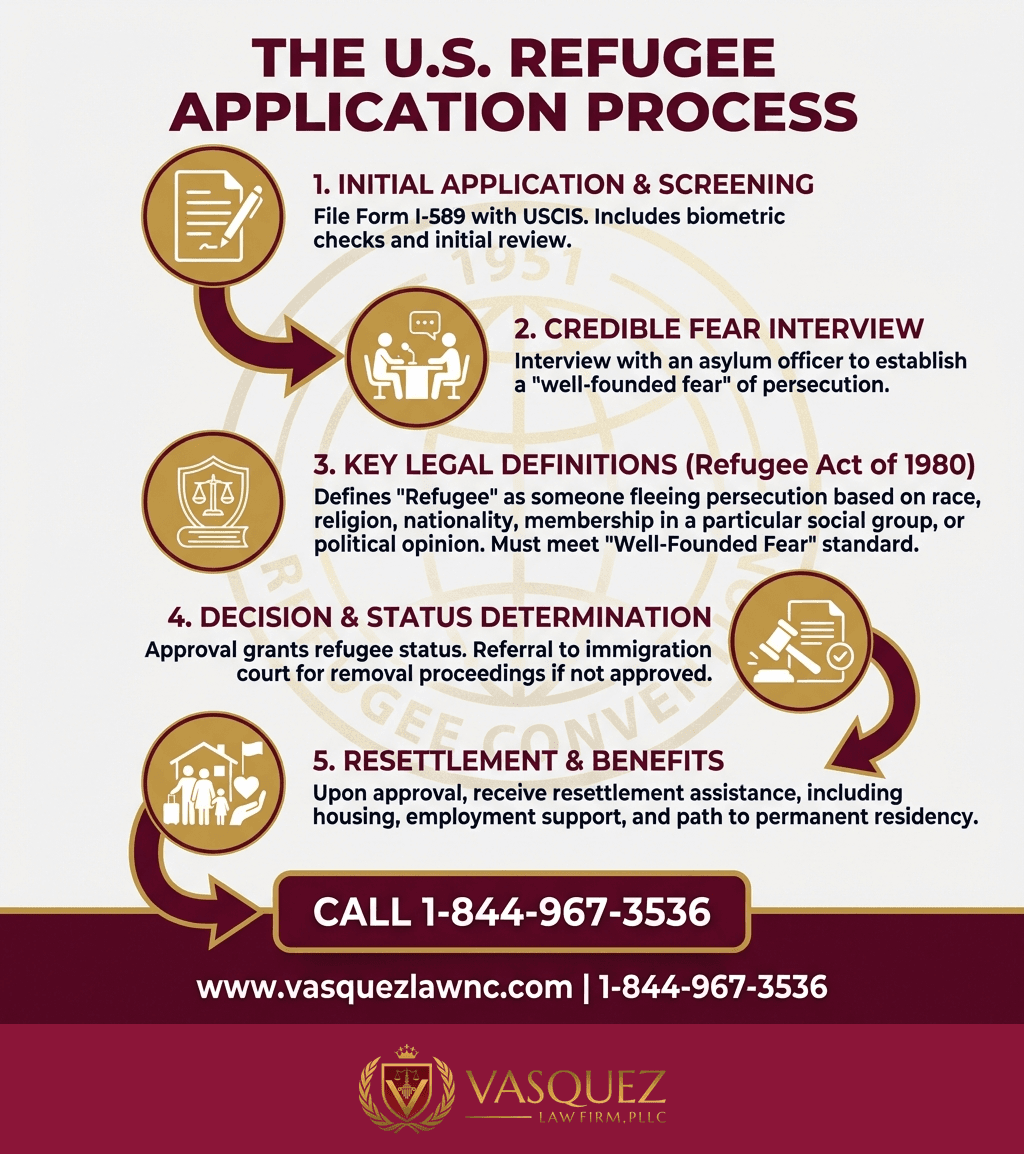
Step-by-Step: How to Apply for Refugee Status
Imagine you want to apply for refugee status from outside the United States. The process begins with registering your claim through the United Nations High Commissioner for Refugees (UNHCR) or a U.S. embassy. If accepted, your case is referred to the U.S. government for resettlement consideration under the Refugee Act of 1980.
Step 1: Registration and Referral
Register with UNHCR or the nearest U.S. embassy. Provide personal information and the reasons you are seeking refuge. This step initiates your case for official evaluation.
Step 2: Application Submission
Complete the application forms and gather supporting documents such as identity papers, medical records, and proof of threats or persecution. Assistance from experienced immigration attorneys can ensure completeness and accuracy.
Step 3: Security and Background Checks
U.S. authorities will conduct security, medical, and background checks to confirm you meet refugee criteria and pose no safety risk to the community.
Step 4: Interview
An interview with a USCIS officer evaluates your claim. Be honest and provide detailed accounts. Legal representation during this phase improves your chances.
Step 5: Decision and Resettlement
If approved, you receive refugee status allowing lawful entry and resettlement in the U.S. You can then apply for work authorization and eventual permanent residence.
- See the USCIS website for official forms and processes.
- Use local resources in Smithfield and Florida for support services upon arrival.
- Contact Vasquez Law Firm for assistance navigating these steps.
Common Mistakes to Avoid in Refugee Applications
Many refugee applicants encounter common pitfalls that delay or jeopardize their cases. Understanding these can save time and stress.
- Submitting incomplete applications: Missing documents often cause delays or denials. Double-check all requirements.
- Inconsistent or contradictory statements: Always provide truthful and consistent information during interviews and on forms.
- Missing deadlines: Late responses to USCIS notices or interview dates can lead to dismissal.
- Not reporting changes: Inform authorities promptly about changes in your contact info or circumstances.
- Ignoring legal advice: Navigating refugee law is complicated; professional help can prevent costly mistakes.
If you only remember one thing: Preparation and honesty matter most in your refugee application success.
Contact our office early to avoid these mistakes.Timeline: What to Expect After Applying
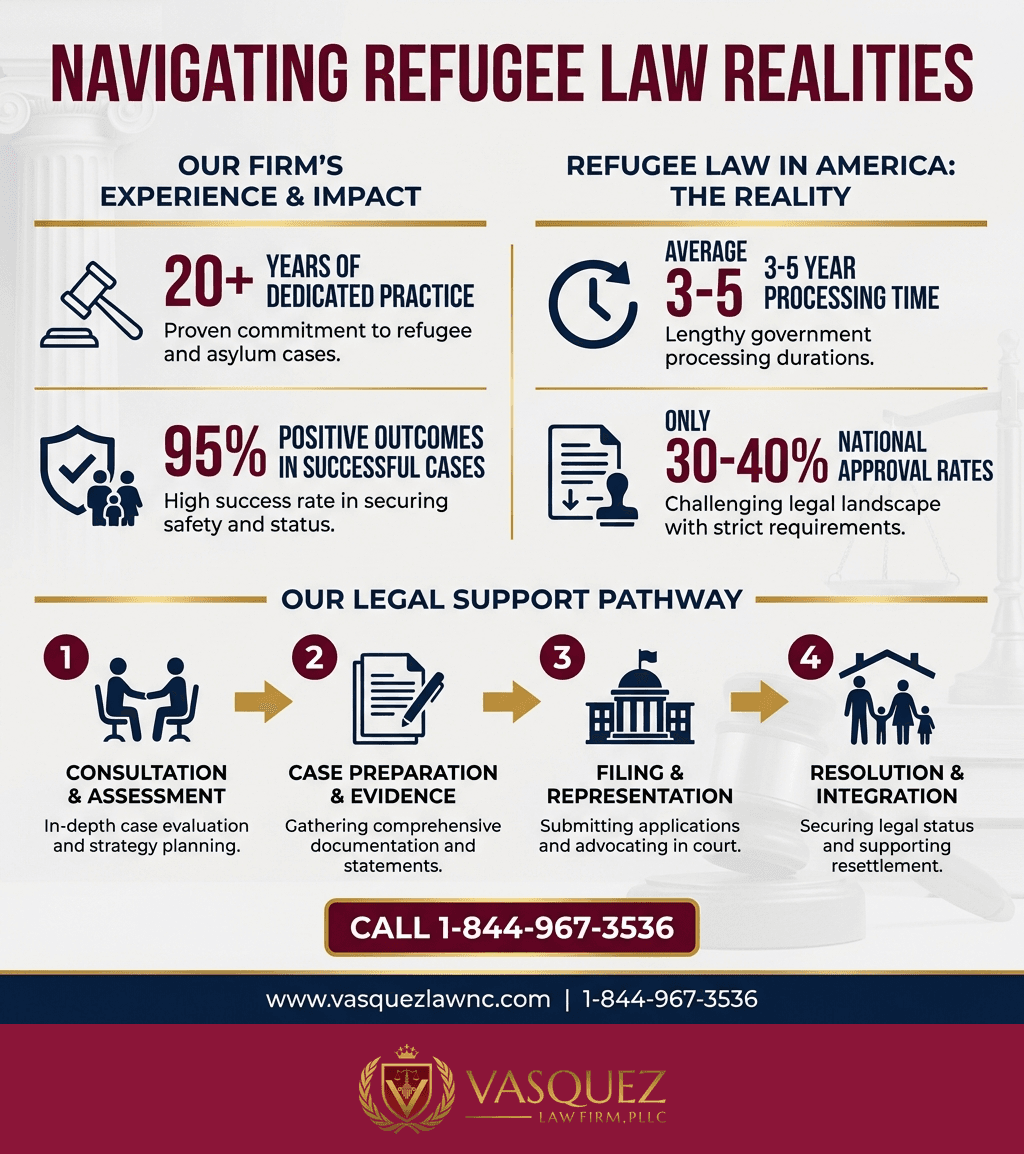
The refugee application timeline varies, but applicants often wait many months to over a year for resolution.
- Initial Registration: Varies depending on UNHCR caseload and embassy appointments.
- Application review: Takes several months including document verification.
- Background checks: Security, health, and law enforcement screenings may add months.
- Interview: Scheduled as early as 6 months or delayed due to backlog.
- Decision: Typically within several weeks after interview, but timing can vary.
- Resettlement and travel: After approval, arrangements can take from weeks to months.
During all stages, staying in contact with your attorney helps track progress and submit any additional required info promptly.
Learn about immigration court timelines and what to expect differently if your case moves there.Costs and Fees: What Impacts the Price
Applying for refugee status itself generally does not require application fees. However, related costs may include:
- Legal fees: Hiring immigration attorneys for consultation and case preparation.
- Medical exams: Required health screenings, paid to certified physicians.
- Document translation: For non-English materials.
- Travel expenses: Costs to attend interviews or relocation after approval.
Vasquez Law Firm offers affordable consultation and payment plans in Smithfield to ensure you can proceed without financial stress.
Checking eligibility for fee waivers or pro bono assistance through nonprofit organizations can also reduce costs.
NC, FL, and Nationwide Notes
North Carolina Notes
Refugee applicants in Smithfield, NC, should be aware that local offices often coordinate with federal agencies for appointments and support. North Carolina law also protects refugees once admitted with state services like healthcare and education.
Florida Notes
Florida offers a significant refugee support network, including legal aid and community programs. Refugees settling in Florida can access specialized legal help and social assistance to ease integration.
Nationwide Concepts
Refugee law in America operates federally under the Immigration and Nationality Act and international treaties. While processing is centralized, each state has unique support systems, so knowing your local resources is important.
When to Call a Lawyer Now
- If you have been denied refugee status and need to file an appeal.
- When you receive an interview notice but do not understand the questions or procedures.
- If you fear criminal charges could affect your immigration status.
- If you need help obtaining or organizing evidence of persecution.
- When your personal circumstances change dramatically and you need to update your case.
- If you face imminent deportation or detention.
- When you need legal advice on applying for asylum if outside the U.S.
- If you are a Dreamer or other protected immigrant seeking complementary relief along with refugee status.
About Vasquez Law Firm
At Vasquez Law Firm, we combine compassion with aggressive representation. Our motto "Yo Peleo" (I Fight) reflects our commitment to standing up for your rights. We understand the urgency and complexity of refugee law cases, especially for those in Smithfield, North Carolina, and Florida.
- Bilingual Support: Se Habla Español - our team is fully bilingual to serve diverse communities.
- Service Areas: North Carolina, Florida, and nationwide immigration services.
- Experience: Over 30 years helping clients navigate complex legal matters related to refugee status and asylum.
- Results: Thousands of successful cases, ensuring our clients gain protection and peaceful resettlement.
Attorney Trust and Experience
Attorney Vasquez holds a Juris Doctor degree and is admitted to practice in both the North Carolina State Bar and Florida Bar. With over 15 years dedicated to immigration law, he has built a reputation for personalized attention and effective advocacy for refugees and asylum seekers.
Don't wait to get the help you deserve. Call us now for immediate assistance.
Se Habla Español
Frequently Asked Questions
What is refugee law?
Refugee law is a set of international and U.S. laws that protect individuals who face persecution or serious harm in their home countries. It establishes who qualifies as a refugee and outlines procedures for applying for protection and status in the United States.
What are the three types of refugees?
The three main types of refugees include those fleeing persecution for race, religion, nationality, or political opinion; those displaced by war or violence; and those who face other serious threats to their safety. The Refugee Act of 1980 guides these classifications.
Can refugee status be revoked or deported?
Yes. Refugee status can be revoked, and deportation is possible if the individual commits certain crimes, abuses the immigration process, or if new evidence shows the person is no longer eligible under refugee laws. Legal guidance is crucial to navigate these risks.
How do I apply for refugee status in the U.S. from outside the country?
Outside the U.S., you apply through the United Nations High Commissioner for Refugees (UNHCR) or a U.S. embassy, which refers eligible cases to U.S. Citizenship and Immigration Services for processing under the Refugee Act of 1980.
What documents do I need to apply for refugee status?
Applicants need identification documents, proof of persecution or threats, and sometimes medical or police records. These documents support your claim and should be gathered with assistance from experienced immigration lawyers.
How long does the refugee application process take?
Processing times vary but often take several months to over a year. Background checks, interviews, and verification add time. These delays require patience and experienced legal representation to lessen risks of denial.
What does the Refugee Act of 1980 do?
The Refugee Act of 1980 established the legal framework for defining refugees and outlining the U.S. process for admitting and protecting them. It aligned U.S. law with international standards, including the 1951 Refugee Convention.
Where can I get legal help with refugee status in Smithfield?
Vasquez Law Firm offers bilingual immigration services in Smithfield, NC, specializing in refugee and asylum cases. Our team understands local and federal laws to guide you through each step.
Sources and References
- U.S. Citizenship and Immigration Services
- Executive Office for Immigration Review
- Legal Information Institute
Take the first step toward justice today. Our team is standing by to help.
Start Your Free Evaluation Now
Call us: 1-844-967-3536
Se Habla Español - Estamos aquí para ayudarle.

William Vasquez
Founder & CEO, Vasquez Law Firm, PLLC
William Vasquez is the founder and CEO of Vasquez Law Firm, PLLC, a results-driven firm specializing in immigration, criminal defense, personal injury, and workers' compensation. A U.S. Air Force veteran and recipient of the Joint Service Achievement Medal, William is dedicated to fiercely fighting for his clients' rights.
Related Legal Services
Need legal help? Learn more about get immigration legal help today, or contact us for a free evaluation.
You can also visit North Carolina immigration law firm for more information.