How Divorce College Expenses Are Handled in Smithfield in 2026
Wondering how divorce college expenses work in North Carolina or Florida? Learn key facts, legal insights, and how to protect your rights. Contact us today.
Published on April 10, 2026

Have questions? Talk to an attorney - free evaluation.
Call 1-844-967-3536How Divorce College Expenses Are Handled in Smithfield in 2026
Dividing financial responsibilities after a divorce can be challenging, especially when it comes to college expenses. In Smithfield, North Carolina and Florida, parents often face questions about who must pay for higher education costs. This article explains divorce college expenses in 2026, including laws, FAFSA impact, and how courts may rule. If you are a divorced parent wondering about responsibility for college tuition or other costs, understanding these details can protect your family’s future.
Need help with your case? Our experienced attorneys are ready to fight for you. Se Habla Español.
Or call us now: 1-844-967-3536
Quick Answer
Divorce college expenses depend on state laws and your divorce agreement. In North Carolina and Florida, parents may be required to share college tuition costs, but courts often consider financial ability, custody, and the child’s needs when ordering payments.
- Divorce decrees may specify payment responsibilities.
- Judges can order payment of college expenses if included in the agreement.
- FAFSA financial aid forms affect parents' financial disclosures.
- Child support obligations sometimes continue through college years.
- Noncustodial and custodial parents’ roles matter.
Understanding Divorce College Expenses
Imagine a divorced couple in Smithfield who must decide who pays for their child's college tuition. Sometimes, the divorce settlement explicitly requires one or both parents to cover these costs. Other times, the responsibility is not mentioned, leaving the question open to courts’ interpretation. In 2026, both North Carolina and Florida have different approaches to college expenses after divorce, making it important to understand local laws.
In North Carolina, courts may order parents to pay for college expenses if the divorce agreement includes this or if parents agree later. However, unlike child support for minors, paying for college tuition is not automatically required by law. Judges consider many factors such as parents’ income, the child’s academic potential, and the financial aid the student receives through FAFSA.
Florida law is similar but often requires more explicit agreements in the divorce decree, as courts tend to limit ongoing financial support after a child turns 18. Parents need to negotiate carefully during divorce proceedings or risk paying large unexpected sums later.
Parents should note that college expenses typically cover tuition, room and board, books, and other fees. Sometimes additional costs like transportation or computers are contested. Clear agreements benefit everyone by avoiding litigation and conflict down the road.
Our family law services in Smithfield include advising parents on how to address college expenses fairly and legally during divorce.
FAFSA Role in Divorce and College Costs
The Free Application for Federal Student Aid (FAFSA) asks for financial information from parents to determine federal aid eligibility. Divorced parents must file FAFSA separately if they live apart. Usually, the custodial parent’s income is the primary factor, but noncustodial parents may also provide data depending on the college.
FAFSA can reduce the amount parents need to pay, but it also makes clear the family’s financial situation, which courts may consider in disputes over who pays college costs.
Does Child Support Include College Expenses?
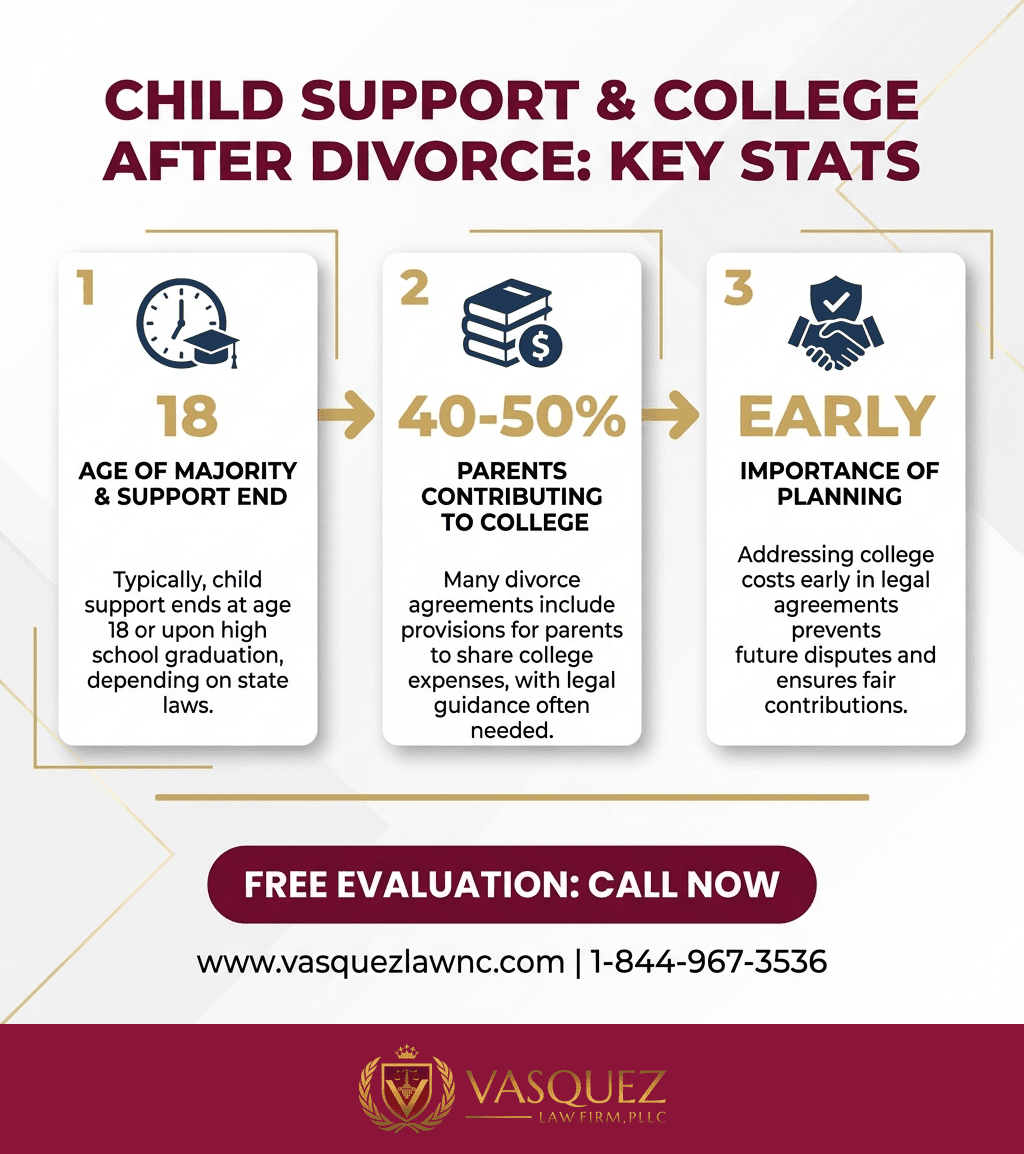
Generally, child support ends when a child reaches the age of majority (18 in many states). However, some courts extend support to cover college expenses. If child support orders do not address college costs, parents often negotiate additional agreements or ask the court to modify support terms.
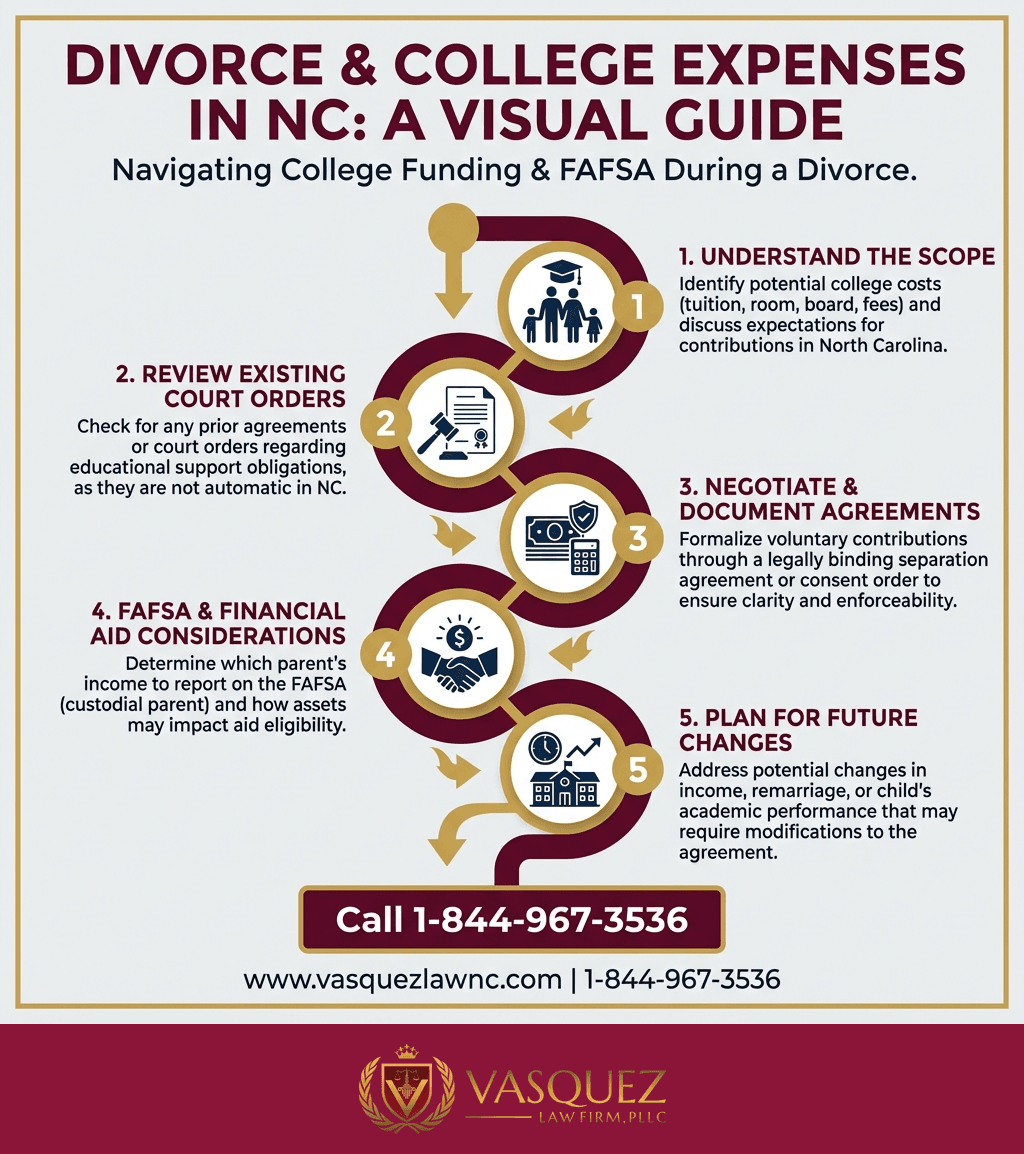
Step-by-Step Guide to Paying College Expenses
- Review Your Divorce Decree. Confirm if it includes clauses about college payments. Many agreements specify who pays tuition or require equal sharing.
- Discuss Financial Aid. Complete FAFSA forms correctly to maximize aid. Understand how your income affects aid amounts.
- Negotiate Additional Agreements. If college costs aren’t covered, consider mediation or court petitions to update your custody or support orders.
- Document Expenses. Keep clear records of tuition bills, receipts, and related costs for accountability.
- Communicate Regularly. Maintain open discussions with the other parent about expenses and payment schedules.
- Seek Legal Assistance. Contact a family law attorney for guidance if disputes arise or you need to enforce payments.
Don't wait to get the help you deserve. Call us now for immediate assistance. Se Habla Español.
Common Scenarios in Divorce College Expenses
Here are some typical situations Smithfield parents encounter:
- One parent agrees to pay all college tuition in return for reduced child support.
- Parents split costs proportionally to income, with the noncustodial parent paying a share.
- College expenses were not addressed in the divorce decree, leading to court intervention.
- The student receives scholarships, reducing parents’ obligations.
- Disagreements arise over what expenses qualify, such as room and board or summer classes.
Common Mistakes with College Costs in Divorce
- Not Including College Expenses in Divorce Decree. Without clear terms, parents face costly litigation later. Fix by negotiating detailed agreements early.
- Ignoring FAFSA Requirements. Failing to submit FAFSA or providing incomplete info can reduce aid. Always file accurately each year.
- Assuming Child Support Covers College. Many believe child support pays for college costs automatically, but that is usually not true.
- Not Documenting Expenses. Poor record-keeping can complicate enforcement. Keep all receipts and bills.
- Waiting Too Long to Address Disputes. Delays can harm the student's education and credit. Act promptly by consulting a lawyer.
- Ignoring Changes in Financial Situation. Both parents’ incomes may change; failing to update agreements causes fairness issues.
- Failing to Communicate with the Other Parent. Good communication avoids misunderstandings and court battles.
If you only remember one thing: Get your divorce decree or court order to clearly state who will pay for college expenses and how.
Timeline and What to Expect in Divorce Cases
- During Divorce: Negotiate college expense terms early; lawyer involvement recommended.
- After Divorce: File FAFSA annually; review and adjust cost-sharing agreements yearly.
- If Disputes Arise: Mediation or family court hearings may take several months to resolve payment issues.
- While Student is in College: Regular payment schedules and expense sharing continue until graduation or until court orders change.
Costs and Fees: What Impacts the Price
- Type of College: Public universities usually cost less, private schools more.
- Residency Status: In-state students pay lower tuition than out-of-state.
- Financial Aid and Scholarships: These reduce parents’ direct payments.
- Parental Income: Courts consider income when allocating payments.
- Additional Expenses: Books, housing, meal plans, transportation, and technology may add significantly.
NC, FL, and Nationwide Notes
NC Notes
North Carolina allows courts to order payment of college expenses if the decree includes such terms or both parents agree. Courts look at parents’ ability to pay, the child’s needs, and financial aid eligibility. If college expenses are not mentioned, parents must agree voluntarily or seek court modification. The North Carolina Courts Divorce Information covers these topics in detail.
FL Notes
Florida law typically ends child support at 18, but college expenses must be explicitly ordered in the divorce settlement. Courts rarely order additional support without clear agreement. Negotiating those terms at divorce is critical for parents in Florida. See the official Florida Statutes Section 61.30 regarding child support.
Nationwide Concepts
Across the U.S., paying for college expenses after a divorce is typically not automatic. Courts rely on agreements or modify child support orders to include college costs. Legal standards vary widely; therefore, parents should always seek advice from a qualified family law attorney in their state to understand obligations and rights.
When to Call a Lawyer Now
- If your divorce decree is silent about college expenses and you want to clarify responsibilities.
- When the other parent refuses to pay agreed college costs.
- If your financial situation changes and you need to modify support orders.
- Facing disputes over what counts as a college expense.
- If deadlines are approaching and payments aren’t made.
- When mediation fails and court intervention may be necessary.
- If you want help negotiating a divorce settlement that includes college costs.
- You are unclear how FAFSA affects financial aid and parental responsibilities.
About Vasquez Law Firm
At Vasquez Law Firm, we combine compassion with aggressive representation. Our motto "Yo Peleo" (I Fight) reflects our commitment to standing up for your rights.
- Bilingual Support: Se Habla Español - our team is fully bilingual
- Service Areas: North Carolina, Florida, and nationwide immigration services
- Experience: Over 30 years helping clients navigate complex legal matters
- Results: Thousands of successful cases across multiple practice areas
Attorney Trust and Experience
Attorney Vasquez holds a Juris Doctor degree and is admitted to practice in both the North Carolina State Bar and Florida Bar. With over 15 years of dedicated legal experience, he has built a reputation for providing personalized attention and achieving favorable outcomes for his clients.
Don't wait to get the help you deserve. Call us now for immediate assistance. Se Habla Español.
Frequently Asked Questions
How do divorced parents handle college expenses?
Divorced parents usually address college expenses through court orders or agreements in the divorce decree. They may share costs proportionally based on income or assign responsibility to one parent. Clear communication and legal guidance help prevent disputes and ensure the child's educational needs are met effectively.
Can a judge order a parent to pay for college?
Yes, a judge can order a parent to pay college expenses if the divorce decree or agreement includes that provision. Otherwise, courts may require parties to negotiate or petition to modify support obligations to cover college-related costs.
Does child support decrease when a child goes to college?
Child support typically ends when a child reaches the age of majority, often 18. Some orders extend support to college years, but if not, payments usually decrease or stop. Parents may separately agree to pay college expenses even if child support ends.
Is the noncustodial parent responsible for college tuition?
The noncustodial parent may be responsible if the divorce agreement or court order specifies it. Courts examine the parents’ financial ability and custody arrangement when assigning responsibility.
How does FAFSA affect child support and college expenses?
FAFSA form data helps determine financial aid eligibility. FAFSA requires custodial and sometimes noncustodial parents to submit financial info, which courts may use to assess who can pay college expenses or adjust support orders accordingly.
What happens if one parent refuses to pay college costs?
If a parent refuses payment ordered by a court or decree, the other parent can seek legal enforcement through contempt motions or modify the support order to compel payment.
Are college expenses automatically included in divorce support?
No, college expenses are not automatically included in child support. Parents should specifically address these costs during the divorce process to avoid conflicts later.
What money can't be touched in a divorce?
Some funds like Social Security benefits, certain retirement accounts, and inheritances may have protections depending on state laws. Money designated for college expenses should be clearly separated to avoid disputes.
Sources and References
- North Carolina Courts Divorce Information
- FAFSA Official Site
- Federal Court Family Support Resources
Take the first step toward justice today. Our team is standing by to help. Se Habla Español.
Start Your Free Evaluation Now
Call us: 1-844-967-3536
Se Habla Español - Estamos aquí para ayudarle.


William Vasquez
Founder & CEO, Vasquez Law Firm, PLLC
William Vasquez is the founder and CEO of Vasquez Law Firm, PLLC, a results-driven firm specializing in immigration, criminal defense, family law, personal injury, and workers' compensation. A U.S. Air Force veteran and recipient of the Joint Service Achievement Medal, William is dedicated to fiercely fighting for his clients' rights.