How Pennsylvania Police ICE Cooperation Affects Immigrants in 2026: April 2026 Update
Wondering how Pennsylvania police ICE cooperation impacts your immigration case in 2026? Learn your rights and next steps. Start now with a free consult.
Published on April 20, 2026
Talk to an immigration attorney
Free call. A clear plan for your case.
Free & confidential · Se habla espanol · 24/7
Have questions? Talk to an attorney - free evaluation.
Call 1-844-967-3536Worried how the latest immigration news affects you?
Schedule a confidential case review with an immigration attorney - know exactly where you stand.
How Pennsylvania Police ICE Cooperation Affects Immigrants in 2026
Pennsylvania police ICE cooperation is a growing trend that affects many immigrants across the state in 2026. This cooperation involves local police departments working with ICE agents to enforce federal immigration laws, including arrests and detentions. For Dreamers and other immigrants in Charlotte and beyond, understanding how these partnerships operate is critical to knowing your rights and protecting your status. This article explores how Pennsylvania police collaborate with ICE, key agencies involved such as Quarryville Police and Pa 287g agencies, and what you should do if you face ICE enforcement actions in Philadelphia or Chester County. Vasquez Law Firm provides bilingual support to help you navigate this challenging legal landscape.
Need help with your case? Our experienced attorneys are ready to fight for you. Se Habla Español.
Or call us now: 1-844-967-3536
Quick Answer
In 2026, Pennsylvania police ICE cooperation means local police departments assist ICE agents with immigration enforcement, including arrests and detentions. Such cooperation occurs through programs like the Pa 287g agencies and coordination with ICE detention centers, including in Philadelphia. Immigrants should know their rights, remain calm, and seek legal advice promptly to protect their status.
- Local police cooperate with ICE to enforce immigration laws
- Pa 287g agencies train officers to perform immigration tasks
- ICE makes arrests in collaboration with police in Philadelphia and Chester County
- Detained individuals can be held at the ICE detention center in Philadelphia
- Knowing your rights and having legal support is critical
Understanding Pennsylvania Police ICE Cooperation
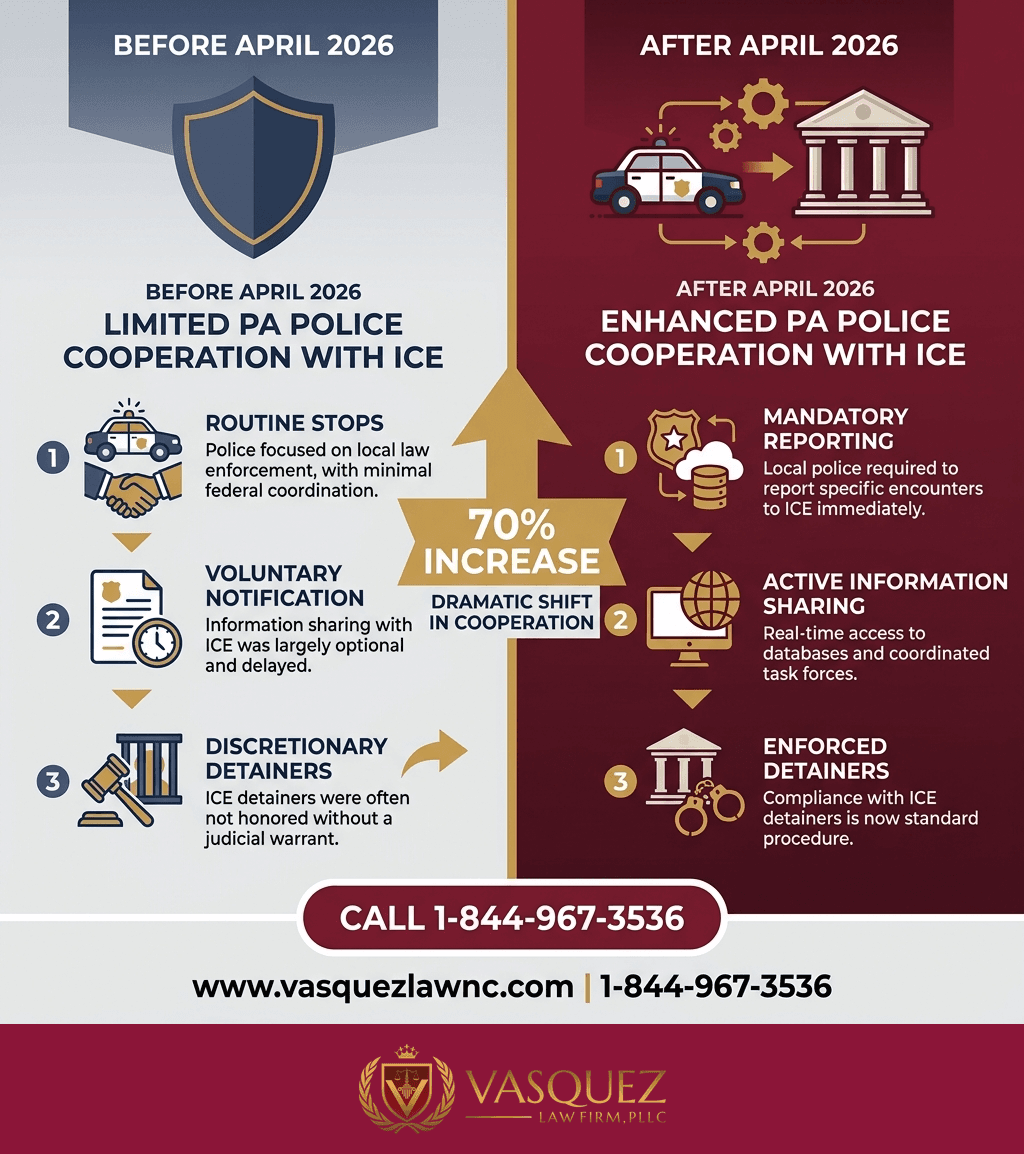
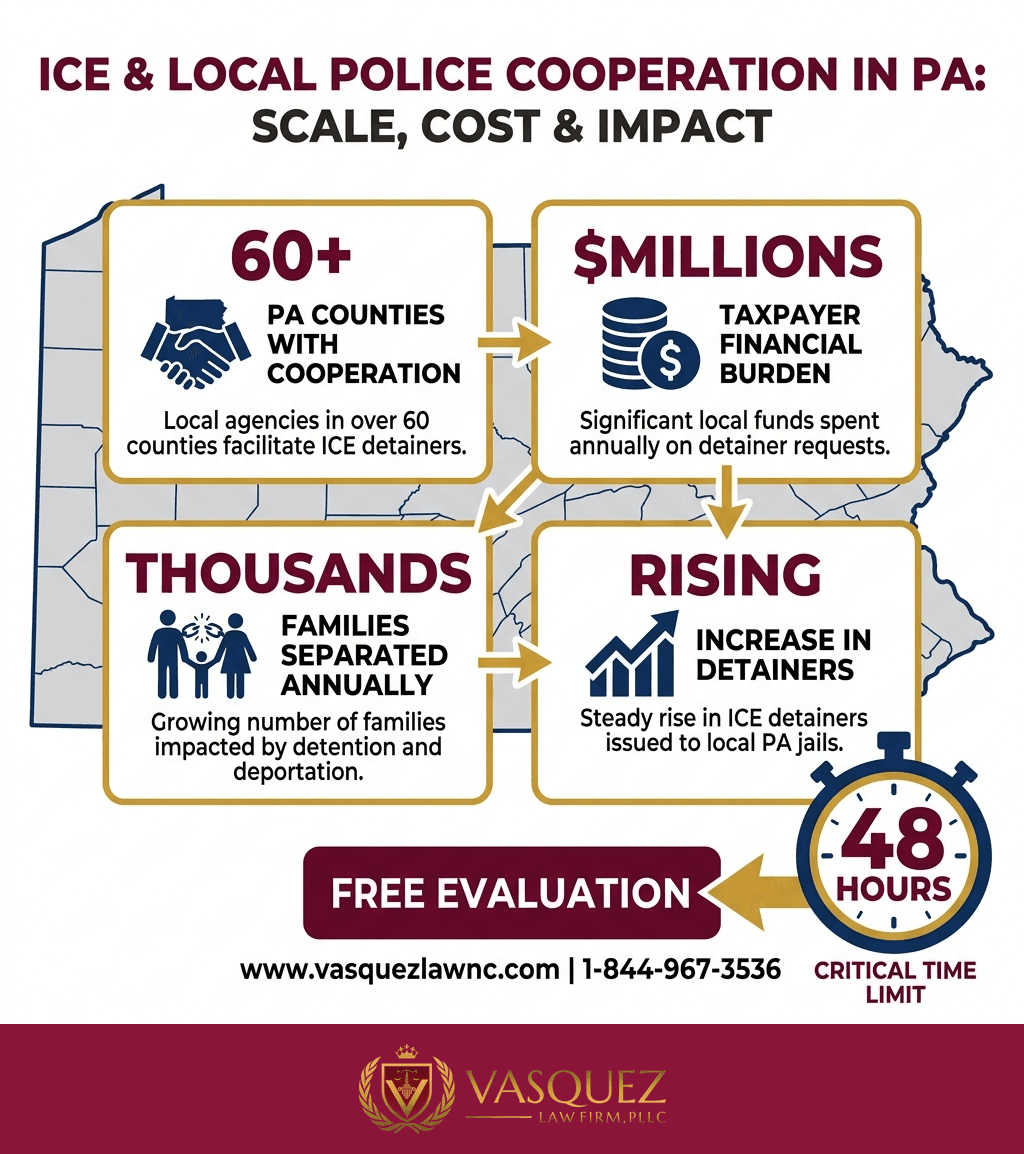
In Pennsylvania, more police departments are entering agreements to collaborate with U.S. Immigration and Customs Enforcement (ICE) in 2026. This cooperation allows local officers to assist in federal immigration enforcement under programs like the Pa 287g agencies. These agencies authorize designated local law enforcement to perform certain immigration-related duties, such as identifying and detaining undocumented immigrants.
Examples of Cooperation
For instance, Quarryville Police ICE collaboration enables officers to work alongside ICE agents to identify individuals for immigration enforcement. Similarly, ICE arrests in Philadelphia and arrests by police in coordination with ICE have increased, reflecting a statewide trend. This means local authorities may hold individuals suspected of immigration violations and coordinate their transfer to ICE detention facilities, including the ICE detention center in Philadelphia.
To illustrate, a recent case in Chester County involved local police detaining an individual during a routine traffic stop after confirming their immigration status with ICE. This person was subsequently transferred to the Philadelphia ICE detention center pending removal proceedings. Such collaborations demonstrate how local policing and federal immigration enforcement are increasingly intertwined.
Another example is when Quarryville Police participate in joint operations with ICE targeting individuals with outstanding immigration violations. These operations often involve coordinated raids or scheduled check-ins, heightening apprehension among immigrant communities. Understanding these examples helps immigrants anticipate scenarios where police cooperation with ICE might affect them or their loved ones.
Authority and Limitations
Local police departments collaborating with ICE have limited authority compared to federal agents. They cannot independently enforce immigration laws but can assist ICE in identifying, detaining, or holding people for ICE arrest. Importantly, not all police departments in Pennsylvania participate in these cooperative agreements, and some cities have policies limiting such collaboration to maintain immigrant-friendly environments.
For example, police officers do not have the authority to initiate deportation proceedings or conduct immigration status investigations without ICE involvement. Their role is generally confined to detaining individuals upon ICE requests or during criminal investigations that intersect with immigration violations.
It is also important to note that these limitations aim to balance local law enforcement priorities with federal immigration enforcement. In some municipalities, policies explicitly prohibit officers from inquiring about immigration status during routine police interactions unless ICE involvement is warranted. This distinction shapes how police ICE cooperation is implemented on the ground.
Impact on Immigrants in Charlotte and Beyond
Although this cooperation happens primarily in Pennsylvania, it impacts immigrants nationwide, including those in Charlotte. For Dreamers and mixed-status families, awareness of police ICE cooperation trends in states like Pennsylvania can inform decisions about travel, legal status, and when to seek legal help. Our immigration attorneys in Charlotte can assist clients facing issues related to ICE enforcement anywhere in the U.S.
Immigrants traveling from Charlotte to Pennsylvania for work, family visits, or other reasons should be especially cautious, as local police in Pennsylvania may collaborate with ICE in ways that differ from those in North Carolina. Understanding these differences can reduce risks during encounters with law enforcement.
Furthermore, community organizations in both states often provide resources and know-your-rights workshops to help immigrants navigate these complex enforcement landscapes. Staying informed and connected with local advocacy groups can offer critical support if you face police or ICE interactions.
Step-by-Step: What to Do if Faced with ICE Enforcement
- Stay Calm and Know Your Rights: You do not have to answer questions about your immigration status. Remain polite and avoid volunteering information.
- Do Not Consent to Searches: Unless the police or ICE have a warrant, you can refuse searches of your home or belongings.
- Ask if You Are Free to Leave: If not detained, calmly leave the situation to avoid self-incrimination.
- Contact an Immigration Lawyer Immediately: Having legal representation helps protect your rights during any ICE encounter.
- Prepare Important Documents: Keep copies of identity and immigration documents readily accessible.
- Inform Trusted Family or Friends: Share your location and situation so others can assist if needed.
- Do Not Sign Anything Without Lawyer Review: Documents from ICE or police can affect your immigration case negatively.
Additional practical advice includes memorizing the phone number of your immigration attorney and carrying a card with emergency contact information at all times. In situations where you may be detained, these details can expedite legal assistance.
Moreover, if children or other dependents are involved, ensure they know who to contact if you are detained. Preparing a plan ahead of time can mitigate the emotional and logistical challenges that arise during enforcement actions.
Remember, law enforcement officers may sometimes misinterpret your rights or intimidate you. Staying calm and requesting legal counsel are your best defenses in any ICE-related encounter.
Documents and Evidence Checklist for ICE Encounters
- Copy of your passport or government-issued ID
- Current immigration documents (visa, work permit, DACA approval)
- Proof of residence or employment (bills, pay stubs)
- Contact information for your immigration attorney
- List of emergency contacts who can help if detained
- Records of any past immigration proceedings or applications
- Evidence supporting your eligibility for relief or status adjustment
It is advisable to keep both physical and digital copies of these documents in a secure but accessible place. Using password-protected digital storage or a trusted relative’s possession can safeguard your records in case of unexpected detention.
Additionally, maintaining a detailed log of any interactions with law enforcement or ICE agents, including dates, times, and officers’ names, can be invaluable in building your defense. This information should be shared promptly with your attorney.
For immigrants with mixed-status families, compiling documentation that demonstrates family ties and community involvement may also help during removal proceedings or applications for relief.
Timeline: What to Expect After Police-ICE Contact
- Immediate Phase (Day 1-3): If detained, ICE may transfer you to a local detention center such as ICE detention center Philadelphia. Initial screening and bond hearings may occur.
- Investigation Phase (Week 1-4): ICE reviews your immigration and criminal history to determine enforcement actions like removal proceedings.
- Legal Proceedings (Month 1+): Deportation hearings begin in immigration court, where evidence and defenses are presented.
- Court Decisions and Appeals (Varies): Immigration judges issue decisions. Appeals may be filed to the Board of Immigration Appeals or federal courts.
During the Immediate Phase, detainees often undergo health screenings and initial interviews to assess their eligibility for detention alternatives or bond. This is a critical period to secure legal representation and prepare your case.
In the Investigation Phase, ICE officers gather documentation and may request additional information from detainees. Cooperation with your attorney is essential to ensure accurate representation of your circumstances.
The Legal Proceedings phase can last several months or more, depending on case complexity and court backlogs. Throughout this time, attending all hearings and submitting required documents is vital to protect your rights.
Costs and Fees Related to ICE Cases
- Legal Representation: Immigration lawyers typically charge consultation and case fees, ranging from $100 to several thousand dollars depending on case complexity.
- Bond Fees: If bond is set, you may need to pay to secure your release from detention.
- Application Fees: Adjusting status or applying for relief may require payment to USCIS, sometimes several hundred dollars per application.
- Miscellaneous Expenses: Travel, document copies, translation services, and possible expert witness fees can add to costs.
- Vasquez Law Firm offers affordable payment plans and free initial consultations to ease financial concerns.
In some cases, nonprofit organizations or community groups may provide assistance or referrals to help cover legal fees or bond payments. Exploring these options early can reduce financial stress during the process.
Remember that investing in qualified legal representation often improves outcomes and can prevent costly mistakes that lead to removal or prolonged detention. Transparent communication with your attorney about fees and payment plans is essential.
Common Mistakes to Avoid When Police Collaborate with ICE
- Talking Without Legal Advice: Giving information to police or ICE without a lawyer can cause unintended self-incrimination. Always consult a lawyer first.
- Ignoring Detention Notices: Failing to respond to immigration notices or court dates can lead to deportation orders in absentia.
- Signing Documents Hastily: Documents from ICE may waive rights or admissions. Review all paperwork with an attorney.
- Not Preparing Identification: Lack of proper documents can complicate bonding or legal defense.
- Assuming All Police Collaborate: Some police departments in Pennsylvania do not work with ICE—know your local policies.
- Delaying Legal Help: Time is critical. The sooner you contact a lawyer, the better your chance to avoid or appeal removal.
- Underestimating the Impact on Family: ICE arrests affect families and communities—plan to protect loved ones and communicate clearly.
If you only remember one thing: Always seek legal counsel immediately after any ICE or police interaction related to immigration enforcement.
Another common error is misunderstanding your rights during police or ICE encounters, which can result in unnecessary detention or legal complications. Educating yourself beforehand helps avoid these pitfalls.
Failing to maintain records of interactions with authorities can also undermine your case later. Documenting every detail provides your attorney with the information needed to advocate effectively on your behalf.
Jurisdiction Notes: Federal, North Carolina, Florida, and Nationwide
Immigration enforcement in the U.S. is governed by federal law, primarily through the Department of Homeland Security (DHS) and ICE. Pennsylvania police ICE cooperation falls under federal authority but occurs locally via formal agreements or policies.
North Carolina Notes
Although cooperation between police and ICE is frequent in Pennsylvania, North Carolina has its own laws affecting immigrants. Our immigration attorneys in North Carolina help clients understand how ICE enforcement impacts them, including advocacy against unauthorized detentions or deportations.
North Carolina localities vary widely in their policies toward ICE cooperation, with some jurisdictions limiting police involvement to promote community trust. Immigrants should stay informed about local laws and seek legal counsel immediately if they encounter enforcement actions.
For example, immigrants traveling between North Carolina and Pennsylvania should be aware that differing local policies may affect their risk of ICE detention. Understanding these nuances helps in planning travel and managing encounters with law enforcement.
Florida Notes
Florida has varied local policies regarding ICE cooperation. Some counties actively collaborate with ICE, while others limit involvement to protect immigrant communities. Understanding local law enforcement’s role is crucial for immigrants traveling or living in Florida.
In Florida, certain counties have passed resolutions to become sanctuary jurisdictions, restricting police from honoring ICE detainer requests without a judicial warrant. This contrasts with counties that fully cooperate with ICE, increasing deportation risks.
Immigrants in Florida should familiarize themselves with local policies and maintain contact with experienced immigration attorneys who understand the evolving landscape of ICE enforcement in the state.
Nationwide Concepts
Nationwide, police cooperation with ICE operates through programs like Section 287(g) of the Immigration and Nationality Act, which authorizes designated officers to enforce immigration laws. However, policies vary strongly by state and city, with some jurisdictions adopting sanctuary policies that limit cooperation.
For example, cities like Philadelphia have adopted policies to restrict ICE access to local jails, aiming to protect immigrant communities and encourage reporting of crimes without fear of deportation. Conversely, other areas maintain strong partnerships with ICE, facilitating arrests and detentions.
Understanding the broader national context helps immigrants and advocates anticipate enforcement trends and develop strategies to safeguard immigrant rights across different regions.

William Vasquez
Founder & CEO, Vasquez Law Firm, PLLC
William Vasquez is the founder and CEO of Vasquez Law Firm, PLLC, a results-driven firm specializing in immigration, criminal defense, personal injury, and workers' compensation. A U.S. Air Force veteran and recipient of the Joint Service Achievement Medal, William is dedicated to fiercely fighting for his clients' rights.
Related Legal Services
Need legal help? Learn more about experienced immigration attorneys in Charlotte, or contact us for a free evaluation.
You can also visit immigration attorneys across North Carolina for more information.