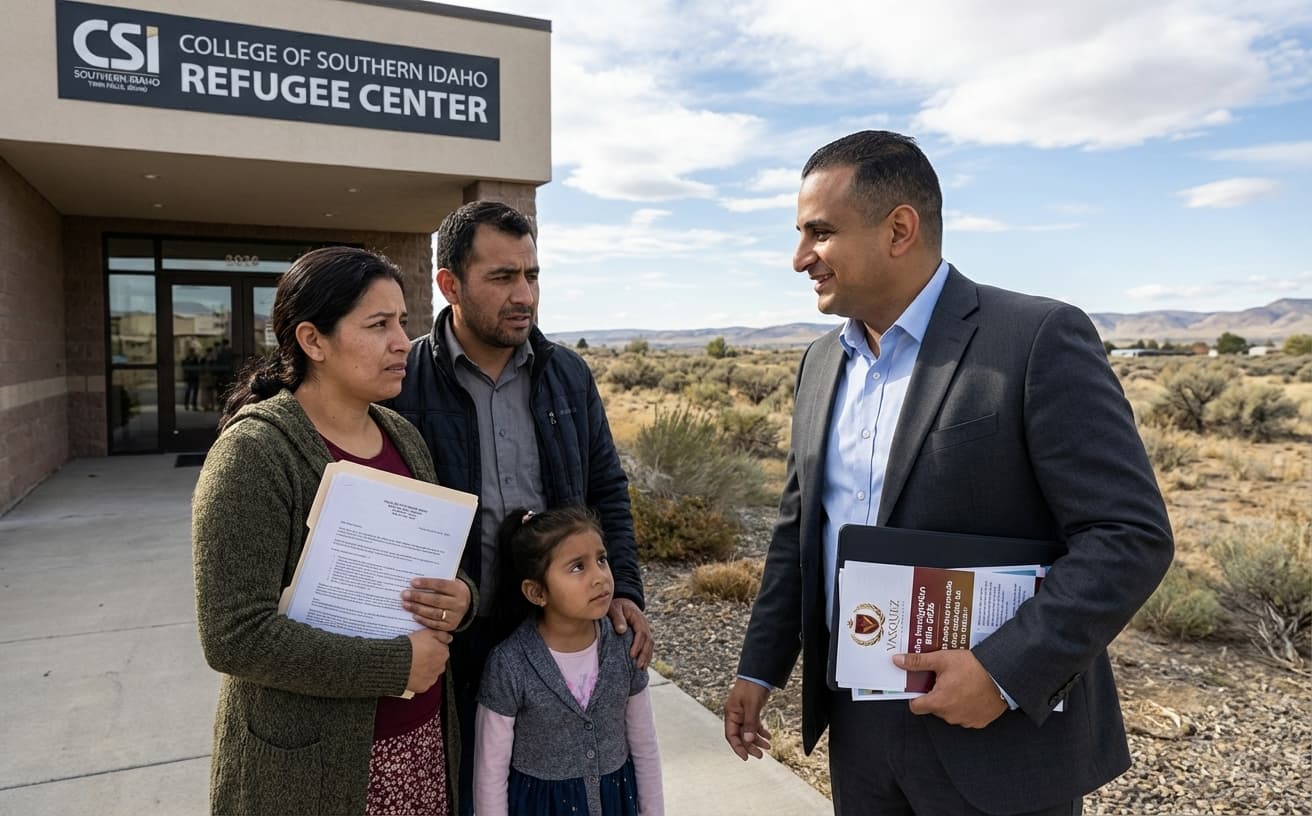
What Are U.S. Deportation Rules and How Do They Work in 2026?
Learn how U.S. deportation rules apply in 2026, timelines, common reasons for removal, and your rights. Contact Vasquez Law for a free consultation.
Published on April 8, 2026
Talk to an immigration attorney
Free call. A clear plan for your case.
Free & confidential · Se habla espanol · 24/7
Have questions? Talk to an attorney - free evaluation.
Call 1-844-967-3536Check your case status now
Look up your immigration case below, then talk to an attorney about what it means — free.
Questions about your result?
Talk to an attorney about your case — free, no obligation.
What Are U.S. Deportation Rules and How Do They Work in 2026?
U.S. deportation rules determine how and when a person can be removed from the country. In 2026, these rules still involve complex federal laws and procedures affecting many immigrants, including Dreamers living in Raleigh and beyond. Understanding the deportation process in the USA can help you protect your rights and know what steps to take if you face removal proceedings. This guide explains the conditions for deportation, timelines, frequently asked questions, and when to get legal help. Whether you are concerned about deportation due to a criminal conviction or immigration status, knowing these rules ensures you can respond effectively.
Need help with your case? Our experienced attorneys are ready to fight for you. Se Habla Español.
Or call us now: 1-844-967-3536
Quick Answer
The U.S. deportation rules are federal laws that specify who can be removed from the country and for what reasons. Deportation can occur due to criminal convictions, visa violations, or illegal entry, among others. The process involves legal hearings and timelines that vary by case. Seeking legal help early improves your chances to remain in the U.S.
- Deportation is governed under federal immigration law
- Common reasons include visa overstay and crimes
- Legal hearings determine if removal will happen
- Rights differ for citizens and non-citizens
- Consult an immigration attorney early for help
Understanding U.S. Deportation Rules
In 2026, U.S. deportation rules remain controlled by federal law, primarily the Immigration and Nationality Act (INA). Deportation, also called removal, is a legal process where the government may order the removal of a non-citizen from the United States. The grounds for deportation include criminal offenses, visa and immigration violations, national security threats, and fraud. For example, someone who entered the U.S. without inspection or overstayed their visa is at risk. Additionally, criminal convictions such as drug offenses or violent crimes commonly trigger deportation proceedings.
Understanding these laws helps residents in Raleigh and throughout North Carolina and Florida protect themselves. The deportation rules define who qualifies for relief or exceptions, such as cancellation of removal or asylum. For Dreamers with DACA or other protections, recent changes as of late 2025 (effective in 2026) might impact eligibility. Consulting with an immigration attorney familiar with the latest rules increases your chance to stay.
The U.S. deportation list PDF is a helpful document that agencies sometimes use to identify individuals with removal orders. It contains names and case numbers but is not publicly searchable. Legal professionals use it internally for case management.
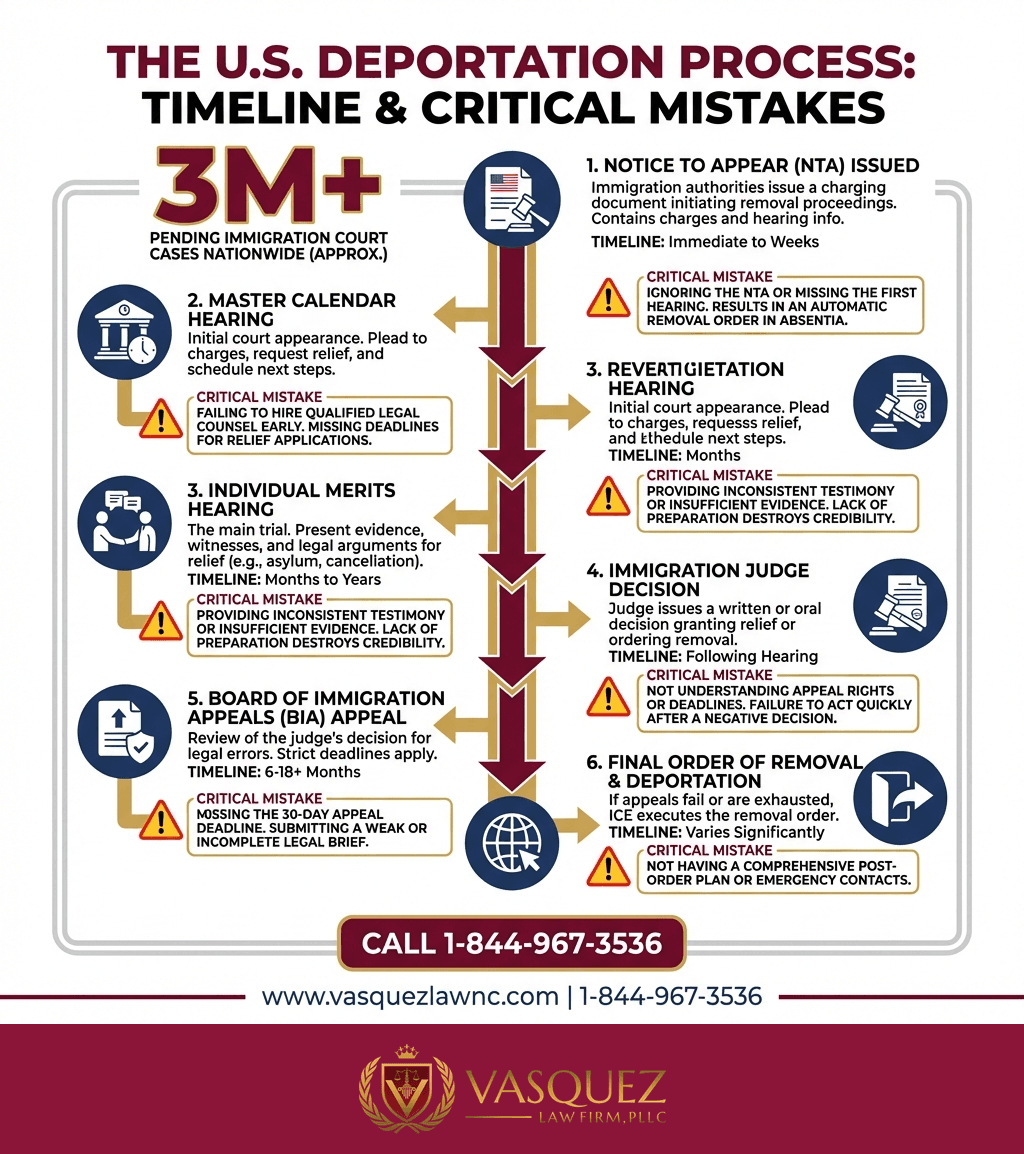
Step-by-Step Deportation Process in USA
- Notice to Appear (NTA): The government issues a formal Notice to Appear initiating the deportation process. It lists charges and hearing dates.
- Master Hearing: An initial hearing before an immigration judge where procedural matters are set.
- Individual Hearing: The main hearing where the person may present defenses or apply for relief like asylum or cancellation.
- Decision: The judge issues a ruling either ordering removal or allowing the person to stay.
- Appeals: Either party may appeal the decision to the Board of Immigration Appeals or federal courts.
- Removal: If ordered deported and appeals fail, ICE enforces physical removal from the U.S.
This deportation process timeline can take months to years depending on complexity. Timely legal representation at each step is critical.
Common Mistakes That Affect Your Deportation Case
- Not Hiring an Attorney: Facing deportation alone risks missing deadlines and defenses.
- Ignoring Hearing Notices: Failure to appear can lead to automatic deportation orders.
- Providing Incomplete Information: Hiding facts or lying during proceedings worsens outcomes.
- Not Applying for Relief Timely: Waiting too long may make you ineligible.
- Assuming Citizenship Protects You: Only U.S.-born or naturalized citizens are protected.
- Failing to Prepare Documents: Missing evidence weakens your defense.
If you only remember one thing: Act promptly and seek skilled legal help to avoid costly mistakes.
Deportation Process Timeline and What to Expect
- 0-30 days: Receipt of Notice to Appear.
- 1-6 months: Initial master hearings to set schedules.
- 6 months to 2 years: Individual hearings and submission of evidence, applications.
- Up to 5 years: Possible appeals and review delays.
- Removal: After final orders and exhaustion of appeals.
Delays can occur due to court backlogs or complex evidence. Staying informed of your case status is vital.
Costs and Fees: What Impacts the Price
- Attorney Fees: Vary by case complexity and whether appeals are involved.
- Application Fees: Filing for relief like cancellation or asylum has government fees.
- Translation and Document Costs: Certified translations and evidence gathering add costs.
- Travel and Logistics: Court appearances may require travel, especially if detained.
Most attorneys offer free initial consultations. Asking about all potential costs upfront helps budgeting.
NC, FL, and Nationwide Notes
North Carolina Notes
In Raleigh and across North Carolina, federal immigration courts handle deportation cases for residents. Local attorneys experienced in immigration law provide vital assistance due to the state’s sizeable immigrant population. Vasquez Law Firm offers immigration legal support in Raleigh to protect your rights under U.S. deportation rules.
Florida Notes
Florida’s immigration courts cover a large area with high case volumes. Deportation proceedings are conducted federally, and local firms with bilingual capacity provide essential help. Vasquez Law Firm’s Florida team has deep knowledge of the deportation process in USA and advocates for clients effectively.
Nationwide Concepts
Deportation law is federal, applying the Immigration and Nationality Act nationwide. Processes and rights are consistent but local court backlogs and policies may differ. Consulting an immigration lawyer in your region ensures you get the most relevant advice.
When to Call a Lawyer Now
- After receiving a Notice to Appear
- If ICE contacts you for questioning or detention
- When you suspect you are on the U.S. deportation list
- If you have a criminal conviction
- Before attending any removal hearing
- If you have been detained
- To check deportation status promptly
- If you face accusations of immigration fraud
About Vasquez Law Firm
At Vasquez Law Firm, we combine compassion with aggressive representation. Our motto "Yo Peleo" (I Fight) reflects our commitment to standing up for your rights.
- Bilingual Support: Se Habla Español - our team is fully bilingual
- Service Areas: North Carolina, Florida, and nationwide immigration services
- Experience: Over 30 years helping clients navigate complex legal matters
- Results: Thousands of successful cases across multiple practice areas
Attorney Trust and Experience
Attorney Vasquez holds a Juris Doctor degree and is admitted to practice in both the North Carolina State Bar and Florida Bar. With over 15 years of dedicated legal experience in immigration law, he has built a reputation for personalized attention and protecting immigrants’ rights.
Don't wait to get the help you deserve. Call us now for immediate assistance.
Se Habla Español
Frequently Asked Questions
What are the conditions for deportation in the USA?
Deportation applies for visa violations, illegal entry, and certain crimes such as aggravated felonies. The U.S. government uses immigration laws like 8 U.S.C. § 1227 to decide grounds for removal. Knowing these can help you prepare your defense.
How many years do you have to live in the U.S. to avoid deportation?
There is no guaranteed number of years to avoid deportation. However, continuous residence of 10 years or more may allow cancellation of removal in some cases. Each case depends on individual facts and should be reviewed by a lawyer.
Can a U.S. citizen be deported for any reason?
No, U.S. citizens cannot be deported. Deportation law only applies to non-citizens. Errors sometimes happen, so proving your citizenship with documentation is essential to avoid wrongful detention or removal.
What qualifies someone to be deported by ICE?
ICE may initiate deportation based on illegal presence, criminal convictions, fraud, or threat to national security. These grounds are defined by federal statutes like the INA. Legal help is critical to address ICE actions properly.
Where do they drop you off when you get deported?
Deportees are typically dropped off in their country of origin or last residence, at official points like airports or borders. This varies with international arrangements. Having family or contacts prepared helps post-deportation planning.
How to check deportation status?
Deportation status can be checked online through EOIR’s case status system or by calling ICE. You will need your Alien Registration Number. Your attorney can assist in monitoring your status to meet deadlines.
What is the most common reason for deportation?
Common reasons include visa overstays and unauthorized entry. Criminal convictions are also frequent causes. Staying aware of your legal status helps avoid unintentional deportation risk.
Can you get deported for no reason?
No. Federal law requires legal cause for deportation such as violations or crimes. Arbitrary deportation without cause is illegal, and a lawyer can help if you suspect such actions.
Sources and References
- U.S. Citizenship and Immigration Services (USCIS)
- Executive Office for Immigration Review
- U.S. Department of State
Take the first step toward justice today. Our team is standing by to help. Se Habla Español.
Start Your Free Evaluation Now
Call us: 1-844-967-3536
Se Habla Español - Estamos aquí para ayudarle.
If you need legal assistance, learn more about speak with an immigration lawyer, or call us at 1-844-967-3536 for a free evaluation.

William Vasquez
Founder & CEO, Vasquez Law Firm, PLLC
William Vasquez is the founder and CEO of Vasquez Law Firm, PLLC, a results-driven firm specializing in immigration, criminal defense, personal injury, and workers' compensation. A U.S. Air Force veteran and recipient of the Joint Service Achievement Medal, William is dedicated to fiercely fighting for his clients' rights.
Related Legal Services
Need legal help? Learn more about speak with an immigration lawyer, or contact us for a free evaluation.
You can also visit North Carolina immigration law firm for more information.