What Happens at an ICE Migrant Detention Center in Orlando 2026
Learn what happens at an ICE migrant detention center in Orlando and your rights in 2026. Contact Vasquez Law Firm for a free consultation today.
Published on March 12, 2026
Talk to an immigration attorney
Free call. A clear plan for your case.
Free & confidential · Se habla espanol · 24/7

Have questions? Talk to an attorney - free evaluation.
Call 1-844-967-3536Worried how the latest immigration news affects you?
Schedule a confidential case review with an immigration attorney - know exactly where you stand.
USCIS Case Status
Check your USCIS case status
Enter your receipt number and get the official status. Free, no registration.
What Happens at an ICE Migrant Detention Center in Orlando 2026
Understanding what happens at an ICE migrant detention center in Orlando is crucial for Dreamers and other immigrants navigating U.S. immigration enforcement in 2026. These facilities are where individuals suspected of immigration violations are held during removal operations. This article explains how ICE detention centers operate, the legal rights of detainees, and what steps you can take if you or a loved one is detained. Knowing your rights and the detention process empowers you to protect your immigration status while seeking support from experienced immigration attorneys.
Need help with your case? Our experienced attorneys are ready to fight for you. Se Habla Español.
Schedule Your Free Case Evaluation
Or call us now: 1-844-967-3536
Quick Answer
ICE migrant detention centers hold individuals suspected of immigration violations during removal operations. In Orlando, detainees may face hearings, bond eligibility reviews, and detention conditions governed by federal law. Knowing your rights to legal counsel and humane treatment is key. Contact an immigration lawyer promptly to protect your case.
- Detention centers house people during removal cases
- Detainees have legal rights and protections
- Bond hearings may offer possible release
- Legal assistance improves outcomes
Understanding ICE Migrant Detention Centers
Imagine arriving at a large facility shortly after an ICE enforcement operation near Orlando. You are placed in a detention center that looks like a prison or jail. These detention facilities are spread across Florida and are under federal control through U.S. Immigration and Customs Enforcement. Their mission is to protect the homeland by enforcing immigration laws and holding individuals pending removal operations.
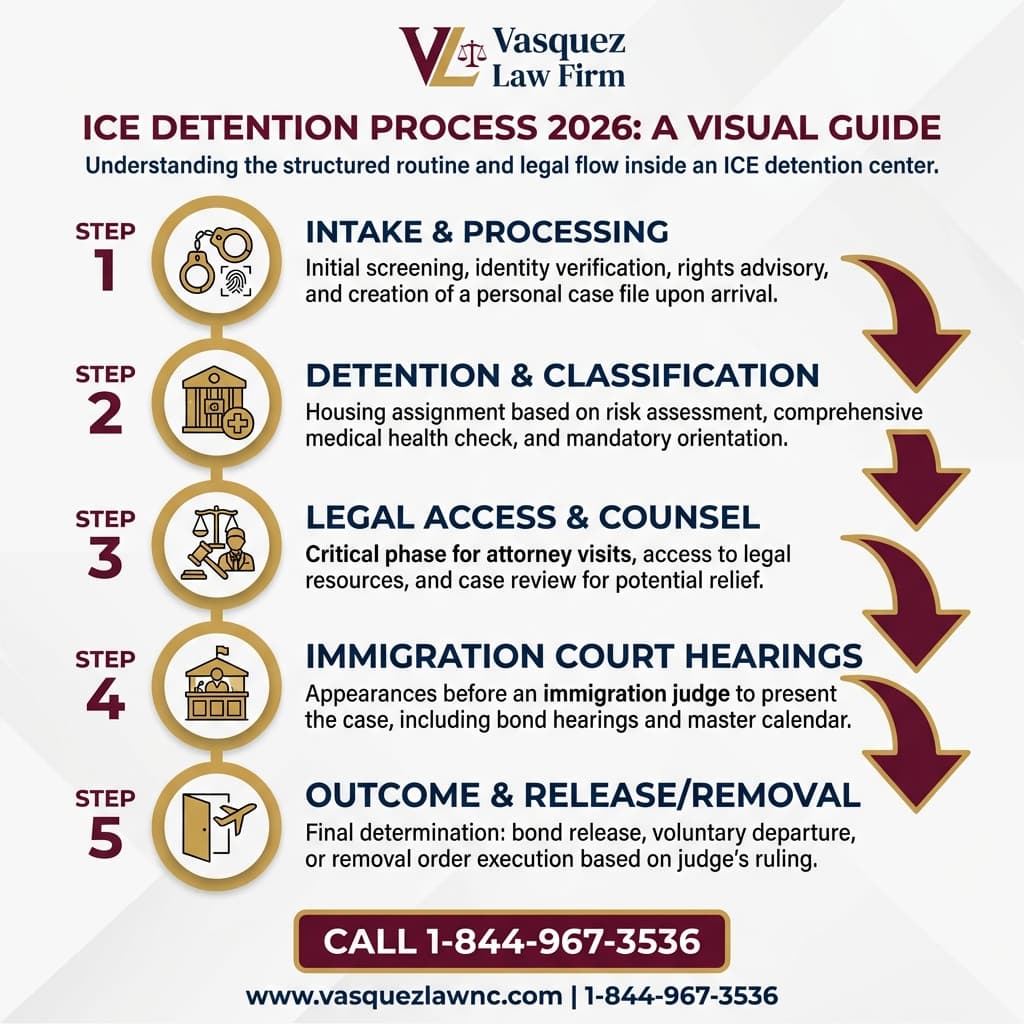
In 2026, ICE detainees at these centers experience a structured routine of intake screenings, medical assessments, and rights advisements. Detention centers must comply with federal detention standards describing humane treatment, adequate food, and healthcare access. However, detainees and advocates report varying conditions among facilities.
The Role of Detention Facilities
Detention centers serve as temporary housing for individuals suspected of violating immigration laws. These facilities provide a secure environment while ICE moves cases through the immigration court system. Detained individuals may be asylum seekers, DACA holders, or others caught in immigration enforcement actions.
ICE’s Enforcement and Removal Operations
ICE’s enforcement operation targets individuals who may be deportable due to criminal records, visa overstays, or other reasons. While ICE’s mission is to protect the homeland through immigration enforcement, detainees retain rights under law including access to counsel and due process. Knowing this balance is critical for anyone facing detention.
Step-by-Step Process after Detention
- Apprehension and Transport: After arrest, ICE transports detainees to local detention centers, often in or near Orlando.
- Initial Intake: Medical screening, fingerprinting, and notification of rights happen quickly after arrival.
- Bond Hearing Eligibility: Within days or weeks, detainees may request a bond hearing to seek release while their case proceeds.
- Immigration Court Proceedings: Detained individuals attend removal hearings where they can present defenses or seek relief.
- Decision and Possible Release: Immigration judges or ICE officers decide on removal, release, or continued detention.
Importance of Legal Representation
An attorney can help navigate hearings, file important motions, and inform detainees of their rights. Detainees with legal help have better chances of release or successful defense.
Communication while Detained
Detained individuals can contact family and attorneys but may face challenges like limited phone access or language barriers. It is vital to establish reliable communication early.
Important Documents and Evidence
- Proof of identity (passport, ID cards)
- Immigration papers (visas, work permits, DACA approval notices)
- Evidence of continuous residence (leases, utility bills, affidavits)
- Criminal records and court documents
- Medical records showing health conditions
- Contact information for attorneys and family
- Personal statements or affidavits supporting relief claims
Having these documents ready can speed up bond hearings and strengthen defense arguments.
Timeline: What to Expect in Detention
- Week 1: Detention and intake processing
- Week 2-3: Bond hearing requests and potential release
- Month 1-3: Immigration court hearings begin, possible bond negotiations
- Month 3-6: Hearings continue; motions and appeals may be filed
- After 6 months: Possible final decision, removal, or release on parole
This schedule varies widely by case and facility. Early legal action may shorten detention length.
Costs and Fees You Should Know
- Attorney fees vary but can range from $3,000 to $10,000 depending on case complexity.
- Some bonds require amounts from $1,500 to $15,000 or more.
- Additional costs include application fees for immigration relief and travel expenses.
- Legal aid organizations may offer reduced-fee or pro bono services.
- Delays in retaining counsel can increase costs due to prolonged detention.
Consulting with Vasquez Law Firm early can clarify costs and payment plans to fit your situation.
Common Mistakes to Avoid in Detention Cases
- Delaying legal representation: Early counsel is vital to avoid rights violations.
- Not keeping records: Failing to collect or organize documents weakens cases.
- Missing bond hearings: Not attending hearings can prevent release opportunities.
- Ignoring communication limits: Failure to maintain contact with lawyers harms defense.
- Failing to understand rights: Detainees often waive their rights unknowingly without counsel.
- Assuming detention equals deportation: Many detainees win relief with proper legal help.
- Trusting unlicensed representatives: Use only qualified immigration attorneys.
If you only remember one thing: Get an experienced immigration attorney immediately after detention.
Federal and Local Jurisdiction Notes
North Carolina Notes
North Carolina has no ICE detention centers like Florida, but detainees may be transferred here for removal hearings. Local lawyers help coordinate legal defense and bond cases. Vasquez Law Firm serves NC clients with strong knowledge of how federal and state laws intersect.
Florida Notes
Florida hosts many ICE detention facilities including near Orlando. Detention conditions and release procedures follow federal standards, but local judges and attorneys influence cases. Florida's diverse immigrant population means specialized knowledge helps navigate these systems.
Nationwide Concepts (General Only)
ICE detention and removal laws apply nationwide per Title 8, United States Code. Detention standards come from federal regulations under 8 CFR Part 236. Every state faces increasing enforcement but policies and facility types differ regionally. Always consult local attorneys to understand nuances.
When To Call an Immigration Lawyer Now
- Immediate detention by ICE or Border Patrol
- Receiving a Notice to Appear (NTA) for removal court
- Critical bond hearing upcoming
- Issues with accessing legal counsel in detention
- Medical emergencies while detained
- Concerns about deportation or asylum claims
- ICE warning letters or interviews scheduled
- Family separation or vulnerable status like DACA
About Vasquez Law Firm
At Vasquez Law Firm, we combine compassion with aggressive representation. Our motto "Yo Peleo" (I Fight) reflects our commitment to standing up for your rights.
- Bilingual Support: Se Habla Español - our team is fully bilingual
- Service Areas: North Carolina, Florida, and nationwide immigration services
- Experience: Over 15 years helping clients navigate complex legal matters
- Results: Thousands of successful cases across multiple practice areas
Attorney Trust and Experience
Attorney Vasquez holds a Juris Doctor degree and is admitted to practice in both the North Carolina State Bar and Florida Bar. With over 15 years of dedicated legal experience, he has built a reputation for providing personalized attention and achieving favorable outcomes for his clients.
Don't wait to get the help you deserve. Call us now for immediate assistance. Se Habla Español.
Frequently Asked Questions
What is an ICE migrant detention center?
An ICE migrant detention center is a place where individuals suspected of immigration violations are held during removal proceedings. These centers provide housing and process detainees while their cases are reviewed. Facilities near Orlando follow federal standards but conditions may vary.
What rights do detainees have at ICE detention centers?
Detainees have rights including access to legal counsel, healthcare, and humane treatment. While detained, they can communicate with attorneys and family. Knowing and asserting these rights is crucial to protect your immigration status.
How long can someone be held in an ICE detention center?
Detention length varies based on individual cases and court availability. Some may be detained for weeks; others for months. Prompt legal action can help minimize detention time.
Can detained Dreamers get legal help?
Yes. Dreamers have the right to legal representation during detention. Attorneys help with bond hearings and defending immigration status to seek possible release or relief from removal.
What should I do if a family member is detained at an ICE center in Orlando?
Locate the detention facility using ICE resources, then contact an immigration lawyer immediately. Gather necessary documents and stay in regular contact to support their case.
Are ICE detention centers safe during the COVID-19 pandemic?
ICE has implemented safety protocols, but detention centers remain high-risk environments. Legal counsel can assist in ensuring detainees get proper medical care and protection.
How does ICE decide who to detain and release?
ICE considers criminal history, flight risk, and immigration status to determine detention or release. Legal representation can help present these factors for bond eligibility.
What are the alternatives to detention?
Alternatives include bond, parole, or supervised release programs that allow detainees to live in the community while their cases proceed. Eligibility varies and requires legal advice.
Sources and References
- U.S. Citizenship and Immigration Services
- Executive Office for Immigration Review
- U.S. Department of Homeland Security Immigration Enforcement
Facing immigration issues in Orlando? Our Orlando immigration lawyers can review your case.
Take the first step toward justice today. Our team is standing by to help. Se Habla Español.
Start Your Free Case Evaluation Now
Call us: 1-844-967-3536
Se Habla Español - Estamos aquí para ayudarle.


William Vasquez
Founder & CEO, Vasquez Law Firm, PLLC
William Vasquez is the founder and CEO of Vasquez Law Firm, PLLC, a results-driven firm specializing in immigration, criminal defense, personal injury, and workers' compensation. A U.S. Air Force veteran and recipient of the Joint Service Achievement Medal, William is dedicated to fiercely fighting for his clients' rights.
Related Legal Services
Need legal help? Learn more about experienced immigration attorneys in Charlotte, or contact us for a free evaluation.
You can also visit NC immigration legal help for more information.
![Immigration Detention Cases Decline: Essential Update [2026]](/_next/image?url=https%3A%2F%2Fvuuyorlsmhunqektprqy.supabase.co%2Fstorage%2Fv1%2Fobject%2Fpublic%2Fblogs%2Fimmigration-header-1773344968243.png&w=1920&q=75)
![Immigration Detention Cases Decline: Updated Guide [2026]](/_next/image?url=https%3A%2F%2Fvuuyorlsmhunqektprqy.supabase.co%2Fstorage%2Fv1%2Fobject%2Fpublic%2Fblogs%2Fimmigration-header-1782501491294.png&w=1920&q=75)
