What Happens to Immigrant Truckers in Orlando in 2026?
Learn what immigrant truckers in Orlando face in 2026. Get helpful insights and contact Vasquez Law Firm for a free consultation today.
Published on March 12, 2026
Talk to an immigration attorney
Free call. A clear plan for your case.
Free & confidential · Se habla espanol · 24/7
Have questions? Talk to an attorney - free evaluation.
Call 1-844-967-3536Worried how the latest immigration news affects you?
Schedule a confidential case review with an immigration attorney - know exactly where you stand.
USCIS Case Status
Check your USCIS case status
Enter your receipt number and get the official status. Free, no registration.
What Happens to Immigrant Truckers in Orlando in 2026?
Immigrant truckers play a critical role in keeping America's goods moving, particularly in Orlando and across Florida. In 2026, these drivers face unique legal challenges regarding immigration status, employment rights, and compliance with trucking regulations. Understanding how immigration laws impact immigrant truckers can help you protect your rights and opportunities. This article outlines the key legal facts, steps to take, and common mistakes immigrant truckers should avoid in Florida today. Vasquez Law Firm is ready to support you with compassionate bilingual representation to navigate these challenges.
Need help with your case? Our experienced attorneys are ready to fight for you. Se Habla Español.
Schedule Your Free Case Evaluation
Or call us now: 1-844-967-3536
Quick Answer
Immigrant truckers in Orlando face legal challenges related to immigration status and employment compliance in 2026. They must meet visa and licensing requirements to work legally. Understanding these rules and seeking legal help early can protect their rights and job opportunities.
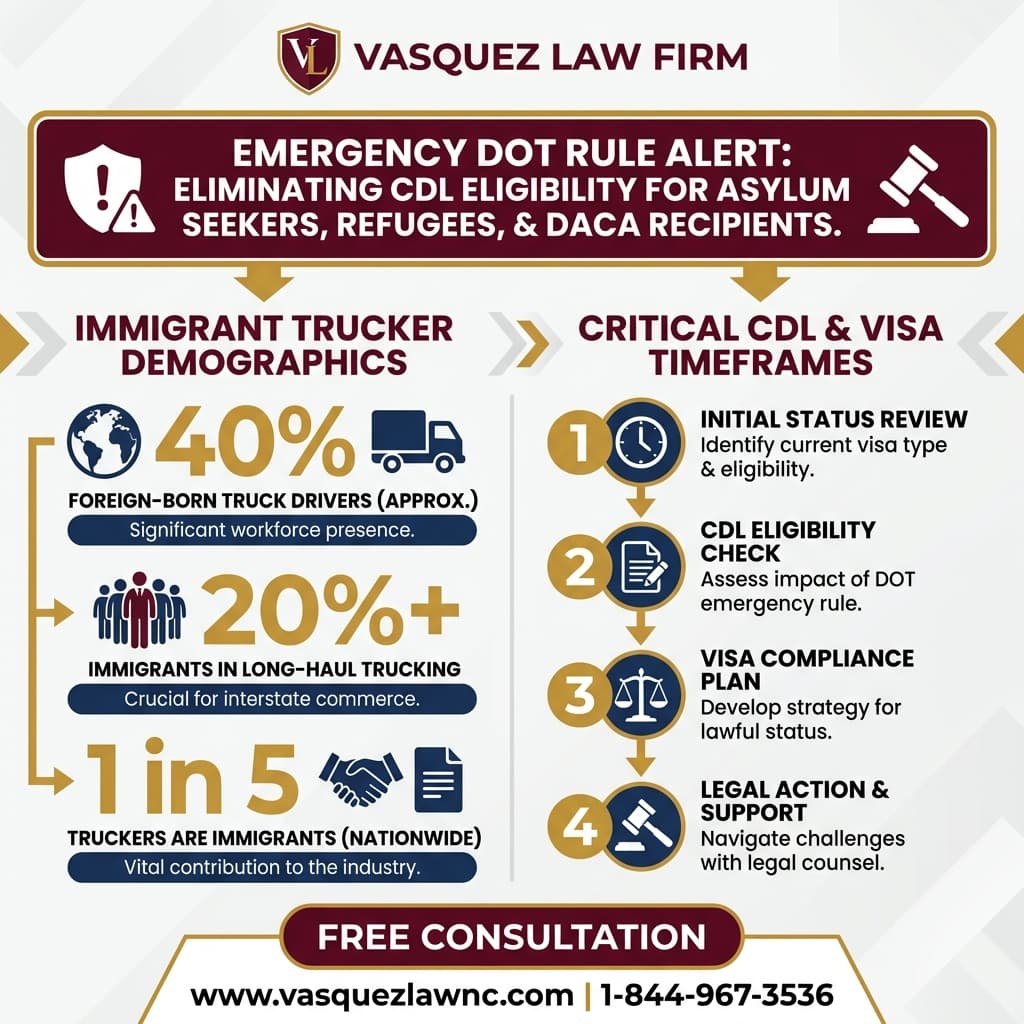
- Approximately 20-25% of U.S. truck drivers are immigrants.
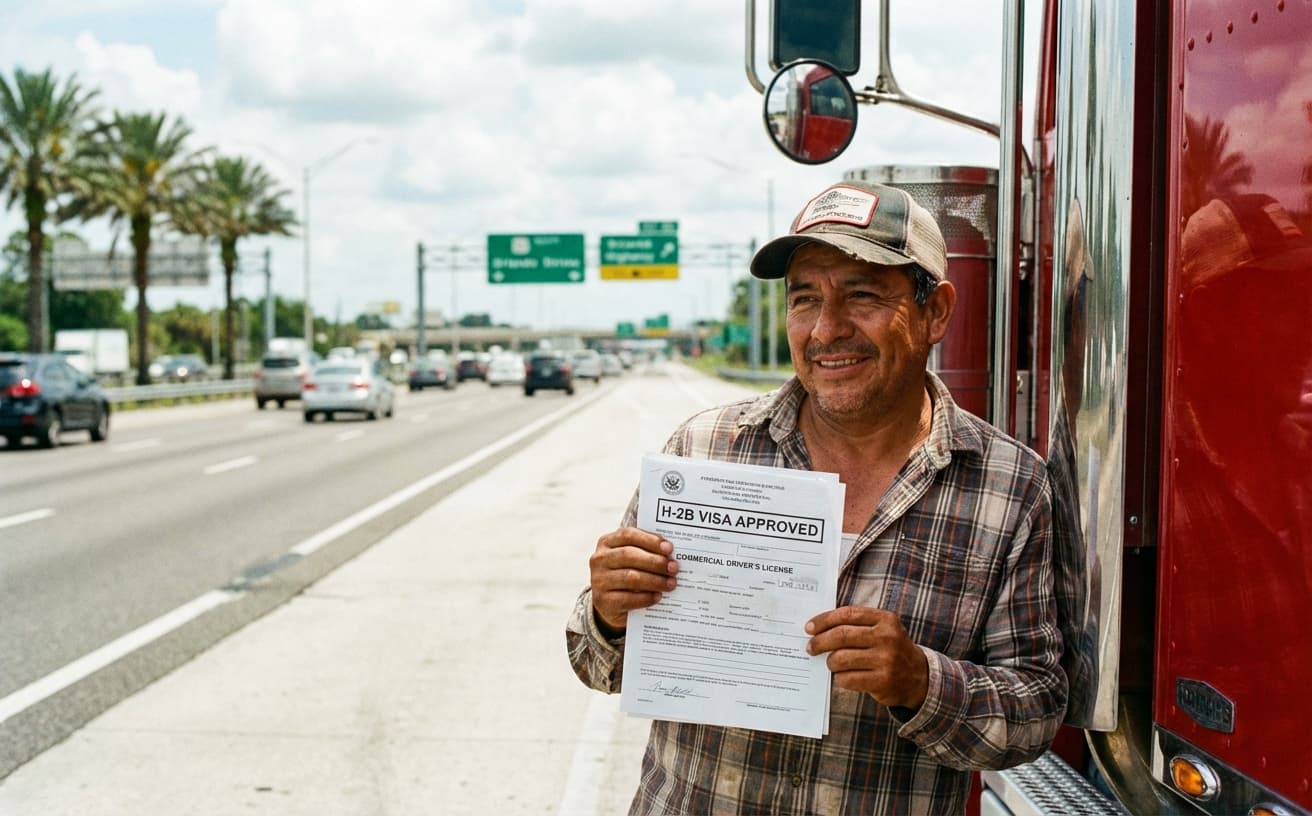
- Visas like H-2B allow temporary work in trucking.
- Drivers must maintain proper documentation and CDL licenses.
- Legal assistance is critical after immigration enforcement actions.
- Orlando immigrant truckers should know their rights and stay compliant.
Understanding Immigrant Truckers in Orlando
In 2026, immigrant truckers make up roughly 20 to 25 percent of the U.S. trucking workforce. In Orlando and across Florida, these workers provide essential contributions to the economy by transporting goods efficiently. However, immigrant truckers often face barriers tied to their immigration status and the regulatory environment.
Immigrant truckers typically hold visas like the H-2B temporary non-agricultural work visa. Others may be navigating paths toward permanent residency or adjusting status based on family or employment petitions. These legal processes require careful documentation and compliance with both immigration and trucking laws.
Employment in trucking demands meeting state licensing requirements, including securing and maintaining a Commercial Driver’s License (CDL). Florida requires a valid CDL and proof of lawful presence for employment eligibility, which can be difficult for immigrant truckers lacking legal status.
Due to tighter immigration enforcement since 2025, immigrant truckers in Orlando may experience increased scrutiny at workplaces, borders, and checkpoints. Immigration arrests or audits disrupt livelihoods and risk deportation for those without proper documentation.
Understanding these challenges helps immigrant truckers seek the right legal protections and comply with state and federal rules to maintain their careers.
Learn more by visiting our immigration services page.
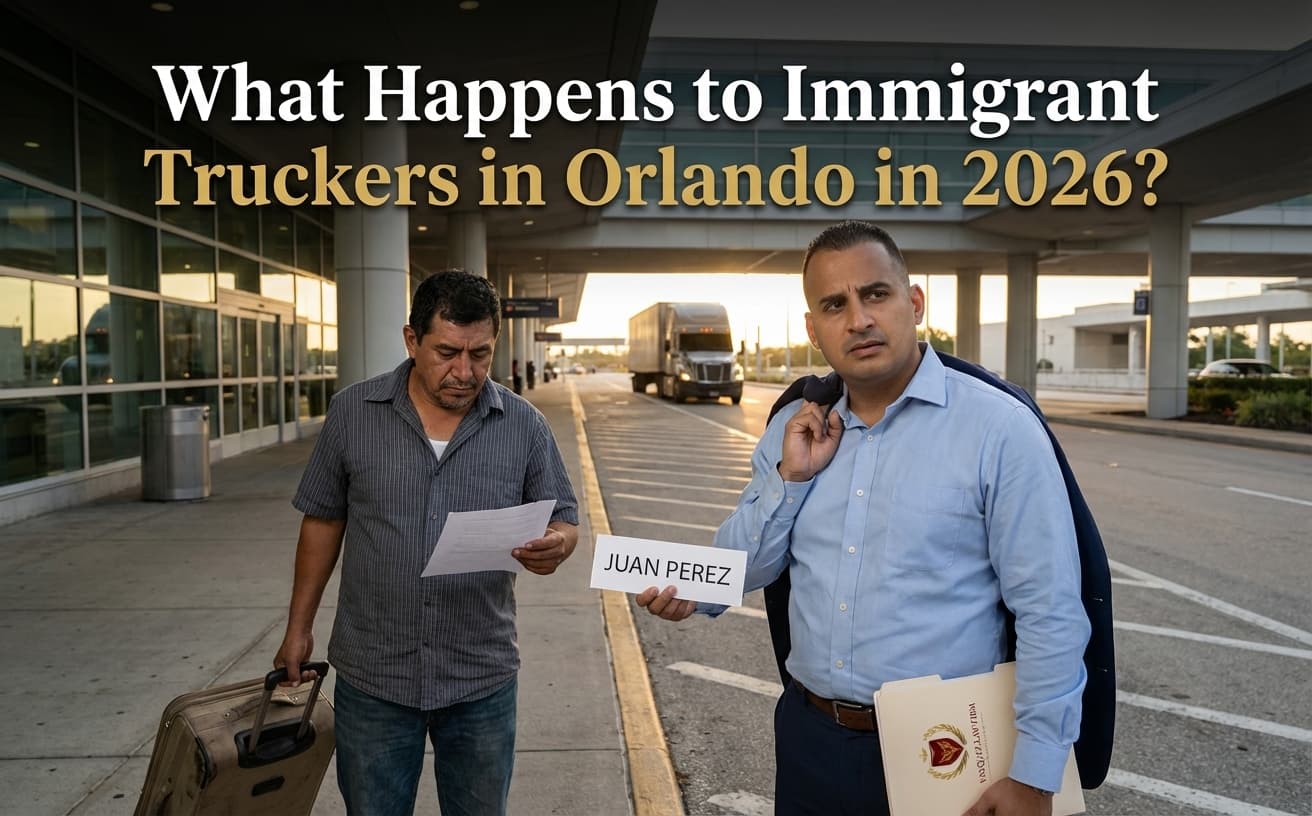
Key Steps for Immigrant Truckers
Immigrant truckers in Orlando need a clear plan to protect their immigration status and right to work. Here are the key steps that can help maintain compliance and reduce risks:
- Verify your visa and work authorization: Make sure your visa status allows you to drive commercially and renew documents before expiration. H-2B visas require employers to file renewals.
- Maintain a valid CDL: Stay current with licensing requirements, medical certifications, and any ongoing testing Florida mandates.
- Keep accurate and updated documentation: This includes employment verification forms (Form I-9), visa paperwork, and any correspondence with USCIS or immigration authorities.
- Understand your rights: Know what to do if law enforcement or immigration agents question you or your employer.
- Consult an immigration attorney early: If you face enforcement actions or need to adjust your immigration status, professional legal guidance can make a huge difference.
- Report any changes to your immigration status or employment: Failing to update your information can result in legal complications down the line.
Attorney Vasquez has successfully advised immigrant truckers on these steps and can help evaluate your unique situation. Visit his bio page for details.
Documents and Requirements for Truck Driving
Before immigrant truckers can legally drive commercially in Orlando, they must satisfy documentation and licensing requirements specific to Florida and federal law. These requirements include:
- Commercial Driver’s License (CDL): The CDL is mandatory and requires passing knowledge and skills tests, along with medical certification. Florida follows Federal Motor Carrier Safety Administration (FMCSA) regulations.
- Proof of Lawful Presence: Under Florida law, drivers must provide evidence of lawful presence in the U.S. to obtain or renew CDLs.
- Employment Verification (Form I-9): Employers must verify driver eligibility for work. Immigrant truckers must produce valid immigration documents like Employment Authorization Documents (EAD) or visas.
- Medical Certificates: Drivers must have up-to-date medical exams confirming fitness to drive commercial vehicles.
- Visa or Immigration Documentation: Such as H-2B visa paperwork, I-94 arrival records, or pending adjustment status documents.
Failing to maintain these documents can lead to employment termination or immigration consequences. Asking for help early can clarify requirements and ensure ongoing compliance.
Learn more about the legal documents needed at the USCIS official guidelines.
Common Legal Mistakes and How to Avoid Them
- Ignoring visa expiration: Letting your visa expire can lead to unlawful status. Renew on time or seek help to adjust status.
- Driving without a valid CDL: Some immigrant truckers drive illegally without renewing or obtaining CDLs. Never risk unlicensed driving.
- Failing to verify employers: Working for unverified companies puts your employment in jeopardy; always ensure your employer properly processes work documents.
- Not responding to immigration notices: Missing deadlines for document requests or hearings can cause deportation orders.
- Not knowing rights during enforcement: Being unaware of legal protections when faced with immigration raids can worsen outcomes.
- Relying on informal advice: Avoid relying on friends or unlicensed consultants for legal matters. Consult a qualified attorney like Attorney Vasquez.
- Failing to document employment history: Accurate records help with applications for status adjustments and prove work eligibility.
If you only remember one thing: Maintaining legal status and compliance with employment documents is critical for immigrant truckers to avoid breaks in work and immigration issues.
Timeline and What to Expect
- Initial visa application: Depending on visa type, processing can take 3 to 6 months or longer.
- CDL preparation and testing: Usually takes 1 to 3 months of training and testing.
- Visa renewals or extensions: Must be filed with USCIS or Department of State before current documents expire, typically 60 days in advance.
- Adjustment of status petitions: Can take 6 to 12 months or longer with USCIS processing times as of 2026.
- Immigration court proceedings: If removal proceedings begin, timelines vary widely, sometimes stretching over a year.
Early preparation and legal assistance speed up processes and improve outcomes. Immigration and employment laws change frequently, so staying informed matters.
When to Call an Immigration Lawyer
- You receive a Notice to Appear or immigration court summons.
- Your work visa is expiring soon without a clear renewal path.
- You face a workplace audit or questioning by immigration enforcement.
- You want to apply for adjustment of status to gain permanent residency.
- You are unsure about proper document filing or eligibility.
- Your employer fails to properly process your immigration paperwork.
- You have been detained or arrested by ICE at the workplace.
- You need legal help applying for work authorization or visas.
- You want to understand your rights under state and federal trucking laws.
Contacting Attorney Vasquez early can help preserve your rights and employment opportunities. Visit our contact page to schedule a free case evaluation.
About Vasquez Law Firm
At Vasquez Law Firm, we combine compassion with aggressive representation. Our motto "Yo Peleo" (I Fight) reflects our commitment to standing up for your rights.
- Bilingual Support: Se Habla Español - our team is fully bilingual
- Service Areas: North Carolina, Florida, and nationwide immigration services
- Experience: Over 15 years helping clients navigate complex legal matters
- Results: Thousands of successful cases across multiple practice areas
Attorney Trust and Experience
Attorney Vasquez holds a Juris Doctor degree and is admitted to practice in both the North Carolina State Bar and Florida Bar. With over 15 years of dedicated legal experience, he has built a reputation for providing personalized attention and achieving favorable outcomes for his clients.
Don't wait to get the help you deserve. Call us now for immediate assistance. Se Habla Español.
Frequently Asked Questions
What percentage of U.S. truck drivers are immigrants?
About 20% to 25% of truck drivers in the U.S. are immigrants, particularly in Florida and North Carolina. These drivers help fill labor gaps, making immigration status important to maintain legal employment in 2026.
Why are so many foreigners truck drivers in the U.S.?
Foreigners often become truck drivers due to steady demand and the opportunity to earn. The U.S. trucking industry faces shortages, so immigrant truckers play a vital role, but must meet legal requirements.
Can I immigrate to the USA as a truck driver?
Yes, but you need appropriate visas such as H-2B or employer sponsorship. Visa eligibility involves specific criteria; legal advice helps you understand your options.
What is the 60 70 rule in trucking?
The 60/70 rule limits truck drivers’ hours of service. Drivers can drive up to 11 hours in a 14-hour work day, ensuring safety and compliance with FMCSA regulations.
What visas can immigrant truckers use to work legally?
H-2B temporary work visas and employment-based visas like H-1B are common. Permanent residency options also exist, depending on qualifications and employer support.
How does immigration enforcement affect immigrant truckers?
Enforcement actions can include workplace audits or arrests. Drivers without proper documentation risk detention or deportation, making legal support critical.
What documents are required to drive commercially in Florida?
You must have a valid CDL, proof of lawful immigration status, employment verification, and medical certification to drive commercially in Florida legally.
Can immigrant truckers adjust their status while working in the U.S.?
Those who entered lawfully and meet eligibility can apply for adjustment of status for permanent residency, but the process requires legal guidance and meeting strict conditions.
Sources and References
- U.S. Citizenship and Immigration Services (USCIS)
- U.S. Department of State Visas
- Executive Office for Immigration Review
Take the first step toward justice today. Our team is standing by to help. Se Habla Español.
Start Your Free Case Evaluation Now
Call us: 1-844-967-3536
Se Habla Español - Estamos aquí para ayudarle.

William Vasquez
Founder & CEO, Vasquez Law Firm, PLLC
William Vasquez is the founder and CEO of Vasquez Law Firm, PLLC, a results-driven firm specializing in immigration, criminal defense, personal injury, and workers' compensation. A U.S. Air Force veteran and recipient of the Joint Service Achievement Medal, William is dedicated to fiercely fighting for his clients' rights.
Related Legal Services
Need legal help? Learn more about our immigration law practice, or contact us for a free evaluation.
You can also visit our NC immigration team for more information.