What Are ICE Practices in 2026? Your Rights & What to Expect
Understand ICE practices and your rights as an immigrant in 2026. Learn what to expect during encounters and how to protect yourself. Contact Vasquez Law for help.
Published on March 11, 2026
Talk to an immigration attorney
Free call. A clear plan for your case.
Free & confidential · Se habla espanol · 24/7

Have questions? Talk to an attorney - free evaluation.
Call 1-844-967-3536Worried how the latest immigration news affects you?
Schedule a confidential case review with an immigration attorney - know exactly where you stand.
What Are ICE Practices in 2026? Your Rights & What to Expect
Understanding current ICE practices is crucial for immigrants and their families in 2026. Recent court decisions, like the one where a judge declined to halt certain ICE operations despite allegations of racial bias, underscore the importance of knowing your rights. Whether you are in North Carolina, Florida, or anywhere else in the U.S., interactions with U.S. Immigration and Customs Enforcement (ICE) can be intimidating and confusing. This guide breaks down what ICE is legally allowed to do, how to assert your rights, and what steps you can take to protect yourself and your loved ones. Knowing these details can make a significant difference in the outcome of an encounter with immigration enforcement.
Need help with your immigration case? Our experienced attorneys are ready to fight for you. Se Habla Español.
Schedule Your Free Case Evaluation
Or call us now: 1-844-967-3536
Quick Answer
ICE practices in 2026 involve enforcement of federal immigration laws, including arrests, detentions, and deportations. Agents generally require a warrant signed by a judge to enter a home without consent. You have the right to remain silent, not open your door without a warrant, and request an attorney. Always carry documents, but do not lie or present false information to agents.
- Do not open your door to ICE without a judicial warrant.
- Assert your right to remain silent and refuse to answer questions.
- Do not sign anything without consulting an immigration attorney.
- Request to speak with an attorney immediately upon arrest.
- Memorize or carry the phone number of an immigration lawyer.
Understanding Current ICE Practices and Authority in 2026
U.S. Immigration and Customs Enforcement (ICE) operates under the Department of Homeland Security (DHS) to enforce federal immigration laws. In 2026, their authority spans a broad range of activities, from border enforcement and interior removals to combating human trafficking and drug smuggling. The scope of ICE practices often becomes a point of concern for immigrant communities due to the significant impact these actions can have on individuals and families.
For example, a recent federal court decision highlighted ongoing debates about the legality and fairness of certain ICE operations, specifically regarding allegations of racial bias. This ruling, while not stopping the practices, emphasizes the need for individuals to be fully aware of their rights during any encounter. ICE agents are legally empowered to question individuals about their immigration status, but there are strict limits to what they can do without proper legal authorization, such as a warrant.
It is important to distinguish between different types of warrants. A warrant for arrest issued by an ICE officer, often called an administrative warrant, is not the same as a search warrant signed by a federal judge. Only a judicial warrant allows ICE agents to forcibly enter a private residence without the occupant's consent. Understanding this distinction is fundamental to protecting your rights and property during an encounter with immigration enforcement.
Your Rights During an ICE Encounter: What You Need to Know
Knowing your rights is your strongest defense when encountering ICE agents. Many individuals feel overwhelmed and unsure how to respond, leading to actions that might inadvertently harm their immigration case. In 2026, these rights remain federally protected, regardless of your immigration status.
One of the most critical rights is the right to remain silent. You are not required to answer questions about your immigration status, nationality, or how you entered the country. Simply state, "I choose to remain silent." This protects you from inadvertently providing information that could be used against you. Remember, anything you say can be used as evidence in immigration proceedings.
Furthermore, you have the right to speak with an attorney. If ICE agents attempt to question you or ask you to sign any documents, you can state, "I want to speak with my lawyer." It is crucial not to sign anything without legal counsel, as these documents could waive important rights or lead to voluntary deportation. Seeking legal guidance from an immigration attorney is always recommended to ensure your best interests are protected.
Can You Sue ICE for Detaining a Citizen?
The question of whether a U.S. citizen can sue ICE for wrongful detention is a complex one, but the short answer is yes, in certain circumstances. U.S. citizens are protected from unlawful detention under the Fourth and Fifth Amendments of the U.S. Constitution. If a U.S. citizen is mistakenly detained by ICE, they may have grounds to file a lawsuit for civil rights violations, false imprisonment, or other claims.
However, pursuing such a case is challenging and requires strong evidence that ICE agents acted without reasonable suspicion or probable cause, or that they ignored clear evidence of citizenship. These cases often involve significant legal hurdles, including qualified immunity for government officials, which protects agents from liability unless their actions clearly violated established constitutional rights. Consulting an attorney experienced in civil rights and immigration law is essential for anyone considering this path.
What to Do When ICE is at Your Door: A Step-by-Step Guide
An ICE presence at your home can be terrifying, but understanding the proper steps can empower you and protect your family. First and foremost, do not open your door unless agents present a judicial warrant signed by a judge. An administrative warrant, often called a Form I-200 or I-205, is not sufficient for forced entry into a private residence without consent.
If agents claim to have a warrant, ask them to slide it under the door or hold it up to a window for you to inspect. Carefully examine the document. Look for a judge's signature and your correct name and address. If it is a judicial warrant, you may have to allow them entry. Otherwise, you can keep your door closed and state, "I do not consent to a search or entry without a judicial warrant."
Even if agents enter with a judicial warrant, you still have rights. Do not resist physically, but clearly state that you do not consent to any searches beyond what the warrant specifies. Remain silent and do not answer questions. Immediately try to contact an attorney, and if possible, document the encounter by writing down details or having a trusted person record it from a safe distance.
ICE Arrests in Charlotte, NC and Florida
ICE operations and arrests occur regularly across North Carolina, including in cities like Charlotte, and throughout Florida. These operations often target individuals with prior deportation orders, criminal records, or those who have overstayed their visas. In Charlotte, ICE works closely with local law enforcement through various programs, though specific cooperation levels can vary based on local policies. Similarly, in Florida, ICE maintains a significant presence, conducting enforcement actions in both urban and rural areas.
For individuals in these states, it is crucial to understand that an arrest by ICE can lead to detention and deportation proceedings. Knowing your rights, such as the right to legal counsel and the right to remain silent, is paramount. If you or a loved one is arrested by ICE in North Carolina or Florida, immediately seek legal representation from an immigration attorney familiar with local practices and federal immigration law. Vasquez Law Firm has extensive experience helping clients in both states navigate these challenging situations.
Common Mistakes to Avoid During ICE Encounters
Many individuals make critical errors during an ICE encounter that can severely jeopardize their immigration case. Avoiding these pitfalls is essential for protecting your rights and increasing your chances of a favorable outcome. Being prepared and informed can prevent these common mistakes.
- Opening the Door Without a Judicial Warrant: This is a frequent mistake. Always demand to see a judicial warrant signed by a judge before opening your door. An administrative warrant (Form I-200 or I-205) does not authorize forced entry into a home.
- Answering Questions About Immigration Status: You have the right to remain silent. Do not answer questions about where you were born, how you entered the U.S., or your immigration status. Simply state, "I choose to remain silent."
- Signing Documents Without Legal Counsel: Never sign anything presented by an ICE agent without first reviewing it with an immigration attorney. You could inadvertently waive your rights or agree to voluntary departure.
- Providing False Information: Lying to a federal agent can lead to serious criminal charges and negatively impact any future immigration relief. Always be truthful, or assert your right to remain silent.
- Resisting Arrest Physically: While you can assert your rights verbally, physically resisting an arrest can lead to additional criminal charges and make your situation significantly worse. Do not physically resist.
- Not Documenting the Encounter: If safe to do so, try to document the encounter. Write down agent badge numbers, vehicle descriptions, and details of what happened. If possible, have a witness record the interaction from a safe distance.
- Not Contacting an Attorney Immediately: The moment you or a loved one is detained or arrested, contact an immigration attorney. Early legal intervention can make a substantial difference in the outcome of your case.
If you only remember one thing: Do not open your door to ICE without a judicial warrant and do not answer questions without an attorney present. These two actions are your strongest protections.
Don't face your legal challenges alone. Our team is here to help you every step of the way.
Call today: 1-844-967-3536 | Se Habla Español
ICE Policies Nationwide: What Immigrants Should Know in 2026
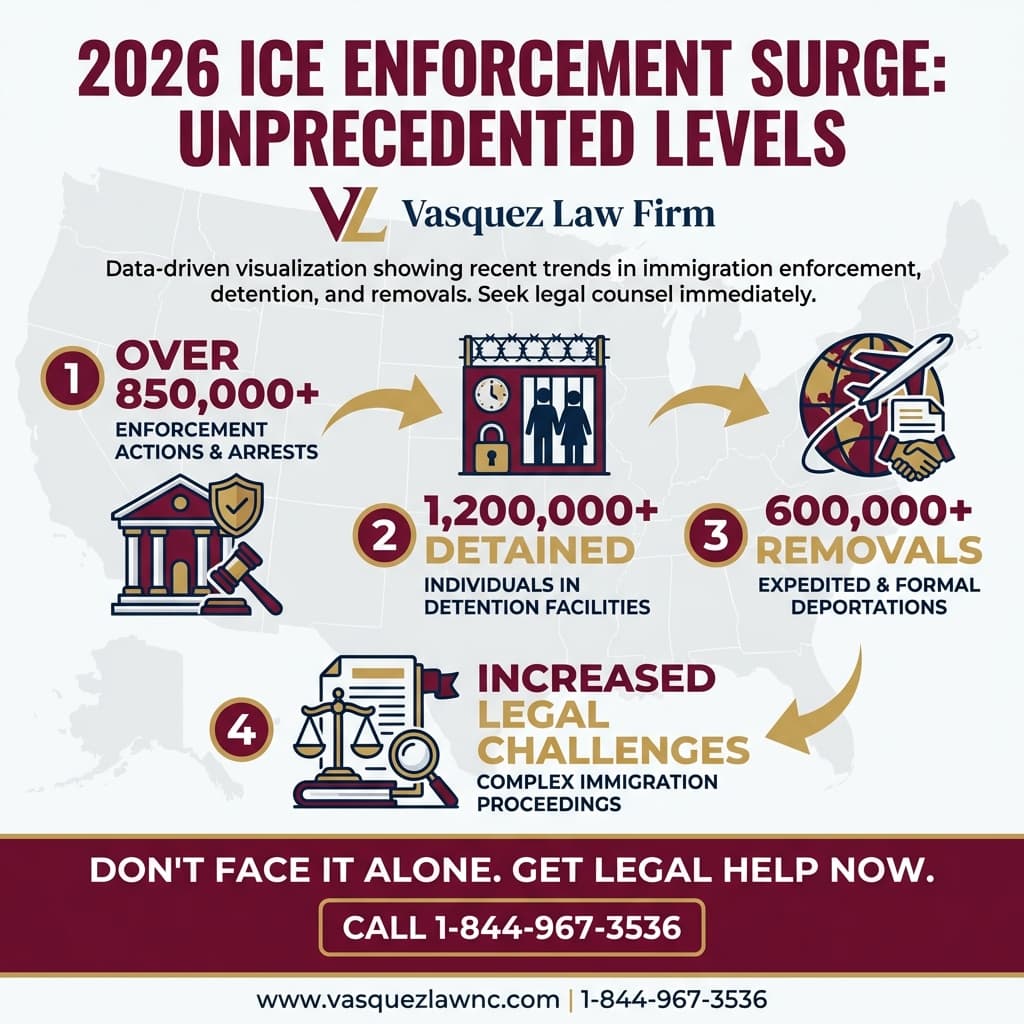
ICE enforcement policies can evolve, influenced by federal administrations and court rulings. As of 2026, the agency continues to prioritize individuals who pose a national security risk, public safety threat, or border security threat. However, the interpretation and application of these priorities can sometimes be broad, impacting a wider range of individuals than initially intended. For instance, individuals with minor criminal offenses or even civil immigration violations may still find themselves subject to enforcement actions.
One key aspect of current ICE practices nationwide involves targeted operations, often based on intelligence gathering or collaboration with local law enforcement. These operations can occur in workplaces, homes, or public spaces. While ICE has discretion in whom they target, their actions must still comply with constitutional protections. For example, the Fourth Amendment protects against unreasonable searches and seizures, meaning ICE generally needs a warrant or probable cause to conduct searches or arrests.
Understanding the current enforcement landscape means being aware of both federal directives and how they are implemented on the ground. For example, some jurisdictions have policies limiting local law enforcement cooperation with ICE, while others may have agreements that facilitate such cooperation. Being informed about these nuances, and having a plan, is vital for immigrant communities across the U.S.
For more details on specific policies and their impact, individuals can refer to official government resources such as the U.S. Citizenship and Immigration Services (USCIS) website or the Executive Office for Immigration Review (EOIR) for court-related information. These resources provide up-to-date information on immigration laws and processes that govern ICE practices.
When to Call an Immigration Lawyer Now
The time to contact an immigration lawyer is often before an emergency arises, but certain situations demand immediate legal attention. Delaying legal counsel can have severe and irreversible consequences for your immigration case. If any of the following scenarios apply to you or a loved one, it is critical to seek professional legal help without delay.
- You or a family member have been arrested or detained by ICE.
- ICE agents have visited your home or workplace.
- You have received a Notice to Appear (NTA) in immigration court.
- You are facing deportation or removal proceedings.
- You have an existing deportation order against you.
- You are a U.S. citizen or legal permanent resident and have been mistakenly detained by ICE.
- You believe your rights have been violated by ICE agents.
- You need to understand your options for immigration relief or defense.
- You are preparing for an interview with immigration officials.
- You want to develop an emergency plan for your family in case of an ICE encounter.
An experienced immigration attorney can provide crucial guidance, represent you in court, and protect your rights throughout the complex immigration process. Contact Vasquez Law Firm for immediate assistance.
About Vasquez Law Firm
At Vasquez Law Firm, we combine compassion with aggressive representation. Our motto "Yo Peleo" (I Fight) reflects our commitment to standing up for your rights. With offices serving North Carolina and Florida, we are dedicated to providing personalized and effective legal solutions for immigrants and their families across the nation.
- Bilingual Support: Se Habla Español - our team is fully bilingual and ready to assist you in your preferred language.
- Service Areas: We proudly serve clients in North Carolina, Florida, and offer nationwide immigration services, understanding the unique challenges faced in different regions.
- Experience: Attorney Vasquez brings over 15 years of dedicated experience, successfully navigating complex immigration, personal injury, and criminal defense cases.
- Results: Our firm has a proven track record of achieving favorable outcomes, helping thousands of clients protect their futures and their families.
Attorney Trust and Experience
Attorney Vasquez holds a Juris Doctor degree and is admitted to practice in both the North Carolina State Bar and Florida Bar. With over 15 years of dedicated legal experience, he has built a reputation for providing personalized attention and achieving favorable outcomes for his clients. He understands the intricacies of immigration law and is committed to fighting tirelessly for justice. His deep understanding of ICE practices and immigration policies ensures that clients receive informed and strategic representation.
Frequently Asked Questions
What is ICE and what is its primary role?
ICE, or U.S. Immigration and Customs Enforcement, is a federal law enforcement agency under the Department of Homeland Security. Its primary role is to enforce federal immigration laws within the United States, including investigating immigration-related crimes, detaining undocumented immigrants, and carrying out deportations. ICE also plays a role in combating human trafficking, drug smuggling, and other transnational criminal activities affecting national security and public safety.
Are ICE agents required to identify themselves?
Yes, ICE agents are generally required to identify themselves and state their purpose when interacting with the public. They should present their badge and credentials. However, they are not always required to inform you of your right to remain silent unless you are under arrest and being interrogated. It is advisable to ask for their identification and badge number if they do not provide it voluntarily, and to write it down for your records.
What is the difference between an administrative warrant and a judicial warrant?
An administrative warrant, often issued on Form I-200 or I-205, is issued by an ICE officer and authorizes the arrest of an individual for an immigration violation. A judicial warrant, however, is issued by a federal judge and authorizes law enforcement, including ICE, to enter a specific property. Only a judicial warrant permits ICE to forcibly enter a private home without the resident's consent. This distinction is critical for protecting your Fourth Amendment rights.
Can I refuse to answer questions from ICE agents?
Yes, you have the right to remain silent and refuse to answer questions from ICE agents. You are not required to discuss your immigration status, country of origin, or how you entered the United States. Simply state clearly, "I choose to remain silent." This right protects you from self-incrimination and from providing information that could potentially be used against you in immigration proceedings.
Should I open my door if ICE is outside my home?
You should not open your door to ICE agents unless they present a judicial warrant signed by a judge. Ask them to slide the warrant under the door or hold it up to a window so you can inspect it. An administrative warrant does not give them permission to enter your home without your consent. You have the right to keep your door closed and deny entry if they do not have a judicial warrant.
What if ICE detains a U.S. citizen by mistake?
If ICE mistakenly detains a U.S. citizen, the individual has constitutional rights against unlawful detention. They should immediately assert their citizenship and demand to speak with an attorney. While challenging, detained citizens may have grounds to sue ICE for civil rights violations, false imprisonment, or other damages. It is crucial to gather evidence and contact an experienced civil rights or immigration attorney promptly to pursue legal action.
Is ICE deporting people with green cards (lawful permanent residents)?
Yes, lawful permanent residents (Green Card holders) can be subject to deportation (removal) if they commit certain crimes, particularly aggravated felonies, or violate other immigration laws. While Green Card holders have more protections than undocumented immigrants, their status is not absolute. They can lose their residency and face deportation, especially if they are deemed inadmissible or deportable under the Immigration and Nationality Act. Legal representation is crucial in such cases.
What nationality is ICE deporting the most in 2026?
Historically, individuals from Mexico and Central American countries (e.g., Honduras, Guatemala, El Salvador) have comprised the largest groups deported by ICE. While specific numbers for 2026 are continually updated, these demographics typically remain consistent due to geographic proximity and migration patterns. However, ICE enforcement priorities can shift, potentially impacting other national groups. Official statistics are published by DHS and EOIR.
What should I do if ICE agents arrest me?
If ICE agents arrest you, remain calm and do not resist physically. Clearly state that you wish to remain silent and want to speak with an attorney immediately. Do not sign any documents without legal counsel. Try to remember or write down the names or badge numbers of the agents, the date, time, and location of your arrest. Contact an immigration lawyer as soon as possible after your arrest.
How can an immigration lawyer help with ICE encounters?
An immigration lawyer can provide invaluable assistance during and after ICE encounters. They can advise you on your rights, communicate with ICE on your behalf, review any documents, and represent you in immigration court. A lawyer can also help assess your eligibility for immigration relief, challenge unlawful detentions, and develop a comprehensive strategy to protect your status and prevent deportation. Early intervention by an attorney is often critical.
Sources and References
- U.S. Citizenship and Immigration Services (USCIS)
- Executive Office for Immigration Review (EOIR)
- 8 U.S. Code § 1229a - Removal proceedings
- 8 U.S. Code § 1357 - Powers of immigration officers
Need immigration help? Our immigration attorneys can review your case.
Ready to take the next step? Contact Vasquez Law Firm today for a free, confidential consultation. We're committed to fighting for your rights and achieving the best possible outcome for your case.
Start Your Free Case Evaluation Now
Call us: 1-844-967-3536
Se Habla Español - Estamos aquí para ayudarle.


William Vasquez
Founder & CEO, Vasquez Law Firm, PLLC
William Vasquez is the founder and CEO of Vasquez Law Firm, PLLC, a results-driven firm specializing in immigration, criminal defense, personal injury, and workers' compensation. A U.S. Air Force veteran and recipient of the Joint Service Achievement Medal, William is dedicated to fiercely fighting for his clients' rights.
Related Legal Services
Need legal help? Learn more about our immigration law practice, or contact us for a free evaluation.
You can also visit immigration lawyers serving all of North Carolina for more information.