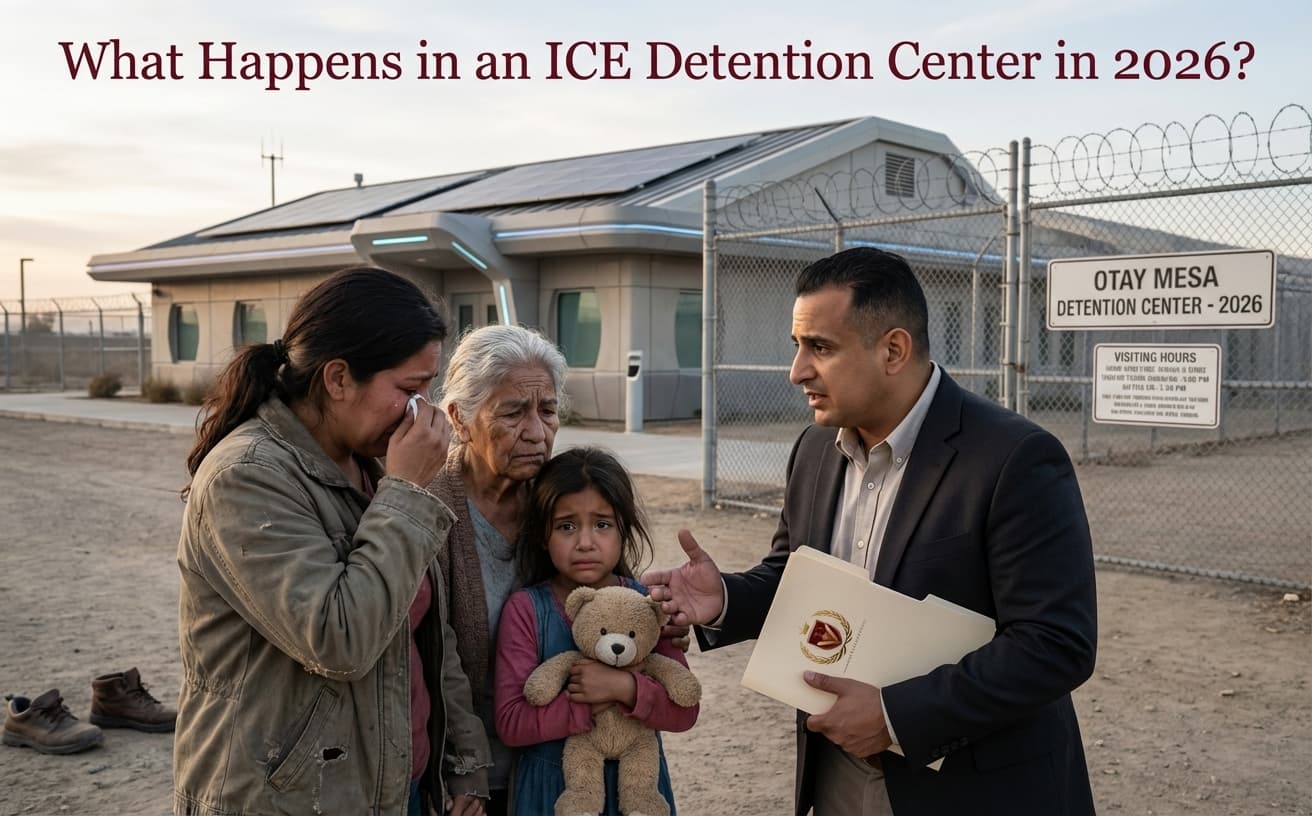
How ICE Abuse Claims Impact Detained Immigrants in 2026
Facing ICE abuse claims? Learn about detained immigrants' rights and how to protect yourself. Contact Vasquez Law Firm for help in 2026.
Published on April 13, 2026
Talk to an immigration attorney
Free call. A clear plan for your case.
Free & confidential · Se habla espanol · 24/7
Have questions? Talk to an attorney - free evaluation.
Call 1-844-967-3536Worried how the latest immigration news affects you?
Schedule a confidential case review with an immigration attorney - know exactly where you stand.
How ICE Abuse Claims Impact Detained Immigrants in 2026
ICE abuse claims involve serious allegations of physical and sexual mistreatment of detained immigrants in immigration detention centers across the country. In 2026, many detained people face challenges reporting abuse at the largest federal facilities. Understanding your rights and how to file a claim can protect you. This article explains the process for detained immigrants in Charlotte, North Carolina, and Florida, highlighting key steps to take if you or a loved one experiences ICE abuse.
Need help with your case? Our experienced attorneys are ready to fight for you. Se Habla Español.
Or call us now: 1-844-967-3536
Quick Answer
ICE abuse claims refer to reports of physical and sexual mistreatment in immigration detention centers. Detained immigrants may face challenges at the largest ICE facilities but have legal rights to report abuse and seek help.
- Report abuse promptly to facility officials or legal representatives
- Gather evidence such as medical records and witness statements
- File complaints through ICE oversight or the Department of Homeland Security Office for Civil Rights
- Seek experienced immigration legal counsel to protect your rights
- Vasquez Law Firm in Charlotte can provide bilingual support and guidance in such cases
Understanding ICE Abuse Claims
In 2026, detained immigrants across the country have continued to file abuse claims against U.S. Immigration and Customs Enforcement (ICE). Reports often detail physical and sexual abuse, neglect, and inhumane conditions at some of the largest immigration detention facilities. For example, the facility in Georgia, which is among the largest in the country, has ongoing allegations of abuse and poor treatment.
Detained people often describe difficulty accessing medical care, threats, and retaliation after reporting mistreatment. These abuses violate federal laws and ICE’s own standards of detention. According to the Executive Office for Immigration Review, these claims may play a crucial role in immigration hearings and detention reviews.
It is important to understand that such abuse claims are serious legal matters that require proper documentation and timely action. The path to justice begins with knowing how to report and document the abuse effectively. Our immigration legal services can help detainees in Charlotte and Florida navigate these challenges.
Physical and Sexual Abuse in Detention Centers
Physical abuse includes actions like excessive force, improper restraints, and physical assault. Sexual abuse ranges from harassment to assault by staff or other detainees. Both forms of abuse severely impact detainees’ rights and dignity.
Many detained immigrants hesitate to report because of fear of retaliation or deportation, yet reporting is a critical step for their protection and legal defense. Evidence such as medical reports and corroborating witness statements strengthens abuse claims.
Legal Protections and Oversight
Federal laws like 8 U.S.C. § 1252 authorize oversight and review of detention conditions and allow individuals to file complaints. ICE must comply with detention standards that prohibit abuse and mandate timely investigations of claims.
Additionally, detained immigrants have the right to seek counsel and access legal information during their detention. The Department of Homeland Security’s Office for Civil Rights and Civil Liberties investigates complaints of physical and sexual abuse at ICE facilities.
Impact of Abuse Claims on Immigration Cases
ICE abuse claims can influence removal proceedings or bond hearings by highlighting unlawful detention conditions. Judges may take such evidence into account when deciding custody or eligibility for relief. Therefore, filing a well-documented abuse claim can improve outcomes for detained people.
Step-by-Step Actions for Detained Immigrants
- Recognize the abuse. Understand what constitutes physical or sexual abuse in detention, including neglect.
- Report immediately. Notify detention center staff or a trusted legal representative about the abuse.
- Document evidence. Collect medical reports, photos of injuries, and witness contact information.
- File a formal complaint. Submit complaints with ICE oversight bodies and the Department of Homeland Security.
- Contact an immigration attorney. Seek experienced legal help to protect your rights and pursue remedies.
Vasquez Law Firm in Charlotte offers bilingual support and knowledgeable guidance for detained immigrants facing abuse claims. Our team understands the urgency to act quickly and carefully document all evidence.
How to Report Abuse at Detention Facilities
Report abuse confidentially to detention officials or through ICE's Detention Reporting and Information Line. If accessible, contact the local ICE Field Office or the Department of Homeland Security Office for Civil Rights.
Role of Legal Representatives
Legal counsel can help draft complaints, advise on gathering evidence, and assist with immigration court presentations. Our immigration attorneys in Charlotte have represented clients with ICE abuse claims and can explain this process during your free evaluation.
Importance of Documenting Abuse Accurately
Timely and detailed documentation is critical. Medical evaluations by trusted providers can corroborate physical injuries. Witness statements may support claims of sexual assault or repeated mistreatment. Keep copies of all paperwork.
Checklist: Documents and Evidence to Gather
- Medical records and doctor’s reports detailing physical or sexual injuries.
- Photographs of visible injuries or unsafe conditions within the detention center.
- Names and contact information of witnesses or fellow detainees who saw the abuse.
- Written logs of incidents describing dates, times, and descriptions of abuse.
- Official complaint filings or correspondence with ICE or the Department of Homeland Security.
- Any video or audio recordings documenting incidents, if available.
- Identification documents and immigration court notices.
Gathering evidence may be difficult in detention, but even partial documentation helps build a strong case. Reach out to legal counsel for help assembling this information.
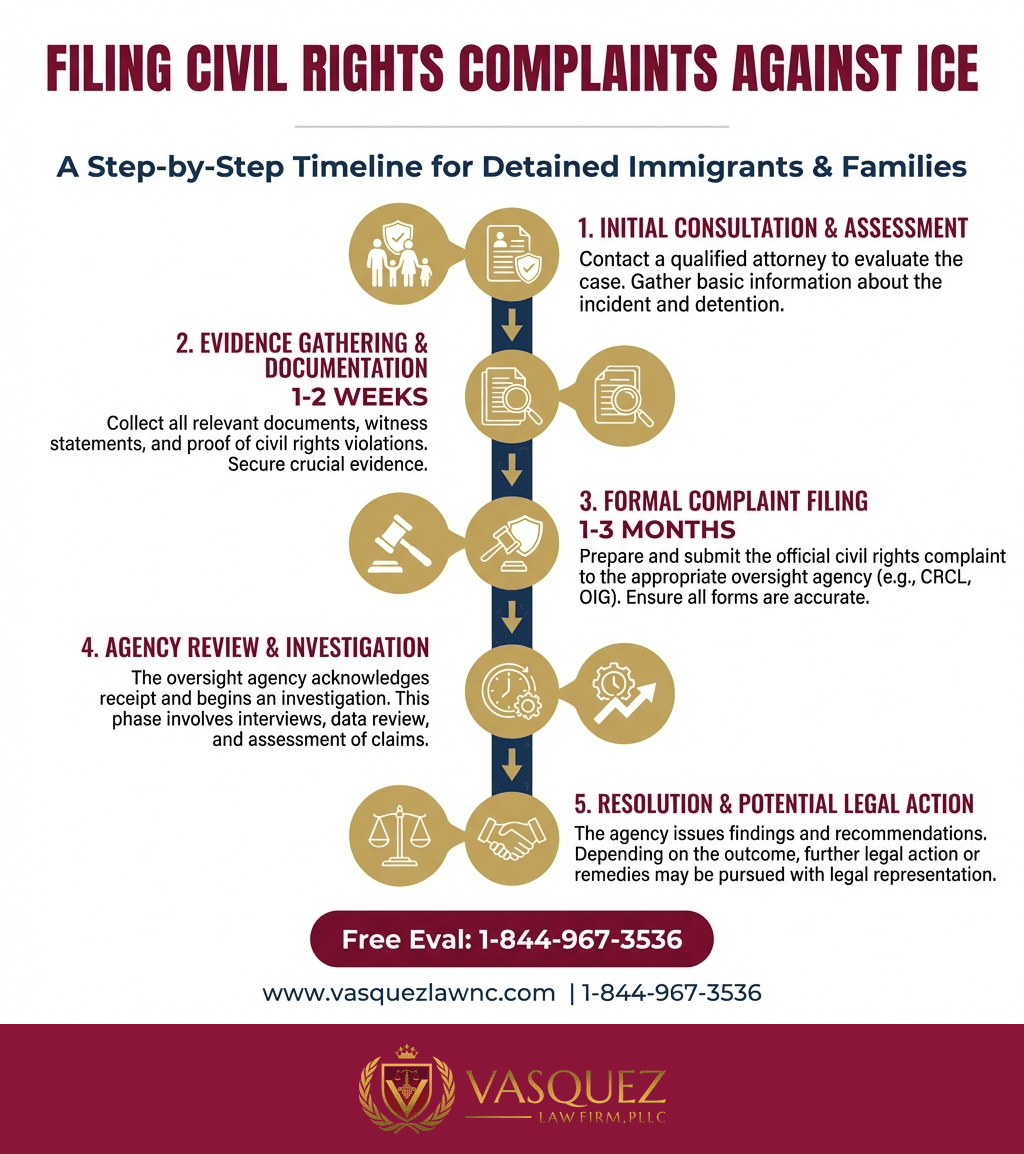
Timeline of an ICE Abuse Claim
- Immediately: Report the abuse to staff and request medical care.
- Within days: Seek legal assistance to document claims and gather evidence.
- 1-2 weeks: File a formal complaint with ICE oversight and civil rights offices.
- 1-3 months: Await investigation results; follow up with legal counsel and authorities.
- 3+ months: Abuse claims can be incorporated into immigration court proceedings or civil lawsuits.
The process can vary depending on facility and case details. Having a lawyer familiar with ICE abuse claims improves chances for timely, favorable resolution.
Costs and Legal Fees to Consider
- Most ICE abuse claims related to immigration have no direct government filing fees, but attorney fees may apply.
- Vasquez Law Firm offers free initial consultations to discuss your options at no cost.
- Legal fees vary by case complexity; contingency or fixed-fee arrangements may be available.
- Costs related to obtaining medical records or expert evaluations may apply.
- Nonprofit organizations or legal aid may provide assistance based on financial need.
Discuss cost options with your attorney early so you can plan and avoid delays due to financial concerns.
Common Mistakes in ICE Abuse Claims
- Delay in reporting abuse. Immediate reporting enhances evidence strength and protection.
- Failure to keep evidence. Not securing medical documentation and witness info weakens claims.
- Fear of retaliation. Retaliation is illegal; attorneys can help ensure your safety.
- Not seeking legal advice. Professionals guide you through complex complaint processes.
- Relying solely on verbal reports. Written and documented evidence carries more weight.
- Ignoring immigration court deadlines. Delays in integrating claims into removal defense reduce impact.
- Misunderstanding legal rights. Detained immigrants have rights even while in custody.
If you only remember one thing: Report abuse as soon as possible and consult an immigration lawyer to protect your rights.
Jurisdiction Notes for NC, FL, and Nationwide
North Carolina Notes
North Carolina has several detention centers where ICE operates. Local advocacy groups support detained people filing abuse claims. Our Charlotte immigration attorneys can assist detained immigrants and their families with abuse reports and immigration defenses.
Florida Notes
Florida hosts some of the largest ICE detention facilities with ongoing abuse allegations. Our firm offers bilingual help for detained immigrants in Florida, including assistance with abuse claims, detention conditions, and credible fear interviews.
Nationwide Concepts (General Only)
ICE abuse claims follow federal regulations regardless of detention location. Reporting mechanisms and legal protections exist nationwide. Each facility may have unique protocols. Contacting experienced immigration counsel familiar with federal detention laws is essential to effective claim handling.
When to Contact an Attorney Immediately
- If you experience physical or sexual abuse while detained by ICE
- If facility staff threaten or retaliate after reporting abuse
- If you experience denial of medical care following injury
- If you want to file a formal abuse complaint with ICE or DHS
- If you need help presenting abuse evidence in immigration court
- If your rights to safety and due process are violated during detention
- If you are unsure how to get legal representation or understand your rights
About Vasquez Law Firm
At Vasquez Law Firm, we combine compassion with aggressive representation. Our motto "Yo Peleo" (I Fight) reflects our commitment to standing up for your rights. We serve detained immigrants in Charlotte, North Carolina, Florida, and nationwide, offering bilingual legal support for sensitive ICE abuse claims.
- Bilingual Support: Se Habla Español - our team is fully bilingual
- Service Areas: North Carolina, Florida, and nationwide immigration services
- Experience: Over 30 years helping clients navigate complex legal matters
- Results: Thousands of successful cases across multiple practice areas
Attorney Trust and Experience
Attorney Vasquez holds a Juris Doctor degree and is admitted to practice in both the North Carolina State Bar and Florida Bar. With over 30 years of dedicated legal experience, he has built a reputation for providing personalized attention and achieving favorable outcomes for his clients.
Don't wait to get the help you deserve. Call us now for immediate assistance.
Se Habla Español
Frequently Asked Questions
What types of mistreatment qualify as ICE abuse claims?
ICE abuse claims include physical abuse such as excessive force, sexual abuse including harassment or assault, neglect leading to medical harm, and unsafe detention conditions. These violate federal detention standards and may form the basis for legal complaints or removal defenses.
How can detained immigrants safely report abuse?
Detained immigrants can report abuse to detention center staff, legal representatives, or through ICE’s Detention Reporting and Information Line. They may also file complaints with the Department of Homeland Security Office for Civil Rights and Civil Liberties. Confidentiality and protection from retaliation are crucial.
What evidence is important for an ICE abuse claim?
Medical records documenting injuries, photographs, witness statements, complaint forms, and any available video or audio recordings strengthen abuse claims. Timely and detailed documentation is key to a successful case.
Can ICE retaliation affect abuse claimants?
Yes, retaliation is illegal but can happen. Retaliation may include denial of services, increased restrictions, or threats. Legal counsel can help protect detainees from retaliation and assist with filing complaints about retaliatory actions.
Do abuse claims influence immigration court decisions?
Judges may consider abuse claims and detention conditions when ruling on bond or removal cases. Demonstrating mistreatment can support requests for release or relief in immigration proceedings, making well-documented claims important.
How long does the ICE abuse claims process take?
The process varies but starts with prompt reporting, followed by investigations which can take several months. Abuse claims may be incorporated into immigration hearings, extending timelines. An attorney can help manage expectations and deadlines.
Are there legal fees to file an ICE abuse claim?
Government agencies do not charge fees for filing complaints, but attorney fees may apply. Many law firms, including Vasquez Law Firm, offer free case evaluations to discuss cost options and how to proceed.
Where can I find more information on my rights as a detained immigrant?
Authoritative resources include the U.S. Citizenship and Immigration Services website, the Executive Office for Immigration Review, and the Legal Information Institute. Consulting an experienced immigration lawyer ensures accurate advice tailored to your situation.
Sources and References
- U.S. Citizenship and Immigration Services
- Executive Office for Immigration Review
- Legal Information Institute
Take the first step toward justice today. Our team is standing by to help.
Start Your Free Evaluation Now
Call us: 1-844-967-3536
Se Habla Español - Estamos aquí para ayudarle.


William Vasquez
Founder & CEO, Vasquez Law Firm, PLLC
William Vasquez is the founder and CEO of Vasquez Law Firm, PLLC, a results-driven firm specializing in immigration, criminal defense, personal injury, and workers' compensation. A U.S. Air Force veteran and recipient of the Joint Service Achievement Medal, William is dedicated to fiercely fighting for his clients' rights.
Related Legal Services
Need legal help? Learn more about speak with an immigration lawyer, or contact us for a free evaluation.
You can also visit our North Carolina immigration practice for more information.