What Is Drug Overdose Immunity and How It Works in 2026
Learn what drug overdose immunity means in 2026. Protect yourself in emergencies with our expert help. Contact Vasquez Law for a free evaluation today.
Published on April 21, 2026
Protect your record and your freedom
Free, confidential review. 24/7.
Free & confidential · Se habla espanol · 24/7
Have questions? Talk to an attorney - free evaluation.
Call 1-844-967-3536Protect Your Record and Your Freedom
A confidential case review - available 24/7 for emergencies.
What Is Drug Overdose Immunity and How It Works in 2026
Drug overdose immunity helps protect people from prosecution when they seek emergency help for an overdose. In Orlando and beyond, understanding this protection could save lives. Our article explains what drug overdose immunity means in 2026, how Good Samaritan laws work, and what you should do if faced with an overdose situation. Vasquez Law Firm’s criminal defense team in North Carolina and Florida shares practical steps and legal insights to guide you through this important protection.
Need help with your case? Our experienced attorneys are ready to fight for you. Se Habla Español.
Or call us now: 1-844-967-3536
Quick Answer
Drug overdose immunity protects people from drug possession charges when they call 911 to get emergency help for someone overdosing. These laws encourage lifesaving assistance without fear of arrest, but the exact protections differ by state. Always call 911 immediately in an overdose emergency.
- Encourages calling emergency services without fear
- Provides legal protection from possession or paraphernalia charges
- Applies mainly during overdose emergencies
- Limits vary by state and jurisdiction
- Does not protect all drug-related crimes
Understanding Drug Overdose Immunity
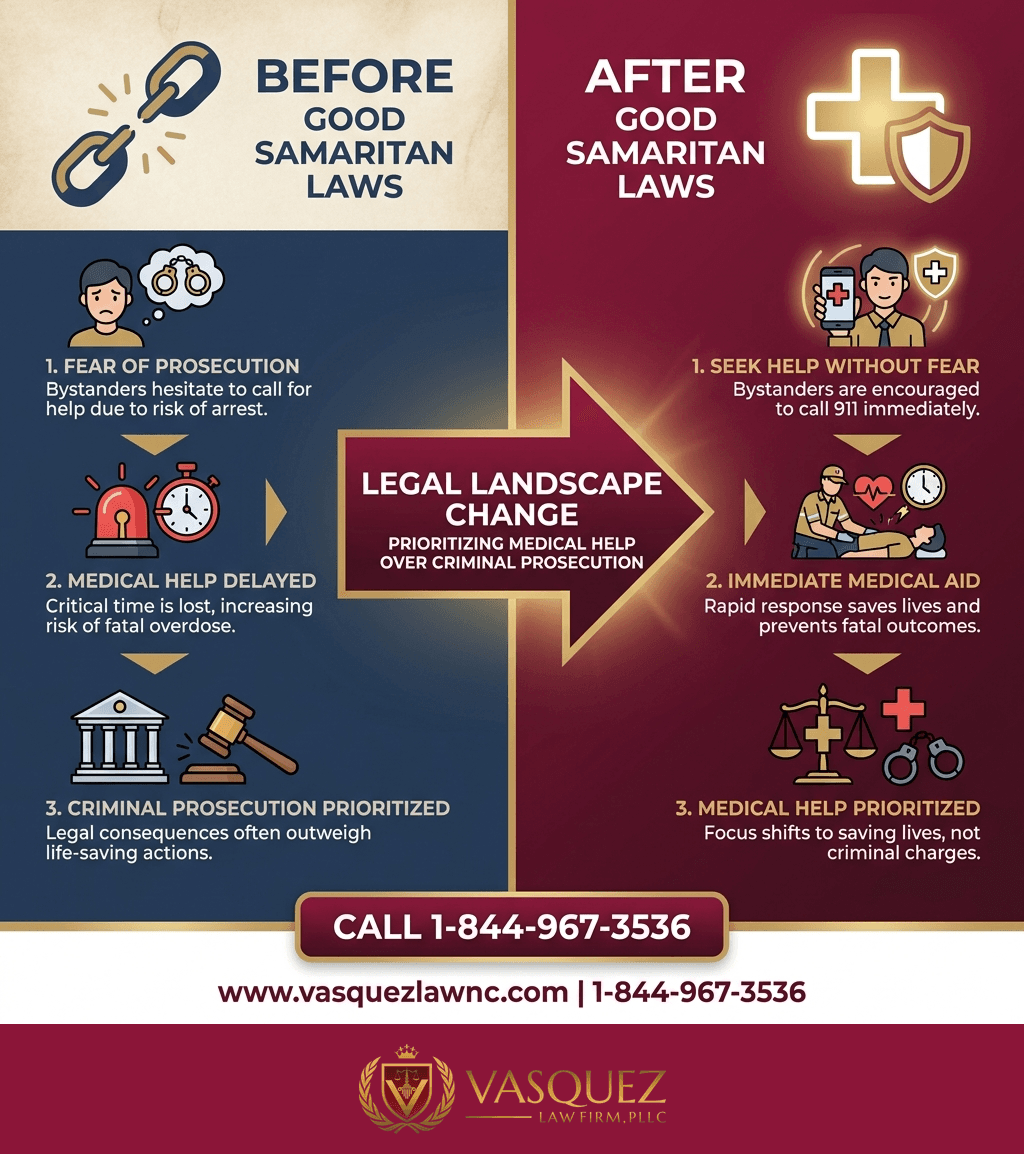
In 2026, drug overdose immunity laws exist nationwide, but their specifics vary. These laws provide legal protections for people who seek emergency medical help for someone experiencing a drug overdose. The goal is to reduce the number of deaths by encouraging quick calls to 911 without fear of being arrested for drug possession or other minor offenses.
For example, in Orlando, Florida, the Good Samaritan law offers certain immunity from prosecution if you call emergency services during an overdose. North Carolina has a similar law, though each state sets its own conditions and limits. Understanding the scope of these protections is essential to make informed decisions in emergencies.
Drug overdose immunity does not mean blanket protection from all drug charges. It generally applies only to possession charges related to the emergency and sometimes extends to possession of paraphernalia. Serious drug trafficking or distribution offenses are usually excluded.
This immunity encourages witnesses, friends, or family to act quickly in overdose situations, saving lives. But failing to understand what the laws cover can lead to missed protections or unintended legal consequences.
Our criminal defense attorneys in Orlando and North Carolina can help you understand your rights under local overdose immunity laws and protect you if you face related charges.
What Are Good Samaritan Laws?
Good Samaritan laws related to drug overdose provide immunity from prosecution for certain offenses when a person calls for emergency assistance. These laws recognize the importance of encouraging emergency calls to reduce fatal overdoses.
Each state defines which offenses qualify, the immunity limits, and who is protected—typically both the person overdosing and those who seek help. For example, some states protect only the caller, while others include the overdose victim.
How Does Immunity Work in Orlando and North Carolina?
In Florida, the Good Samaritan law (FL Stat § 381.887) grants limited immunity to those who summon help during an overdose. This includes protection from prosecution for possession of drugs and paraphernalia discovered during the emergency call.
North Carolina’s Good Samaritan Drug Overdose Act (NC Gen Stat § 90-96.1) offers similar protections but has specific requirements for immunity eligibility. Both states encourage immediate emergency calls while balancing legal concerns.
Why Is Drug Overdose Immunity Important?
Since opioid overdose deaths continue to rise nationwide, drug overdose immunity laws reduce hesitation to call for help. According to the CDC, timely administration of naloxone and prompt medical care dramatically improve survival chances.
Knowing these laws helps people act quickly without fear of arrest, ultimately saving lives.
Step-by-Step: What to Do During an Overdose
- Recognize Signs of Overdose: Symptoms include slow or stopped breathing, unconsciousness, blue lips or nails, and unresponsiveness.
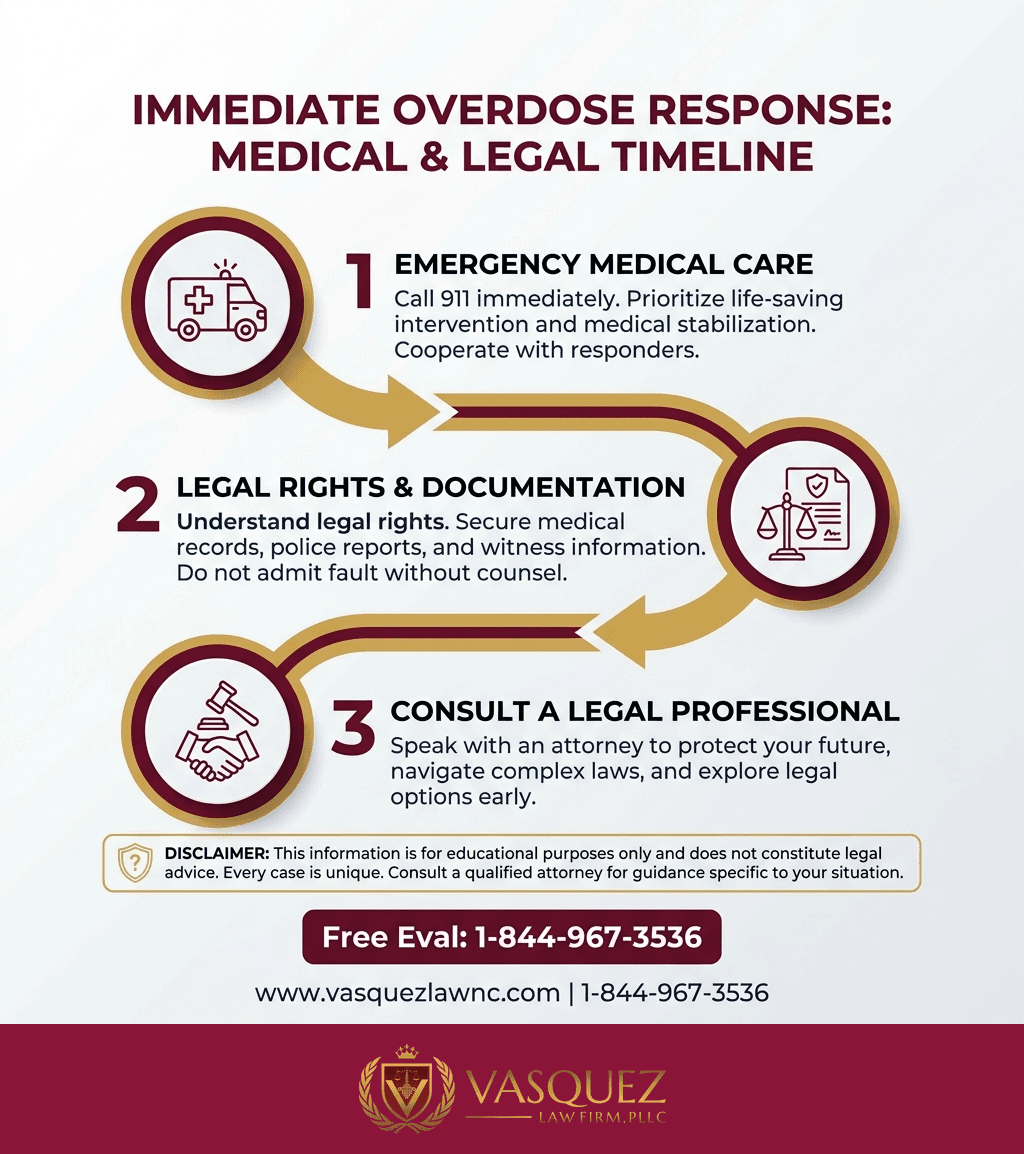
- Call 911 Immediately: Reporting the overdose activates emergency medical services. You gain drug overdose immunity protections when you call in most states.
- Administer Naloxone If Available: This antidote reverses opioid effects and restores breathing. It can be given via nasal spray or injection.
- Stay with the Person: Remain until help arrives, provide rescue breathing if trained, and monitor breathing.
- Provide Information to EMS: Tell responders what drugs were involved and what steps you've taken. This can guide treatment.
- Understand Your Legal Protections: Remember that calling for help often grants limited immunity from possession charges. Avoid self-incriminating statements.
- Follow Up: Seek legal advice if you face any charges or if doubts arise about your protections.
Common Scenarios
Imagine a friend overdoses at a party in Orlando. You call 911, administer naloxone, and wait with them until EMS arrives. Under Florida’s law, you are protected from drug possession charges. However, if you try to hide evidence or refuse to cooperate, protections may not apply.
In North Carolina, someone found with small amounts of drugs but who called for help might still be protected under the state’s Good Samaritan law, provided the call occurred in good faith during the overdose.
Each case is different. Our experienced criminal defense lawyers guide clients through these complexities in North Carolina and Florida.
Common Mistakes to Avoid in Overdose Situations
- Delaying the Call to 911: Some hesitate due to fear of arrest, risking life. Call immediately.
- Failing to Recognize Overdose Signs: Not understanding symptoms can delay lifesaving help.
- Not Administering Naloxone: If available, neglecting to use this antidote wastes critical seconds.
- Trying to Hide Drugs: Concealing drugs can revoke overdose immunity protections.
- Giving Drugs to Others: Providing drugs, especially to minors, is a felony and not protected.
- Assuming All Charges Are Dropped: Immunity doesn’t cover all offenses — know your limits.
- Ignoring Legal Help: Never face charges alone. Early legal advice can protect your rights.
If you only remember one thing: call 911 immediately and stay with the person. Legal protections exist to save lives, not to punish those seeking help.
Timeline and What to Expect After Calling 911
- Minutes 0-10: EMS arrives at the scene, assesses, and administers naloxone if opioid overdose is suspected.
- Minutes 10-30: Patient stabilization and transport to the nearest hospital for further monitoring and treatment.
- Hours 1-24: Medical evaluation continues; law enforcement may question witnesses and gather evidence.
- Days 1-7: Legal review begins if charges arise; communication with lawyers advised.
- Weeks 1-4: Possible court proceedings or diversion programs depending on circumstances.
Understanding this timeline can prepare you for what comes after an overdose emergency. Immediate survival depends on quick action; legal processes follow separately.
Costs and Fees: What Impacts the Price of Legal Help
- Complexity of Charges: Multiple drug charges or related offenses may increase defense costs.
- Severity of Offenses: Felony charges require extensive legal work and expert resources.
- Need for Expert Witnesses: Medical or forensic experts can raise costs but strengthen cases.
- Legal Experience: Seasoned attorneys like Attorney Vasquez bring value that may offset fees by improving outcomes.
- Timeliness and Urgency: Immediate legal intervention can prevent costly mistakes later.
Many firms offer free case evaluations to assess your case and explain costs. Vasquez Law Firm provides upfront guidance and transparent fee structures.
North Carolina and Nationwide Notes
North Carolina Notes
North Carolina’s Good Samaritan law (NC Gen Stat § 90-96.1) offers immunity from prosecution for drug possession when a person acts in good faith to seek emergency medical help for an overdose. This law aims to save lives by encouraging calls to 911 without fear of drug possession charges. However, immunity only applies if the call is made promptly and in good faith.
Nationwide Concepts
Most states now have some form of Good Samaritan law for overdoses, but the extent of protections and eligibility requirements differ widely. Not all states cover paraphernalia or allow immunity for all drug offenses. It's critical to be familiar with local laws and seek legal advice from an experienced attorney after any incident.
When to Call a Lawyer Now
- If you or a loved one is charged with drug possession after an overdose emergency.
- If law enforcement is threatening prosecution despite calling 911.
- If you are unsure about the protections of local Good Samaritan laws.
- If you fear losing custody of a child after a drug-related incident.
- If you have prior criminal record and face new drug charges.
- If you were pressured to provide information or waive rights during overdose investigation.
- If court dates or legal notices arrive after an overdose incident.
- If you want to understand diversion, treatment, or alternative sentencing options.
About Vasquez Law Firm
At Vasquez Law Firm, we combine compassion with aggressive representation. Our motto "Yo Peleo" (I Fight) reflects our commitment to standing up for your rights.
- Bilingual Support: Se Habla Español - our team is fully bilingual
- Service Areas: Criminal defense in Johnston and Harnett counties, NC; immigration nationwide, including Florida
- Experience: Over 30 years helping clients navigate complex legal matters
- Results: Thousands of successful cases across multiple practice areas
Attorney Trust and Experience
Attorney Vasquez holds a Juris Doctor degree and is admitted to practice in both the North Carolina State Bar and Florida Bar. With over 15 years of dedicated legal experience, he has built a reputation for providing personalized attention and achieving favorable outcomes for his clients.
Don't wait to get the help you deserve. Call us now for immediate assistance.
Se Habla Español
Frequently Asked Questions
What is drug overdose immunity?
Drug overdose immunity is a legal protection that prevents prosecution of people who call emergency services to help during a drug overdose. These laws aim to encourage individuals to seek lifesaving help without fear of arrest for drug possession or related offenses. The exact scope varies by state but generally covers possession charges in emergency overdose situations.
Do all states have Good Samaritan laws for overdose?
As of 2026, most U.S. states have enacted some form of Good Samaritan laws relating to drug overdoses. These laws provide variable immunity protections, often covering possession charges if someone seeks emergency assistance. However, the details and protections differ significantly from state to state.
What drug overdose has the highest death rate?
Opioids, especially synthetic opioids like fentanyl, cause the highest number of overdose deaths in the U.S. annually. According to the CDC, fentanyl-related overdoses have increased sharply due to its potency and widespread availability, representing the most lethal risk in drug overdose cases.
Is an overdose classified as an accidental death?
Most drug overdoses are classified as accidental deaths unless there is clear evidence of intentional self-harm. Medical examiners typically rule overdose deaths accidental due to unintentional consumption of toxic drug amounts. This classification impacts legal and insurance outcomes.
What is the antidote for a drug overdose?
Naloxone (Narcan) is the primary antidote used to reverse opioid overdoses. It quickly restores normal breathing by blocking opioid effects. First responders, family, and even friends can administer Naloxone. Access to this antidote has increased due to overdose immunity and Good Samaritan laws encouraging prompt intervention.
Can calling 911 protect me from drug possession charges?
In many states, calling 911 to report a drug overdose can provide immunity from certain drug possession charges under Good Samaritan laws. This protection encourages people to seek emergency help without fear of arrest. However, immunity does not cover all offenses and varies by jurisdiction.
Is giving drugs to a minor a felony?
Yes, in most states giving drugs to a minor is considered a felony with severe penalties. This includes possession with intent to distribute or directly providing controlled substances to anyone under the legal age. Drug overdose immunity laws generally do not protect such offenses.
How do Good Samaritan laws differ between NC and FL?
North Carolina and Florida both have Good Samaritan laws offering some protection for overdose emergencies. NC provides limited immunity from possession charges when calling 911, while Florida’s law includes broader protections including some possession and paraphernalia offenses. Each state sets its specific conditions for immunity.
Sources and References
- U.S. Citizenship and Immigration Services
- North Carolina Courts
- NC General Assembly
- U.S. Department of Justice Civil Rights Division
Take the first step toward justice today. Our team is standing by to help.
Start Your Free Evaluation Now
Call us: 1-844-967-3536
Se Habla Español - Estamos aquí para ayudarle.

William Vasquez
Founder & CEO, Vasquez Law Firm, PLLC
William Vasquez is the founder and CEO of Vasquez Law Firm, PLLC, a results-driven firm specializing in immigration, criminal defense, personal injury, and workers' compensation. A U.S. Air Force veteran and recipient of the Joint Service Achievement Medal, William is dedicated to fiercely fighting for his clients' rights.
Related Legal Services
Need legal help? Learn more about NC criminal defense legal team, or contact us for a free evaluation.
You can also visit Smithfield criminal defense attorneys for more information.