How to Protect Yourself From Deportation in 2026
Understand your deportation protections and rights in 2026. Learn how to defend against removal and secure your future. Contact Vasquez Law for a free consultation today.
Published on February 15, 2026

Have questions? Talk to an attorney - free evaluation.
Call 1-844-967-3536Check your case status now
Look up your immigration case below, then talk to an attorney about what it means — free.
Questions about your result?
Talk to an attorney about your case — free, no obligation.
How to Protect Yourself From Deportation in 2026
Navigating the complex landscape of U.S. immigration law can be daunting, especially when facing the threat of removal. Understanding your deportation protections is not just important, it's absolutely essential for immigrants and their families across North Carolina, Florida, and nationwide. As of 2026, various legal avenues exist that may shield individuals from deportation, offering hope and a path to stability. Knowing these protections, from Temporary Protected Status (TPS) to asylum and cancellation of removal, can empower you to defend your right to remain in the United States.
Need help with your case? Our experienced attorneys are ready to fight for you. Se Habla Español.
Schedule Your Free Consultation
Or call us now: 1-844-967-3536
Quick Answer
Deportation protections are legal provisions that allow non-citizens to remain in the U.S. despite being deemed removable. These protections, such as asylum, Temporary Protected Status (TPS), and cancellation of removal, are crucial for individuals facing deportation proceedings in 2026. Eligibility depends on specific circumstances, legal standing, and timely application.
- Asylum and Withholding of Removal provide safety for those fleeing persecution.
- Temporary Protected Status (TPS) offers temporary relief for nationals of designated countries.
- Cancellation of Removal may be available for long-term residents with qualifying family.
- Adjustment of Status allows some to get a Green Card without leaving the U.S.
- Prosecutorial Discretion can lead to case closure or administrative closure.
Understanding Deportation Protections in 2026
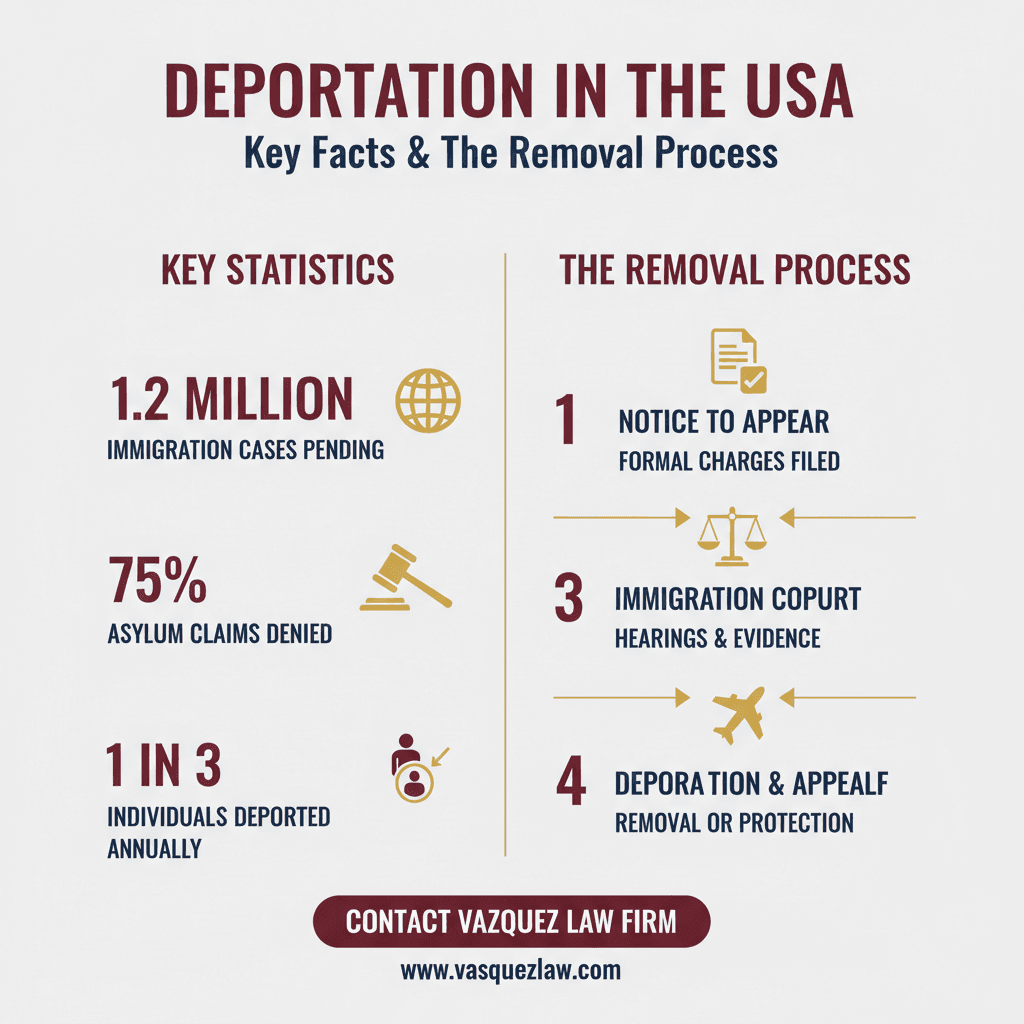
Deportation, also known as removal, is a serious legal process that can force non-citizens to leave the United States. However, the U.S. immigration system also provides several forms of deportation protections designed to safeguard individuals who meet specific eligibility criteria. These protections are not automatic; they require a proactive legal strategy and often depend on the individual's history, family ties, and circumstances in their home country. Understanding which protection might apply to your situation is the first critical step.
One of the most widely discussed protections is Temporary Protected Status (TPS). As of 2026, TPS continues to offer a lifeline to individuals from countries experiencing armed conflict, environmental disaster, or other extraordinary and temporary conditions. While TPS does not lead directly to a Green Card, it prevents deportation and grants work authorization for the duration of its designation. Eligibility criteria for TPS are strict and country-specific, often requiring continuous physical presence in the U.S. since a certain date.
Another vital form of protection is asylum. For those who have fled their home country due to persecution or a well-founded fear of persecution based on race, religion, nationality, political opinion, or membership in a particular social group, asylum offers a path to safety and potentially permanent residency. The asylum process can be complex, involving interviews with asylum officers and potentially hearings before an immigration judge. Seeking asylum is a fundamental human right recognized under international and U.S. law.
Beyond these, other forms of relief include withholding of removal, cancellation of removal for non-permanent residents (NACARA), and a variety of waivers. Each of these deportation protections has its own stringent requirements and application process. For instance, cancellation of removal typically requires showing continuous physical presence in the U.S. for a decade, good moral character, and demonstrating that your deportation would cause exceptional and extremely unusual hardship to a qualifying U.S. citizen or lawful permanent resident spouse, parent, or child. Navigating these options successfully requires deep knowledge of immigration law.
Key Types of Deportation Relief Available
Understanding the specific mechanisms that can prevent deportation is paramount for anyone facing removal proceedings. The U.S. immigration system offers several distinct types of relief, each tailored to different circumstances and with unique eligibility requirements. Identifying the correct form of relief for your situation is a complex task that often requires the guidance of an experienced immigration attorney. Let's delve into some of the most common and impactful deportation protections available as of 2026.
Temporary Protected Status (TPS)
Temporary Protected Status (TPS) is a temporary immigration benefit provided by the U.S. government to eligible nationals of certain countries. These countries are designated by the Secretary of Homeland Security due to conditions that prevent their nationals from returning safely, such as ongoing armed conflict, environmental disasters, or other extraordinary and temporary conditions. TPS grants individuals protection from deportation, along with work authorization. It is important to note that TPS does not automatically lead to permanent residency, but it offers crucial stability. As of 2026, individuals from several countries, including El Salvador, Honduras, and Venezuela, continue to benefit from TPS designations, though these are subject to periodic review and potential termination. USCIS provides official information on current TPS designations.
Asylum and Withholding of Removal
Asylum and Withholding of Removal are vital protections for individuals who fear persecution in their home countries. Asylum provides a pathway to legal status for those who can demonstrate a well-founded fear of persecution based on race, religion, nationality, political opinion, or membership in a particular social group. If granted asylum, an individual can eventually apply for a Green Card. Withholding of Removal offers similar protection but does not lead to permanent residency; it prevents removal to the country where persecution is feared. The burden of proof for asylum is generally lower than for withholding of removal, but both require compelling evidence and a credible fear assessment.
Cancellation of Removal
Cancellation of Removal is a discretionary form of relief that allows certain non-citizens to avoid deportation and obtain lawful permanent resident status. There are two main types: for lawful permanent residents (LPRs) and for non-LPRs. For non-LPRs, eligibility is highly stringent, requiring at least 10 years of continuous physical presence in the U.S., good moral character, and proof that deportation would cause exceptional and extremely unusual hardship to a qualifying U.S. citizen or LPR spouse, parent, or child. LPRs must meet different criteria, including seven years of continuous residence and no aggravated felony convictions. This is one of the most challenging deportation protections to obtain.
Steps to Pursue Deportation Protections
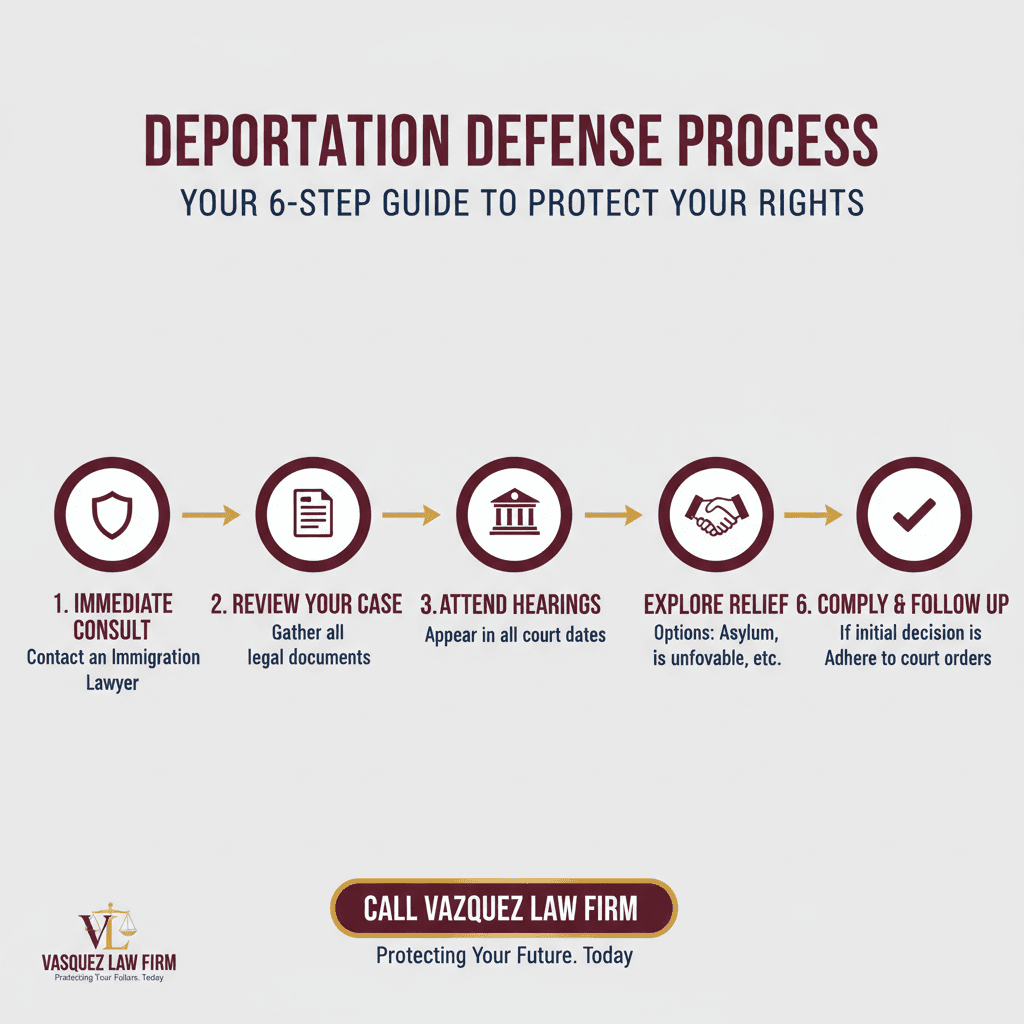
When facing deportation proceedings, taking swift and informed action is crucial. The process of applying for deportation protections can be complex and time-sensitive, often requiring the submission of detailed documentation and compelling legal arguments. Here are the general steps involved in pursuing various forms of deportation relief, emphasizing the importance of legal counsel throughout the journey.
- Immediate Legal Consultation: The moment you receive a Notice to Appear (NTA) or face detention, contact an immigration attorney. An attorney can assess your eligibility for various deportation protections and advise on the best course of action. This initial consultation is vital for understanding your rights and options.
- Gathering Evidence and Documentation: Depending on the type of protection you seek, you will need to collect extensive documentation. This might include birth certificates, marriage licenses, proof of continuous presence, tax records, medical records, police reports (if applicable to asylum claims), and affidavits from family and community members.
- Filing Applications: Your attorney will help you prepare and file the necessary applications with the Executive Office for Immigration Review (EOIR) or USCIS, depending on whether you are in removal proceedings or seeking affirmative relief. Timeliness is critical, as many forms of relief have strict filing deadlines.
- Court Hearings and Interviews: If you are in removal proceedings, you will attend multiple hearings before an immigration judge. For asylum, you might first have an interview with an asylum officer. Your attorney will prepare you for these appearances and represent you, presenting your case and evidence.
- Appeals Process: If your application for relief is denied, you may have the option to appeal the decision to the Board of Immigration Appeals (BIA) and, in some cases, to federal courts. This process can be lengthy and requires specialized legal expertise.
Documents and Evidence Checklist for Relief
Successfully applying for deportation protections requires a robust collection of documents and evidence. The specific items needed will vary significantly based on the type of relief you are seeking, but a comprehensive approach is always best. Organizing your documents meticulously can strengthen your case and streamline the application process. Remember, the burden of proof often lies with the applicant, so thorough preparation is key. Here's a general checklist of documents and evidence that are commonly required:
- Personal Identification: Passport, birth certificate, national ID from your home country.
- Proof of Entry and Presence: I-94 arrival/departure record, airline tickets, school records, utility bills, rent receipts, employment records, bank statements showing continuous presence in the U.S.
- Family Relationship Documents: Marriage certificates, birth certificates of U.S. citizen or LPR children/spouses, divorce decrees, adoption papers, affidavits from family members.
- Financial Documents: Tax returns, pay stubs, bank statements, proof of financial support for dependents.
- Good Moral Character Evidence: Letters of recommendation from employers, community leaders, religious figures; police clearance certificates; proof of community involvement.
- Hardship Evidence (for Cancellation of Removal): Medical records, psychological evaluations, school records of children, expert testimonies on country conditions, proof of financial dependence on you.
- Persecution Evidence (for Asylum): Affidavits detailing fear of persecution, country condition reports, news articles, police reports from home country, medical records of injuries sustained.
- Any Prior Immigration Filings: Copies of previous visa applications, petitions, or notices from USCIS or EOIR.
Common Mistakes and How to Avoid Them
The immigration process is unforgiving of errors, and even small mistakes can have significant consequences, potentially leading to denial of deportation protections or even expedited removal. Avoiding these common pitfalls is crucial for anyone seeking relief from deportation. Working with a knowledgeable legal team, like Vasquez Law Firm in Charlotte, can help you navigate these complexities and ensure your application is as strong as possible. Here are some of the most frequent mistakes immigrants make and how to prevent them:
- Missing Deadlines: Many forms of relief, especially asylum, have strict one-year filing deadlines. Missing these can severely limit your options. Always track deadlines carefully or have your attorney manage them.
- Incomplete or Inaccurate Applications: Submitting applications with missing information, incorrect details, or insufficient evidence can lead to delays, Requests for Evidence (RFEs), or outright denial. Double-check all forms and ensure all supporting documents are attached.
- Failing to Disclose Criminal History: Attempting to hide past arrests or convictions, even minor ones, can be detrimental. Immigration authorities have access to extensive databases. Full and honest disclosure, along with proper legal counsel on how to address such issues, is always the best approach.
- Lack of Supporting Evidence: Merely stating your case is rarely enough. You need concrete evidence to back up your claims, whether it's proof of continuous presence, hardship, or persecution. Gather all relevant documents and affidavits.
- Not Preparing for Interviews/Hearings: Underestimating the importance of interviews with USCIS or hearings before an immigration judge can be a fatal error. Practice your testimony, understand the questions, and be prepared to articulate your case clearly and consistently.
- Traveling Internationally Without Permission: Leaving the U.S. while your application for deportation protections is pending can result in abandonment of your application or inadmissibility upon return, even if you have advance parole. Always consult your attorney before any international travel.
- Not Seeking Legal Counsel: Attempting to navigate the intricate immigration system alone is perhaps the biggest mistake. An experienced attorney can identify all available forms of relief, prepare strong applications, represent you in court, and appeal adverse decisions.
If you only remember one thing: Always seek qualified legal counsel immediately when facing any immigration issue, especially deportation. Procrastination and self-representation are the leading causes of unfavorable outcomes.
NC, FL, and Nationwide Notes on Deportation Protections
Immigration law in the United States is primarily federal, meaning the core statutes and regulations governing deportation protections apply uniformly across all states, including North Carolina and Florida. However, the practical implications, enforcement priorities, and availability of local resources can vary significantly by region. Vasquez Law Firm serves clients facing immigration challenges nationwide, with a strong presence in North Carolina and Florida. We understand the nuances of how federal law is applied in different jurisdictions and how local factors can influence a case.
North Carolina Considerations
In North Carolina, immigrants facing deportation proceedings often interact with the Charlotte Immigration Court, one of the busiest in the Southeast. Local enforcement by ICE (Immigration and Customs Enforcement) and collaboration with local law enforcement through programs like 287(g) can impact detention and removal trends. Our firm, based in Charlotte, has extensive experience representing clients in this court and navigating the local ICE field office's procedures. Understanding local prosecutorial discretion policies can be crucial for obtaining favorable outcomes.
Florida Considerations
Florida, with its large immigrant population and proximity to the Caribbean, sees a high volume of immigration cases, particularly in Miami and Orlando immigration courts. The state's unique geographical challenges and a history of specific immigration policies related to certain nationalities (e.g., Cuban Adjustment Act) mean that while federal law is supreme, local practices and judicial interpretations can affect outcomes. Vasquez Law Firm has a robust practice in Florida, assisting clients with their deportation protections and advocating for their rights in a dynamic environment.
Nationwide Concepts (General Only, Rules Vary)
While the federal framework for deportation protections is consistent, individual cases are adjudicated by various immigration courts and USCIS offices across the country. This means that while the legal standards are the same, the application of those standards can vary based on the specific judge, asylum officer, or even the prevailing political climate in a given region. For example, policies on prosecutorial discretion, which can lead to administrative closure or termination of a case, may be applied differently across various ICE field offices. Understanding these national trends and regional variations is critical for effective legal representation. The Executive Office for Immigration Review (EOIR) provides information on immigration courts nationwide.
When to Call a Lawyer Now for Deportation Protections
The urgency of seeking legal counsel in immigration matters, especially those involving deportation, cannot be overstated. Time is often of the essence, and delays can severely limit your options or even lead to irreversible consequences. If you find yourself in any of the following situations, it is imperative to contact an immigration attorney immediately to discuss your deportation protections:
- You have received a Notice to Appear (NTA) in immigration court.
- You or a family member has been detained by ICE (Immigration and Customs Enforcement).
- You are facing an interview with an asylum officer or immigration judge.
- You have a final order of deportation but believe you have grounds for relief.
- You are a non-citizen with a criminal conviction, even a minor one, and fear deportation.
- Your Temporary Protected Status (TPS) is expiring, and you need to explore other options.
- You believe you qualify for asylum due to fear of persecution in your home country.
- You have been denied an immigration benefit and need to consider an appeal.
- You are a long-term resident with U.S. citizen family members and fear removal.
- You simply want to understand your rights and potential deportation protections proactively.
About Vasquez Law Firm
At Vasquez Law Firm, we combine compassion with aggressive representation. Our motto "Yo Peleo" (I Fight) reflects our commitment to standing up for your rights and fighting tirelessly for justice. We understand the profound impact that immigration challenges can have on individuals and families, and we are dedicated to providing personalized, effective legal solutions.
- Bilingual Support: Se Habla Español - our team is fully bilingual, ensuring clear communication and understanding throughout your legal journey.
- Service Areas: We proudly serve clients in North Carolina and Florida, and provide comprehensive immigration services nationwide.
- Experience: With over 15 years of dedicated legal experience, we have a proven track record of helping clients navigate complex legal matters.
- Results: Attorney Vasquez and our team have achieved thousands of successful outcomes across multiple practice areas, including complex deportation defense cases.
Attorney Trust and Experience
Attorney Vasquez holds a Juris Doctor degree and is admitted to practice in both the North Carolina State Bar and Florida Bar. With over 15 years of dedicated legal experience, he has built a reputation for providing personalized attention and achieving favorable outcomes for his clients. He is committed to upholding the highest ethical standards and ensuring every client receives diligent and zealous representation. Our clients in Charlotte and beyond trust us to handle their most sensitive legal matters with expertise and care.
Don't face your legal challenges alone. Our team is here to help you every step of the way.
Call today: 1-844-967-3536 | Se Habla Español
Frequently Asked Questions
What does Temporary Protected Status (TPS) mean for deportation protections?
TPS offers temporary protection from deportation and work authorization to nationals of designated countries experiencing crises. While it doesn't lead directly to a Green Card, it provides a crucial period of safety and stability, allowing individuals to live and work legally in the U.S. without fear of removal. Eligibility is country-specific and requires continuous physical presence since the designation date. It's a key form of deportation protections for many.
Are all non-citizens eligible for some form of deportation protections?
No, not all non-citizens are eligible for deportation protections. Eligibility depends heavily on individual circumstances, including how they entered the U.S., their length of stay, family ties, criminal history, and any fear of persecution in their home country. Some individuals with serious criminal convictions may be barred from most forms of relief. A thorough legal assessment is necessary to determine eligibility.
How does asylum differ from withholding of removal?
Both asylum and withholding of removal protect individuals fleeing persecution. However, asylum allows an individual to eventually apply for a Green Card and become a lawful permanent resident, while withholding of removal only prevents deportation to the country of persecution. The burden of proof for asylum is slightly lower, requiring a "well-founded fear," whereas withholding of removal requires a higher standard of demonstrating that it is "more likely than not" that persecution will occur.
Can a criminal record affect my eligibility for deportation protections?
Yes, a criminal record can significantly impact eligibility for deportation protections. Certain convictions, especially aggravated felonies or crimes involving moral turpitude, can render an individual inadmissible or deportable and may bar them from various forms of relief, including asylum and cancellation of removal. It is essential to consult an attorney to understand the specific implications of your criminal history.
What is prosecutorial discretion in deportation cases?
Prosecutorial discretion refers to the government's authority to decide whether to pursue or drop a deportation case. ICE attorneys may exercise discretion by agreeing to administrative closure, termination of proceedings, or other favorable outcomes, particularly for individuals with strong ties to the U.S., compelling humanitarian factors, or limited criminal histories. It is not a guaranteed right but a possibility that an experienced attorney can advocate for.
How long does it take to get a decision on deportation protections?
The timeline for obtaining a decision on deportation protections varies widely depending on the type of relief sought, the complexity of the case, the immigration court's caseload, and whether appeals are involved. Asylum cases can take several years due to backlogs, while other forms of relief might be resolved more quickly. An attorney can provide a more realistic estimate based on your specific circumstances.
Can I apply for a Green Card if I have deportation protections?
It depends on the specific protection. If you are granted asylum, you can typically apply for a Green Card one year after your asylum approval. However, protections like Temporary Protected Status (TPS) or Withholding of Removal do not directly lead to a Green Card. In these cases, you would need to explore other pathways to permanent residency, such as family-based petitions, if eligible.
What if I have an existing deportation order? Can I still seek protection?
Even with an existing deportation order, there may still be options for relief, though they are often more challenging. These can include motions to reopen or reconsider, or certain waivers if new evidence or a change in law applies. It is critical to consult an attorney immediately if you have an outstanding deportation order, as time is of the essence in these situations. Terminating deportation is possible.
What role does a lawyer play in seeking deportation protections?
An immigration lawyer plays a critical role in seeking deportation protections. They assess eligibility, prepare and file complex applications, gather crucial evidence, represent clients in immigration court hearings and interviews, argue against removal, and handle appeals. Their expertise is invaluable in navigating the intricate legal system, advocating for your rights, and maximizing your chances of a favorable outcome. Vasquez Law Firm is dedicated to providing this comprehensive support.
How can I find out if my country is designated for TPS in 2026?
To determine if your country is designated for Temporary Protected Status (TPS) in 2026, you should consult the official website of U.S. Citizenship and Immigration Services (USCIS). USCIS regularly updates its list of TPS-designated countries and their eligibility requirements, including initial registration periods and re-registration deadlines. An immigration attorney can also provide current information and assist with the application process, ensuring you meet all criteria.
Sources and References
- U.S. Citizenship and Immigration Services (USCIS)
- Executive Office for Immigration Review (EOIR)
- 8 U.S. Code § 1255 - Adjustment of status of nonimmigrant to that of person admitted for permanent residence
- 8 C.F.R. § 245.1 - Eligibility
Ready to take the next step? Contact Vasquez Law Firm today for a free, confidential consultation. We're committed to fighting for your rights and achieving the best possible outcome for your case.
Start Your Free Consultation Now
Call us: 1-844-967-3536
Se Habla Español - Estamos aquí para ayudarle.


William Vasquez
Founder & CEO, Vasquez Law Firm, PLLC
William Vasquez is the founder and CEO of Vasquez Law Firm, PLLC, a results-driven firm specializing in immigration, criminal defense, personal injury, and workers' compensation. A U.S. Air Force veteran and recipient of the Joint Service Achievement Medal, William is dedicated to fiercely fighting for his clients' rights.
Related Legal Services
Need legal help? Learn more about our immigration law practice, or contact us for a free evaluation.
You can also visit our North Carolina immigration practice for more information.