What You Need to Know About Mass Immigration Detention in 2026
Understand mass detention in 2026, including ICE policies and detainee rights. Get critical insights and contact Vasquez Law Firm for a free immigration consultation.
Published on February 13, 2026
Talk to an immigration attorney
Free call. A clear plan for your case.
Free & confidential · Se habla espanol · 24/7
Have questions? Talk to an attorney - free evaluation.
Call 1-844-967-3536Worried how the latest immigration news affects you?
Schedule a confidential case review with an immigration attorney - know exactly where you stand.
USCIS Case Status
Check your USCIS case status
Enter your receipt number and get the official status. Free, no registration.
What You Need to Know About Mass Immigration Detention in 2026
Immigration law is complex and constantly evolving, especially when it comes to the policies and practices surrounding mass detention. For individuals and families navigating the U.S. immigration system, understanding what mass detention entails, your rights, and the potential impacts is absolutely critical. As of 2026, the landscape of immigration enforcement, including the operation of ICE detention centers, continues to present significant challenges and questions for many across North Carolina, Florida, and nationwide. Vasquez Law Firm is here to provide clarity and steadfast legal support.
Need help with your case? Our experienced attorneys are ready to fight for you. Se Habla Español.
Schedule Your Free Case Evaluation
Or call us now: 1-844-967-3536
Quick Answer
Mass detention in immigration refers to the large-scale holding of non-citizens, often in facilities managed by U.S. Immigration and Customs Enforcement (ICE), awaiting deportation proceedings or asylum claim resolutions. These centers house individuals from various backgrounds, including asylum seekers, undocumented immigrants, and those with visa overstays. The conditions and legal processes within these facilities are subject to ongoing scrutiny and legal challenges, making legal representation vital.
- ICE detention centers hold individuals awaiting immigration proceedings.
- Detainees have certain rights, including the right to legal counsel.
- Conditions and policies within centers vary and can be complex.
- Legal assistance is crucial for navigating release options and court processes.
- The number of people in ICE detention fluctuates based on enforcement priorities.
Understanding Mass Detention in Immigration [2026]
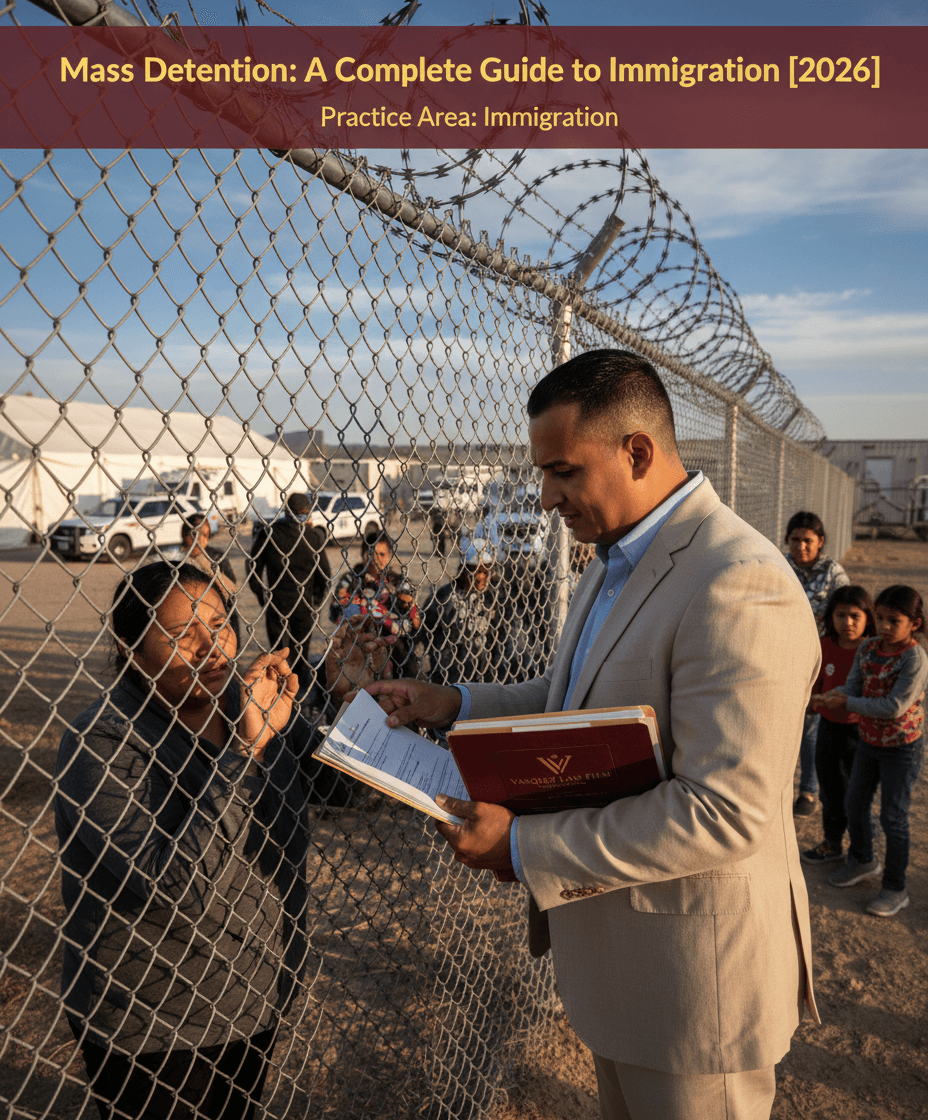
Mass detention, particularly within the context of immigration, refers to the practice of holding a significant number of non-citizens in large-scale facilities across the United States. These facilities, often operated or contracted by U.S. Immigration and Customs Enforcement (ICE), serve as temporary holding places for individuals awaiting various stages of their immigration proceedings. This can include those apprehended at the border, individuals whose visas have expired, or even long-term residents facing deportation due to past legal issues.
As of 2026, the concept of mass detention continues to be a central, often controversial, component of U.S. immigration enforcement strategy. The policies governing who is detained, for how long, and under what conditions are subject to federal law, regulations, and ongoing court challenges. For individuals in Charlotte, across North Carolina, Florida, and nationwide, understanding these complex dynamics is the first step in protecting your rights and seeking legal remedies. The sheer scale of these operations means that many families are impacted, often with little warning or understanding of the process.
The legal framework for immigration detention is primarily found in the Immigration and Nationality Act (INA), specifically 8 U.S.C. § 1226, which outlines the authority to arrest and detain aliens. While some detentions are mandatory, others are discretionary. This distinction often hinges on factors like criminal history or whether an individual is deemed a flight risk. The discretionary nature of some detentions means that a skilled immigration attorney can often advocate for release on bond or parole, a critical aspect of navigating the mass detention system.
Public discourse frequently highlights concerns about the conditions within these centers, access to legal aid, and the psychological impact on detainees. Advocacy groups and legal organizations, including firms like Vasquez Law Firm, continuously work to ensure that due process is upheld and that individuals are treated humanely while in immigration custody. The evolving nature of federal immigration policy means that understanding the most current regulations and enforcement priorities is key to effective legal strategy in 2026.
Who Is Affected by ICE Detention Policies?
ICE detention policies cast a wide net, affecting a diverse population of non-citizens within the U.S. This includes individuals who have recently crossed the border seeking asylum, those apprehended within the country without authorization, and even lawful permanent residents who might face deportation due to certain criminal convictions. The impact extends to families, with children often separated from parents, and communities that rely on immigrant labor and cultural contributions.
As of 2026, ICE detention statistics indicate that thousands of individuals are held daily across a network of facilities. These numbers fluctuate based on border enforcement efforts, internal immigration sweeps, and policy shifts at the federal level. The detention population includes people from nearly every country in the world, each with a unique story and legal situation. Many are asylum seekers fleeing persecution, while others may have overstayed a visa and are now facing removal proceedings. The conditions inside ICE detention centers vary widely, from state-of-the-art facilities to older, less adequately equipped ones, leading to varied experiences for detainees.
Vulnerable populations, such as unaccompanied minors, individuals with serious medical conditions, and victims of torture or trafficking, are particularly affected by detention policies. Special protections and considerations are supposed to be in place for these groups, though their implementation often faces challenges. For instance, the Flores Settlement Agreement sets standards for the detention, release, and treatment of children in immigration custody, yet its application remains a point of contention.
The legal implications of being in mass detention are profound. Detained individuals often have limited access to legal resources, making it difficult to understand their rights or prepare their case for immigration court. This is where the expertise of an immigration lawyer becomes invaluable. An attorney can help navigate complex hearings, pursue avenues for release, and advocate for fair treatment and due process. Whether in Charlotte, elsewhere in North Carolina, or Florida, the team at Vasquez Law Firm is committed to providing robust representation for those facing these daunting circumstances.
Your Rights in Immigration Detention: What You Need to Know
Even when held in immigration detention, non-citizens retain certain fundamental rights under U.S. law and international conventions. Understanding these rights is paramount, as it empowers individuals to advocate for themselves and ensures they receive fair treatment throughout the process. Knowledge is power, especially when facing the daunting reality of mass detention.
Key Rights for Detained Individuals:
- Right to Legal Counsel: You have the right to hire an attorney, though the government is not required to provide one if you cannot afford it. This is a critical distinction, underscoring the importance of seeking legal aid from firms like Vasquez Law Firm.
- Right to Due Process: This includes the right to a fair hearing before an immigration judge to present your case and challenge your detention or removal.
- Right to Humane Treatment: Detainees are entitled to adequate food, water, medical care, and sanitary living conditions. Any denial of these basic necessities can be grounds for legal action.
- Right to Communicate: You have the right to communicate with family members, legal counsel, and consular officials of your home country.
- Right to Seek Asylum: If you fear returning to your home country, you have the right to apply for asylum, regardless of how you entered the U.S.
It's important to remember that these rights are not always automatically honored, and individuals may need to assert them. This is often best done with the assistance of a knowledgeable immigration attorney. An attorney can ensure proper procedures are followed, challenge illegal detentions, and advocate for your release or other forms of relief. For anyone facing mass detention in 2026, whether in North Carolina, Florida, or elsewhere, knowing and exercising these rights is a crucial step.
For example, if you or a loved one is detained by ICE, an attorney can help determine if there are grounds for release on bond. They can also ensure that any medical needs are addressed and that communication with the outside world is maintained. The legal team at Vasquez Law Firm has extensive experience in these matters, fiercely advocating for the rights of detainees and working tirelessly to achieve favorable outcomes.
Options for Release from ICE Detention
Being held in an ICE detention center can be a frightening and uncertain experience, but it is important to know that detention is often not indefinite. There are several avenues through which individuals can seek release, depending on the specifics of their case. Understanding these options is vital for anyone navigating the immigration system, especially those caught in the web of mass detention.
Common Release Pathways:
- Immigration Bond: For many detainees, the most direct path to release is through an immigration bond. An immigration judge or ICE can set a bond amount, which, once paid, allows the individual to be released while their immigration case proceeds. The amount varies widely based on factors like flight risk, criminal history, and community ties.
- Parole: In certain circumstances, ICE may grant parole, allowing an individual to be released from detention without having to post a bond. Parole is often granted to asylum seekers, individuals with serious medical conditions, or those deemed to pose no flight risk or danger to the community.
- Order of Release by an Immigration Judge: After a hearing, an immigration judge may order a detainee released if they determine that the individual is not a flight risk or a danger to the community, or if they grant a form of relief that leads to release.
- Habeas Corpus Petition: In cases of prolonged or unlawful detention, an attorney can file a petition for writ of habeas corpus in federal court, challenging the legality of the detention. This is a powerful legal tool used when other avenues for release have been exhausted.
Navigating these release options requires a deep understanding of immigration law and procedure. An experienced attorney can assess your case, identify the most viable path to release, and represent you in bond hearings or other proceedings. They can gather necessary documentation, present compelling arguments, and advocate forcefully on your behalf. For those in mass detention in Charlotte, across North Carolina, Florida, or elsewhere in the U.S., securing legal representation is often the most critical step toward regaining freedom.
The legal team at Vasquez Law Firm has a proven track record of successfully advocating for the release of detained immigrants. We understand the urgency of these situations and work diligently to explore every possible avenue for our clients. We know that every day spent in detention is a day too long, and we are committed to fighting for your rights with the motto, "Yo Peleo."
Don't face your legal challenges alone. Our team is here to help you every step of the way.
Call today: 1-844-967-3536 | Se Habla Español
Legal Challenges and Advocacy in Mass Detention
The system of mass detention in the U.S. immigration context is continually challenged on legal, ethical, and humanitarian grounds. These challenges often lead to significant legal battles and policy debates, shaping the future of immigration enforcement. As of 2026, litigation surrounding detention conditions, access to counsel, and the length of detention remains a prominent feature of immigration law.
Advocacy efforts play a crucial role in bringing about change. Immigration rights organizations, legal aid groups, and private law firms like Vasquez Law Firm are at the forefront of these challenges. They file lawsuits, advocate for legislative reforms, and provide direct legal services to detainees. These efforts aim to ensure that the rights of individuals in mass detention are protected and that the government adheres to its legal obligations.
Key Areas of Legal Challenge:
- Conditions of Confinement: Lawsuits frequently challenge inadequate medical care, unsanitary living conditions, and lack of access to mental health services within ICE detention facilities.
- Access to Due Process: Challenges often focus on the difficulty detainees face in accessing legal counsel, understanding complex legal proceedings, and presenting their cases effectively, especially for those with language barriers.
- Prolonged Detention: The legality of holding individuals in detention for extended periods, particularly asylum seekers who have passed credible fear interviews, is a recurring issue in federal courts.
- Family Separation: Although policies regarding family separation have shifted, the historical impact and ongoing concerns about child welfare within detention settings continue to be a focus of advocacy.
The legal landscape is dynamic, with federal courts often weighing in on the constitutionality and legality of various detention practices. Recent rulings, even from Trump-era appointees, have sometimes sided against ICE's expansive detention powers, indicating a complex and evolving judicial interpretation of immigration law. For example, some courts have placed limits on mandatory detention provisions, offering new avenues for release for certain individuals.
For individuals and families in Charlotte, across North Carolina, Florida, and nationwide, understanding these ongoing legal challenges is important. It highlights the need for experienced legal representation that can navigate these complex and often contentious issues. Vasquez Law Firm remains dedicated to staying abreast of all legal developments and using every available tool to protect the rights and dignity of our clients facing mass detention.
What to Expect in an ICE Detention Center
For those who have never been inside an ICE detention center, the experience can be overwhelming and disorienting. While conditions vary by facility, there are some general expectations regarding the environment, daily routine, and interaction with staff and other detainees. This overview is intended to provide a realistic picture, helping individuals and their families prepare for the challenges ahead.
Daily Life and Environment:
- Structure and Routine: Detention centers operate on a strict schedule, including set times for meals, recreation, and sleep. Detainees are typically housed in dorm-style settings or cells, depending on the facility and individual classification.
- Limited Personal Items: Detainees are generally allowed very few personal belongings. Essential items like clothing, toiletries, and some reading materials are usually provided or available for purchase through a commissary.
- Access to Communication: Phone calls are usually permitted, though they can be expensive. Access to mail is also typically available. Visits from family and legal counsel are generally allowed, but schedules and procedures must be strictly followed.
- Medical and Mental Health Services: Basic medical care is supposed to be provided, but the quality and accessibility can vary significantly. Mental health services are often limited, despite the high need among detained populations.
- Legal Access: Detainees have the right to meet with their attorneys. Facilities should provide private spaces for these consultations. However, the physical distance of many centers from urban areas can make regular legal visits challenging.
The psychological impact of detention can be severe, with many detainees experiencing anxiety, depression, and trauma. The uncertainty of their legal future, coupled with separation from family, contributes to significant stress. Families often express concerns about their loved ones' well-being, especially regarding how many people are in ICE detention centers and the resources available to them.
It is crucial for families and legal representatives to maintain consistent contact with detainees, providing emotional support and legal guidance. This connection can make a significant difference in a detainee's ability to cope and participate effectively in their legal proceedings. Vasquez Law Firm understands these challenges and works diligently to support both detainees and their families throughout the process, whether in Charlotte, Florida, or anywhere across North Carolina.
When to Call an Immigration Lawyer Now
The complexities of mass detention and immigration law demand immediate and expert legal intervention. Knowing when to contact an immigration attorney can be the difference between prolonged detention and a swift resolution or release. If you or a loved one are facing any of the following situations, it's time to reach out to a legal professional:
- You or a loved one has been detained by ICE: Immediate legal action is often necessary to explore release options like bond or parole.
- You have received a Notice to Appear (NTA): This document initiates removal proceedings, and an attorney can help you understand the charges and prepare your defense.
- You fear persecution if returned to your home country: An attorney can help you file for asylum or other forms of relief.
- You are unsure of your rights while in detention: A lawyer can inform you of your legal protections and ensure they are upheld.
- You are considering self-deportation: This decision has severe long-term consequences, and an attorney can explain all alternatives.
- You have a prior deportation order: An attorney can assess if there are any avenues to reopen your case or seek other relief.
- You have been denied bond or parole: A lawyer can appeal these decisions or present new evidence.
- Your family member is held in a remote detention facility: Legal counsel can help navigate communication and visitation challenges.
Don't wait until it's too late. The immigration system moves quickly, and delays can jeopardize your case. Vasquez Law Firm offers comprehensive immigration services, specializing in detention and deportation defense. Our dedicated team, serving clients in Charlotte, across North Carolina, Florida, and nationwide, is ready to provide the aggressive and compassionate representation you deserve. "Yo Peleo" for your rights, every step of the way.
About Vasquez Law Firm
At Vasquez Law Firm, we combine compassion with aggressive representation. Our motto "Yo Peleo" (I Fight) reflects our commitment to standing up for your rights and vigorously pursuing the best possible outcome for your case. We understand the immense stress and uncertainty that immigration and other legal challenges can bring, and we are dedicated to providing personalized, effective legal solutions.
- Bilingual Support: Se Habla Español - our team is fully bilingual, ensuring clear communication and understanding for all our clients.
- Service Areas: We proudly serve clients facing immigration challenges in North Carolina, Florida, and nationwide. For personal injury, workers' compensation, criminal defense, family law, and traffic cases, we focus exclusively on North Carolina.
- Experience: With over 15 years of dedicated experience, we have a deep understanding of complex legal matters and a proven track record of success.
- Results: Our firm has successfully handled thousands of cases across multiple practice areas, earning a reputation for fierce advocacy and client satisfaction.
Attorney Trust and Experience
Attorney Vasquez holds a Juris Doctor degree and is admitted to practice in the North Carolina State Bar. With over 15 years of dedicated legal experience, he has built a reputation for providing personalized attention and achieving favorable outcomes for his clients. His commitment to justice and his clients' well-being is the cornerstone of Vasquez Law Firm's practice.
Need immigration help? Our immigration attorneys can review your case.
Ready to take the next step? Contact Vasquez Law Firm today for a free, confidential consultation. We're committed to fighting for your rights and achieving the best possible outcome for your case.
Start Your Free Case Evaluation Now
Call us: 1-844-967-3536
Se Habla Español - Estamos aquí para ayudarle.
Frequently Asked Questions
How many people are in ICE detention centers in 2026?
The number of individuals in ICE detention fluctuates daily due to new arrests, releases, and transfers. As of early 2026, ICE detention statistics indicate that tens of thousands of individuals are held across various facilities nationwide. These numbers are influenced by current immigration enforcement priorities and border policies, making them subject to constant change. For precise, real-time data, official ICE reports or reputable immigration advocacy groups are the best sources.
What's the difference between an ICE detention center and a jail?
While both hold individuals, an ICE detention center primarily holds non-citizens for civil immigration violations, not criminal offenses. Jails, conversely, are for individuals accused or convicted of crimes. Detention centers are typically under federal immigration authority, whereas jails are run by local or state governments. Though different in purpose, some immigration detainees may be held in county jails under contract with ICE, blurring the lines for many.
How long can people be held in immigration detention centers?
The length of detention varies significantly. Some individuals may be held for only a few days, while others, especially those challenging deportation or awaiting asylum decisions, can be detained for months or even years. There is no strict legal limit for most adult immigration detentions, though courts have intervened in cases of excessively prolonged detention, particularly for asylum seekers. An attorney can help challenge prolonged detentions.
Can I visit a family member inside an ICE detention center?
Yes, most ICE detention facilities allow family visitation, but policies vary by center. Visitors typically need to be on an approved list, present valid identification, and adhere to strict visitation schedules and rules, including dress codes. It is advisable to contact the specific detention facility directly or consult with your attorney for detailed visitation guidelines before planning a visit. Legal counsel often has more flexible access.
What happens after someone is released from mass detention?
Upon release, individuals are typically given specific instructions regarding their ongoing immigration case. This may include reporting requirements to ICE, court dates, or conditions of release, such as electronic monitoring. It is crucial to comply with all instructions and continue working with an immigration attorney to navigate the next steps of their legal process. Non-compliance can lead to re-detention.
Why was a 5-year-old detained by ICE?
Children are typically detained by ICE if they arrive at the border unaccompanied or if their parents are also detained. While efforts are made to release children quickly, especially those with family in the U.S., the process can be slow. The Flores Settlement Agreement mandates certain standards for the detention and release of minors. However, legal and logistical challenges sometimes result in children, including young ones, being held in custody.
What are the common challenges faced by detainees in mass detention?
Detainees often face numerous challenges, including limited access to legal counsel, language barriers, inadequate medical and mental health care, and difficulty communicating with family. The emotional and psychological toll of uncertainty and confinement is also significant. These challenges highlight the critical need for experienced legal representation to ensure their rights are protected and their cases are effectively presented.
How can an immigration lawyer help with mass detention cases?
An immigration lawyer can provide invaluable assistance by explaining rights, assessing eligibility for bond or parole, representing clients in immigration court, and challenging unlawful detention. They can also help gather necessary documentation, prepare asylum claims, and advocate for humane treatment. For those in mass detention, an attorney acts as a crucial advocate and guide through the complex legal system, fighting for release and favorable outcomes.
Are there alternatives to mass detention for immigrants?
Yes, there are several alternatives to detention (ATDs) that allow individuals to remain in their communities while their immigration cases proceed. These alternatives include ankle monitors, phone check-ins, and community-based supervision programs. ATDs are often seen as more humane and cost-effective than detention, and advocacy groups frequently push for their expanded use, especially for vulnerable populations who pose no flight risk or danger.
What is the role of the Executive Office for Immigration Review (EOIR) in detention cases?
The EOIR, which includes immigration courts, plays a central role in mass detention cases. Immigration judges, who are part of the EOIR, preside over removal proceedings, determine eligibility for various forms of relief, and make decisions regarding bond for detained individuals. They are the primary adjudicators of immigration cases for those in detention, making their decisions critical to a detainee's fate. The EOIR operates independently from ICE.
Sources and References


William Vasquez
Founder & CEO, Vasquez Law Firm, PLLC
William Vasquez is the founder and CEO of Vasquez Law Firm, PLLC, a results-driven firm specializing in immigration, criminal defense, personal injury, and workers' compensation. A U.S. Air Force veteran and recipient of the Joint Service Achievement Medal, William is dedicated to fiercely fighting for his clients' rights.
Related Legal Services
Need legal help? Learn more about speak with an immigration lawyer, or contact us for a free evaluation.
You can also visit North Carolina immigration lawyers for more information.