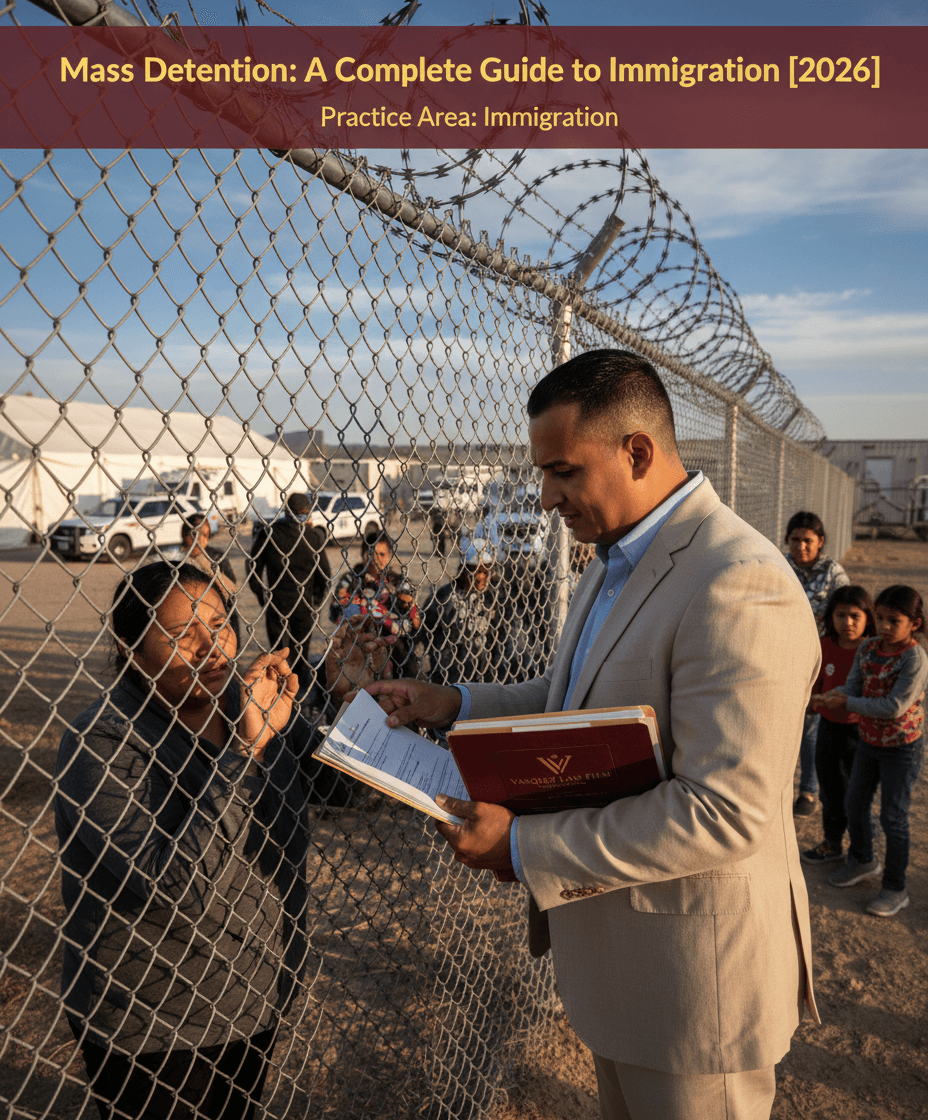
Deportation Terminated: Your Ultimate Guide for 2026
Is your deportation terminated? Understand what happens next in 2026. Get expert legal guidance to pursue permanent residency. Contact Vasquez Law Firm today.
Vasquez Law Firm
Published on February 13, 2026

Deportation Terminated: Your Ultimate Guide for 2026
Discovering that your deportation terminated case has been successfully closed by an immigration judge is a monumental moment for any immigrant and their family. This decision, formally known as the termination of removal proceedings, can open doors to new possibilities, including the pursuit of legal permanent residency in the U.S. However, understanding the intricacies of what happens next, the potential paths forward, and the importance of continued legal guidance is crucial. As of 2026, navigating post-termination immigration processes requires careful attention to detail and strategic planning. This guide will walk you through the essential steps and considerations after your deportation case is terminated.
Need help with your case? Our experienced attorneys are ready to fight for you. Se Habla Español.
Schedule Your Free Consultation
Or call us now: 1-844-967-3536
Quick Answer: What Happens When Deportation is Terminated?
When a deportation case is terminated, it means an immigration judge has closed the removal proceedings against you. This outcome allows you to remain in the U.S. and often pursue other immigration benefits, such as applying for a Green Card or other forms of legal status, without the immediate threat of removal. It is a critical step towards securing your future in the United States.
- You are no longer in active removal proceedings.
- You can often pursue other immigration remedies.
- It does not automatically grant legal status.
- Legal guidance is essential for next steps.
- It provides an opportunity to adjust your status.
Understanding Deportation Termination: What It Means
The termination of deportation, also known as removal proceedings, is a favorable outcome in immigration court. It signifies that the Department of Homeland Security (DHS) can no longer pursue your removal from the United States, at least not based on the charges initially brought against you. This decision can stem from various reasons, such as the DHS failing to meet its burden of proof, the availability of a new form of relief, or a prosecutorial discretion request being granted.
Receiving this news is often a huge relief, but it is important to understand that termination itself does not automatically grant you legal status. Instead, it removes the immediate threat of deportation and creates an opportunity for you to apply for other immigration benefits. This could include adjusting your status to a lawful permanent resident, applying for asylum, or seeking other forms of relief for which you may now be eligible. The specific path forward depends heavily on your individual circumstances and immigration history.
For many, this means a chance to reunite with family, pursue educational or career goals, and build a more stable future without the constant fear of being forced to leave the country. The legal process leading up to this point can be long and emotionally taxing, making the termination of proceedings a significant victory. However, the subsequent steps are equally crucial and require careful navigation to secure a lasting legal status in the U.S. Consulting with an experienced immigration attorney, like those at Vasquez Law Firm, is vital to understand your options and execute the next phase effectively.
Common Reasons for Deportation Terminated Cases
Several factors can lead to an immigration judge deciding that a deportation terminated outcome is appropriate. Understanding these common reasons can help you assess your own case or the case of a loved one. One frequent reason is when the Department of Homeland Security (DHS) exercises prosecutorial discretion. This means DHS decides not to pursue removal, often due to compelling humanitarian factors, long-term U.S. residency, or significant ties to the community.
Another common scenario involves a respondent becoming eligible for an immigration benefit during the proceedings. For example, if you marry a U.S. citizen and become eligible for adjustment of status, the judge might terminate the removal proceedings to allow you to pursue that path. Similarly, if new evidence emerges that disproves the charges of removability or establishes eligibility for a form of relief, termination may be warranted.
Procedural issues or legal errors by the DHS can also lead to termination. If the government fails to properly serve a Notice to Appear (NTA) or cannot provide sufficient evidence to support its claims, the immigration judge may terminate the case. Sometimes, legislative changes or new court rulings can create opportunities for termination that did not exist before. Each case is unique, and the specific reasons for termination will depend on the facts presented and the legal arguments made. For instance, a recent case highlighted an undocumented father of U.S. Marines whose deportation was terminated, allowing him to seek legal permanent residency, illustrating the impact of strong community ties and humanitarian considerations.
Next Steps After Your Deportation Terminated Case
Once your deportation terminated, the immediate threat of removal is lifted, but your immigration journey is far from over. This is a critical juncture where proactive steps can lead to securing a more permanent legal status. The primary goal after termination is often to apply for an immigration benefit that will grant you lawful status, such as a Green Card or asylum. The specific application you pursue will depend on the underlying reasons for your termination and your eligibility for various forms of relief.
For many, the next step involves filing an Application to Adjust Status (Form I-485) with USCIS if they are eligible for a Green Card through a family petition, employment, or other categories. This process requires demonstrating eligibility for the underlying visa and proving admissibility to the United States. Other individuals might pursue asylum if they fear persecution in their home country, or seek U Nonimmigrant Status (U-Visa) if they were victims of certain crimes and cooperated with law enforcement.
It is essential to consult with an immigration attorney immediately after termination to assess all available options. An attorney can help you understand the eligibility requirements for each benefit, prepare the necessary documentation, and represent you throughout the application process. This strategic planning ensures that you capitalize on the opportunity created by the termination and move closer to achieving your long-term immigration goals. Do not delay in seeking legal advice, as some applications may have strict deadlines or specific filing requirements.
Pathways to Legal Status After a Terminated Deportation
Having your deportation terminated opens up several potential pathways to obtaining legal status in the United States. The most suitable path depends on your unique circumstances and what made you eligible for termination in the first place. One common route is through family-based petitions. If you have a qualifying U.S. citizen or lawful permanent resident family member, they might be able to file an immigrant petition on your behalf, such as Form I-130, Petition for Alien Relative. Once that petition is approved and a visa becomes available, you could then apply for adjustment of status (Green Card) within the U.S. if eligible, or pursue consular processing abroad.
Another important pathway is through employment-based visas, although these are typically more complex and depend on specific job offers and employer sponsorship. For individuals who have been victims of certain crimes and have cooperated with law enforcement, U Nonimmigrant Status (U-Visa) could be an option. Similarly, victims of human trafficking may qualify for T Nonimmigrant Status (T-Visa). These humanitarian visas provide a path to lawful status and eventually, a Green Card.
Asylum or Withholding of Removal might be pursued if you have a well-founded fear of persecution in your home country. Even if your initial asylum claim was denied in removal proceedings, termination might allow for a new application under certain circumstances. Additionally, specific relief programs like Special Immigrant Juvenile Status (SIJS) for abused, neglected, or abandoned children, or VAWA (Violence Against Women Act) self-petitions for victims of domestic violence, could become viable options. Each pathway has distinct eligibility criteria, and a thorough assessment by an immigration lawyer is crucial to identify the best course of action. For example, 8 U.S.C. § 1255 outlines the conditions for adjustment of status, a key pathway for many.

Don't face your legal challenges alone. Our team is here to help you every step of the way.
Call today: 1-844-967-3536 | Se Habla Español
Common Mistakes After a Deportation Terminated Case
Even after your deportation terminated, it is easy to make mistakes that could jeopardize your future immigration goals. One of the most critical errors is assuming that termination automatically grants you legal status. It does not. Termination merely ends the removal proceedings, making it imperative to actively pursue an alternative immigration benefit. Failing to act quickly or misunderstanding the next steps can lead to missed deadlines or even renewed removal proceedings.
Another common mistake is attempting to navigate the complex post-termination landscape without legal counsel. Immigration law is incredibly nuanced, and the specific forms of relief available to you will depend on a detailed analysis of your case. Without an attorney, you risk filing the wrong application, submitting incomplete documentation, or missing crucial eligibility requirements. This can result in denials, delays, and potentially wasted filing fees.
Furthermore, some individuals might travel outside the U.S. without proper authorization after termination, assuming they are now free to do so. Depending on your previous immigration history and any prior unlawful presence, leaving the country could trigger re-entry bars, making it impossible to return legally. Always consult with an attorney before making any travel plans. Lastly, providing inconsistent information to different immigration agencies or on various applications can raise red flags and complicate your case. Consistency and accuracy are paramount throughout all immigration processes. For example, 8 C.F.R. § 245.1 details complex eligibility requirements that are easy to misinterpret.
If you only remember one thing: Do not assume your immigration journey is over after a deportation case is terminated. Seek immediate legal advice to understand your next steps and actively pursue a path to permanent legal status.
Immigration Law: NC, FL, and Nationwide Considerations
Immigration law in the United States is primarily federal, meaning that the laws governing a deportation terminated case, and the pathways to legal status afterward, apply uniformly across the nation. This includes decisions made by immigration judges within the Executive Office for Immigration Review (EOIR) and applications processed by U.S. Citizenship and Immigration Services (USCIS).
Nationwide Concepts
The core principles for terminating removal proceedings and applying for subsequent immigration benefits, such as adjustment of status (Green Card) or asylum, are consistent nationwide. Agencies like USCIS and Immigration and Customs Enforcement (ICE) operate under federal statutes and regulations, ensuring that the legal framework for immigration cases remains the same whether you are in North Carolina, Florida, or any other state. This means the eligibility criteria for various visas, waivers, and forms of relief are not state-specific. However, the interpretation and application of these laws can sometimes vary slightly by jurisdiction and the specific immigration court or USCIS field office involved. For further information, the U.S. Department of State provides comprehensive details on various visa categories.
North Carolina and Florida Practicalities
While the federal laws are uniform, the practical aspects of navigating the immigration system in North Carolina and Florida can have local nuances. For instance, the caseloads and processing times at the Charlotte Immigration Court or the Miami Immigration Court might differ, affecting how quickly your case progresses. Similarly, local ICE field offices in areas like Smithfield, NC, or Orlando, FL, may have specific priorities or policies regarding prosecutorial discretion. The availability of legal aid resources and the experience of local immigration attorneys in these states can also vary. Vasquez Law Firm serves both North Carolina and Florida, offering localized expertise within the federal immigration framework. Our attorneys understand the local procedures and can provide tailored guidance whether your case is in Smithfield, NC, or anywhere in Florida.
When to Call a Lawyer After Deportation Terminated
The moment your deportation terminated, you should immediately contact an experienced immigration attorney. This is not a task to delay, as crucial next steps often have strict timelines and complex requirements. Here are several triggers indicating you need to call a lawyer now:
- Your immigration judge just issued an order terminating your removal proceedings.
- You received a notice from the immigration court or DHS confirming termination.
- You are unsure about your eligibility for any post-termination immigration benefit.
- You need to apply for a Green Card, asylum, or another form of legal status.
- You have concerns about potential re-entry bars or past immigration violations.
- You are considering traveling outside the U.S. after termination.
- You have received any communication from USCIS or ICE after your case was terminated.
- You want to understand the full implications of the termination order for your future.
- You want to explore options for bringing family members to the U.S.
- You need help gathering and preparing complex documentation for new applications.
An attorney from Vasquez Law Firm can provide immediate clarity and strategic guidance, ensuring you make informed decisions during this pivotal time.
About Vasquez Law Firm
At Vasquez Law Firm, we combine compassion with aggressive representation. Our motto "Yo Peleo" (I Fight) reflects our commitment to standing up for your rights and tirelessly advocating for our clients. We understand the profound impact immigration cases have on individuals and families, and we are dedicated to providing the highest level of legal service.
- Bilingual Support: Se Habla Español - our team is fully bilingual, ensuring clear communication and understanding throughout your legal journey.
- Service Areas: We proudly serve clients across North Carolina, Florida, and provide comprehensive immigration services nationwide.
- Experience: With over 15 years of dedicated experience, Attorney Vasquez and our team have a proven track record of helping clients navigate complex legal matters.
- Results: We have achieved thousands of successful outcomes across various practice areas, always striving for the best possible results for those we represent.
Attorney Trust and Experience
Attorney Vasquez holds a Juris Doctor degree and is admitted to practice in both the North Carolina State Bar and Florida Bar. With over 15 years of dedicated legal experience, he has built a reputation for providing personalized attention and achieving favorable outcomes for his clients. He is committed to understanding each client's unique story and fighting for their rights with unwavering dedication. His deep knowledge of immigration law, combined with a compassionate approach, makes Vasquez Law Firm a trusted ally for your legal needs.
Frequently Asked Questions About Deportation Terminated Cases
What does it mean when an immigration case is terminated?
When an immigration case is terminated, it signifies that an immigration judge has closed the removal proceedings against an individual. This means the government is no longer actively seeking to deport them. It does not automatically grant legal status but removes the immediate threat of removal, allowing the individual to pursue other immigration benefits and pathways to lawful residency within the U.S.
What happens after a deportation case is dismissed?
After a deportation case is dismissed or terminated, you are no longer in removal proceedings. This opens the door to explore other immigration options, such as applying for a Green Card through family petitions, employment, or humanitarian relief. It's crucial to consult an attorney immediately to identify and pursue the appropriate next steps to secure a more permanent legal status.
Can a terminated immigration case be reopened by the government?
Yes, a terminated immigration case can potentially be reopened by the government, though it's not common without new circumstances. DHS can file a motion to reopen if new evidence emerges, if there was a procedural error, or if the individual commits a new crime. This highlights the importance of continuing to comply with all immigration laws and seeking legal counsel for any new developments.

Can someone who has been deported come back after a case termination?
A case termination typically refers to ending *ongoing* removal proceedings, not reversing a completed deportation. If someone was already deported, a separate process, often involving a waiver (Form I-212) or specific visa petition, is usually required for them to legally return. Termination prevents future deportation, it doesn't automatically allow re-entry after a prior deportation.
Does a terminated deportation case automatically lead to a Green Card?
No, a terminated deportation case does not automatically lead to a Green Card. It simply means you are no longer in removal proceedings. You must still independently qualify and apply for a Green Card through an eligible category, such as a family petition, employment sponsorship, or asylum. The termination provides the opportunity to pursue these applications without the threat of deportation.
How long does it take to get a Green Card after deportation termination?
The timeline for obtaining a Green Card after deportation termination varies significantly. It depends on the specific pathway you pursue (e.g., family-based, employment-based, asylum), visa availability, and the processing times of USCIS. This process can range from several months to many years. An immigration attorney can provide a more accurate estimate based on your specific situation.
What is prosecutorial discretion in the context of termination?
Prosecutorial discretion refers to the government's power to decide how to enforce immigration laws. In the context of termination, DHS may exercise prosecutorial discretion by choosing not to pursue removal proceedings against an individual, often due to compelling humanitarian factors, U.S. citizen family ties, or other favorable circumstances. This can lead to the termination of a deportation case.
What documents are needed to apply for new status after termination?
The specific documents needed after a deportation terminated case depend on the immigration benefit you are seeking. Generally, you will need your birth certificate, marriage certificate (if applicable), passport, proof of entry, prior immigration documents, and any supporting evidence for your new application (e.g., I-130 petition, medical exam, affidavits). A lawyer can provide a comprehensive checklist.
Can I travel internationally after my deportation case is terminated?
Traveling internationally after your deportation case is terminated can be risky and depends entirely on your current immigration status and history. If you do not yet have a Green Card or other valid travel document, leaving the U.S. could trigger re-entry bars and prevent your return. Always consult with an immigration attorney before making any international travel plans to avoid serious complications.
What if I was detained when my deportation case was terminated?
If you were detained when your deportation case was terminated, you should generally be released. The termination order means the legal basis for your detention, which was the removal proceeding, no longer exists. However, the release process can take some time and may require coordination with ICE. An attorney can help expedite your release and ensure all procedures are followed correctly.
Sources and References
- U.S. Citizenship and Immigration Services (USCIS)
- Executive Office for Immigration Review (EOIR)
- U.S. Department of State
- 8 U.S.C. § 1255 - Adjustment of Status
- 8 C.F.R. § 245.1 - Eligibility
Ready to take the next step? Contact Vasquez Law Firm today for a free, confidential consultation. We're committed to fighting for your rights and achieving the best possible outcome for your case.
Start Your Free Consultation Now
Call us: 1-844-967-3536
Se Habla Español - Estamos aquí para ayudarle.
Free Legal Consultation
Discuss your case with our experienced attorneys. We're available 24/7.
Vasquez Law Firm
Legal Team
Our experienced attorneys at Vasquez Law Firm have been serving clients in North Carolina and Florida for over 20 years. We specialize in immigration, personal injury, criminal defense, workers compensation, and family law.