Are Immigrant Detentions Illegal and What Are Your Rights in 2026
Are immigrant detentions illegal in 2026? Understand your rights and legal options if you or a loved one faces detention. Contact Vasquez Law for a free consultation.
Published on February 15, 2026

Have questions? Talk to an attorney - free evaluation.
Call 1-844-967-3536Worried how the latest immigration news affects you?
Get a free, confidential case review with an immigration attorney - know exactly where you stand.
Are Immigrant Detentions Illegal and What Are Your Rights in 2026
The question of whether immigrant detentions are illegal often arises amidst complex immigration laws and enforcement actions. In 2026, understanding your rights and the legal framework governing immigration detention is more crucial than ever. While U.S. immigration authorities, such as Immigration and Customs Enforcement (ICE), have the power to detain individuals, their actions are subject to specific legal limits and constitutional protections. Knowing when an immigrant detention might be unlawful or when a detainee's rights are violated is the first step toward seeking justice. This comprehensive guide from Vasquez Law Firm will help you navigate the intricate world of immigration detention, focusing on federal laws and practical considerations for individuals in North Carolina, Florida, and nationwide.
Need help with your case? Our experienced attorneys are ready to fight for you. Se Habla Español.
Schedule Your Free Consultation
Or call us now: 1-844-967-3536
Quick Answer: Are Immigrant Detentions Illegal?
No, not inherently. Immigrant detentions are generally legal under U.S. federal law if conducted by authorized agencies like ICE, provided they adhere to specific legal statutes and constitutional rights. However, a detention can become illegal if it violates due process, is prolonged without justification, or if the individual's rights are infringed upon during custody. This includes situations where there's no legal basis for detention or procedures aren't followed correctly.
- Detention must have a legal basis (e.g., pending deportation, security risk).
- Detainees have due process rights, including the right to a hearing.
- Prolonged detention without bond or review can be challenged.
- ICE must follow established procedures for arrest and detention.
- Legal representation is crucial to challenge potentially illegal detentions.
Understanding the Legal Framework for Immigration Detention in 2026
Immigration detention in the United States operates under a complex set of federal laws and regulations. The primary authority for detention stems from the Immigration and Nationality Act (INA), specifically 8 U.S.C. § 1226, which outlines when non-citizens may be detained pending removal proceedings. While the government has broad powers, these powers are not absolute. Detentions must comply with constitutional due process requirements and international human rights standards.
As of 2026, the legal landscape continues to evolve, with ongoing debates and court challenges regarding the scope of ICE's authority and the rights of detained immigrants. Recent court rulings have emphasized the need for individualized bond hearings and timely reviews for those held in prolonged custody. Understanding these legal nuances is vital for anyone questioning if immigrant detentions are illegal in a specific case. Without a clear legal basis or adherence to proper procedures, what begins as a lawful detention can quickly become an unlawful one.
When Can Immigrant Detentions Become Illegal?
While the government has the authority to detain non-citizens, there are specific circumstances where an immigrant detention can be deemed illegal or unconstitutional. These situations often involve violations of due process, prolonged detention without review, or a lack of proper legal basis. Knowing these triggers is essential for challenging a detention effectively.
- Lack of Legal Basis: Detention without a valid warrant, a pending removal proceeding, or a finding of inadmissibility/deportability can be challenged. Every detention must be predicated on a specific provision of the INA.
- Due Process Violations: This includes denial of the right to a bond hearing, insufficient notice of charges, lack of access to legal counsel, or inability to present evidence. The Fifth Amendment guarantees due process to all persons within U.S. jurisdiction.
- Prolonged Detention: While there's no strict time limit, indefinite detention without a meaningful opportunity for release or review, especially for individuals not deemed a flight risk or danger, can be unconstitutional. The Supreme Court has addressed this in various cases, emphasizing the need for periodic bond hearings.
- Conditions of Confinement: Extreme abuses, neglect, or inhumane conditions within detention facilities can render a detention illegal, violating the Eighth Amendment's prohibition against cruel and unusual punishment, even if the initial arrest was lawful.
- Mistaken Identity or Error: If an individual is detained due to mistaken identity, clerical error, or if they are a U.S. citizen or have valid legal status, their detention is illegal from the outset.
These scenarios highlight the importance of immediate legal intervention. An experienced immigration attorney can assess the specifics of a detention and determine the best course of action to challenge its legality. The Vasquez Law Firm in Raleigh, NC, and throughout Florida, is prepared to assist.
Your Rights During Immigration Detention
Even if an immigrant detention is legal, individuals retain fundamental rights that must be respected by ICE and detention facility staff. Understanding these rights is paramount for anyone facing or experiencing detention.
- Right to Legal Counsel: Detained immigrants have the right to an attorney, though the government is not required to provide one. You can hire an attorney or seek assistance from pro bono organizations.
- Right to a Bond Hearing: Many detained immigrants are eligible for a bond hearing before an immigration judge to argue for release on bond. This is a critical opportunity to seek release from detention.
- Right to Know the Reason for Detention: You must be informed of the charges against you and the reason for your detention. This information is typically provided in a Notice to Appear (NTA).
- Right to Communicate: You have the right to contact family members, your embassy or consulate, and your attorney. Our free consulate directory lists the 24-hour emergency line for each country, which is the number to call from detention. Detention facilities must facilitate these communications.
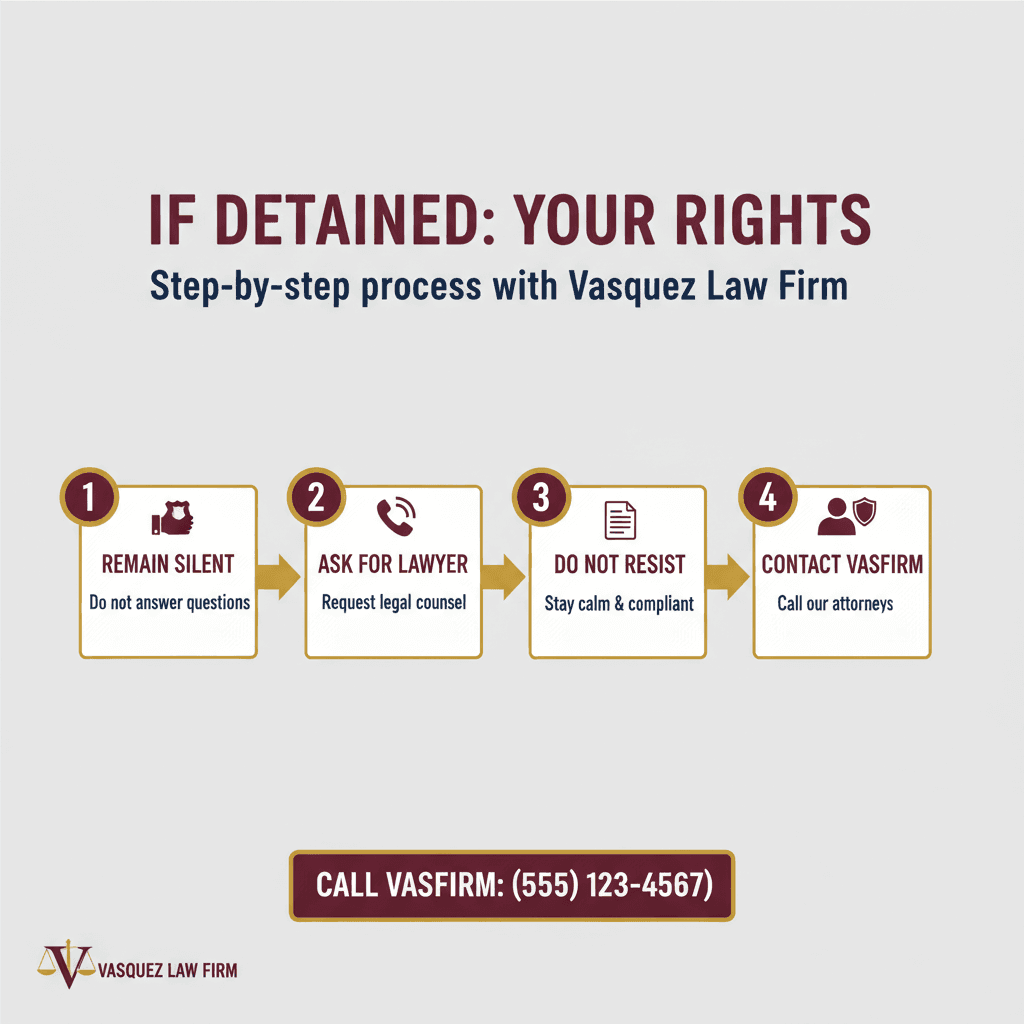
- Right to Remain Silent: You are not required to answer questions from ICE agents beyond basic identification. Anything you say can be used against you in immigration proceedings.
- Right to Medical Care: Detention facilities are legally obligated to provide adequate medical and mental health care to detainees. If you are denied care, it is a serious violation.
- Right to Review of Your Case: You have the right to have your case reviewed by an immigration judge and to appeal adverse decisions.
Exercising these rights can be challenging while detained, making legal representation indispensable. For those in Raleigh, NC, or anywhere in Florida, Vasquez Law Firm offers comprehensive immigration legal services.
Steps to Take if a Loved One is in Immigrant Detention
When a family member or friend is detained by immigration authorities, it can be an incredibly stressful and confusing time. Taking immediate and informed action is crucial. Here's a step-by-step guide to help you navigate the process:
- Locate the Detainee: The first step is to find out where your loved one is being held. You can use the ICE Online Detainee Locator System. You will need their A-number (alien registration number) or biographical information.
- Gather Information: Collect as much information as possible about the circumstances of the arrest and detention. This includes the date, time, location, and any documents received.
- Contact an Immigration Attorney: This is arguably the most critical step. An experienced attorney can quickly assess the situation, determine the legal basis for detention, and advise on the best course of action. They can also ensure your loved one's rights are protected.
- Understand the Charges: Once an attorney is involved, they can help you understand the specific charges your loved one faces and the type of immigration proceeding they are in (e.g., removal proceedings, credible fear interview).
- Prepare for a Bond Hearing: If your loved one is eligible for a bond, an attorney can help prepare the necessary documentation and arguments for a bond hearing. This often involves demonstrating that the detainee is not a flight risk or a danger to the community.
- Maintain Communication: Work with your attorney to establish communication with the detainee. Ensure they know their rights and understand the legal process.
- Explore Relief Options: Your attorney will explore all possible forms of relief from removal or detention, such as asylum, adjustment of status, or cancellation of removal.
Acting quickly and decisively can significantly impact the outcome of an immigrant detention case. Vasquez Law Firm is dedicated to providing urgent and effective legal assistance to families across North Carolina and Florida.
Don't face your legal challenges alone. Our team is here to help you every step of the way.
Call today: 1-844-967-3536 | Se Habla Español
Common Mistakes to Avoid in Immigrant Detention Cases
Navigating an immigrant detention case is fraught with potential pitfalls. Avoiding common mistakes can significantly improve the chances of a favorable outcome. Here are some critical errors to steer clear of:
- Not Seeking Legal Counsel Immediately: Delaying legal consultation can lead to missed deadlines, uninformed decisions, and missed opportunities for release. An attorney can intervene early to protect rights.
- Signing Documents Without Understanding Them: Never sign any document from immigration officials without fully understanding its implications or consulting with an attorney. You might inadvertently waive important rights or agree to voluntary departure.
- Providing False Information: Lying or providing misleading information to ICE or immigration judges can lead to severe penalties, including criminal charges and permanent bars from immigration benefits. Always be truthful with your attorney.
- Failing to Attend Hearings: Missing any scheduled immigration court hearing can result in an order of removal (deportation) in absentia, making it much harder to reopen the case.
- Not Knowing Your Rights: Ignorance of your rights can lead to self-incrimination or a failure to challenge unlawful procedures. Educate yourself or rely on your attorney to assert your rights.
- Assuming All Detentions Are Unlawful: While some detentions may be illegal, many are legally permissible. Focusing solely on illegality without exploring other forms of relief can be a strategic error.
- Failing to Secure Bond Funds: If a bond is granted, delays in paying it can prolong detention. Prepare financially or seek assistance from family and community groups.
- Not Documenting Everything: Keep detailed records of all interactions with ICE, court dates, and communications. This documentation can be vital evidence in your case.
If you only remember one thing: Always consult with an experienced immigration attorney as soon as possible if you or a loved one is detained. Their expertise is invaluable in protecting your rights and navigating complex legal challenges.
Immigration Detention: North Carolina, Florida, and Nationwide Considerations
Immigration law is primarily federal, meaning the core statutes and regulations apply uniformly across the United States. However, the practical experience of immigrant detentions can vary depending on the specific location and the policies of local ICE field offices and detention facilities. Vasquez Law Firm provides comprehensive immigration services to individuals and families across North Carolina and Florida, as well as nationwide.
North Carolina Notes on Immigration Detention
In North Carolina, ICE operates several detention facilities or utilizes county jails under intergovernmental service agreements (IGSAs) to house detainees. Major facilities include the Stewart Detention Center (though technically in Georgia, it serves detainees from across the Southeast, including NC), and various county jails. Detainees in North Carolina often face proceedings in immigration courts in Charlotte or Atlanta. Our Raleigh-based firm regularly assists clients detained within North Carolina and those transferred to facilities in neighboring states.
Florida Notes on Immigration Detention
Florida has a significant number of immigration detention facilities, reflecting its large immigrant population and proximity to the Caribbean. Key facilities include the Krome Service Processing Center in Miami, the Glades County Detention Center, and the Baker County Detention Center. Immigration courts in Florida are primarily located in Miami and Orlando. Our firm's presence in Florida enables us to provide direct support to clients navigating the specific challenges of detention in the state.
Nationwide Concepts for Immigrant Detentions
Regardless of location, the fundamental federal laws governing immigrant detentions remain the same. The process involves ICE apprehension, potential placement in removal proceedings, and hearings before an immigration judge under the Executive Office for Immigration Review (EOIR). Challenges to detention conditions or legality are often heard in federal district courts. Vasquez Law Firm leverages its deep understanding of federal immigration law to serve clients across the nation, ensuring consistent and high-quality representation.
When to Call an Immigration Lawyer Immediately
Immediate legal intervention can be a game-changer in immigration detention cases. Here are critical triggers that signal it's time to call an immigration lawyer without delay:
- After Any Arrest or Encounter with ICE: Even if no formal detention occurs, an attorney can advise on rights and potential future actions.
- If a Loved One Has Been Detained: Time is of the essence to locate them, understand the charges, and explore release options.
- If You Receive a Notice to Appear (NTA): This document initiates removal proceedings and requires a timely response.
- If Your Bond Request Was Denied: An attorney can review the denial and determine if there are grounds for an appeal or a new hearing.
- If You Believe Your Detention is Unlawful: This includes situations where there's no clear legal basis, due process violations, or prolonged detention.
- If You Are a U.S. Citizen or Have Valid Legal Status and Are Detained: This is an illegal detention that requires immediate legal action.
- If You Are Facing Deportation or Removal Proceedings: An attorney can build a defense and explore all available forms of relief.
- If You Fear Persecution in Your Home Country: An attorney can help you apply for asylum or other protective statuses.
- If You Are Being Asked to Sign Any Documents by ICE: Never sign anything without legal review.
- If You Are Experiencing Poor Conditions or Denied Medical Care in Detention: These are serious violations that require legal intervention.
For urgent assistance, contact Vasquez Law Firm. We are here to fight for your rights, whether you're in Raleigh, NC, Florida, or anywhere else in the U.S. Our motto, "Yo Peleo," means we fight for you.
About Vasquez Law Firm
At Vasquez Law Firm, we combine compassion with aggressive representation. Our motto "Yo Peleo" (I Fight) reflects our commitment to standing up for your rights and providing dedicated legal advocacy. We understand the profound impact that immigration challenges, including detention, can have on individuals and families. Our team is committed to delivering personalized service and strategic solutions.
- Bilingual Support: Se Habla Español - our team is fully bilingual, ensuring clear communication and understanding throughout your legal journey.
- Service Areas: We proudly serve clients with immigration needs across North Carolina, Florida, and nationwide. For personal injury, workers' compensation, criminal defense, family law, and traffic cases, we focus on North Carolina.
- Experience: With over 15 years of dedicated experience, we have a proven track record of helping clients navigate complex legal matters and achieve favorable outcomes.
- Results: Our firm has successfully handled thousands of cases, advocating fiercely for our clients' rights and futures.
Attorney Trust and Experience
Attorney Vasquez holds a Juris Doctor degree and is admitted to practice in both the North Carolina State Bar and Florida Bar. With over 15 years of dedicated legal experience, he has built a reputation for providing personalized attention and achieving favorable outcomes for his clients. His deep understanding of immigration law, coupled with a compassionate approach, makes him a trusted advocate for those facing challenging legal situations.
Frequently Asked Questions About Immigrant Detentions
Is immigration detention legal in the U.S. in 2026?
Yes, immigration detention is generally legal under U.S. federal law, primarily the Immigration and Nationality Act (INA), when conducted by authorized agencies like ICE. However, it must adhere to specific legal statutes and constitutional due process rights. Detentions can become illegal if they violate these rights or lack proper legal justification. It's crucial to distinguish between a legal detention and one that infringes on an individual's rights.
How long can someone be held in immigrant detention?
There is no strict, universal time limit for immigrant detention in the U.S. However, prolonged detention without a bond hearing or individualized review can be challenged as unconstitutional. The length of detention often depends on the complexity of the case, court backlogs, and whether the individual is deemed a flight risk or a danger to the community. An attorney can work to expedite release or challenge lengthy detentions.
What rights do immigrants have during detention?
Detained immigrants have several fundamental rights, including the right to legal counsel (though not provided by the government), the right to a bond hearing, the right to know the reason for their detention, and the right to communicate with family and their consulate. They also have the right to medical care and to remain silent when questioned by ICE beyond basic identification. These rights are protected under U.S. law.
Can a U.S. citizen be held in immigrant detention?
No, a U.S. citizen cannot be legally held in immigrant detention. If a U.S. citizen is mistakenly detained by ICE, it is an illegal detention that requires immediate legal action. It is vital to assert U.S. citizenship and provide proof, and to contact an attorney immediately to secure release and address the wrongful detention. This situation, while rare, can occur due to identity issues.
What is the purpose of immigration detention centers?
The primary purpose of immigration detention centers is to hold non-citizens who are awaiting immigration court proceedings, are deemed a flight risk, or are considered a danger to public safety. They are designed to ensure individuals appear for their hearings and to facilitate their eventual removal from the U.S. if ordered. They are not intended as punitive facilities, though conditions can vary.
Are ICE agents law enforcement?
Yes, Immigration and Customs Enforcement (ICE) agents are federal law enforcement officers. They are authorized to enforce immigration laws, make arrests, and conduct investigations related to immigration, customs, and national security. Their authority is derived from federal statutes, granting them powers similar to other federal law enforcement agencies in their specific jurisdiction.
How does ICE know if someone is undocumented?
ICE uses various methods to identify undocumented individuals, including information sharing with local law enforcement, databases, tips from the public, and encounters during other law enforcement operations. They may also identify individuals through routine traffic stops where state laws permit officers to inquire about immigration status, or during targeted enforcement actions based on intelligence. Border Patrol also apprehends individuals at the border.
What should I do if ICE approaches me?
If ICE approaches you, remember your rights: You have the right to remain silent. You do not have to answer questions about your immigration status. You have the right to speak with an attorney. Do not open your door unless agents have a warrant signed by a judge. Do not sign any documents without legal review. It's best to state you wish to remain silent and want to speak to a lawyer.
Can I appeal an immigration judge's detention decision?
Yes, generally you can appeal an immigration judge's decision regarding detention or bond. Appeals are typically filed with the Board of Immigration Appeals (BIA). The BIA reviews the judge's decision for legal errors or abuses of discretion. This process can be complex and requires strict adherence to deadlines and legal procedures, making legal representation highly advisable. An attorney can guide you through the appeal.
Sources and References
- U.S. Citizenship and Immigration Services (USCIS)
- Executive Office for Immigration Review (EOIR)
- 8 U.S. Code § 1226 - Apprehension and Detention of Aliens
Ready to take the next step? Contact Vasquez Law Firm today for a free, confidential consultation. We're committed to fighting for your rights and achieving the best possible outcome for your case.
Start Your Free Consultation Now
Call us: 1-844-967-3536
Se Habla Español - Estamos aquí para ayudarle.


William Vasquez
Founder & CEO, Vasquez Law Firm, PLLC
William Vasquez is the founder and CEO of Vasquez Law Firm, PLLC, a results-driven firm specializing in immigration, criminal defense, personal injury, and workers' compensation. A U.S. Air Force veteran and recipient of the Joint Service Achievement Medal, William is dedicated to fiercely fighting for his clients' rights.
Related Legal Services
Need legal help? Learn more about immigration lawyers in North Carolina, or contact us for a free evaluation.
You can also visit statewide immigration legal services for more information.