What It Means When Your Deportation Case Is Terminated in 2026
Understand how a deportation case terminated impacts your immigration status in 2026. Get expert legal guidance from Vasquez Law Firm. Contact us for a free consultation today.
Published on February 13, 2026
Talk to an immigration attorney
Free call. A clear plan for your case.
Free & confidential · Se habla espanol · 24/7

Have questions? Talk to an attorney - free evaluation.
Call 1-844-967-3536Check your case status now
Look up your immigration case below, then talk to an attorney about what it means — free.
Questions about your result?
Talk to an attorney about your case — free, no obligation.
What It Means When Your Deportation Case Is Terminated in 2026
Navigating the complexities of immigration law can be overwhelming, especially when facing removal proceedings. When a deportation case is terminated, it signifies a critical turning point, often opening new pathways for individuals to remain in the United States. This guide, updated for 2026, will explore what it means when an immigration judge terminates removal proceedings, the various reasons this might occur, and the crucial steps you should take afterward. Understanding this process is vital for anyone in Charlotte, Florida, or across the nation facing similar challenges. Vasquez Law Firm is dedicated to providing aggressive and compassionate representation to help you secure your future.
Need help with your case? Our experienced attorneys are ready to fight for you. Se Habla Español.
Schedule Your Free Case Evaluation
Or call us now: 1-844-967-3536
Quick Answer
When a deportation case is terminated, it means an immigration judge has officially closed the removal proceedings against an individual. This can happen for various reasons, such as lack of evidence, prosecutorial discretion, or eligibility for other forms of relief. Termination provides a significant opportunity for individuals to pursue legal permanent residency or other immigration benefits without the threat of immediate deportation.
- An immigration judge officially closes the removal proceedings.
- Reasons include insufficient evidence or prosecutorial discretion.
- Opens doors for pursuing legal permanent residency.
- Removes the immediate threat of deportation.
- Requires immediate follow-up with an immigration attorney.
Understanding When an Immigration Judge Terminates Removal Proceedings
The termination of removal proceedings is a significant event in immigration law. It means that the Department of Homeland Security (DHS) can no longer pursue its efforts to deport an individual from the United States. This decision is typically made by an immigration judge after reviewing the specifics of a case, considering legal arguments, and evaluating evidence presented by both the government and the respondent.
There are several scenarios that can lead to an immigration judge terminating removal proceedings. Sometimes, DHS may determine that it lacks sufficient legal grounds to deport the individual, or a respondent might become eligible for a form of relief that resolves their immigration status. This decision effectively pauses or ends the legal battle to remove someone from the country, providing a crucial window for individuals to stabilize their immigration situation.
For many, particularly Dreamers or those with deep ties to their communities in places like Charlotte and Florida, a terminated deportation case offers immense relief and a renewed sense of hope. However, it's essential to understand that termination does not automatically grant legal status; it merely removes the immediate threat of deportation, allowing for further steps to be taken towards securing a lawful presence. Vasquez Law Firm specializes in guiding clients through these complex post-termination processes.
Common Reasons for a Deportation Case to Be Terminated
An immigration judge may terminate removal proceedings for a variety of compelling reasons. One common reason is prosecutorial discretion, where DHS decides not to pursue the case further due to humanitarian factors, strong community ties, or other administrative priorities. This often occurs when an individual has no serious criminal history and has strong equities, such as U.S. citizen children or spouses.
Another frequent cause for a deportation case to be terminated is a defect in the Notice to Appear (NTA), which is the charging document that initiates removal proceedings. If the NTA contains errors or fails to properly inform the individual of the charges against them, an immigration judge may determine it is invalid and terminate the case. Similarly, if DHS cannot provide sufficient evidence to support the allegations of removability, the judge might rule in favor of termination.
Furthermore, if an individual becomes eligible for a form of immigration relief during the proceedings, such as adjustment of status to a lawful permanent resident, asylum, or cancellation of removal, the judge may terminate the case to allow them to pursue that relief with USCIS. This transition requires careful legal strategy and immediate action to capitalize on the opportunity presented by the termination.
Key Steps After Your Deportation Case is Terminated
While a terminated deportation case is a victory, it's not the end of your immigration journey. It's crucial to understand that termination does not automatically grant legal status or a Green Card. Instead, it typically means that you are no longer in removal proceedings and are free to pursue other avenues for lawful status, often through USCIS. Immediate and informed action is essential to capitalize on this opportunity and secure your long-term future in the United States.
The first and most critical step is to consult with an experienced immigration attorney. They can review the specific reasons for your case's termination and advise you on the best path forward. This might involve applying for adjustment of status, a U-visa, or other forms of relief for which you may now be eligible. Without proper legal guidance, you risk missing crucial deadlines or making errors that could jeopardize your ability to gain legal status.
You must also ensure that all records are updated following the termination. This includes checking with USCIS and the Executive Office for Immigration Review (EOIR) to confirm that your case is officially closed and that you are no longer listed in active removal proceedings. Maintaining accurate documentation and clear communication with immigration authorities is paramount to avoiding future complications. Vasquez Law Firm helps clients manage these post-termination complexities in Charlotte, Florida, and nationwide.
What to Do Immediately After Termination
Upon receiving the immigration judge's order to terminate your deportation case, take these immediate actions:
- Obtain the Official Order: Secure a copy of the judge's written order of termination. This document is your proof that removal proceedings have concluded.
- Consult an Immigration Attorney: Schedule an immediate meeting with your attorney or seek new legal counsel. They will analyze the termination details and outline your next steps for pursuing permanent legal status.
- Understand Your Eligibility: Your attorney will assess if you are now eligible for an adjustment of status, a different visa, or other forms of relief that were previously unavailable due to your active removal case.
- Update Your Records: Confirm with USCIS that your immigration status is correctly reflected as no longer being in removal proceedings. This prevents future issues.
- Gather Documentation: Begin collecting all necessary documents for potential new applications, such as birth certificates, marriage certificates, financial records, and evidence of good moral character.
Essential Documents and Evidence After Termination
Even after a deportation case is terminated, the journey to securing permanent legal status often requires submitting new applications to USCIS. Preparing a comprehensive set of documents and evidence is crucial for these subsequent steps. The specific documents needed will depend on the type of immigration relief you are pursuing, but some general categories are almost always required.
You will likely need personal identification documents, such as your passport, birth certificate, and any previous immigration documents like I-94 records. Financial records, including tax returns and employment verification letters, are often necessary to demonstrate financial stability or support. Additionally, proof of your ties to the U.S., such as utility bills, lease agreements, and letters from community members, can strengthen your case.
Any documents related to your original removal proceedings, including the Notice to Appear, court orders, and the termination order, are also vital. These prove that your deportation case was indeed terminated and clarify the legal basis for that decision. Your immigration attorney will help you identify and organize all necessary documentation to ensure a thorough and compelling application for your next step.
- Official Order of Termination from the Immigration Judge.
- Passport and birth certificate.
- I-94 Arrival/Departure Record.
- Proof of physical presence in the U.S. (e.g., utility bills, school records, employment history).
- Financial documents (tax returns, employment letters, bank statements).
- Marriage certificate and birth certificates of U.S. citizen children (if applicable).
- Police clearance certificates from all places of residence.
- Medical examination results (Form I-693).
- Affidavit of Support (Form I-864) from a qualifying sponsor, if required for adjustment of status.
- Any prior immigration application receipts or approval notices.
Timeline: What to Expect After a Deportation Case is Terminated
The timeline after a deportation case is terminated can vary significantly depending on the individual's specific circumstances and the type of immigration relief they pursue. While the immediate threat of removal is gone, the process of adjusting status or obtaining other benefits can still take months, or even years, in some cases. Understanding the general phases can help manage expectations and plan effectively.
Initially, there's a period of assessment with your attorney, typically within a few weeks of termination, to determine the most viable path forward. This is followed by the preparation and filing of new applications with USCIS, which can take several weeks or months, depending on the complexity of the forms and the availability of supporting documents. Once filed, USCIS processing times vary widely based on the application type and current caseloads.
Applicants should anticipate biometric appointments, requests for additional evidence (RFEs), and potentially an interview with a USCIS officer. Each of these steps adds to the overall timeline. Staying organized, responding promptly to all requests, and maintaining consistent communication with your legal team are critical for a smooth process. Vasquez Law Firm works diligently to expedite these processes for clients in Charlotte, Florida, and across the nation.
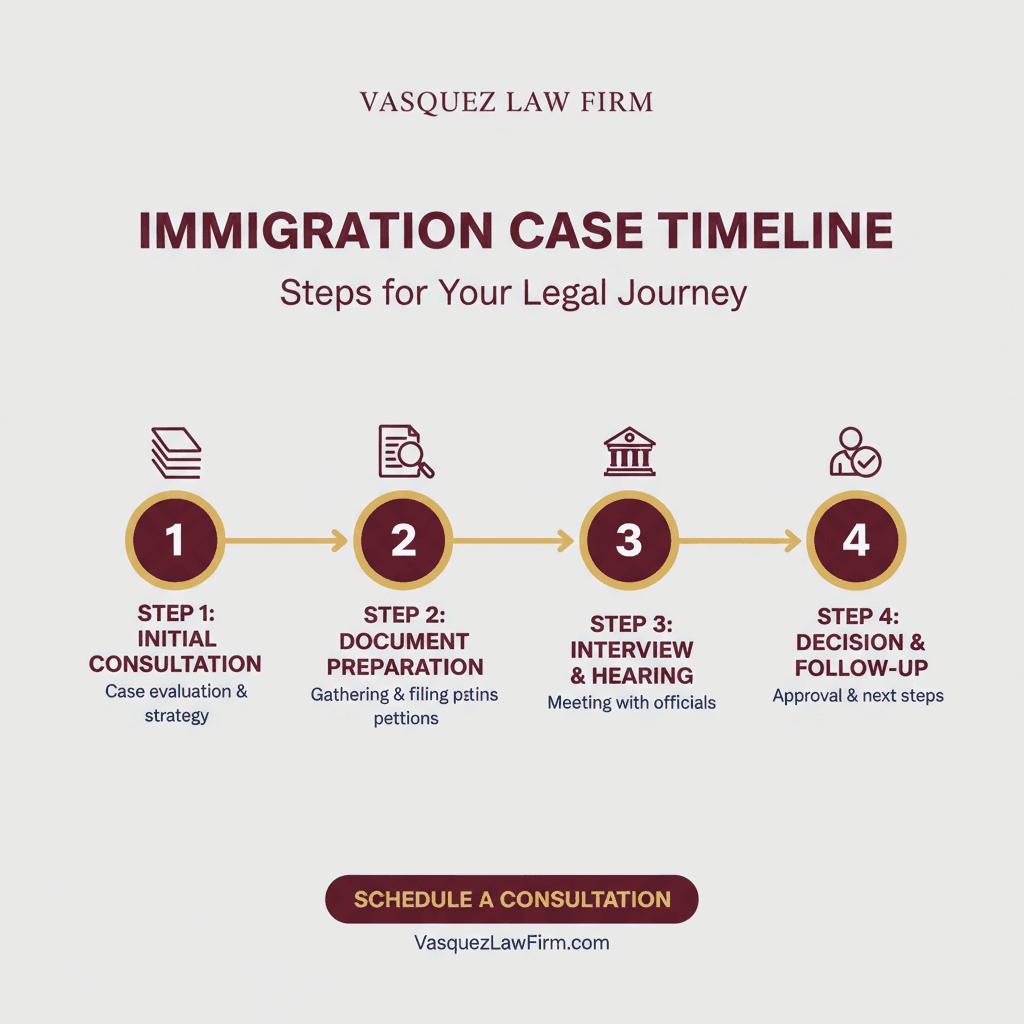
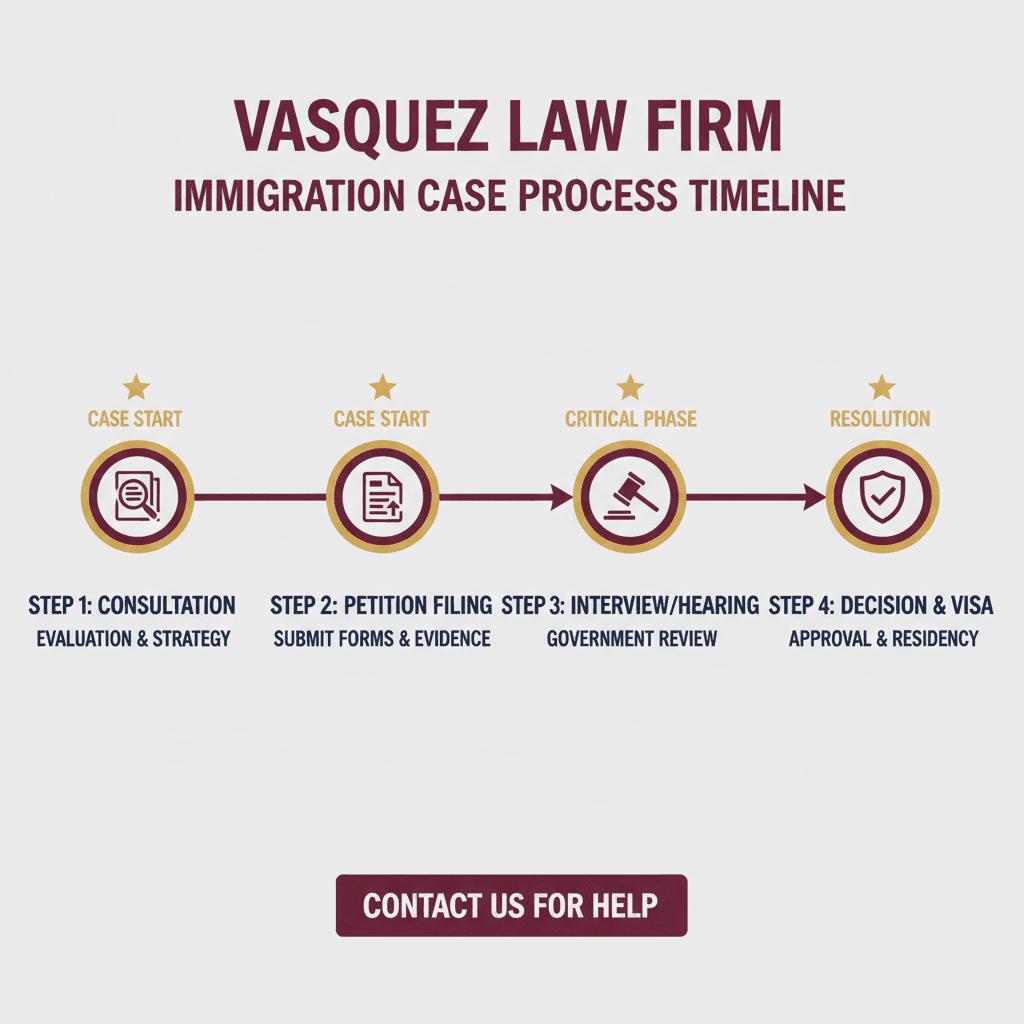
- Week 1-4: Consultation with attorney, review of termination order, and strategy planning for next steps.
- Month 1-3: Preparation and filing of new immigration petitions (e.g., I-485 for adjustment of status, I-130 for family-based petition).
- Month 3-6: Receipt of USCIS notices, scheduling of biometric appointments (fingerprints and photos).
- Month 6-12+: Potential requests for evidence (RFEs) from USCIS, requiring prompt responses.
- Month 12-24+: Interview with a USCIS officer, if required for your specific application.
- Month 18-36+: Final decision on your application for legal permanent residency or other immigration benefits.
Costs and Fees: What Impacts the Price of Post-Termination Processes
Understanding the potential costs involved after a deportation case is terminated is an important part of planning your immigration journey. While the immediate removal threat is resolved, pursuing a new immigration benefit, such as adjustment of status, involves various fees. These costs typically include government filing fees, legal fees for attorney representation, and other miscellaneous expenses.
Government filing fees are set by USCIS and can vary significantly depending on the specific forms you need to file. For example, an application for adjustment of status (Form I-485) often has a substantial fee, which may also include fees for employment authorization (EAD) and advance parole. These fees are non-refundable, regardless of the outcome of your application, making it crucial to file correctly the first time.
Legal fees for attorney representation will depend on the complexity of your case, the services required, and the attorney's experience. An attorney will help you identify the correct forms, gather necessary documentation, prepare you for interviews, and represent you throughout the process. Other potential costs might include translation services for foreign documents, medical examination fees, and travel expenses for appointments. Vasquez Law Firm offers transparent fee structures and works with clients to make legal representation accessible.
Common Mistakes and How to Avoid Them After Case Termination
Even after a successful termination of a deportation case, individuals can make mistakes that jeopardize their future immigration prospects. Avoiding these pitfalls is just as important as securing the termination itself. Being proactive and seeking expert legal guidance can prevent unnecessary delays, additional costs, and potential setbacks.
- Assuming Legal Status is Granted: Termination only stops removal proceedings; it does not grant a Green Card or other legal status. You must actively pursue new immigration benefits. Always consult with an attorney to understand your actual status and next steps.
- Delaying Action: The window of opportunity after termination is precious. Procrastinating on filing new applications can lead to expired eligibility or changes in law. Act promptly and work with your attorney to file as soon as possible.
- Failing to Update Records: Not ensuring that USCIS and EOIR records reflect the termination can lead to confusion or even future enforcement actions. Always confirm your case status with relevant agencies and keep all official documentation.
- Providing Inconsistent Information: Any new application must be consistent with previous statements made during removal proceedings. Discrepancies can lead to denials or accusations of misrepresentation. Review all past records with your attorney before filing new forms.
- Traveling Internationally Without Advance Parole: Leaving the U.S. without proper authorization (Advance Parole) while an application for adjustment of status is pending can lead to denial of your application or inadmissibility upon return. Always consult your attorney before any international travel.
- Ignoring New Eligibility: You might now be eligible for forms of relief that were not available during removal proceedings. Failing to explore these options with an attorney could mean missing the best path to legal status.
- Falling for Notary Public Scams: Only licensed attorneys or accredited representatives can provide legal advice. Notaries public (notarios) in many countries are not attorneys and cannot represent you in immigration matters. Seek counsel only from qualified legal professionals.
If you only remember one thing: A terminated deportation case is a fresh start, not a finished one. Immediately consult with an experienced immigration attorney to plan your next steps toward securing permanent legal status and avoid costly errors.
Don't face your legal challenges alone. Our team is here to help you every step of the way.
Call today: 1-844-967-3536 | Se Habla Español
Immigration Law: NC, FL, and Nationwide Considerations
Immigration law in the United States is primarily federal, meaning the statutes and regulations apply uniformly across all states, including North Carolina and Florida. Decisions made by an immigration judge, such as a deportation case being terminated, have nationwide applicability. However, the practical implications and available resources can vary by location. The Vasquez Law Firm assists clients throughout North Carolina, Florida, and across the nation with their immigration matters.
Federal Framework and Uniformity
The Immigration and Nationality Act (INA), found in Title 8 of the U.S. Code, establishes the foundational laws governing immigration. Agencies like U.S. Citizenship and Immigration Services (USCIS), Immigration and Customs Enforcement (ICE), and the Executive Office for Immigration Review (EOIR), which oversees immigration courts, operate under federal authority. Therefore, the legal grounds for removal, forms of relief, and procedures for when a deportation case is terminated are consistent nationwide. For instance, the criteria for adjustment of status are the same whether you are in Charlotte, NC, or Miami, FL. 8 U.S.C. § 1255 outlines the conditions for adjustment of status, which is a common path after termination.
North Carolina Specifics
While the laws are federal, local factors in North Carolina can influence the experience of individuals in removal proceedings. The Charlotte immigration court handles cases for many residents across the state. Local ICE field offices and their enforcement priorities can also affect how cases proceed. Our attorneys at Vasquez Law Firm are deeply familiar with the local practices and judicial tendencies within North Carolina's immigration courts and can provide tailored advice for clients in the region.
Florida Specifics
Florida, with its large immigrant population, has a robust and complex immigration court system, including courts in Miami, Orlando, and Bradenton. The volume of cases and specific local prosecutorial discretion policies can impact the speed and nature of removal proceedings. Our firm's presence and experience in Florida mean we understand these local nuances, allowing us to effectively advocate for clients whose deportation case is terminated in the state, helping them navigate their next steps in the Florida immigration landscape. The Executive Office for Immigration Review (EOIR) provides information on immigration courts.
Nationwide Concepts and Impact
The termination of a deportation case, regardless of where it occurs, has a nationwide impact on an individual's immigration record. This federal decision clears the way for applications to USCIS, which are processed centrally. The key is to leverage this federal outcome effectively, regardless of your state of residence. Vasquez Law Firm provides nationwide immigration services, ensuring that clients receive consistent, high-quality legal representation no matter their location. We stay current on federal policy changes and how they affect individuals across the country in 2026.
When to Call an Immigration Lawyer Now
While the termination of a deportation case is a positive development, it's not the time to become complacent. Several situations warrant immediate contact with an experienced immigration attorney to ensure you capitalize on this opportunity and avoid future complications. Delaying legal consultation can lead to missed deadlines or missteps that could jeopardize your ability to secure permanent legal status.
- You have just received an order from an immigration judge stating your deportation case is terminated.
- You are unsure of the next steps to take to adjust your immigration status or pursue other benefits.
- You have questions about your eligibility for a Green Card or other forms of relief after termination.
- You need to apply for employment authorization or advance parole following the termination.
- You are considering traveling outside the U.S. after your case was terminated.
- You believe there might be errors in your immigration records post-termination.
- You are concerned about potential appeals from DHS regarding the termination decision.
- You have received any communication from USCIS or ICE after your case termination that you do not understand.
- You were arrested or detained by ICE for reasons that led to a terminated case, and you need to understand your rights.
- You want to explore all possible legal avenues to secure your long-term future in the U.S. after your removal proceedings ended.
About Vasquez Law Firm
At Vasquez Law Firm, we combine compassion with aggressive representation. Our motto "Yo Peleo" (I Fight) reflects our commitment to standing up for your rights and securing your future. We understand the profound impact immigration challenges have on individuals and families, which is why we approach every case with dedication and a results-driven mindset.
- Bilingual Support: Se Habla Español - our team is fully bilingual, ensuring clear communication and understanding throughout your legal journey.
- Service Areas: We proudly serve clients throughout North Carolina and Florida, and provide comprehensive immigration services nationwide.
- Experience: With over 15 years of dedicated legal experience, we have successfully navigated complex legal matters across various practice areas.
- Results: Our firm has achieved thousands of successful outcomes for clients, demonstrating our commitment to fighting for the best possible results.
Attorney Trust and Experience
Attorney Vasquez holds a Juris Doctor degree and is admitted to practice in the North Carolina State Bar. With over 15 years of dedicated legal experience, he has built a reputation for providing personalized attention and achieving favorable outcomes for his clients. His deep understanding of immigration law, coupled with a compassionate approach, makes him a trusted advocate for those facing challenging legal battles. Attorney Vasquez is committed to fighting for your rights, embodying the "Yo Peleo" spirit in every case.
Need immigration help? Our immigration attorneys can review your case.
Ready to take the next step? Contact Vasquez Law Firm today for a free, confidential consultation. We're committed to fighting for your rights and achieving the best possible outcome for your case.
Start Your Free Case Evaluation Now
Call us: 1-844-967-3536
Se Habla Español - Estamos aquí para ayudarle.
Frequently Asked Questions
What does it mean if my deportation case is terminated?
When an immigration judge terminates removal proceedings, it means the legal process to deport you from the U.S. has been officially closed. This does not automatically grant you legal status, but it removes the immediate threat of removal and opens the door for you to pursue other immigration benefits through USCIS, such as adjusting your status to a lawful permanent resident. It's a critical step, but not the final one.
Does termination mean I have a Green Card or legal status?
No, termination of a deportation case does not automatically grant you a Green Card or any other legal status. It simply means you are no longer in active removal proceedings. You must then proactively apply for a specific immigration benefit, like adjustment of status, with USCIS to obtain lawful permanent residency or another form of legal status. An attorney can guide you.
What are common reasons an immigration judge terminates removal proceedings?
An immigration judge may terminate removal proceedings for several reasons. These include prosecutorial discretion by DHS, where the government chooses not to pursue deportation; defects in the Notice to Appear (NTA); insufficient evidence from DHS to prove removability; or if the individual becomes eligible for a form of immigration relief, such as adjustment of status, that can be pursued outside of court.
How long does it take after a deportation case is terminated to get a Green Card?
The time it takes to get a Green Card after a deportation case is terminated varies greatly. It depends on the specific immigration benefit you are pursuing and USCIS processing times. This process can range from several months to a few years. Factors like the complexity of your application, the volume of cases, and prompt responses to RFEs all influence the timeline. Legal guidance is essential.
Can I travel internationally after my deportation case is terminated?
Traveling internationally after your deportation case is terminated requires extreme caution. If you have a pending application for adjustment of status, leaving the U.S. without an Advance Parole document can lead to your application being denied and potentially make you inadmissible upon return. Always consult with your immigration attorney before making any international travel plans to avoid jeopardizing your case.
What should I do if DHS appeals the judge's decision to terminate my case?
If DHS appeals the immigration judge's decision to terminate your case, it means the Board of Immigration Appeals (BIA) will review the decision. This is a serious development that requires immediate legal action. You must work closely with your immigration attorney to prepare a strong response to the appeal, arguing for the validity of the termination. Do not attempt to handle an appeal without legal representation.
Will a terminated deportation case affect future immigration applications?
Generally, a terminated deportation case should not negatively affect future immigration applications, as it signifies that the government's efforts to deport you were unsuccessful. In fact, it often clears the path for new applications. However, full disclosure of your immigration history, including the terminated proceedings, is always required. An experienced attorney can help ensure your applications are accurately prepared and presented.
Do I still need an attorney after my deportation case is terminated?
Yes, absolutely. While the immediate threat of deportation is removed, an attorney is crucial for guiding you through the subsequent steps to secure permanent legal status. They can help identify eligible forms of relief, prepare and file complex applications with USCIS, respond to requests for evidence, and represent you in interviews. Their expertise significantly increases your chances of a successful outcome.
Can I apply for a work permit after my deportation case is terminated?
Applying for a work permit, also known as an Employment Authorization Document (EAD), after your deportation case is terminated depends on the specific immigration benefit you are now pursuing. For example, if you have filed an application for adjustment of status (Form I-485), you can typically apply for an EAD concurrently or shortly thereafter. Your attorney can advise on eligibility and the correct filing process for your situation.
What is prosecutorial discretion and how does it lead to termination?
Prosecutorial discretion is the authority of immigration enforcement agencies, like ICE, to decide how to use their resources. It allows them to choose not to pursue deportation against certain individuals, often based on humanitarian factors, strong community ties, or a lack of serious criminal history. When DHS exercises prosecutorial discretion in your favor, they may ask an immigration judge to terminate your removal proceedings, effectively closing your case.
Sources and References


William Vasquez
Founder & CEO, Vasquez Law Firm, PLLC
William Vasquez is the founder and CEO of Vasquez Law Firm, PLLC, a results-driven firm specializing in immigration, criminal defense, personal injury, and workers' compensation. A U.S. Air Force veteran and recipient of the Joint Service Achievement Medal, William is dedicated to fiercely fighting for his clients' rights.
Related Legal Services
Need legal help? Learn more about get immigration legal help today, or contact us for a free evaluation.
You can also visit our NC immigration team for more information.