What Changed in Colorado Immigration Law and What It Means for You
Navigating Colorado immigration law can be complex. Get an essential guide to state policies and how they impact you in 2026. Contact Vasquez Law for help today.
Published on February 26, 2026
Talk to an immigration attorney
Free call. A clear plan for your case.
Free & confidential · Se habla espanol · 24/7
Have questions? Talk to an attorney - free evaluation.
Call 1-844-967-3536Worried how the latest immigration news affects you?
Schedule a confidential case review with an immigration attorney - know exactly where you stand.
What Changed in Colorado Immigration Law and What It Means for You
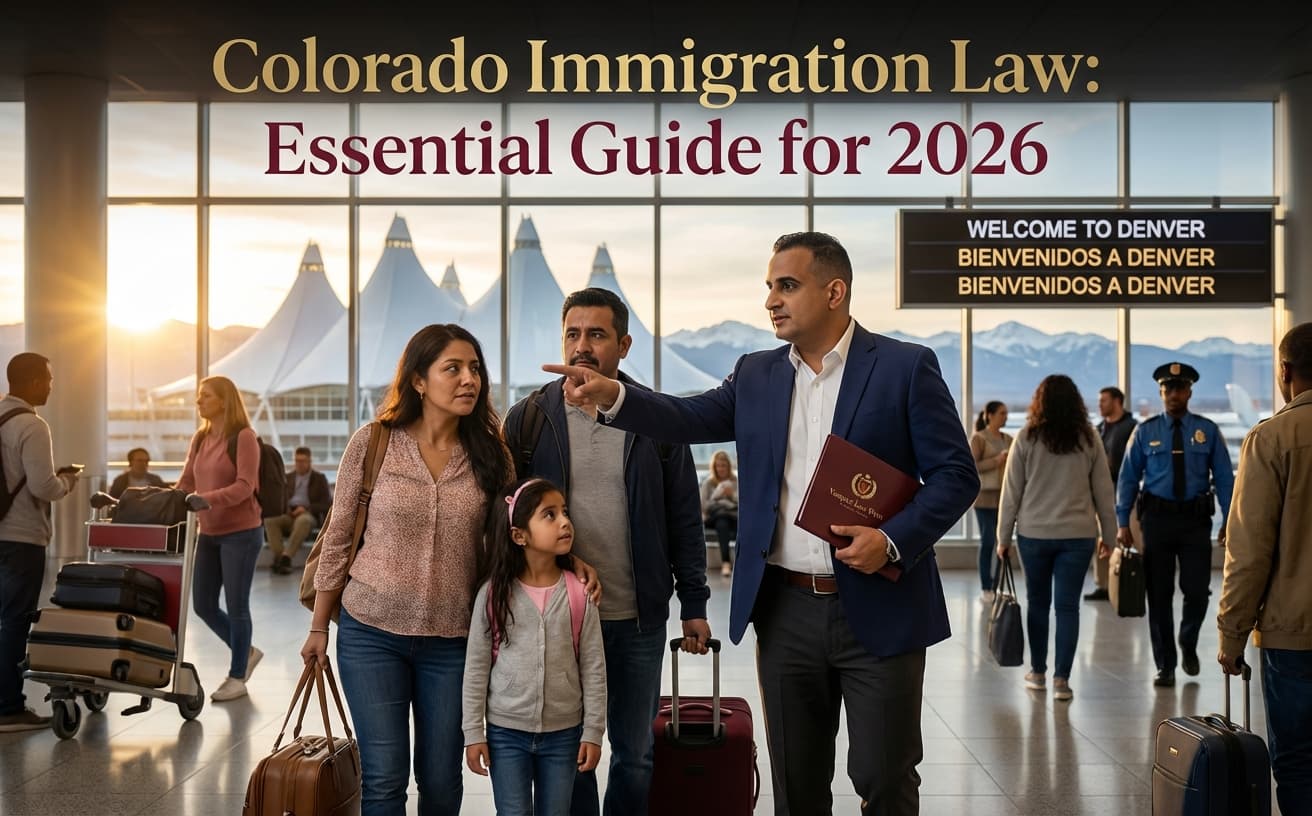
Understanding Colorado immigration law is crucial for immigrants, their families, and employers across the state. In 2026, the legal landscape continues to evolve, with new policies and enforcement practices shaping the lives of undocumented immigrants in Colorado and those seeking legal status. This comprehensive guide breaks down key aspects of Colorado's approach to immigration, including state-specific bills like SB 276 Colorado, local enforcement, and how these intersect with federal regulations. At Vasquez Law Firm, we are dedicated to providing clear, actionable information and robust representation for all your immigration needs, whether you are in North Carolina, Florida, or navigating complex federal laws from any state.
Need help with your case? Our experienced attorneys are ready to fight for you. Se Habla Español.
Schedule Your Free Case Evaluation
Or call us now: 1-844-967-3536
Quick Answer
Colorado immigration law in 2026 involves a blend of federal statutes and state-level policies designed to address the unique needs and challenges of its immigrant population. While federal law governs most immigration matters, Colorado has enacted specific legislation, such as SB25-276, to protect civil rights and define local enforcement roles, impacting undocumented immigrants and their families within the state.
- Colorado's state laws aim to protect immigrant rights and limit local involvement in federal enforcement.
- Federal law, enforced by agencies like USCIS and ICE, remains paramount for visas, green cards, and citizenship.
- Recent bills like SB25-276 focus on civil rights and enforcement of federal immigration law, particularly for undocumented immigrants in Colorado.
- Access to services and protections for immigrants can vary significantly based on state and local policies.
Understanding Colorado Immigration Law in 2026
Colorado has a distinctive approach to immigration compared to many other states, often enacting legislation aimed at supporting immigrant communities and delineating the roles of state and local entities from federal immigration enforcement. This creates a complex legal environment where federal regulations, like those found in the Immigration and Nationality Act (INA), interact with specific Colorado immigration laws 2025 and 2026. For anyone living or working in the state, understanding this interplay is essential.
The state's legislative efforts frequently address issues such as access to driver's licenses for undocumented immigrants, protections against discriminatory practices, and limitations on local law enforcement's participation in federal immigration actions. These measures reflect Colorado's commitment to creating a more inclusive environment for its diverse population. However, it's vital to remember that state laws cannot override federal immigration authority, meaning the path to legal residency or citizenship remains primarily governed by national statutes and agencies like USCIS.
Navigating these overlapping legal frameworks requires careful attention to detail and up-to-date knowledge. Changes at either the state or federal level can significantly impact an individual's rights and options. Vasquez Law Firm specializes in helping clients understand these nuances, offering expert guidance whether you're dealing with federal agencies in Florida, state matters in North Carolina, or specific Colorado immigration law issues from anywhere in the country.
Key State Policies and Bills Affecting Immigrants
Colorado has been proactive in passing legislation that impacts immigrants, particularly in recent years. Understanding these specific bills and policies is crucial for anyone residing in the state. One significant piece of legislation is SB25-276 Colorado, which aims to protect the civil rights of individuals regardless of their immigration status, particularly concerning interactions with law enforcement. This bill reflects a broader effort to prevent local authorities from acting as de facto immigration enforcement agents, a role traditionally reserved for federal agencies like ICE.
Another important aspect of Colorado's state-level policies includes provisions for driver's licenses for undocumented immigrants, which has been a contentious issue in many states but is a reality in Colorado. These policies help integrate immigrant communities into the economic and social fabric of the state, improving safety and access to essential services. However, these state-issued licenses do not confer federal immigration benefits or change an individual's immigration status under federal law.
These state-level initiatives, while beneficial, add layers of complexity. It's not enough to understand federal immigration law; one must also be aware of how state laws, like the Colorado immigration bill, provide additional rights or impose specific requirements. Staying informed about Colorado new law and its implications is a continuous process that often requires legal expertise. Our firm keeps abreast of these developments to provide the most current advice for our clients.
Federal vs. State Jurisdiction in Immigration Matters
The division of power between federal and state governments is a cornerstone of the U.S. legal system, especially in immigration. Federal law, primarily administered by the U.S. Department of Homeland Security (DHS) through agencies like USCIS and ICE, holds supreme authority over who can enter, reside in, and become a citizen of the United States. This includes matters such as visa applications, green card petitions (8 U.S.C. § 1255), naturalization processes, and deportation proceedings (8 C.F.R. § 240.1).
However, states like Colorado can enact laws that affect immigrants within their borders, as long as these laws do not contradict or infringe upon federal authority. For example, a state can decide whether undocumented immigrants can obtain driver's licenses or receive certain state benefits. Colorado immigration advocates often push for such state-level protections. These state laws might influence the daily lives of immigrants significantly, providing access to education, healthcare, or professional licenses, but they cannot grant legal immigration status or prevent federal deportation actions.
Understanding this distinction is critical. A state-issued ID, while useful for local purposes, will not protect an individual from federal immigration enforcement in Colorado. Similarly, state laws limiting local police cooperation with ICE do not prevent ICE from operating independently within the state. This complex legal landscape underscores why expert legal counsel is indispensable for anyone navigating immigration issues, whether in Smithfield, North Carolina, or across the country.
Impact on Undocumented Immigrants in Colorado
Undocumented immigrants in Colorado face a unique set of circumstances due to the state's progressive legislative stance, yet they remain subject to federal immigration law. While Colorado has sought to offer certain protections and access to services, such as state-issued driver's licenses, the underlying federal status of an undocumented individual remains unchanged. This means that despite state-level efforts, the threat of federal immigration enforcement in Colorado, including detention and deportation by ICE, continues to be a reality.
The passage of bills like SB25-276 aims to limit local law enforcement's ability to inquire about immigration status or hold individuals solely for federal immigration purposes, offering a layer of protection against certain forms of local cooperation with ICE. However, these measures do not preclude federal agents from conducting their operations. Undocumented immigrants must understand that while state laws may offer some respite, they do not provide immunity from federal actions.
It is crucial for undocumented individuals to be aware of their rights, both under state and federal law, and to seek legal advice if they encounter law enforcement or immigration officials. Knowing what to say, what not to say, and when to request an attorney can significantly impact the outcome of such interactions. Vasquez Law Firm provides crucial guidance on these matters, helping undocumented immigrants in Colorado and elsewhere understand their options and defend their rights.
Common Immigration Scenarios and Challenges
Immigrants in Colorado, both documented and undocumented, often encounter a range of complex legal scenarios. One common challenge involves family-based immigration, where U.S. citizens or lawful permanent residents petition for relatives. The process, governed by federal law (8 U.S.C. § 1151 et seq.), can be lengthy and fraught with specific requirements, including proving bona fide relationships and financial support. Even with Colorado's supportive environment, federal regulations on eligibility and admissibility are strict, requiring meticulous preparation.
Another frequent scenario involves individuals seeking asylum or refugee status, particularly given global humanitarian crises. While the initial application is filed with USCIS, the process often involves interviews and potential hearings before an immigration judge, overseen by the Executive Office for Immigration Review (EOIR). These cases are highly sensitive and require compelling evidence and expert legal advocacy. Even with Colorado immigration advocates, the federal standard for proving persecution is high.
Furthermore, issues related to employment authorization, DACA renewals, and navigating changes to U.S. immigration law changes 2026 are constant concerns. For example, an individual might have state-level protections but still need to secure federal work authorization to legally hold a job. Each of these scenarios carries its own set of legal hurdles and requires a tailored legal strategy. Vasquez Law Firm assists clients through these intricate processes, from initial applications to appeals, ensuring their rights are protected.
Don't face your legal challenges alone. Our team is here to help you every step of the way.
Call today: 1-844-967-3536 | Se Habla Español
When to Seek Legal Help for Colorado Immigration Law
Navigating the complexities of Colorado immigration law, alongside federal regulations, can be overwhelming. Knowing when to seek professional legal assistance is crucial to protecting your rights and achieving your immigration goals. You should consider contacting an immigration attorney if you are facing any of the following situations, whether you are in North Carolina, Florida, or dealing with federal agencies from Colorado:
- Facing Deportation or Removal Proceedings: If you receive a Notice to Appear (NTA) or are detained by ICE, immediate legal counsel is essential.
- Applying for a Visa or Green Card: The application process is intricate, and errors can lead to delays or denials.
- Seeking Asylum or Refugee Status: These cases require strong evidence and articulate legal arguments to succeed.
- Dealing with USCIS Denials or RFEs: A Request for Evidence (RFE) or a denial means you need expert help to respond effectively.
- Concerned about Undocumented Immigrants in Colorado: If you are an undocumented immigrant and want to understand your rights and options under state and federal law.
- Employer Seeking Immigration Compliance: Businesses need to ensure they comply with federal employment eligibility verification rules.
- Changes in Immigration Law: If you are unsure how new immigration policies or bills, like the Colorado immigration bill, might affect your status.
- Family Members Abroad: When petitioning for relatives, ensuring proper documentation and meeting eligibility criteria is vital.
- Criminal Charges: Any criminal offense, even minor, can have severe immigration consequences, including inadmissibility or deportability.
Do not wait until a crisis point to seek legal counsel. Proactive legal advice can often prevent future complications and save significant time and stress. Vasquez Law Firm is ready to provide the dedicated support you need.
About Vasquez Law Firm
At Vasquez Law Firm, we combine compassion with aggressive representation. Our motto "Yo Peleo" (I Fight) reflects our commitment to standing up for your rights and navigating the intricate legal system on your behalf. We understand the profound impact immigration law has on individuals and families, and we are dedicated to providing personalized and effective legal solutions.
- Bilingual Support: Se Habla Español - our team is fully bilingual, ensuring clear communication and understanding throughout your legal journey.
- Service Areas: We proudly serve clients in North Carolina, Florida, and provide comprehensive immigration services nationwide.
- Experience: With over 15 years of dedicated legal experience, our firm has successfully helped thousands of clients achieve their immigration goals.
- Results: Our track record demonstrates a consistent commitment to securing favorable outcomes across various practice areas, always prioritizing our clients' best interests.
Attorney Trust and Experience
Attorney Vasquez holds a Juris Doctor degree and is admitted to practice in both the North Carolina State Bar and Florida Bar. With over 15 years of dedicated legal experience, he has built a reputation for providing personalized attention and achieving favorable outcomes for his clients. He is a veteran-founded leader, bringing discipline and a relentless work ethic to every case. His deep understanding of both federal and state laws, including nuances of Colorado immigration law, ensures that clients receive knowledgeable and strategic advocacy.
Frequently Asked Questions
Is Colorado an immigrant friendly state?
Yes, Colorado is generally considered an immigrant-friendly state. It has enacted various laws to support immigrant communities, including allowing undocumented immigrants to obtain driver's licenses and limiting local law enforcement's involvement in federal immigration enforcement. These policies aim to integrate immigrants into society and protect their civil rights, fostering a more inclusive environment for all residents in 2026.
Can an undocumented immigrant get a driver's license in Colorado?
Yes, as of 2026, undocumented immigrants can obtain a driver's license in Colorado. The state passed legislation allowing individuals to apply for a Colorado driver's license regardless of their immigration status, provided they meet all other requirements such as passing driving tests and proving Colorado residency. This policy helps improve road safety and provides essential identification for many residents.
What is the new immigration policy in July 2025?
While there isn't a single, overarching "new immigration policy" set for July 2025 across all jurisdictions, Colorado's SB25-276, effective in 2025, significantly impacts local immigration enforcement. This bill limits local law enforcement's ability to hold individuals for federal immigration purposes without a judicial warrant, enhancing civil rights protections for immigrants. Always consult an attorney for the latest updates.
Which states have the strictest immigration laws?
States like Arizona, Alabama, and South Carolina are often cited for having some of the strictest immigration laws, characterized by measures that mandate local law enforcement cooperation with federal immigration authorities, impose penalties on employers hiring undocumented workers, or restrict access to public services. These states often contrast sharply with more immigrant-friendly states like Colorado.
Does Colorado have sanctuary cities?
While Colorado does not officially declare itself a "sanctuary state," several cities within Colorado, such as Denver, have adopted policies that limit local law enforcement's cooperation with federal immigration authorities. These policies are often referred to as "sanctuary" policies, aiming to build trust between immigrant communities and local police. These local policies should not be confused with federal immigration law.
How does SB25-276 Colorado impact immigration enforcement?
SB25-276 Colorado, a key Colorado immigration bill, significantly limits the ability of state and local law enforcement to hold individuals solely based on immigration detainers from federal agencies like ICE without a judicial warrant. This bill aims to protect civil rights and ensure due process, preventing local authorities from acting as extensions of federal immigration enforcement, impacting undocumented immigrants in Colorado.
Can Colorado laws prevent federal deportation?
No, Colorado laws cannot prevent federal deportation actions. While Colorado state laws may offer protections against local police cooperation with ICE or provide certain state benefits, they cannot override federal immigration authority. Deportation is a federal process, and only federal law or a federal court can prevent or halt a deportation order, regardless of state policies.
What resources are available for immigrants in Colorado?
Immigrants in Colorado have access to various resources, including legal aid organizations, community centers, and non-profits that offer assistance with immigration applications, language services, and social support. Organizations like the Colorado Immigrant Rights Coalition (CIRC) and others provide advocacy and direct services. Vasquez Law Firm also offers expert legal representation for complex immigration matters.
Are there any new federal immigration changes impacting Colorado residents in 2026?
As of 2026, federal immigration policies are continually evolving. While specific changes can occur at any time, general trends indicate ongoing emphasis on border security, asylum processing, and enforcement. Residents of Colorado, like all U.S. residents, are subject to these federal changes. Consulting an immigration attorney is crucial to stay informed about any new federal immigration law changes 2026 that may affect your status.
How do I find a reliable immigration lawyer in Colorado?
To find a reliable immigration lawyer in Colorado, look for attorneys with extensive experience in federal immigration law and a strong understanding of Colorado-specific policies. Seek out lawyers who are members of reputable legal associations, have positive client testimonials, and offer clear communication. Vasquez Law Firm, with its nationwide immigration services, provides expert legal counsel for Colorado residents.
Sources and References
- U.S. Citizenship and Immigration Services (USCIS)
- Executive Office for Immigration Review (EOIR)
- 8 U.S.C. § 1255 - Adjustment of Status
- 8 C.F.R. § 240.1 - Proceedings to determine deportability of aliens
Need immigration help? Our immigration attorneys can review your case.
Ready to take the next step? Contact Vasquez Law Firm today for a free, confidential consultation. We're committed to fighting for your rights and achieving the best possible outcome for your case.
Start Your Free Case Evaluation Now
Call us: 1-844-967-3536
Se Habla Español - Estamos aquí para ayudarle.

William Vasquez
Founder & CEO, Vasquez Law Firm, PLLC
William Vasquez is the founder and CEO of Vasquez Law Firm, PLLC, a results-driven firm specializing in immigration, criminal defense, personal injury, and workers' compensation. A U.S. Air Force veteran and recipient of the Joint Service Achievement Medal, William is dedicated to fiercely fighting for his clients' rights.
Related Legal Services
Need legal help? Learn more about get immigration legal help today, or contact us for a free evaluation.
You can also visit North Carolina immigration law firm for more information.