What Are Carbon County Drug Trafficking Penalties in 2026?
Facing Carbon County drug trafficking charges? Understand potential penalties, defense strategies, and what to expect in 2026. Contact Vasquez Law Firm for a free consultation today.
Published on March 10, 2026
Have questions? Talk to an attorney - free evaluation.
Call 1-844-967-3536Protect Your Record and Your Freedom
A free, confidential case review - available 24/7 for emergencies.
What Are Carbon County Drug Trafficking Penalties in 2026?
In 2026, individuals facing Carbon County drug trafficking charges confront severe legal consequences, ranging from lengthy prison sentences to substantial fines. For instance, a person caught trafficking a Schedule I controlled substance, like heroin, could face mandatory minimum sentences of several years, even for relatively small quantities. These charges are distinct from simple possession and carry much harsher penalties due to the perceived intent to distribute. Understanding the specific laws governing drug trafficking in North Carolina is crucial for anyone caught in such a situation. Vasquez Law Firm is dedicated to providing robust criminal defense for those accused of these serious offenses, ensuring their rights are protected throughout the legal process.
Need help with your case? Our experienced attorneys are ready to fight for you. Se Habla Español.
Schedule Your Free Consultation
Or call us now: 1-844-967-3536
Quick Answer
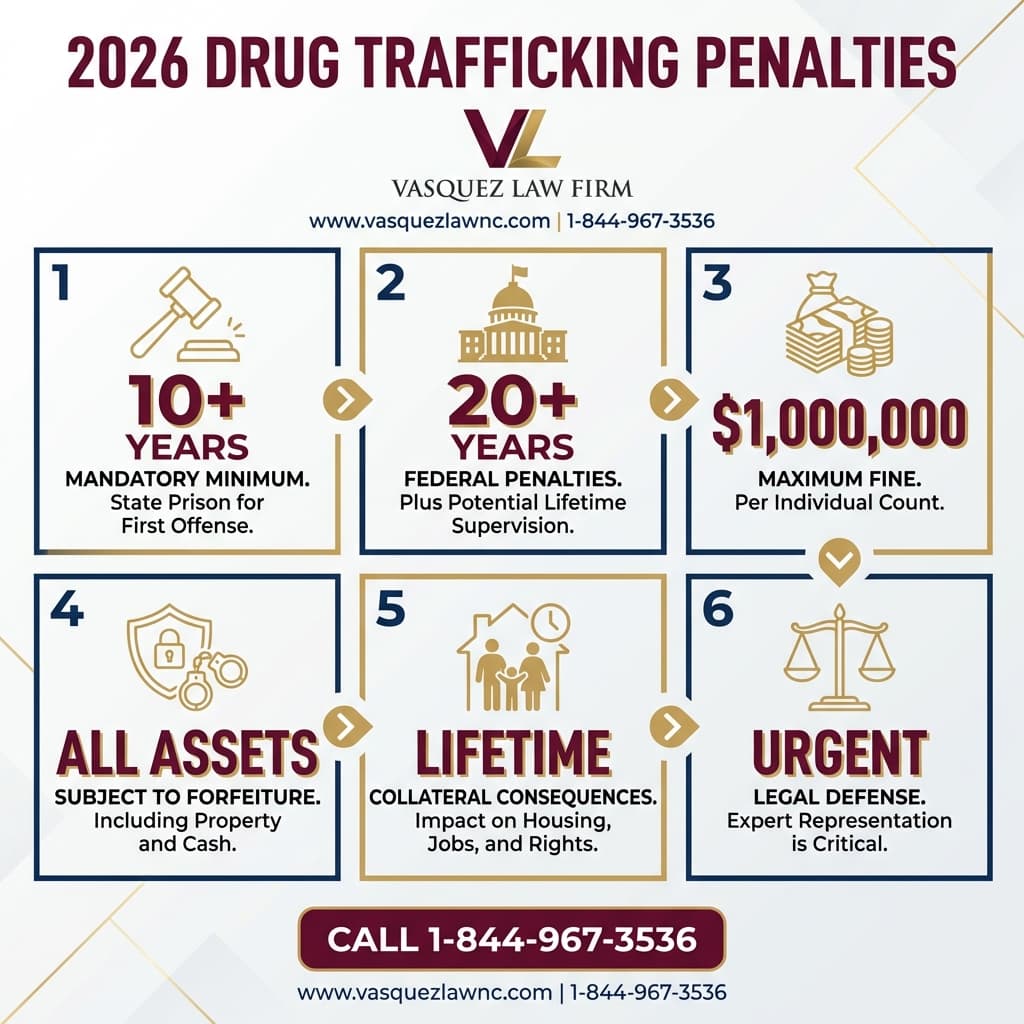
Carbon County drug trafficking penalties in 2026 are severe, often involving mandatory minimum prison sentences and hefty fines. Penalties depend on the drug type, quantity, and prior criminal record. A conviction can lead to years in prison and significant financial burdens.
- Mandatory minimum prison sentences based on drug weight.
- Fines reaching hundreds of thousands of dollars.
- Felony convictions with lasting impacts on employment and rights.
- Sentences vary significantly by drug schedule and quantity.
- Aggravating factors can increase penalties further.
Understanding Carbon County Drug Trafficking Charges
Drug trafficking charges in North Carolina are among the most serious criminal offenses a person can face. Unlike simple drug possession, which focuses on personal use, trafficking implies the intent to manufacture, transport, or sell controlled substances. For example, possessing more than 10 grams of heroin is automatically considered trafficking under North Carolina General Statute § 90-95(h)(4), triggering mandatory minimum sentences. This means even if you had no intention of selling, the quantity alone can elevate a possession charge to a trafficking charge.
The severity of these charges is directly linked to the type and quantity of the drug involved. Schedule I drugs like heroin or ecstasy, and Schedule II drugs such as cocaine or methamphetamine, carry the harshest penalties. Even marijuana, a Schedule VI drug, can result in trafficking charges if the quantity exceeds specific thresholds, such as 10 pounds or more. Law enforcement agencies in areas like Orlando and across North Carolina are actively targeting drug trafficking operations, leading to frequent arrests and stringent prosecutions.
The legal framework aims to deter large-scale drug distribution, but it often impacts individuals who may be caught in complex situations. Understanding these distinctions is critical for anyone accused of Carbon County drug trafficking, as the defense strategy will differ significantly from a standard possession case. An experienced criminal defense lawyer can help dissect the charges and identify potential weaknesses in the prosecution's case.
Penalties for Drug Trafficking in NC in 2026
North Carolina's drug trafficking laws are notoriously strict, imposing mandatory minimum prison sentences and substantial fines that vary based on the drug and its quantity. As of 2026, these penalties remain a significant concern for anyone facing such accusations. For instance, trafficking between 10 and 28 grams of cocaine (a Schedule II substance) could result in a mandatory minimum sentence of 35 to 51 months in prison and a fine of $50,000. These are not discretionary sentences; judges are generally required to impose them upon conviction.
The penalties escalate dramatically with larger quantities. Trafficking 400 grams or more of cocaine, for example, carries a mandatory minimum of 175 to 222 months (nearly 15 to 18.5 years) in prison and a fine of $250,000. Similar harsh penalties apply to other controlled substances, including heroin, methamphetamine, and even certain prescription medications when trafficked illegally. These severe consequences highlight the importance of mounting a strong defense.
Beyond the immediate prison time and fines, a conviction for drug trafficking results in a felony record, which can have lifelong repercussions. This includes difficulty finding employment, housing, and even limitations on certain civil rights. Given the gravity of these penalties, securing legal representation from a firm like Vasquez Law Firm is not just advisable, but essential for anyone navigating these complex legal waters.
Evidence Needed for a Drug Trafficking Conviction
To secure a conviction for drug trafficking, prosecutors must present compelling evidence demonstrating that the defendant not only possessed a controlled substance but also intended to sell, transport, or manufacture it beyond simple personal use. For example, law enforcement might present evidence of large quantities of drugs, packaging materials, scales, or large sums of cash found during a search. These items, when found together, can strongly suggest an intent to traffic rather than merely possess.
Under North Carolina law, the quantity of drugs alone can be sufficient evidence to establish trafficking, as seen with the specific weight thresholds outlined in NC Gen. Stat. § 90-95(h). However, prosecutors often rely on a combination of direct and circumstantial evidence. This can include text messages or phone calls discussing drug deals, surveillance footage, or testimony from informants. The prosecution needs to prove beyond a reasonable doubt that the defendant committed the acts of trafficking.
A skilled defense attorney will meticulously examine all evidence presented by the prosecution. This includes scrutinizing how the evidence was collected, whether search warrants were properly executed, and if any constitutional rights were violated during the arrest or investigation. Challenging the chain of custody for drug evidence, questioning the reliability of informants, or arguing that the evidence does not sufficiently prove intent can be crucial defense strategies in Carbon County drug trafficking cases.
Common Defenses Against Drug Trafficking Charges
Even with seemingly overwhelming evidence, several effective defense strategies can be employed against drug trafficking charges. One common defense involves challenging the legality of the police stop, search, or arrest. If law enforcement violated your Fourth Amendment rights, for instance, by conducting a search without probable cause or a valid warrant, any evidence obtained could be deemed inadmissible in court. This could lead to the dismissal of charges.
Another defense strategy focuses on challenging the prosecution's ability to prove intent to traffic. If the quantity of drugs, while above simple possession, is still debatable as a trafficking amount, or if there's no other evidence like scales or large cash, a defense attorney might argue for a lesser charge. Additionally, arguing that the drugs belonged to someone else, or that the defendant was unaware of their presence, can be a viable defense, although it often requires strong supporting evidence.
Entrapment is another possible defense, where law enforcement induces an otherwise unwilling individual to commit a crime. This defense is complex and requires demonstrating that the defendant had no predisposition to commit the crime and was coerced by agents. Furthermore, if laboratory tests show the substance was not a controlled drug, or if the weight was miscalculated, these factual errors can also be used to challenge the charges. A robust defense is critical to navigating the severe penalties associated with Carbon County drug trafficking.
What to Expect in a Drug Trafficking Case: Timeline
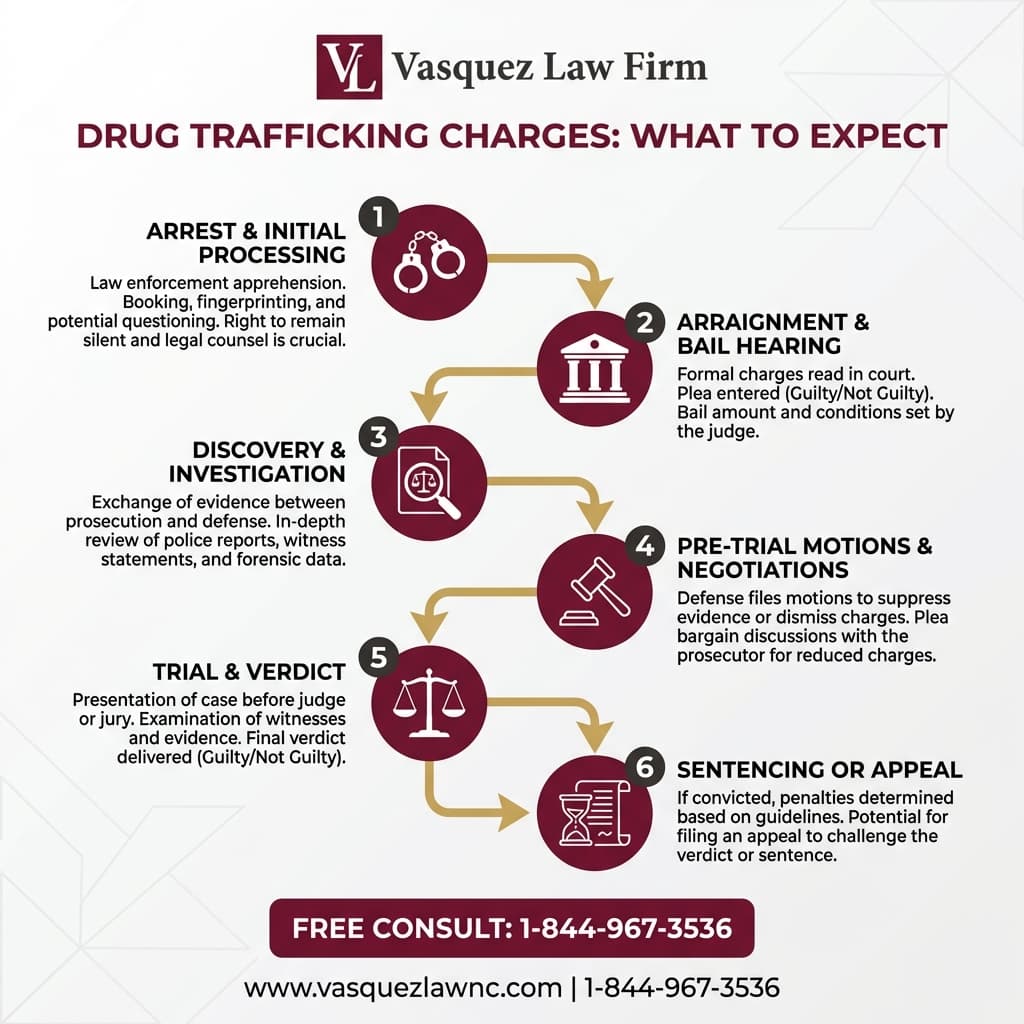
Navigating a drug trafficking case can be a long and arduous process, typically involving several key stages. Initially, an arrest leads to a first appearance or bond hearing, where a judge determines bail. Given the severity of drug trafficking, bail amounts can be very high, or even denied. Following this, the case moves into the discovery phase, where both the prosecution and defense gather and exchange evidence. This period can last several weeks to months, depending on the complexity of the evidence, such as forensic reports or electronic communications.
Next comes the preliminary hearing or grand jury indictment, where a judge or grand jury determines if there is enough probable cause to proceed with felony charges. If indicted, the case will progress to arraignment, where the defendant formally enters a plea. During this time, plea negotiations often occur, with the defense attorney working to secure a favorable deal, potentially reducing charges or penalties. Many cases resolve through plea bargains, avoiding a full trial.
If a plea agreement cannot be reached, the case will proceed to trial. A jury trial can last days or weeks, culminating in a verdict. If convicted, a sentencing hearing will follow, where the judge imposes the penalties. Throughout this entire timeline, having an experienced criminal defense lawyer from Vasquez Law Firm is essential. They can guide you through each step, ensuring your rights are protected and advocating for the best possible outcome in your criminal defense case.
Don't face your legal challenges alone. Our team is here to help you every step of the way.
Call today: 1-844-967-3536 | Se Habla Español
Common Mistakes to Avoid in Drug Trafficking Cases
Making certain missteps in a drug trafficking case can severely jeopardize your defense and lead to harsher penalties. One of the most critical mistakes is talking to law enforcement without legal counsel. Anything you say, even if you believe it’s innocent, can be used against you. Police officers are trained to elicit information, and you have the right to remain silent.
- Speaking to Police Without an Attorney: Never provide statements or answer questions without your lawyer present. Invoke your right to remain silent.
- Resisting Arrest: While frustrating, resisting arrest can lead to additional charges and complicate your case. Comply with officers, then contact your attorney.
- Attempting to Hide or Destroy Evidence: This is a separate crime and can be used as evidence of guilt, severely damaging your defense.
- Failing to Understand Your Charges: Many people don't grasp the difference between possession and trafficking, leading to poor decisions. Your attorney will explain everything.
- Not Securing Legal Representation Quickly: The sooner an attorney is involved, the better they can protect your rights, investigate the case, and build a strong defense.
- Disregarding Court Orders: Missing court dates or violating bail conditions will result in warrants and further legal trouble.
- Underestimating the Seriousness: Drug trafficking charges carry mandatory minimums; treating them lightly can lead to devastating consequences.
- Discussing Your Case on Social Media: Any posts can be used as evidence by the prosecution, even if deleted later.
If you only remember one thing: Always exercise your right to remain silent and immediately request an attorney if you are questioned or arrested for drug trafficking. This single action can be the most important step in protecting your future.
NC and Florida Notes on Drug Trafficking
While this article primarily focuses on North Carolina, it's important to note that drug trafficking laws can vary significantly by state. For instance, Florida also has strict drug trafficking statutes, often mirroring North Carolina's approach with mandatory minimum sentences based on drug type and quantity. However, the exact thresholds, sentencing guidelines, and available diversion programs may differ. For example, Florida Statute § 893.135 outlines various trafficking offenses, including those for cannabis, cocaine, and fentanyl, with similar escalating penalties. The legal landscape in Orlando, Florida, for drug offenses also presents unique challenges and local court procedures.
In North Carolina, specific judicial districts, including those covering Carbon County, may have particular tendencies in prosecuting these cases. Understanding these local nuances is critical for effective defense. Federal drug trafficking laws, codified in the Controlled Substances Act (21 U.S.C. Chapter 13), apply nationwide and often carry even more severe penalties, especially for large-scale operations or cross-state trafficking. Federal charges can involve different court procedures and sentencing guidelines than state charges. Therefore, whether you are in North Carolina, Florida, or facing federal charges, the specific jurisdiction dictates the precise legal strategy.
When to Call a Lawyer Now for Drug Trafficking Charges
The moment you suspect you are under investigation or are arrested for drug trafficking, it's critical to contact a criminal defense attorney immediately. Delaying legal counsel can severely impact your case. Here are key triggers when you should call a lawyer:
- You have been questioned by law enforcement regarding drug-related activities.
- You are served with a search warrant or your property is searched.
- You are arrested and charged with any drug offense, especially trafficking.
- You believe your constitutional rights were violated during an arrest or search.
- You are offered a plea deal by prosecutors.
- You are facing a grand jury indictment.
- You need to understand the potential penalties and your legal options.
- You are concerned about mandatory minimum sentences.
- You want to explore all possible defense strategies to protect your future.
- You need guidance on how to navigate the complex criminal justice system.
About Vasquez Law Firm
At Vasquez Law Firm, we combine compassion with aggressive representation. Our motto "Yo Peleo" (I Fight) reflects our commitment to standing up for your rights, especially when facing serious charges like Carbon County drug trafficking. We understand the fear and uncertainty that come with criminal accusations, and our team is dedicated to providing personalized attention and unwavering support.
- Bilingual Support: Se Habla Español - our team is fully bilingual and ready to assist clients in both English and Spanish, ensuring clear communication.
- Service Areas: We proudly serve clients across North Carolina and Florida, offering comprehensive criminal defense and immigration services.
- Experience: With over 15 years of dedicated legal experience, Attorney Vasquez has successfully handled thousands of complex legal matters.
- Results: Our firm has a proven track record of achieving favorable outcomes for clients, fighting tirelessly to protect their freedom and future.
Attorney Trust and Experience
Attorney Vasquez holds a Juris Doctor degree and is admitted to practice in both the North Carolina State Bar and Florida Bar. With over 15 years of dedicated legal experience, he has built a reputation for providing personalized attention and achieving favorable outcomes for his clients. His deep understanding of criminal law, particularly in drug trafficking cases, makes him a formidable advocate for those in need.
Ready to take the next step? Contact Vasquez Law Firm today for a free, confidential consultation. We're committed to fighting for your rights and achieving the best possible outcome for your case.
Start Your Free Consultation Now
Call us: 1-844-967-3536
Se Habla Español - Estamos aquí para ayudarle.
Frequently Asked Questions
What is the difference between drug possession and drug trafficking in NC?
In North Carolina, drug possession refers to having a controlled substance for personal use. Drug trafficking, however, involves possessing a certain quantity of drugs (exceeding specific thresholds), or engaging in manufacturing, selling, or transporting drugs. Trafficking carries significantly harsher mandatory minimum sentences and fines, even if there's no direct evidence of selling, due to the quantity involved. Vasquez Law Firm can explain these critical distinctions for your specific case.
What amount of drugs is considered trafficking in North Carolina?
The amount of drugs considered trafficking in North Carolina varies widely by the type of controlled substance. For example, possessing 10 grams or more of heroin, 28 grams or more of cocaine, or 10 pounds or more of marijuana can trigger trafficking charges. These are statutory thresholds defined in NC Gen. Stat. § 90-95(h). Exceeding these quantities automatically elevates the charge, regardless of intent, leading to severe penalties.
Can I face federal drug trafficking charges in Carbon County?
Yes, you can face federal drug trafficking charges in Carbon County, even if the primary focus of this article is state law. Federal charges often arise when drug operations cross state lines, involve large quantities, or are connected to organized crime. Federal penalties are typically more severe and involve different court systems. An attorney familiar with both state and federal law, like those at Vasquez Law Firm, is essential for such complex cases.
What are the mandatory minimum sentences for drug trafficking in NC?
Mandatory minimum sentences for drug trafficking in North Carolina are dictated by the drug type and quantity. For example, trafficking 10-28 grams of cocaine carries a minimum of 35-51 months in prison and a $50,000 fine. These sentences increase substantially with larger quantities, reaching over 15 years in prison and $250,000 fines for the largest amounts. Judges have limited discretion to deviate from these minimums, making a strong defense vital.
What evidence is typically used to prove drug trafficking?
Evidence used to prove drug trafficking often includes large quantities of controlled substances, drug paraphernalia such as scales and packaging materials, large sums of cash, and communication records like text messages or phone calls discussing drug sales. Witness testimony, surveillance footage, and financial records can also be used. The prosecution aims to demonstrate intent to distribute beyond personal use, often through a combination of these elements.
Can a drug trafficking charge be reduced to possession?
In some cases, a drug trafficking charge can be reduced to simple possession, particularly if an experienced defense attorney can challenge the evidence of intent to distribute or the quantity threshold. This often involves negotiating with the prosecutor, presenting mitigating circumstances, or demonstrating weaknesses in the state's case. Reducing the charge can drastically lower potential penalties, highlighting the importance of skilled legal representation.
What should I do if I am stopped by police for suspected drug trafficking?
If stopped by police for suspected drug trafficking, immediately invoke your right to remain silent and request an attorney. Do not answer questions, consent to searches, or make any statements. Anything you say can be used against you. Politely but firmly state that you wish to speak with a lawyer. Contact Vasquez Law Firm as soon as possible for guidance on how to protect your rights.
How does a prior criminal record affect drug trafficking penalties?
A prior criminal record can significantly increase the penalties for drug trafficking in North Carolina. Sentencing guidelines consider a defendant's prior convictions, leading to higher felony classification levels and longer prison sentences. Repeat offenders often face enhanced penalties and less favorable plea offers. An attorney can assess how your criminal history might impact your current charges and develop a strategy to mitigate these effects.
Are there alternative sentencing options for drug trafficking?
Alternative sentencing options for drug trafficking are rare due to mandatory minimum laws, especially for higher-level offenses. However, in some limited circumstances, such as for first-time offenders with smaller quantities or those who cooperate with law enforcement, a judge might have some discretion. Drug treatment programs or probation might be considered for lesser charges, but generally not for serious trafficking. An attorney can explore all available avenues.
Why is it important to have a local Carbon County drug trafficking lawyer?
Having a local Carbon County drug trafficking lawyer is crucial because they understand the specific prosecutors, judges, and court procedures in that jurisdiction. They are familiar with local law enforcement practices and can often anticipate how a case might be handled. This local insight, combined with expertise in North Carolina drug laws, provides a significant advantage in building an effective defense strategy and navigating the local legal system.
Sources and References
- North Carolina Courts
- Cornell Law School - 21 U.S. Code Chapter 13 - Controlled Substances Act
- North Carolina General Statutes - Article 5 - North Carolina Controlled Substances Act


William Vasquez
Founder & CEO, Vasquez Law Firm, PLLC
William Vasquez is the founder and CEO of Vasquez Law Firm, PLLC, a results-driven firm specializing in immigration, criminal defense, personal injury, and workers' compensation. A U.S. Air Force veteran and recipient of the Joint Service Achievement Medal, William is dedicated to fiercely fighting for his clients' rights.
Related Legal Services
Need legal help? Learn more about get criminal defense help today, or contact us for a free evaluation.
You can also visit defense attorneys serving all of North Carolina for more information.