How the Asylum Ban Works at the Border in 2026
Wondering if the asylum ban at the border is still legal in 2026? Learn new rules for asylum seekers and your rights. Contact Vasquez Law for help.
Published on May 18, 2026
Talk to an immigration attorney
Free call. A clear plan for your case.
Free & confidential · Se habla espanol · 24/7
Have questions? Talk to an attorney - free evaluation.
Call 1-844-967-3536Worried how the latest immigration news affects you?
Schedule a confidential case review with an immigration attorney - know exactly where you stand.
USCIS Case Status
Check your USCIS case status
Enter your receipt number and get the official status. Free, no registration.
How the Asylum Ban Works at the Border in 2026
The asylum ban at the U.S. border has impacted thousands of individuals seeking protection in recent years. Updated for 2026, this article explains what the asylum ban means, its current legal status, and what asylum seekers in Raleigh, NC and Orlando, FL need to know to protect their rights effectively.
Need help with your case? Our experienced attorneys are ready to fight for you. Se Habla Español.
Or call us now: 1-844-967-3536
Quick Answer
The asylum ban at the border restricts many arrivals from applying for asylum in the United States, but a 2026 appeals court ruling found parts of this ban illegal. Asylum is still allowed under certain conditions, but ICE may still deport some people with pending asylum cases. Seek legal help to understand your rights and options.
- The asylum ban at border limits access for many applicants.
- Recent courts ruled some parts of the ban are illegal.
- Asylum still allowed for certain qualified individuals.
- ICE may deport some with pending asylum cases.
- Legal guidance in Raleigh and Orlando can improve outcomes.
Understanding the Asylum Ban at the Border
Imagine arriving at a U.S. border port of entry and being told you cannot seek asylum due to the government's asylum ban. This ban, introduced under the Trump administration as the "asylum ban 2025" policy, aimed to reduce asylum claims by restricting eligibility for those crossing at certain points without prior authorization. The policy blocked many from applying for asylum even if they faced persecution in their home countries.
In 2026, courts including the D.C. Circuit have determined some aspects of this asylum ban illegal because they conflict with federal asylum law under 8 U.S.C. § 1158, which allows anyone physically present in the U.S. to apply for asylum regardless of how they arrived. The appeals court ruling, often called a key "Asylum ruling," invalidated portions of the ban, restoring asylum pathways for many.
What Does Asylum Mean?
Asylum is a protection granted to immigrants who fear persecution or harm in their home country based on race, religion, nationality, political opinion, or membership in a particular social group. Under federal law, an asylum seeker can request protection regardless of their legal status at the border (8 U.S.C. § 1158).
The Asylum Ban at Border Impact
The asylum ban at border prevented many from applying. This led to a rise in summary removals and denied access to immigration courts. However, the 2026 appeals court ruling requires U.S. authorities to reconsider applications under the proper asylum law, especially for those arriving at points of entry near Raleigh, NC, and Orlando, FL.
Legal Status as of 2026
Despite the ruling, the asylum ban remains partially in effect due to ongoing litigation and policy revisions. ICE continues to enforce strict border protocols, sometimes deporting people with pending asylum. Therefore, timely legal advice is crucial to ensure protection rights in this shifting landscape.
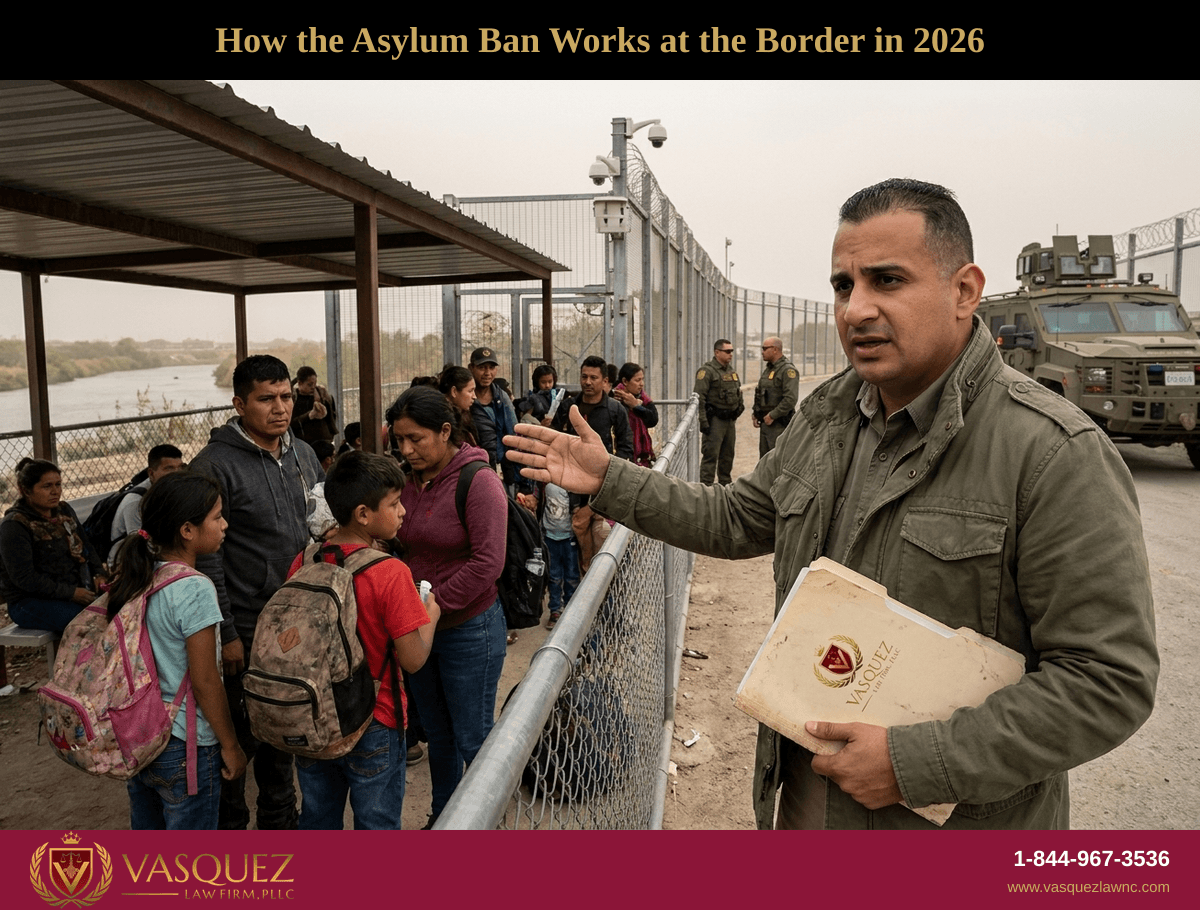
Key Steps to Protect Your Asylum Rights
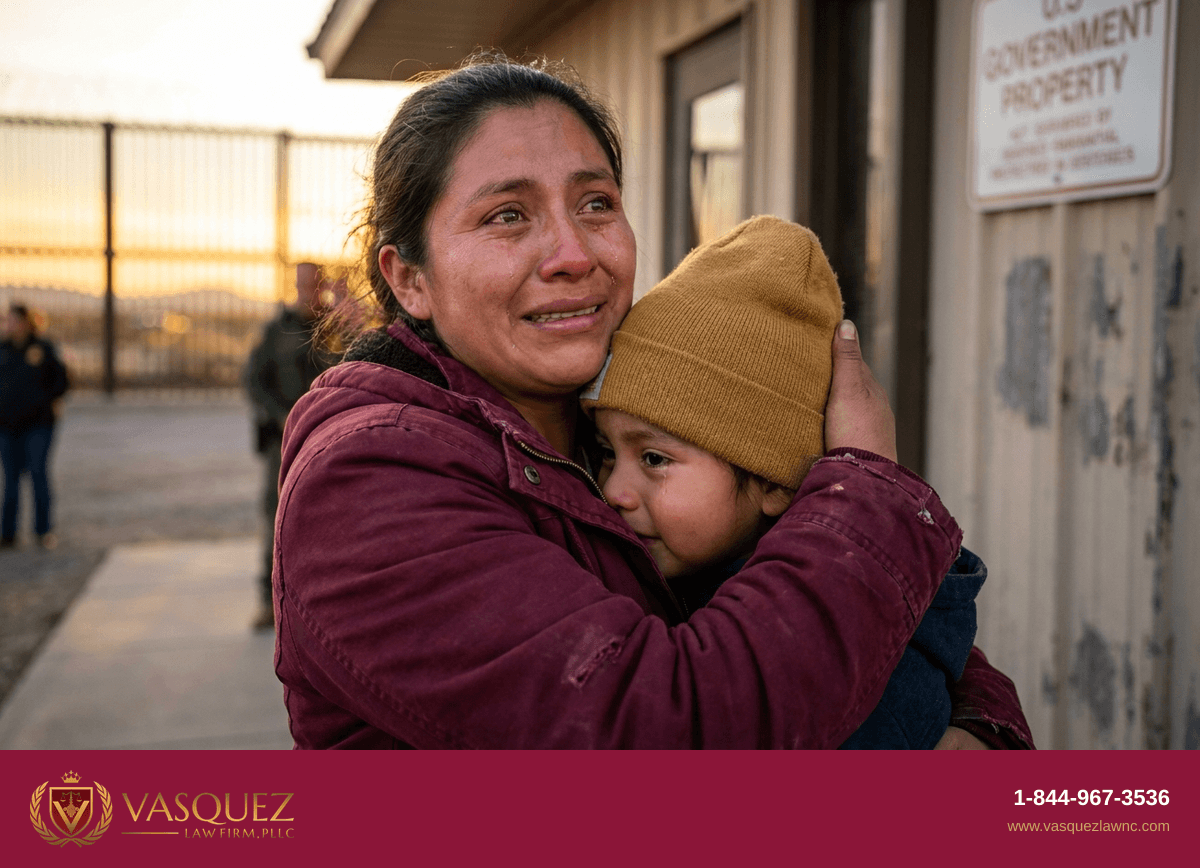
Consider Maria, a woman who fled violence and tried to request asylum at a port near Orlando. Without legal representation, she faced expedited removal and was unsure how to protect her claim. With guidance, however, Maria understood her rights and submitted evidence that halted her removal, allowing her asylum case to move forward.
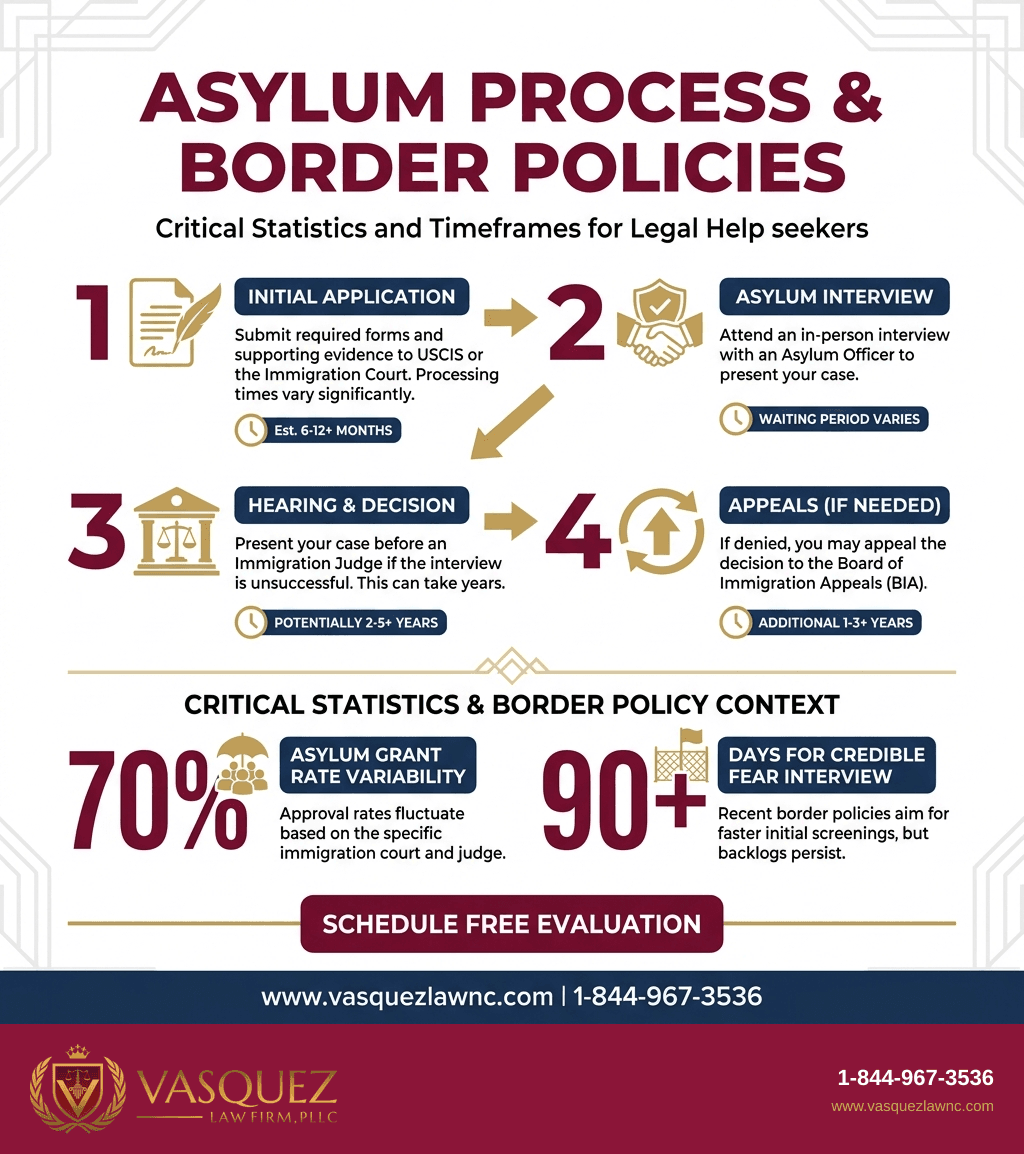
Step 1: Understand Eligibility for Asylum
Asylum seekers must prove a credible fear of persecution based on protected grounds. Knowing whether the asylum ban affects your eligibility is the starting point. Consult advanced resources and legal help to assess your specific situation.
Step 2: File Your Application Promptly
File Form I-589 with U.S. Citizenship and Immigration Services (USCIS) within one year of entry or seek credible fear interview for expedited consideration (8 U.S.C. § 1158(a)(2)(B)). Filing late can disqualify you.
Step 3: Gather Supporting Evidence
Medical reports, police reports, witness statements, and country condition reports support your claim. Preparing a thorough record improves credibility before USCIS or immigration court.
Step 4: Attend Your Interviews and Hearings
Reply honestly and consistently. Prepare with counsel to reduce errors. Missed appointments or inconsistencies are common grounds for denial.
Step 5: Appeal If Denied
If USCIS denies your claim, immigration court may allow a more detailed hearing. Board of Immigration Appeals or federal courts provide further appeals options.
Our immigration attorneys in Raleigh and Orlando can help you complete these steps properly to avoid common pitfalls.
Common Mistakes to Avoid When Filing Asylum
Javier, a client from Raleigh, almost lost his asylum claim by missing the important one-year filing deadline because he misunderstood the asylum ban's impact. Such mistakes can severely damage your case.
- Missed Deadlines: File the asylum application within one year of entry. Late filing usually leads to denial unless exceptions apply.
- Incomplete Evidence: Failing to provide detailed evidence weakens your credible fear claim.
- Inconsistent Testimony: Conflicting statements harm credibility and can cause denial.
- Not Seeking Legal Help: Attempting to navigate complex asylum laws alone can lead to errors and missed opportunities.
- Ignoring Detention Rights: Detained asylum seekers must request timely hearings; failing can result in deportation.
- Assuming Asylum Ban Means No Eligibility: The asylum ban is partially illegal as of 2026; do not give up without consulting an attorney.
- Missing Interviews: Not appearing can cause automatic denial.
If you only remember one thing: Start your asylum process early and get help from experienced immigration lawyers.
Timeline for Asylum Cases in 2026
Karla applied for asylum near Orlando in early 2026. Her case illustrates typical timelines but also highlights variability depending on asylum ban enforcement and USCIS processing.
- First 7 Days: Filing of credible fear interview if arriving at border. Approval leads to asylum application opportunity.
- Within 1 Year: Form I-589 application submission deadline to USCIS.
- 3 to 12 Months: USCIS schedules asylum interview. Processing durations vary widely (https://egov.uscis.gov/processing-times/ reports approximately 6-12 months for Form I-589).
- Post-Interview: If USCIS denies, referred to immigration court hearing within a few months.
- Immigration Court: Hearings scheduled months to years later depending on backlog.
- Work Authorization: Eligible applicants may apply for permission to work after 150 days of pending application.
- Appeals: Can extend the process by months to years.
Understanding this timeline helps asylum seekers manage expectations and plan accordingly.
Frequently Asked Questions about the Asylum Ban
What is the new rule for asylum in 2026?
A 2026 appeals court decision invalidated major parts of the Trump-era asylum ban, restoring access to asylum applications at the border. Some restrictions still apply but asylum is generally allowed for those with credible fear of persecution.
Is asylum still allowed in the USA with the asylum ban?
Yes, asylum is still allowed under U.S. law despite some enforcement of the asylum ban. Courts have declared parts of the ban illegal, supporting seekers’ rights to apply and have their claims reviewed.
Does ICE deport people with pending asylum cases?
Sometimes ICE detains and deport individuals with pending asylum claims, especially if the asylum ban applies. It’s critical to have legal representation to protect against wrongful deportation.
What does asylum mean legally?
Asylum is a legal status protecting those persecuted or with a well-founded fear of persecution due to protected grounds like race or political opinion. It allows protection from deportation and potential path to permanent residency.
How do the asylum ban and credible fear interviews relate?
The asylum ban blocked many at the border, but credible fear interviews remain the gateway for most asylum seekers to present their claims. Passing such interviews can prevent immediate deportation.
Can the asylum ban affect my eligibility in Raleigh or Orlando?
Though the ban targets border crossings, shelters and ports near Raleigh and Orlando face similar challenges. Local asylum seekers must prepare timely applications and legal defenses due to enforcement practices in these regions.
What forms do I need to file asylum?
Form I-589 is the principal application form for asylum seekers, filed with USCIS. This must be submitted within one year of entry unless certain exceptions apply.
How can Vasquez Law Firm help with asylum cases?
Attorney Vasquez and the team offer expert guidance filing asylum applications, building evidence, attending interviews, and fighting wrongful deportations. We serve clients throughout North Carolina and Florida.
About Vasquez Law Firm
At Vasquez Law Firm, we combine compassion with aggressive representation. Our motto "Yo Peleo®" (I Fight) reflects our commitment to standing up for your rights.
- Bilingual Support: Se Habla Español — Spanish-speaking attorneys and staff available
- Service Areas: North Carolina, Florida, and nationwide immigration services
- Experience: Over 30 years helping clients navigate complex legal matters
- Results: Thousands of successful cases across multiple practice areas
Attorney Trust and Experience
William J. Vásquez is admitted to the North Carolina State Bar (2011) and to the U.S. Courts of Appeals for the 4th, 5th, 6th, and 11th Circuits. Florida-jurisdiction matters at the firm are handled by Florida Bar attorney Alekssandra Lopez. The firm has provided dedicated legal representation since 2011, with personalized attention to each client's case.
Don't wait to get the help you deserve. Call us now for immediate assistance.
Or contact us online. Se Habla Español.
Sources and References
- U.S. Citizenship and Immigration Services
- Executive Office for Immigration Review
- Legal Information Institute
Take the first step toward justice today. Our team is standing by to help.
Start Your Free Evaluation Now
Call us: 1-844-967-3536
Se Habla Español - Estamos aquí para ayudarle.

William Vasquez
Founder & CEO, Vasquez Law Firm, PLLC
William Vasquez is the founder and CEO of Vasquez Law Firm, PLLC, a results-driven firm specializing in immigration, criminal defense, personal injury, and workers' compensation. A U.S. Air Force veteran and recipient of the Joint Service Achievement Medal, William is dedicated to fiercely fighting for his clients' rights.
Related Legal Services
Need legal help? Learn more about NC immigration legal team, or contact us for a free evaluation.
You can also visit immigration attorneys across North Carolina for more information.