How USCIS Works: What You Should Know in 2026
Learn how USCIS processing works in 2026. Get clear answers on cases, online accounts, and requests. Contact Vasquez Law for a free evaluation today.
Published on May 19, 2026
Talk to an immigration attorney
Free call. A clear plan for your case.
Free & confidential · Se habla espanol · 24/7
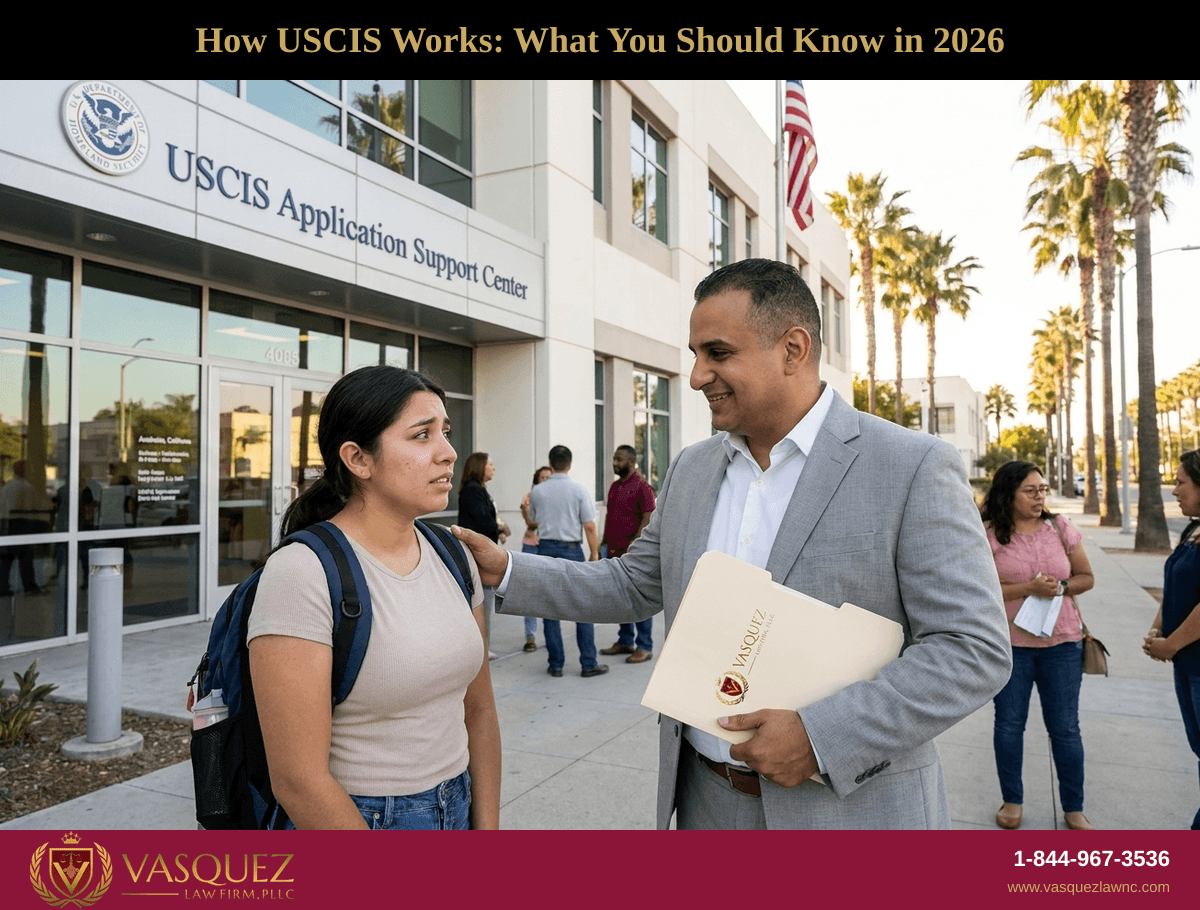
Have questions? Talk to an attorney - free evaluation.
Call 1-844-967-3536Free Tool
Check Your USCIS Case Status Now
Enter your receipt number - get the official USCIS status in English or Spanish. No registration.
How USCIS Works: What You Should Know in 2026
Navigating the United States Citizenship and Immigration Services (USCIS) process is essential for immigrants in Orlando, FL, and Raleigh, NC. In 2026, USCIS continues to manage millions of cases nationwide, from green card applications to work permits. Understanding how USCIS online systems, processing times, and requests work can reduce delays and improve your chances of success. This guide explains USCIS processes, key steps, common mistakes, and when to get legal help. Vasquez Law Firm provides experienced immigration representation across North Carolina and Florida, helping clients manage their USCIS cases with care and confidence.
Need help with your case? Our experienced attorneys are ready to fight for you. Se Habla Español.
Or call us now: 1-844-967-3536
Quick Answer
USCIS is the federal agency that handles immigration applications such as green cards, work permits, and naturalization. In 2026, using USCIS online systems simplifies filing and tracking cases. Processing times vary widely based on case type. Knowing the right forms, deadlines, and how to avoid mistakes improves your chances of approval.
- USCIS processes millions of cases yearly nationwide
- Online accounts let you track your USCIS case status easily
- Typical processing ranges from 3 to 14 months depending on form
- Careful preparation avoids common mistakes and delays
- Local expertise in Orlando and Raleigh helps navigate NC and FL USCIS processes
Understanding USCIS and Its Functions
Imagine applying for a green card or work permit with no idea how to check your case status or when it might be approved. USCIS (United States Citizenship and Immigration Services) handles these processes, issuing authorizations and decisions on immigration petitions. In 2026, USCIS remains the primary agency overseeing lawful immigration to the United States.
USCIS manages many forms, including family-based petitions (Form I-130), adjustment of status (I-485), employment authorization (I-765), and naturalization (N-400). Each application goes through steps like receipt, biometrics appointment, possible interview, and final adjudication.
Understanding how USCIS works, including how to create a USCIS online account and how to request specific case information, helps applicants stay informed and prepared. This knowledge is critical in busy immigration hubs such as Orlando, FL and Raleigh, NC.
Our immigration services are designed to support clients through every USCIS step with accurate advice and timely action, reducing risks of delay and denial.
What USCIS Does
- Processes and adjudicates immigration applications
- Conducts background and security checks
- Schedules biometrics appointments and interviews
- Issues decisions, approvals, or requests for more information
Importance for NC and FL Residents
Residents in North Carolina and Florida are served by USCIS field offices in Raleigh and Orlando. These offices conduct interviews and biometrics as needed. Knowing local USCIS office procedures helps applicants prepare appropriately.
Stay updated on USCIS announcements, as policy changes can affect processing in these jurisdictions. Vasquez Law Firm monitors local USCIS data to guide your case effectively.
Step-by-Step Guide to USCIS Processes
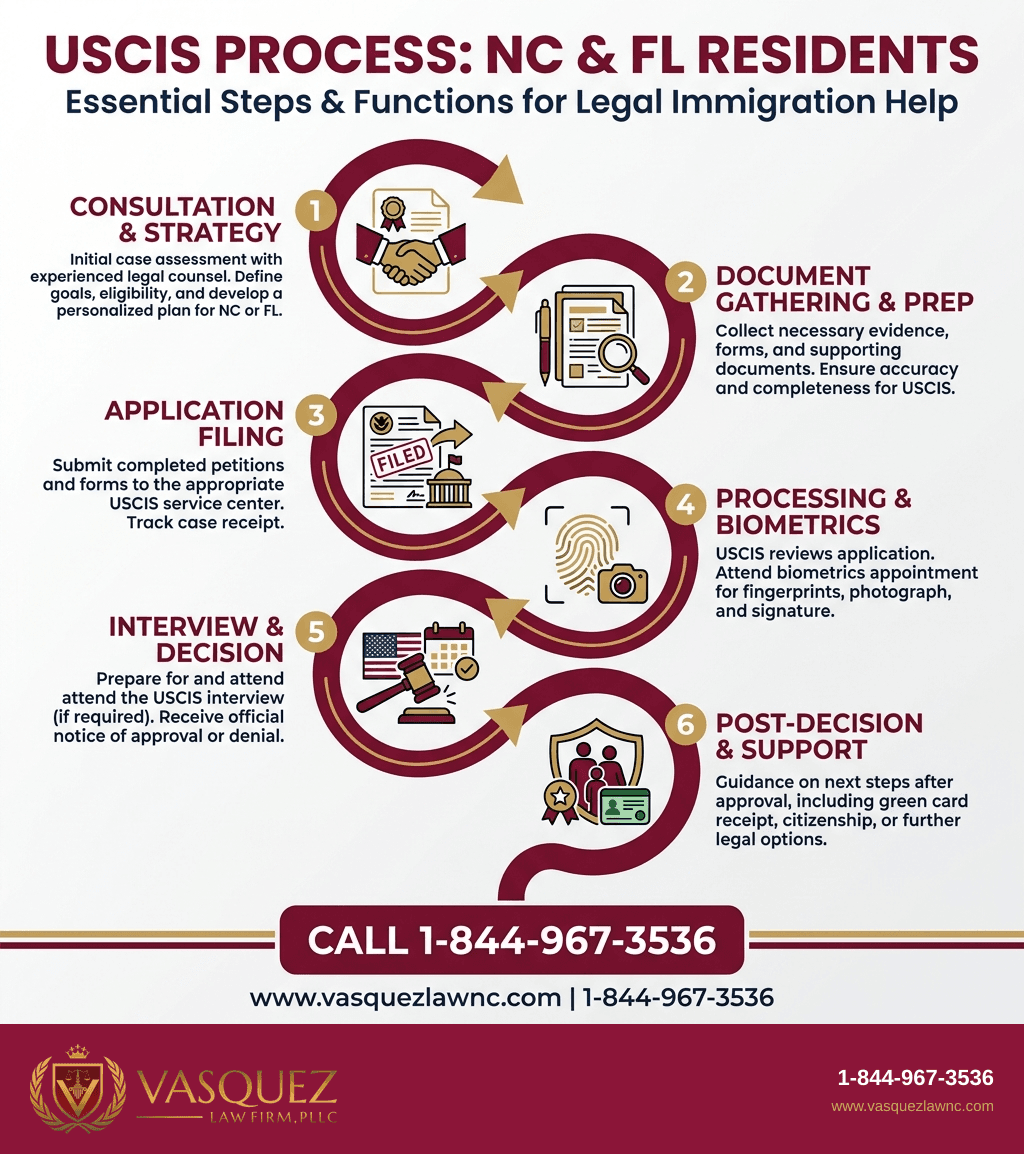
Consider Maria who filed for her adjustment of status in Orlando. She started by submitting Form I-485 through her USCIS online account. Here's how the typical process works:
- Form Submission: Complete and submit the correct USCIS form with necessary fees. Online filing is easier and reduces mail delays.
- Receipt Notice: USCIS confirms receipt and assigns a case number.
- Biometrics Appointment: You'll be scheduled to provide fingerprints, photo, and signature.
- Interview: Many cases require a USCIS interview in the local field office.
- Decision: USCIS will notify you if your application is approved, denied, or if they need more information.
- Follow-ups: Respond promptly to any Requests for Evidence (RFEs) to keep your case moving.
Understanding each step reduces anxiety and helps meet USCIS deadlines. We help clients in Raleigh and Orlando by explaining these steps and what to expect.
Creating Your USCIS Online Account
An online USCIS account is a valuable tool for case management. After registering at USCIS official site, link your receipt numbers to get real-time updates. This platform allows you to receive notices, check biometrics appointments, and even submit forms electronically for faster processing.
Requesting USCIS Information
If your case appears stuck, you or your attorney can use your USCIS account to submit inquiries or requests. Contacting USCIS by phone or through the online system with your receipt number can clarify delays or status changes.
Documents Checklist for Common USCIS Applications
Proper document submission is crucial. Many USCIS cases get delayed or denied due to missing evidence. Here's a checklist common for applications like green cards or work permits:
- Completed and signed USCIS Form (specific to your application)
- Government-issued ID copies (passport, driver’s license)
- Birth certificates and marriage certificates if applicable
- Immigration status documents (I-94, visa stamps)
- Employment verification or offer letters, if required
- Proof of residency or address in Raleigh or Orlando area
- Filing fees payment or fee waiver requests
- Two passport-style photos meeting USCIS guidelines
- Certified translations for any non-English documents
Maintain copies of everything sent to USCIS. Our attorneys review document checklists specific to each case type to help avoid costly delays.
USCIS Processing Times and What to Expect
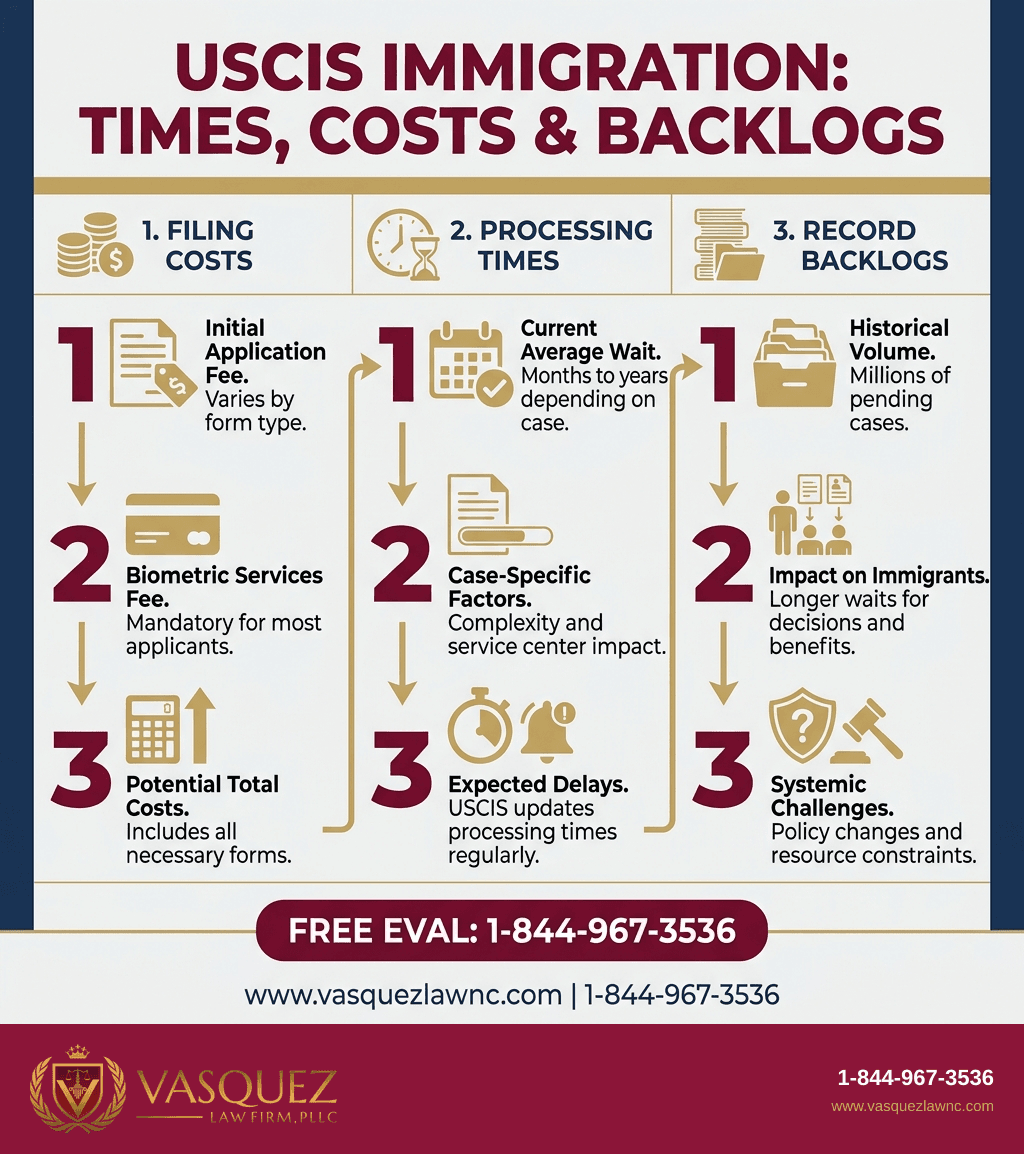
USCIS publishes detailed processing times by form and service center. As of May 2026, here are typical estimates:
- Form I-485 (Adjustment of Status): 8 to 14 months
- Form I-765 (Employment Authorization): 3 to 6 months
- Form N-400 (Naturalization): 9 to 15 months
- Form I-130 (Petition for Relative): 7 to 12 months
These ranges vary by local field office workload and complexity of cases. Checking USCIS processing times regularly helps you plan accordingly.
Cases with missing evidence, errors, or additional security checks typically take longer.
What Affects Processing Times?
- Volume of applications at the USCIS field or service center
- Completeness and accuracy of your initial submission
- Case complexity or background check delays
- Policy changes impacting adjudication priorities
Vasquez Law Firm assists clients in navigating USCIS processing timelines with realistic expectations and proactive follow-up.
Costs and Fees: What Affects Your USCIS Case
USCIS fees vary by form; for instance, Form I-485 costs $1,225 including biometrics as of 2026. Fee waivers are available for applicants with financial hardship.
Additional costs could include:
- Attorney fees for legal assistance
- Medical exams required for adjustment of status
- Translation and document certification fees
- Filing multiple forms or appeals
Paying incorrect fees can cause rejections or slowdowns. Using the correct fee schedule from the official USCIS fee page is critical.
Common Mistakes and How to Avoid Them
- Incorrect or incomplete forms: Double-check all fields before submission.
- Missing supporting documents: Provide full evidence to reduce RFEs.
- Late responses to requests: Respond to RFEs or notices immediately.
- Not using the USCIS online account: Missing online updates delays awareness of case status.
- Failing to pay correct fees: Use USCIS fee tables for 2026.
- Incorrect translations: Submit certified and accurate translations.
- Ignoring interview preparation: Attend interviews with all necessary documents.
- Changing address without notice: Update USCIS promptly to receive mail.
- Trying to self-represent without understanding: Complex cases benefit from legal help.
If you only remember one thing: Carefully prepare your forms and documents, and monitor your USCIS online account regularly.
North Carolina and Florida USCIS Notes
North Carolina Notes
USCIS applicants in Raleigh and across North Carolina often rely on the Raleigh Field Office for interviews and biometrics. This office schedules appointments based on USCIS adjudication workload and local case volume. Processing times can vary slightly compared to national averages but generally align closely.
NC applicants also benefit from local legal expertise familiar with regional office trends and common issues. Vasquez Law Firm’s Raleigh team frequently communicates with the Raleigh USCIS office to assist clients.
Florida Notes
Orlando's USCIS Field Office serves a diverse immigrant population with a high case volume. Florida applicants often face increased demand, leading to longer wait times for interviews. USCIS updates may be delayed on paper, so online status monitoring is vital.
In Orlando and surrounding areas, Vasquez Law Firm helps Dreamers, families, and workers keep track of their USCIS cases and comply with local USCIS office procedures.
Nationwide Concepts
USCIS policies generally apply nationwide under federal law. Forms and procedures are standardized, but processing centers and field offices handle cases differently based on location and workload. This results in variation in wait times and local practices.
Federal Immigration law such as INA §§ 240 and 245 govern how USCIS adjudicates statuses. It’s critical to stay informed of federal regulations and USCIS policy updates, available in the USCIS Policy Manual.
When to Call a Lawyer for Your USCIS Matters
- If you receive a USCIS Notice of Intent to Deny or Request for Evidence
- If you are scheduled for an interview but are unsure how to prepare
- If your case processing time exceeds published USCIS averages significantly
- If you need help understanding complex legal eligibility requirements
- If you want to file appeals or motions after a denial
- If there are changes in your circumstances affecting your application status
- If you face difficulties navigating the USCIS online system or account
- If you receive a notice of removal proceedings or deportation
About Vasquez Law Firm
At Vasquez Law Firm, we combine compassion with aggressive representation. Our motto "Yo Peleo®" (I Fight) reflects our commitment to standing up for your rights.
- Bilingual Support: Se Habla Español — Spanish-speaking attorneys and staff available
- Service Areas: North Carolina, Florida, and nationwide immigration services
- Experience: Over 30 years helping clients navigate complex legal matters
- Results: Thousands of successful cases across multiple practice areas
Attorney Trust and Experience
William J. Vásquez is admitted to the North Carolina State Bar and to the U.S. Courts of Appeals for the 4th, 5th, 6th, and 11th Circuits. Florida matters are handled by a Florida Bar admitted attorney within the firm. The firm provides dedicated legal representation with personalized attention to your USCIS immigration case.
Don't wait to get the help you deserve. Call us now for immediate assistance.
Se Habla Español
Frequently Asked Questions
What is USCIS and what does it do?
USCIS stands for United States Citizenship and Immigration Services. It is a federal agency responsible for handling immigration applications, including visas, green cards, and naturalization. USCIS processes millions of cases each year and manages the legal framework under which immigrants apply for status changes. Their work includes reviewing forms, conducting background checks, and scheduling interviews.
How do I create and use a USCIS online account?
Creating a USCIS online account lets you track your case, receive notifications, and submit certain forms electronically. To start, visit the official USCIS website and register with your email. After verification, link your case numbers to monitor updates. The online system also allows filing applications like adjustment of status (Form I-485) and employment authorization (Form I-765).
What are typical USCIS processing times in 2026?
USCIS processing times vary by case type and service center. For example, adjustment of status (I-485) applications can take 8 to 14 months, while employment authorization renewals (I-765) often process within 3 to 6 months. USCIS regularly updates processing times on their website, which is a valuable resource to estimate case progress.
How can I contact USCIS if I have questions about my case?
You can contact USCIS by calling their National Customer Service Center at 1-800-375-5283 or using the USCIS online inquiry system. For issues related to Orlando or Raleigh offices, visiting the local USCIS field office may help, but appointments are often required. Tracking your case online often provides the fastest updates.
What forms are commonly submitted to USCIS?
Common USCIS forms include Form I-130 (Petition for Alien Relative), I-485 (Adjustment of Status), I-765 (Employment Authorization), and N-400 (Naturalization). Each form has specific eligibility rules and documentary requirements, which must be carefully followed to avoid delays or denials.
What does USCIS Estatus mean, and how do I check mine?
USCIS Estatus refers to your immigration status or case status within USCIS records. You can check your status online using your receipt number through the USCIS Case Status Online portal. Keeping track of your USCIS Estatus helps you stay informed about interviews, biometrics appointments, or decisions.
Is home filing available for USCIS applications?
Some USCIS forms can be filed from home using USCIS online filing systems. This includes many common applications like renewal of work permits and certain adjustment of status petitions. Filing from home is easier and faster but requires a USCIS online account and adherence to electronic document submission rules.
What mistakes should I avoid when dealing with USCIS?
Common mistakes include missing deadlines, submitting incomplete forms, failing to provide required documents, and not responding promptly to USCIS requests. Mistakes can cause delays or denials. Consulting with an immigration attorney early can help you avoid these errors and improve your case's chances.
Sources and References
- U.S. Citizenship and Immigration Services
- Executive Office for Immigration Review
- Legal Information Institute
Take the first step toward justice today. Our team is standing by to help. Se Habla Español.
Start Your Free Evaluation Now
Call us: 1-844-967-3536
Se Habla Español - Estamos aquí para ayudarle.

William Vasquez
Founder & CEO, Vasquez Law Firm, PLLC
William Vasquez is the founder and CEO of Vasquez Law Firm, PLLC, a results-driven firm specializing in immigration, criminal defense, personal injury, and workers' compensation. A U.S. Air Force veteran and recipient of the Joint Service Achievement Medal, William is dedicated to fiercely fighting for his clients' rights.
Related Legal Services
Need legal help? Learn more about immigration lawyers in North Carolina, or contact us for a free evaluation.
You can also visit statewide immigration legal services for more information.