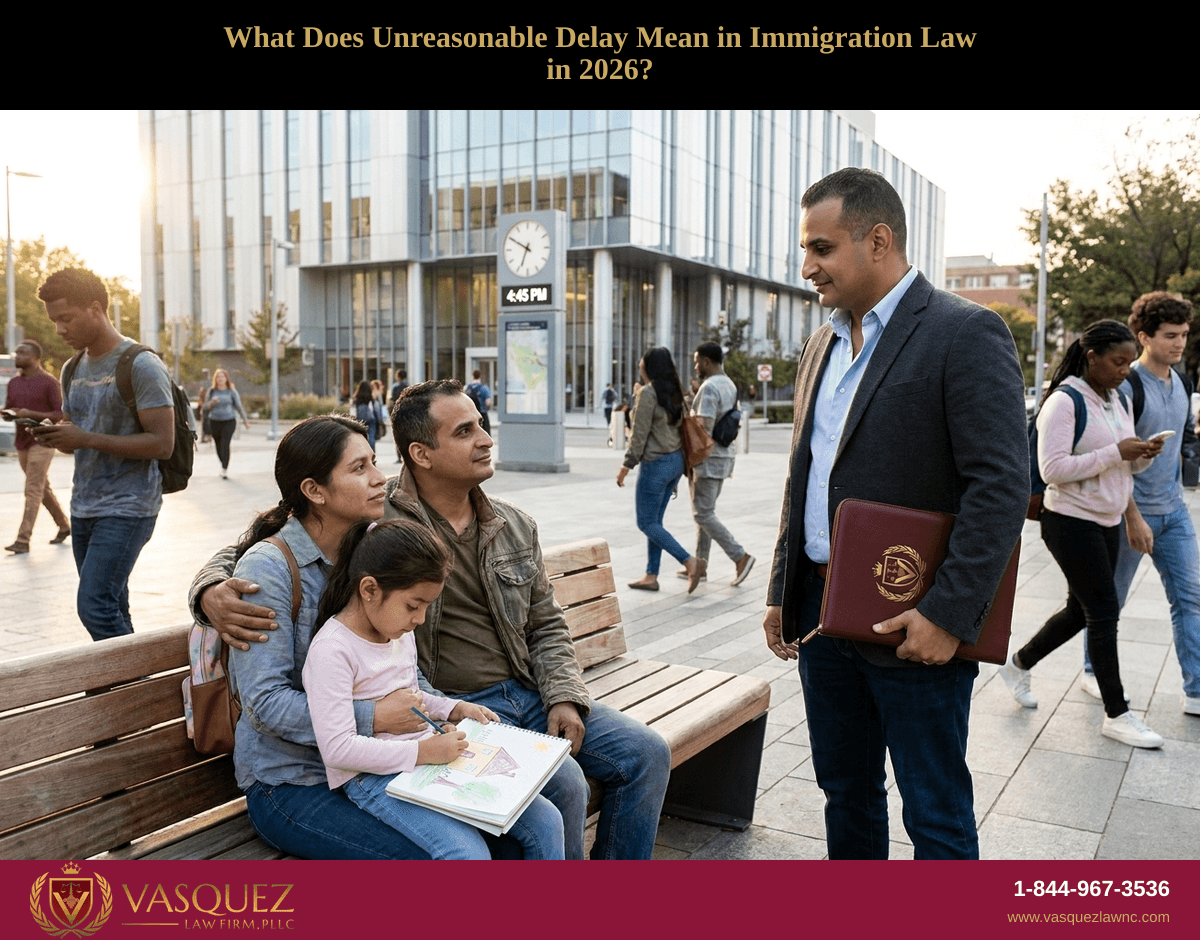
What Does Unreasonable Delay Mean in Immigration Law in 2026?
Struggling with unreasonable delay in your immigration case? Learn what it means, your rights, and how to respond. Contact Vasquez Law for a free evaluation.
Published on July 13, 2026
Talk to an immigration attorney
Free call. A clear plan for your case.
Free & confidential · Se habla espanol · 24/7
Have questions? Talk to an attorney - free evaluation.
Call 1-844-967-3536Worried how the latest immigration news affects you?
Schedule a confidential case review with an immigration attorney - know exactly where you stand.
What Does Unreasonable Delay Mean in Immigration Law in 2026?
Unreasonable delay in immigration cases can derail benefits and prolong uncertainty. In 2026, delays from USCIS or immigration courts affect many applicants in Raleigh, NC and Orlando, FL. Understanding what is legally considered an unreasonable delay, your rights, and the steps to protect your status is crucial. This guide explains the TRAC factors, laches doctrine, and the legal standards governing delays, helping Dreamers and all immigrants in North Carolina and Florida navigate the process confidently.
Need help with your case? Our experienced attorneys are ready to fight for you. Se Habla Español.
Or call us now: 1-844-967-3536
Quick Answer
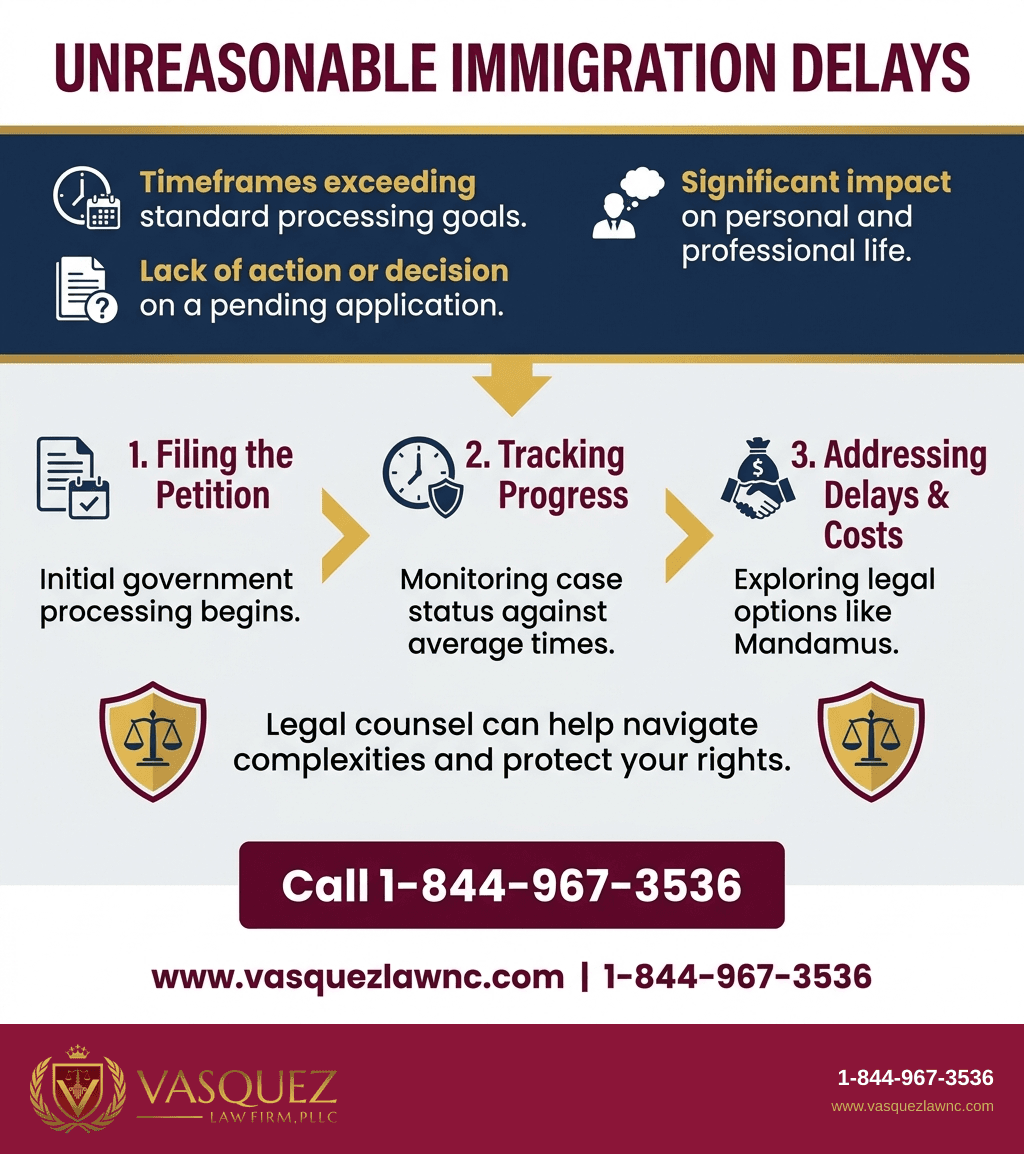
Unreasonable delay in immigration means a government agency takes longer than legally justified to process your application or case. Delays become unreasonable when they exceed typical processing times, cause harm, and lack valid reasons according to legal standards such as 5 U.S.C. § 706(1) and TRAC factors.
- Occurs when USCIS or immigration courts delay beyond normal times
- Courts weigh multiple factors including impact and agency resources
- Legal claims may require showing delay is unjustified or damaging
- Laches doctrine may bar claims if action is delayed too long
- Understanding delays helps protect rights in Raleigh and Orlando
Understanding Unreasonable Delay in Immigration
Imagine waiting years for your work permit or green card while USCIS fails to process your case. In Raleigh, NC, and Orlando, FL, this frustration is common. Unreasonable delay in immigration law occurs when government agencies like USCIS or the immigration courts take excessively long without good cause, unfairly impacting applicants’ lives and legal rights.
Federal law under 5 U.S.C. § 706(1) authorizes courts to compel agencies to act when they unlawfully withhold or unreasonably delay actions. This statute supports mandamus lawsuits to push agencies to comply with timely processing requirements.
What Does Unreasonable Delay Mean Legally?
Unreasonable delay is not just any wait; it must surpass normal administrative processing times established by agencies based on case complexity, security checks, or workload. For immigration, courts commonly examine TRAC factors from Telecommunications Research & Action Center v. FCC (750 F.2d 70, D.C. Cir. 1984) to determine if delay is excessive:
- Time agencies usually take for similar actions
- Effect on the applicant’s interests
- Effect of expedited action on agency activities
- Agency’s reason for delay
- Whether statutory deadlines apply
When delays exceed these considerations, claimants may argue the agency is abusing its discretion or violating procedural rights by delaying without reasonable cause.
Role of the Doctrine of Laches
The laches doctrine prevents parties from attacking delay if they themselves unreasonably wait too long to act. Courts may dismiss unreasonable delay claims if an applicant delays filing a lawsuit after knowing of the delay. This balances preventing government inertia with discouraging stale claims.
In practice, this means applicants in Raleigh and Orlando should seek legal advice sooner rather than later when facing long immigration delays.
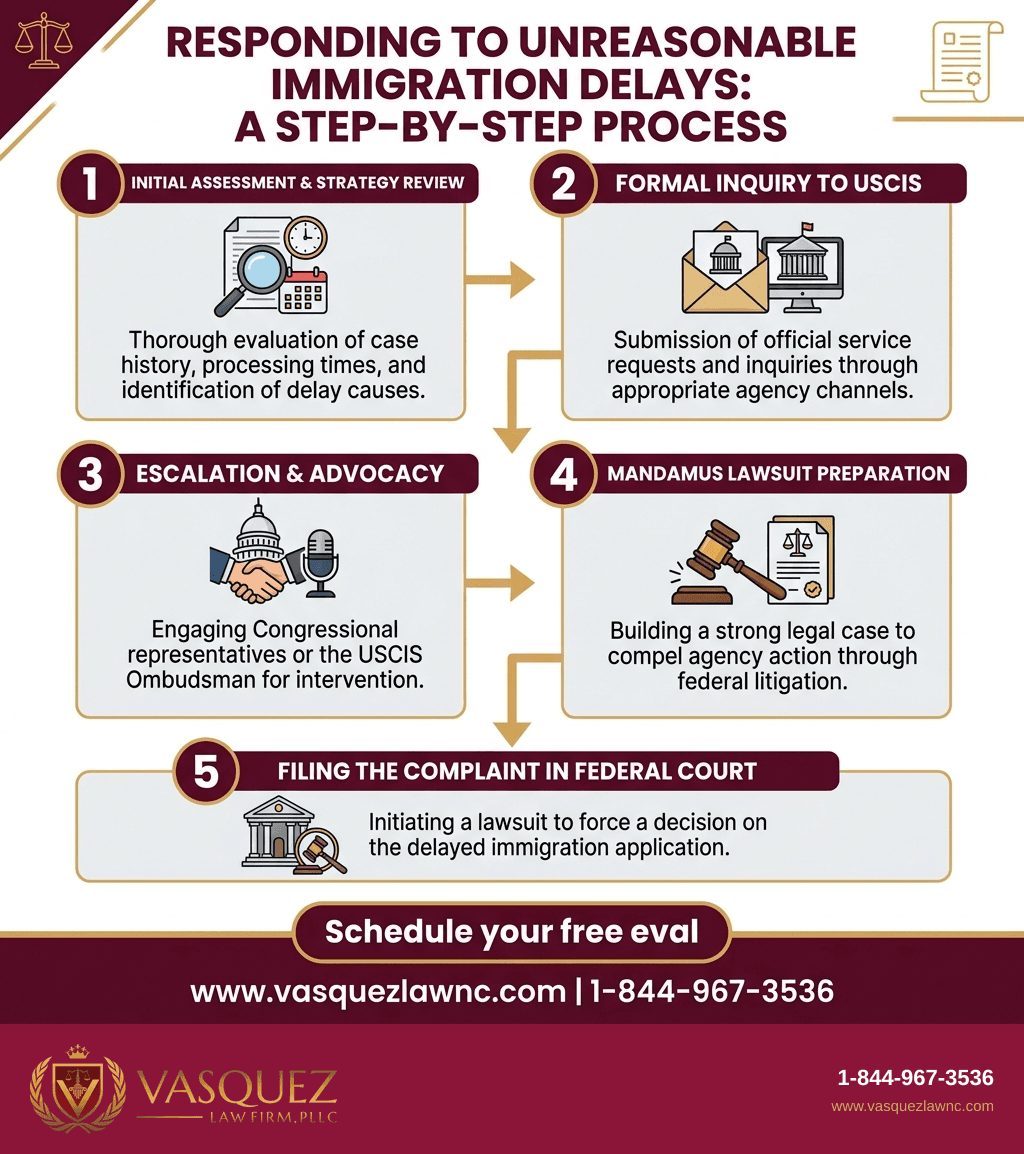
Step-by-Step: How to Respond to Delay
- Check Processing Times: Use the USCIS Processing Times page regularly to verify if your case exceeds the standard wait.
- Gather Documentation: Collect all notices, appointment letters, receipts, and correspondence from USCIS or the immigration court.
- Contact USCIS or EOIR: Sometimes delays are due to missing information or require a status inquiry. Contacting these agencies can sometimes unblock your case.
- Seek Legal Advice: Consult an immigration attorney experienced in Raleigh, NC, or Orlando, FL, who can evaluate whether the delay might be legally unreasonable.
- Mandamus Lawsuit: If appropriate, your lawyer may file a mandamus lawsuit under 5 U.S.C. § 706(1) to compel timely agency action when all administrative remedies are exhausted.
Documents and Evidence Checklist
- USCIS receipt notices and biometric appointment notices
- All correspondence with USCIS or immigration court
- Published USCIS or EOIR processing times related to your case
- Proof of harms caused by delay (e.g., lost job offers, expired documents)
- Copies of any prior legal or status inquiries made
- Identification documents and immigration paperwork copies
Timeline: What to Expect for Your Case
- First 1-3 months: USCIS issues receipt and schedules biometrics
- 4-8 months: Initial application review and requests for evidence (RFEs)
- 8-14 months: Typical approval or interview date window for adjustment of status
- Beyond 14 months: Delay may become unreasonable if unexplained or without agency communication
- One year plus: Legal action such as mandamus petition may be considered if no resolution
Costs and Fees Affecting Your Delay Case
- Filing fees for immigration applications vary by form (e.g., I-485 is $1,225 as of 2026)
- Legal fees for delay-related consultations and mandamus lawsuits can range from $3,000 to $7,000 or more, depending on case complexity
- Administrative costs include charges for obtaining certified copies, medical exams, or translations
- Costs increase with appeals or motions to reopen delayed cases
- Vasquez Law Firm offers transparent fee structures and free initial evaluations to discuss costs
Common Mistakes to Avoid
- Ignoring delays and waiting indefinitely without action: File inquiries and seek counsel early
- Assuming all delays are unreasonable: Understand agency published times and processes first
- Failing to keep organized records of all case communications and notices
- Overlooking the laches doctrine by waiting too long before acting
- Starting a lawsuit too early, without completing administrative remedies
- Submitting incomplete or inaccurate documents that cause further delays
- Not consulting an immigration attorney knowledgeable about NC and FL specific issues
If you only remember one thing: Track your processing times, keep good records, and get legal advice promptly to avoid missing critical deadlines in delay claims.
NC, FL, and Nationwide Notes on Delay
North Carolina Notes
In Raleigh, NC, USCIS field offices and the Charlotte immigration court handle many applications. Local processing times and backlog levels affect expected waits. Our Raleigh-based attorneys understand the nuances of these offices to help manage delay issues effectively for North Carolina residents.
Florida Notes
Orlando, FL hosts USCIS and immigration court facilities with similar but distinct wait times. The Florida service centers process a broad range of immigration benefits. Vasquez Law Firm offers virtual consultations for business and employment visas across Florida and in-person support in Orlando for delay concerns.
Nationwide Concepts (General Only, Rules Vary)
Federal immigration laws and Administrative Procedure Act (APA) standards apply nationwide, but state-level processing backlogs and local office resources differ. Clients nationwide face varying delay lengths. Always check current processing times and consult local counsel for jurisdiction-specific advice.
When to Call a Lawyer Now
- Your USCIS case exceeds published processing times by 6+ months
- You received no updates despite submitting all required documents
- Your work permit or travel document expired and renewal is delayed
- Immigration court hearings are scheduled far in the future without explanation
- You want to file a mandamus lawsuit to compel agency action
- You've received Requests for Evidence (RFE) and need legal review
- You believe the delay is causing you irreparable harm or loss of status
- You require help interpreting your immigration status or rights during delay
- You need assistance with related legal remedies such as motions to reopen
About Vasquez Law Firm
At Vasquez Law Firm, we combine compassion with aggressive representation. Our motto "Yo Peleo®" (I Fight) reflects our commitment to standing up for your rights.
- Bilingual Support: Se Habla Español — Spanish-speaking attorneys and staff available
- Service Areas: North Carolina, Florida, and nationwide immigration services
- Experience: Over 30 years helping clients navigate complex legal matters
- Results: Thousands of successful cases across multiple practice areas
Attorney Trust and Experience
William J. Vásquez is admitted to the North Carolina State Bar (2011) and to the U.S. Courts of Appeals for the 4th, 5th, and 11th Circuits. Florida-jurisdiction matters at the firm are handled by Florida Bar attorney Harold Estrada-Rodriguez (FL Bar No. 1041171). The firm has provided dedicated legal representation since 2011, with personalized attention to each client's case.
Don't wait to get the help you deserve. Call us now for immediate assistance.
Se Habla Español
Frequently Asked Questions
What is the legal term for unreasonable delay?
Unreasonable delay refers to a delay in government processing that is excessive or unjustified under laws like 5 U.S.C. § 706(1). In immigration, it means agencies take longer than legally acceptable to process applications, harming applicants’ rights.
What does 'without unreasonable delay' mean?
It means government agencies should act within reasonable timeframes based on typical caseloads and complexity. It obligates timely, not instantaneous, action.
What is considered an unreasonable amount of time for immigration processing?
When processing exceeds USCIS’s published timeframes significantly without explanation or causes harm, courts may deem it unreasonable. This varies by case type.
What are the TRAC factors that courts use to evaluate delay?
TRAC factors include agency’s usual timelines, impact on applicants, agency reasons, resources, and statutory deadlines. They guide courts deciding if delays are unlawful.
Can I file a lawsuit for unreasonable delay in my immigration case?
Yes, mandamus lawsuits compel agencies to act when delay violates 5 U.S.C. § 706(1). Legal counsel can evaluate if your case qualifies.
What delays may be considered reasonable in immigration cases?
Delays caused by security checks, case complexity, or high agency workloads are often reasonable within published processing times.
How does the doctrine of laches relate to unreasonable delay?
Laches bars claims when applicants unreasonably wait to assert rights, causing prejudice. Prompt legal action avoids dismissal.
How long do USCIS delays usually last in Raleigh, NC, and Orlando, FL?
Typical adjustment of status takes 8-14 months depending on the office; real-time processing times are posted on USCIS’s official website.
Sources and References
- U.S. Citizenship and Immigration Services
- Executive Office for Immigration Review
- Legal Information Institute
Take the first step toward justice today. Our team is standing by to help.
Start Your Free Evaluation Now
Call us: 1-844-967-3536
Se Habla Español - Estamos aquí para ayudarle.
If you need legal assistance, learn more about get immigration legal help today, or call us at 1-844-967-3536 for a free evaluation.


William Vasquez
Founder & CEO, Vasquez Law Firm, PLLC
William Vasquez is the founder and CEO of Vasquez Law Firm, PLLC, a results-driven firm specializing in immigration, criminal defense, personal injury, and workers' compensation. A U.S. Air Force veteran and recipient of the Joint Service Achievement Medal, William is dedicated to fiercely fighting for his clients' rights.
Related Legal Services
Need legal help? Learn more about get immigration legal help today, or contact us for a free evaluation.
You can also visit North Carolina immigration lawyers for more information.