The Supreme Court protected birthright citizenship: what it decided and what it means for your family
No, the Supreme Court did not eliminate birthright citizenship. It protected it.
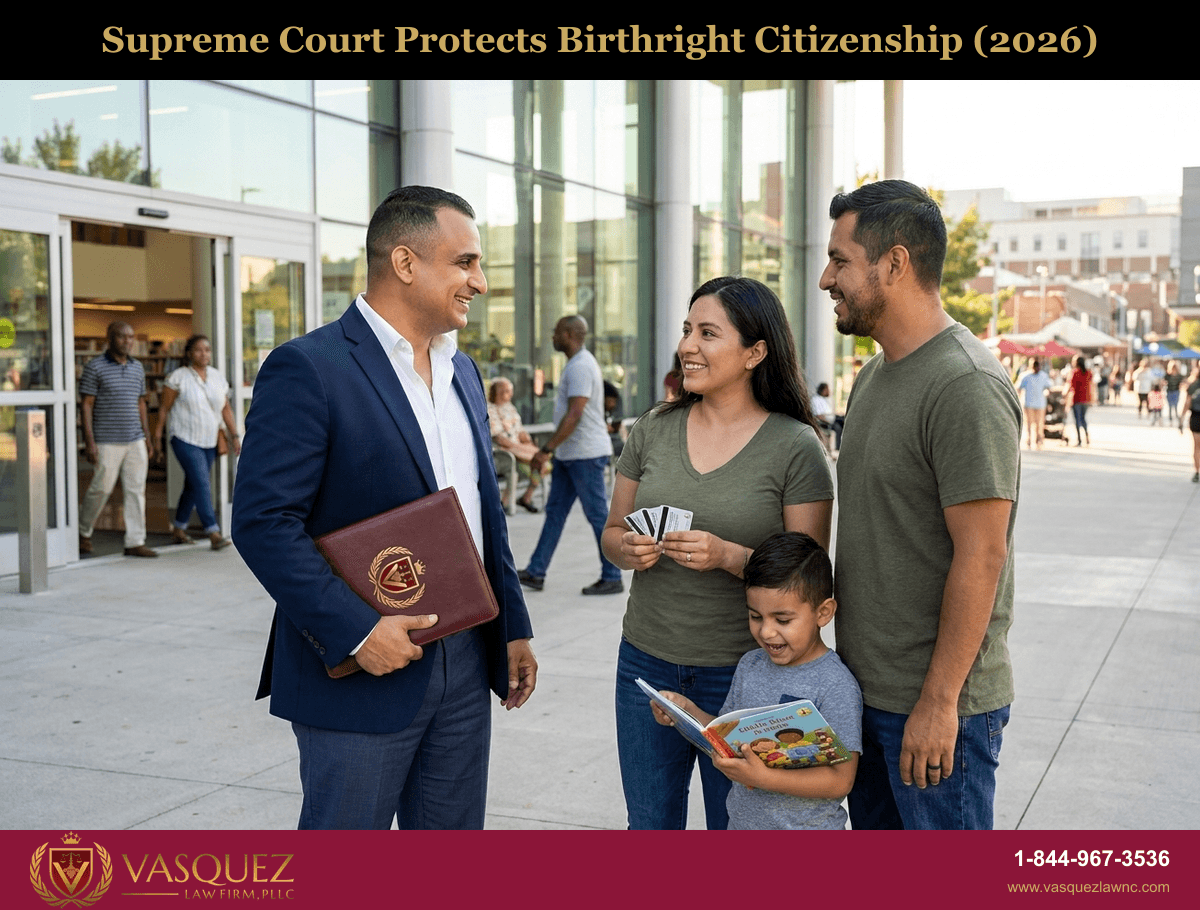
On June 30, 2026, in Trump v. Barbara, the U.S. Supreme Court ruled 6 to 3 and confirmed that children born in the United States - even to parents without legal status or with only temporary presence - are citizens at birth under the 14th Amendment. The executive order that sought to end this right was rejected.
| Case | Trump v. Barbara, No. 25-365 (U.S. Supreme Court) |
|---|---|
| Decision date | June 30, 2026 |
| Result | Affirmed - birthright citizenship remains protected |
| Vote | 6 to 3 |
| Opinion of the Court | Chief Justice John Roberts, with Sotomayor, Kagan, Barrett and Jackson; Kavanaugh concurred in the result |
| Dissent | Thomas, Alito and Gorsuch |
| What does NOT change | TPS, deportation proceedings and other immigration measures remain in effect |
What did the Supreme Court decide about birthright citizenship?
The Court resolved the question that had millions of families on edge: whether a child born in the United States, to parents with no legal status or only temporary presence, is a citizen. The answer was yes. The Court confirmed that those children are "subject to the jurisdiction" of the United States and therefore citizens at birth under the Citizenship Clause of the 14th Amendment.
With this decision, Executive Order 14160 - signed at the start of President Trump’s term, which sought to deny automatic citizenship to those children - was rejected, and the nationwide block that had paused it stays in place.
What is birthright citizenship?
Birthright citizenship is the principle that anyone born in a country’s territory is a citizen of that country, regardless of their parents’ immigration status. In the United States, this right is enshrined in the 14th Amendment, which provides that every person "born or naturalized in the United States, and subject to the jurisdiction thereof," is a citizen. The only exceptions are very limited, such as the children of foreign diplomats.
How did the justices vote?
The decision was 6 to 3. The opinion of the Court was written by Chief Justice John Roberts, joined by Justices Sotomayor, Kagan, Barrett and Jackson. Justice Kavanaugh concurred in the result. Justices Thomas, Alito and Gorsuch dissented.
That a majority made up of justices appointed by presidents of different parties reached the same result reinforces the message: this was not a one-sided position, but a reading of the constitutional text and more than a century of history.
Why is this decision so important?
Because the Court did not invent a new rule - it reaffirmed a very old one. The 14th Amendment was born after the Civil War to repudiate the infamous Dred Scott decision, which had denied citizenship to people descended from enslaved people. The idea the country wrote into its Constitution was clear: it is the soil - not blood, nor a parent’s origin - that defines who is born a citizen.
In 1898, in United States v. Wong Kim Ark, the Court had already confirmed that a child of immigrants born on U.S. soil is a citizen. The 2026 decision reaffirms that precedent and, in the Court’s own words, seeks to settle the question definitively.
What does it mean for my family?
If you have children born in the United States, their citizenship is secure. This is not a pause or a temporary measure - it is a decision on the merits by the highest court in the country. And for families expecting a baby, a child born here will be a citizen at birth, just as always.
What does NOT change with this decision?
This victory is specifically about birthright citizenship. It does not change other immigration realities many families are living through, like TPS terminations or deportation proceedings. Anyone who says "everything is won now" is not telling the truth - and anyone who says "your child is no longer a citizen" isn’t either. We won this battle, which is enormous, and the others are still ongoing.
What should I do if I have children born in the United States?
Even though your child’s citizenship is not in doubt, having the proof organized gives peace of mind. We recommend:
- Keep each child’s birth certificate, both physical and digital.
- Obtain or keep current their U.S. passport and Social Security number.
- Keep your own immigration documents organized and your address updated with the authorities.
Beware of fraud
In moments of confusion, people appear who promise, "for a fee," to secure or process citizenship for a child who is already a citizen by having been born here. That is not something you buy. Be wary of anyone who wants to charge you out of fear. A child born in the United States is already a citizen - no one has to "get it" for you.
Frequently asked questions
Did the Supreme Court eliminate birthright citizenship?
No. On June 30, 2026, in Trump v. Barbara, the Court ruled 6-3 and confirmed that birthright citizenship remains protected by the Constitution. Children born in the U.S., even to parents without legal status, are citizens at birth.
Is my U.S.-born child a citizen even if I have no legal status?
Yes. A child’s citizenship depends on having been born on U.S. soil, not on the parents’ immigration status, except for very limited exceptions such as the children of diplomats.
Is this decision final, or can it change?
It is a decision on the merits by the Supreme Court and settles the question definitively. The executive order that sought to end the right was rejected.
Does this change TPS or deportations?
No. It specifically protects birthright citizenship. Other immigration measures, such as TPS terminations or deportation proceedings, continue on their own course.
What documents should I keep for my children?
A birth certificate and, if possible, a U.S. passport and Social Security number. Keeping them organized is peace of mind, not a new obligation.
Keep informed
Questions about your family’s status?
We review your case, explain your real options, and tell you the truth. Se habla español.
Call 1-844-YO-PELEOVasquez Law Firm, PLLC · More than 15 years · More than 30,000 cases handled · YO PELEO® POR TI

William J. Vásquez
Founding attorney of Vasquez Law Firm, PLLC. Licensed in North Carolina (2011) and admitted to federal practice (immigration is federal practice). U.S. Air Force veteran. Appointed to the North Carolina Governor’s Advisory Council on Hispanic/Latino Affairs (2023). Legal counsel to the Mexican and Guatemalan Consulates in Raleigh. More than 15 years serving immigrant families.