How International Student Athletes Navigate NCAA Rules in 2026
Discover how international student athletes handle NCAA rules and eligibility in 2026. Learn your rights and get expert immigration help. Start now.
Published on April 4, 2026
Have questions? Talk to an attorney - free evaluation.
Call 1-844-967-3536Worried how the latest immigration news affects you?
Get a free, confidential case review with an immigration attorney - know exactly where you stand.
How International Student Athletes Navigate NCAA Rules in 2026
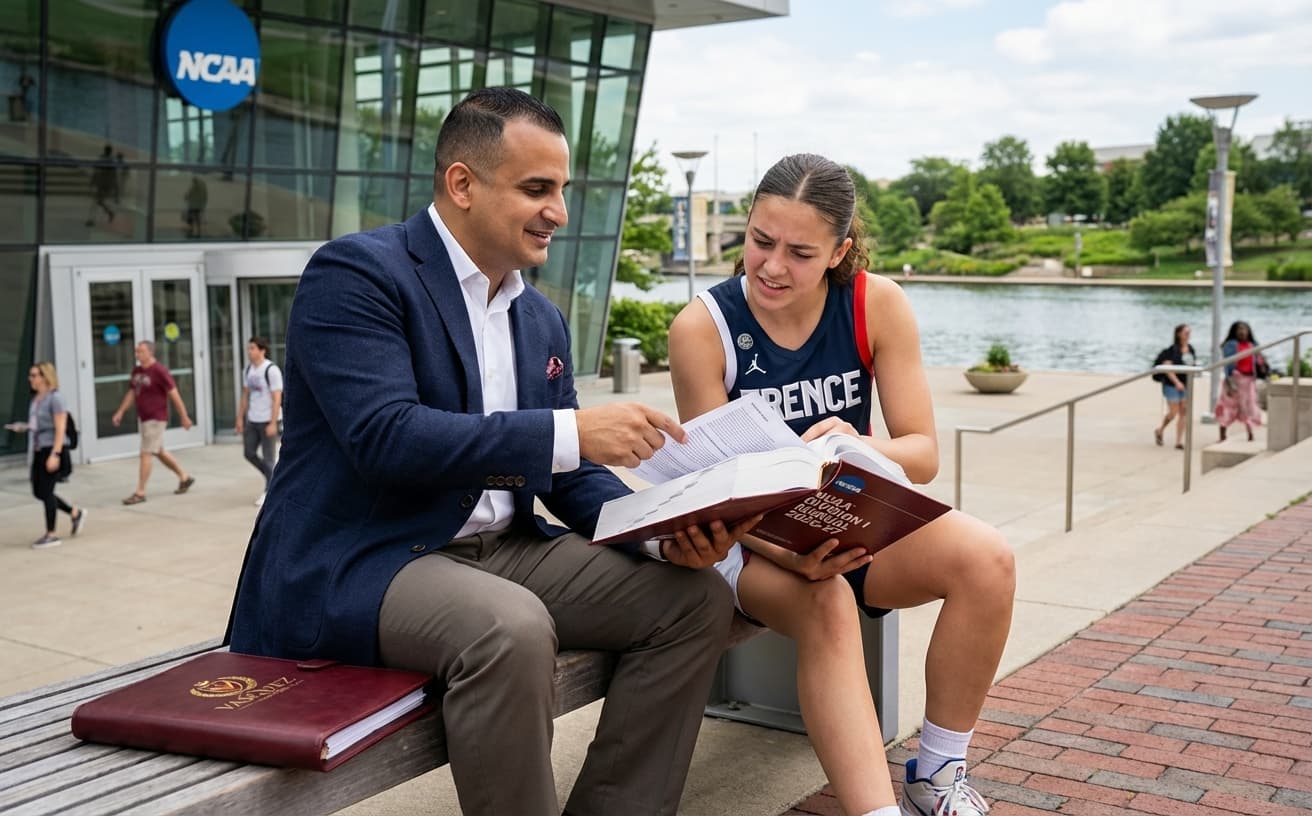
International student athletes face unique challenges navigating NCAA eligibility and immigration laws. In 2026, more athletes from around the world are seeking opportunities to study and compete in US colleges. This guide explains key NCAA statistics, important rules like the 40-60-80 rule, and how international student athletes can work with attorneys to protect their rights in North Carolina and Florida.
Need help with your case? Our experienced attorneys are ready to fight for you. Se Habla Español.
Schedule Your Free Consultation
Or call us now: 1-844-967-3536
Quick Answer
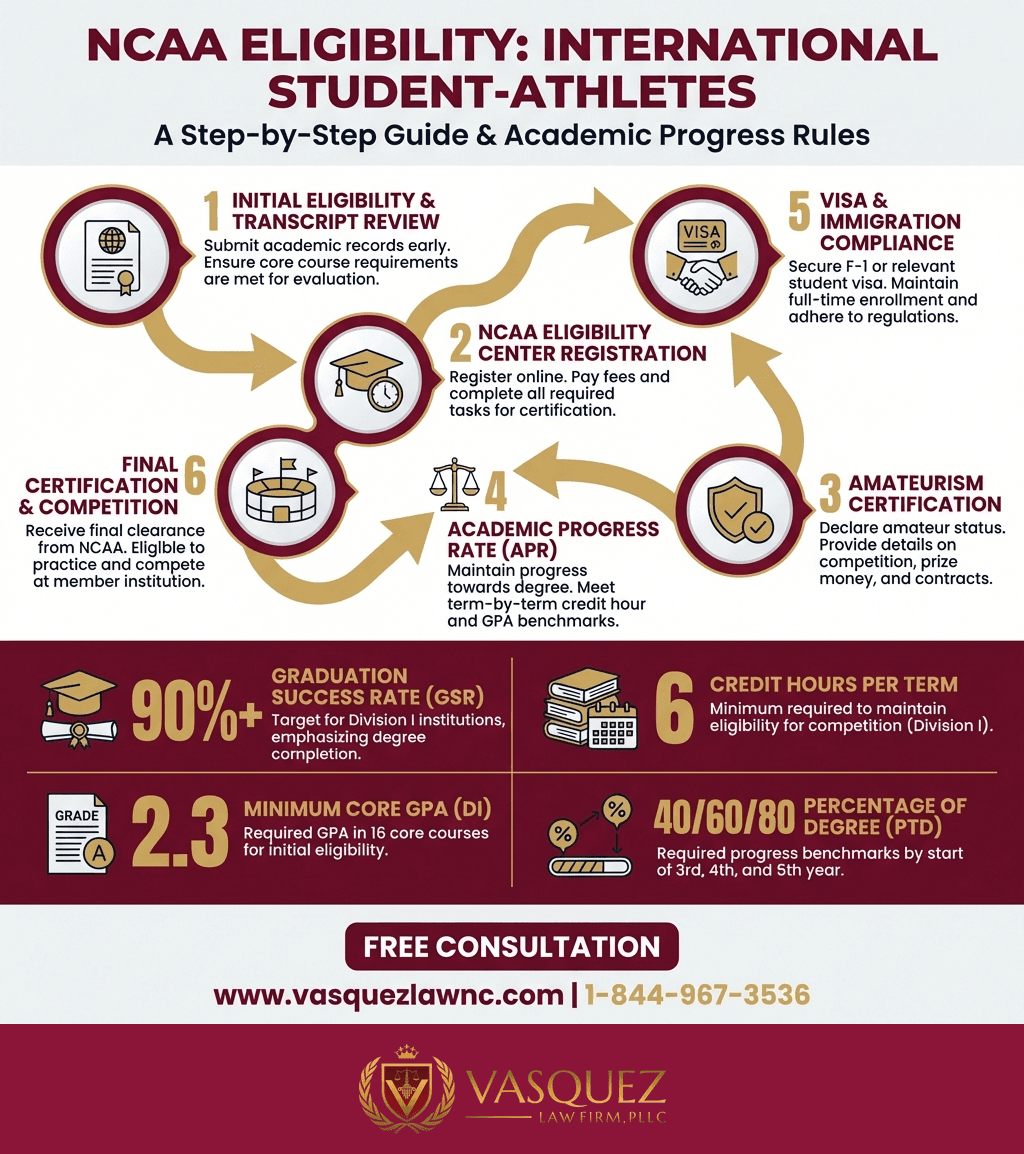
International student athletes must meet NCAA academic and amateurism standards, maintain valid visas, and follow specific rules like the 40-60-80 academic progress requirement. In 2026, immigration compliance and NCAA eligibility go hand in hand for successful participation in US college sports.
- Register with the NCAA Eligibility Center
- Submit academic transcripts and amateur status proof
- Obtain proper student visa (usually F-1)
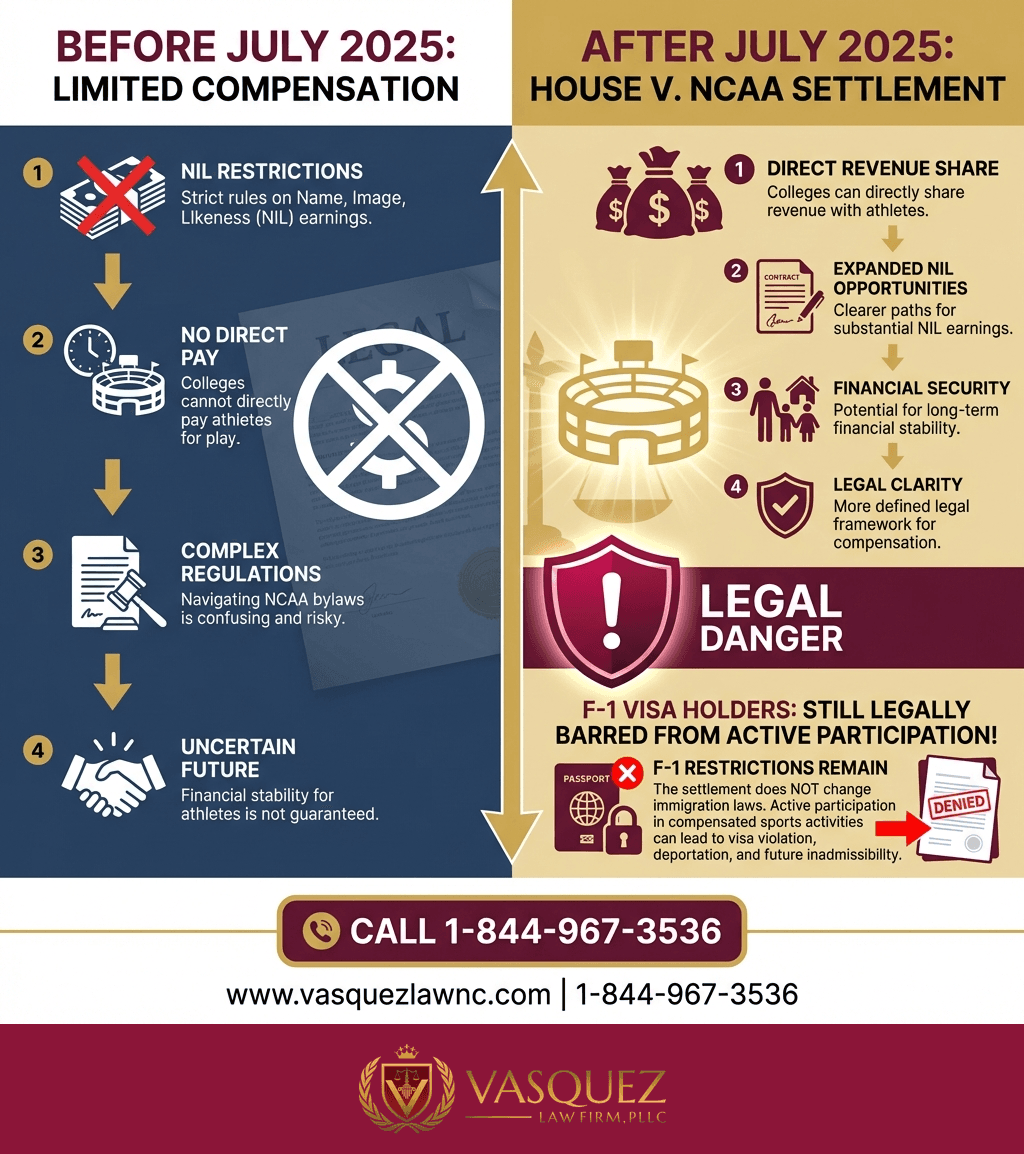
- Understand NIL payment limitations for visa holders
- Maintain timely academic progress per NCAA rules
Understanding International Student Athletes and NCAA Rules
Over 27,000 international student athletes competed in the NCAA during the 2022 season, a number that has steadily grown as colleges increase global recruitment. This growth brings challenges related to eligibility verification and immigration status, especially for schools in North Carolina and Florida hosting many diverse athletes.
International student athletes must adhere to NCAA eligibility rules that focus on academic benchmarks and amateur status verification. Key requirements include registering with the NCAA Eligibility Center and submitting all foreign academic transcripts for evaluation.
One important academic requirement is the 40-60-80 rule. This mandates that athletes complete 40 percent of their degree requirements in their first year, 60 percent by year two, and 80 percent by their third year. Compliance is essential to remain eligible to compete in NCAA divisions I, II, or III.
Immigration law also heavily influences international student athletes. Most enter the country on an F-1 student visa, which requires maintaining full-time enrollment and limits on employment. The overlap of immigration and NCAA rules makes consulting an immigration attorney vital to avoid jeopardizing status and eligibility.
For more on how immigration intersects with sports participation, learn about our immigration services for international student athletes in North Carolina and Florida. Attorney Vasquez offers personalized guidance to help athletes manage both NCAA compliance and visa requirements.
NCAA International Student-Athletes Statistics
According to the NCAA International Guide 2024-25, sports like soccer, tennis, golf, and track receive the highest participation rates among international athletes. North Carolina and Florida colleges rank among the top states recruiting globally, increasing demand for clear legal advice on maintaining eligibility.
Student Status and Visa Requirements
The F-1 visa remains the most common for international athletes. This visa category allows full-time study but restricts off-campus work, which complicates income opportunities from Name, Image, and Likeness (NIL) deals. Other visa types like J-1 or O-1 may apply to certain athletes but come with their own rules and restrictions.
How NIL Affects International Athletes
NIL rights introduced in recent years allow many US student athletes to monetize endorsements. However, immigration law limits many international students from monetizing without violating visa terms. Proper legal counsel can clarify who may participate and guide athletes to stay compliant.
Step-by-Step Guide to Becoming an International Student Athlete
- Research NCAA Eligibility Requirements: Review NCAA Division I, II, or III academic rules and amateurism standards.
- Register with NCAA Eligibility Center: Submit your academic transcripts and proof of amateur status early.
- Meet Academic Standards: Understand the 40-60-80 rule and other progress benchmarks.
- Choose the Right Visa: Typically, apply for an F-1 student visa; explore other options with legal advice.
- Complete Visa Application Process: Gather documents, attend interviews, and receive approval from U.S. consulates or USCIS.
- Maintain Compliance in Studies and Sports: Stay full-time enrolled and follow NCAA and immigration rules.
- Consult With Immigration Attorneys: Address eligibility risks, Visa challenges, and NIL implications with experienced lawyers.
Documents Needed for NCAA and Visa Processes
- Certified academic transcripts (translated if necessary)
- Proof of amateur status (no prior professional participation)
- Passport and identification documents
- Evidence of financial ability to support study
- Acceptance letter from NCAA-participating university
- Visa application forms and associated fees
Timeline for Application and Approval
The entire process from NCAA registration to visa approval can take 3 to 6 months, depending on individual circumstances and country of origin. Early application is recommended to avoid delays impacting participation.
Role of Attorney Vasquez in the Process
Attorney Vasquez, admitted to the North Carolina and Florida Bars, has over 15 years’ experience guiding international student athletes through NCAA eligibility verification and immigration compliance. His bilingual support ensures you understand legal steps clearly. Learn more about Attorney Vasquez.
Common Challenges and Mistakes to Avoid
Many international student athletes struggle with misunderstanding NCAA amateurism rules, visa restrictions, and timing of applications. Common mistakes can lead to loss of eligibility or immigration status problems.
- Missing NCAA Registration Deadlines: Late submissions can delay clearance.
- Inaccurate or Incomplete Academic Records: Transcripts must be verified for equivalency.
- Unauthorized Employment: Taking NIL payments without proper visa authorization risks visa revocation.
- Failing Academic Progress: Not meeting the 40-60-80 rule can cause loss of eligibility.
- Ignoring Visa Expiration Dates: Overstaying visas can result in deportation or future bans.
- Skipping Legal Advice: Navigating legal complexities without a lawyer increases risks.
If you only remember one thing: Ensure you meet both NCAA and immigration requirements before competing. Early preparation saves your college sports career.
Timeline and What to Expect When Applying for NCAA Eligibility
- Months 1-2: Register with NCAA Eligibility Center and prepare necessary documents.
- Months 2-3: Submit academic transcripts and other verification materials.
- Months 3-4: Apply for student visa through US consulate or embassy in home country.
- Months 4-5: Await visa approval and prepare for arrival in the US.
- Month 6: Enroll in school, attend orientation, and begin training and sports activities.
Delays in any step can push back eligibility clearance. Coaching staff and immigration attorneys can provide guidance throughout the timeline.
Costs and Fees: What Impacts the Price
- NCAA Registration Fees: Initial fee to register with the Eligibility Center ranges around $90.
- Visa Application Fees: F-1 visa application fees can vary by country, typically $160, plus SEVIS fee.
- Legal Fees: Hiring an immigration attorney like Attorney Vasquez can range widely based on case complexity but provides valuable peace of mind.
- Translation and Credential Evaluation: External services required for verifying foreign academic transcripts.
- Travel and Accommodation: Expenses for visa interviews or travel related to athletics or study.
NC, FL, and Nationwide Notes
North Carolina Notes
North Carolina colleges are top destinations for international student athletes. Schools like UNC and Duke have specialized compliance offices. Local visa services support athletes applying within the state. North Carolina law requires understanding both NCAA and state educational standards for public universities.
Florida Notes
Florida hosts many diverse NCAA programs that attract international athletes. Orlando, Miami, and Tampa have consular services for visas and immigration filings. State regulations on employment and education affect international athlete opportunities on and off campus.
Nationwide Concepts (General Only, Rules Vary)
NCAA eligibility and US immigration policies are federal but implementation and resources differ by region. Always review local school policies and consult immigration attorneys familiar with your campus location and area, especially when moving states.
When to Call a Lawyer Now
- Visa denial or complications in your student visa application
- Concerns about losing NCAA eligibility
- Issues with maintaining legal status during college
- Questions about NIL payment legality for your visa type
- Academic probation that threatens your sports eligibility
- Immigration court notices or deportation proceedings
- Confusion about transfer rules between colleges
- Need assistance with post-college visa options or work authorization
About Vasquez Law Firm
At Vasquez Law Firm, we combine compassion with aggressive representation. Our motto "Yo Peleo" (I Fight) reflects our commitment to standing up for your rights.
- Bilingual Support: Se Habla Español - our team is fully bilingual
- Service Areas: North Carolina, Florida, and nationwide immigration services
- Experience: Over 15 years helping clients navigate complex legal matters
- Results: Thousands of successful cases across multiple practice areas
Attorney Trust and Experience
Attorney Vasquez holds a Juris Doctor degree and is admitted to practice in both the North Carolina State Bar and Florida Bar. With over 15 years of dedicated legal experience, he has built a reputation for providing personalized attention and managing complex immigration and NCAA compliance issues for international student athletes.
Don't wait to get the help you deserve. Call us now for immediate assistance.
Or schedule your free consultation online: Se Habla Español
Frequently Asked Questions
How many international student-athletes are there in the US?
In 2026, tens of thousands of international student athletes compete under NCAA guidelines, with increasing representation yearly. Rankings show sports like soccer and tennis with high international enrollments. This growth underlines the importance of understanding NCAA and immigration rules for newcomers.
Can international student athletes get paid under NCAA rules?
NIL rights allow many athletes to earn money from endorsements, but visa restrictions often prevent international students from accepting payments without work authorization. Consulting an immigration attorney is essential before entering NIL deals to avoid violating visa status.
What is the 40-60-80 rule for international student athletes?
The 40-60-80 rule sets minimum academic progress percentages required annually to maintain eligibility: 40% after year one, 60% after year two, and 80% after year three. This rule ensures student-athletes, including internationals, are progressing academically along with their athletic participation.
How do international student athletes apply for NCAA eligibility?
International student athletes apply through the NCAA Eligibility Center, submitting transcripts, proof of amateur status, and other documents. They must also meet immigration requirements like obtaining an F-1 visa. Early application prevents delays affecting sports participation.
What visa options are available for international student athletes in the US?
F-1 visas are standard for full-time study and athletic participation. The J-1 visa suits some exchange visitors, while O-1 visas cover individuals with exceptional athletic achievements. Each visa has specific criteria and limitations impacting sports eligibility and work authorization.
Why can't some international student athletes get paid under NIL rules?
Visa conditions restrict many international students from earning income due to work authorization rules. NCAA permits NIL earnings, but immigration laws supersede and prohibit unauthorized employment, including paid endorsements under NIL without proper authorization.
How do NCAA eligibility rules differ for international student athletes compared to US students?
International students must submit foreign academic records for equivalency, verify amateur status abroad, and show compliance with visa requirements. These steps differ from domestic students, who primarily present US-based transcripts and do not face visa restrictions.
Can international student athletes extend their stay in the US after college sports eligibility ends?
Post-eligibility options include applying for Optional Practical Training (OPT) or changing visa status for work or continuing education. Legal guidance is crucial to pursue these paths while remaining in compliance with immigration laws.
Sources and References
- U.S. Citizenship and Immigration Services (USCIS)
- Executive Office for Immigration Review (EOIR)
- NCAA International Guide 2024-25
Take the first step toward justice today. Our team is standing by to help. Se Habla Español.
Start Your Free Consultation Now
Call us: 1-844-967-3536
Se Habla Español - Estamos aquí para ayudarle.
William Vasquez
Founder & CEO, Vasquez Law Firm, PLLC
William Vasquez is the founder and CEO of Vasquez Law Firm, PLLC, a results-driven firm specializing in immigration, criminal defense, personal injury, and workers' compensation. A U.S. Air Force veteran and recipient of the Joint Service Achievement Medal, William is dedicated to fiercely fighting for his clients' rights.
Related Legal Services
Need legal help? Learn more about immigration lawyers in North Carolina, or contact us for a free evaluation.
You can also visit NC immigration legal help for more information.