What Drivers Need to Know About the GM OnStar Lawsuit in 2026
Are you affected by the GM OnStar lawsuit? Learn about your rights, potential claims, and how to protect your data in 2026. Contact Vasquez Law Firm for a free consultation.
Published on March 4, 2026
Have questions? Talk to an attorney - free evaluation.
Call 1-844-967-3536Get What Your Injury Is Worth
Free case review, and no fee unless we win.
What Drivers Need to Know About the GM OnStar Lawsuit in 2026
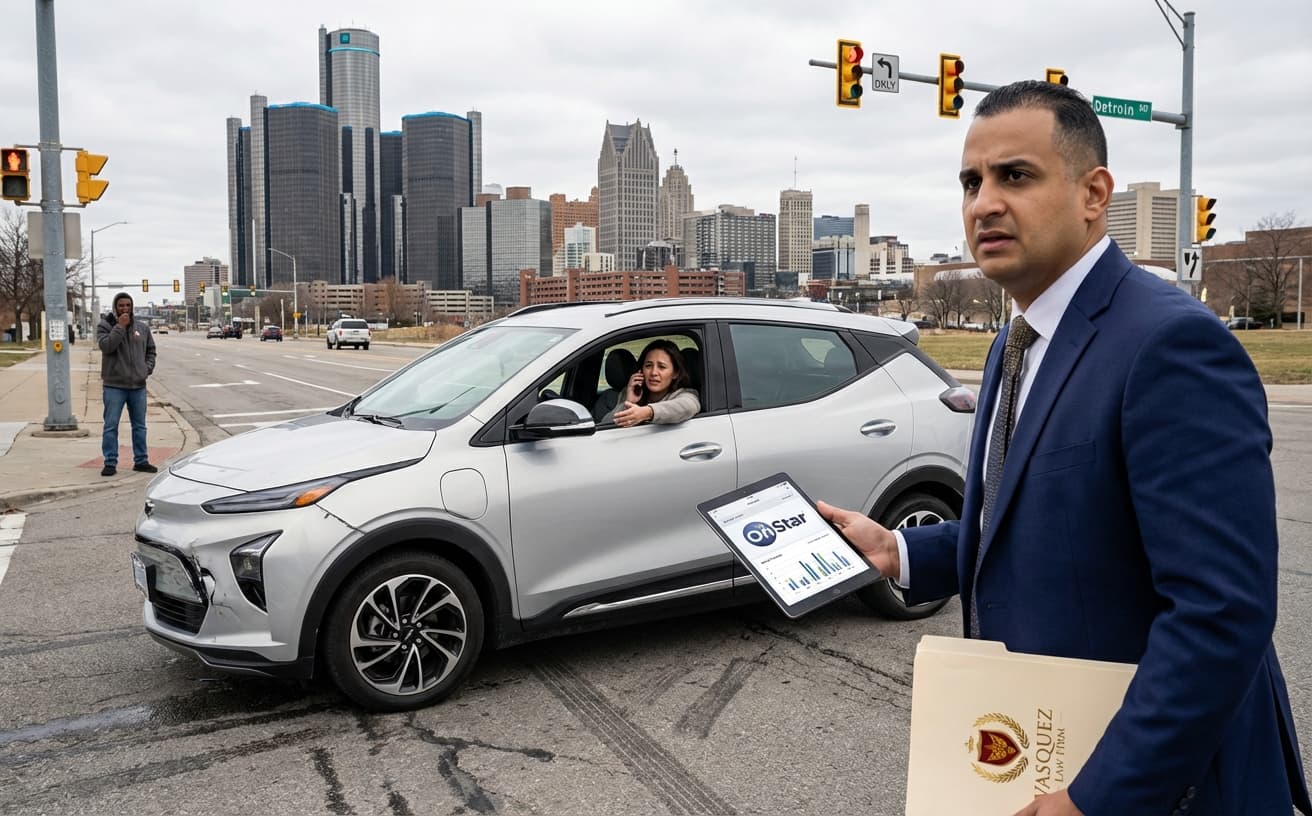
Recent developments surrounding the GM OnStar lawsuit have brought critical attention to consumer privacy and data sharing practices in the automotive industry. As of 2026, General Motors is facing legal challenges concerning allegations that it shared driver data, including driving habits and locations, with data brokers and insurance companies without explicit consent. This situation has significant implications for vehicle owners and highlights the importance of understanding your rights. If you own a GM vehicle equipped with OnStar, it is crucial to stay informed about these proceedings and consider how they might affect you. Vasquez Law Firm is closely monitoring these developments and can help you understand your options.
Need help with your case? Our experienced attorneys are ready to fight for you. Se Habla Español.
Schedule Your Free Consultation
Or call us now: 1-844-967-3536
Quick Answer
The GM OnStar lawsuit centers on allegations that General Motors shared driver data, including detailed driving behavior and location information, with third-party data brokers and insurers without proper consent. Drivers who owned or leased certain GM vehicles equipped with OnStar may be affected and could have claims for privacy violations under state and federal laws.
- GM vehicles with OnStar are at the heart of the privacy allegations.
- Lawsuits allege data sharing without explicit driver consent.
- Drivers may be eligible for compensation if their data was improperly shared.
- It is crucial to review your vehicle's data privacy settings.
- Legal action aims to hold GM accountable for these practices.
Understanding the GM OnStar Lawsuit
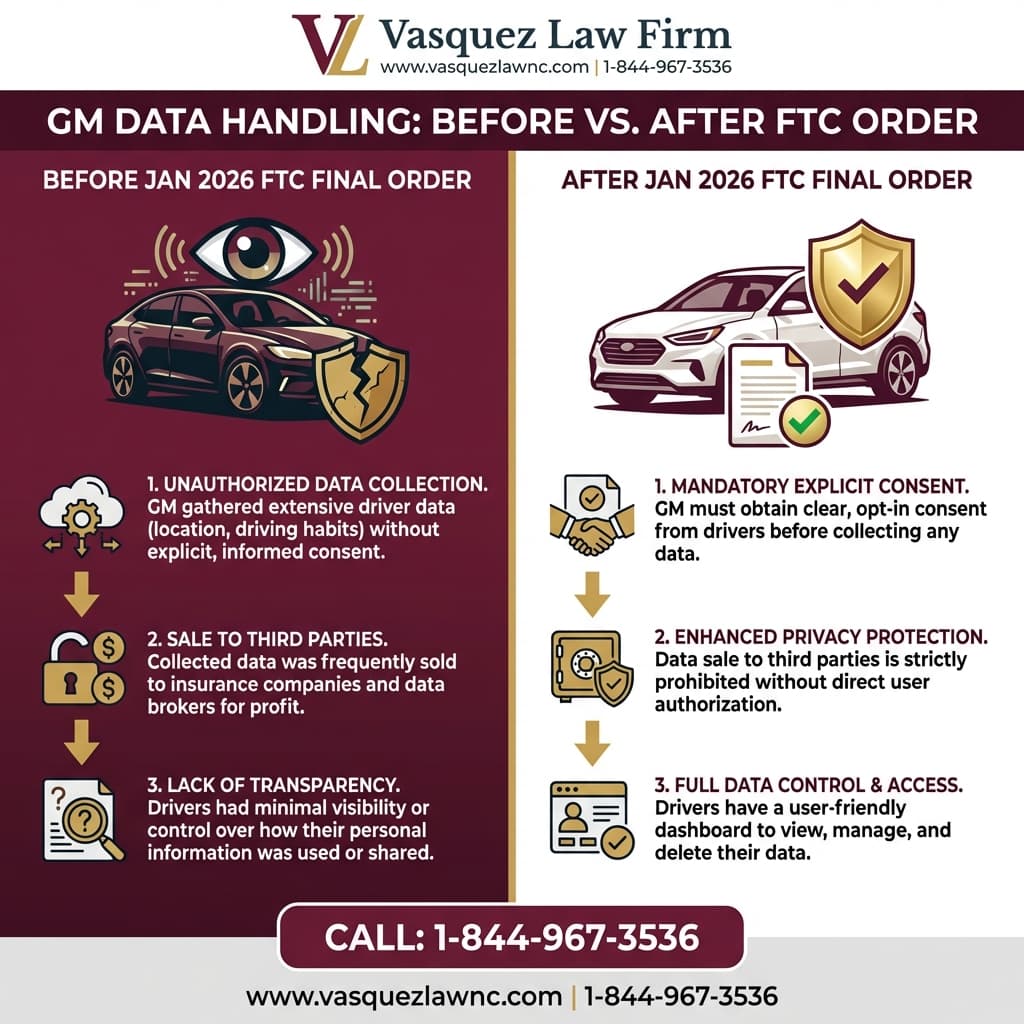
The current GM OnStar lawsuit has emerged as a significant legal battle concerning consumer privacy in the age of connected vehicles. At its core, the lawsuit alleges that General Motors, through its OnStar connected services, collected extensive data on drivers' habits and movements. This data, which can include acceleration, braking patterns, speed, and even precise location history, was then allegedly shared with various third parties, particularly data brokers and insurance companies, without the explicit knowledge or consent of the vehicle owners.
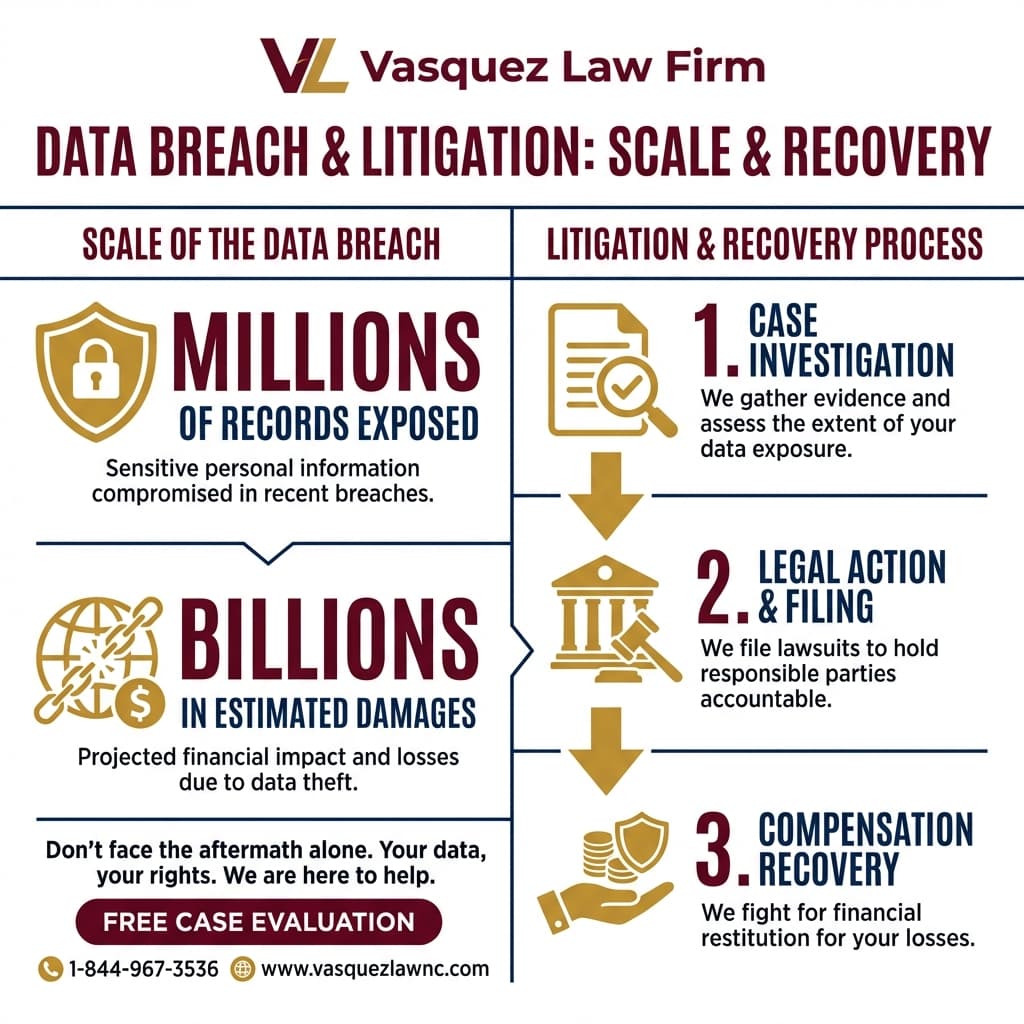
This situation raises serious questions about who owns vehicle data and the boundaries of corporate data collection. For many drivers, the idea that their daily commutes and driving styles are being monitored and sold to other companies is deeply unsettling. The legal claims typically revolve around violations of privacy, breach of contract, and deceptive trade practices. As of 2026, several class-action lawsuits are consolidating, seeking to represent millions of affected GM vehicle owners across the United States. These cases highlight a growing area of law that attempts to keep pace with technological advancements in vehicles.
The outcomes of these lawsuits could set important precedents for how automotive manufacturers handle sensitive driver information in the future. It could also lead to substantial compensation for affected individuals whose privacy rights may have been infringed upon. Understanding the specifics of these allegations and how they might apply to your situation is the first step in protecting your rights. Vasquez Law Firm is committed to helping clients navigate these complex legal waters, offering clear guidance and aggressive representation in cases involving personal injury and consumer rights.
Who is Affected by GM Privacy Lawsuit Allegations?
The GM privacy lawsuit primarily impacts individuals who owned or leased certain General Motors vehicles equipped with OnStar or similar connected services. This typically includes a wide range of GM models manufactured in recent years, where advanced telematics systems are standard features. If your vehicle has OnStar, particularly if you activated or subscribed to its services, you might be among those whose data was collected and potentially shared. The specific models and years covered by the lawsuits can vary as new information emerges, but generally, vehicles from the last decade are most commonly implicated.
Beyond direct subscribers, even individuals who did not actively opt-in to certain OnStar features could be affected if their vehicle's data collection systems were active by default. The key issue is the alleged lack of transparent consent for sharing this sensitive data with third parties like insurance providers. Many drivers were unaware that their driving habits were being compiled into comprehensive reports and sold, potentially leading to higher insurance premiums or other adverse outcomes.
Identifying if you are an affected party often involves reviewing your vehicle's features, any OnStar agreements you may have signed, and monitoring updates on the ongoing litigation. Legal teams involved in the GM OnStar lawsuit are working to define the class of affected individuals as broadly as possible to ensure that all who suffered harm can seek justice. If you believe your vehicle might be involved, it is prudent to gather any relevant documentation, such as purchase agreements, OnStar service records, and any communications from GM or OnStar regarding data privacy policies.
Potential Claims and Compensation in a GM Data Lawsuit
In a GM data lawsuit, affected drivers may have several avenues for seeking compensation and holding General Motors accountable. The primary claims often involve violations of state and federal privacy laws, such as those related to consumer protection and deceptive trade practices. Depending on the jurisdiction, statutory damages for privacy violations can be significant, even without proof of direct financial harm. Additionally, plaintiffs may argue for damages related to the devaluation of their personal data, emotional distress, or any financial losses incurred, such as increased insurance rates based on data shared without consent.
The type and amount of compensation available will largely depend on the specific allegations proven in court and the nature of the class action settlement, if one is reached. Potential remedies could include monetary awards for each class member, injunctive relief requiring GM to change its data collection and sharing practices, or a combination of both. For example, some settlements in similar privacy cases have offered a fixed sum per affected individual, while others have provided vouchers or credits for future services.
It's important to understand that in a class action lawsuit, individual payouts can vary widely based on factors like the total settlement amount, the number of eligible claimants, and the severity of the alleged harm. While specific figures are not yet available for the current GM OnStar lawsuit, past large-scale data privacy settlements have ranged from hundreds to thousands of dollars per claimant. Consulting with a personal injury attorney experienced in consumer protection and data privacy cases, such as those at Vasquez Law Firm, can provide clarity on what to expect and how to maximize your potential recovery. We can help you understand the intricacies of the legal process and advocate fiercely on your behalf.
Protecting Your Privacy: Vehicle Data Management
Given the ongoing GM OnStar lawsuit update and heightened awareness of vehicle data privacy, it is more important than ever for drivers to proactively manage their personal information. Many modern vehicles, not just those from GM, are equipped with sophisticated telematics systems that collect vast amounts of data. Understanding how to access, control, and, if necessary, disable certain data-sharing features is crucial. Start by thoroughly reviewing your vehicle's infotainment system settings and any associated apps, looking for privacy options related to data collection and sharing.
Next, carefully read the terms and conditions of any connected services you subscribe to, such as OnStar. While often lengthy, these documents outline what data is collected and how it might be used. Look for clauses regarding third-party sharing and your rights to opt-out. If you are unsure, contact the service provider directly and ask for clarification. Many companies now offer more transparent privacy dashboards or settings that allow you to customize your preferences.
Consider the following steps to better protect your vehicle data:
- Review OnStar/GM Privacy Policies: Regularly check for updated terms of service regarding data collection and sharing.
- Adjust In-Vehicle Settings: Explore your car's infotainment system for options to limit data transmission or location tracking.
- Opt-Out Where Possible: Exercise any opt-out rights for data sharing with third parties, especially for marketing or insurance purposes.
- Be Wary of Connected Apps: Understand the data permissions requested by any mobile apps linked to your vehicle.
- Consult a Professional: If you're unsure about your rights or how to manage your data, speak with a legal expert.
If you only remember one thing: Always be proactive in reviewing and managing the privacy settings for your vehicle's connected services. Your personal data is valuable, and you have a right to control who accesses and uses it.
Legal Remedies and the Class Action Process
For those affected by the alleged data sharing in the General Motors lawsuit, understanding the class action process is vital. A class action lawsuit allows a large group of individuals who have suffered similar harm from the same defendant to pursue legal action collectively. This approach is particularly effective in cases like the GM OnStar lawsuit, where individual damages might be small but the collective impact is substantial. It streamlines the legal process and provides a more efficient way to seek justice for a broad group of plaintiffs.
Typically, the class action process begins with one or more named plaintiffs filing a lawsuit on behalf of themselves and all others similarly situated. The court then certifies the class, defining who is included in the group. Once certified, all class members are generally bound by the outcome of the lawsuit, whether it's a settlement or a judgment. Class members usually receive notice of the lawsuit and have the option to opt-out if they prefer to pursue an individual claim, though this is rare in large consumer cases.
The legal remedies sought in these cases often include monetary damages to compensate for privacy violations, as well as injunctive relief. Injunctive relief requires the defendant, in this case, General Motors, to cease certain practices or implement new policies to prevent future harm. For instance, the court could order GM to obtain explicit, informed consent from drivers before sharing any telematics data with third parties. This type of remedy can have a far-reaching impact, improving privacy protections for all vehicle owners. Vasquez Law Firm has experience with complex litigation and can guide you through the intricacies of such legal proceedings.
Don't face your legal challenges alone. Our team is here to help you every step of the way.
Call today: 1-844-967-3536 | Se Habla Español
NC and FL Perspectives on Data Privacy Lawsuits
While the GM OnStar lawsuit is a federal matter due to the interstate nature of GM's operations, state laws in North Carolina and Florida play a crucial role in how these cases are litigated and what remedies may be available. Both states have their own consumer protection statutes and common law principles that address privacy and deceptive trade practices. For example, North Carolina's Unfair and Deceptive Trade Practices Act (N.C. Gen. Stat. § 75-1.1) provides a broad framework for consumers to seek recourse against businesses engaging in misleading or unethical conduct. Similarly, Florida's Deceptive and Unfair Trade Practices Act (Fla. Stat. § 501.201 et seq.) offers protections against similar actions.
North Carolina Notes
In North Carolina, consumers alleging privacy violations might pursue claims under the state's common law right to privacy, though this area can be complex. The focus would likely be on whether GM's actions constituted an appropriation of an individual's likeness or an unreasonable intrusion upon their seclusion. Additionally, claims under the state's consumer protection laws would be strong avenues, arguing that the alleged non-consensual data sharing was an unfair or deceptive act. The North Carolina Courts provide resources for understanding state-specific legal processes.
Florida Notes
Florida has a robust framework for consumer protection, and its Deceptive and Unfair Trade Practices Act is often utilized in cases involving corporate misconduct. For the GM OnStar lawsuit, plaintiffs in Florida could argue that GM's alleged failure to disclose its data-sharing practices constituted a deceptive act. Florida also recognizes a constitutional right to privacy, which could be invoked depending on the specific facts of the case. Understanding these state-specific nuances is critical for any class action litigation.
Nationwide Concepts (General Only, Rules Vary)
Across the nation, the legal landscape for data privacy is evolving rapidly. While there is no single comprehensive federal privacy law akin to Europe's GDPR, various sector-specific laws (like HIPAA for health data) and state laws (like California's CCPA) provide protections. The principles of informed consent, data minimization, and transparency are increasingly becoming central to legal arguments in data privacy lawsuits. The outcomes of cases like the GM OnStar lawsuit will likely influence future legislation and corporate practices nationwide, pushing for greater accountability in how personal data is handled.
When to Call a Lawyer Now
If you believe you've been affected by the GM OnStar lawsuit or similar vehicle data privacy issues, it's crucial to act quickly. The complexity of these cases, coupled with potential statutes of limitations, means that timely legal advice is essential. Here are several triggers indicating you should contact a lawyer immediately:
- You own or previously owned a GM vehicle equipped with OnStar and are concerned about data sharing.
- You've received communication regarding the GM OnStar lawsuit or a potential settlement.
- Your insurance premiums have unexpectedly increased, and you suspect it's related to shared driving data.
- You've discovered that your personal driving data has been accessed or used without your explicit consent.
- You are unsure whether your vehicle is covered by the existing lawsuits.
- You want to understand your legal rights and options for potential compensation.
- You need help interpreting complex legal documents or privacy policies from GM or OnStar.
- You're considering opting out of a class action or pursuing an individual claim.
About Vasquez Law Firm
At Vasquez Law Firm, we combine compassion with aggressive representation. Our motto "Yo Peleo" (I Fight) reflects our commitment to standing up for your rights. We understand the distress and frustration that can arise when your privacy is violated or you've been wronged by a large corporation. Our team is dedicated to providing personalized legal services and fighting tirelessly to achieve the best possible outcomes for our clients.
- Bilingual Support: Se Habla Español - our team is fully bilingual, ensuring clear communication and understanding.
- Service Areas: We proudly serve clients in North Carolina, Florida, and offer nationwide immigration services, including our local Smithfield office.
- Experience: With over 15 years helping clients navigate complex legal matters, we bring a wealth of knowledge and a proven track record to every case.
- Results: Thousands of successful cases across multiple practice areas demonstrate our commitment to justice and client satisfaction.
Attorney Trust and Experience
Attorney Vasquez holds a Juris Doctor degree and is admitted to practice in both the North Carolina State Bar and Florida Bar. With over 15 years of dedicated legal experience, he has built a reputation for providing personalized attention and achieving favorable outcomes for his clients. He understands the intricacies of personal injury and consumer protection law, making him a formidable advocate in cases like the GM OnStar lawsuit. Our firm is committed to protecting your rights and ensuring your voice is heard.
Don't face your legal challenges alone. Our team is here to help you every step of the way.
Call today: 1-844-967-3536 | Se Habla Español
Frequently Asked Questions
What specifically is the GM OnStar lawsuit about?
The GM OnStar lawsuit alleges that General Motors, through its OnStar connected services, collected and shared extensive driver data, including driving habits, speed, and location, with third-party data brokers and insurance companies. This sharing allegedly occurred without the explicit consent or full knowledge of vehicle owners, leading to claims of privacy violations and deceptive practices under consumer protection laws. The core issue is the unauthorized monetization of personal driving information.
How do I know if my GM vehicle is affected by the lawsuit?
Generally, if you owned or leased a GM vehicle with active OnStar services, particularly models from the last decade, you might be affected. The specific year, make, and model information is being detailed as the class action progresses. It is advisable to review any OnStar service agreements you have and monitor official lawsuit notices. Consulting with an attorney can help clarify your eligibility based on the most current information available.
What kind of data did OnStar allegedly share?
The lawsuit claims that OnStar shared highly detailed telematics data. This includes information about driving behavior such as acceleration, braking patterns, speed, mileage, and precise GPS location history. This data could be compiled into comprehensive driver scores and sold to third parties, including insurance companies, potentially impacting a driver's insurance rates or eligibility for certain policies.
What compensation could I receive from a GM class action lawsuit?
Compensation in a GM class action lawsuit could include monetary damages for privacy violations, reimbursement for any financial losses (like increased insurance premiums), and potentially statutory damages depending on state laws. The exact amount would depend on the total settlement reached, the number of eligible claimants, and the specific harm proven. Injunctive relief, requiring GM to change its data practices, is also a common outcome.
Can I opt out of the GM OnStar lawsuit and file my own claim?
In most class action lawsuits, class members are given the option to "opt out" of the settlement. If you choose to opt out, you would then retain your right to file an individual lawsuit against General Motors. However, pursuing an individual claim can be more complex and costly. It is crucial to discuss this decision with an experienced attorney to understand the pros and cons for your specific situation.
How can I protect my vehicle's data privacy in 2026?
To protect your vehicle's data privacy in 2026, start by reviewing your car's infotainment settings and any connected service agreements (like OnStar). Look for options to limit data collection, location tracking, and third-party sharing. Opt-out of any non-essential data sharing programs. Regularly check for privacy policy updates and consider contacting the service provider directly for clarification on their data practices and your rights.
What are the legal citations relevant to data privacy lawsuits?
Relevant legal citations in data privacy lawsuits often include state consumer protection acts, such as North Carolina's Unfair and Deceptive Trade Practices Act (N.C. Gen. Stat. § 75-1.1) and Florida's Deceptive and Unfair Trade Practices Act (Fla. Stat. § 501.201 et seq.). Federal laws like the Electronic Communications Privacy Act (18 U.S.C. Chapter 119) and various state constitutional privacy rights can also be invoked, depending on the specific allegations and jurisdiction.
Why is Vasquez Law Firm a good choice for this type of case?
Vasquez Law Firm offers over 15 years of experience in personal injury and consumer protection law, with a strong commitment to fighting for clients' rights. Our bilingual team (Se Habla Español) ensures clear communication, and our aggressive representation aims for the best possible outcomes. Attorney Vasquez is admitted to practice in North Carolina and Florida, providing comprehensive legal support for complex cases like the GM OnStar lawsuit.
Sources and References
- North Carolina Courts
- North Carolina Department of Transportation (NCDOT)
- Iowa Files Lawsuit Claiming GM Shared OnStar Driver Data With Insurers - AOL.com
Ready to take the next step? Contact Vasquez Law Firm today for a free, confidential consultation. We're committed to fighting for your rights and achieving the best possible outcome for your case.
Start Your Free Consultation Now
Call us: 1-844-967-3536
Se Habla Español - Estamos aquí para ayudarle.


William Vasquez
Founder & CEO, Vasquez Law Firm, PLLC
William Vasquez is the founder and CEO of Vasquez Law Firm, PLLC, a results-driven firm specializing in immigration, criminal defense, personal injury, and workers' compensation. A U.S. Air Force veteran and recipient of the Joint Service Achievement Medal, William is dedicated to fiercely fighting for his clients' rights.
Related Legal Services
Need legal help? Learn more about our personal injury law practice, or contact us for a free evaluation.
You can also visit North Carolina personal injury lawyers for more information.