What Happens During Deportation Process in 2026
Wondering how deportation works in 2026? Learn about the deportation process, your rights, and defense options. Contact Vasquez Law for a free consultation.
Published on May 21, 2026
Have questions? Talk to an attorney - free evaluation.
Call 1-844-967-3536Check your case status now
Look up your immigration case below, then talk to an attorney about what it means — free.
Questions about your result?
Talk to an attorney about your case — free, no obligation.
What Happens During Deportation Process in 2026
Facing deportation in 2026 is a serious legal challenge for many immigrants in Raleigh, NC and Orlando, FL. The deportation process involves multiple steps including detention, notice, hearings, and possible removal. Understanding this process, the grounds for deportation, and your legal options can help protect your rights. Vasquez Law Firm offers experienced immigration assistance to navigate deportation matters effectively.
Need help with your case? Our experienced attorneys are ready to fight for you. Se Habla Español.
Or call us now: 1-844-967-3536
Quick Answer
Deportation is a legal process in which the government removes a non-citizen from the U.S. for violating immigration laws. It involves receiving a deportation notice, court hearings, and possibly removal. Knowing the deportation grounds and how to defend yourself is essential. Immediate legal help is critical.
- Deportation starts with a notice to appear in immigration court
- ICE enforces detention and removal of non-citizens
- Court hearings determine if removal is lawful
- Legal defenses may stop deportation
- Process length varies from months to over a year
Understanding Deportation Process
A North Carolina immigrant recently received a deportation letter from Immigration and Customs Enforcement (ICE). This letter signals the start of removal proceedings requiring immediate attention. Deportation, also called removal, is the federal process to expel foreign nationals who violate immigration laws. The grounds for deportation are listed in 8 U.S.C. § 1227 and include criminal activity, visa violations, and illegal entry.
The deportation process generally follows these stages: ICE detention and notice, initial hearings before an immigration judge from the Executive Office for Immigration Review (EOIR), and final orders for removal or relief. While the U.S. government enforces federal immigration law nationwide, practical enforcement and legal resources differ in Raleigh, NC and Orlando, FL. Vasquez Law Firm’s immigration services provide tailored support through this process.
Also called removal proceedings, deportation is different from voluntary departure, which allows eligible individuals to leave on their own accord without a formal removal order. The process includes important legal safeguards but missing deadlines or hearings can lead to automatic deportation.
Deportation ICE Role
ICE is responsible for arresting and detaining individuals subject to deportation. Once an individual is detained, ICE issues a deportation letter or notice to appear, specifying the grounds and the date to appear in immigration court. ICE then arranges for removal if the court orders deportation.
Deportation Grounds
Common grounds to be deported include:
- Criminal convictions including aggravated felonies or crimes involving moral turpitude
- Visa overstay or unauthorized employment
- Entry without inspection or through fraudulent means
- Violations such as failure to register or false claims of citizenship
Each ground triggers different legal consequences and some may allow for defenses or cancellation under INA § 240A(b) depending on length of residence, family ties, and other factors.
Deportation Letter Explained
The deportation letter, or Notice to Appear (NTA), is the formal document that begins removal proceedings. It includes:
- Your name and identifying information
- Date, time, and place to appear in immigration court
- Allegations of deportability including specific grounds
- Possible penalties and instructions
It is critical to respond and appear as required. Failing to do so results in removal by default.
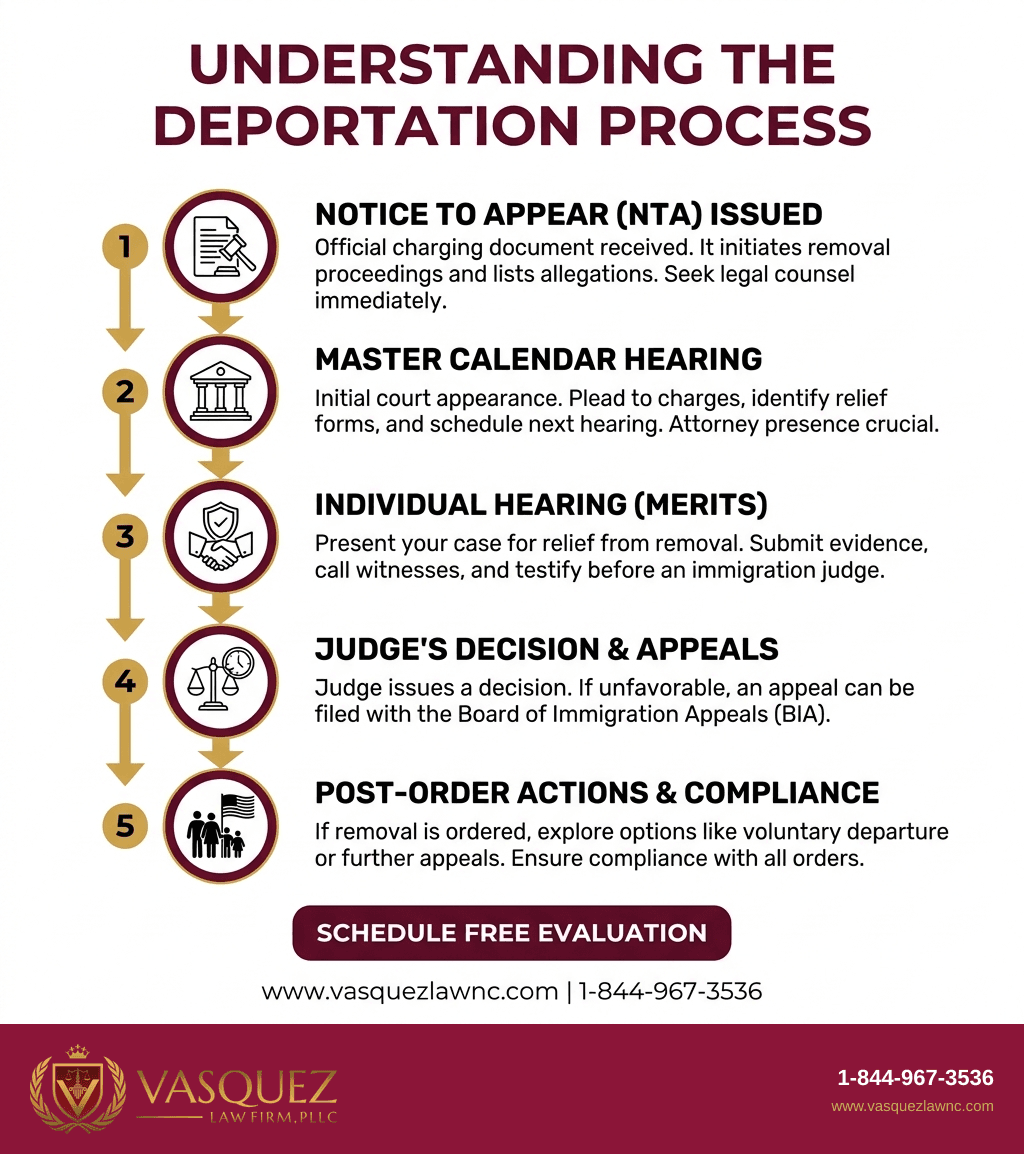
Step-by-Step Guide to Deportation
- Detention and Notice: ICE may arrest and detain you. You receive the deportation letter or Notice to Appear.
- Master Calendar Hearing: This is the first immigration court hearing. You enter a plea and your case is scheduled for a merits hearing.
- Individual Hearing: Present evidence and legal arguments. Judge decides deportation or relief.
- Appeal Rights: If denied, you may appeal to the Board of Immigration Appeals or federal courts.
- Removal: If all relief is denied, ICE will arrange removal from the U.S.
Step 1: Contact an Immigration Lawyer
After receiving a deportation notice, contact an experienced attorney promptly. Vasquez Law Firm offers direct help with deportation defenses in Raleigh, NC and Orlando, FL.
Step 2: Gather Evidence
Collect documents like immigration status papers, criminal records, proof of residence, work, and family ties. These support possible defenses or motions to suppress evidence.
Step 3: Prepare Your Defense
Common defenses include cancellation of removal under INA § 240A(b), asylum, withholding of removal, or adjustment of status if eligible. Your lawyer will advise on the best approach.
Common Deportation Mistakes to Avoid
- Ignoring the deportation letter — Respond immediately to avoid default removal.
- Failing to attend court hearings — Missing a hearing leads to automatic deportation.
- Not hiring qualified legal counsel — Self-representation increases risk of losing relief opportunities.
- Delaying legal action — Time-sensitive deadlines can cause loss of defense rights.
- Providing false information — Misrepresentations may cause additional removal grounds.
- Failing to maintain proper documentation — Lack of evidence weakens your case.
- Not understanding your rights during ICE detention — Always request legal representation and know your rights.
If you only remember one thing: Act fast and get legal help immediately to protect your rights during the deportation process.
Timeline and What to Expect
- Week 1-2: ICE issues Notice to Appear and may detain you.
- Month 1-3: Attend Master Calendar Hearing; plead and schedule case.
- Month 3-6: Prepare and attend Individual Hearing.
- Month 6-12+: Appeal if necessary; await final disposition.
Some cases may be resolved quicker or delayed due to backlogs. Check current EOIR court schedules for expected wait times in Raleigh and Orlando.
Costs and Fees: What Impacts the Price
- Complexity of your case and number of hearings
- Evidence gathering and translation requirements
- Experience level of your attorney
- Emergency detention or bond hearings
At Vasquez Law Firm, we provide transparent fee structures and free evaluations to explain costs early.
NC, FL, and Nationwide Notes
North Carolina notes
In Raleigh and wider NC, deportation cases are handled under federal immigration law but supported by local ICE field offices. Access to legal aid and immigration courts is available in nearby cities. Vasquez Law Firm’s Raleigh office offers direct representation and local support.
Florida notes
In Orlando, FL, ICE enforcement is active, and EOIR immigration courts hold regular hearings. Local consulates and community groups also provide helpful resources. Our Orlando team is familiar with the specific procedures and judges in Florida immigration courts.
Nationwide concepts
Deportation is a federal matter with standard laws, though court backlog and ICE practices vary regionally. Relief eligibility hinges on federal statutes like INA § 240A and 8 U.S.C. § 1227. Nationwide legal precedents affect defense options across states.
When to Call a Lawyer Now
- If you receive any deportation letter or Notice to Appear
- If ICE arrests or detains you or a family member
- If you miss a court date or deportation hearing
- When facing criminal charges that could affect immigration status
- If you are unsure of your immigration status or relief options
- If you want to apply for cancellation of removal or asylum
- When ICE gives you a removal order or final decision
About Vasquez Law Firm
At Vasquez Law Firm, we combine compassion with aggressive representation. Our motto "Yo Peleo®" (I Fight) reflects our commitment to standing up for your rights.
- Bilingual Support: Se Habla Español — Spanish-speaking attorneys and staff available
- Service Areas: North Carolina, Florida, and nationwide immigration services
- Experience: Over 30 years helping clients navigate complex legal matters
- Results: Thousands of successful cases across multiple practice areas
Attorney Trust and Experience
William J. Vásquez is admitted to the North Carolina State Bar (2011) and to the U.S. Courts of Appeals for the 4th, 5th, and 11th Circuits. Florida-jurisdiction matters at the firm are handled by Florida Bar attorney Harold Estrada-Rodriguez (FL Bar No. 1041171). The firm has provided dedicated legal representation since 2011, with personalized attention to each client's case.
Don't wait to get the help you deserve. Call us now for immediate assistance.
Se Habla Español
Frequently Asked Questions
What are the common grounds for deportation?
Common grounds for deportation include criminal convictions, overstaying visas, illegal entry, and visa violations. Under 8 U.S.C. § 1227, these grounds lead to removal proceedings. Identifying your grounds early helps build defenses and understand your options.
What happens after receiving a deportation letter?
The deportation letter or Notice to Appear begins removal proceedings. It includes court dates and charges. You must respond and attend hearings to defend yourself. Ignoring it risks deportation by default.
How long does the deportation process take?
The process can last months to over a year depending on case complexity and court speed. Appeals or relief applications may add more time. Stay informed about your court schedule.
Can I stop deportation with a legal defense?
Yes, defenses like cancellation of removal, asylum, or adjustment of status can stop deportation. Qualified attorneys help identify and argue your defense in court.
What is the role of Immigration and Customs Enforcement (ICE) in deportation?
ICE enforces removal by detaining, arresting, and physically removing individuals after court orders. They deliver notices and conduct hearings in some cases.
What documents should I prepare if facing deportation?
Gather ID, immigration status papers, family ties proofs, work history, and any criminal records. These documents support your case for relief or defense.
Can I represent myself in deportation court?
While allowed, self-representation is risky. Immigration court is complex and technical. Lawyers improve chances of relief and avoiding deportation.
How does the new third-country deportation agreement affect immigrants?
The new agreement allows deportation to third countries. For NC and Orlando immigrants, it changes possible removal locations. Legal guidance is vital to understand effects on your case.
Sources and References
- U.S. Citizenship and Immigration Services
- Executive Office for Immigration Review
- Legal Information Institute
Take the first step toward justice today. Our team is standing by to help. Se Habla Español.
Start Your Free Evaluation Now
Call us: 1-844-967-3536
Se Habla Español - Estamos aquí para ayudarle.
If you need legal assistance, learn more about how our immigration attorneys can help, or call us at 1-844-967-3536 for a free evaluation.


William Vasquez
Founder & CEO, Vasquez Law Firm, PLLC
William Vasquez is the founder and CEO of Vasquez Law Firm, PLLC, a results-driven firm specializing in immigration, criminal defense, personal injury, and workers' compensation. A U.S. Air Force veteran and recipient of the Joint Service Achievement Medal, William is dedicated to fiercely fighting for his clients' rights.
Related Legal Services
Need legal help? Learn more about how our immigration attorneys can help, or contact us for a free evaluation.
You can also visit immigration lawyers serving all of North Carolina for more information.