What Is Denaturalization and How It Works in 2026
Wondering what denaturalization means? Learn the 2026 denaturalization process, risks, and rights. Contact Vasquez Law for a free consultation.
Published on April 17, 2026
Talk to an immigration attorney
Free call. A clear plan for your case.
Free & confidential · Se habla espanol · 24/7

Have questions? Talk to an attorney - free evaluation.
Call 1-844-967-3536Worried how the latest immigration news affects you?
Schedule a confidential case review with an immigration attorney - know exactly where you stand.
What Is Denaturalization and How It Works in 2026
Denaturalization is a legal process where U.S. citizenship is revoked, often due to fraud or illegal actions during naturalization. This article explains denaturalization in 2026, details who is at risk, common scenarios, and how those in Raleigh and beyond can protect their rights. Understanding the denaturalization process is vital for immigrants, especially Dreamers concerned about the security of their citizenship. Attorney Vasquez and the Vasquez Law Firm provide compassionate guidance to help you navigate complex immigration laws and potential citizenship challenges.
Need help with your case? Our experienced attorneys are ready to fight for you. Se Habla Español.
Or call us now: 1-844-967-3536
Quick Answer
Denaturalization is the legal process by which U.S. citizenship is revoked due to fraud or illegal conduct at the time of naturalization. It involves a federal court procedure where the government proves citizenship was obtained unlawfully.
- Citizenship revocation can lead to deportation.
- Fraud or concealment triggers denaturalization.
- Legal defenses and appeals are possible.
- The process can take several months to years.
Understanding Denaturalization Meaning
Imagine a Dreamer who became a U.S. citizen several years ago. Suddenly, immigration authorities start questioning the validity of their citizenship because of alleged misrepresentations during their naturalization. This situation involves denaturalization, a serious legal action with lasting consequences.
Denaturalization means the formal removal of U.S. citizenship after it has been granted. Unlike loss of citizenship due to voluntary renunciation, denaturalization is involuntary and based on evidence that the citizenship was obtained through fraud, concealment, or illegal actions. It can apply to those naturalized citizens who committed identity fraud, concealed criminal records, or lied about their eligibility when applying.
Being denaturalized means losing the privileges of U.S. citizenship, including the right to vote, travel with a U.S. passport, and legal protections under U.S. law. It often leads to removal or deportation proceedings. Denaturalization is federally controlled and handled in U.S. district courts.
For Raleigh Dreamers and immigrants in North Carolina and Florida, understanding the meaning of denaturalization is crucial. It highlights the importance of honesty and legal compliance in immigration processes. To protect your status, it's wise to consult an experienced immigration attorney at Vasquez Law Firm.
Denaturalization Process Explained
Lisa moved to Raleigh and earned U.S. citizenship through naturalization in 2015. In 2026, she received a notice from the Department of Justice alleging she hid a past arrest during her application. This triggered the denaturalization process.
The denaturalization process usually begins when the government discovers evidence of fraud or misrepresentation. A petition is filed in a federal district court to revoke citizenship under statutes like 8 U.S.C. § 1451. The court notifies the individual and schedules hearings.
During the process, the individual has a right to defend themselves and present evidence. The government must prove citizenship was unlawfully obtained by clear, convincing evidence. If the court agrees, citizenship is revoked.
After revocation, the person becomes an alien subject to removal. They can appeal the decision or seek post-order relief depending on circumstances. Legal representation is vital at every stage.
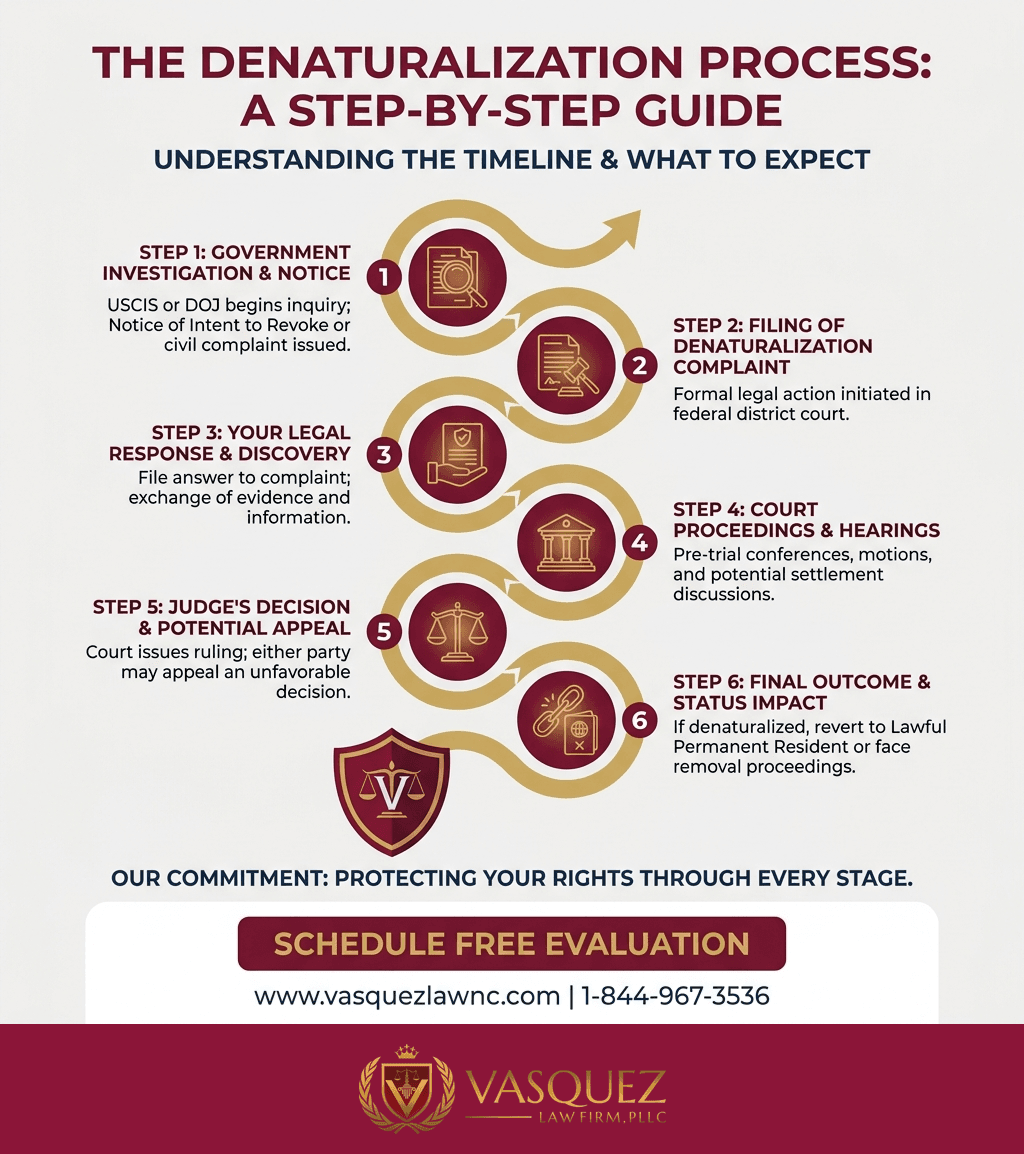
Key steps in the denaturalization process include:
- Investigation: Authorities review records and evidence of fraud.
- Filing Petition: Formal complaint to revoke citizenship is filed.
- Notification: Individual receives notice and can respond.
- Court Hearings: Trial-like hearings on evidence.
- Judgment: Court rules on citizenship revocation.
- Post-Judgment: Possible appeals or removal proceedings.
Consulting our immigration services early can protect your rights during this intimidating process.
Common Denaturalization Examples
John, a North Carolina resident, was denaturalized because immigration authorities found he submitted false documents while applying for citizenship. Cases like his are not uncommon. Below are examples that relate directly to denaturalization:
- Fraudulent Documents: Presenting fake papers to prove residency or employment.
- Concealing Criminal History: Hiding arrests, convictions, or involvement in crimes.
- Identity Fraud: Using someone else’s identity or false personal information.
- Membership in Prohibited Organizations: Concealing affiliation with groups barred by law.
- Failure to Disclose Deportation Orders: Omitting prior removals from the U.S.
In each of these examples, authorities may initiate legal proceedings to revoke citizenship. If you fear exposure to denaturalization, speak with Attorney Vasquez immediately.
Timeline and What to Expect
Denaturalization cases can take anywhere from several months to multiple years, depending on complexity and court schedules. Below is a general timeline:
- Investigation Phase: Weeks to months of government review and evidence gathering.
- Filing and Notification: Petition filed; individual receives notice (1-2 weeks).
- Pre-trial Motions: Possible motions and discovery period (2-6 months).
- Hearing or Trial: Court hearing or trial to determine citizenship status (1 week to months).
- Judgment : Court ruling on citizenship revocation (days to weeks).
- Appeals (if any): Appeals proceedings can extend timeline by months or years.
During this time, legal counsel can help you prepare and respond effectively.
Costs and Fees for Denaturalization Cases
Legal costs for defending against denaturalization vary widely. Factors include case complexity, court fees, attorney hourly rates, and whether appeals are necessary.
- Attorney Fees: Experienced immigration attorneys typically bill hourly; expect several thousand dollars for full defense.
- Court Costs: Filing and processing fees may also apply.
- Expert Witnesses: Some cases require expert testimony, adding to expenses.
- Appeals: Additional fees for appellate representation.
Affordable representation is crucial. Vasquez Law Firm strives to offer transparent pricing and payment options. Schedule a free evaluation to discuss your case and costs.
Common Mistakes to Avoid
- Ignoring Notices: Failing to respond to government communications worsens outcomes. Always respond promptly.
- Not Hiring an Attorney Early: Denaturalization proceedings are complex; legal help is vital.
- Providing Incomplete Information: Withholding facts damages credibility and defense.
- Missing Deadlines: Statutes of limitations and court deadlines must be respected.
- Speaking Without Counsel: Avoid unsupervised interviews with immigration officials.
- Assuming Citizenship Is Permanent: Even naturalized citizens can lose status under certain conditions.
- Relying on Unverified Sources: Get legal advice from qualified attorneys, not internet forums like Denaturalization Reddit.
If you only remember one thing: Contact a qualified immigration lawyer like Attorney Vasquez immediately if you receive any government notices questioning your citizenship.
Jurisdiction Notes for Raleigh and Beyond
North Carolina Notes
Denaturalization cases are always federal matters. However, North Carolina residents in Raleigh or other cities benefit from local legal support experienced in federal court procedures. The Vasquez Law Firm’s Raleigh office understands regional court systems and can assist effectively.
Florida Notes
In Florida, denaturalization proceedings follow the same federal rules, but local courts may differ in scheduling and practice norms. Vasquez Law serves clients throughout Florida, offering bilingual representation to guide immigrants through these challenges.
Nationwide Concepts
All denaturalization actions are under federal jurisdiction. Denaturalization affects citizenship rights nationwide, regardless of the resident's state. The Department of Homeland Security (DHS) with support from the Department of Justice handles investigations and prosecutions. For national updates, visit the U.S. Citizenship and Immigration Services website.
When to Call a Lawyer Now
- Receipt of a government notice questioning citizenship status.
- Invitation to an immigration interview concerning citizenship.
- Discovery of past criminal or immigration issues that were undisclosed.
- Being targeted in denaturalization investigations or lawsuits.
- Facing removal proceedings after loss of citizenship.
- Uncertainty about responses to government correspondence.
- Concerns about statute of limitations or deadlines.
- Previous denial or revocation of immigration benefits.
About Vasquez Law Firm
At Vasquez Law Firm, we combine compassion with aggressive representation. Our motto "Yo Peleo" (I Fight) reflects our commitment to standing up for your rights.
- Bilingual Support: Se Habla Español - our team is fully bilingual
- Service Areas: North Carolina, Florida, and nationwide immigration services
- Experience: Over 30 years helping clients navigate complex legal matters
- Results: Thousands of successful cases across multiple practice areas
Attorney Trust and Experience
Attorney Vasquez holds a Juris Doctor degree and is admitted to practice in both the North Carolina State Bar and Florida Bar. With over 30 years of dedicated legal experience, he has built a reputation for providing personalized attention and achieving favorable outcomes for his clients.
Don't wait to get the help you deserve. Call us now for immediate assistance.
Se Habla Español
Frequently Asked Questions
Can U.S. citizens be denaturalized?
Yes, U.S. citizens can lose citizenship if it was obtained through fraud or misrepresentation during naturalization. This includes hiding criminal history or using false documents. Denaturalization involves federal court proceedings and can result in deportation and loss of rights.
What is the meaning of denaturalization?
Denaturalization is the legal process that cancels U.S. citizenship after it has been granted. It typically happens when citizenship was acquired through deceit or illegal actions. This process removes all rights of citizenship and may lead to removal from the U.S.
Who is at risk for denaturalization?
Any naturalized citizen who provided false information or omitted important facts during naturalization is at risk. Other risks include concealing crimes, involvement in prohibited organizations, or identity fraud discovered later.
Has anyone ever been denaturalized?
Yes, courts have denaturalized individuals for years, especially in cases involving war criminals, fraud, or false statements. Denaturalization remains a serious consequence for those caught violating citizenship laws.
What is the legal basis for denaturalization?
The legal basis is found in federal laws such as 8 U.S.C. § 1451, which permits revoking citizenship if obtained unlawfully or via fraud. The government must prove misconduct in naturalization to initiate denaturalization.
What is the denaturalization process in 2026?
The government files a petition in federal court to revoke citizenship. The individual can respond and defend themselves. After hearings, the court may revoke citizenship if fraud is proven. Appeals can extend the timeline.
Are there time limits for denaturalization cases?
Yes, the government typically has two years from discovering fraud to file for denaturalization. However, exceptions and specific facts can affect the time limits, so legal advice is important.
Can denaturalized individuals be deported?
Once citizenship is revoked, individuals lose protections and may face deportation based on their immigration and criminal history. Being denaturalized often leads to removal proceedings in immigration court.
Sources and References
- U.S. Citizenship and Immigration Services (USCIS)
- Executive Office for Immigration Review
- Legal Information Institute
Take the first step toward justice today. Our team is standing by to help. Se Habla Español.
Start Your Free Evaluation Now
Call us: 1-844-967-3536
Se Habla Español - Estamos aquí para ayudarle.


William Vasquez
Founder & CEO, Vasquez Law Firm, PLLC
William Vasquez is the founder and CEO of Vasquez Law Firm, PLLC, a results-driven firm specializing in immigration, criminal defense, personal injury, and workers' compensation. A U.S. Air Force veteran and recipient of the Joint Service Achievement Medal, William is dedicated to fiercely fighting for his clients' rights.
Related Legal Services
Need legal help? Learn more about get immigration legal help today, or contact us for a free evaluation.
You can also visit our North Carolina immigration practice for more information.