A Complete Guide to Cuban Immigration Pathways in 2026
Navigating Cuban immigration pathways can be complex. This 2026 guide covers laws, challenges, and support. Contact Vasquez Law for a free consultation.
Published on February 17, 2026
Talk to an immigration attorney
Free call. A clear plan for your case.
Free & confidential · Se habla espanol · 24/7
Have questions? Talk to an attorney - free evaluation.
Call 1-844-967-3536Worried how the latest immigration news affects you?
Schedule a confidential case review with an immigration attorney - know exactly where you stand.
A Complete Guide to Cuban Immigration Pathways in 2026
Cuban immigration to the United States has a long and complex history, marked by unique legal frameworks and evolving policies. As of 2026, understanding the various pathways available for Cubans seeking to live in the U.S., whether through family-based petitions, the Cuban Adjustment Act, or humanitarian parole programs, is crucial. This guide provides an in-depth look at the current landscape, challenges, and opportunities for Cuban immigrants, offering essential information for those navigating this often-intricate process. Vasquez Law Firm is dedicated to helping individuals and families understand their options and pursue their immigration goals.
Need help with your Cuban immigration case? Our experienced attorneys are ready to fight for you. Se Habla Español.
Schedule Your Free Case Evaluation
Or call us now: 1-844-967-3536
Quick Answer: Navigating Cuban Immigration in 2026
Cuban immigration in 2026 involves several key pathways, including family-sponsored visas, the Cuban Adjustment Act (CAA), and various parole programs like the Cuban Family Reunification Parole (CFRP) Program. Eligibility criteria, application processes, and processing times vary significantly depending on the specific pathway. Current policies aim to provide orderly processes, but challenges like visa backlogs and changing diplomatic relations continue to impact applicants. Seeking legal guidance is essential to navigate these complexities effectively.
- Family-based petitions remain a primary route for Cuban nationals.
- The Cuban Adjustment Act offers a unique path to lawful permanent residency.
- Humanitarian parole programs provide temporary entry and potential pathways.
- Policies are subject to change, requiring up-to-date legal counsel.
- Long processing times are a common challenge for many applicants.
Understanding Cuban Immigration Pathways and Policies
Cuban immigration to the United States is distinct due to specific historical agreements and legislation. While general U.S. immigration laws apply, unique provisions like the Cuban Adjustment Act (CAA) of 1966, 8 U.S.C. § 1255 note, have historically offered Cubans a faster track to lawful permanent residency compared to other nationalities. This act allows Cuban nationals who have been inspected and admitted or paroled into the U.S., and have been physically present for at least one year, to adjust their status.
In 2026, the landscape of Cuban immigration is shaped by both long-standing laws and more recent policy adjustments. Family-based visas, such as those for immediate relatives of U.S. citizens or lawful permanent residents, continue to be a significant pathway. Additionally, programs like the Cuban Family Reunification Parole (CFRP) Program facilitate parole for certain eligible Cuban family members of U.S. citizens and lawful permanent residents. These programs aim to alleviate some of the pressures from traditional visa backlogs, but they also come with their own set of requirements and processing challenges.
The political relationship between the U.S. and Cuba also plays a critical role, influencing visa processing capabilities and the availability of certain humanitarian programs. Changes in diplomatic relations can directly affect consular services in Havana, impacting how and where Cuban nationals can apply for visas or parole. This dynamic environment underscores the importance of staying informed and seeking expert legal advice.
History and Evolution of Cuban Immigration Law
The history of Cuban immigration is marked by several distinct waves, each influenced by political and economic conditions in Cuba and U.S. policy responses. From the mass exodus in the 1960s following the Cuban Revolution, through the Mariel boatlift in 1980, to more recent migrations, the U.S. has often adopted specific measures to address Cuban arrivals. The “wet foot, dry foot” policy, which largely ended in 2017, was a significant aspect of Cuban immigration law for decades, granting Cubans who reached U.S. soil a path to legal residency.
Today, while the CAA remains in effect, the methods of entry and the criteria for parole have evolved. The current administration's approach emphasizes orderly processing and discouraging irregular migration. This shift means that Cubans arriving at the border without proper documentation face different legal challenges than those who arrived under previous policies. Understanding these historical shifts helps contextualize the current legal framework and the difficulties many Cuban immigrants face in 2026.
Key Pathways for Cuban Nationals in 2026
For Cuban nationals aspiring to immigrate to the United States in 2026, several primary legal pathways exist. Each route has specific eligibility requirements, application procedures, and processing times. Navigating these options successfully often requires meticulous attention to detail and a thorough understanding of U.S. immigration law.
The Cuban Adjustment Act (CAA)
The Cuban Adjustment Act (CAA) of 1966 is a unique piece of legislation that specifically benefits Cuban nationals. It allows Cubans who have been inspected and admitted or paroled into the U.S. and have been physically present for at least one year to apply for lawful permanent resident status, commonly known as a Green Card. This is a crucial distinction, as most other foreign nationals must typically secure an immigrant visa from abroad or meet strict criteria for adjustment of status within the U.S. To be eligible for CAA, an individual must demonstrate they are a citizen of Cuba or born in Cuba, have been inspected and admitted or paroled into the U.S. after January 1, 1959, have been physically present in the U.S. for at least one year, and be admissible to the U.S. for permanent residence.
Family-Sponsored Visas
Family-sponsored immigration remains a cornerstone for many Cuban immigrants. U.S. citizens and lawful permanent residents can petition for their eligible family members to immigrate to the United States. These include immediate relatives (spouses, unmarried children under 21, and parents of U.S. citizens) who have no visa quota, and other family preference categories (unmarried adult children, married children, and siblings of U.S. citizens, and spouses and unmarried children of lawful permanent residents) which are subject to annual limits and often involve long waiting periods. The process typically begins with filing Form I-130, Petition for Alien Relative, with USCIS. For those in Orlando or elsewhere in Florida, understanding local processing nuances can be beneficial.
Cuban Family Reunification Parole (CFRP) Program
The Cuban Family Reunification Parole (CFRP) Program allows certain eligible U.S. citizens and lawful permanent residents to apply for parole for their family members in Cuba. If granted, these family members can come to the United States without waiting for their immigrant visa priority dates to become current. This program aims to expedite family reunification and provide a safe, orderly, and legal pathway to the U.S. for Cubans who already have approved family-based immigrant visa petitions. The CFRP program helps reduce the backlog for family-sponsored visas, offering a vital alternative for many families.
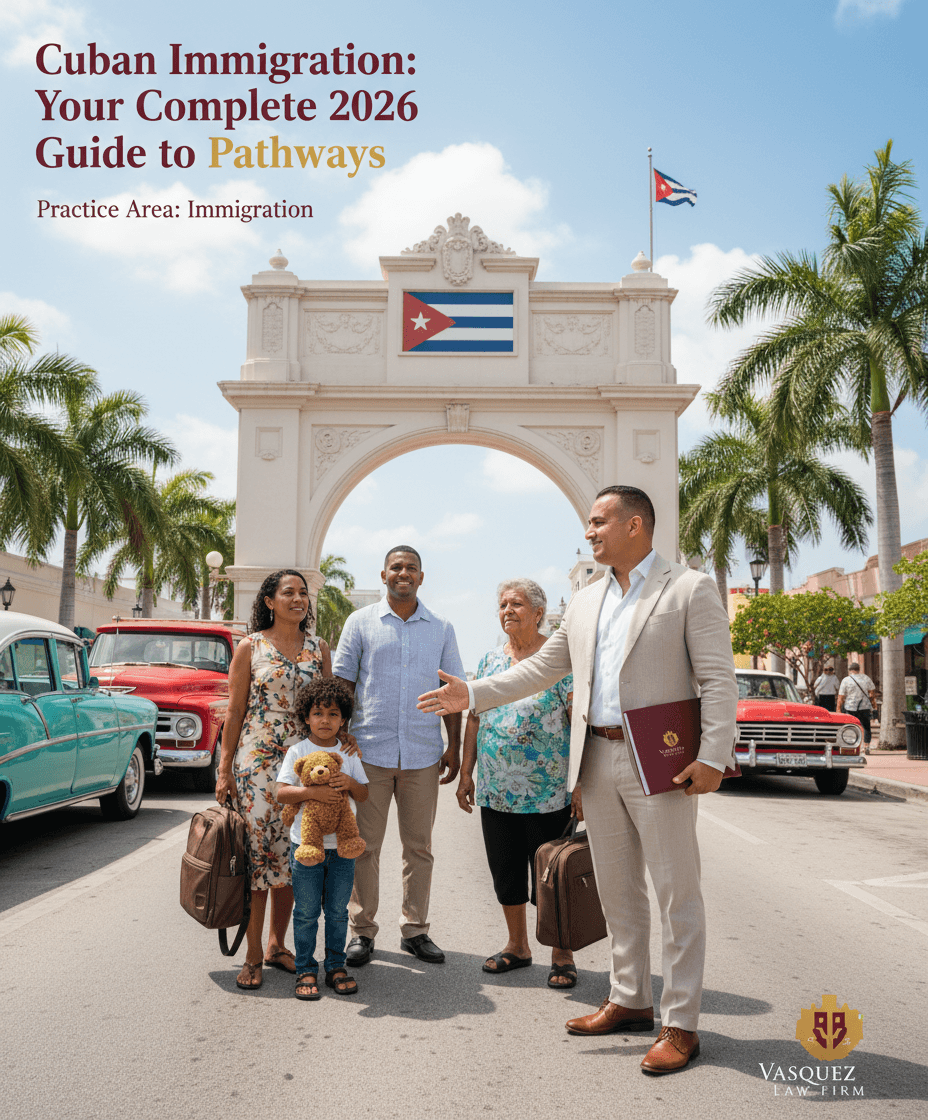
Step-by-Step: Applying for Cuban Immigration Benefits
Applying for immigration benefits as a Cuban national involves several critical steps, which can vary depending on the chosen pathway. Here's a general overview of the process:
- Determine Eligibility: First, assess which pathway best suits your situation. Are you eligible for the Cuban Adjustment Act? Do you have a U.S. citizen or lawful permanent resident family member who can petition for you? Understanding the specific criteria for each program is the foundational step.
- File the Initial Petition (Form I-130): For family-sponsored visas and the CFRP Program, the U.S. citizen or lawful permanent resident sponsor typically files Form I-130, Petition for Alien Relative, with U.S. Citizenship and Immigration Services (USCIS). This establishes the family relationship.
- Wait for Petition Approval: Once filed, USCIS reviews the petition. Approval means the familial relationship has been recognized. For family preference categories, a priority date is assigned, and you may need to wait until a visa becomes available.
- National Visa Center (NVC) Processing: After USCIS approval, the case moves to the National Visa Center (NVC). The NVC collects necessary documents, including civil documents and financial forms, and schedules the visa interview at a U.S. embassy or consulate.
- Consular Interview (or Adjustment of Status): For those applying from outside the U.S., an interview is conducted at the U.S. Embassy in Havana or another designated location. If eligible for the Cuban Adjustment Act and already in the U.S. with parole, you would file Form I-485, Application to Register Permanent Residence or Adjust Status, with USCIS.
- Medical Examination: All applicants must undergo a medical examination by a USCIS-approved physician.
- Receive Visa or Green Card: If the interview is successful or the adjustment of status is approved, an immigrant visa is issued, allowing entry to the U.S., or a Green Card is granted if already in the U.S.
Documents Checklist for Cuban Immigration
Preparing a comprehensive set of documents is vital for any Cuban immigration application. Missing or incorrect documentation can cause significant delays. While specific requirements vary by pathway, here's a general checklist:
- Passport: Valid Cuban passport for all applicants.
- Birth Certificates: Original birth certificates for all family members involved.
- Marriage Certificates: If applicable, original marriage certificates.
- Divorce Decrees/Death Certificates: If applicable, for previous marriages.
- Form I-130, Petition for Alien Relative: Filed by the U.S. petitioner.
- Form I-485, Application to Register Permanent Residence or Adjust Status: For CAA applicants already in the U.S.
- Form I-765, Application for Employment Authorization: Often filed concurrently with I-485.
- Form I-131, Application for Travel Document: For advance parole, if needed.
- Form I-864, Affidavit of Support: From the U.S. petitioner/sponsor.
- Medical Examination Results: From a USCIS-approved civil surgeon.
- Police Certificates: From Cuba and any other country where you lived for six months or more since age 16.
- Photographs: Passport-style photographs meeting USCIS specifications.
- Proof of Entry/Parole: I-94 Arrival/Departure Record or other documentation showing lawful entry or parole into the U.S.
- Evidence of Cuban Nationality: Such as a Cuban birth certificate or passport.
Timeline: What to Expect in Cuban Immigration Processing
The timeline for Cuban immigration can be lengthy and unpredictable, influenced by various factors including the specific pathway, current caseloads at USCIS and NVC, and the availability of consular services. Here's a general breakdown:
- Petition Filing and Approval (Form I-130): This can take anywhere from 6 months to several years, especially for family preference categories subject to visa bulletin backlogs. Immediate relative petitions generally process faster.
- NVC Processing: Once the I-130 is approved, NVC processing can take several months, depending on how quickly required documents are submitted and reviewed.
- Visa Availability: For family preference categories, the wait for a visa to become available can extend for many years, based on the Visa Bulletin.
- Consular Interview Scheduling: After NVC processing, scheduling an interview at the U.S. Embassy in Havana (or another designated post) can take additional months.
- Adjustment of Status (CAA): For those eligible for CAA, the I-485 processing time can range from 1 to 3 years, sometimes longer, depending on the USCIS field office and individual case complexities.
- Employment Authorization (EAD): If applying for an Employment Authorization Document (EAD) concurrently with Form I-485, it typically takes 6-12 months to receive, allowing you to work legally while your Green Card application is pending.
It is important to remember that these are estimates, and individual cases may vary significantly. Economic and political factors, as well as the sheer volume of applications, can all affect processing times for Cuban immigration.
Costs and Fees: What Impacts the Price of Cuban Immigration
Immigrating to the U.S. involves a range of government filing fees and potentially legal fees. Understanding these costs is essential for planning your Cuban immigration journey.
- USCIS Filing Fees: These are non-refundable fees for various forms, such as Form I-130 (Petition for Alien Relative), Form I-485 (Application to Adjust Status), Form I-765 (Application for Employment Authorization), and Form I-131 (Application for Travel Document). Fees can range from hundreds to over a thousand dollars per application.
- Medical Examination Fees: A required medical exam by a USCIS-approved civil surgeon will incur separate costs, which vary by provider but can be several hundred dollars per person.
- Biometrics Fees: A fee for fingerprinting and background checks is typically included with the main application fee, but sometimes it is separate.
- Translation Costs: If any documents are not in English, certified translations are required, adding to overall expenses.
- Attorney Fees: Legal representation can be a significant cost, but it is an investment in ensuring your application is correctly prepared and submitted. Fees vary based on the complexity of the case and the attorney's experience. Vasquez Law Firm offers competitive rates and transparent billing for Cuban immigration cases.
- Travel Costs: Depending on the pathway, travel expenses for interviews, medical exams, or the final journey to the U.S. must be considered.
These fees are subject to change by government agencies. It is crucial to check the most current fee schedules on the USCIS website USCIS official guidelines before filing any application.
Common Mistakes in Cuban Immigration Applications and How to Avoid Them
The Cuban immigration process is complex, and even minor errors can lead to significant delays or denials. Being aware of common pitfalls can help you avoid them:
- Incomplete or Inaccurate Forms: Filing forms with missing information or errors is a frequent cause of RFE (Request for Evidence) or rejection. Double-check all fields and ensure consistency across all documents.
- Insufficient Supporting Documentation: Failing to provide all required civil documents, proof of relationship, or financial evidence can halt your application. Use the official checklists provided by USCIS and NVC.
- Lying or Misrepresenting Facts: Any false statements or fraudulent documents can lead to a permanent bar from future immigration benefits. Always be truthful and provide accurate information.
- Missing Deadlines: Failing to respond to RFEs or NVC requests by the specified deadline can result in the denial or closure of your case. Keep track of all communication and deadlines.
- Not Understanding Eligibility Criteria: Applying for a pathway for which you are not truly eligible wastes time and money. For example, some mistakenly assume all Cubans qualify for the CAA regardless of entry method. Consult with an attorney to confirm your eligibility.
- Lack of Legal Counsel: Attempting to navigate the complex immigration system without legal guidance can lead to critical errors, missed opportunities, and unnecessary stress. An experienced attorney can provide invaluable assistance.
- Failure to Update Addresses: Moving without informing USCIS or NVC of your new address can result in missed notices and important documents, potentially leading to case abandonment.
- Not Preparing for Interviews: Going into a consular or USCIS interview unprepared can lead to inconsistencies in your answers, raising red flags. Review your application thoroughly and understand potential questions.
If you only remember one thing: Always seek professional legal advice from an experienced immigration attorney to ensure your Cuban immigration application is handled correctly from the start.
Jurisdiction Notes: Cuban Immigration in NC, FL, and Nationwide
Cuban immigration law is primarily federal, meaning the core statutes and regulations apply uniformly across the United States. However, the practical experience of Cuban immigrants can vary significantly based on their location within the U.S., particularly in states like North Carolina and Florida with large Cuban populations.
Nationwide Federal Framework
The Cuban Adjustment Act, family-sponsored visa categories, and humanitarian parole programs like CFRP are all federal programs administered by agencies such as U.S. Citizenship and Immigration Services (USCIS), U.S. Immigration and Customs Enforcement (ICE), and the Department of State. This means the eligibility criteria and core application processes are the same whether you are applying from Orlando, North Carolina, or any other state. Decisions are made based on federal law and regulations, such as those found in the Immigration and Nationality Act (INA) and Title 8 of the Code of Federal Regulations (8 C.F.R. § 245.1).
North Carolina Considerations
While the federal laws apply, Cuban immigrants in North Carolina may find themselves needing to navigate local resources and legal support. Vasquez Law Firm, with its strong presence in North Carolina, provides comprehensive immigration services for clients throughout the state. We assist with filing applications, responding to RFEs, and representing clients in immigration court if necessary. Understanding the local USCIS field office procedures and resources available to immigrant communities in North Carolina can be beneficial for a smoother process.
Florida Considerations
Florida, especially areas like Orlando and Miami, has historically been a primary destination for Cuban immigrants. The large Cuban diaspora in Florida means there are extensive community networks and support services available. However, it also means USCIS field offices and immigration courts in Florida often handle a higher volume of Cuban immigration cases. Our firm also serves clients in Florida, offering dedicated support to those navigating the system in a state with a significant Cuban population. The sheer volume can sometimes lead to longer processing times or specific local procedural nuances.
When to Call a Cuban Immigration Lawyer Now
The complexities of Cuban immigration law make professional legal guidance almost essential. Here are situations where you should contact an experienced Cuban immigration lawyer immediately:
- You are unsure about your eligibility: If you're not certain which immigration pathway applies to you or if you meet the specific requirements.
- You received a Request for Evidence (RFE): USCIS has requested more information or clarification on your application.
- Your application has been denied: If you received a denial, an attorney can help you understand the reasons and explore options for appeal or reapplication.
- You are facing deportation or removal proceedings: This is a critical situation requiring immediate legal intervention to protect your rights. Our deportation protection guide may offer some insights.
- You have a criminal record: Certain criminal convictions can affect your admissibility to the U.S. and require expert legal analysis.
- You have experienced a significant life change: Marriage, divorce, or the birth of a child can impact your immigration case and require updates to your application.
- You entered the U.S. without inspection: While some Cubans may adjust status under CAA, unlawful entry can complicate matters significantly.
- You are a victim of domestic violence or human trafficking: Special visas like VAWA or U Visas may be available.
- You need to understand the latest policy changes: Immigration laws and policies can change rapidly, and an attorney stays up-to-date.
- You simply want peace of mind: Ensuring your application is correctly prepared and submitted can prevent costly delays and stress.
About Vasquez Law Firm
At Vasquez Law Firm, we combine compassion with aggressive representation. Our motto "Yo Peleo" (I Fight) reflects our commitment to standing up for your rights and fighting tirelessly for the best possible outcome in your immigration case. We understand the unique challenges faced by the Cuban community and are dedicated to providing clear, effective legal strategies.
- Bilingual Support: Se Habla Español - our team is fully bilingual, ensuring you can communicate comfortably and clearly.
- Service Areas: We proudly serve clients across North Carolina, Florida, and provide comprehensive nationwide immigration services.
- Experience: With over 15 years of dedicated legal experience, we have a proven track record of helping clients navigate complex legal matters.
- Results: Our firm has handled thousands of successful cases across multiple practice areas, providing peace of mind and positive outcomes for families.
Attorney Trust and Experience
Attorney Vasquez holds a Juris Doctor degree and is admitted to practice in both the North Carolina State Bar and Florida Bar. With over 15 years of dedicated legal experience, he has built a reputation for providing personalized attention and achieving favorable outcomes for his clients. His deep understanding of immigration law, particularly regarding Cuban immigration challenges, ensures that clients receive knowledgeable and empathetic representation.
Don't face your legal challenges alone. Our team is here to help you every step of the way with your Cuban immigration case.
Call today: 1-844-967-3536 | Se Habla Español
Frequently Asked Questions About Cuban Immigration
What is the Cuban Adjustment Act (CAA)?
The Cuban Adjustment Act (CAA) is a U.S. law allowing Cuban nationals who have been inspected and admitted or paroled into the U.S., and have been physically present for at least one year, to apply for lawful permanent resident status. This unique pathway bypasses many requirements faced by other immigrants, reflecting the historical context of U.S.-Cuba relations. It remains a primary avenue for many Cuban immigrants to achieve permanent residency.
Are Cubans still getting deported from the U.S. in 2026?
Yes, Cubans can still be deported from the U.S. in 2026, especially if they entered unlawfully and do not qualify for protection under the Cuban Adjustment Act or other forms of relief. While previous policies offered certain protections, the U.S. government has increased deportations of Cubans who have committed crimes or are deemed inadmissible. Legal counsel is critical if facing deportation proceedings.
What is the Cuban Family Reunification Parole (CFRP) Program?
The Cuban Family Reunification Parole (CFRP) Program allows eligible U.S. citizens and lawful permanent residents to apply for parole for their family members in Cuba. This enables family members to come to the U.S. without waiting for their immigrant visa priority dates to become current, expediting family reunification. The program helps provide an orderly process for approved family-based immigrant visa petitions.
How long does the Cuban immigration process take in 2026?
The Cuban immigration process timeline in 2026 varies significantly by pathway. Family-sponsored visas can take several years due to backlogs, while the Cuban Adjustment Act (CAA) can take 1 to 3 years after eligibility is established. Humanitarian parole programs often have their own processing times, which can also extend for months or years. Factors like application completeness and government caseloads play a major role.
Can I apply for a Green Card if I entered the U.S. unlawfully from Cuba?
Generally, unlawful entry complicates Green Card eligibility. However, under the Cuban Adjustment Act (CAA), Cuban nationals who were "paroled" into the U.S., even if initially without inspection, may still be eligible to adjust their status after one year of physical presence. The specific circumstances of your entry are crucial, and legal advice is essential to determine eligibility and navigate the process.
What are the main challenges faced by Cuban immigrants today?
Cuban immigrants in 2026 face challenges including evolving U.S. immigration policies, long processing times for visas and parole programs, and limited consular services in Havana. Economic difficulties in Cuba, the risk of irregular migration, and the need to adapt to a new country also present significant hurdles. Navigating legal complexities without proper guidance is a common difficulty.
How does the political relationship between the U.S. and Cuba affect immigration?
The political relationship between the U.S. and Cuba significantly impacts immigration. Changes in diplomatic ties can affect the availability of consular services, the implementation of parole programs, and overall policy priorities. Tensions or improvements in relations can influence visa processing capacity, travel restrictions, and the political will to enact or modify specific immigration pathways for Cuban nationals.
Why is the USA blocking oil to Cuba?
The U.S. government implements sanctions against Cuba, including restrictions on oil shipments, as part of its broader foreign policy aimed at pressuring the Cuban government. These measures are often tied to human rights concerns, democratic reforms, and perceived support for certain regimes. While not directly an immigration law, these policies contribute to the economic conditions in Cuba that often drive immigration.
Is it hard to immigrate to Cuba?
Immigrating to Cuba for non-Cubans involves navigating Cuban residency laws, which can be complex. Typically, it requires obtaining a specific visa type, such as a family visa, worker visa, or retiree visa, and meeting residency requirements set by the Cuban government. While not directly related to Cuban immigration to the U.S., it highlights that legal immigration processes are intricate in many countries.
What are the '4 waves of Cuban immigration' to the U.S.?
Historically, Cuban immigration to the U.S. can be broadly categorized into four waves: the post-revolution exodus (1959-early 1960s), the Freedom Flights (1965-1973), the Mariel boatlift (1980), and the Special Period/rafter crisis (1990s). Each wave was driven by distinct political and economic events in Cuba and met with varying U.S. policy responses, shaping the demographic and legal landscape of Cuban-American communities.
Sources and References
- U.S. Citizenship and Immigration Services (USCIS)
- U.S. Department of State
- Executive Office for Immigration Review (EOIR)
- 8 U.S.C. § 1255 - Adjustment of Status
- 8 C.F.R. § 245.1 - Eligibility
Ready to take the next step? Contact Vasquez Law Firm today for a free, confidential consultation. We're committed to fighting for your rights and achieving the best possible outcome for your Cuban immigration case.
Start Your Free Case Evaluation Now
Call us: 1-844-967-3536
Se Habla Español - Estamos aquí para ayudarle.


William Vasquez
Founder & CEO, Vasquez Law Firm, PLLC
William Vasquez is the founder and CEO of Vasquez Law Firm, PLLC, a results-driven firm specializing in immigration, criminal defense, personal injury, and workers' compensation. A U.S. Air Force veteran and recipient of the Joint Service Achievement Medal, William is dedicated to fiercely fighting for his clients' rights.
Related Legal Services
Need legal help? Learn more about our immigration law practice, or contact us for a free evaluation.
You can also visit our NC immigration team for more information.