A Complete Guide to US Immigration for Filipino Immigrants in 2026
Navigating US immigration as Filipino immigrants can be complex. This complete guide for 2026 covers visas, green cards, and citizenship. Contact Vasquez Law for help.
Published on February 16, 2026
Have questions? Talk to an attorney - free evaluation.
Call 1-844-967-3536Worried how the latest immigration news affects you?
Get a free, confidential case review with an immigration attorney - know exactly where you stand.
A Complete Guide to US Immigration for Filipino Immigrants in 2026
For many Filipino immigrants, the journey to the United States represents a dream of opportunity, family reunification, and a better future. However, navigating the intricate U.S. immigration system can be overwhelming, filled with complex procedures, strict requirements, and often lengthy waiting periods. As of 2026, understanding the specific pathways available, from family-sponsored visas to employment-based green cards, is crucial. This comprehensive guide aims to demystify the process for Filipino immigrants, providing clarity on common challenges and how to overcome them. Vasquez Law Firm is dedicated to assisting individuals and families from the Philippines in achieving their immigration goals, offering compassionate and aggressive representation.
Need help with your immigration case? Our experienced attorneys are ready to fight for you. Se Habla Español.
Schedule Your Free Consultation
Or call us now: 1-844-967-3536
Quick Answer
Filipino immigrants can pursue various U.S. immigration pathways, primarily through family-sponsored visas, employment-based visas, and diversity visas. The process involves petitions, interviews, and background checks, with specific requirements varying based on the visa category. Legal assistance is highly recommended to navigate the complexities and ensure compliance with U.S. immigration laws as of 2026.
- Family-based petitions often involve long waiting periods due to visa backlogs.
- Employment-based visas require a U.S. employer sponsor and specific job qualifications.
- The Diversity Visa Lottery is another potential, though competitive, avenue.
- Thorough documentation and adherence to deadlines are critical for all applications.
- Consulting an immigration attorney can significantly improve your chances of success.
Understanding Pathways for Filipino Immigrants
The Philippines has a long history of immigration to the United States, making Filipino immigrants one of the largest foreign-born groups in the country. This strong familial and historical connection often shapes the primary immigration avenues. Most Filipinos come to the U.S. through family-sponsored visas, reflecting the close-knit family structures prevalent in Filipino culture. These categories include immediate relatives of U.S. citizens and various preference categories for other family members.
Beyond family sponsorship, employment-based visas offer another significant pathway for skilled Filipino professionals and workers. The U.S. economy often benefits from the diverse talents and strong work ethic of Filipino immigrants. Understanding the specific criteria for each visa type, including educational qualifications, work experience, and employer sponsorship requirements, is essential for a successful application. Vasquez Law Firm has extensive experience guiding clients through these complex processes.
It's also important to note that immigration policies and processing times can fluctuate, making it vital to stay informed on the latest updates from agencies like USCIS. For instance, the demand for certain visa categories, particularly for family preference visas, can create substantial backlogs for applicants from the Philippines. Having an attorney who understands these nuances can make a significant difference in preparing for potential delays and addressing any challenges that arise during your immigration journey.
Family-Sponsored Visas for Filipino Nationals
Family reunification is a cornerstone of U.S. immigration policy, and it's the most common path for Filipino immigrants. U.S. citizens can petition for immediate relatives, which include spouses, unmarried children under 21, and parents. These visas do not have annual numerical limits, leading to generally faster processing times compared to other family categories. However, even immediate relative petitions involve detailed paperwork and interviews.
For other family members, such as married children of U.S. citizens, siblings of U.S. citizens, and spouses and unmarried children of lawful permanent residents (green card holders), the process falls under family preference categories. These categories are subject to annual numerical limits and often experience significant backlogs, especially for applicants from high-demand countries like the Philippines. The visa bulletin, published monthly by the U.S. Department of State, provides crucial information on current priority dates, which can help applicants estimate their waiting times.
Understanding your specific family relationship and the appropriate visa category is the first critical step. Each category has distinct requirements regarding the petitioner's status, the beneficiary's relationship, and the documentation needed to prove eligibility. Our team can help you identify the correct path and meticulously prepare your petition to avoid common pitfalls. This can be a long and emotional journey for Filipino immigrants, and having expert legal support is invaluable.
Employment-Based Immigration for Filipino Professionals
Employment-based visas offer another vital route for Filipino immigrants seeking to work and live permanently in the United States. These visas are generally categorized into five preference levels (EB-1 through EB-5), each with specific requirements for the applicant's skills, education, and the nature of the job. Many Filipino professionals, particularly those in healthcare, technology, and engineering, find opportunities through these channels.
Most employment-based green card processes require a U.S. employer to sponsor the foreign national. This sponsorship often involves obtaining a labor certification from the U.S. Department of Labor, which demonstrates that there are no qualified U.S. workers available for the position. The employer then files an Immigrant Petition for Alien Worker (Form I-140) with USCIS. Once approved, the Filipino applicant can then apply for adjustment of status if they are in the U.S. or through consular processing abroad.
The requirements for employment-based visas are stringent, often demanding specific academic degrees, professional licenses, and extensive work experience. The process can also be lengthy, with varying priority dates depending on the visa category and the applicant's country of origin. Staying updated on the Visa Bulletin is essential for estimating processing times. Vasquez Law Firm assists both employers and Filipino employees in navigating these complex requirements, ensuring all necessary documentation is accurately prepared and submitted.
Key Steps for Filipino Immigrants in US Immigration
The U.S. immigration process, regardless of the specific visa type, generally follows a series of defined steps. While details vary, a general understanding of the common stages can help Filipino immigrants prepare effectively. This systematic approach helps manage expectations and ensures all necessary requirements are met at each phase.
Initially, most pathways begin with a petition filed by a U.S. citizen or lawful permanent resident relative, or a U.S. employer, on behalf of the Filipino applicant. This petition, typically Form I-130 for family-based or Form I-140 for employment-based, establishes the foundational eligibility. After the petition is approved, the case moves to the National Visa Center (NVC), which collects necessary documents and fees before scheduling an interview at a U.S. embassy or consulate in the Philippines, or an interview with USCIS if adjusting status in the U.S.
Navigating these steps requires meticulous attention to detail and a thorough understanding of immigration law. Missing deadlines, providing incomplete information, or making errors on forms can lead to significant delays or even denials. Our firm emphasizes proactive preparation and clear communication throughout the process, providing peace of mind for Filipino immigrants. We understand the unique challenges faced by applicants from countries like the Philippines and tailor our guidance accordingly.
Document Preparation and Submission
Successful immigration hinges on comprehensive and accurate documentation. Filipino immigrants must gather a wide array of personal and financial records to support their applications. These often include birth certificates, marriage certificates, police clearances, medical examination results, financial support documents (such as Form I-864 Affidavit of Support), and educational or professional credentials. All foreign language documents must be accompanied by certified English translations.
The USCIS website provides detailed lists of required documents for each form and visa category. It is crucial to follow these instructions precisely. Any discrepancies or missing documents can result in a Request for Evidence (RFE), which prolongs the application process. We help our clients organize their documents, ensure proper translations, and double-check every detail before submission, minimizing the risk of delays.
Interviews and Background Checks
After document submission, most Filipino immigrants will undergo an interview either at a U.S. embassy or consulate in Manila or with a USCIS officer if adjusting status within the United States. The purpose of the interview is to verify the information provided in the application, assess the applicant's eligibility, and ensure they are not inadmissible to the U.S. due to health, criminal, or security grounds.
During the interview, applicants should be prepared to answer questions about their background, their relationship to the petitioner, their intentions in the U.S., and other relevant details. Honesty and consistency are paramount. Simultaneously, extensive background checks are conducted by various U.S. government agencies to ensure national security and prevent fraud. These checks are a standard part of the process for all immigrants, including Filipino immigrants, and can sometimes contribute to processing times. Having legal representation can help prepare you for the interview and address any potential concerns.
Essential Documents Checklist for Filipino Immigrants
To ensure a smooth immigration process, Filipino immigrants should prepare a comprehensive set of documents. This checklist covers the most commonly required items, but specific needs may vary by visa category. Organize these documents meticulously to avoid delays.
- Passport: Valid passport for at least six months beyond your intended period of stay.
- Birth Certificate: Original or certified copy of your birth certificate.
- Marriage Certificate (if applicable): For spouses of U.S. citizens or LPRs.
- Divorce Decrees or Death Certificates (if applicable): For previous marriages.
- Police Clearances: From all countries where you've lived for six months or more since age 16.
- Medical Examination: Completed by a USCIS-approved physician.
- Affidavit of Support (Form I-864): From your U.S. petitioner/sponsor.
- Financial Documents: Tax returns, employment letters, bank statements of the sponsor.
- Educational/Professional Documents: Diplomas, transcripts, licenses, work experience letters (for employment-based visas).
- Photographs: U.S. visa-style photographs.
- Visa Application Forms: DS-260 (Immigrant Visa Application) or I-485 (Adjustment of Status).
- Petition Approval Notice: I-797, Notice of Action, for your I-130 or I-140 petition.
Timeline: What to Expect for Filipino Immigrants
The immigration timeline for Filipino immigrants can vary significantly depending on the visa category, current USCIS and NVC processing times, and the specific circumstances of each case. Patience is often a key virtue in this journey. Understanding the general stages and potential durations can help manage expectations.
- Petition Filing and Approval (I-130 or I-140): This initial stage can take anywhere from 6 months to several years, depending on the service center workload and the complexity of the case. Immediate relative petitions generally process faster than preference categories.
- National Visa Center (NVC) Processing: Once the petition is approved, the NVC takes over, typically lasting 3 to 6 months to collect documents, fees, and schedule interviews. This stage can be prolonged if documents are incomplete.
- Visa Bulletin Wait Times: For family preference and most employment-based categories, there may be a substantial wait for a visa to become available, as indicated by the monthly Visa Bulletin. For Filipino immigrants, certain categories, like F1, F2B, and F3, can have waiting periods extending over a decade due to high demand.
- Interview and Visa Issuance: The interview at the U.S. Embassy in Manila or a USCIS office usually occurs within a few months of the NVC completing its processing. If approved, the visa is typically issued within weeks.
- Adjustment of Status: For those already in the U.S. and eligible to adjust status, the I-485 processing can take 1-2 years, with employment authorization (EAD) and advance parole often granted within 6-12 months.
It is important to note that these are general estimates, and individual cases may differ. Legislative changes or unforeseen backlogs can also impact timelines. For precise and up-to-date information, consulting with an immigration attorney is always recommended. They can help track your case and advise on any developments.
Costs and Fees: What Impacts the Price for Filipino Immigrants
Immigrating to the U.S. involves various fees that can accumulate throughout the process. Filipino immigrants should budget for these expenses, which include government filing fees, medical examination costs, and potential legal fees. Understanding what influences these costs can help in financial planning.
- USCIS Filing Fees: These are mandatory government fees for filing petitions (e.g., Form I-130: $535, Form I-140: $715), adjustment of status applications (Form I-485: $1,225 which includes biometrics), and other forms. Fees are subject to change, so always check the USCIS website for the latest information.
- National Visa Center (NVC) Fees: For consular processing, there's an Immigrant Visa Application Processing Fee ($325) and an Affidavit of Support Fee ($120).
- Medical Examination Fees: Required for all immigrant visa applicants and adjustment of status applicants, these fees vary by physician but can range from $200-$500 per person.
- Translation and Document Fees: Costs associated with obtaining certified translations of foreign documents and securing original copies of civil documents.
- Travel Costs: Airfare to the U.S. and potential travel within the Philippines for interviews or medical exams.
- Attorney Fees: Legal fees vary based on the complexity of the case, the specific services required, and the attorney's experience. While an upfront investment, legal counsel can save money in the long run by preventing costly errors and delays. Vasquez Law Firm offers transparent fee structures.
These costs can add up, making careful financial planning essential for Filipino immigrants. Some fees may be waived in certain hardship cases, but this is rare and requires specific eligibility. Always discuss all potential costs with your attorney to have a clear financial roadmap.
Common Mistakes for Filipino Immigrants and How to Avoid Them
The U.S. immigration process is unforgiving of errors. Filipino immigrants often encounter common pitfalls that can lead to delays, denials, or even long-term immigration consequences. Being aware of these mistakes is the first step to avoiding them.
- Incomplete or Inaccurate Forms: Failing to fill out forms completely or providing incorrect information is a frequent cause of RFEs and denials. Double-check every field, and consider professional help.
- Missing or Incorrect Supporting Documents: Submitting applications without all required evidence, or providing documents that don't meet USCIS specifications (e.g., uncertified translations), will halt your case.
- Ignoring Deadlines: Missing a deadline for an RFE response, an interview, or a visa fee payment can lead to case termination. Keep a strict calendar.
- Misrepresenting Information: Any attempt to provide false information or misrepresent facts can lead to a finding of fraud, which can result in a permanent ban from the U.S. Always be truthful.
- Not Disclosing Prior Immigration Issues: Failing to disclose previous visa denials, deportations, or criminal history, even minor infractions, can be detrimental. Transparency is critical.
- Traveling Without Advance Parole: If adjusting status in the U.S., leaving the country without approved Advance Parole can automatically abandon your adjustment application.
- Changing Jobs Without Consulting an Attorney (for employment-based visas): For certain employment-based green card processes, changing employers can jeopardize your petition. Always seek legal advice before making job changes.
- Failing to Update Address: Not informing USCIS of a change of address can lead to missed notices, interviews, or even deportation orders if you don't receive correspondence.
- Not Preparing for Interviews: Underestimating the importance of the interview can lead to poor performance. Practice answering questions and understand your case details.
- Ignoring Legal Advice: Attempting to navigate complex immigration law without professional guidance often results in costly errors.
If you only remember one thing: Always seek qualified legal advice from an experienced immigration attorney. Their expertise can help you avoid these common and often devastating mistakes, ensuring your application for Filipino immigrants is as strong as possible.
NC, FL, and Nationwide Immigration Notes for Filipino Immigrants
Immigration law in the United States is primarily federal, meaning the core laws and regulations are established by the U.S. Congress and enforced by federal agencies like USCIS, ICE, and CBP. This means that the fundamental eligibility requirements for visas and green cards for Filipino immigrants are generally the same across all states, including North Carolina and Florida.
North Carolina Notes for Filipino Immigrants
While federal law dictates immigration policy, practical aspects can vary locally. In North Carolina, Filipino immigrants and their families can access legal services and community support. Charlotte, in particular, has a growing Filipino community, and legal services are readily available to assist with federal immigration matters. Vasquez Law Firm serves clients throughout North Carolina, providing local expertise within the federal immigration framework. We understand the specific needs and concerns of Filipino families in areas like Charlotte and Raleigh.
Florida Notes for Filipino Immigrants
Florida, especially regions like Miami and Orlando, is home to a significant and vibrant Filipino population. Like North Carolina, the immigration process for Filipino immigrants in Florida follows federal guidelines. However, the presence of various federal immigration offices and a high volume of cases can sometimes influence local processing times or specific procedural requirements. Our firm also serves clients across Florida, offering comprehensive immigration services tailored to the state's diverse immigrant communities. We are familiar with the local USCIS field offices and immigration courts in Florida.
Nationwide Immigration Concepts (General Only, Rules Vary)
For Filipino immigrants, the overarching federal immigration laws, such as the Immigration and Nationality Act (INA), govern all aspects of eligibility, application, and enforcement across the entire United States. Whether you are in California, New York, or any other state, the criteria for obtaining a family-based visa (e.g., 8 U.S.C. § 1153) or an employment-based green card (e.g., 8 C.F.R. § 204.5) remain consistent. Enforcement actions by ICE are also federal, though localized operations may occur. The main differences across states often lie in the availability of local resources, community support, and the specific backlogs or workload at regional USCIS field offices or immigration courts. Vasquez Law Firm proudly offers nationwide immigration services, leveraging our deep understanding of federal law to assist Filipino immigrants wherever they reside in the U.S.
When to Call an Immigration Lawyer Now
The U.S. immigration system is complex and unforgiving. While some processes seem straightforward, even minor errors can have significant, long-lasting consequences. Filipino immigrants should consider contacting an immigration attorney immediately if they encounter any of the following situations:
- You have received a Request for Evidence (RFE) or Notice of Intent to Deny (NOID) from USCIS.
- Your visa petition has been denied, and you need to understand your options for appeal or reapplication.
- You or a family member is facing deportation or removal proceedings.
- You have a criminal record, even a minor one, that might affect your admissibility to the U.S.
- You have previously been denied entry to the U.S. or had a visa revoked.
- You are unsure about which visa category is most appropriate for your situation.
- You are seeking to adjust status but have overstayed a previous visa or entered without inspection.
- Your priority date is current, and you need to complete consular processing or adjustment of status.
- You are an employer looking to sponsor a Filipino professional and need guidance on labor certification.
- You are trying to bring family members to the U.S. and are confused by the visa bulletin or long wait times.
Don't navigate these critical moments alone. An experienced immigration attorney can provide clarity, protect your rights, and dramatically improve your chances of a successful outcome for Filipino immigrants. Vasquez Law Firm is ready to provide the aggressive and compassionate representation you deserve.
About Vasquez Law Firm
At Vasquez Law Firm, we combine compassion with aggressive representation. Our motto "Yo Peleo" (I Fight) reflects our commitment to standing up for your rights and advocating tirelessly on your behalf. We understand the profound impact immigration matters have on individuals and families, and we are dedicated to providing personalized attention and strategic legal solutions.
- Bilingual Support: Se Habla Español - our team is fully bilingual, ensuring clear communication and understanding for our diverse clientele, including Filipino immigrants.
- Service Areas: We proudly serve clients in North Carolina and Florida, and provide nationwide immigration services, offering comprehensive support wherever you are.
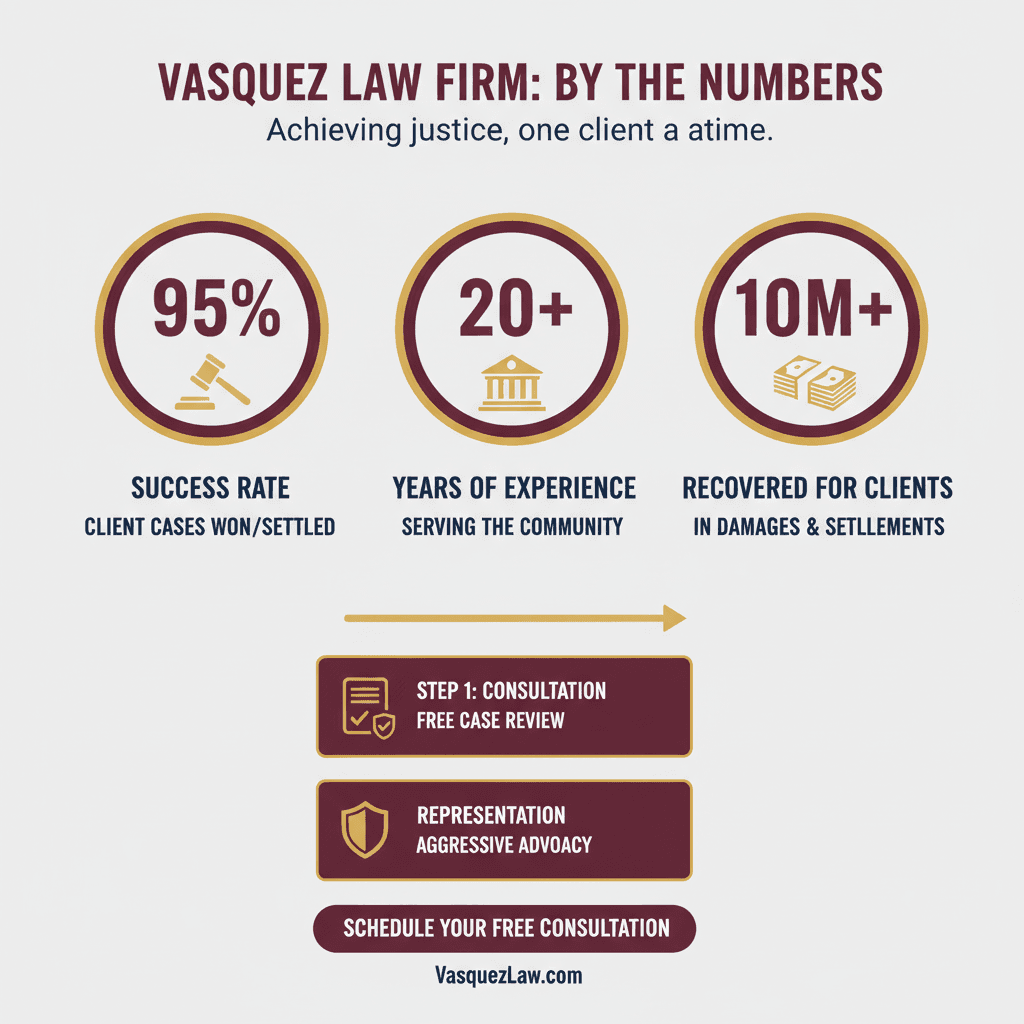
- Experience: With over 15 years of dedicated experience, Attorney Vasquez and our team have a proven track record of helping clients navigate complex legal matters across various practice areas.
- Results: We have achieved thousands of successful outcomes, focusing on delivering the best possible results for those we represent.
Attorney Trust and Experience
Attorney Vasquez holds a Juris Doctor degree and is admitted to practice in both the North Carolina State Bar and Florida Bar. With over 15 years of dedicated legal experience, he has built a reputation for providing personalized attention and achieving favorable outcomes for his clients. His deep understanding of immigration law, combined with a commitment to client advocacy, makes Vasquez Law Firm a trusted partner for Filipino immigrants seeking legal guidance.
Don't face your legal challenges alone. Our team is here to help you every step of the way.
Call today: 1-844-967-3536 | Se Habla Español
Frequently Asked Questions
Can Filipino immigrants apply for the Diversity Visa Lottery?
Yes, Filipino immigrants are generally eligible to apply for the Diversity Visa (DV) Lottery, also known as the Green Card Lottery, provided the Philippines is not excluded in a given year due to high immigration rates. Applicants must meet specific education or work experience requirements. It's a competitive process, and eligibility can change annually, so checking the latest State Department guidelines is crucial.
What are the current waiting times for family-sponsored visas for Filipino immigrants?
Waiting times for family-sponsored visas for Filipino immigrants can be very long, often exceeding 10-20 years for certain preference categories (F1, F2B, F3, F4). Immediate relative visas (spouses, unmarried children under 21, and parents of U.S. citizens) have no numerical limits and thus much shorter wait times, typically 1-2 years for processing. The monthly Visa Bulletin is the official source for current priority dates.
Do I need a lawyer to apply for a U.S. visa as a Filipino national?
While it's not legally mandatory, hiring an experienced immigration lawyer is highly recommended for Filipino immigrants. The U.S. immigration system is notoriously complex, with strict deadlines and detailed requirements. An attorney can help you choose the correct visa category, prepare thorough documentation, avoid common mistakes, and represent you in communications with USCIS or at interviews, significantly increasing your chances of success.
Can Filipino nurses easily get green cards in the U.S.?
Filipino nurses have historically had a strong pathway to green cards in the U.S. due to high demand for healthcare professionals. They typically qualify for employment-based visas (EB-3 category) which require a U.S. employer sponsor. While still a viable option, processing times can vary, and specific requirements regarding licensure and certifications must be met. Current demand and visa availability fluctuate.
What happens if my visa interview is denied at the U.S. Embassy in Manila?
If your visa interview is denied, the consular officer will usually provide a reason. Common reasons include ineligibility under U.S. immigration law (e.g., public charge, misrepresentation) or missing documents. Depending on the reason, you might be able to submit additional evidence, appeal the decision, or apply for a waiver. Consulting an attorney immediately after a denial is crucial to assess your options and next steps.
Can I bring my parents to the U.S. if I am a U.S. citizen?
Yes, if you are a U.S. citizen and at least 21 years old, you can petition for your parents to immigrate to the United States as immediate relatives. This category does not have numerical limitations, meaning the waiting times are generally shorter compared to other family preference categories. You will need to file Form I-130 and demonstrate you can financially support them.
What is the K-1 visa, and is it available for Filipino fiancés?
The K-1 visa, or Fiancé(e) visa, allows a U.S. citizen to bring their foreign fiancé(e) to the U.S. to marry within 90 days of entry. Yes, it is available for Filipino fiancés. After marriage, the Filipino spouse can apply for adjustment of status to become a lawful permanent resident. Both parties must prove a bona fide relationship and intent to marry.
How does the public charge rule affect Filipino immigrants in 2026?
As of 2026, the public charge rule primarily focuses on whether an immigrant is likely to become primarily dependent on government assistance. While the stricter 2019 rule was rescinded, USCIS still considers factors like age, health, family status, assets, resources, financial status, education, and skills. Filipino immigrants must demonstrate they will not become a public charge, often through an Affidavit of Support (Form I-864) from a U.S. sponsor.
Can Filipino immigrants adjust status if they overstayed their visa?
Generally, Filipino immigrants who overstayed their visa cannot adjust status to a green card within the U.S., unless they are an immediate relative of a U.S. citizen. For most other categories, overstaying a visa triggers a bar to adjustment of status and can lead to a 3-year or 10-year bar from re-entering the U.S. if they depart. Seeking legal counsel is essential to understand specific exceptions or waivers.
What is consular processing for Filipino immigrants?
Consular processing is the process for Filipino immigrants applying for an immigrant visa at a U.S. embassy or consulate in their home country (Manila, in this case). It's typically used by individuals living outside the U.S. or those ineligible for adjustment of status. After USCIS approves a petition, the case is sent to the National Visa Center, which then coordinates with the embassy for interviews and visa issuance.
Sources and References
- U.S. Citizenship and Immigration Services (USCIS)
- U.S. Department of State
- Executive Office for Immigration Review (EOIR)
- 8 U.S. Code § 1153 - Allocation of immigrant visas
- 8 C.F.R. § 204.5 - Petitions for employment-based immigrants
Ready to take the next step? Contact Vasquez Law Firm today for a free, confidential consultation. We're committed to fighting for your rights and achieving the best possible outcome for your case.
Start Your Free Consultation Now
Call us: 1-844-967-3536
Se Habla Español - Estamos aquí para ayudarle.

William Vasquez
Founder & CEO, Vasquez Law Firm, PLLC
William Vasquez is the founder and CEO of Vasquez Law Firm, PLLC, a results-driven firm specializing in immigration, criminal defense, personal injury, and workers' compensation. A U.S. Air Force veteran and recipient of the Joint Service Achievement Medal, William is dedicated to fiercely fighting for his clients' rights.
Related Legal Services
Need legal help? Learn more about immigration case consultation, or contact us for a free evaluation.
You can also visit statewide immigration attorneys for more information.