What Happens If Abolish ICE Becomes Law in 2026?
Discover what happens if Abolish ICE passes in 2026. Learn your rights and how our immigration lawyers can help. Contact Vasquez Law for a free consultation.
Published on May 3, 2026
Talk to an immigration attorney
Free call. A clear plan for your case.
Free & confidential · Se habla espanol · 24/7
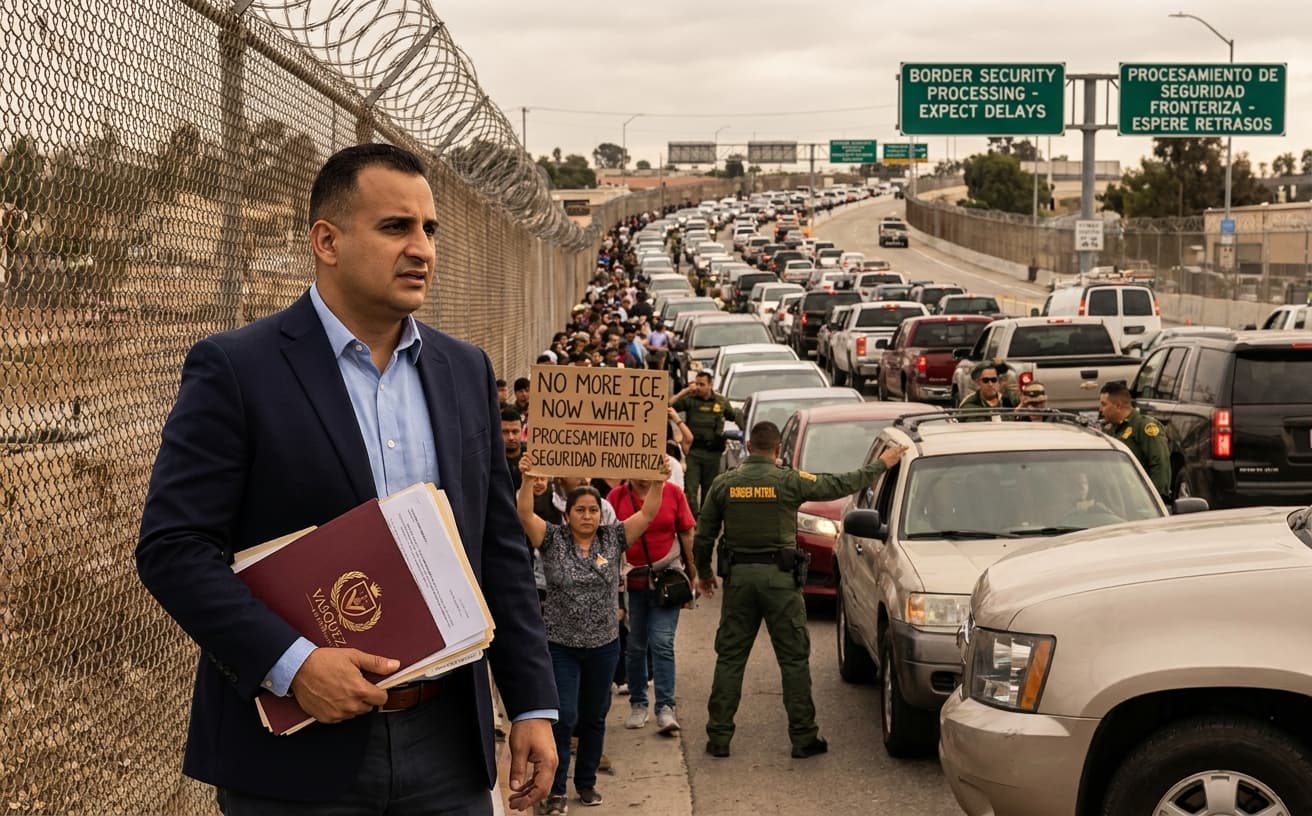
Have questions? Talk to an attorney - free evaluation.
Call 1-844-967-3536Worried how the latest immigration news affects you?
Schedule a confidential case review with an immigration attorney - know exactly where you stand.
USCIS Case Status
Check your USCIS case status
Enter your receipt number and get the official status. Free, no registration.
What Happens If Abolish ICE Becomes Law in 2026?
The call to abolish ICE has gained nationwide attention, but what does it actually mean, and what would happen if ICE were abolished in 2026? Many immigrants and Dreamers seek clear answers about this controversial topic, especially in North Carolina and Florida where immigration enforcement shapes daily life. This article explains the Abolish ICE movement, who can abolish ICE, what an Abolish ICE Act entails, and how ongoing protests and policies affect you today. Whether you have questions about Abolish ICE signs, protests, or stickers, Vasquez Law Firm’s immigration attorneys provide trusted guidance to protect your rights and navigate changing regulations.
Need help with your case? Our experienced attorneys are ready to fight for you. Se Habla Español.
Or call us now: 1-844-967-3536
Quick Answer
The Abolish ICE movement wants Congress to dismantle the federal Immigration and Customs Enforcement agency. If ICE is abolished, Congress must establish a new system to handle immigration enforcement. This change could reshape immigration policies and enforcement in significant ways.
- Calls focus on ending detentions and deportations seen as harmful
- Only Congress can legally abolish ICE via legislation
- Protests and advocacy drive public awareness
- Local impact varies by state, including North Carolina and Florida
- Consult an immigration attorney to understand your rights
Understanding the Abolish ICE Movement
In 2018, the phrase "Abolish ICE" became a rallying cry for immigrants' rights advocates calling for the end of the U.S. Immigration and Customs Enforcement agency. The agency oversees detention centers, deportation operations, and immigration law enforcement. Critics argue ICE has engaged in sweeping raids, family separations, and detention conditions that violate human rights.
The movement seeks to replace ICE with alternatives focused on community safety, transparency, and humane treatment. It is supported by various organizations and grassroots groups that organize protests featuring Abolish ICE signs and stickers. These protests have spread nationwide, including visible demonstrations in Charlotte, NC, and key Florida cities.
Understanding this movement requires knowing that it is inherently political, involving debates on immigration policy, federal priorities, and border security. While some advocate for a complete abolition, others seek reform or partial restructuring of ICE’s role.
For Dreamers and immigrants in North Carolina and Florida, these discussions influence both daily life and legal processes. Immigration enforcement affects access to work, safety, and family unity.
Learn more about our immigration legal services for support navigating changes.
The Role of the Abolish ICE Organization
Various groups identify as part of the Abolish ICE organization network, coordinating protests, lobbying, and legal challenges. They provide resources like the "Abolish ICE book" which educates communities on immigration policy, rights, and activism. These groups use visible symbols such as Abolish ICE protest signs and stickers to increase public awareness.
Why Does the Call to Abolish ICE Exist?
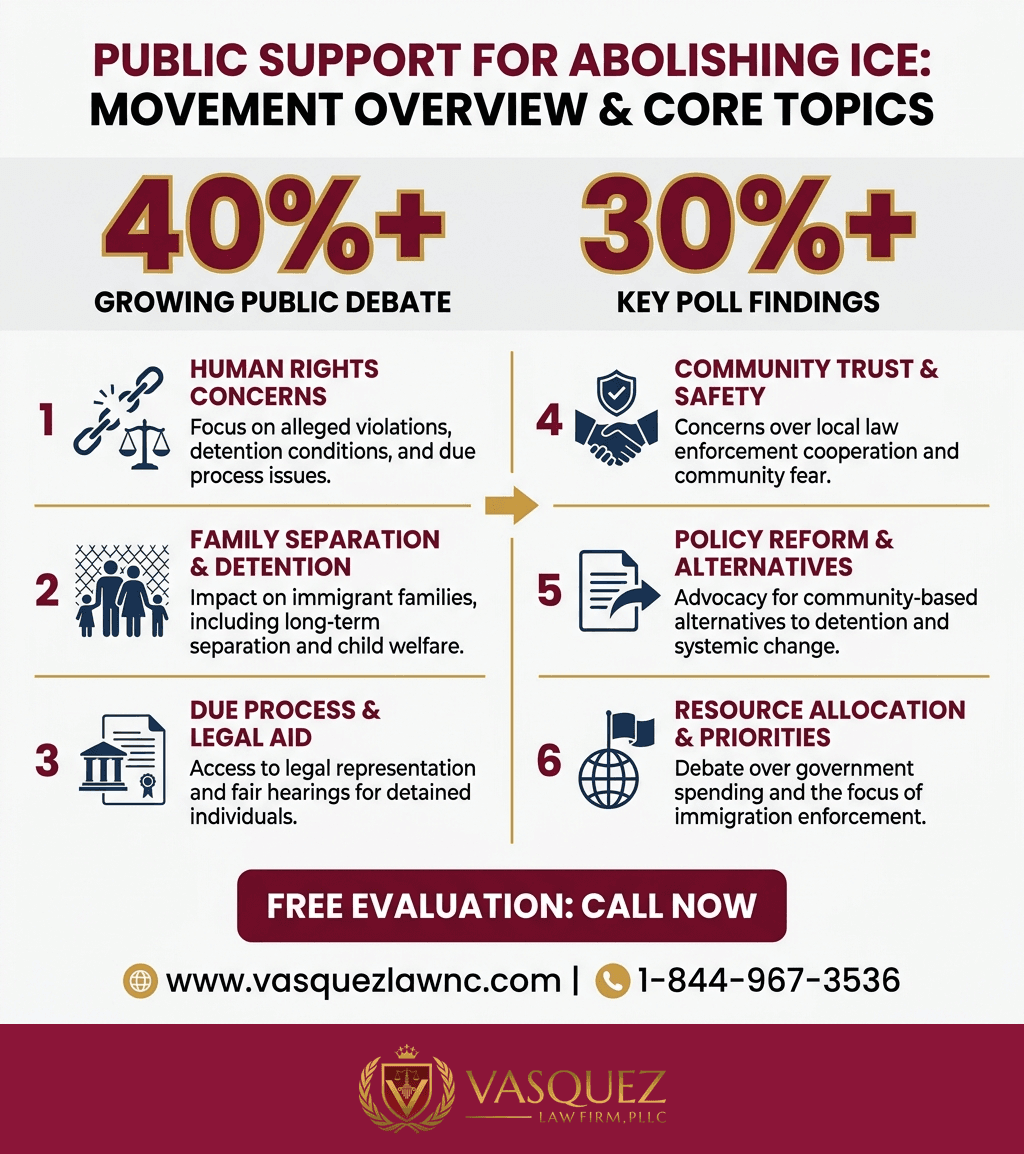
Reasons include concerns over civil rights abuses, prolonged detentions, family separations, and lack of oversight. Supporters argue immigration enforcement should emphasize humanitarian values rather than punitive measures. They believe abolishing ICE could lead to fairer and safer immigration systems.
Controversies and Public Opinion
Public opinion remains divided. Some polls show 30-40% support abolishing ICE nationwide, while others want reform or maintaining strong enforcement. The debate intensified in recent years due to high-profile immigration incidents and policy changes.
What Happens If ICE Is Abolished?
Abolishing ICE requires an act of Congress. If passed, this legislation would direct the executive branch to dismantle the agency and create new entities or transfer its functions to other departments. Enforcement of immigration laws would continue, but under a different framework, possibly emphasizing community-based approaches.
This transition could affect:
- Immigration detention practices and facilities
- Deportation priorities and procedures
- Worksite enforcement and fraud investigations
- Coordination with local law enforcement
In practice, such a change involves complex legal and political processes. Immigrants in North Carolina and Florida might experience shifts in enforcement intensity or priorities as policies evolve.
Impacts on Dreamers and Other Immigrants
For Dreamers, who often depend on immigration relief programs, these policy changes could alter enforcement environments but would not change the eligibility for protections like DACA directly. Understanding these nuances helps you prepare and respond.
What the Abolish ICE Act Proposes
Previous versions of the Abolish ICE Act have aimed at dissolving ICE, reallocating duties to agencies focusing on customs or border patrol, and eliminating harsh enforcement practices. However, none have become law as of 2026.
Legal and Political Challenges
Enacting abolition faces opposition in Congress, law enforcement lobbies, and some community members. The debate includes concerns about border security and national safety, complicating legislative prospects.
Key Steps to Take If You’re Affected
If you live in Charlotte or Florida and face concerns about ICE enforcement, certain steps can help protect your rights and future.
- Stay informed about local and federal immigration policies and any changes related to ICE enforcement.
- Consult with a qualified immigration attorney to understand your case and options. Our Attorney Vasquez and team specialize in these matters.
- Know your legal rights during any ICE encounters—such as the right to remain silent and to request a lawyer.
- Keep important immigration and identity documents secure and accessible.
- Avoid sharing sensitive information with ICE without legal counsel present.
- Engage with community support groups advocating immigrant rights for additional resources and support.
Don't wait to get the help you deserve. Call us now for immediate assistance. Se Habla Español.
Checklist: Prepare Your Documents
- Valid passport or consular ID (your consulate issues both: find yours in our free directory)
- Employment authorization documents
- Proof of residence such as leases or utility bills
- Any immigration applications or notices
- Legal representation contact info
Common Misconceptions About Abolish ICE
- Assuming ICE would simply disappear: Abolition requires new enforcement frameworks.
- Believing deportations would immediately stop: Enforcement continues under law until policies change.
- Thinking local police will fully replace ICE: Local agencies have different roles and limitations.
- Mistaking protests as legally binding actions: Protests raise awareness but don’t change laws directly.
- If you only remember one thing: Legal changes depend on Congress, so staying informed and seeking legal help is crucial.
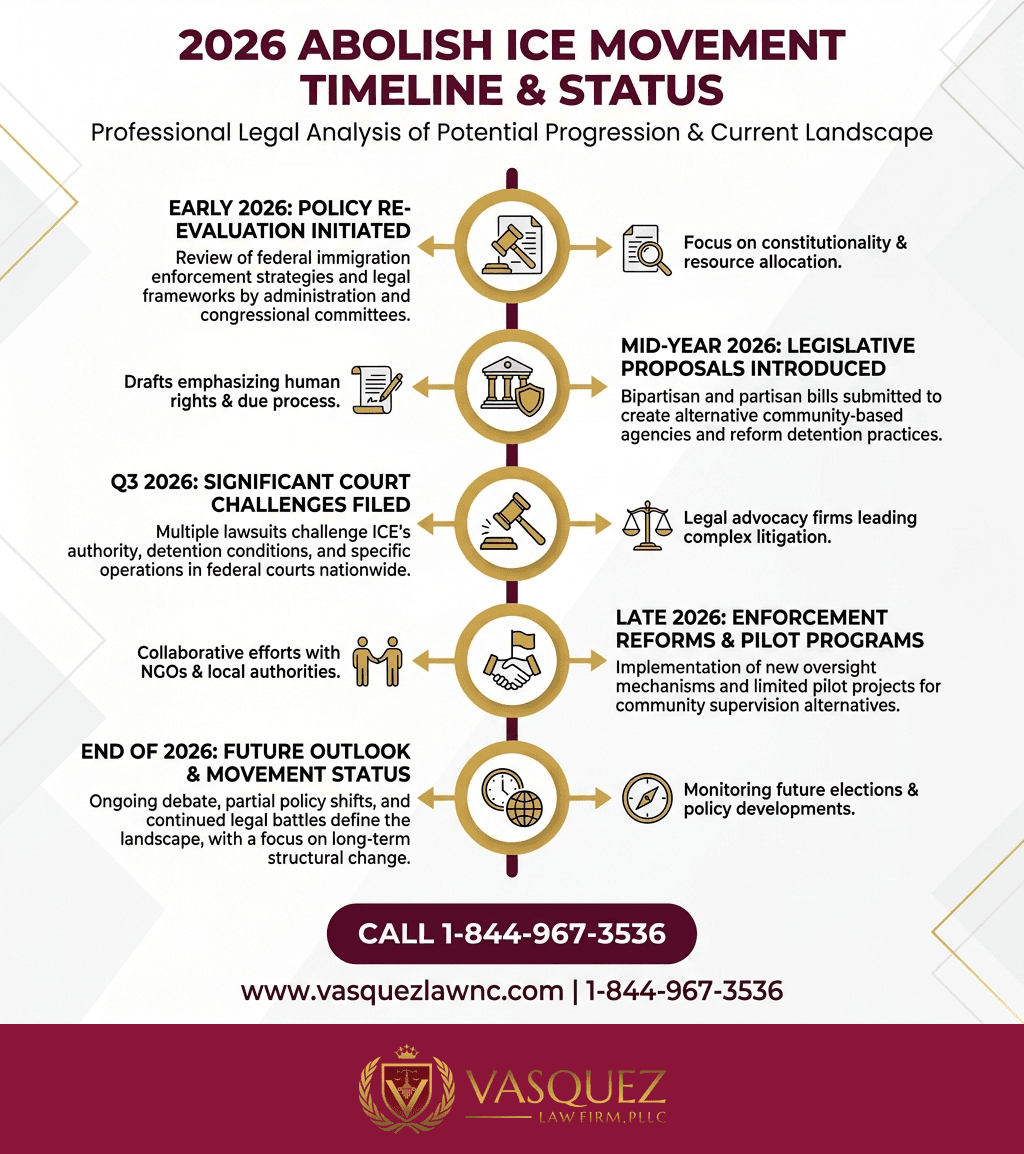
Timeline and What to Expect Moving Forward
- 2023–2025: Heightened protests and proposed bills including various Abolish ICE Acts.
- Early 2026: Legislative debates continue; no majority support for abolition yet.
- Mid 2026: Possible announcements of new immigration enforcement reforms or alternative agency proposals.
- Late 2026 and beyond: Immigration policy remains uncertain; ongoing local impacts, especially in NC and FL.
Costs, Legal Fees, and How to Prepare
Engaging with an immigration attorney helps navigate complex regulations, especially amid changing enforcement policies. Costs vary depending on case type, urgency, and required motions.
- Consultation and case evaluation fees may vary
- Filing fees tied to specific visa or relief applications
- Possible additional costs for appeals and hearings
- Legal assistance can prevent costly mistakes
Frequently Asked Questions
What does 'Abolish ICE' actually mean?
The phrase 'Abolish ICE' calls for dismantling the U.S. Immigration and Customs Enforcement agency, which enforces immigration laws. Advocates want to replace it with a different system focused on humane immigration enforcement and community safety. This movement highlights concerns about ICE’s detention practices and deportations.
Who has the authority to abolish ICE?
Only Congress can abolish ICE by passing legislation. The President and executive agencies do not have unilateral authority to dismantle federal agencies. Any Abolish ICE Act would require majority approval in both houses of Congress and presidential signature or veto override.
What would happen to immigration enforcement if ICE is abolished?
Abolishing ICE would require Congress to create new agencies or systems to handle immigration enforcement. This could shift tasks to other federal or local agencies focusing on border security, visa enforcement, and deportations, but the details depend on new laws and funding priorities.
Why do people protest with 'Abolish ICE' signs?
Protesters carry 'Abolish ICE' signs to raise awareness against practices viewed as harsh or unjust, such as family separations or prolonged detentions. These protests seek policy changes, greater oversight, or complete removal of ICE to protect immigrant rights.
Are there organizations behind the Abolish ICE movement?
Yes, various grassroots groups and civil rights organizations support the Abolish ICE movement. These groups organize protests, political advocacy, and public education to influence lawmakers and the public about immigration reform.
What percentage of people support abolishing ICE?
Support varies by polls and regions; nationwide surveys in recent years indicate around 30% to 40% support abolishing ICE, while others want reform or maintaining enforcement. Public opinion continues to evolve based on immigration policies and enforcement actions.
What is the Abolish ICE Act?
The Abolish ICE Act is proposed legislation aiming to eliminate ICE and reorganize immigration enforcement functions. Versions of this bill have been introduced in Congress but have not passed. The act calls for shifting responsibilities to other federal or local agencies.
How can I protect my rights if I’m concerned about ICE enforcement in Charlotte or Florida?
Consulting experienced immigration lawyers can help you understand your options, such as visas or relief programs. Knowing your rights during ICE encounters and keeping updated on local policies is essential. Vasquez Law Firm offers expert immigration advice in Charlotte, NC, and Florida to help you stay informed and prepared.
About Vasquez Law Firm
At Vasquez Law Firm, we combine compassion with aggressive representation. Our motto "Yo Peleo®" (I Fight) reflects our commitment to standing up for your rights.
- Bilingual Support: Se Habla Español — Spanish-speaking attorneys and staff available
- Service Areas: North Carolina, Florida, and nationwide immigration services
- Experience: Over 30 years helping clients navigate complex legal matters
- Results: Thousands of successful cases across multiple practice areas
Attorney Trust and Experience
Attorney Vasquez, JD, is admitted to the North Carolina State Bar. With 15 years of immigration law experience, the firm provides personalized attention and knowledgeable guidance for your case in Charlotte, NC, and Florida.
Take the first step toward justice today. Our team is standing by to help. Se Habla Español.
Start Your Free Evaluation Now
Call us: 1-844-967-3536
Se Habla Español - Estamos aquí para ayudarle.
Sources and References


William Vasquez
Founder & CEO, Vasquez Law Firm, PLLC
William Vasquez is the founder and CEO of Vasquez Law Firm, PLLC, a results-driven firm specializing in immigration, criminal defense, personal injury, and workers' compensation. A U.S. Air Force veteran and recipient of the Joint Service Achievement Medal, William is dedicated to fiercely fighting for his clients' rights.
Related Legal Services
Need legal help? Learn more about how our immigration attorneys can help, or contact us for a free evaluation.
You can also visit immigration lawyers serving all of North Carolina for more information.