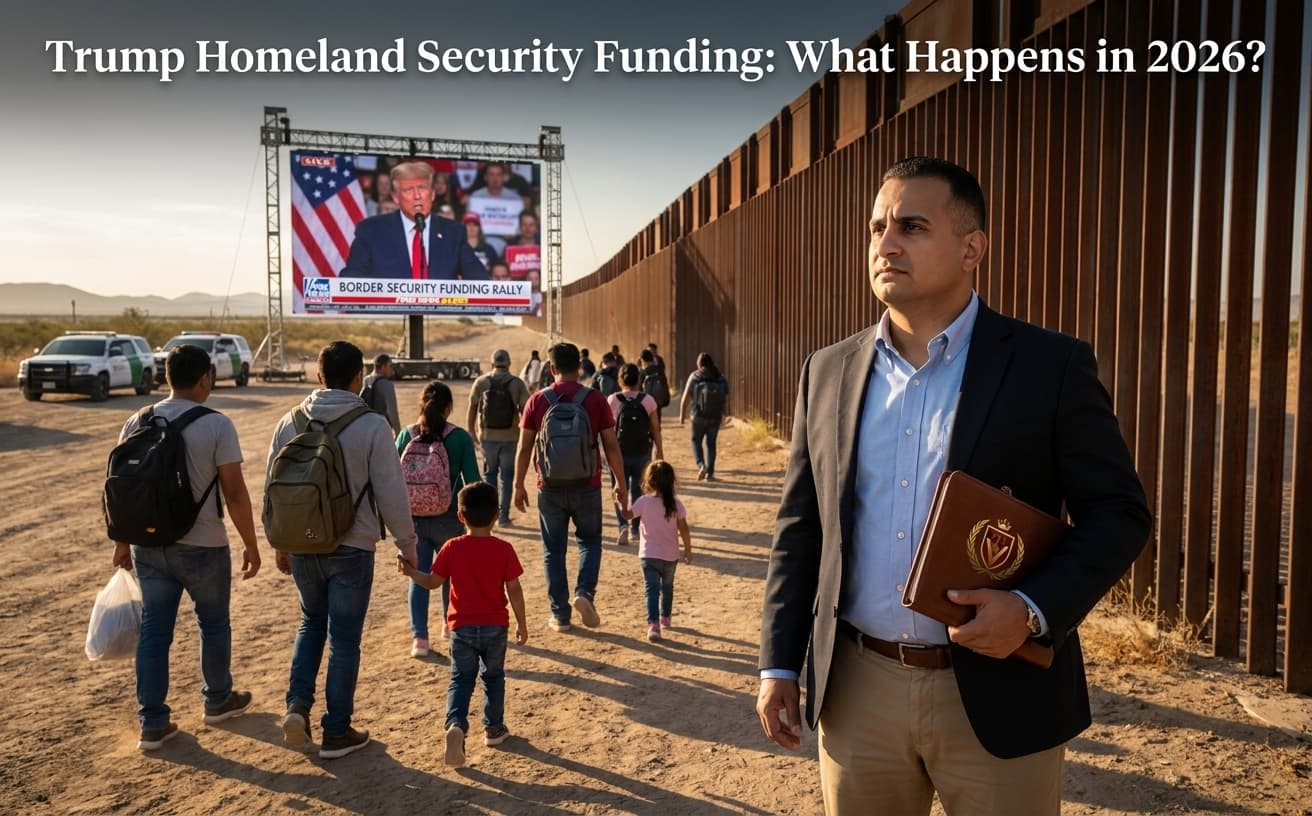
Trump Homeland Security Funding: What Happens in 2026?
Wondering if Trump Homeland Security funding passed for 2026? Learn what happens if DHS runs out of money. Contact Vasquez Law for help today.
Published on May 1, 2026
Talk to an immigration attorney
Free call. A clear plan for your case.
Free & confidential · Se habla espanol · 24/7
Have questions? Talk to an attorney - free evaluation.
Call 1-844-967-3536Worried how the latest immigration news affects you?
Schedule a confidential case review with an immigration attorney - know exactly where you stand.
USCIS Case Status
Check your USCIS case status
Enter your receipt number and get the official status. Free, no registration.
Trump Homeland Security Funding: What Happens in 2026?
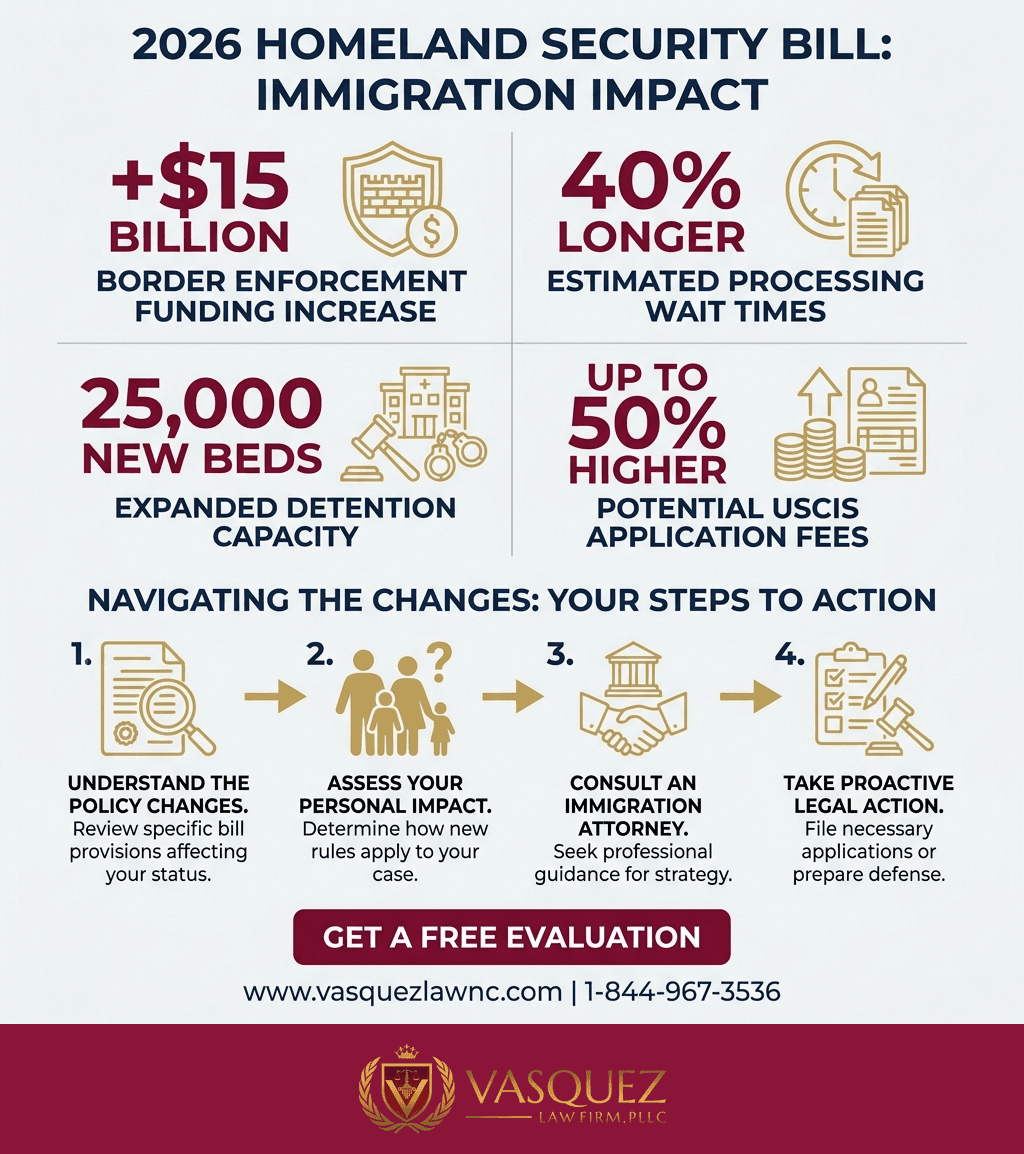
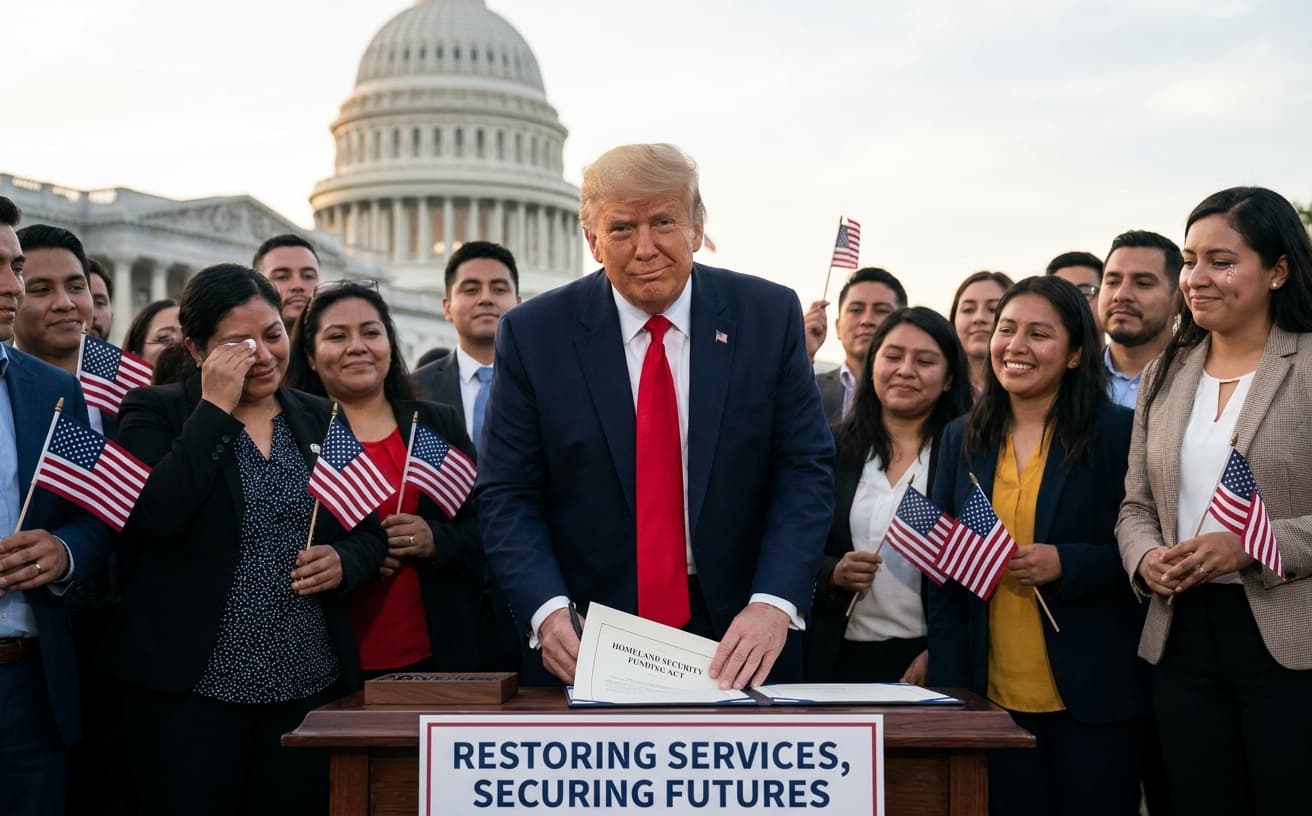
As of 2026, the Trump Homeland Security funding bill has ended a record shutdown that disrupted services crucial to immigration and national security. Many Dreamers and immigrants residing in Raleigh, NC, and Florida are asking: Is Homeland Security funded for 2026? This article explains what the funding means for immigration benefits and what happens if the Department of Homeland Security (DHS) loses funding. If you want to understand your rights and protect your immigration status, read on or contact our immigration attorneys at Vasquez Law Firm.
Need help with your case? Our experienced attorneys are ready to fight for you. Se Habla Español.
Or call us now: 1-844-967-3536
Quick Answer
The Trump Homeland Security funding bill signed in 2026 ended a historic government shutdown, ensuring the Department of Homeland Security (DHS) is funded. This funding impacts immigration services, including visa processing and benefits for Dreamers. If DHS funding runs out again, immigration processing could face delays or suspensions.
- Trump signed the DHS funding bill in early 2026.
- DHS funding ensures immigration benefits continue without interruption.
- A lack of funding leads to service delays and operational challenges.
- Understanding your rights during funding gaps is crucial.
- Contacting legal counsel can protect your immigration status.
Why Trump Homeland Security Funding Matters
In 2026, many immigrants, including Dreamers in Raleigh, NC and Florida, rely on the Department of Homeland Security for immigration benefits. The funding status of DHS directly affects the processing of applications for visas, green cards, asylum, and work permits. Without proper funding, these services can slow down or temporarily stop.
For example, during the record 75-day shutdown in late 2025, USCIS suspended many application processes, causing uncertainty among applicants. The Trump Homeland Security funding bill signed in 2026 ended that shutdown, restoring normal operations.
This funding is critical because the DHS oversees agencies like USCIS and Immigration and Customs Enforcement (ICE), which affect your immigration case. Lack of funding affects not only application processing but also enforcement activities and court proceedings handled by the Executive Office for Immigration Review (EOIR).
Our immigration attorneys in Raleigh understand these challenges. We help clients protect their rights during uncertain funding periods by staying informed and prepared.
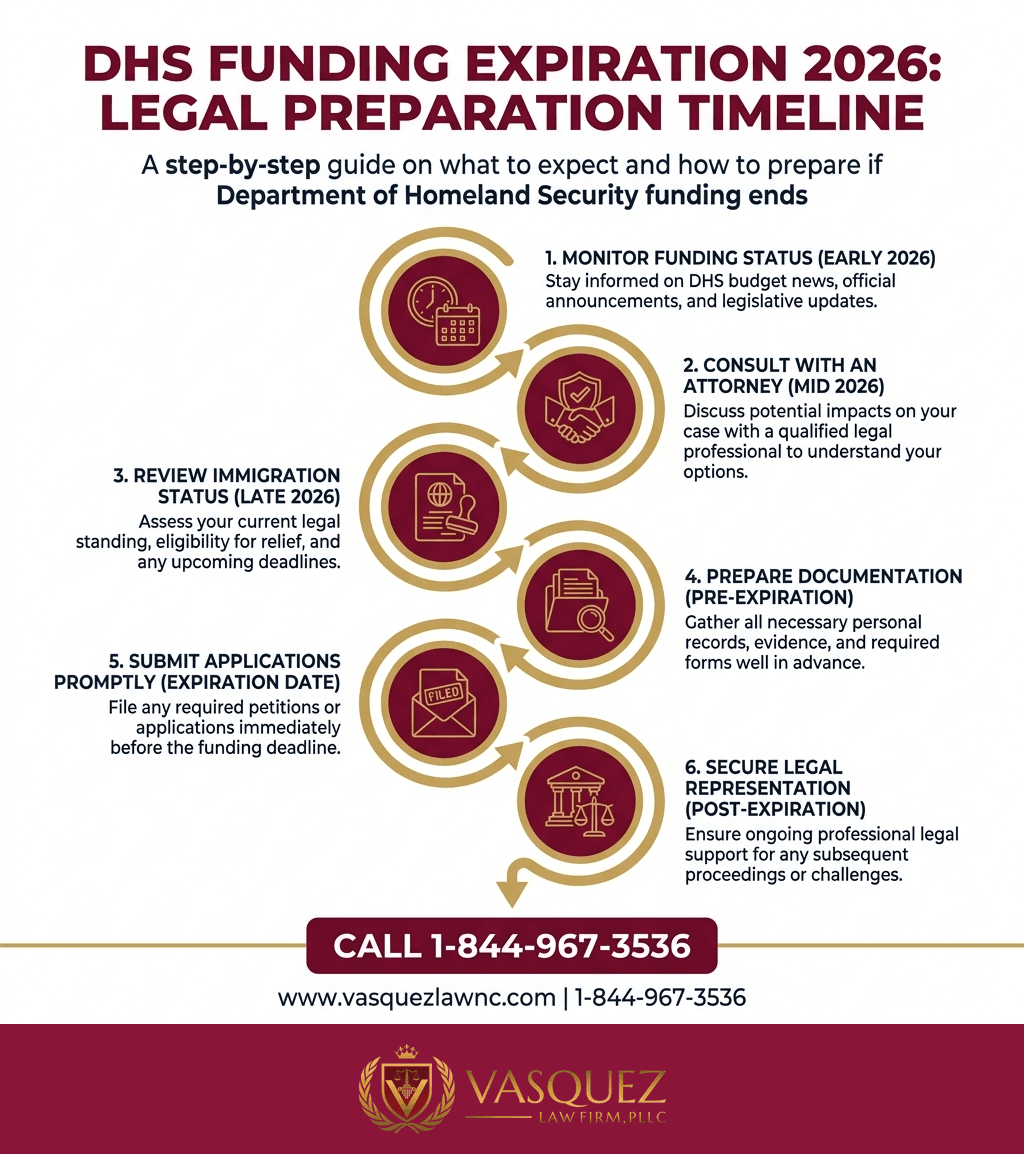
Step-by-Step: What to Do If DHS Funding Runs Out
- Stay Updated: Follow official announcements from the Department of Homeland Security and USCIS regarding funding status.
- Gather Documents: Keep copies of all your immigration paperwork, receipts, and notices ready.
- Contact an Attorney: Reach out to skilled immigration lawyers, like those at Vasquez Law Firm, to understand your options.
- Monitor Application Deadlines: Be aware of your case-specific deadlines, which can be affected by funding pauses.
- Request Expedited Treatment: In emergencies, your attorney can assist with expedite requests to minimize delays.
- Prepare for Delays: Understand that processing times may increase and plan accordingly, especially for travel and work authorizations.
Common Scenarios During Funding Gaps
- Visa interviews rescheduled or deferred due to USCIS office closures.
- Temporary suspension of green card or work permit approvals delaying benefits.
- Immigration courts postponing hearings, impacting removal cases.
Documents You Should Keep Ready
- Copies of all USCIS receipts and notices.
- Identification documents such as passports and driver’s licenses.
- Employment authorization cards or applications.
- Any correspondence from immigration authorities.
- Evidence of continuous residence and work in the U.S. for Dreamers.
- Legal representation contact information.
Having these documents organized can speed up your case review if funding issues arise.
Timeline: What to Expect with DHS Funding in 2026
- January 2026: Trump signs the DHS funding bill, ending the 75-day shutdown.
- February to April 2026: USCIS resumes normal processing with increased focus on clearing backlogs.
- Mid-2026: Watch for potential government budget cycles; funding uncertainty can reoccur.
- Late 2026: Expect regular renewals of funding or temporary extensions as Congress debates budgets.
This timeline reflects the current outlook but can change with congressional actions or political developments.
Costs and Fees Related to Immigration Services
DHS funding status can indirectly affect costs associated with immigration applications. Fee increases can occur to offset processing delays or backlogs during shutdowns.
- Filing Fees: Application fees for visas, green cards, or work permits may increase slightly over time.
- Legal Fees: Attorney consultation and representation costs vary, but can help you avoid costly mistakes.
- Expedite Requests: Some fees apply for urgent processing, which may become necessary during funding gaps.
Consulting with a North Carolina immigration attorney at Vasquez Law can clarify expected costs for your case.
Common Mistakes to Avoid Regarding DHS Funding
- Ignoring funding news: Mistake - assuming services continue uninterrupted; Fix - stay informed through trusted sources.
- Delaying legal help: Mistake - waiting too long to consult an attorney; Fix - seek early advice to plan for delays.
- Missing deadlines: Mistake - not tracking one’s case deadlines; Fix - use calendars and attorney guidance.
- Failing to keep documents: Mistake - losing crucial paperwork; Fix - maintain organized, accessible copies.
- Attempting self-representation: Mistake - navigating complex immigration matters alone; Fix - hire experienced counsel.
- Overlooking work authorization: Mistake - not renewing timely; Fix - file early and monitor USCIS updates.
- Not requesting expedite: Mistake - missing chances for faster processing; Fix - consult your lawyer about qualifying for expedite status.
If you only remember one thing: Time is critical. Acting early with accurate information protects your immigration status during DHS funding uncertainties.
NC, FL, and Nationwide Notes on DHS Funding
North Carolina Notes
In Raleigh and throughout North Carolina, USCIS offices follow federal funding schedules. Local DHS field offices may reduce services temporarily if federal funding lapses. Our NC immigration attorneys monitor these changes and keep clients updated on regional impacts.
Florida Notes
Florida’s immigration offices also depend on DHS funding. Large immigrant communities in Miami and Orlando often face challenges during funding gaps. Vasquez Law Firm’s bilingual team helps Spanish-speaking immigrants navigate these periods in Florida.
Nationwide Concepts (General Only, Rules Vary)
DHS funding affects immigration services nationally because USCIS and ICE operate government-wide. Shutdowns can cause application processing delays or suspensions anywhere in the U.S. Always check for updates from official channels and avoid misinformation.
When to Call a Lawyer About Your Immigration Case
- If your immigration benefits are delayed due to funding issues.
- If you receive a Notice of Intent to Deny or Request for Evidence during a shutdown.
- If your work permit expiration date is approaching and funding status is uncertain.
- If your immigration court hearing is postponed or rescheduled.
- If you need help expediting your application during funding gaps.
- If you experience difficulty understanding DHS or USCIS communications.
- If you are a Dreamer needing assistance with DACA or related protections.
- If you want to plan ahead for possible funding-related immigration changes.
About Vasquez Law Firm
At Vasquez Law Firm, we combine compassion with aggressive representation. Our motto "Yo Peleo®" (I Fight) reflects our commitment to standing up for your rights.
- Bilingual Support: Se Habla Español - our team is fully bilingual to serve diverse communities.
- Service Areas: North Carolina, Florida, and nationwide immigration services tailored to your needs.
- Experience: Over 30 years helping clients navigate complex immigration processes and DHS funding issues.
- Results: Thousands of successful cases protecting immigrant rights and statuses.
Attorney Trust and Experience
Attorney Vasquez holds a Juris Doctor degree and is admitted to practice in both the North Carolina State Bar and Florida Bar. With over 15 years of dedicated legal experience, he has built a reputation for providing personalized attention and knowledgeable guidance through immigration challenges, including those related to federal funding and delays.
Don't wait to get the help you deserve. Call us now for immediate assistance. Se Habla Español.
Frequently Asked Questions
Is Homeland Security funded for 2026?
Yes, President Trump signed the Homeland Security funding bill in early 2026, ending the previous government shutdown. This bill authorized funding for the Department of Homeland Security through the year, allowing USCIS and related agencies to continue immigration services uninterrupted for now.
How much funding does the Department of Homeland Security get?
The DHS budget is decided annually by Congress and totals tens of billions of dollars for operations including immigration enforcement, border security, and visa processing. The exact figure varies yearly, reflecting national priorities and funding bills passed by legislators.
What happens if Homeland Security runs out of money?
If DHS funding lapses, government shutdowns can occur. USCIS and other DHS agencies may reduce or suspend immigration services, leading to delayed processing, closed offices, and longer wait times for benefits like visas and work permits.
Can a government shutdown affect my immigration case?
Yes, shutdowns due to funding issues can delay application processing, postpone court hearings, and disrupt immigration enforcement. Applicants should stay informed and consult an attorney to mitigate impact and understand their rights.
Does DHS funding affect Deferred Action for Childhood Arrivals (DACA)?
DACA benefits and processing are connected to DHS funding because USCIS must operate continuously to handle renewals and applications. Funding gaps can slow DACA approvals but do not automatically terminate existing protections.
How can I stay updated on DHS funding and its impact?
Follow official DHS and USCIS websites, trusted news sources, and consult immigration attorneys. Vasquez Law Firm regularly updates clients about important funding and immigration developments affecting application processing.
What should I do if my immigration application is delayed?
Contact an immigration attorney right away for guidance. They can help request case status updates, expedite processing under qualifying circumstances, and advise on steps to maintain your legal status while waiting.
How does DHS funding affect immigration courts?
Immigration courts operate under the Executive Office for Immigration Review, which depends on DHS funding. Funding lapses can delay hearings and decisions, prolonging cases and increasing uncertainty for respondents.
Sources and References
- U.S. Citizenship and Immigration Services
- Executive Office for Immigration Review
- Legal Information Institute
Take the first step toward justice today. Our team is standing by to help. Se Habla Español.
Start Your Free Evaluation Now
Call us: 1-844-967-3536
Se Habla Español - Estamos aquí para ayudarle.

William Vasquez
Founder & CEO, Vasquez Law Firm, PLLC
William Vasquez is the founder and CEO of Vasquez Law Firm, PLLC, a results-driven firm specializing in immigration, criminal defense, personal injury, and workers' compensation. A U.S. Air Force veteran and recipient of the Joint Service Achievement Medal, William is dedicated to fiercely fighting for his clients' rights.
Related Legal Services
Need legal help? Learn more about how our immigration attorneys can help, or contact us for a free evaluation.
You can also visit our North Carolina immigration practice for more information.