How Non-Immigrant Visas Work: What You Should Know in 2026
Learn how non-immigrant visas work in 2026. Find out about applications, U.S. visa appointments, and how to get legal help. Contact Vasquez Law today.
Published on May 3, 2026
Talk to an immigration attorney
Free call. A clear plan for your case.
Free & confidential · Se habla espanol · 24/7
Have questions? Talk to an attorney - free evaluation.
Call 1-844-967-3536Worried how the latest immigration news affects you?
Schedule a confidential case review with an immigration attorney - know exactly where you stand.
USCIS Case Status
Check your USCIS case status
Enter your receipt number and get the official status. Free, no registration.
How Non-Immigrant Visas Work: What You Should Know in 2026
A non-immigrant visa allows temporary entry to the U.S. for tourism, work, study, or business. If you are applying from Charlotte or anywhere in North Carolina or Florida, understanding the application process, U.S. visa appointments, and common mistakes can improve your chances of approval. Vasquez Law Firm offers expert help for your non-immigrant visa application online and through every step.
Need help with your case? Our experienced attorneys are ready to fight for you. Se Habla Español.
Or call us now: 1-844-967-3536
Quick Answer
A non-immigrant visa allows temporary lawful entry into the United States for specific purposes such as tourism, study, or work. To apply, you must complete an online nonimmigrant visa application (DS-160), schedule a U.S. visa appointment, and attend an interview. Each visa type has valid durations and conditions to meet during your stay.
- Non-immigrant visas cover many categories like student, tourist, and worker visas.
- Applications start with the DS-160 online form submission.
- U.S. visa appointments must be scheduled at a U.S. consulate.
- Visa validity varies by category and country.
- Legal advice improves application success.
What Is a Non-Immigrant Visa?
Imagine you want to visit the United States for a limited period—maybe to study, work, or vacation. The U.S. government issues a non-immigrant visa that permits this temporary stay. By 2026, millions apply for these visas to legally enter the country without intending to live permanently.
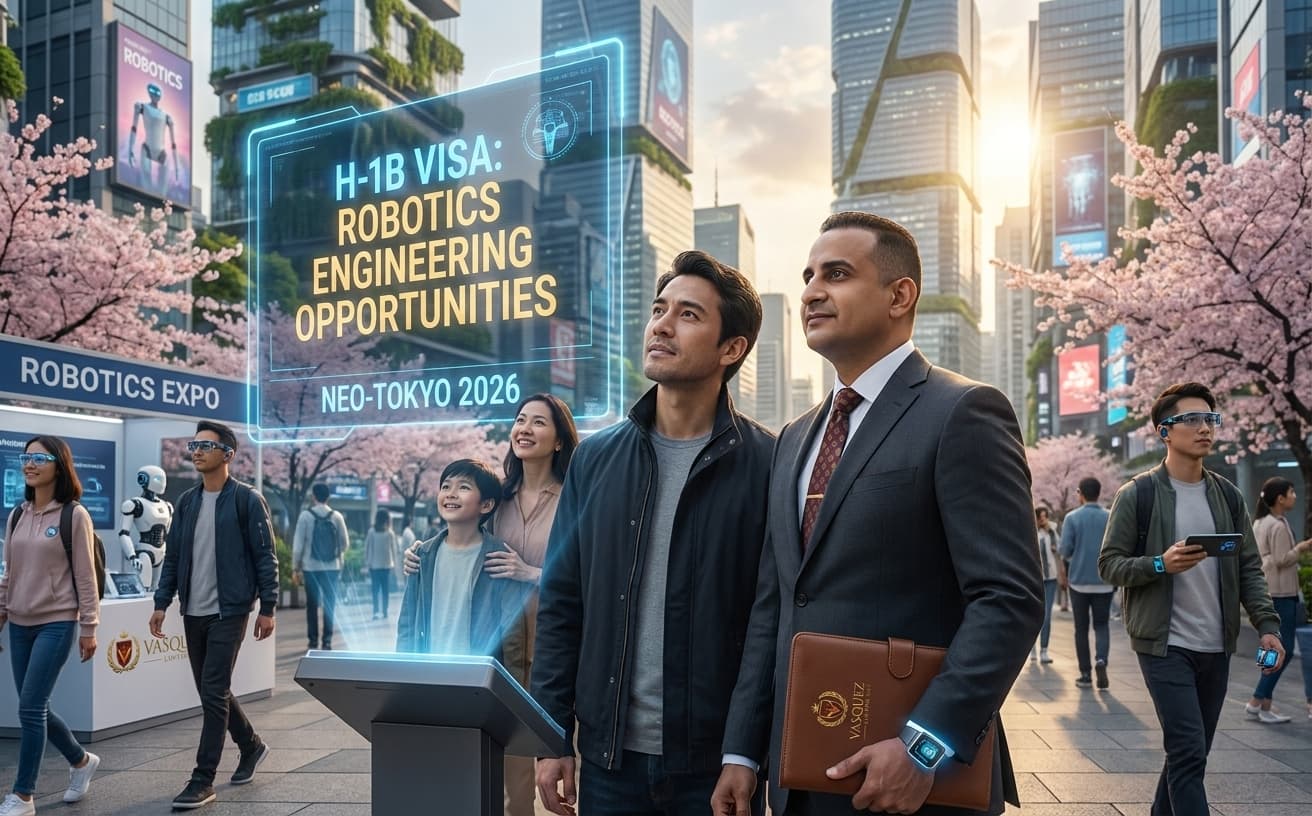
A non-immigrant visa is different from an immigrant visa, which is for those seeking permanent residency (a green card). Non-immigrant visas have strict durations and purposes. Common types include the tourist visa (B-2), student visa (F-1), and work visas like H-1B.
Each visa category comes with specific requirements. For example, the F-1 visa requires acceptance at a U.S. educational institution, while H-1B visas require employer sponsorship. The rules can feel complex, especially when applying from places like Charlotte, North Carolina, or Florida where application volume is significant.
Our immigration services in Charlotte focus on guiding applicants through these details to improve their chances of approval.
Examples of Non-Immigrant Visas
- B-1/B-2 Visitor Visa: For business or tourism
- F-1 Student Visa: For academic studies
- H-1B Work Visa: Specialty occupations with employer sponsor
- J-1 Exchange Visitor Visa: For training and cultural exchange programs
How Long Is a Non-Immigrant Visa Valid?
Validity depends on visa type and the applicant's country. Some tourist visas allow multiple entries for up to 10 years, while student visas are tied to the program length. However, the visa's validity is separate from authorized stay time, which is decided at U.S. entry by Customs officers.
The difference can be confusing, but if you receive a visa marked valid for 5 years, that only means you can travel to a U.S. port of entry during that time, not that you can live in the U.S. continuously.
How to Apply for a Non-Immigrant Visa
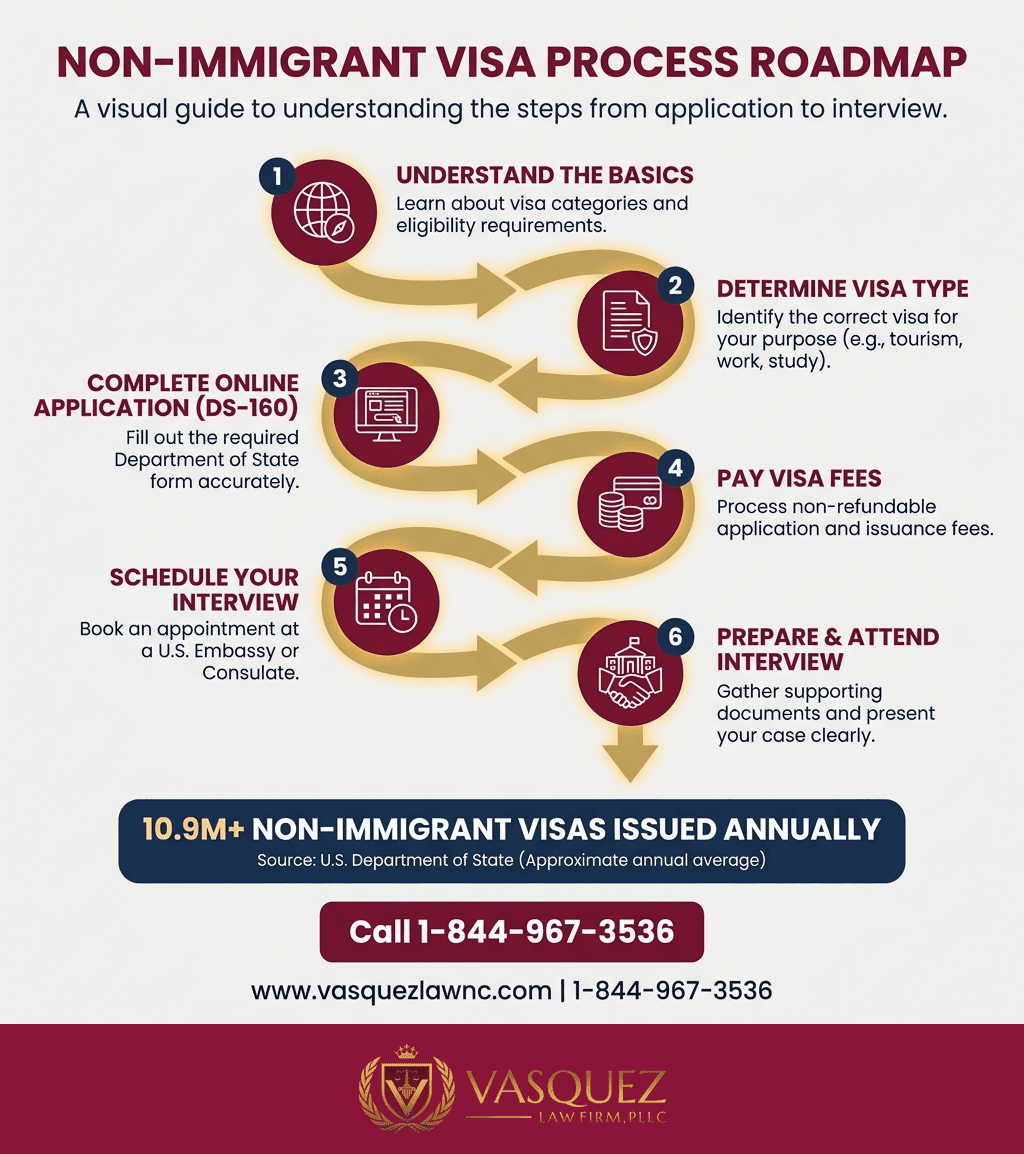
Apply by filling out the Online nonimmigrant visa application (DS-160). This is a mandatory form collecting personal information, travel plans, and background security questions.
For residents in Charlotte or Florida, start early because getting a U.S. visa appointment can take several weeks. The U.S. Department of State handles scheduling, and you must attend a face-to-face interview at the U.S. consulate or embassy.
During your interview, a consular officer will review your application, supporting documents, and ask about your travel purpose. Approval is not guaranteed, and you should be prepared to demonstrate strong ties to your home country.
Step-by-step Application Process
- Complete the DS-160 form online with accurate details.
- Pay the visa application fee, which varies by visa type.
- Schedule your U.S. visa appointment through the official portal.
- Attend your interview with all required documents.
- Wait for visa processing and passport return.
Common Mistakes to Avoid in Visa Applications
- Incomplete or incorrect DS-160: Double-check all answers before submitting.
- Failing to bring required documents: Missing paperwork can cause delays or denial.
- Weak evidence of ties to home country: Show strong family, job, or property ties to prove non-immigrant intent.
- Unprepared for interview questions: Practice explaining your travel purpose clearly.
- Using outdated photos or missing photo requirements: Follow official photo guidelines strictly.
- Applying too late in the process: Schedule appointments early due to wait times.
If you only remember one thing: submitting a complete, honest, and well-documented application makes your case stronger.
Timeline and What to Expect
- Week 1-2: Complete DS-160 and pay visa fee.
- Week 3-6: Secure U.S. visa appointment availability.
- Week 7: Attend interview and submit biometrics if required.
- Weeks 8-10: Visa processing; passport returned with visa or denial.
Delays can occur during peak seasons or security checks. Plan travel accordingly, especially if you are currently in North Carolina or Florida, where consulate wait times may vary.
Costs and Fees to Consider
- Application fee: ranges from $160 for tourist visas to $460 for work visas.
- Visa issuance fee: dependent on reciprocity agreements with the applicant’s home country.
- Additional costs: travel to consulate, document translations, legal help fees.
Understanding these costs helps you budget appropriately for your non-immigrant visa application process.
Jurisdiction Notes for North Carolina and Florida
North Carolina Notes
Applicants from North Carolina typically use the U.S. Consulate in Atlanta or surrounding states for their interviews. Local immigration lawyers familiar with the regional application trends can provide strategic advice tailored to your situation in Charlotte.
Florida Notes
In Florida, major consulates are in Miami and Orlando. Wait times can be longer due to demand. Vasquez Law Firm has offices assisting clients across Florida to manage this process efficiently.
Nationwide Concepts
Regardless of state, the non-immigrant visa process is federally regulated by the U.S. Department of State and USCIS. Each consulate may have slight procedural differences, but eligibility, fees, and documentation requirements align nationally.
When to Call a Lawyer Now
- If you have a prior visa denial and need to appeal or reapply.
- If your visa application requires waiver requests due to inadmissibility.
- If you are unsure about your eligibility or visa category.
- If you face criminal or immigration violations affecting your application.
- If you want to confirm required documents or prepare for interviews.
- If delays threaten your planned travel or employment.
About Vasquez Law Firm
At Vasquez Law Firm, we combine compassion with aggressive representation. Our motto "Yo Peleo®" (I Fight) reflects our commitment to standing up for your rights.
- Bilingual Support: Se Habla Español - our team is fully bilingual
- Service Areas: North Carolina, Florida, and nationwide immigration services
- Experience: Over 30 years helping clients navigate complex legal matters
- Results: Thousands of successful cases across multiple practice areas
Attorney Trust and Experience
Attorney Vasquez holds a Juris Doctor degree and is admitted to practice in the North Carolina State Bar. With over 30 years of dedicated legal experience, he has built a reputation for providing personalized attention and achieving favorable outcomes for his clients.
Don't wait to get the help you deserve. Call us now for immediate assistance.
Se Habla Español
Frequently Asked Questions
What is a non-immigrant visa?
A non-immigrant visa allows you to enter the U.S. temporarily for tourism, work, study, or other short-term purposes. It does not confer permanent residence. Applicants must demonstrate intent to leave once the visa expires and meet the requirements specific to each visa category.
How long is a non-immigrant U.S. visa valid?
Validity periods vary by visa type and nationality. Some visas are valid for months, others for up to 10 years with multiple entries. The actual permitted stay is assessed by U.S. Customs at entry and may be shorter than visa validity.
What are examples of non-immigrant visas?
Examples include B-1/B-2 visitor visas, F-1 student visas, H-1B work visas, and J-1 exchange visitor visas. Each serves different purposes and has separate eligibility rules.
Can a non-immigrant visa lead to a green card?
Yes, certain non-immigrant visas, such as H-1B, permit holders to apply for permanent residency through adjustment of status. However, not all non-immigrant visas allow this, and the process requires legal qualifications.
What is the Online Nonimmigrant Visa Application (DS-160)?
DS-160 is the form submitted online for most non-immigrant visa types. It gathers biographical data, travel purpose, and background information. Accuracy is crucial to avoid delays or denials.
How do I schedule a U.S. visa appointment?
After completing the DS-160, applicants schedule an interview on the Department of State’s website. Availability can be limited, so early scheduling is advisable.
What documents should I bring to my visa interview?
Bring your passport, DS-160 confirmation, appointment letter, photographs, and supporting evidence like proof of finances and ties to your home country.
What happens if my non-immigrant visa application is denied?
The consular officer will provide reasons based on U.S. law, often under Section 214(b). You can reapply or seek legal help to apply for waivers or appeals if eligible.
Sources and References
- U.S. Citizenship and Immigration Services (USCIS)
- Executive Office for Immigration Review
- Legal Information Institute
Take the first step toward justice today. Our team is standing by to help.
Start Your Free Evaluation Now
Call us: 1-844-967-3536
Se Habla Español - Estamos aquí para ayudarle.
William Vasquez
Founder & CEO, Vasquez Law Firm, PLLC
William Vasquez is the founder and CEO of Vasquez Law Firm, PLLC, a results-driven firm specializing in immigration, criminal defense, personal injury, and workers' compensation. A U.S. Air Force veteran and recipient of the Joint Service Achievement Medal, William is dedicated to fiercely fighting for his clients' rights.
Related Legal Services
Need legal help? Learn more about get immigration legal help today, or contact us for a free evaluation.
You can also visit our NC immigration team for more information.