What Happens When TPS Revocation Occurs in 2026
Concerned about TPS revocation in 2026? Learn what happens, your rights, and next steps. Contact Vasquez Law for a free evaluation today.
Published on April 30, 2026
Talk to an immigration attorney
Free call. A clear plan for your case.
Free & confidential · Se habla espanol · 24/7
Have questions? Talk to an attorney - free evaluation.
Call 1-844-967-3536Worried how the latest immigration news affects you?
Schedule a confidential case review with an immigration attorney - know exactly where you stand.
USCIS Case Status
Check your USCIS case status
Enter your receipt number and get the official status. Free, no registration.
What Happens When TPS Revocation Occurs in 2026
TPS revocation can dramatically affect thousands of immigrants in Charlotte and nationwide. In 2026, understanding what happens when Temporary Protected Status (TPS) is revoked is crucial. TPS provides safety from deportation for individuals from designated countries. When that status ends or is revoked, the consequences can be serious. This guide explains the revocation process, how it impacts TPS holders, key actions to take, and legal options available. If you or a loved one faces TPS challenges, Vasquez Law Firm’s immigration attorneys in Charlotte stand ready to help you navigate this complex situation with bilingual support and compassionate advocacy.
Need help with your case? Our experienced attorneys are ready to fight for you. Se Habla Español.
Or call us now: 1-844-967-3536
Quick Answer
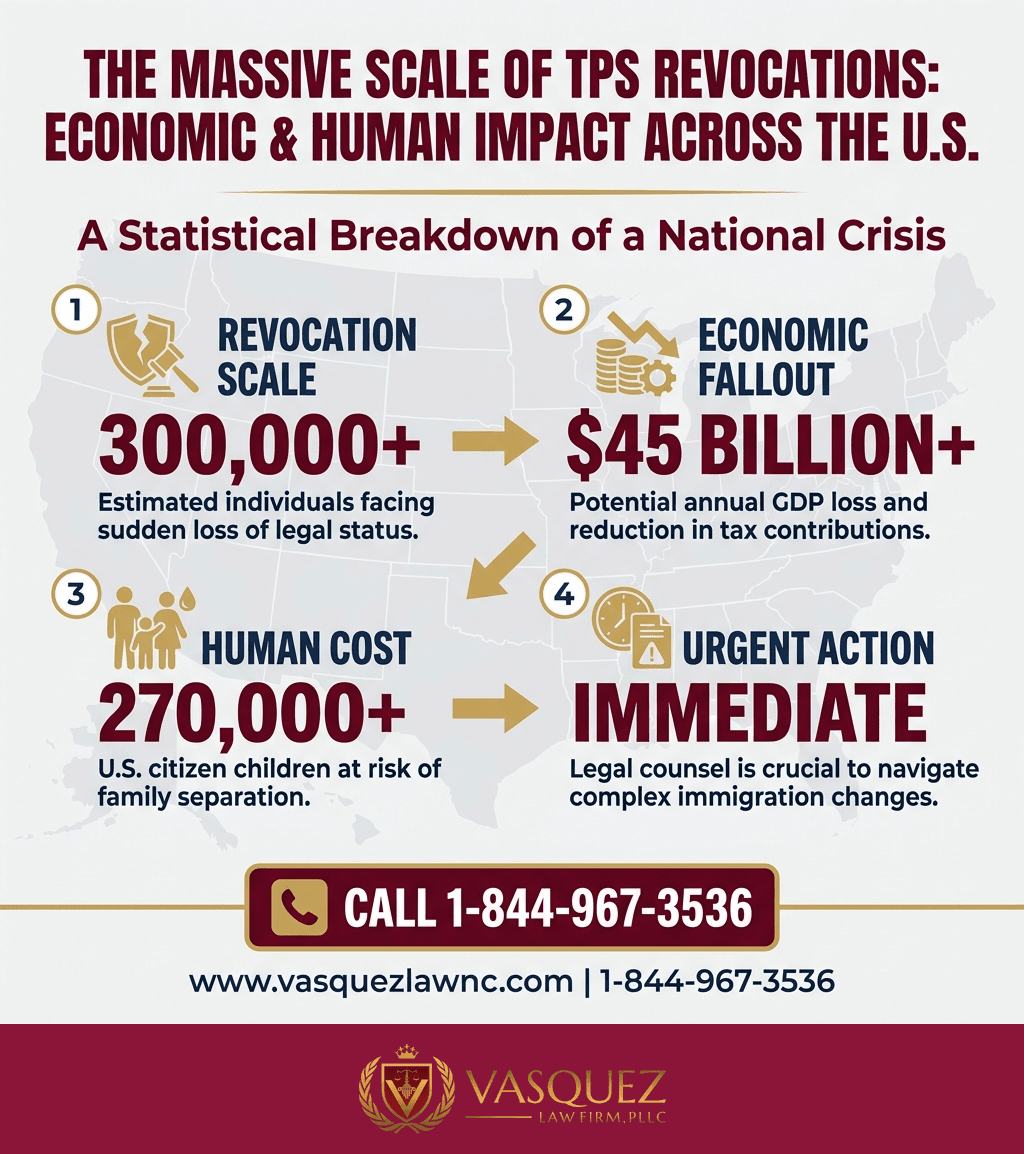
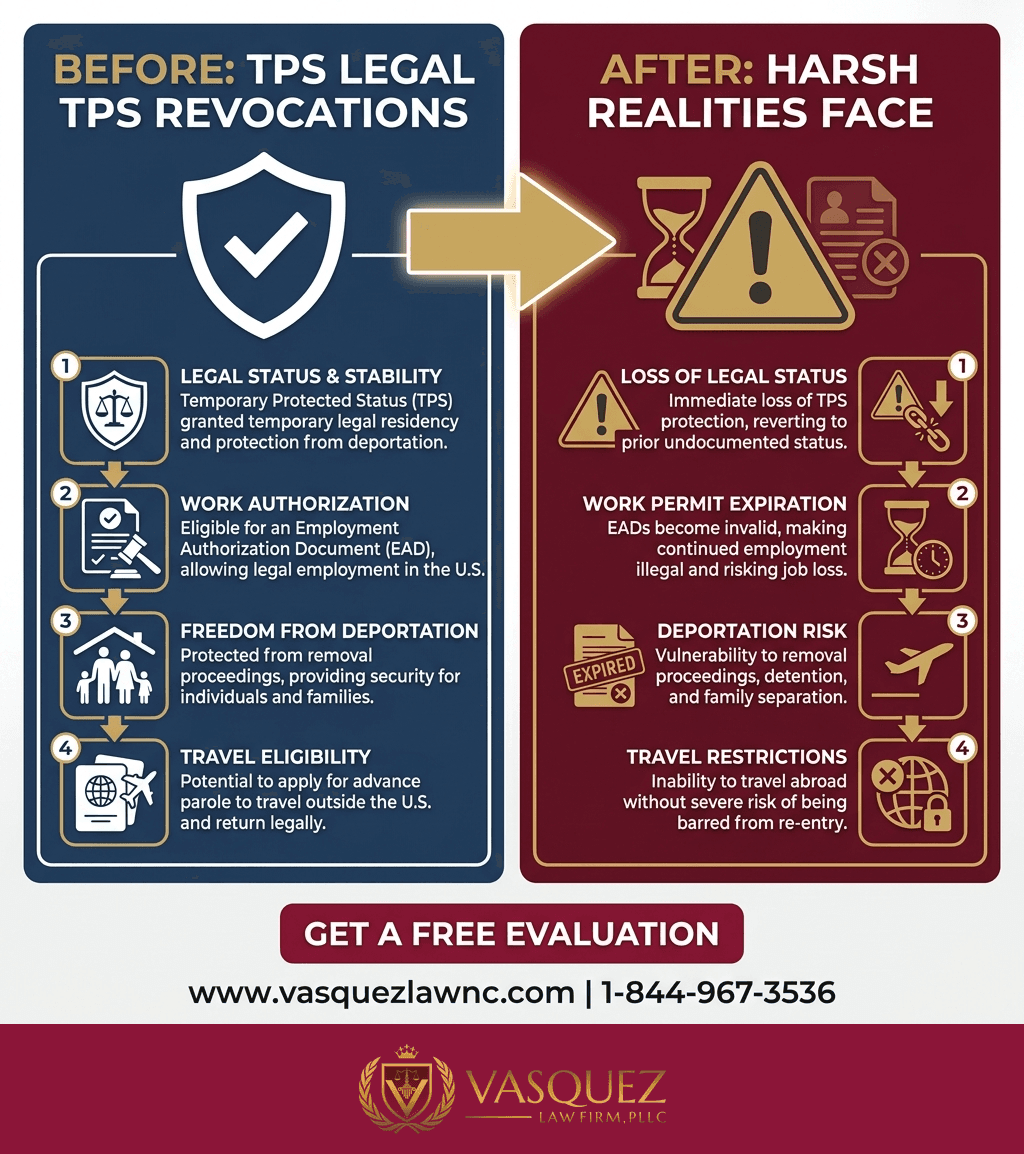
TPS revocation means losing temporary protection from deportation and work authorization. Affected individuals may face removal proceedings but have legal options including renewal petitions, appeals, or pursuing other immigration status.
- TPS provides safety to immigrants from certain countries
- Revocation ends this protection, risking deportation
- Work permits tied to TPS expire upon revocation
- Legal steps include filing motions or applying for new status
- Immediate legal help is critical after revocation
Understanding TPS Revocation
In 2026, many immigrants depend on Temporary Protected Status (TPS) for legal safety in the U.S. TPS is granted by the Secretary of Homeland Security for nationals of countries experiencing conditions such as armed conflict or natural disaster. When the government decides to revoke TPS designation for a country, individuals lose their protected status. For example, the TPS designation for a country like Haiti may be reviewed periodically, and if conditions improve, revocation can occur. This means individuals from Haiti with TPS could lose work authorization and protection from deportation.
TPS revocation doesn’t happen automatically without notice. USCIS issues announcements regarding TPS updates and extensions. However, once TPS is revoked, affected immigrants face complex challenges. Many aren’t aware that revocation means a return to the immigration system’s usual rules, which might include removal proceedings. The loss of TPS can be sudden if a renewal was denied or a country was redesignated.
To learn more about the risks and process, explore our immigration services to understand how Vasquez Law Firm can assist.
How TPS Revocation Works
The revocation decision is made by the Secretary of Homeland Security based on country conditions. Once a decision to end TPS for a country is announced, there is usually a period before the revocation takes effect, allowing holders to prepare.
During this time, USCIS may provide a grace period for work authorization. However, once TPS is revoked, individuals no longer meet eligibility requirements under 8 U.S.C. § 1254a. This statute governs TPS designation and termination. At this point, deportation proceedings may begin unless other immigration relief applies.
TPS Status Updates and Extensions
TPS status is subject to change. For example, President Trump’s administration made several changes to TPS programs, affecting millions of holders. Updates and extensions are typically announced via USCIS’s official channels. Staying informed with USCIS TPS news is essential to act proactively during upcoming deadlines or possible revocation.
Step-by-step: What to Do After TPS Is Revoked
- Stay Calm and Seek Legal Advice. The period following revocation is critical. Contact an immigration attorney like Attorney Vasquez immediately to review your options.
- Gather Documentation. Collect all paperwork related to your TPS status, including approval notices, work permits, and correspondence from USCIS.
- File Motions If Eligible. In some cases, motions to reopen or reconsider termination decisions may be possible depending on new evidence or changes in law.
- Explore Alternative Immigration Relief. Options such as asylum, family-based petitions, or employment visas may be available to maintain legal presence.
- Prepare for Possible Immigration Court. Without TPS, you may be subject to removal. An attorney can assist with defense strategies at the Executive Office for Immigration Review.
- Stay Informed of USCIS Deadlines. Missing a renewal window can lead to automatic revocation; stay aware of application windows for TPS extension or other benefits.
Alternative Paths After TPS
If your TPS is revoked, don’t lose hope. Some individuals may qualify for permanent residency via family members or work sponsorship. Others might apply for humanitarian relief such as asylum if they fear return to their home country. Consulting a qualified attorney ensures you maximize your options.
Documents and Evidence for TPS Challenges
- Copy of TPS approval notice (Form I-797)
- Employment Authorization Document (EAD)
- Valid identification (passport, foreign ID)
- Proof of continuous residence and physical presence
- Copies of TPS renewal applications and receipts
- Correspondence regarding TPS revocation or extension
- Any new evidence supporting renewal or appeals
Having these documents organized and ready can improve your chances if you seek to challenge a revocation or apply for alternative relief. Vasquez Law Firm offers assistance with filing and document preparation.
Timeline and What to Expect With TPS Status
- TPS Designation Announced: Secretary of Homeland Security designates or renews TPS for specific countries.
- Benefit Period: TPS holders receive protection from deportation and work permits, updated regularly.
- Notice of Revocation: USCIS or DHS announces termination or expiration of TPS designation.
- Grace Period: Work authorization may continue for a limited time after revocation for orderly transition.
- End of TPS: Deportation protections and work permits expire, triggering immigration enforcement actions.
- Possible Appeals or New Applications: TPS holders may file appeals, motions, or other immigration petitions.
The length of these phases varies by country and policy changes. Immediate action within these timeframes is vital for affected TPS holders.
Costs and Fees: What Impacts the Price
- Application and Renewal Fees: USCIS charges fees for TPS applications and work permits. Fee waivers may apply in some cases.
- Legal Representation: Hiring an immigration attorney adds cost but improves chances of success.
- Filing Motions or Appeals: These usually involve extra fees and preparation time.
- Additional Immigration Benefits: Applying for asylum, family petitions, or other visas has separate fees and requirements.
- Emergency Assistance: Urgent cases requiring expedited help may incur higher costs.
Many TPS holders qualify for fee exemptions or pro bono support. Contact Vasquez Law Firm for a free case evaluation to discuss affordability.
Common Mistakes TPS Holders Make
- Waiting too long to seek legal help after receiving revocation notice. Act immediately.
- Failing to collect and save all essential documents. Organize your records.
- Missing TPS renewal deadlines. Monitor USCIS announcements carefully.
- Assuming deportation is automatic without exploring relief. Consult an attorney.
- Trying to navigate immigration courts alone. Legal representation is key.
- Not informing employers about status changes affecting work authorization. Communicate promptly.
- Ignoring possible alternative immigration paths. Evaluate all options.
If you only remember one thing: Act quickly whenever there is a TPS update or revocation to protect your rights.
TPS in North Carolina, Florida, and Nationwide
North Carolina Notes
Charlotte, NC, has a sizable immigrant community relying on TPS. While TPS is a federal program, local resources such as community legal aid and advocacy groups can assist. Vasquez Law Firm’s immigration attorneys in Charlotte provide personalized guidance for TPS challenges, including revocation issues.
Florida Notes
Florida also has many TPS holders from countries like Haiti and El Salvador. The state-wide immigration services help individuals apply for TPS extensions and respond to revocation notices. Local immigration courts may handle removal proceedings for affected persons in Florida.
Nationwide Concepts
TPS is governed federally, but each state’s local USCIS offices and immigration courts differ. The legal framework under 8 U.S.C. § 1254a applies nationwide. Staying updated through USCIS and the Executive Office for Immigration Review is critical for all TPS holders across the U.S.
When to Call an Immigration Lawyer
- Received a revocation or termination notice for TPS
- Denied TPS renewal or extension application
- Facing deportation proceedings after TPS loss
- Missing USCIS deadlines related to TPS status
- Unsure about eligibility for alternative immigration relief
- Need assistance gathering documents and filing motions
- Experiencing employment authorization issues after TPS changes
- Want to understand options for permanent residency paths
- Confused by government updates or new TPS policies
About Vasquez Law Firm
At Vasquez Law Firm, we combine compassion with aggressive representation. Our motto "Yo Peleo®" (I Fight) reflects our commitment to standing up for your rights.
- Bilingual Support: Se Habla Español - our team is fully bilingual
- Service Areas: North Carolina, Florida, and nationwide immigration services
- Experience: Over 30 years helping clients navigate complex legal matters
- Results: Thousands of successful cases across multiple practice areas
Attorney Trust and Experience
Attorney Vasquez holds a Juris Doctor degree and is admitted to practice in both the North Carolina State Bar and Florida Bar. With over 30 years of dedicated legal experience, he has built a reputation for providing personalized attention and achieving favorable outcomes for his clients.
Don't wait to get the help you deserve. Call us now for immediate assistance. Se Habla Español.
Frequently Asked Questions
What happens when TPS is revoked?
When TPS is revoked, individuals lose their temporary protection from deportation and work authorization. This means they could be subject to removal proceedings unless they have other valid immigration status. TPS holders should act quickly to explore alternative immigration options or seek legal counsel to protect their rights.
Can a TPS holder be deported if their status is revoked?
Yes. Once TPS is revoked, holders become vulnerable to deportation unless they have other legal protections. Immediate legal assistance is critical to find alternatives such as asylum, family sponsorship, or other forms of relief.
Will TPS be renewed for Haiti in 2026?
As of 2026, TPS for Haiti is under review and subject to extension or termination based on conditions in the country. It is important to stay updated through official USCIS news and consult legal experts about your TPS status.
What is the process for TPS revocation?
TPS revocation follows a formal process where the Secretary of Homeland Security decides to terminate or withdraw designation. TPS holders receive notices and may have a grace period, but must act quickly. Legal challenges or motions to reopen may be possible depending on circumstances.
How do I apply for TPS extension or renewal?
To apply for TPS renewal, submit a timely application to USCIS with updated documents and fees. It is important to watch for official USCIS announcements about extension windows. Working with an immigration attorney can help ensure your application is complete and timely.
What documents do I need if my TPS is revoked?
Keep official TPS approval notices, employment authorization documents, and identification documents. Gather evidence showing your continuous residence and eligibility. These documents are essential if you challenge revocation or pursue alternative immigration relief.
Does TPS revocation affect my ability to work legally?
Yes. TPS holders receive work authorization based on their status. Once TPS is revoked, work permits usually expire. The loss of work authorization may affect employment and income, so seeking new legal status or work permits is critical.
Can TPS holders seek other immigration options?
TPS revocation can prompt individuals to explore other immigration pathways including asylum, family-sponsored visas, or employment-based options. Consulting with an immigration attorney is essential to identify the best strategy based on your unique circumstances.
Sources and References
- U.S. Citizenship and Immigration Services
- Executive Office for Immigration Review
- Legal Information Institute
Take the first step toward justice today. Our team is standing by to help.
Start Your Free Evaluation Now
Call us: 1-844-967-3536
Se Habla Español - Estamos aquí para ayudarle.

William Vasquez
Founder & CEO, Vasquez Law Firm, PLLC
William Vasquez is the founder and CEO of Vasquez Law Firm, PLLC, a results-driven firm specializing in immigration, criminal defense, personal injury, and workers' compensation. A U.S. Air Force veteran and recipient of the Joint Service Achievement Medal, William is dedicated to fiercely fighting for his clients' rights.
Related Legal Services
Need legal help? Learn more about our immigration legal services, or contact us for a free evaluation.
You can also visit North Carolina immigration lawyers for more information.