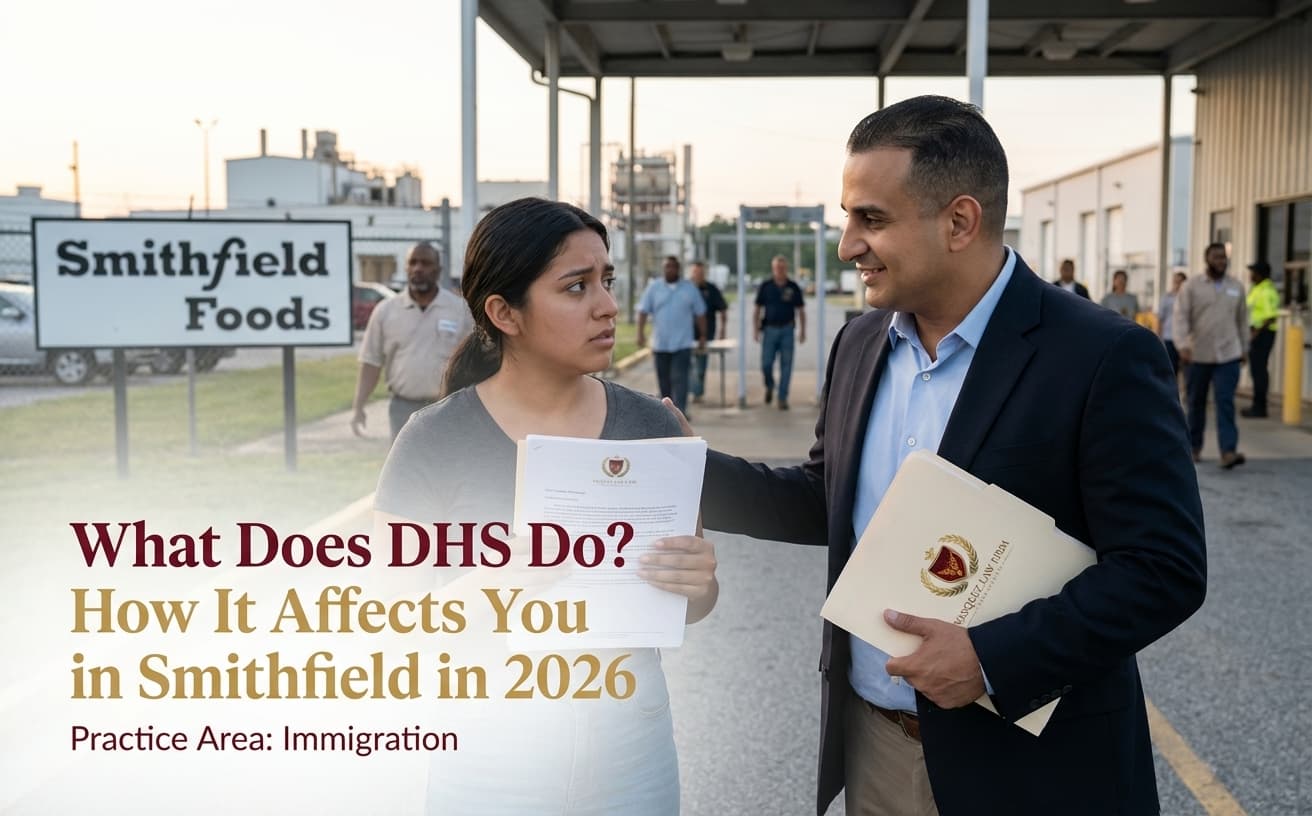
What Does DHS Do? How It Affects You in Smithfield in 2026
Understand what DHS does in 2026 and how it impacts immigration cases in Smithfield. Contact Vasquez Law Firm for a free consultation today.
Published on March 11, 2026
Have questions? Talk to an attorney - free evaluation.
Call 1-844-967-3536Worried how the latest immigration news affects you?
Get a free, confidential case review with an immigration attorney - know exactly where you stand.
What Does DHS Do? How It Affects You in Smithfield in 2026
The Department of Homeland Security (DHS) plays a critical role in immigration enforcement, border security, and public safety. In Smithfield and across North Carolina and Florida, understanding DHS is key for Dreamers and immigrants navigating complex legal challenges. This guide explains DHS’s functions, how it affects immigration cases in 2026, and important steps you can take to protect your rights.
Need help with your case? Our experienced attorneys are ready to fight for you. Se Habla Español.
Schedule Your Free Consultation
Or call us now: 1-844-967-3536
Quick Answer
DHS oversees immigration enforcement, border security, and public safety. For immigrants in Smithfield, DHS manages applications, conducts investigations, and can initiate removal proceedings. Knowing how DHS operates helps you protect your rights effectively.
- DHS includes USCIS, ICE, and CBP agencies
- It enforces immigration laws nationwide
- DHS decisions impact DACA and Dreamers
- Legal help is crucial when DHS is involved
Understanding DHS and Its Role
Imagine DHS as a federal umbrella agency with several important immigration-related branches. In 2026, the Department of Homeland Security (DHS) continues to oversee everything from visa applications to immigration law enforcement inside the United States.
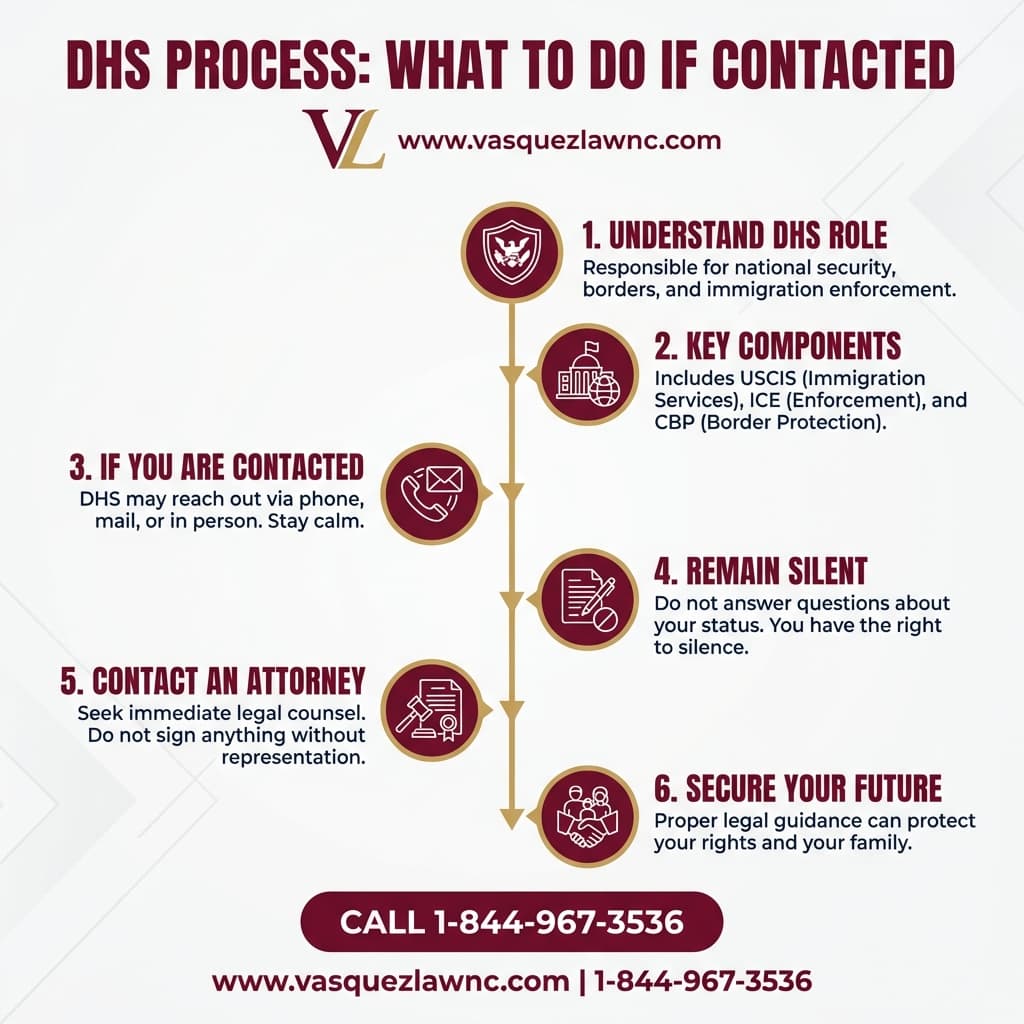
DHS includes agencies like U.S. Citizenship and Immigration Services (USCIS), which processes applications for visas, green cards, naturalization, and humanitarian relief. It also includes Immigration and Customs Enforcement (ICE), responsible for identifying and detaining individuals who violate immigration laws. Customs and Border Protection (CBP) secures borders and ports of entry.
For residents in Smithfield, North Carolina, or Florida, DHS directly affects your ability to apply for lawful status, renew permits like Deferred Action for Childhood Arrivals (DACA), and defend against removal actions.
Beyond immigration, DHS also coordinates efforts to protect the nation from terrorism, natural disasters, and cybersecurity threats. By integrating intelligence and emergency response, DHS maintains safety on multiple fronts, which indirectly impacts immigrant communities by ensuring stable and secure environments.
In practical terms, DHS's multifaceted responsibilities mean that individuals in Smithfield may encounter DHS officers in various contexts—from border checkpoints to local enforcement actions. Understanding the distinct roles of each DHS agency helps you navigate interactions and assert your rights appropriately.
DHS Immigration Services Explained
USCIS handles paperwork and interviews related to immigration benefits. If you are a Dreamer or facing immigration court, USCIS reviews your applications and sometimes refers cases to removal proceedings handled by DHS's legal branch known as the Executive Office for Immigration Review (EOIR).
USCIS also administers programs such as asylum and Temporary Protected Status (TPS), which can provide relief and work authorization for eligible individuals facing unsafe conditions in their home countries. For example, if you have TPS, USCIS manages your renewal applications and updates on your status.
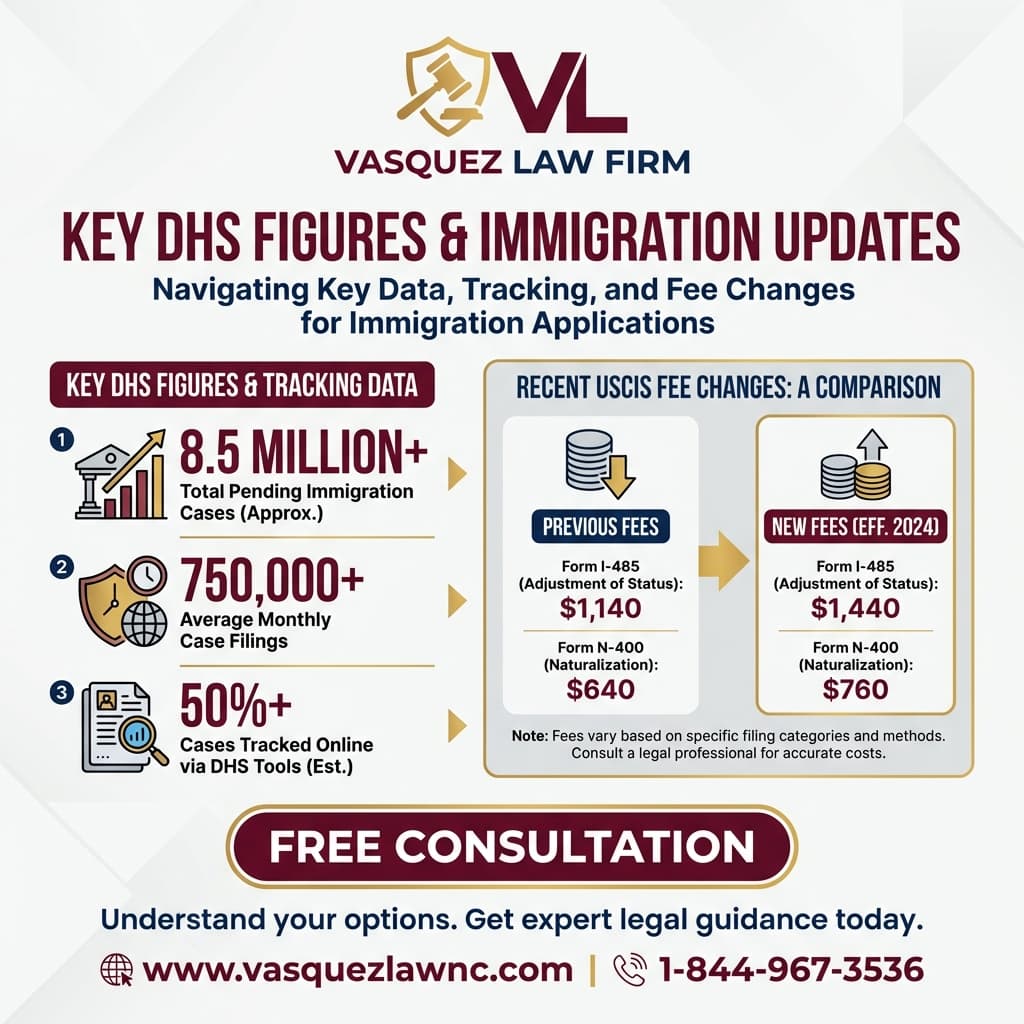
Additionally, USCIS offers resources such as the Electronic Immigration System (ELIS), allowing applicants to track case status online, submit documents, and receive correspondence digitally. This system improves transparency and can be crucial for timely responses to DHS requests.
DHS Enforcement Role
ICE enforces immigration laws within the interior of the country. This includes arrests, detentions, and deportations. ICE actions can lead to court cases that require immediate legal attention. CBP controls border security and prevents unauthorized entry.
ICE also conducts investigations into immigration fraud, human trafficking, and other violations impacting national security. For example, if DHS suspects fraudulent documents or smuggling operations, ICE agents may initiate raids or detain individuals involved. Such enforcement actions can affect families and communities, making legal representation essential.
CBP operates at airports, seaports, and land borders, screening travelers and cargo. They have the authority to inspect personal belongings and question individuals about their immigration status. For instance, a Smithfield resident returning from abroad may be subject to CBP screening, impacting their reentry based on DHS policies.
How DHS Affects Smithfield Residents
For Smithfield immigrants, knowing your rights when DHS agents come to your door, during workplace raids, or at checkpoints is critical. DHS decisions about your case can affect family unity, work authorization, and residency status. Staying informed about DHS policies and changes allows you to make better legal choices.
For example, a Dreamer in Smithfield relying on DACA must stay updated on DHS policy changes that may affect eligibility or renewal processes. Delays or denials by USCIS can impact the ability to work legally or attend school. Similarly, workplace enforcement actions by ICE can disrupt families by detaining breadwinners, highlighting the importance of legal preparedness.
Community outreach programs and legal clinics often collaborate with DHS to provide education and resources to local residents. Engaging with these initiatives can empower Smithfield immigrants to understand DHS procedures, recognize potential risks, and access support services timely.
Key Steps to Take if DHS Contacts You
When DHS contacts you, whether through USCIS requests, ICE inquiries, or CBP encounters at the border, your response can impact your future drastically. Here are practical steps to follow if you encounter DHS in Smithfield or elsewhere.
Remain Calm and Know Your Rights
If DHS agents appear at your home or workplace, do not panic. You have constitutional rights including the right to remain silent and to refuse consent to search without a warrant. Ask to see identification and federal documents.
Keep in mind that you do not have to answer questions about your immigration status or sign any documents without an attorney present. For instance, if ICE agents ask about your status, politely decline to answer and request to speak with your lawyer first. This approach protects you from self-incrimination and procedural errors.
Remember, DHS agents must generally have a warrant signed by a judge to enter your home. If they claim to have a warrant, ask to see it before allowing entry. If they do not have one, you can lawfully refuse entry. This knowledge is vital to prevent unlawful searches and potential violations of your rights.
Document All Interactions
Write down the agents’ names, badge numbers, and details about what they say or ask. This information can help your lawyer assess your case later. Do not sign anything without legal advice.
In addition, if possible, record the interaction using a phone or other device, provided it is legal in your jurisdiction. Such recordings can serve as evidence if DHS agents do not follow proper procedures. For example, if an agent threatens or intimidates you, documentation can support your legal defense.
Keep copies of any notices or letters sent by DHS, including USCIS Requests for Evidence (RFEs) or ICE subpoenas. Timely responses and organized records can prevent negative outcomes like application denials or removal orders.
Contact an Experienced Immigration Lawyer
Getting prompt legal support is one of the most important steps. An immigration lawyer familiar with DHS policies in North Carolina and Florida can protect your rights and prepare you for potential court proceedings. Vasquez Law Firm offers bilingual assistance in Smithfield and beyond.
A qualified attorney can evaluate your case specifics, advise on the best course of action, and represent you in interactions with DHS. For instance, if ICE serves you with a Notice to Appear, your lawyer can help prepare your defense, request continuances, or explore relief options such as cancellation of removal.
Legal counsel is also critical for managing complex processes such as asylum applications or DACA renewals, ensuring that deadlines are met and documentation is accurate. Early consultation improves chances of favorable outcomes and mitigates risks associated with DHS enforcement.
Common Mistakes to Avoid With DHS
- Failing to respond to USCIS notices: This can lead to denied applications or removal orders. Always reply on time.
- Giving false information: Misstatements can result in serious legal consequences including denial of benefits.
- Not hiring legal help: Going through DHS processes alone increases risk of mistakes.
- Ignoring your immigration status: Staying informed helps prevent unintended violations.
- Allowing unauthorized searches: Know when DHS must have a warrant to enter your home.
- Missing court dates: Failing to appear can lead to automatic removal orders.
- Disclosing sensitive information to employers: Protect your privacy.
If you only remember one thing: Always consult an immigration lawyer experienced with DHS before making decisions.
Another common error is failing to keep copies of important documents and correspondence. Losing track of paperwork can delay your case or cause misunderstandings with DHS. Develop an organized system to store all documents related to your immigration status.
Additionally, some individuals mistakenly believe that DHS agents have unlimited authority in public spaces or workplaces. Understanding the limits of DHS powers helps you assert your rights and avoid unnecessary detention or searches.
Timeline and What to Expect in Immigration Cases
Immigration cases involving DHS can vary widely but generally follow a recognizable timeline.
- Application Submission: Filing petitions or renewal requests with USCIS.
- Background Checks: DHS screens applicants for security and criminal history.
- USCIS Interview: Applicants attend interviews to prove eligibility.
- Possible Notice to Appear: DHS may issue charges for removal in immigration court.
- Immigration Court Hearing: EOIR adjudicates with DHS as the government party.
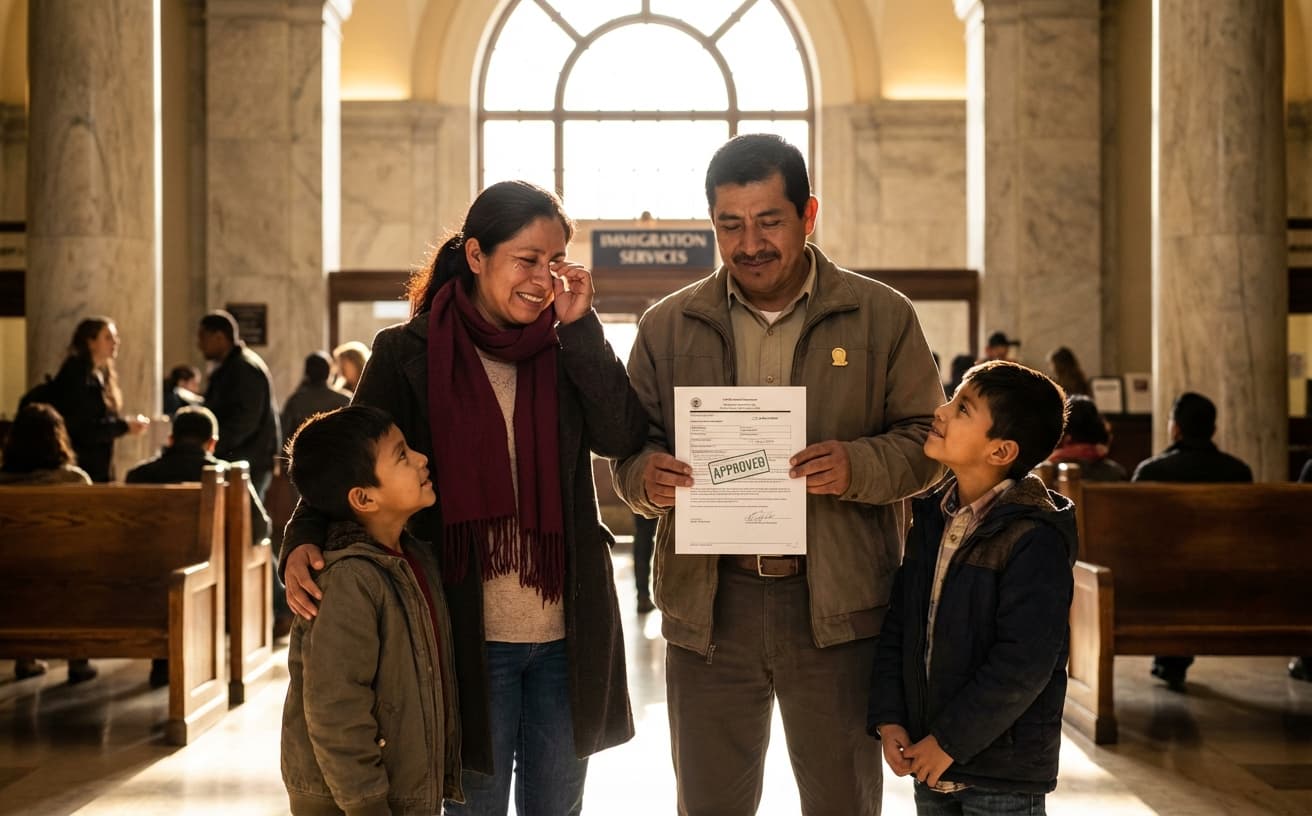
- Final Decision and Appeals: Decisions can be appealed or result in relief like cancellation or adjustment of status.
Understanding this timeline helps Dreamers and immigrants in Smithfield plan accordingly and avoid surprises during their immigration journey.
For example, after submitting a DACA renewal, applicants should expect a processing time that can vary due to changes in DHS resources or policy priorities. Being proactive in checking case status and submitting requested documents promptly can reduce delays.
In removal proceedings, the timeline can be unpredictable due to court backlogs or emergency policy shifts. Staying in contact with your attorney and attending all hearings is essential to maintaining your case’s momentum and eligibility for relief.
Frequently Asked Questions About DHS
What does DHS stand for?
DHS stands for the Department of Homeland Security. It is a federal agency responsible for immigration enforcement, border security, and public safety. It includes USCIS, ICE, and CBP agencies among others. Established after 9/11 to consolidate multiple agencies, DHS plays a vital role in protecting the nation while managing immigration processes nationwide.
Is DHS the same as ICE?
DHS is the overarching department, while ICE is a division within DHS focused on immigration enforcement and investigations inside the US. ICE deals with detention, deportation, and enforcement of immigration laws, whereas DHS also encompasses agencies handling visas, naturalization, and border protection.
What does DHS do in Oregon?
DHS performs the same federal enforcement and security functions in Oregon as elsewhere, including immigration enforcement and border security. They process visa applications, conduct investigations, and secure ports of entry, ensuring safety and legal compliance within the state.
Why is the DHS shut down sometimes?
DHS shutdowns occur when Congress fails to fund the department, temporarily halting many immigration and security operations. Such shutdowns can delay visa processing, reduce enforcement activities, and affect public safety programs, causing uncertainty for immigrants awaiting decisions.
How can I access DHS services in Smithfield?
You can access DHS services through local USCIS offices or online portals. Legal advice helps navigate these services successfully. Scheduling appointments, submitting applications, and responding to requests promptly are critical steps to avoid delays and complications in your immigration journey.
What should I do if ICE contacts me?
Remain calm, exercise your rights, and contact an immigration attorney immediately to protect your case. Avoid answering questions without legal counsel, do not sign documents, and document all details of the encounter. Prompt legal support can help you navigate detention or removal proceedings effectively.
Does DHS affect Dreamers and DACA recipients?
Yes, DHS administers DACA and its policies directly impact Dreamers’ protections and renewals. Changes in DHS enforcement priorities or guidance can affect eligibility, work authorization, and protections from deportation. Staying informed and working with an attorney helps Dreamers maintain their status.
How do DHS funding changes impact immigration cases?
Funding changes can cause delays in processing, fewer resources for enforcement, and impact court backlogs. Reduced funding might lead to slower application approvals or postponement of removal hearings. Conversely, increased funding can result in more enforcement actions and tighter scrutiny of cases.
About Vasquez Law Firm
At Vasquez Law Firm, we combine compassion with aggressive representation. Our motto "Yo Peleo" (I Fight) reflects our commitment to standing up for your rights.
- Bilingual Support: Se Habla Español - our team is fully bilingual
- Service Areas: North Carolina, Florida, and nationwide immigration services
- Experience: Over 15 years helping clients navigate complex legal matters
- Results: Thousands of successful cases across multiple practice areas
Attorney Trust and Experience
Attorney Vasquez holds a Juris Doctor degree and is admitted to practice in both the North Carolina State Bar and Florida Bar. With over 15 years of dedicated legal experience, he has built a reputation for providing personalized attention and achieving favorable outcomes for his clients.
His extensive experience includes representing clients in asylum cases, DACA renewals, removal defense, and family-based immigration petitions. Attorney Vasquez understands the unique challenges faced by immigrants in Smithfield and tailors strategies to each client’s circumstances.
Clients praise the firm’s commitment to communication, cultural sensitivity, and thorough preparation. Whether facing DHS enforcement or applying for immigration benefits, Vasquez Law Firm is a trusted advocate ready to fight for your rights.
Don't wait to get the help you deserve. Call us now for immediate assistance.
Se Habla Español
Sources and References
- U.S. Citizenship and Immigration Services (USCIS)
- Executive Office for Immigration Review (EOIR)
- Department of Homeland Security official site
Take the first step toward justice today. Our team is standing by to help. Se Habla Español.
Start Your Free Consultation Now
Call us: 1-844-967-3536
Se Habla Español - Estamos aquí para ayudarle.

William Vasquez
Founder & CEO, Vasquez Law Firm, PLLC
William Vasquez is the founder and CEO of Vasquez Law Firm, PLLC, a results-driven firm specializing in immigration, criminal defense, personal injury, and workers' compensation. A U.S. Air Force veteran and recipient of the Joint Service Achievement Medal, William is dedicated to fiercely fighting for his clients' rights.
Related Legal Services
Need legal help? Learn more about speak with an immigration lawyer, or contact us for a free evaluation.
You can also visit our NC immigration team for more information.
![Surge in Missed Immigration Hearings Linked to Fear of ICE Arrests [2026]](/_next/image?url=https%3A%2F%2Fvuuyorlsmhunqektprqy.supabase.co%2Fstorage%2Fv1%2Fobject%2Fpublic%2Fblogs%2Fimmigration-header-1782501530817.png&w=1920&q=75)
![Senate Hearing Questions Birthright Citizenship [2026]](/_next/image?url=https%3A%2F%2Fvuuyorlsmhunqektprqy.supabase.co%2Fstorage%2Fv1%2Fobject%2Fpublic%2Fblogs%2Fimmigration-header-1782501679427.png&w=1920&q=75)