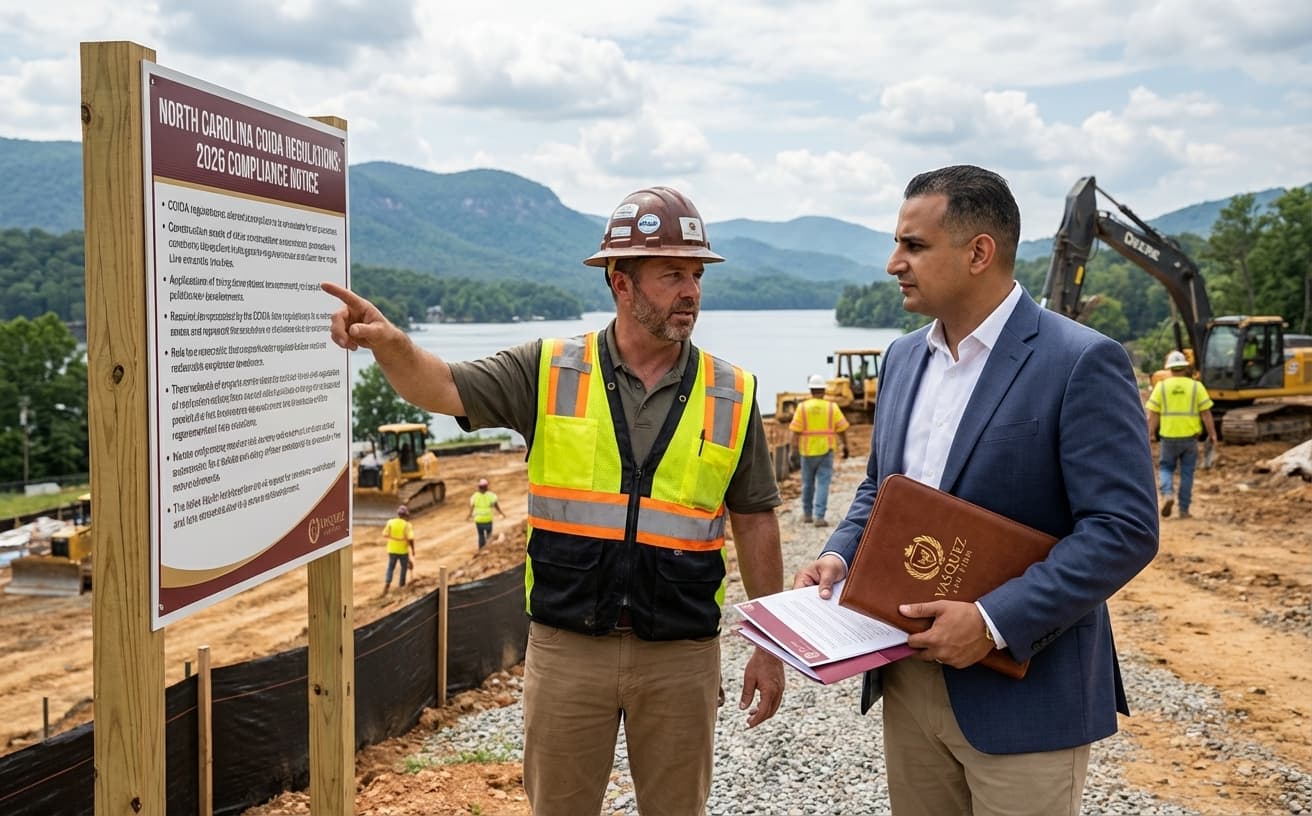
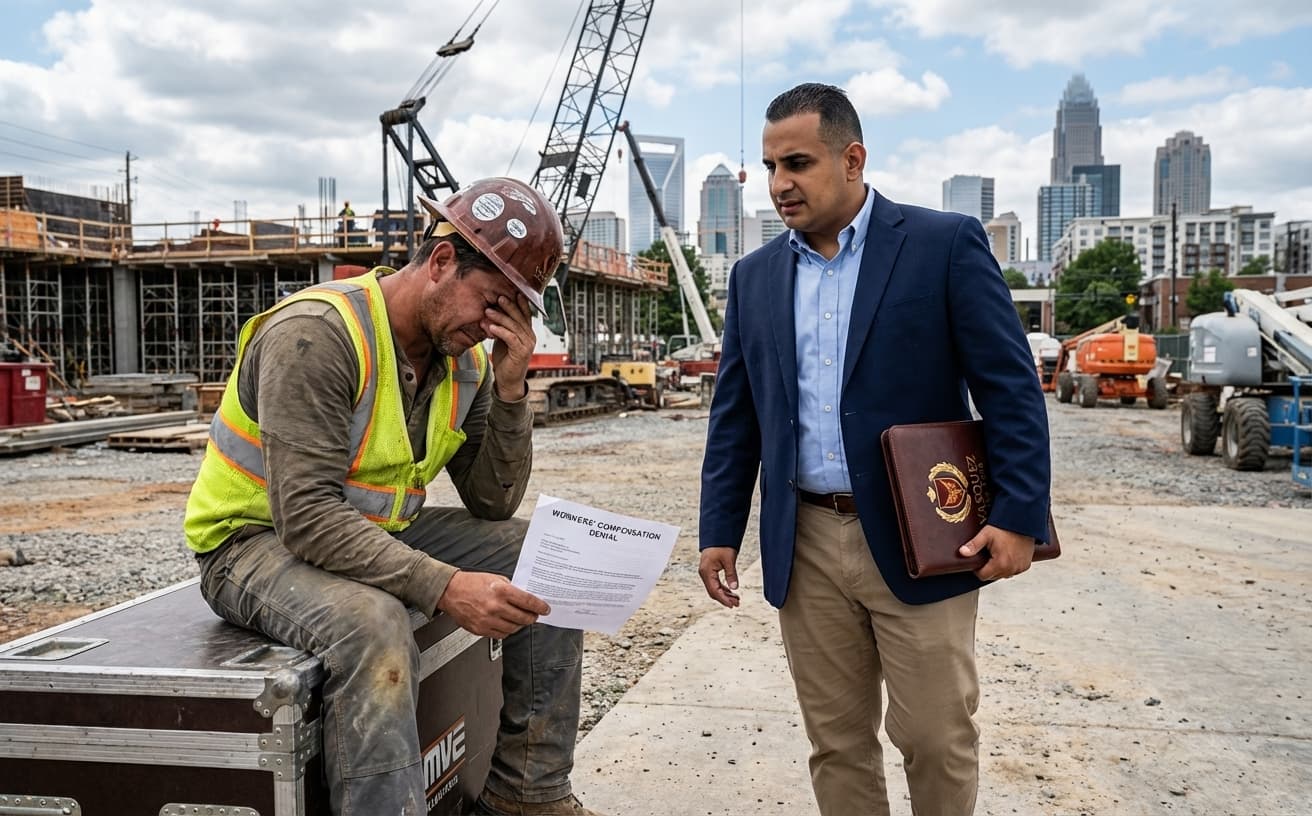
How Delayed Emergency Response Affects Workers' Comp in 2026
A delayed emergency response can severely impact your North Carolina workers' compensation claim. Learn your rights and how to protect your case in 2026. Contact Vasquez Law Firm for a free consultation.
Published on March 10, 2026

Have questions? Talk to an attorney - free evaluation.
Call 1-844-967-3536Hurt on the Job? Claim What You Are Owed
Free review of your workers' comp claim - we handle the fight.
How Delayed Emergency Response Affects Workers' Comp in 2026
Imagine an employee suffers a severe fall at a construction site in Raleigh, sustaining a head injury. The on-site supervisor, instead of immediately calling 911, spends 20 minutes trying to locate a first-aid kit and then another 10 minutes debating which hospital to send the worker to. This delayed emergency response can have devastating consequences for the worker's health and significantly complicate a subsequent North Carolina workers' compensation claim. Understanding how these delays impact your legal rights and potential compensation is crucial in 2026, especially when every second counts after a workplace injury.
Need help with your workers' compensation case after an emergency response delay? Our experienced attorneys are ready to fight for you. Se Habla Español.
Schedule Your Free Consultation
Or call us now: 1-844-967-3536
Quick Answer
A delayed emergency response after a workplace injury in North Carolina can seriously jeopardize a workers' compensation claim. It can worsen injuries, create disputes over the cause of harm, and make it harder to prove the injury occurred at work. Prompt medical attention is vital for both health and legal standing.
- Delayed care can worsen injuries and complicate recovery.
- It may create disputes about the direct cause of the injury or its severity.
- Employers have a duty to provide immediate medical attention.
- Documenting the delay is critical for your workers' comp claim.
- Seek legal counsel if you experience a delayed emergency response.
Why Delayed Emergency Response Matters for Workers' Comp Claims
In 2025, a study by the National Safety Council found that nearly 20% of workplace injuries requiring emergency medical attention experienced some form of delay in response. This delay isn't just a matter of inconvenience; it can be life-altering. For workers in North Carolina, a delayed emergency response following a workplace accident can directly influence the success and value of their workers' compensation claim. The longer it takes to receive medical care, the more challenging it becomes to definitively link the injury to the workplace incident.
Consider a construction worker who falls from scaffolding and suffers a back injury. If emergency services are not called promptly, or if the employer delays transportation to a medical facility, the worker's condition could deteriorate. This deterioration might be argued by the employer or their insurance company as separate from the initial incident, or as a result of the delay rather than the accident itself. Such arguments can create significant hurdles in securing fair compensation for medical expenses, lost wages, and disability benefits under North Carolina workers' compensation law.
The core issue revolves around causation and the extent of injury. North Carolina General Statutes Chapter 97, which governs workers' compensation, requires that an injury "arise out of and in the course of the employment." A delayed response can blur this line, making it appear that the injury's severity was exacerbated by external factors rather than being a direct consequence of the workplace incident. This is why immediate reporting and swift medical attention are not just best practices, but crucial legal safeguards for injured workers.
Employer's Duty of Care and Rapid Response Systems
Employers in North Carolina have a fundamental duty to provide a safe working environment and, critically, to ensure immediate medical attention is available when an injury occurs. This duty is not merely ethical; it is legally mandated. When a serious workplace injury happens, a rapid response is expected, involving prompt notification of emergency services or immediate transport to a medical facility. Failure to act quickly can be seen as a breach of this duty, potentially strengthening a worker's claim that the employer's negligence contributed to the injury's severity.
Many larger workplaces, particularly in industries with higher injury risks like manufacturing or construction in Orlando, utilize rapid response teams or designated personnel trained in first aid and emergency protocols. These systems are designed to minimize the time between injury and professional medical intervention. However, even with these systems in place, human error, lack of training, or a deliberate attempt to downplay an injury can lead to a delayed emergency response.
If your employer failed to provide a timely response, it is important to document every detail. This includes who was notified, when, what actions were taken (or not taken), and the exact timeline of events leading up to your professional medical care. Such documentation becomes invaluable evidence if your workers' compensation claim faces challenges due to the delay. An attorney at Vasquez Law Firm can help you gather this critical information and build a strong case.
Legal Consequences of a Delayed Emergency Response
A significant consequence of a delayed emergency response is the potential for an insurance company to deny or dispute the workers' compensation claim. Insurers often look for any reason to reduce payouts, and a delay in seeking medical treatment provides them with a strong argument. They might claim that the injury wasn't severe enough to warrant immediate attention, or that the delay allowed for an intervening event to worsen the condition, thus breaking the chain of causation back to the workplace accident.
For example, if a worker experiences a head injury and waits several hours before going to the emergency room, the insurance company might argue that the symptoms worsened during that time due to factors unrelated to the initial fall. This can lead to a protracted legal battle, requiring extensive medical testimony to prove that the delay itself caused further harm directly attributable to the original workplace incident. This scenario highlights why the "golden hour" of medical care is not just a clinical concept but a legal one, especially in North Carolina.
Furthermore, a delayed response can affect the type and duration of benefits you receive. If the delay leads to a more severe or prolonged injury, the insurance company may dispute the extent of permanent disability or the need for certain treatments. This can result in lower disability ratings, reduced medical coverage, and a diminished overall settlement for the injured worker. Seeking legal guidance immediately after an injury, especially if a delay occurred, is essential to protect your rights.
North Carolina Workers' Compensation Specifics
In North Carolina, the North Carolina Industrial Commission (NCIC) oversees workers' compensation claims. The NCIC expects prompt medical attention for workplace injuries. If an employer fails to provide this, it can be considered a violation of their duties under N.C. Gen. Stat. § 97-25, which mandates medical treatment. Delays can lead to penalties for the employer and strengthen the worker's position in demanding appropriate care and compensation.
Workers must report their injury to their employer within 30 days, though immediate reporting is always best. A delayed emergency response combined with a delayed reporting can be especially damaging to a claim. The NCIC will scrutinize the entire timeline of events, from injury to treatment, to determine the validity and extent of the claim. Having an attorney who understands these nuances is crucial for success.
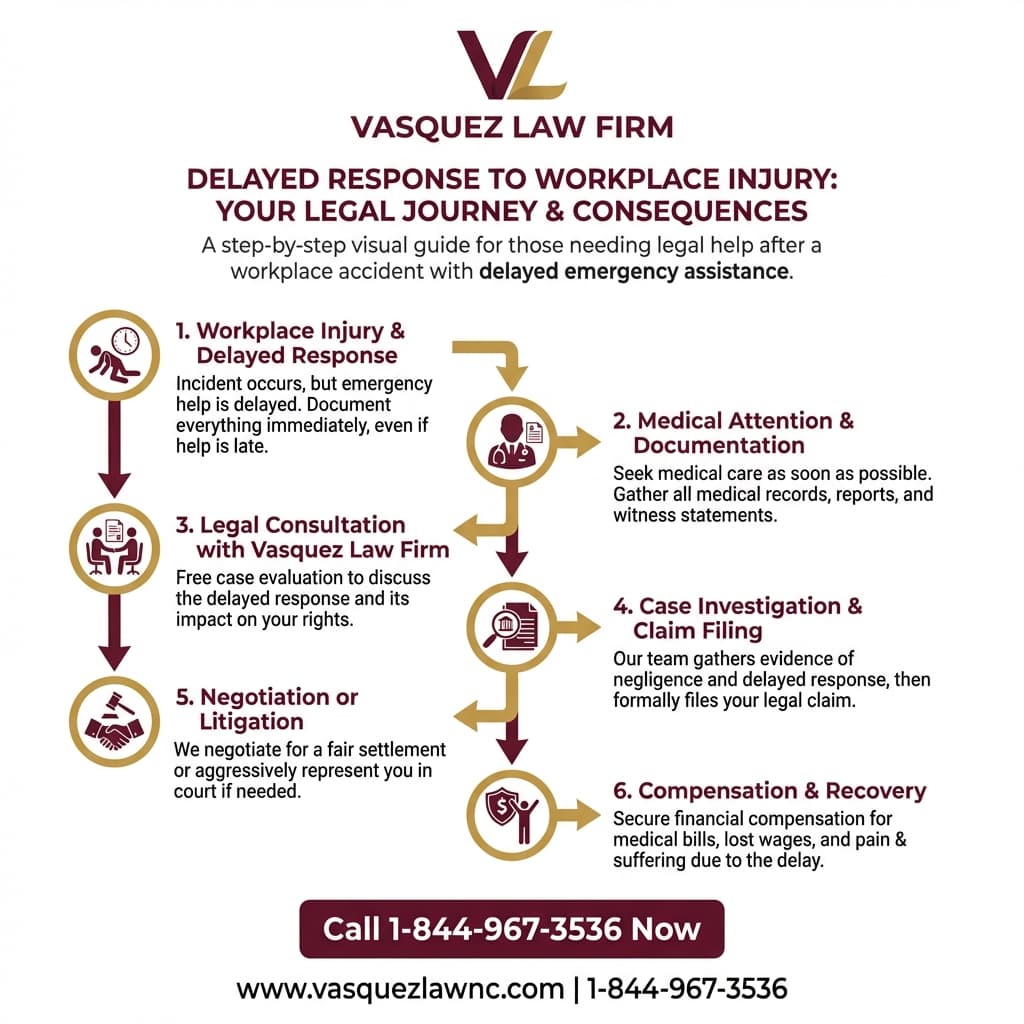
Step-by-Step: What to Do After a Delayed Emergency Response
If you or a loved one experiences a delayed emergency response after a workplace injury in North Carolina, taking specific steps can help protect your workers' compensation claim. Acting quickly and systematically is crucial to mitigate the damage caused by the initial delay. These actions can provide vital evidence and strengthen your position against potential challenges from the employer or their insurance carrier.
- Seek Medical Attention Immediately: Regardless of any prior delay, get to a doctor or emergency room as soon as possible. Clearly explain when the injury occurred, what happened, and note any previous delays in getting care.
- Document Everything: Write down all details of the injury and the delay. Include times, dates, names of witnesses, what was said, and what actions were or were not taken by your employer.
- Report the Injury in Writing: Ensure your employer receives a formal, written notice of your injury and the circumstances, including the delayed emergency response. Keep a copy for your records.
- Preserve Evidence: Take photos of the accident scene, your injuries, and any equipment involved. Collect contact information for any witnesses.
- Do Not Give Recorded Statements: Avoid giving recorded statements to the employer or their insurance company without first consulting an attorney. These statements can be used against you.
- Consult a Workers' Compensation Attorney: An experienced attorney can guide you through the complex legal process, help gather evidence, and advocate for your rights, especially when a delayed response complicates the claim.
Documents and Evidence Checklist
To effectively pursue a workers' compensation claim, especially one complicated by a delayed emergency response, gathering specific documents and evidence is paramount. A comprehensive collection of information can counteract arguments from the defense and prove the legitimacy of your injury and the impact of the delay. This checklist will help you organize what you need.
- Incident Report: Any internal company report detailing the accident.
- Medical Records: All documentation from emergency services, hospitals, doctors, and specialists, detailing your injuries, diagnosis, treatment, and prognosis. Ensure these records note the time of injury and the time of initial treatment.
- Witness Statements: Written accounts from co-workers or others who saw the accident or observed the delayed response.
- Communication Logs: Records of calls, emails, or texts to your employer about the injury and the need for medical help.
- Photos/Videos: Images or footage of the accident scene, hazardous conditions, or your injuries.
- Wage Statements: Proof of your income before the injury to calculate lost wages.
- Employer Policies: Copies of company policies regarding workplace safety, emergency procedures, and injury reporting.
- Personal Journal: A detailed log of your symptoms, pain levels, doctor visits, and how the injury affects your daily life.
Timeline: What to Expect After a Workplace Injury with Delayed Response
Navigating a workers' compensation claim after a delayed emergency response can be a prolonged process. Understanding the typical timeline can help you prepare for the various stages and potential challenges. While every case is unique, a general sequence of events often unfolds.
- Immediate Aftermath (Days 1-7): Seek immediate medical care, notify your employer in writing, and begin documenting all details of the injury and the delay. An attorney consultation should happen as soon as possible.
- Initial Investigation (Weeks 1-4): The employer and their insurance carrier will investigate the claim. They may request medical records and statements. Your attorney will help you respond appropriately and gather counter-evidence regarding the delay.
- Medical Treatment & Evaluation (Weeks 4-Ongoing): You will undergo necessary medical treatments. Regular doctor visits will establish the extent of your injuries and your recovery progress. Independent Medical Examinations (IMEs) may be requested by the insurance company.
- Dispute & Negotiation (Months 2-6+): If the claim is disputed due to the delayed response, your attorney will negotiate with the insurance company. This might involve formal mediation or hearings before the NC Industrial Commission.
- Resolution (Months 6-18+): The case may resolve through a settlement agreement or an award from the NCIC after a hearing. The length depends on the complexity of the injury, the extent of the dispute, and the evidence presented.
Costs and Fees: What Impacts the Price of a Workers' Comp Claim
The costs associated with a workers' compensation claim in North Carolina primarily involve legal fees, which are typically contingent upon a successful outcome. This means you generally do not pay upfront fees to your attorney. However, other factors can influence the overall financial implications of your case, especially when a delayed emergency response complicates matters.
- Attorney Fees: In North Carolina, workers' compensation attorney fees are regulated by the NC Industrial Commission, usually capping at 25% of the compensation recovered. This percentage motivates attorneys to maximize your benefits.
- Medical Expenses: All authorized and necessary medical treatment related to your work injury should be covered by workers' comp. A delayed response can lead to higher initial medical costs and ongoing treatment, which the insurance company may dispute.
- Lost Wages: Benefits for lost wages (temporary total disability) are paid at two-thirds of your average weekly wage. If a delayed response lengthens your recovery, it increases the total amount of lost wages you are entitled to, assuming the claim is approved.
- Litigation Costs: These include fees for obtaining medical records, expert witness testimony (especially crucial if proving harm from a delayed response), deposition costs, and filing fees. These are often advanced by your attorney and reimbursed from your settlement or award.
- Settlement Value: The overall value of your claim, including medical and wage benefits, can be significantly impacted by a delayed response. Proving the causal link between the delay and worsened injury often requires substantial evidence and expert testimony, which can increase legal efforts but also potentially increase the final settlement if successful.
Common Mistakes and How to Avoid Them After a Delayed Emergency Response
Even with an initial delayed emergency response, injured workers can make further mistakes that undermine their workers' compensation claim. Avoiding these pitfalls is critical to protecting your rights and securing the benefits you deserve. Being aware of these common errors can help you navigate the process more effectively.
- Failing to Seek Immediate Medical Care After the Delay: Despite the initial delay, not seeking medical attention as soon as possible afterward can be seen as further negligence, making it harder to prove the severity of your injury. Always go to the doctor.
- Not Documenting the Delay: Failing to record specific details about when and how the emergency response was delayed can weaken your claim. Write down names, times, and what was communicated.
- Not Reporting the Injury in Writing: Verbal reports are often insufficient. Always follow up with a written report to your employer, keeping a copy for yourself. This establishes a clear record.
- Accepting an Early Settlement Offer: Insurance companies may offer a quick, low settlement, especially if they believe a delayed response weakens your case. Do not accept anything without legal review.
- Giving a Recorded Statement Without Legal Counsel: Any statement you give can be used against you. Never provide a recorded statement to the insurance company without your attorney present.
- Failing to Follow Doctor's Orders: Deviating from prescribed treatment plans can be used to argue that you are not serious about your recovery, or that your condition worsened due to your own actions.
- Not Disclosing Pre-Existing Conditions: Attempting to hide a pre-existing condition can severely damage your credibility and lead to claim denial. Be honest with your medical providers and attorney.
- Returning to Work Too Soon: Going back to work before medically cleared can aggravate your injury and lead to disputes over your ongoing need for benefits. Follow your doctor's restrictions.
- Delaying Legal Consultation: The longer you wait to speak with a workers' compensation attorney, the more challenging it becomes to gather critical evidence and build a strong case.
If you only remember one thing: Document every detail of your injury and any delayed emergency response, then seek legal counsel immediately to protect your rights.
Don't face your legal challenges alone. Our team is here to help you every step of the way.
Call today: 1-844-967-3536 | Se Habla Español
When to Call a Workers' Compensation Lawyer Now
If you've experienced a workplace injury, especially one involving a delayed emergency response, knowing when to seek legal help is crucial. Waiting too long can jeopardize your ability to recover fair compensation. Certain situations should immediately trigger a call to an experienced workers' compensation attorney at Vasquez Law Firm.
- Emergency Response Was Significantly Delayed: If your employer or colleagues failed to call 911 or get you immediate medical attention after a serious injury.
- Your Claim Has Been Denied: If the insurance company has outright denied your workers' compensation claim, often citing the delayed response as a reason.
- Medical Treatment is Being Disputed: If the insurance company refuses to authorize necessary medical procedures, medications, or therapy.
- You Are Being Pressured to Return to Work: If your employer or the insurance company is pushing you to return to work before your doctor has cleared you.
- You Don't Understand Your Rights: If you feel overwhelmed by the legal process, paperwork, or the complexity of North Carolina workers' compensation laws.
- Your Injuries Are Severe or Permanent: If your workplace injury resulted in significant medical expenses, long-term disability, or permanent impairment.
- You Believe Your Employer is Retaliating: If you face negative consequences at work after reporting your injury or filing a claim.
- You are Offered a Settlement: Never accept a settlement offer without having an attorney review it to ensure it covers all your current and future needs.
About Vasquez Law Firm
At Vasquez Law Firm, we combine compassion with aggressive representation. Our motto "Yo Peleo" (I Fight) reflects our commitment to standing up for your rights. We understand the physical, emotional, and financial toll a workplace injury can take, especially when compounded by a delayed emergency response.
- Bilingual Support: Se Habla Español - our team is fully bilingual and ready to assist clients in both English and Spanish.
- Service Areas: We proudly serve injured workers across North Carolina, providing dedicated legal representation.
- Experience: With over 15 years of experience, Attorney Vasquez has a deep understanding of workers' compensation laws and how to navigate complex claims.
- Results: We have a proven track record of achieving favorable outcomes for our clients, ensuring they receive the compensation they deserve.
Attorney Trust and Experience
Attorney Vasquez holds a Juris Doctor degree and is admitted to practice in the North Carolina State Bar. With over 15 years of dedicated legal experience, he has built a reputation for providing personalized attention and achieving favorable outcomes for his clients in workers' compensation cases. His commitment to fighting for justice is unwavering, particularly when clients have been unfairly treated due to a delayed emergency response.
Frequently Asked Questions
Is it normal to wait 4 hours in the ER after a workplace injury?
While ER wait times can vary, a four-hour wait for a significant workplace injury requiring emergency care is concerning and could be considered a delayed emergency response. This delay can worsen your condition and complicate your workers' compensation claim. Document the wait time and seek legal advice if it was excessive.
What are the 3 C's of emergency response in a workplace?
The 3 C's often refer to Check, Call, Care. Check the scene for safety and the victim for injuries. Call for emergency medical services (911) promptly. Care for the injured person to the best of your abilities until professional help arrives. A delayed emergency response often involves a failure in one or more of these steps.
What are the consequences of a delay in emergency management for workers?
For injured workers, consequences include worsened physical injuries, prolonged recovery times, increased medical costs, and significant challenges to their workers' compensation claim. A delayed emergency response can lead to disputes over causation, reduced benefits, and a more complex legal battle to secure compensation.
What is the golden hour of a disaster, and how does it relate to workplace injuries?
The "golden hour" refers to the critical time immediately following a traumatic injury, during which prompt medical treatment can significantly improve the outcome and survival rate. In workplace injuries, a delayed emergency response beyond this golden hour can dramatically increase the severity of harm and complicate recovery, both medically and legally.
Can I sue my employer for a delayed emergency response?
In North Carolina, workers' compensation is generally the exclusive remedy for workplace injuries, meaning you typically cannot sue your employer directly for negligence. However, a delayed emergency response can strengthen your workers' compensation claim, potentially leading to increased benefits or penalties against the employer. Consult an attorney for specific options.
What evidence do I need to prove a delayed emergency response?
You will need detailed documentation including incident reports, medical records noting time of injury vs. time of treatment, witness statements, communication logs (calls, texts, emails) with your employer, and any video surveillance. A personal journal detailing the events can also be valuable. An attorney can help you compile this evidence.
Will a delayed response affect my medical treatment coverage?
Yes, a delayed emergency response can cause the workers' compensation insurance carrier to dispute the necessity or extent of your medical treatment. They might argue that some treatments are for conditions exacerbated by the delay, not the original injury. An attorney can fight these disputes to ensure your medical coverage.
How quickly should an employer call 911 after a serious workplace injury in NC?
An employer should call 911 immediately after a serious workplace injury that requires emergency medical attention. Any hesitation or attempt to handle a severe injury internally without professional medical assessment can be considered a delayed emergency response and a breach of their duty of care.
What is a rapid response team in a hospital, and is it relevant to workers' comp?
A rapid response team (RRT) in a hospital is a multidisciplinary group that quickly assesses and treats patients whose condition is deteriorating. While directly related to hospital care, the concept of a rapid response highlights the importance of immediate intervention. For workers' comp, a delayed emergency response before hospital arrival can negate the benefits of an RRT.
What are my rights if my employer denies my claim due to a delayed response?
If your claim is denied, you have the right to appeal the decision through the North Carolina Industrial Commission. An attorney can represent you in this appeal process, presenting evidence and arguments to counter the insurance company's position and prove that the delayed emergency response should not invalidate your claim.
Sources and References
- North Carolina Industrial Commission (NCIC)
- North Carolina General Statutes Chapter 97 (Workers' Compensation Act)
- Occupational Safety and Health Administration (OSHA) - 29 CFR 1904.7
Ready to take the next step? Contact Vasquez Law Firm today for a free, confidential consultation. We're committed to fighting for your rights and achieving the best possible outcome for your case, especially when a delayed emergency response has complicated your claim.
Start Your Free Consultation Now
Call us: 1-844-967-3536
Se Habla Español - Estamos aquí para ayudarle.

William Vasquez
Founder & CEO, Vasquez Law Firm, PLLC
William Vasquez is the founder and CEO of Vasquez Law Firm, PLLC, a results-driven firm specializing in immigration, criminal defense, personal injury, and workers' compensation. A U.S. Air Force veteran and recipient of the Joint Service Achievement Medal, William is dedicated to fiercely fighting for his clients' rights.
Related Legal Services
Need legal help? Learn more about how our work injury attorneys can help, or contact us for a free evaluation.
You can also visit work injury attorneys serving all of North Carolina for more information.