USCIS Pause Applications: What NC and FL Immigrants Should Know 2026
USCIS pause applications affects green cards and asylum in 19 countries. Learn what this means for you in NC and FL. Get a free consultation today.
Published on May 9, 2026
Talk to an immigration attorney
Free call. A clear plan for your case.
Free & confidential · Se habla espanol · 24/7
Have questions? Talk to an attorney - free evaluation.
Call 1-844-967-3536Free Tool
Check Your USCIS Case Status Now
Enter your receipt number - get the official USCIS status in English or Spanish. No registration.
USCIS Pause Applications: What NC and FL Immigrants Should Know 2026
The USCIS pause on applications has created uncertainty for many immigrants from 19 designated countries. As of 2026, this hold affects green card applications, asylum claims, and other benefits filed by individuals from these countries. North Carolina and Florida immigrants should understand how this pause impacts their immigration status and options. Vasquez Law Firm’s experienced immigration attorneys explain what to expect, steps to take, and how to protect your rights amid these changes.
Need help with your case? Our experienced attorneys are ready to fight for you. Se Habla Español.
Or call us now: 1-844-967-3536
Quick Answer
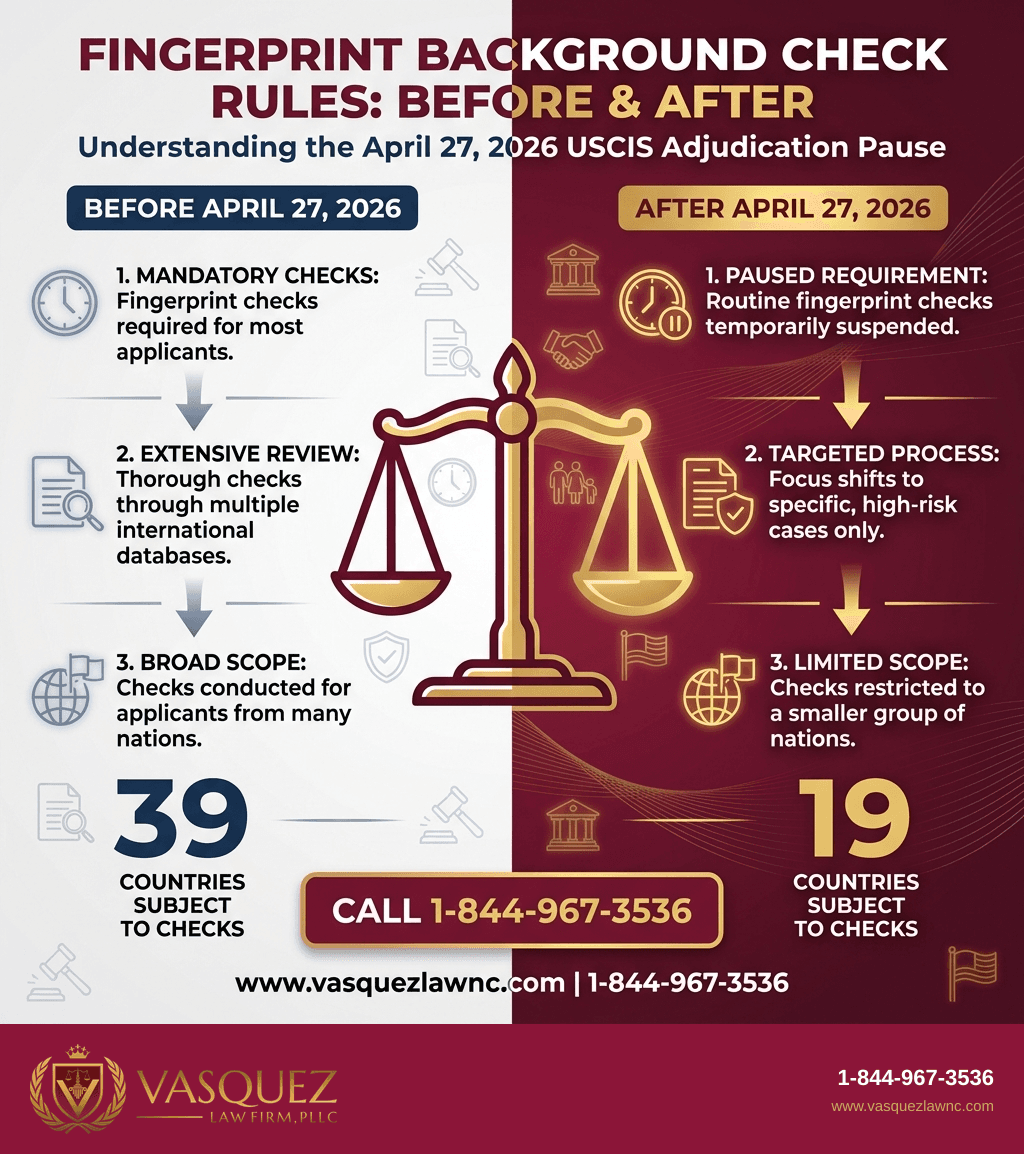
USCIS is currently pausing immigration applications filed by individuals from 19 high-risk countries. This pause affects green card and asylum applications, causing delays in processing. Immigrants in North Carolina and Florida should stay informed, gather necessary documents, and seek legal guidance to protect their rights during this pause.
- Applies to 19 countries identified by USCIS
- Green card and certain asylum applications paused
- Duration possibly several months to a year
- Consult an immigration attorney early
- Stay updated with USCIS announcements
Understanding the USCIS Pause Applications
In early 2026, U.S. Citizenship and Immigration Services (USCIS) announced a pause on adjudicating several immigration benefit applications. This pause specifically targets applications from 19 countries that the agency has deemed 'high-risk' due to concerns including fraud, national security, and incomplete information. Among the affected are green card (adjustment of status) petitions and asylum claims filed by individuals from these nations.
This action, outlined in the USCIS Policy Manual, reflects an increased emphasis on vetting applicants more thoroughly before granting immigration benefits. The impact is felt deeply in immigrant communities throughout North Carolina and Florida, where many applicants hail from these affected countries.
For immigrants in Raleigh or Orlando, this pause means that applications that would normally be processed within months are now delayed indefinitely. Understanding the pause's legal basis and operational effects helps applicants anticipate challenges and plan their next steps carefully.
Important to know: USCIS continues processing applications from countries outside the pause list, but changes can occur as policies evolve. Vasquez Law Firm advises all clients to stay vigilant and seek professional counsel during this period.
Learn more about our immigration services and how we support clients facing these challenges.
Step-by-Step: What To Do If Your Application Is Paused
- Confirm your application status: Use the USCIS online case status tool or contact USCIS customer service to verify if your case is affected by the pause.
- Stay informed with official updates: USCIS posts updates on its website. Monitor these regularly for new information or changes to the pause.
- Consult an experienced immigration attorney: Legal counsel can review your case, determine the implications, and recommend options to protect your status.
- Gather updated evidence: Prepare any additional documentation that supports your eligibility for immigration benefits, such as proof of family relationships or work history.
- Be prepared for interviews or Requests for Evidence (RFEs): USCIS may ask for more information once the pause lifts. Advance preparation can help avoid further delays.
- Consider alternative immigration options: With delays possible, an attorney can advise on other visa types, humanitarian relief, or temporary legal protections.
- Maintain your legal status in the U.S.: Avoid overstays or lapses in current immigrant or nonimmigrant status during pauses.
- Keep communication lines open: Ensure USCIS has your current address and contact details to receive notices promptly.
Documents or Evidence Checklist
- Copies of all USCIS notices and receipts related to your application
- Valid passports and visas
- Birth and marriage certificates proving family ties
- Employment records or pay stubs if applicable
- Proof of residence such as lease agreements or utility bills
- Any prior immigration documents or approved petitions
- Certified translations of any foreign language documents
- Evidence of hardship or humanitarian factors, if relevant
- Letters of support or affidavits from community leaders or employers
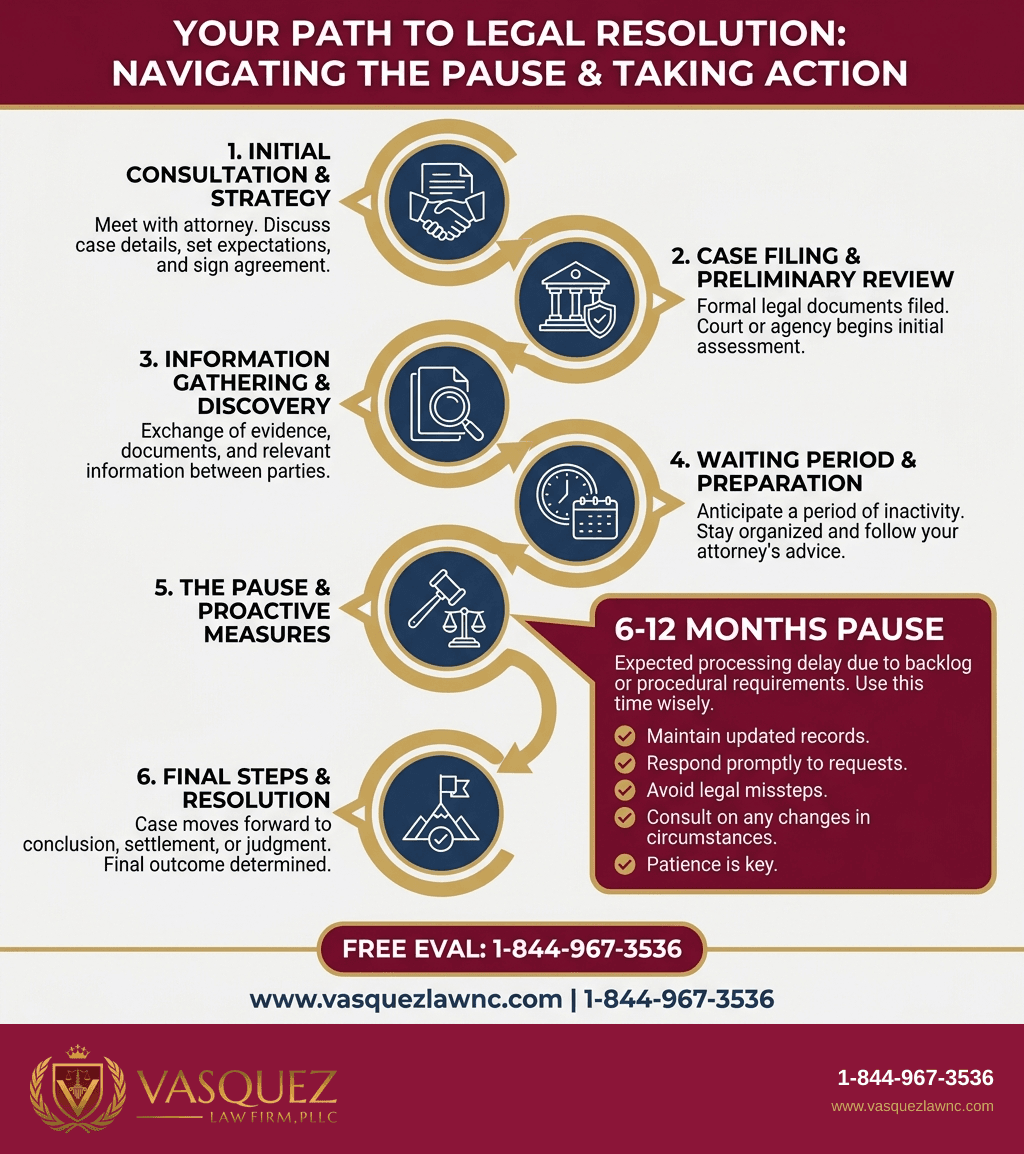
Timeline: What To Expect During the USCIS Pause
- Initial announcement: Early 2026 USCIS published the pause memo affecting 19 countries.
- Immediate effect: Adjudications for impacted applications halted within weeks.
- Ongoing reporting: USCIS updates about processing delays continue on their official site.
- Duration estimate: Pauses like this typically last 6 to 12 months, depending on federal policy reviews.
- Case status changes: Applicants may receive RFEs or interview notices after the pause lifts.
- Potential litigation: Ongoing lawsuits may accelerate or alter the pause timeline.
Costs and fees: What impacts the price
- USCIS application fees remain due even if applications are paused.
- Additional legal fees for consultation or appeals are separate from USCIS fees.
- Extra document gathering, translations, and expert evaluations can add to the cost.
- Delays may cause applicants to maintain or renew existing visas, incurring further expenses.
- In certain cases, premium processing requests or waivers may offset or exacerbate costs.
Common mistakes and how to avoid them
- Submitting incomplete or outdated applications – regularly review and update documents.
- Failing to respond promptly to USCIS Requests for Evidence (RFEs) – meet all deadlines.
- Ignoring official USCIS pauses and continuing to pay fees unnecessarily – consult an attorney first.
- Maintaining expired visas or status during the pause – renew or adjust status proactively.
- Not keeping USCIS informed of address changes – update info to avoid missed notices.
- Discussing sensitive case details publicly or on social media – maintain confidentiality.
- Delaying legal consultations until a denial occurs – seek help preemptively.
- Assuming pauses apply equally to all immigration types – understand your specific category.
If you only remember one thing: stay proactive, informed, and seek legal support early to navigate USCIS application pauses successfully.
Jurisdiction Notes: NC, FL, and Nationwide Effects
North Carolina Notes
Immigrants residing in Raleigh and other North Carolina cities rely on federal USCIS offices and local immigration courts governed by the Executive Office for Immigration Review (EOIR). The USCIS pause affects state residents by delaying access to benefits such as work permits and green cards, complicating employment and family immigration plans. Local nonprofits and legal aid entities coordinate with attorneys like those at Vasquez Law Firm to support affected individuals.
Florida Notes
Florida immigrants in Orlando and surrounding areas similarly face delays due to the USCIS pause. State immigration benefits and municipal programs do not supersede federal controls. With Florida’s large immigrant population, timely legal advice is crucial. Vasquez Law Firm’s Florida-licensed attorneys offer virtual consultations to assist clients facing pauses with green card applications or asylum claims.
Nationwide Concepts (General Only, Rules Vary)
The USCIS pause is a federal initiative and thus applies uniformly across all states. However, local processing centers and immigration courts may manage cases differently based on workload and resources. Applicants nationwide should monitor USCIS announcements directly and consult licensed attorneys to understand how federal pauses intersect with local immigration enforcement and case processing times.
When to Call a Lawyer Now
- Your application status is listed as "on hold" or "paused" on the USCIS website
- You receive a Notice of Intent to Deny or a Request for Evidence (RFE)
- You face impending expiration of your current visa or work authorization
- You recently applied for adjustment of status or asylum from one of the affected countries
- You have received no updates for over 6 months on your pending application
- You learn of a USCIS policy change impacting your eligibility
- You want help understanding the impact of ongoing lawsuits against the USCIS pause
- You desire a review of your immigration options during the pause period
- Your family immigration petition is delayed due to the USCIS hold
- You are concerned about deportation or enforcement linked to your immigration status
About Vasquez Law Firm
At Vasquez Law Firm, we combine compassion with aggressive representation. Our motto "Yo Peleo®" (I Fight) reflects our commitment to standing up for your rights. We understand the challenges immigrants face amid USCIS application pauses and policy shifts.
- Bilingual Support: Se Habla Español — Spanish-speaking attorneys and staff available
- Service Areas: North Carolina, Florida, and nationwide immigration services
- Experience: Over 30 years helping clients navigate complex legal matters
- Results: Thousands of successful cases across multiple practice areas
Attorney Trust and Experience
William J. Vásquez, JD, is admitted to the North Carolina State Bar with 15 years of focused immigration law practice. His leadership ensures clients receive both compassionate care and vigorous legal advocacy. The firm has helped countless immigrants in Raleigh and Orlando maintain their residency and work status despite federal pauses and challenges.
Don't wait to get the help you deserve. Call us now for immediate assistance.
Or contact our office today. Se Habla Español.
Frequently Asked Questions
Is USCIS currently pausing immigration applications?
Yes, USCIS has paused adjudicating many immigration applications from 19 high-risk countries to conduct thorough reviews. This pause means affected applicants will experience delays but does not cancel their applications.
How long will the USCIS pause last?
The pause duration is uncertain but expected to last anywhere from 6 to 12 months. USCIS regularly updates their website with information about ongoing processing delays and expected timelines.
Which countries are affected by the USCIS pause?
The pause targets 19 countries identified for security and administrative reasons. These include nations in Africa, Asia, and the Middle East. USCIS periodically updates the list in its policy memoranda.
What happens to green card applications during the pause?
Applicants from the affected countries will see their green card processing delayed, with applications held in abeyance until USCIS resumes adjudications.
Can I apply for other immigration benefits during the USCIS pause?
Applications from countries not on the pause list are still processed normally. For affected individuals, alternative immigration options might be available; it is advisable to speak with an immigration lawyer.
What should I do if my application is on hold due to the USCIS pause?
Stay informed through official USCIS communications and consult an experienced attorney. Gather additional evidence, update documents, and maintain valid status in the meantime.
Are there lawsuits against the USCIS pause policy?
Several legal challenges are underway asserting the pause violates immigration laws and constitutional rights. These suits could modify or end the pause depending on judicial rulings.
How do USCIS pauses affect family-based immigration cases?
Family applications from affected countries are delayed like employment or asylum cases, creating longer waits for family sponsorship and reunification.
Sources and References
- U.S. Citizenship and Immigration Services
- Executive Office for Immigration Review
- Legal Information Institute
Take the first step toward justice today. Our team is standing by to help.
Start Your Free Evaluation Now
Call us: 1-844-967-3536
Se Habla Español - Estamos aquí para ayudarle.

William Vasquez
Founder & CEO, Vasquez Law Firm, PLLC
William Vasquez is the founder and CEO of Vasquez Law Firm, PLLC, a results-driven firm specializing in immigration, criminal defense, personal injury, and workers' compensation. A U.S. Air Force veteran and recipient of the Joint Service Achievement Medal, William is dedicated to fiercely fighting for his clients' rights.
Related Legal Services
Need legal help? Learn more about our immigration law practice, or contact us for a free evaluation.
You can also visit North Carolina immigration law firm for more information.