Understanding Drug-Related Charges in NC: Your Rights & Defense
Following a recent arrest from a search warrant on drug-related charges in North Carolina, it's essential to understand your rights and the legal implications. Vasquez Law Firm provides expert advice on navigating drug charges, emphasizing the impact on immigration status and offering robust defense strategies.
Published on December 8, 2025· Updated March 3, 2026
Protect your record and your freedom
Free, confidential review. 24/7.
Free & confidential · Se habla espanol · 24/7
Have questions? Talk to an attorney - free evaluation.
Call 1-844-967-3536Protect Your Record and Your Freedom
A confidential case review - available 24/7 for emergencies.
Understanding Drug-Related Charges in NC: Your Rights & Defense
In a recent incident reported by norfolkneradio.com, a search warrant led to an arrest on drug-related charges, highlighting the ongoing efforts by law enforcement to combat drug crimes. This event serves as a crucial reminder of the legal complexities surrounding drug charges in North Carolina and the potential consequences for individuals involved. At Vasquez Law Firm, we understand how overwhelming and confusing the legal process can be, especially when facing charges that could alter the course of your life. This blog post aims to demystify the legal process, outline your rights, and provide actionable advice to those who find themselves in similar situations.
Charged with DUI/DWI?
A DUI conviction affects your license, job, and record. We can fight to reduce or dismiss charges.
Overview of Legal Issues Surrounding Drug Charges
Drug charges in North Carolina can range from simple possession to trafficking, each carrying its own set of penalties. Understanding the nature of the charges against you is the first step in crafting a defense strategy. A search warrant, as in the case reported, is often the precursor to such charges. It's crucial to know that law enforcement must adhere to stringent legal standards when obtaining and executing a search warrant.
Your Rights and Options
Everyone has fundamental rights under the U.S. Constitution, including the right to remain silent and the right to an attorney. If you're facing drug charges in North Carolina, it's vital to exercise these rights wisely. Refrain from discussing your case with anyone but your lawyer, and ensure you have legal representation that understands the nuances of North Carolina's drug laws and how they might intersect with immigration issues.
Step-by-Step Process
Following an arrest on drug-related charges, the legal process can feel like a whirlwind. Initially, you'll be processed and may have the opportunity for bail. Subsequently, your case will move through several stages, including arraignment, preliminary hearings, and possibly a trial. Each stage offers opportunities for your defense team to advocate on your behalf, challenge evidence, and negotiate with prosecutors.
Common Mistakes to Avoid
One common mistake is underestimating the impact of drug charges on your future, particularly concerning immigration status. Convictions can lead to deportation or ineligibility for naturalization. Additionally, speaking to law enforcement without an attorney or consenting to searches without a warrant can compromise your defense.
How Vasquez Law Firm Can Help
At Vasquez Law Firm, our experienced attorneys specialize in criminal defense, including DUI, assault, and drug crimes, as well as immigration law. We understand the complexities of North Carolina’s legal system and how drug charges can affect your immigration status. Our bilingual services ensure that language is not a barrier to obtaining expert legal representation. We're committed to providing a robust defense for our clients, guiding them through every step of the legal process, and fighting for the best possible outcome.
FAQ Section
What should I do immediately after an arrest for drug charges?
Remain calm, exercise your right to remain silent, and request an attorney immediately. Avoid discussing your case with anyone until you have legal representation.
How can drug charges affect my immigration status?
Drug convictions can lead to severe immigration consequences, including deportation, denial of naturalization, or exclusion from entering the U.S.
Can the Vasquez Law Firm help with both criminal and immigration cases?
Yes, our attorneys are experienced in handling both criminal defense and immigration matters, providing comprehensive legal support tailored to your unique situation.
Call to Action
Contact Vasquez Law Firm today at (phone) for a free case evaluation. Se Habla Español. Our team is ready to defend your rights and guide you through the complexities of the legal system with expert advice and compassionate support.
North Carolina Drug Laws: A Comprehensive Overview
North Carolina has strict drug laws that carry significant penalties for possession, trafficking, and manufacturing. Understanding how these laws work is essential for anyone facing drug-related charges or wanting to understand the legal landscape.
Drug Classifications Under North Carolina Law
North Carolina classifies controlled substances into six schedules (I through VI) based on their potential for abuse and accepted medical use:
- Schedule I: Highest potential for abuse, no accepted medical use. Includes heroin, LSD, MDMA (ecstasy), and psilocybin mushrooms.
- Schedule II: High potential for abuse, limited accepted medical use. Includes cocaine, methamphetamine, oxycodone, fentanyl, and Adderall.
- Schedule III: Moderate potential for abuse. Includes anabolic steroids and some barbiturates.
- Schedule IV: Lower potential for abuse. Includes prescription drugs like Valium and Xanax.
- Schedule V: Lowest potential for abuse. Includes certain cough medicines with codeine.
- Schedule VI: Marijuana and THC. Despite national trends toward legalization, marijuana remains a controlled substance under NC law.
Types of Drug Charges in North Carolina
Drug charges in North Carolina range from misdemeanors to serious felonies depending on the substance, quantity, and alleged conduct:
- Simple possession: Knowingly or intentionally possessing a controlled substance for personal use. Charges range from a Class 3 misdemeanor (small amounts of marijuana) to Class I felony (most Schedule I-V substances).
- Possession with intent to sell or distribute (PWISD): Possessing a quantity of drugs that suggests distribution rather than personal use. This is a felony charge with more severe penalties than simple possession.
- Drug trafficking: Manufacturing, transporting, selling, or possessing large quantities of controlled substances. Trafficking charges carry mandatory minimum sentences.
- Manufacturing/cultivation: Producing or growing controlled substances.
- Drug conspiracy: Agreeing with others to commit a drug offense, even if the offense was not completed.
Mandatory Minimum Sentences for Drug Trafficking in NC
North Carolina's drug trafficking laws carry mandatory minimum prison sentences that judges cannot go below, regardless of circumstances. Example thresholds:
- Heroin/opiates: 4+ grams (14-51 months mandatory), 14+ grams (70-93 months), 28+ grams (225-282 months)
- Cocaine: 28+ grams (35-51 months mandatory), 200+ grams (175-219 months), 400+ grams (225-282 months)
- Marijuana: 10+ lbs (25-39 months mandatory), 50+ lbs (35-51 months), 2,000+ lbs (175-219 months)
- Methamphetamine: 28+ grams (70-93 months mandatory), 200+ grams (175-219 months)
Your Constitutional Rights in Drug Cases
The U.S. Constitution provides powerful protections for individuals accused of drug crimes. Understanding and invoking these rights can make a critical difference in your case:
Fourth Amendment: Protection Against Unreasonable Searches and Seizures
Police must generally have a warrant, probable cause, or a recognized exception to search you, your vehicle, or your home. Common exceptions include:
- Consent (you voluntarily agree to the search)
- Plain view (contraband is clearly visible)
- Search incident to lawful arrest
- Automobile exception (probable cause to search a vehicle)
- Exigent circumstances (emergency requiring immediate action)
How Serious Are My Charges?
Find out what you're facing and your options
Question 1 / 3
What are you charged with?
Keep Reading
If police violated your Fourth Amendment rights, your attorney can file a motion to suppress the evidence obtained from the illegal search. If successful, the suppressed evidence cannot be used against you, often resulting in dismissal of charges.
Fifth Amendment: Right Against Self-Incrimination
You have the right to remain silent and cannot be compelled to testify against yourself. When police stop or arrest you in a drug investigation, you should:
- Clearly state: "I am exercising my right to remain silent."
- Not answer questions about what you were doing, where you were going, or who you were with
- Not consent to searches, even if you have nothing to hide
- Ask for an attorney immediately upon arrest
Sixth Amendment: Right to Counsel
You have the right to an attorney at every critical stage of the criminal process. If you cannot afford an attorney, the court must appoint one for you. However, a private defense attorney who focuses on criminal defense in North Carolina will typically have more time and resources to devote to your case than an overloaded public defender.
Potential Defenses in Drug Cases
A skilled criminal defense attorney will analyze every aspect of your case to identify defenses. Common defenses in drug cases include:
- Unlawful search and seizure: As discussed above, illegally obtained evidence can be suppressed.
- Lack of knowledge: The defendant did not know the substance was present or did not know it was a controlled substance.
- Lack of possession: The defendant did not exercise dominion or control over the drugs (constructive possession).
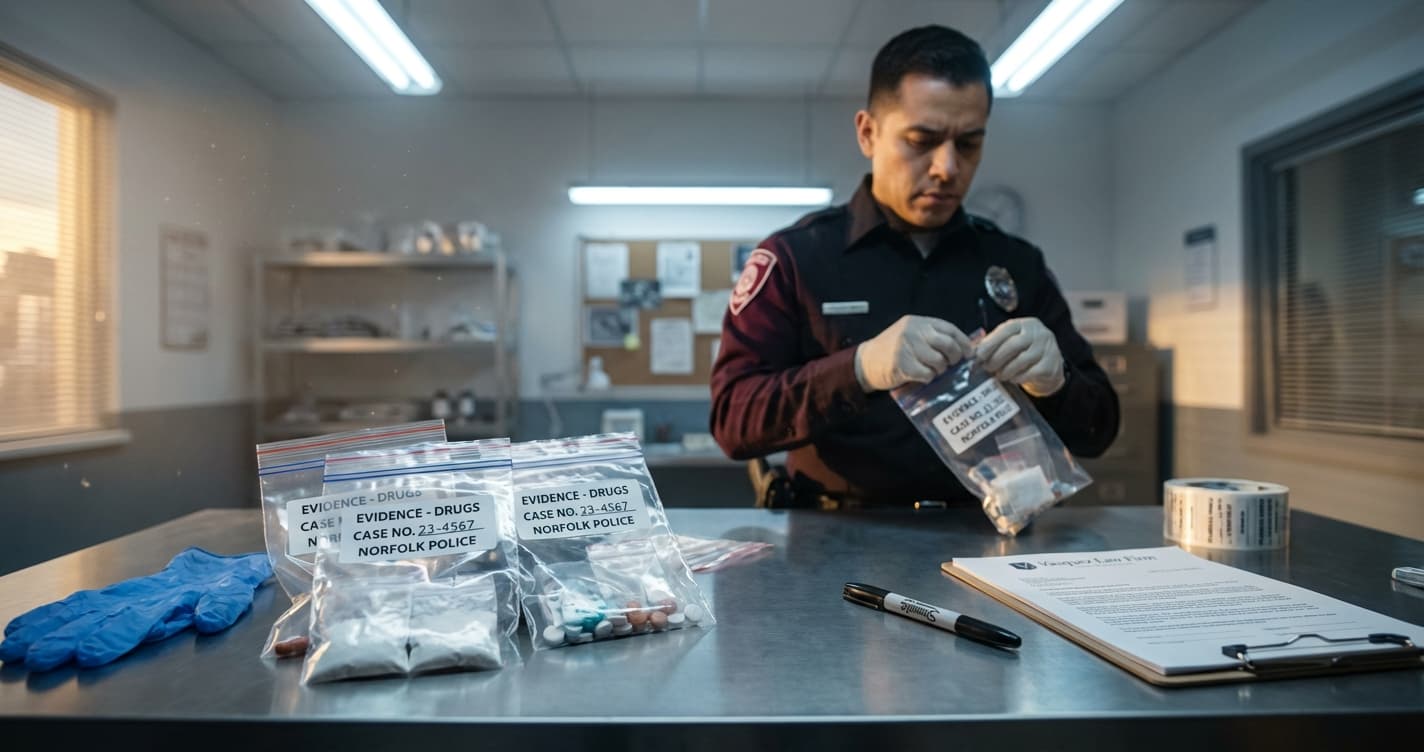
- Chain of custody issues: The prosecution cannot properly account for how the evidence was handled from seizure to trial, raising questions about its integrity.
- Entrapment: Law enforcement induced the defendant to commit a drug offense they would not otherwise have committed.
- Substantial assistance: Providing substantial assistance to law enforcement in investigating or prosecuting other drug crimes can result in a reduction in mandatory minimum sentences in trafficking cases.
Drug Diversion Programs in North Carolina
For first-time and low-level drug offenders, North Carolina offers several diversion alternatives that can keep a conviction off your record:
- Drug Treatment Court: An intensive supervision program combining substance abuse treatment with regular court appearances and drug testing. Successful completion can result in dismissal of charges.
- Deferred Prosecution: Under certain conditions, charges can be deferred pending completion of treatment, community service, or other requirements. Successful completion results in dismissal.
- Conditional Discharge for First Offenders: Under N.C.G.S. § 90-96, first-time offenders charged with simple possession may be eligible for a conditional discharge leading to dismissal and eventual expunction of the record.
Immigration Consequences of Drug Convictions
For non-citizens, drug convictions can have devastating immigration consequences that must be considered alongside the criminal penalties. Drug offenses can make a person deportable, inadmissible to the United States, or ineligible for naturalization. Even some relatively minor drug offenses can trigger immigration consequences. An attorney with expertise in both criminal defense and immigration law is essential for non-citizen defendants.
Vasquez Law Firm: Your North Carolina Drug Defense Attorney
Facing drug charges in North Carolina is a serious matter that demands experienced, aggressive legal representation. At Vasquez Law Firm, our criminal defense attorneys have deep knowledge of North Carolina's drug laws and court systems. We serve clients throughout the state, including Raleigh, Charlotte, Smithfield, and Durham. Our bilingual team provides services in English and Spanish. Contact us today for a free case evaluation. Se Habla Español.
Facing charges? Our criminal defense attorneys can review your case.
Related Topics

William Vasquez
Founder & CEO, Vasquez Law Firm, PLLC
William Vasquez is the founder and CEO of Vasquez Law Firm, PLLC, a results-driven firm specializing in immigration, criminal defense, personal injury, and workers' compensation. A U.S. Air Force veteran and recipient of the Joint Service Achievement Medal, William is dedicated to fiercely fighting for his clients' rights.
Related Legal Services
Need legal help? Learn more about how our defense attorneys can help, or contact us for a free evaluation.
You can also visit defense attorneys serving Johnston and Harnett counties for more information.