What Are Sentencing Rules and How They Apply in 2026
Confused about sentencing rules in 2026? Learn the options, guidelines, and key details with our Raleigh criminal defense team. Contact us for help.
Published on May 15, 2026
Protect your record and your freedom
Free, confidential review. 24/7.
Free & confidential · Se habla espanol · 24/7
Have questions? Talk to an attorney - free evaluation.
Call 1-844-967-3536Protect Your Record and Your Freedom
A confidential case review - available 24/7 for emergencies.
What Are Sentencing Rules and How They Apply in 2026
Sentencing rules determine the penalties a defendant may face after conviction. In 2026, understanding these rules is essential for anyone charged with a crime in Smithfield, NC, or nationwide. This guide explains sentencing guidelines, federal charts, sentencing options, and what to expect during the sentencing process. Whether dealing with local courts or federal charges, knowing sentencing rules helps protect your rights and prepare your defense.
Need help with your case? Our experienced attorneys are ready to fight for you. Se Habla Español.
Or call us now: 1-844-967-3536
Quick Answer
Sentencing rules define how courts decide a defendant's punishment after conviction. They include federal and state guidelines, judge discretion, and sentencing options like imprisonment or probation. In Smithfield and North Carolina, understanding these rules can impact your case outcome substantially.
- Sentencing guidelines help standardize penalties.
- Federal and state charts calculate sentencing ranges.
- Options include fines, probation, imprisonment, and community service.
- Judge discretion is guided but not unlimited.
- Legal counsel is key to navigating sentencing rules.
Understanding Sentencing Rules and Guidelines
Imagine you are charged with a felony in Smithfield, North Carolina. After conviction, the court must decide your sentence. This decision follows specific sentencing rules designed to balance fairness, punishment, and public safety. Sentencing rules are not random; they are based on structured sentencing laws and guidelines from state and federal levels.
In North Carolina, the Structured Sentencing Act, effective since 1994, creates a framework that categorizes offenses by severity and considers prior criminal history. The law sets presumptive sentencing ranges, meaning judges typically follow these ranges unless there’s a solid legal reason to depart.
At the federal level, sentencing is governed by the United States Sentencing Guidelines (USSG), developed to promote consistency across federal courts. This includes a federal sentencing guidelines chart that ranks offenses and offender history. The guidelines recommend a sentence range to the judge but are advisory following the landmark Supreme Court case United States v. Booker, 543 U.S. 220 (2005).
Understanding these guidelines is crucial. For example, the federal sentencing guidelines calculator is a tool used to estimate your potential sentence based on offense level and criminal history. This calculator guides attorneys in advising clients on likely sentencing outcomes.
North Carolina courts use a similar approach, referring to a guidelines sentencing table to assign a sentencing range. Both systems aim to prevent arbitrary sentencing and ensure defendants in Smithfield and across North Carolina are treated fairly.
If you want to review the formal guidelines, the Sentencing Guidelines PDF for North Carolina is available through state resources, while the federal system offers the U.S. Sentencing Commission's official guidelines online.
To learn more about your case and sentencing framework, our criminal defense services provide detailed assistance and representation tailored to your circumstances.
Step-by-Step: What to Expect in Sentencing
- Conviction or Plea: Sentencing begins after a guilty verdict or a plea agreement.
- Presentence Investigation: A probation officer prepares a report detailing your background, offense, and other factors.
- Guidelines Calculation: The court reviews the offense severity and criminal history, often using a sentencing guidelines calculator or table.
- Sentencing Hearing: Both prosecution and defense may present arguments. The judge considers all information before making a decision.
- Sentencing Announcement: The judge states the sentence in court, referencing applicable guidelines and laws.
- Post-Sentencing: Defendants may have the opportunity to appeal or seek modification within allocated timeframes.
Each step requires careful preparation. For instance, the presentence investigation report can affect the sentencing calculation significantly. That is why having knowledgeable representation from Attorney Vasquez is important to ensure accuracy and fairness during these processes.
Sentencing Options and Types Explained
Court sentencing options in North Carolina and federal cases come in various forms. The judge’s choice depends on many factors, including crime type, offender history, and statutory limits.
1. Imprisonment
This is serving time in jail or prison. Sentences can be fixed or within a range. For serious offenses, imprisonment is common and sometimes mandatory depending on the crime.
2. Probation
Probation allows the defendant to remain in the community under supervision instead of jail. Conditions often include regular check-ins, employment requirements, and drug testing.
3. Fines and Restitution
Courts may impose monetary penalties, including court fines or compensation payments to victims. Fines serve as punishment and deterrent.
4. Community Service
This includes court-ordered work benefiting the public and can sometimes accompany probation.
Infographic: The Four Pillars of Sentencing graphic shows that sentencing aims to balance punishment, deterrence, rehabilitation, and public safety.
Understanding these options helps defendants and families prepare for what lies ahead after conviction. Discuss your situation with criminal defense counsel experienced in Smithfield and Raleigh courts.
Common Mistakes in Sentencing Cases
- Ignoring Presentence Reports: Failure to review and correct inaccuracies here can lead to harsher penalties. Fix: Act early with your attorney to verify report facts.
- Overestimating Judge Discretion: Judges often follow guidelines unless reasons exist for departure. Fix: Understand guidelines and build case arguments accordingly.
- Missing Sentencing Deadlines: Deadlines for filing motions or appeals are strict. Fix: Consult your lawyer promptly after sentencing.
- Not Considering Alternatives: Neglecting rehabilitation or community service options can hurt outcomes. Fix: Explore all sentencing possibilities with counsel.
- Poor Legal Representation: Self-representation or inexperienced attorneys can increase risks. Fix: Hire skilled criminal defense lawyers familiar with local sentencing rules.
- Failing to Understand Your Rights: Defendants unaware of plea impacts or sentence consequences face surprises. Fix: Gain informed advice from knowledgeable attorneys.
- Assuming Federal and State Sentencing Are the Same: Differences exist in guidelines, discretion, and penalties. Fix: Clarify jurisdictional rules with your lawyer.
If you only remember one thing: Proper guidance at sentencing stage significantly affects your future freedoms and life opportunities.
Timeline and What to Expect During Sentencing
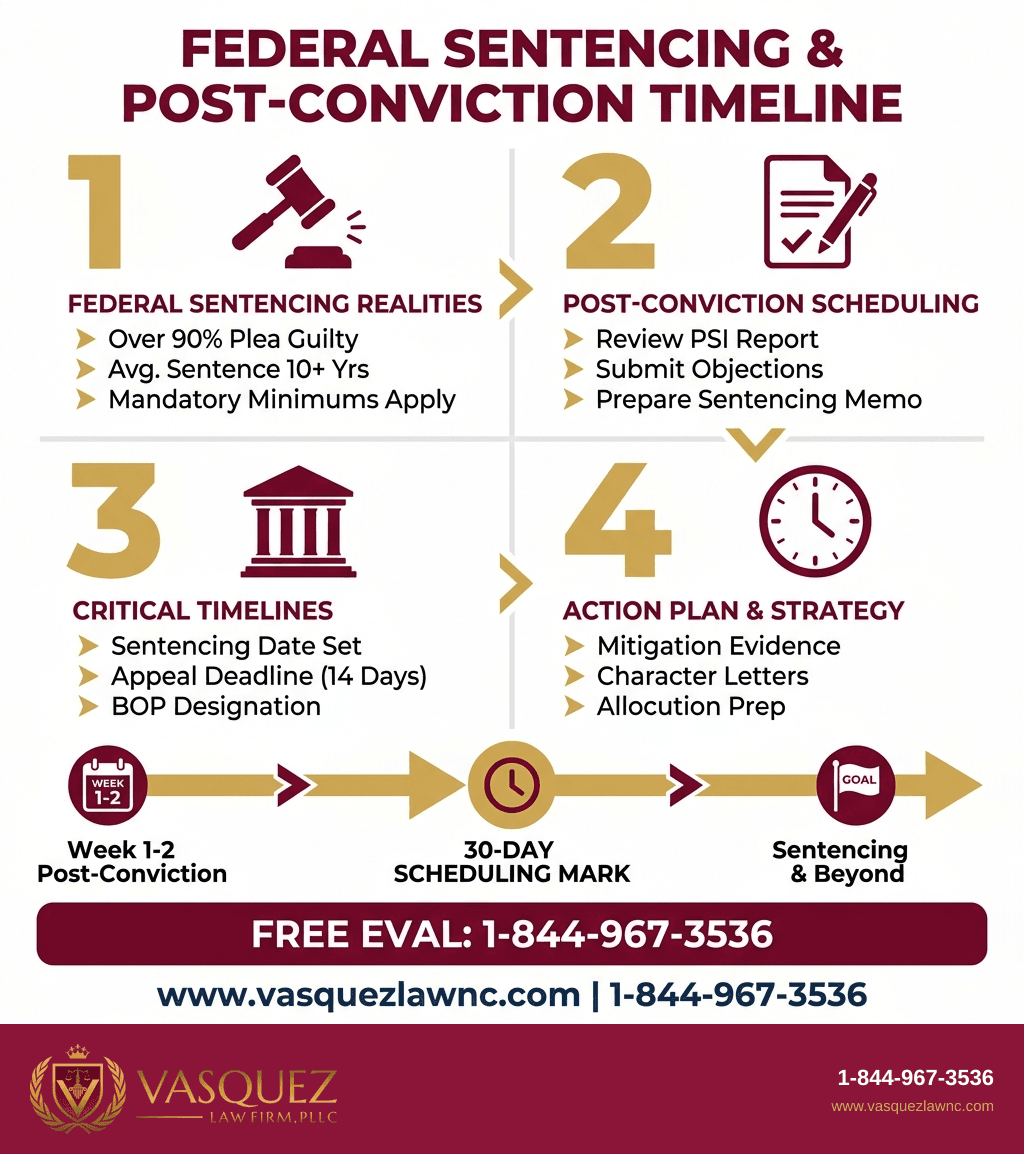
- Week 1-2 Post-Conviction: Court schedules a sentencing date, usually within 30 days after conviction.
- Week 2-4: Presentence investigation report is prepared by probation officers.
- Week 4: Defense can file objections or submit sentencing memoranda.
- Week 5: Sentencing hearing takes place. Judge announces sentence.
- Week 6-8: Defendant can file a notice of appeal within this window.
Cases vary widely, so consult with your lawyer to understand the timeline specific to your Smithfield or Raleigh court.
When to Call a Criminal Defense Lawyer
- Immediately after arrest or charge to review sentencing risks.
- Before pleading guilty to understand consequences and options.
- If you receive a presentence investigation report with errors.
- If the prosecutor recommends a sentence outside guidelines.
- When facing mandatory minimum sentences or habitual offender provisions.
- To explore plea bargains or alternatives to incarceration.
- If you want to appeal or modify a harsh sentence.
- If federal charges are involved requiring specialized knowledge.
NC and Nationwide Sentencing Notes
North Carolina Notes
North Carolina uses the Structured Sentencing Act, which divides crimes into classes A through I. The law includes presumptive sentencing ranges based on prior convictions. Sentencing reforms continue to adjust guidelines to reduce prison populations while maintaining public safety. Sentencing hearings typically happen weeks after conviction in districts like Smithfield and Raleigh. Compliance with procedural rules and timely motions is crucial to avoid harsh penalties.
Nationwide Concepts
Across the U.S., sentencing rules vary but commonly include federal guidelines established by the U.S. Sentencing Commission. The federal chart assigns offense levels and history categories that affect sentencing ranges. State laws differ widely, so it is important to understand local statutes. Generally, sentencing aims to balance punishment, deterrence, rehabilitation, and public safety—often called the four pillars. Always consult local counsel for jurisdiction-specific advice and defense.
About Vasquez Law Firm
At Vasquez Law Firm, we combine compassion with aggressive representation. Our motto "Yo Peleo®" (I Fight) reflects our commitment to standing up for your rights during difficult times. We have served clients facing criminal charges in Smithfield, Raleigh, and throughout North Carolina with over 15 years of experience handling sentencing issues.
- Bilingual Support: Se Habla Español — Our Spanish-speaking attorneys and staff provide personalized assistance.
- Service Areas: Criminal defense services focused on Smithfield and Raleigh with knowledge of both state and federal sentencing laws.
- Experience: Proven track record representing defendants through conviction, sentencing, and appeals.
- Results: We strive to minimize penalties and protect your future through skilled legal advocacy.
Attorney Trust and Experience
Attorney Vasquez holds a JD with 15 years of experience and is admitted to the North Carolina State Bar. Our firm understands the nuances of sentencing in North Carolina courts and federal settings, working closely with clients to secure fair outcomes.
Don't wait to get the help you deserve. Call us now for immediate assistance.
Se Habla Español
Frequently Asked Questions
What are the sentencing rules?
Sentencing rules are the laws and guidelines courts follow to determine penalties after a conviction. These rules include federal and state statutes, guidelines like the USSG, and considerations of the defendant's history and offense details. They aim to ensure fair and consistent sentencing in Smithfield and beyond.
What are the four sentencing options?
The four main sentencing options include probation, fines, imprisonment, and community service. Probation permits supervised freedom, while imprisonment involves jail time. Judges choose based on guidelines and case factors, and sometimes options are combined.
What are the three types of sentencing guidelines?
Sentencing guidelines are categorized as mandatory, advisory, or voluntary. Mandatory guidelines strictly bind judges, advisory ones recommend a range but allow discretion, and voluntary guidelines guide sentencing policy without binding force.
How does the US Sentencing Guidelines chart work?
The federal chart ranks crimes by offense level and categorizes defendants by criminal history. Together, these define a sentencing range. Judges use this as a baseline to promote uniformity across federal courts.
What happens if sentencing guidelines are disputed?
When sentencing guidelines are disputed, judges hold hearings to review facts and arguments. Courts may depart from guidelines for valid legal reasons but must provide written explanations to maintain transparency.
How long does the sentencing process take in North Carolina?
Sentencing timing varies but generally occurs within weeks after a conviction. Presentence reports may delay sentencing for 2-4 weeks. Procedures differ by court complexity.
Can sentencing be appealed in North Carolina?
Sentencing appeals are possible if legal errors are present, such as misuse of guidelines or procedural mistakes. Not all sentences qualify; it’s important to consult an experienced attorney for guidance.
What are the four pillars of sentencing?
The pillars are punishment to address wrongdoing, deterrence to discourage crimes, rehabilitation aimed at offender reform, and public safety to protect communities. These values shape sentencing decisions nationwide.
Sources and References
Take the first step toward justice today. Our team is standing by to help.
Start Your Free Evaluation Now
Call us: 1-844-967-3536
Se Habla Español - Estamos aquí para ayudarle.


William Vasquez
Founder & CEO, Vasquez Law Firm, PLLC
William Vasquez is the founder and CEO of Vasquez Law Firm, PLLC, a results-driven firm specializing in immigration, criminal defense, personal injury, and workers' compensation. A U.S. Air Force veteran and recipient of the Joint Service Achievement Medal, William is dedicated to fiercely fighting for his clients' rights.
Related Legal Services
Need legal help? Learn more about speak with a criminal defense lawyer, or contact us for a free evaluation.
You can also visit North Carolina criminal defense lawyers for more information.