What Happens If You Are Involved in a High-Speed Chase in 2026
Are you facing charges after a high-speed chase in 2026? Learn what happens, possible penalties, and how to protect your rights. Call Vasquez Law now.
Published on May 13, 2026
Protect your record and your freedom
Free, confidential review. 24/7.
Free & confidential · Se habla espanol · 24/7

Have questions? Talk to an attorney - free evaluation.
Call 1-844-967-3536Protect Your Record and Your Freedom
A confidential case review - available 24/7 for emergencies.
What Happens If You Are Involved in a High-Speed Chase in 2026
High-speed chases can quickly escalate into dangerous situations that lead to serious legal charges in Smithfield, North Carolina, and Florida. If you're involved in a high-speed chase, understanding what the law considers a high-speed chase, who can be charged, and what legal consequences you face is critical. This guide explains how high-speed chases are treated under North Carolina law in 2026, common charges such as reckless driving or drug offenses, and steps you should take if arrested after a high-speed chase. Protect your rights with help from experienced criminal defense attorneys at Vasquez Law Firm.
Need help with your case? Our experienced attorneys are ready to fight for you. Se Habla Español.
Or call us now: 1-844-967-3536
Quick Answer
A high-speed chase involves fleeing police at dangerous speeds, which can lead to charges like reckless driving or eluding law enforcement in Smithfield, NC. Passengers usually aren’t charged unless involved. Convictions can result in prison time, fines, and a permanent criminal record.
- Typically means escaping police at 20+ mph over limits
- Can lead to felony or misdemeanor charges
- Passengers generally not charged unless aiding
- Penalties include prison, fines, license suspension
- Charged under North Carolina or Florida statutes
Understanding a High-Speed Chase
In Smithfield, North Carolina, a high-speed chase is typically considered when a driver knowingly flees or attempts to elude a law enforcement officer while driving at speeds well above the posted limits. For example, if a driver exceeds the speed limit by 20 miles per hour or more and ignores police signals to stop, it can trigger pursuit and criminal charges. The law classifies this as "reckless driving" under N.C. Gen. Stat. § 20-140 and "eluding arrest" under N.C. Gen. Stat. § 14-218.1.
Florida law has similar provisions under F.S. § 316.1937, which defines fleeing or attempting to elude a law enforcement officer. Both states prioritize public safety when prosecuting such cases, especially as high-speed chases put passengers, pedestrians, and other drivers in danger.
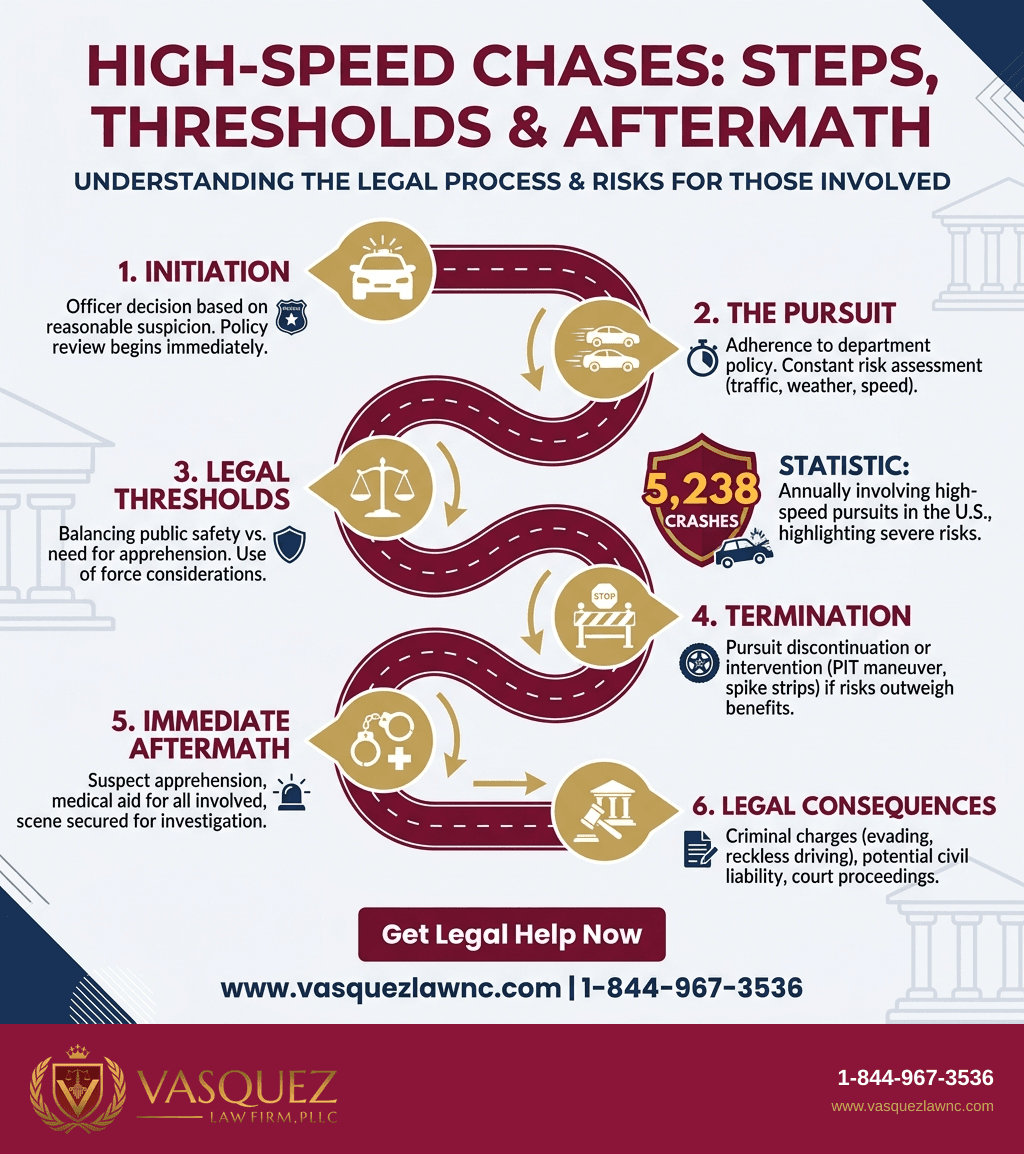
High-speed chases are not only about the speed but also the intent and risk posed to the public. Law enforcement agencies often weigh the potential danger of the chase against the necessity of apprehending the suspect, sometimes terminating pursuits if the risk becomes too great. This balancing act aims to minimize harm to innocent bystanders while enforcing the law effectively.
Moreover, technology such as GPS tracking and helicopters is increasingly used to monitor suspects without engaging in dangerous pursuits. This shift reflects a growing awareness of the hazards associated with high-speed chases and an effort to reduce accidents and fatalities.
Understanding these legal and tactical considerations is crucial for anyone involved in or charged with offenses related to high-speed chases, as they affect how cases are investigated and prosecuted.
What Qualifies as High Speed?
While no universal speed defines a high-speed chase, law enforcement and courts often consider 20 mph or more over the speed limit as a practical threshold for reckless driving during a chase. Other factors include road conditions, traffic, and the driver’s conduct.
For example, a driver traveling 50 mph in a 30 mph zone while fleeing police would likely be considered engaging in a high-speed chase. However, context matters; driving 15 mph over the limit in heavy traffic might be viewed as equally dangerous due to the increased risk of accidents. Courts examine whether the speed and manner of driving created a substantial risk to others on the road.
In some cases, even speeds lower than 20 mph over the limit can qualify if combined with other reckless behaviors, such as running red lights, weaving through traffic, or driving on the wrong side of the road. These factors compound the danger and influence charges and penalties.
Role of Passengers in a Chase
Passengers in a vehicle involved in a high-speed chase are typically not criminally liable simply for being there. However, if authorities can prove that a passenger encouraged the driver to flee or participated in other crimes, they may face charges. This distinction is crucial in Smithfield cases where multiple individuals are present during a pursuit.
For instance, if a passenger is found to be directing the driver to evade police or providing the driver with drugs or weapons, they may be charged with accessory offenses or conspiracy. Conversely, a passenger who is simply a victim or unaware of the driver’s intent generally will not face legal consequences. Passengers should be cautious about their actions and statements during and after a chase, as these can impact their liability.
In some scenarios, passengers who attempt to interfere with law enforcement—such as attempting to escape from the vehicle, physically obstructing officers, or providing false information—may also face charges. Understanding the limits of passenger liability is important for anyone caught in such situations.
How Speed Chases End
High-speed chases often end with the driver being arrested after the vehicle is stopped or crashes. The consequences depend on many factors, including damage, injuries, and any additional criminal activity discovered during or after the chase.
Typically, law enforcement may use tactics such as spike strips, roadblocks, or pursuit termination protocols to safely end a chase. In some cases, the pursuit may end when the vehicle runs out of fuel or the driver voluntarily stops. Unfortunately, many chases end in crashes that can cause serious injuries or fatalities to the driver, passengers, officers, or innocent bystanders.
After the chase concludes, police conduct thorough investigations, including vehicle searches and evidence collection, which may uncover drugs, weapons, or outstanding warrants. These findings can lead to additional charges beyond the initial pursuit-related offenses. The severity of consequences often correlates with the extent of harm caused and the driver’s criminal history.
Step-by-Step: What to Do If You're Involved
- Stay Calm and Pull Over When Safe: If you are the driver, safely stop the vehicle as soon as possible after police signal you. Passengers should remain calm and avoid interfering.
- Follow Police Instructions: Keep your hands visible, avoid sudden movements, and comply with officers’ commands to prevent escalation.
- Do Not Admit Guilt: Avoid making statements that could be used against you later. It is best to remain respectful but silent when asked about the chase.
- Gather Information: Note details such as officers’ names, badge numbers, and any witnesses if you can safely do so after the incident.
- Contact a Criminal Defense Attorney: Reach out to skilled lawyers experienced in high-speed chase cases in North Carolina or Florida, like those at Vasquez Law Firm, to protect your rights and build your defense.
Why Early Legal Help Matters
After arrest, prompt consultation allows your attorney to investigate evidence, challenge improper police conduct, and explore defenses that may reduce or dismiss charges.
Early legal intervention is especially important in high-speed chase cases because the evidence can include dashcam footage, eyewitness accounts, and technical data such as GPS tracking. An experienced attorney can scrutinize this evidence for inconsistencies or violations of your rights during the stop and arrest.
Moreover, a lawyer can advise you on interactions with law enforcement and prosecutors, helping to avoid self-incrimination. They can also negotiate with prosecutors to explore plea bargains or alternative sentencing options, which can be critical given the serious nature of these offenses.
Preparing for Court
Your defense lawyer will guide you through the pretrial process, hearings, and any plea negotiations or trial proceedings. Understanding the criminal justice timeline can help alleviate stress.
This preparation includes gathering character references, medical or psychological evaluations if applicable, and developing a strategy tailored to the specifics of your case. Your attorney may also work to suppress unlawfully obtained evidence or challenge the legality of the police pursuit itself.
Being proactive in court preparation can improve outcomes significantly. For example, demonstrating remorse, cooperating with the court, or participating in counseling programs may influence sentencing decisions positively. Your lawyer will keep you informed at every stage to empower you through the process.
Common Charges and Legal Consequences
A high-speed chase can bring multiple criminal charges depending on circumstances. Here are common charges seen in cases from Smithfield and surrounding counties:
- Reckless Driving: Violating speed limits and driving dangerously under N.C. Gen. Stat. § 20-140.
- Eluding Arrest: Intentionally fleeing a police officer under N.C. Gen. Stat. § 14-218.1 or F.S. § 316.1937.
- Possession of Controlled Substances: Drug charges if police discover drugs during or after the chase.
- Assault with a Deadly Weapon: Charged if the chase causes injury to others, including pedestrians or other drivers.
- Endangering Public Safety: Additional charges for reckless conduct putting the public at risk.
Besides these common charges, prosecutors may also pursue related offenses such as driving with a revoked license, resisting arrest, or property damage if the chase results in crashes. Each charge carries its own set of penalties and can compound the overall legal consequences.
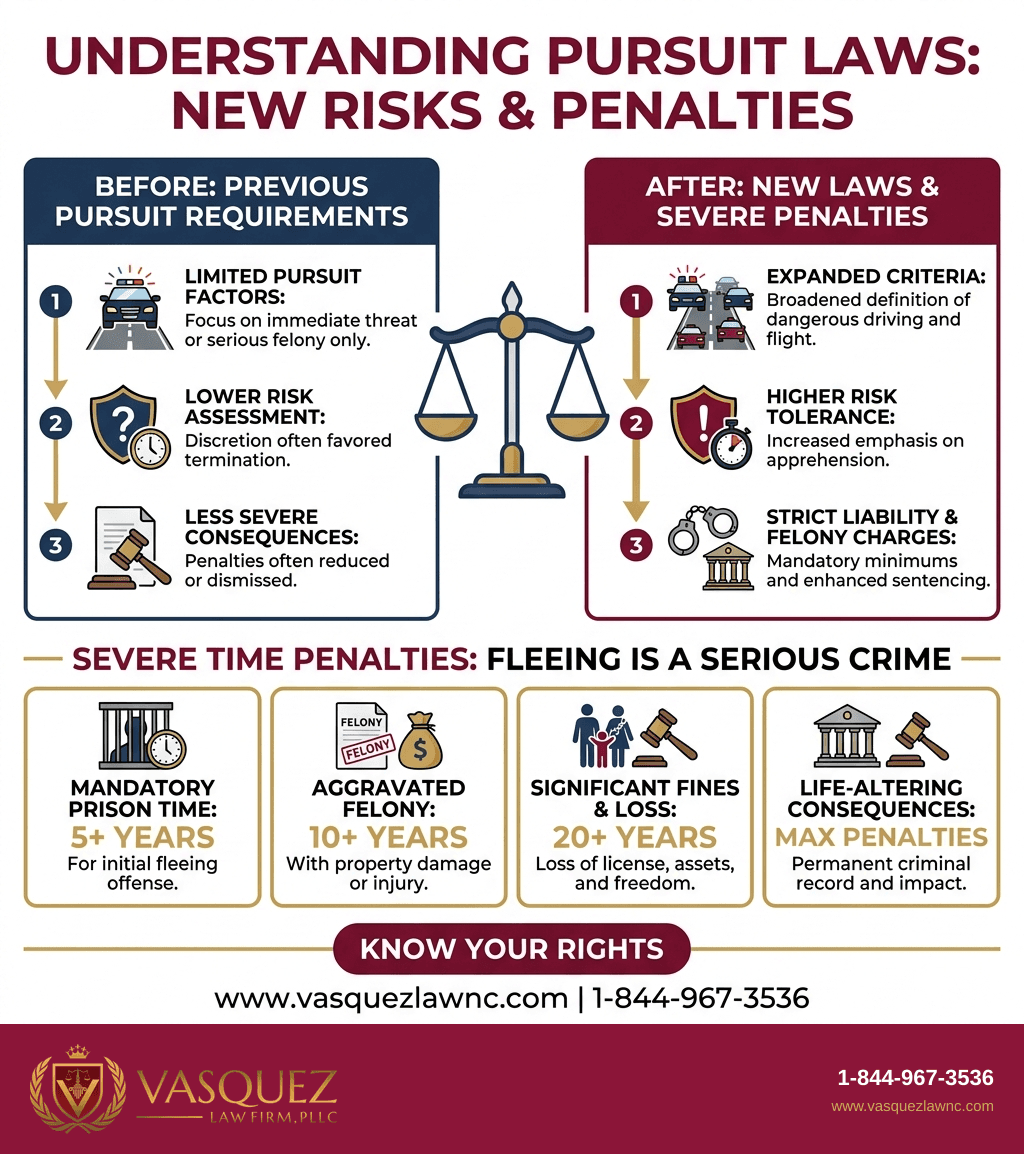
In some instances, if the driver has a prior criminal record or previous traffic offenses, sentencing may be harsher. Repeat offenders often face mandatory minimum sentences or enhanced penalties, reflecting the court’s interest in deterring dangerous behavior.
Penalties Overview
Penalties differ based on severity, but can include fines, license suspension, community service, probation, and jail time. For example, fleeing law enforcement in North Carolina is a Class 1 misdemeanor, punishable by up to 120 days in jail or fines. When injuries occur, felony charges with longer imprisonment and higher fines apply.
In Florida, eluding law enforcement can be a third-degree felony if the suspect causes injury or death. This can mean imprisonment for up to five years, substantial fines, and permanent criminal records. Additionally, courts may impose license revocation periods that extend for years, affecting employment and daily life.
Probation options may be available in some cases, often requiring compliance with strict conditions such as community service, drug testing, or attending driving safety courses. Failure to meet these conditions can result in revocation and imposition of jail sentences.
Charges Against Passengers
Passengers are generally not charged unless they help facilitate the crime. For example, a passenger distracting officers or supplying drugs to the driver could face separate charges.
In a notable example, a passenger who handed a weapon to the driver during a chase was charged with accessory to assault with a deadly weapon. Conversely, passengers who remain passive and do not interfere or engage in criminal activity typically avoid prosecution.
It is important for passengers to understand their rights and avoid incriminating themselves during police encounters. Remaining silent and cooperating respectfully can reduce risks, but legal counsel should be sought promptly to navigate any potential charges.
Timeline of a High-Speed Chase Case
- Day 1: Arrest and booking following the chase.
- Week 1-2: Initial court appearance and bail hearing.
- Month 1-3: Discovery and pretrial motions by defense and prosecution.
- Month 4+: Trial or plea negotiation to resolve the case.
- Post-trial: Sentencing or appeals if applicable.
Each case timeline varies depending on court backlog, complexity, and cooperation from involved parties.
Additional steps may include forensic testing of evidence, interviews with witnesses, and expert testimony preparation. Delays are common due to the need for thorough investigation and scheduling conflicts. It is important for defendants to stay in contact with their attorneys and attend all scheduled court dates to avoid further complications.
After sentencing, defendants may have the option to appeal convictions or seek post-conviction relief based on new evidence or legal errors. Understanding the timeline helps in setting realistic expectations and planning for possible outcomes.
Frequently Asked Questions
What is considered a high-speed chase?
A high-speed chase is when a driver flees police at dangerous speeds, usually exceeding speed limits by 20 mph or more. It is treated as reckless driving or eluding law enforcement under North Carolina law, carrying serious penalties. The definition also considers the driver’s intent to evade capture, the risk posed to public safety, and other reckless behaviors during the pursuit, such as running red lights or driving against traffic. These factors together determine whether authorities classify an incident as a high-speed chase.
Do passengers get charged in a high-speed chase?
Passengers normally are not charged unless they actively assist the driver or commit additional crimes such as drug offenses during the chase. Mere presence does not usually lead to charges. However, if a passenger encourages the driver to flee, provides illegal substances or weapons, or interferes with law enforcement, they may face accessory or conspiracy charges. It is essential for passengers to avoid involvement in any illegal activity and to cooperate with authorities to reduce legal risks.
What happens if you get hit by a car in a high-speed chase?
Victims hit during a chase can file personal injury claims and the fleeing driver may face assault charges. Injuries increase the severity of criminal penalties against the driver. In addition to criminal prosecution, victims may seek compensation through civil lawsuits for medical expenses, pain and suffering, lost wages, and other damages. High-speed chase incidents resulting in injury often lead to more severe charges such as reckless endangerment or vehicular assault, reflecting the heightened danger to public safety.
How many years can a high-speed chase sentence involve?
Penalties range widely. North Carolina’s penalties for eluding police include up to 3 years imprisonment. Additional felony convictions can increase time significantly. In Florida, sentences can extend up to 5 years or more if the chase results in injury or death. Repeat offenders or those with prior criminal records may face enhanced sentences. Sentencing also depends on factors like the presence of drugs, weapons, or other aggravating circumstances during the chase.
Can you be arrested after a high-speed chase without being the driver?
Yes, but only if there is evidence you aided or encouraged the chase or committed another crime. Otherwise, passengers are generally not arrested just for being present. For example, a passenger providing instructions to evade police or supplying contraband may be arrested. Law enforcement must establish involvement beyond mere presence to justify arresting non-drivers. Legal counsel is critical in these situations to protect your rights and clarify your role in the incident.
What charges often accompany a high-speed chase?
Charges often include reckless driving, eluding police, drug possession, assault with a deadly weapon, and endangering public safety. Additional offenses may involve resisting arrest, driving with a suspended license, or property damage resulting from the chase. The exact charges depend on the circumstances, evidence gathered, and any harm caused. Prosecutors may pursue multiple charges to address the full scope of criminal conduct.
How can a criminal defense lawyer help after a high-speed chase?
An attorney can review the case, challenge evidence, negotiate charges, and help build a defense to minimize penalties or avoid conviction. They assess whether police followed proper procedures, identify constitutional violations, and explore defenses such as mistaken identity or lack of intent. A skilled lawyer also advises on plea bargains and represents you in court, advocating for the best possible outcome given the facts of your case.
What should I do immediately after being stopped following a high-speed chase?
Stay calm, comply with police instructions, do not admit guilt, and contact a criminal defense lawyer promptly to protect your rights. Avoid making statements or signing documents without legal advice. If you are a passenger, remain respectful and avoid interfering. Collecting information about the officers and any witnesses, if possible, can be helpful for your defense. Prompt legal representation ensures your case is handled properly from the outset.
About Vasquez Law Firm
At Vasquez Law Firm, we combine compassion with aggressive representation. Our motto "Yo Peleo®" (I Fight) reflects our commitment to standing up for your rights.
- Bilingual Support: Se Habla Español — Spanish-speaking attorneys and staff available
- Service Areas: Criminal defense in Johnston and Harnett counties, NC; immigration nationwide, including Florida
- Experience: Over 30 years helping clients navigate complex legal matters
- Results: Thousands of successful cases across multiple practice areas
Attorney Trust and Experience
William J. Vásquez is admitted to the North Carolina State Bar (2011) and to the U.S. Courts of Appeals for the 4th, 5th, 6th, and 11th Circuits. Florida-jurisdiction matters at the firm are handled by Florida Bar attorney Alekssandra Lopez. The firm has provided dedicated legal representation since 2011, with personalized attention to each client's case.
Don't wait to get the help you deserve. Call us now for immediate assistance.
Se Habla Español
Sources and References
Take the first step toward justice today. Our team is standing by to help.
Start Your Free Evaluation Now
Call us: 1-844-967-3536
Se Habla Español - Estamos aquí para ayudarle.
If you need legal assistance, learn more about criminal defense lawyers in North Carolina, or call us at 1-844-967-3536 for a free evaluation.


William Vasquez
Founder & CEO, Vasquez Law Firm, PLLC
William Vasquez is the founder and CEO of Vasquez Law Firm, PLLC, a results-driven firm specializing in immigration, criminal defense, personal injury, and workers' compensation. A U.S. Air Force veteran and recipient of the Joint Service Achievement Medal, William is dedicated to fiercely fighting for his clients' rights.
Related Legal Services
Need legal help? Learn more about criminal defense lawyers in North Carolina, or contact us for a free evaluation.
You can also visit criminal defense services in Johnston and Harnett counties for more information.