What Happens If You Self-Deport in 2026? Key Facts
Wondering what happens if you self-deport? Learn the self-deportation process, consequences, and how to protect your rights. Call for a free consult.
Published on April 12, 2026
Talk to an immigration attorney
Free call. A clear plan for your case.
Free & confidential · Se habla espanol · 24/7

Have questions? Talk to an attorney - free evaluation.
Call 1-844-967-3536Check your case status now
Look up your immigration case below, then talk to an attorney about what it means — free.
Questions about your result?
Talk to an attorney about your case — free, no obligation.
What Happens If You Self-Deport in 2026? Key Facts
Self-deportation is a controversial topic among immigrants, especially those in Raleigh and across North Carolina and Florida, considering their options in 2026. Many Dreamers and others face pressure to leave the U.S. voluntarily, but the self-deportation process has legal risks and consequences. Knowing what happens if you self-deport and how to handle this can protect your future. Vasquez Law Firm offers bilingual, knowledgeable support to help you understand your rights and options before making any decisions.
Need help with your case? Our experienced attorneys are ready to fight for you. Se Habla Español.
Or call us now: 1-844-967-3536
Quick Answer
Self-deportation means voluntarily leaving the U.S. without formal removal. It avoids detention but can cause reentry bans and harm future immigration options.
- May avoid detention or deportation proceedings
- Typically does not provide financial benefits
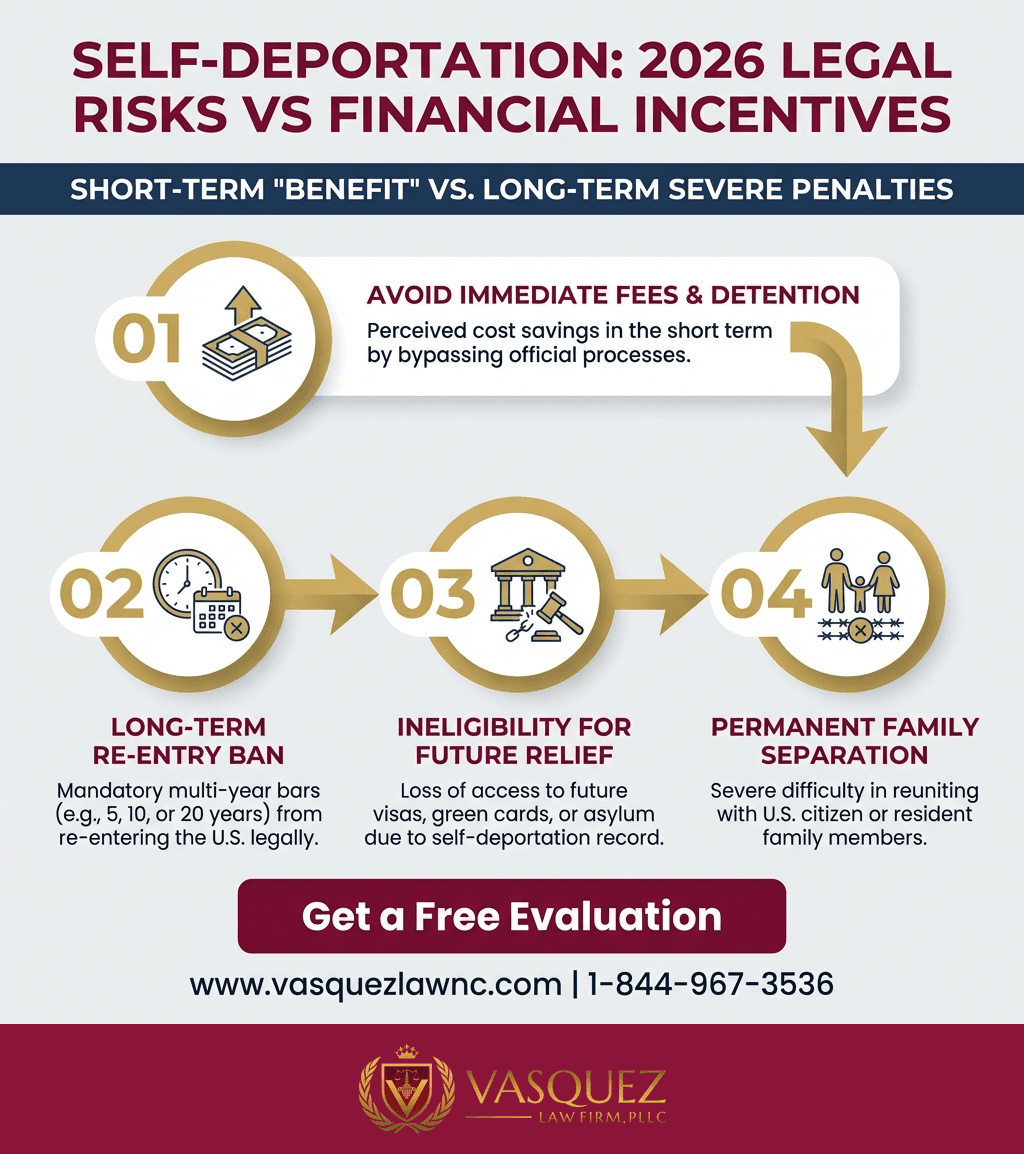
- Can result in multi-year reentry bans
- Impacts ability to apply for visas or adjustment
- Legal risks are significant; consult an attorney
Understanding Self-Deportation
Imagine a situation where an undocumented immigrant in Raleigh receives a notice to appear in immigration court. To avoid detention, they consider leaving the country voluntarily. This option is referred to as self-deportation, where a person chooses to leave without a formal removal order. In 2026, self-deportation remains a complex and risky process.
The term "self-deportation" refers to the voluntary departure of a person from the United States. Unlike forced removal, or deportation, self-deporting means choosing to leave, often to avoid being detained by immigration authorities. While this might sound like a straightforward way to handle immigration issues, the consequences can be severe.
U.S. immigration laws, including the Immigration and Nationality Act (INA), provide frameworks for voluntary departure but these come with specific requirements and legal implications. Voluntary departure within certain timeframes may permit a lawful exit without some penalties, but not all self-deportations follow these rules.
Many immigrants, especially Dreamers in North Carolina and Florida, wonder whether self-deportation is their best option. The reality is that self-deportation usually results in a bar on reentry for several years, often from three to ten. Additionally, leaving without legal advice or proper paperwork can lead to significant issues with future immigration benefits.
Navigating this complicated matter requires expert guidance. Our immigration services in Raleigh can help you understand if there are better alternatives to self-deportation suited to your case.
Step-by-Step: How the Self-Deportation Process Works
Consider Juan, who is undocumented and wants to leave the U.S. voluntarily to avoid a deportation order that might harm his chance of future reentry. How does the self-deportation process work exactly in 2026?
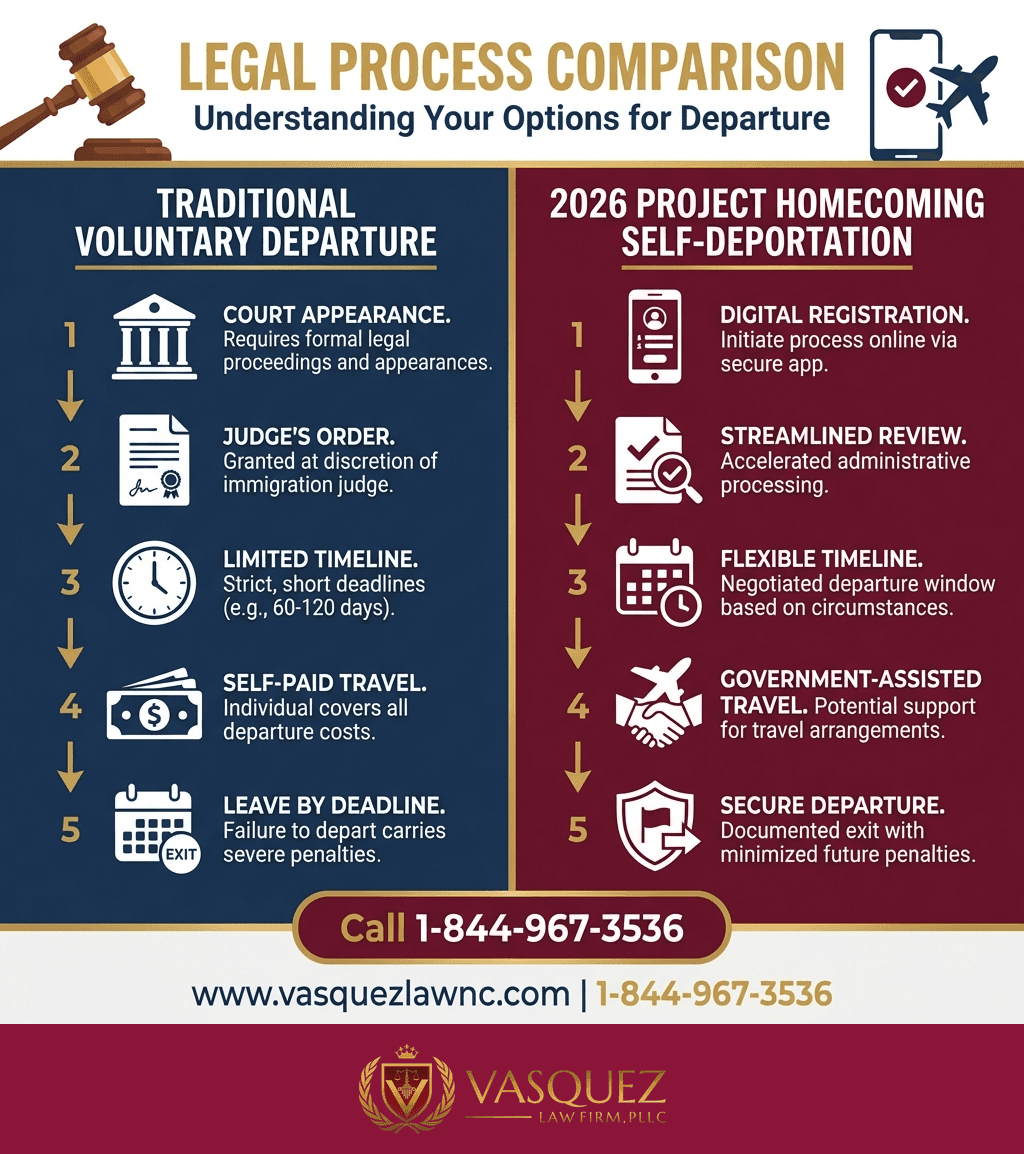
- Decision to Leave Voluntarily: The immigrant decides to leave the U.S. before removal proceedings begin or while they are ongoing.
- Voluntary Departure Request (Optional): Sometimes, the individual can request voluntary departure through immigration court or ICE. Approval is required, and conditions apply.
- Departure Within Set Timeframe: If granted voluntary departure, the person must leave the U.S. within a specific period, usually 60-120 days.
- Leaving the Country: The immigrant departs on their own accord, without coercion.
- Consequences Trigger: After departure, reentry bars may apply, potentially lasting years depending on immigration history.
- Future Applications Affected: Self-deportation can impact future applications for visas, green cards, or adjustment of status.
Many do not formally request voluntary departure but simply leave, which can lead to deportation orders issued in absentia and more severe penalties. To avoid this, some immigrants use resources like the CBP Home self-deportation website, which provides information and phone numbers to assist in voluntary departure cases.
The Vasquez Law Firm attorneys encourage clients to seek professional advice before making decisions about self-deporting. We can guide you through legal forms such as the self-deportation form when applicable and explain the official self-deportation phone number for resources.
Common Mistakes to Avoid When Considering Self-Deportation
Several immigrants face serious consequences due to common mistakes during self-deportation. Here are mistakes and how to avoid them:
- Leaving Without Legal Advice: Many leave impulsively, unaware of long-term consequences. Always consult an attorney first.
- Not Requesting Voluntary Departure Officially: Walking away without filing proper paperwork increases risk of in absentia deportation orders.
- Misinformation from Unofficial Sources: Relying on unreliable websites or social media can cause costly errors.
- Failing to Understand Reentry Bans: Some do not realize self-deportation may bar them from returning for years.
- Ignoring Future Immigration Plans: Self-deportation may disqualify you from relief options, adjustment, or visas.
- Not Documenting Departure Dates: Missing proof of departure can complicate your immigration record.
- Assuming Immediate Reentry is Allowed: U.S. Customs and Border Protection usually enforces strict bans after self-deportation.
If you only remember one thing: Never attempt self-deportation without consulting a qualified immigration attorney who can evaluate your case and discuss possible alternatives that preserve your rights.
Timeline: What to Expect If You Choose Self-Deportation
On average, self-deportation timelines vary based on your circumstances. Here is a typical timeline for voluntary departure:
- Immediately: Decision to self-deport made, ideally after legal consultation.
- Within 30 Days: If applying for voluntary departure, file request with immigration court or ICE.
- Within 60-120 Days: Expected to leave the U.S. after approval.
- Within 1-3 Years After Departure: Face possible reentry bans lasting 3, 5, or 10 years depending on violation type.
- Ongoing: Consult an immigration lawyer to assess timing for eligibility to return and apply for visas or other relief.
Immigrants considering self-deportation should prepare for delays and legal hurdles. Vasquez Law Firm can help establish a clear timeline tailored to your case, so you know what happens and when.
Costs and Fees: What Impacts the Price of Self-Deportation Advice
Self-deportation itself does not require government fees, but legal advice and filing voluntary departure requests may involve costs such as:
- Attorney consultation and representation fees
- Travel expenses to depart the country
- Potential fines or penalties for overstaying
- Costs if removal orders issue in your absence
- Costs associated with reapplying for visas or other relief after reentry bans
Working with experienced immigration attorneys reduces risk of costly mistakes or unexpected charges. At Vasquez Law Firm, we offer transparent pricing and free initial consultations to explain what to expect.
Common Mistakes and How to Avoid Them
- Leaving without consulting a lawyer - Fix: Schedule a free evaluation with an immigration attorney early.
- Ignoring paperwork requirements - Fix: File voluntary departure requests if eligible.
- Assuming self-deportation erases future immigration problems - Fix: Understand reentry bans and bars carefully.
- Failing to document departure - Fix: Keep proof of exit from the U.S. for future applications.
- Relying on unverified information - Fix: Use official government websites such as USCIS and CBP.
- Self-deporting while involved in pending immigration cases - Fix: Discuss options with an attorney before leaving.
- Not preparing for reentry bans - Fix: Plan ahead with lawyers to time return applications correctly.
NC, FL, and Nationwide Notes
North Carolina Notes
In North Carolina, immigrants often face local ICE enforcement actions. Our Raleigh office offers immigration legal services including deportation defense and voluntary departure advice. State and local laws do not alter federal deportation rules, but local resources can assist.
Florida Notes
Florida has a large immigrant population, and enforcement can be aggressive. Many immigrants explore self-deportation options due to fear of detention. Vasquez Law Firm provides bilingual immigration legal help to residents across Florida with self-deportation questions and alternatives.
Nationwide Concepts
Self-deportation is governed by federal immigration laws, including statutes under the INA and regulations from USCIS and EOIR. The process and consequences are consistent nationwide, though local enforcement priorities vary. Always seek federal legal guidance when considering self-deportation.
When to Call a Lawyer Now
- You received a Notice to Appear (NTA) in immigration court
- ICE or border agents have contacted or detained you
- You are considering self-deportation without legal advice
- You want to file for voluntary departure or relief from removal
- You fear reentry bans may impact your future immigration plans
- You’re a Dreamer or protected immigrant unsure of your status
- You have pending immigration applications or petitions
- You want to avoid costly or irreversible mistakes
About Vasquez Law Firm
At Vasquez Law Firm, we combine compassion with aggressive representation. Our motto "Yo Peleo" (I Fight) reflects our commitment to standing up for your rights.
- Bilingual Support: Se Habla Español - our team is fully bilingual
- Service Areas: North Carolina, Florida, and nationwide immigration services
- Experience: Over 30 years helping clients navigate complex legal matters
- Results: Thousands of successful cases across multiple practice areas
Attorney Trust and Experience
Attorney Vasquez holds a Juris Doctor degree and is admitted to practice in both the North Carolina State Bar and Florida Bar. With over 30 years of dedicated legal experience, he has built a reputation for providing personalized attention and achieving favorable outcomes for his clients.
Don't wait to get the help you deserve. Call us now for immediate assistance.
Se Habla Español
Frequently Asked Questions
What happens if you self-deport?
If you self-deport, it means you voluntarily leave the United States without being formally removed by immigration authorities. This can affect your future ability to return legally, as leaving without proper documentation or notice may result in penalties or bans. Self-deportation might avoid detention but still carries risks to your immigration status.
How much do you get for self-deportation?
There is no government benefit or payment for self-deportation. Any financial support provided is typically linked to specific immigration relief programs or voluntary departure terms, but self-deporting on your own does not come with compensation. It is important to check your specific case with an immigration attorney.
Is there a benefit to self-deporting?
Self-deporting may avoid formal removal proceedings or detention, but it has serious drawbacks. It can create reentry bans, bar future visas, and negatively impact applications for relief or legalization. The risks often outweigh any perceived benefits. Legal guidance is essential to understand your options.
Can you come back to the U.S. after voluntary deportation?
Returning to the U.S. after voluntary deportation depends on the terms of departure and your immigration status. Often, there are reentry bans of 3 to 10 years. You generally must wait out any bars before applying for a visa or admission. Consulting an immigration lawyer can clarify your timeline and chances.
What is the self-deportation process?
The self-deportation process usually involves voluntarily leaving the U.S. without enforcement action. Sometimes it includes filing a voluntary departure request or using CBP Home's self-deportation program for certain noncitizens. Each case is unique, so understand your options and proper legal steps before acting.
Is self-deportation working in 2026?
Self-deportation remains controversial and not usually recommended as a strategy in 2026. It rarely solves immigration problems and may close doors for future legal stays. Proper legal consultation is critical to avoid costly mistakes and explore better solutions like relief or adjustment of status.
Where can I find the self-deportation form or phone number?
There is no universal self-deportation form. Some voluntary departure requests are made through immigration court or ICE, and CBP Home sometimes offers phone assistance. Contact qualified immigration attorneys for current forms, guidance, and official phone contacts rather than relying on unofficial sources.
What are the consequences of self-deportation?
Consequences include reentry bans, inability to apply for certain immigration benefits, and potential loss of future relief options. Self-deporting without legal advice may lead to permanent bars or inadmissibility. Understand federal laws and consult experienced attorneys to handle your case carefully.
Sources and References
- U.S. Citizenship and Immigration Services
- Executive Office for Immigration Review
- Legal Information Institute
Take the first step toward justice today. Our team is standing by to help. Se Habla Español.
Start Your Free Evaluation Now
Call us: 1-844-967-3536
Se Habla Español - Estamos aquí para ayudarle.

William Vasquez
Founder & CEO, Vasquez Law Firm, PLLC
William Vasquez is the founder and CEO of Vasquez Law Firm, PLLC, a results-driven firm specializing in immigration, criminal defense, personal injury, and workers' compensation. A U.S. Air Force veteran and recipient of the Joint Service Achievement Medal, William is dedicated to fiercely fighting for his clients' rights.
Related Legal Services
Need legal help? Learn more about speak with an immigration lawyer, or contact us for a free evaluation.
You can also visit North Carolina immigration lawyers for more information.