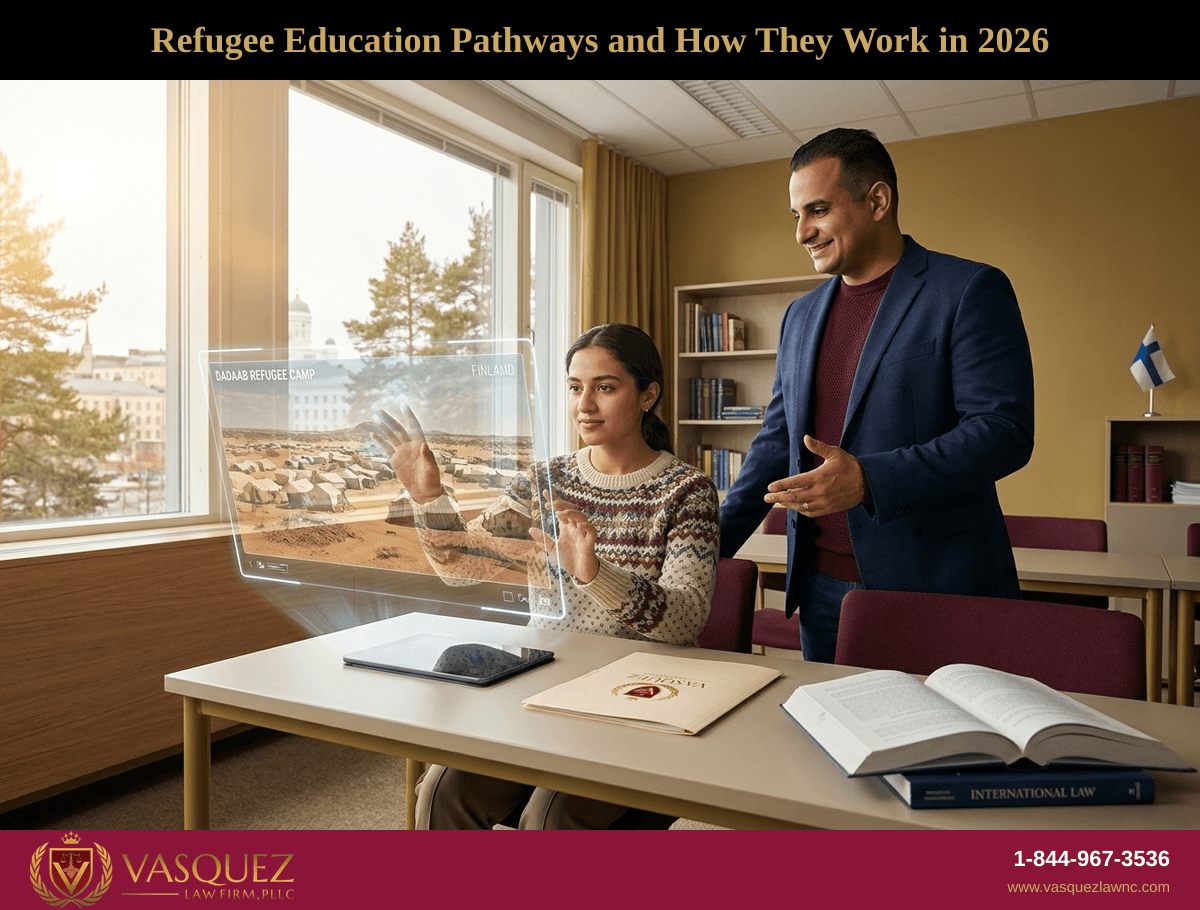
Refugee Education Pathways and How They Work in 2026
Understand refugee education pathways in 2026. Discover how education helps refugees and the key steps to take. Contact Vasquez Law for guidance.
Published on May 14, 2026
Talk to an immigration attorney
Free call. A clear plan for your case.
Free & confidential · Se habla espanol · 24/7
Have questions? Talk to an attorney - free evaluation.
Call 1-844-967-3536Worried how the latest immigration news affects you?
Schedule a confidential case review with an immigration attorney - know exactly where you stand.
USCIS Case Status
Check your USCIS case status
Enter your receipt number and get the official status. Free, no registration.
Refugee Education Pathways and How They Work in 2026
Refugee education pathways open doors for displaced people seeking safety and growth through learning. In 2026, refugees arriving in Orlando and other U.S. cities can access complementary education programs that help integrate them socially and economically. This article explains the available education pathways for refugees, including formal schooling, vocational training, and higher education. With recognized challenges like language barriers and limited resources, it’s vital to understand how to navigate these options. Vasquez Law Firm supports refugees and immigrant communities in North Carolina and Florida by offering trusted immigration legal services.
Need help with your case? Our experienced attorneys are ready to fight for you. Se Habla Español.
Or call us now: 1-844-967-3536
Quick Answer
Refugee education pathways are legal and programmatic routes that allow refugees to access schooling and vocational training in the U.S., helping them integrate socially and economically. These pathways include formal education, complementary programs, and resettlement options expanded in 2026.
- Includes K-12 and higher education
- Vocational training and language classes offered
- Complementary pathways expand opportunities
- Legal help improves access and navigation
Understanding Refugee Education Pathways
Imagine arriving in Orlando as a refugee seeking safety and a new start. Education is one of the most important tools for rebuilding your life. Refugee education pathways provide structured programs and legal routes enabling displaced persons to attend schools and training centers despite their initial challenges.
Education pathways for refugees typically include:
- Formal schooling: Refugee children and adults can enroll in public schools, including K-12 and adult education classes.
- Vocational training: Programs teaching job-related skills such as computer literacy, trades, or healthcare support, especially in cities like Orlando.
- Higher education: Some refugees qualify for scholarships or resettlement programs allowing college or university studies.
- Complementary pathways: These alternative routes include humanitarian visas and special scholarships facilitating legal entry for educational purposes outside refugee camps.
Complementary education programs are gaining momentum as they provide safer and more sustainable options for refugees to gain education beyond traditional asylum. For example, the U.S. Committee for Refugees and Immigrants (USCRI) launched initiatives to expand these opportunities in Latin America and the Caribbean in 2026. These programs benefit refugees in North Carolina and Florida by broadening legal education access.
The legal framework supporting refugee education is primarily federal. Refugees admitted through the U.S. Refugee Admissions Program (USRAP) have certain rights and access to education under federal law, including eligibility for public schooling and federal financial aid in higher education.
This intersection of law and education programs means refugee students in Orlando and similar cities can often attend public schools immediately on arrival. Adult refugees can access English as a Second Language (ESL) programs and vocational training supported by nonprofits and governmental agencies. Legal assistance through immigration attorneys can help clarify eligibility and application requirements.
At Vasquez Law Firm, our immigration specialists assist refugees navigating these education pathways in Orlando and across North Carolina to maximize their legal protections and opportunities.
Key Steps Refugees Should Take
Imagine you are newly resettled in Orlando and want to secure education for yourself or your children. Follow these practical steps to access refugee education pathways efficiently.
- Register with Local Agencies: Contact organizations such as the refugee resettlement office or local education authorities on arrival to learn about available programs.
- Verify Legal Status: Ensure your refugee status is active and documented, as this affects eligibility for education and financial aid.
- Enroll Children in School: Local public schools welcome refugee children; bring necessary documents like proof of residence and immunizations.
- Apply for Adult Education: Look for ESL and vocational training programs to improve language skills and job prospects.
- Explore Higher Education Options: Investigate scholarships and complementary pathways programs that facilitate college admissions for refugees.
- Seek Legal Advice: Work with an immigration attorney to understand your rights and prepare documents, especially for complex pathways such as student visas or humanitarian admissions.
Each step helps bridge gaps between resettlement and long-term success. Education is a key factor influencing employment, community integration, and eventual naturalization hopes.
Subsection: Case Example
Maria, a refugee recently resettled in Orlando, enrolled her children in public school within days. She also signed up for an ESL class through a community center, which helped her improve her English quickly. With legal guidance, she applied for a scholarship program available to refugees, aiming for college enrollment next year.
Common Mistakes Refugees Make in Accessing Education
Refugees face unique challenges when seeking education. Avoid these frequent mistakes to better leverage available pathways.
- Missing Deadlines: Education applications, scholarship submissions, and program enrollments often have strict timelines. Delays can lead to missed opportunities.
- Ignoring Legal Documentation: Lack of updated or proper immigration paperwork can disqualify refugees from financial aid and certain education programs.
- Underestimating Language Barriers: Not enrolling in ESL or language support services early slows down integration and limits program access.
- Failing to Seek Legal Help: Complex pathways like humanitarian parole or student visas benefit greatly from experienced legal advice.
- Overlooking Complementary Pathways: Many refugees miss opportunities beyond traditional asylum, such as special education visas and scholarships.
- Not Using Local Resources: Community organizations offer vital support and information which newcomers often do not engage with early enough.
If you only remember one thing: Timely legal and educational guidance can significantly affect your education outcomes as a refugee in Orlando and North Carolina.
Timeline: What Refugees Can Expect
Refugee education pathways follow a general timeline from arrival to integration as students or workers.
- Week 1-4: Arrival and Orientation - Refugees register with resettlement agencies, receive legal documentation, and get initial health screenings.
- Month 1-3: Enrollment and Assessments - Children enroll in schools; adults assess language needs and vocational interests.
- Month 3-6: Adult Training and Schooling Begins - ESL classes start; vocational programs and community college courses begin.
- Month 6-12: Progression and Integration - Students adapt to education environments; refugees pursue advanced certifications or higher education applications.
- Year 1+: Long-Term Planning - Refugees explore citizenship pathways and employment aligned with educational achievements.
This timeline can vary depending on individual and local circumstances. Legal procedures related to status adjustment or visa applications can affect educational access timing. Consult legal specialists for tailored timelines.
Frequently Asked Questions
What are complementary pathways for refugees?
Complementary pathways provide additional legal avenues for refugees to access education and resettlement, including scholarships, student visas, and family reunification, helping them pursue safety and learning opportunities outside traditional asylum routes.
How can education help refugees?
Education enables refugees to learn language and job skills, build community ties, and enhance employment chances, which are critical for long-term stability and integration in the U.S.
What are the 5 largest refugee camps in the world?
Some of the biggest refugee camps as of 2026 include Kutupalong (Bangladesh), Dadaab and Kakuma (Kenya), Zaatari (Jordan), and Bidi Bidi (Uganda), hosting hundreds of thousands awaiting resettlement.
What happens after 5 years of refugee status?
After 5 years, refugees typically apply for U.S. citizenship if eligible, or maintain permanent resident status. They should ensure compliance with immigration rules to preserve status.
Are refugees eligible for educational financial aid?
Refugees with legal status can apply for federal and state financial aid programs, including Pell Grants and scholarships, to support college or vocational studies.
Can refugees attend public schools in the U.S.?
Yes, children of refugees have the right to attend public K-12 schools with required language support, including in North Carolina and Florida.
How long do refugee education programs typically last?
Programs vary widely, from short vocational training lasting months to full degree programs spanning several years, depending on goals and eligibility.
Do refugees need legal help to access education pathways?
Legal assistance is highly recommended to understand complex immigration rules and maximize access to education and scholarships available for refugees.
About Vasquez Law Firm
At Vasquez Law Firm, we combine compassion with aggressive representation. Our motto "Yo Peleo®" (I Fight) reflects our commitment to standing up for your rights.
- Bilingual Support: Se Habla Español — Spanish-speaking attorneys and staff available
- Service Areas: North Carolina, Florida, and nationwide immigration services
- Experience: Over 30 years helping clients navigate complex legal matters
- Results: Thousands of successful cases across multiple practice areas
Attorney Trust and Experience
William J. Vásquez is admitted to the North Carolina State Bar (2011) and to the U.S. Courts of Appeals for the 4th, 5th, 6th, and 11th Circuits. Florida-jurisdiction matters at the firm are handled by Florida Bar attorney Alekssandra Lopez. The firm has provided dedicated legal representation since 2011, with personalized attention to each client's case.
Don't wait to get the help you deserve. Call us now for immediate assistance.
Se Habla Español
Sources and References
- U.S. Citizenship and Immigration Services
- Executive Office for Immigration Review
- Legal Information Institute
Take the first step toward justice today. Our team is standing by to help.
Start Your Free Evaluation Now
Call us: 1-844-967-3536
Se Habla Español - Estamos aquí para ayudarle.
If you need legal assistance, learn more about how our immigration attorneys can help, or call us at 1-844-967-3536 for a free evaluation.

William Vasquez
Founder & CEO, Vasquez Law Firm, PLLC
William Vasquez is the founder and CEO of Vasquez Law Firm, PLLC, a results-driven firm specializing in immigration, criminal defense, personal injury, and workers' compensation. A U.S. Air Force veteran and recipient of the Joint Service Achievement Medal, William is dedicated to fiercely fighting for his clients' rights.
Related Legal Services
Need legal help? Learn more about how our immigration attorneys can help, or contact us for a free evaluation.
You can also visit our NC immigration team for more information.