What Happens When You Encounter U.S. Border Patrol in 2026
Wondering about the U.S. Border Patrol? Learn about their role, jobs, salaries, and key facts in 2026. Call Vasquez Law for expert immigration help today.
Published on May 14, 2026
Talk to an immigration attorney
Free call. A clear plan for your case.
Free & confidential · Se habla espanol · 24/7
Have questions? Talk to an attorney - free evaluation.
Call 1-844-967-3536Worried how the latest immigration news affects you?
Schedule a confidential case review with an immigration attorney - know exactly where you stand.
USCIS Case Status
Check your USCIS case status
Enter your receipt number and get the official status. Free, no registration.
What Happens When You Encounter U.S. Border Patrol in 2026
Encountering the U.S. Border Patrol can raise many questions, especially for immigrants in Orlando and North Carolina. This guide explains the Patrol's role, jobs, salaries, and recent changes affecting immigrant communities in 2026. Knowing your rights and understanding Border Patrol procedures can help protect you and your family.
Need help with your case? Our experienced attorneys are ready to fight for you. Se Habla Español.
Or call us now: 1-844-967-3536
Quick Answer
The U.S. Border Patrol enforces immigration laws by preventing illegal border crossings. In 2026, roles include patrol, checkpoints, and interior enforcement. Recent leadership changes, like the Border Patrol chief’s resignation, impact policies for North Carolina and Florida immigrants.
- U.S. Border Patrol agents earn $53,000 - $60,000 starting salaries.
- $20,000 recruitment bonuses help fill positions nationwide.
- Agents patrol borders, checkpoints, and conduct arrests inside the U.S.
- Know your rights if you encounter Border Patrol agents.
- Legal help in Orlando and NC is critical after border contacts.
Understanding U.S. Border Patrol
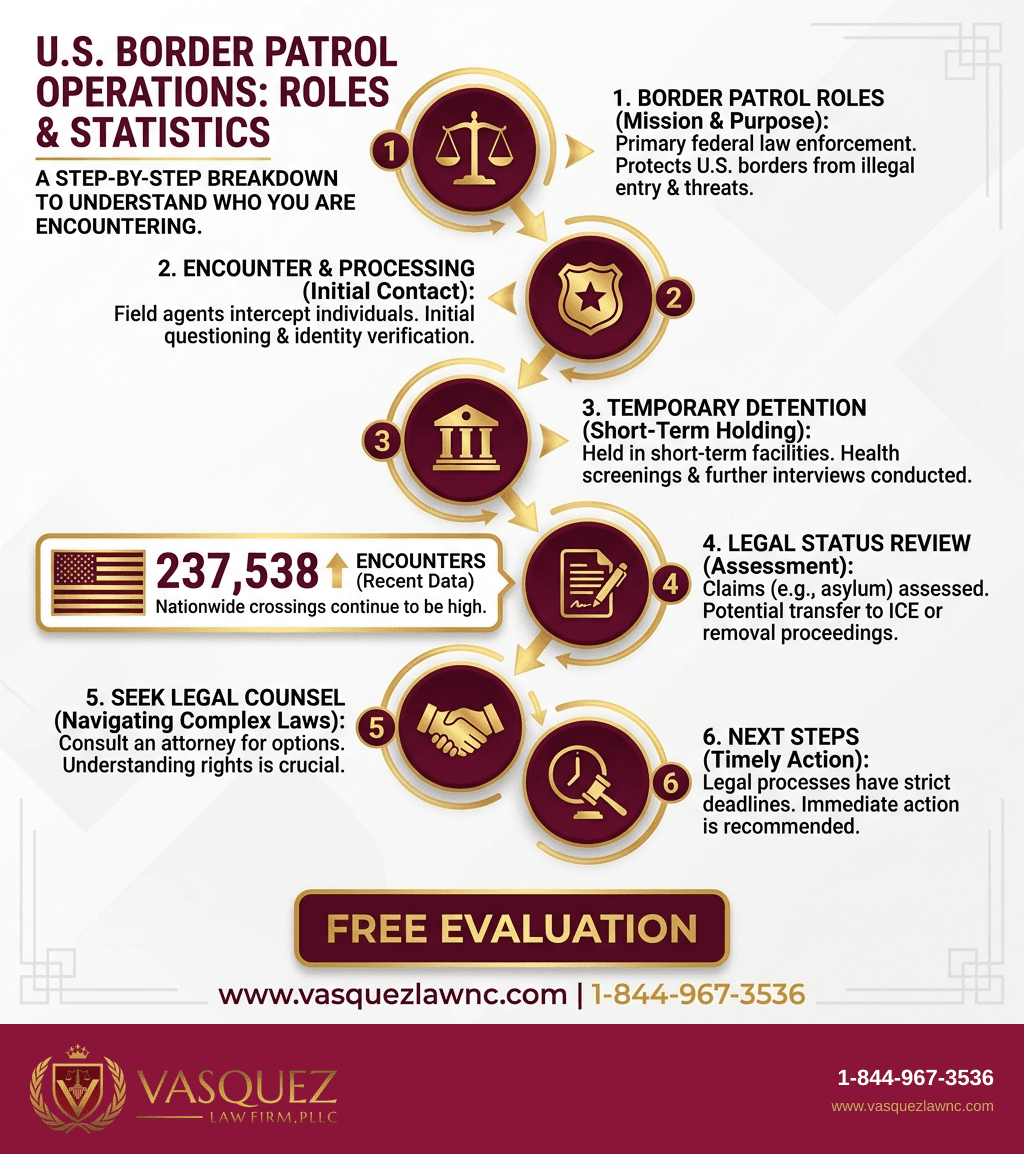
In 2026, the U.S. Border Patrol operates under the Department of Homeland Security, enforcing immigration laws along land borders and within interior checkpoints. Agents focus on preventing unlawful crossings, detecting illegal activity, and apprehending unauthorized individuals. The agency also monitors smuggling and human trafficking.
Border Patrol Roles and Responsibilities
Border Patrol agents perform border security patrols, work at ports of entry, and conduct interior enforcement operations. The enforcement extends beyond just the southern and northern borders; agents also staff checkpoints within states such as Florida and North Carolina. Their work involves surveillance, vehicle inspections, and apprehending those violating immigration regulations.
Uniform and Equipment
U.S. Border Patrol agents wear green and black uniforms with badges identifying their agency. They are equipped with firearms, radios, handcuffs, body cameras, and other law enforcement tools. Uniforms maintain a professional and consistent appearance to ensure clear identification during encounters.
Agency Organization
The Border Patrol is divided into sectors covering geographic regions, including a sector for Florida and the southeastern U.S. Agents report through a chain of command culminating in the Chief of the Border Patrol. The recent resignation of Chief Michael Banks in early 2026 has led to some internal restructuring and policy reviews.
U.S. Border Patrol Jobs and Careers
Many seek U.S. Border Patrol jobs for the opportunity to serve and protect while earning a competitive salary. In 2026, recruiting remains active due to officer shortages and increased enforcement needs.
Job Requirements and Eligibility
Applicants must be U.S. citizens, pass thorough background investigations, physical fitness exams, and medical assessments. A high school diploma or equivalent is required, with training at the Border Patrol Academy mandatory for new recruits. Candidates must also hold a valid driver’s license and be willing to work irregular hours in remote or hostile environments.
Salary and Bonuses
According to federal data, starting pay ranges around $53,144 to $60,000 annually, with additional locality pay in some regions. A $20,000 hiring bonus is offered in 2026 to attract qualified candidates especially in hard-to-fill sectors. Experienced agents with seniority can earn significantly more through promotions and overtime.
Career Growth and Advancement
Border Patrol careers offer promotion paths from agent to supervisory and administrative positions. Specialized roles include K9 handlers, intelligence officers, and tactical teams. The agency offers retirement benefits, health insurance, and federal employee protections.
Border Patrol Chief Resignation and Its Impact
In early 2026, Chief Michael Banks resigned amid evolving federal immigration policies and operational pressures. Leadership changes can affect enforcement priorities and morale, influencing how agents carry out their duties in Florida and North Carolina.
What the Resignation Means Locally
For immigrant communities in Orlando and North Carolina, shifts in leadership may bring new enforcement guidelines and focus areas. While enforcement remains federal, local legal teams must stay alert to evolving practices.
Policy and Enforcement Changes
Political and administrative changes may alter detention, deportation, and border security approaches. Immigrants should not assume policy stability but seek current information about federal immigration enforcement.
Your Rights When Encountering Border Patrol
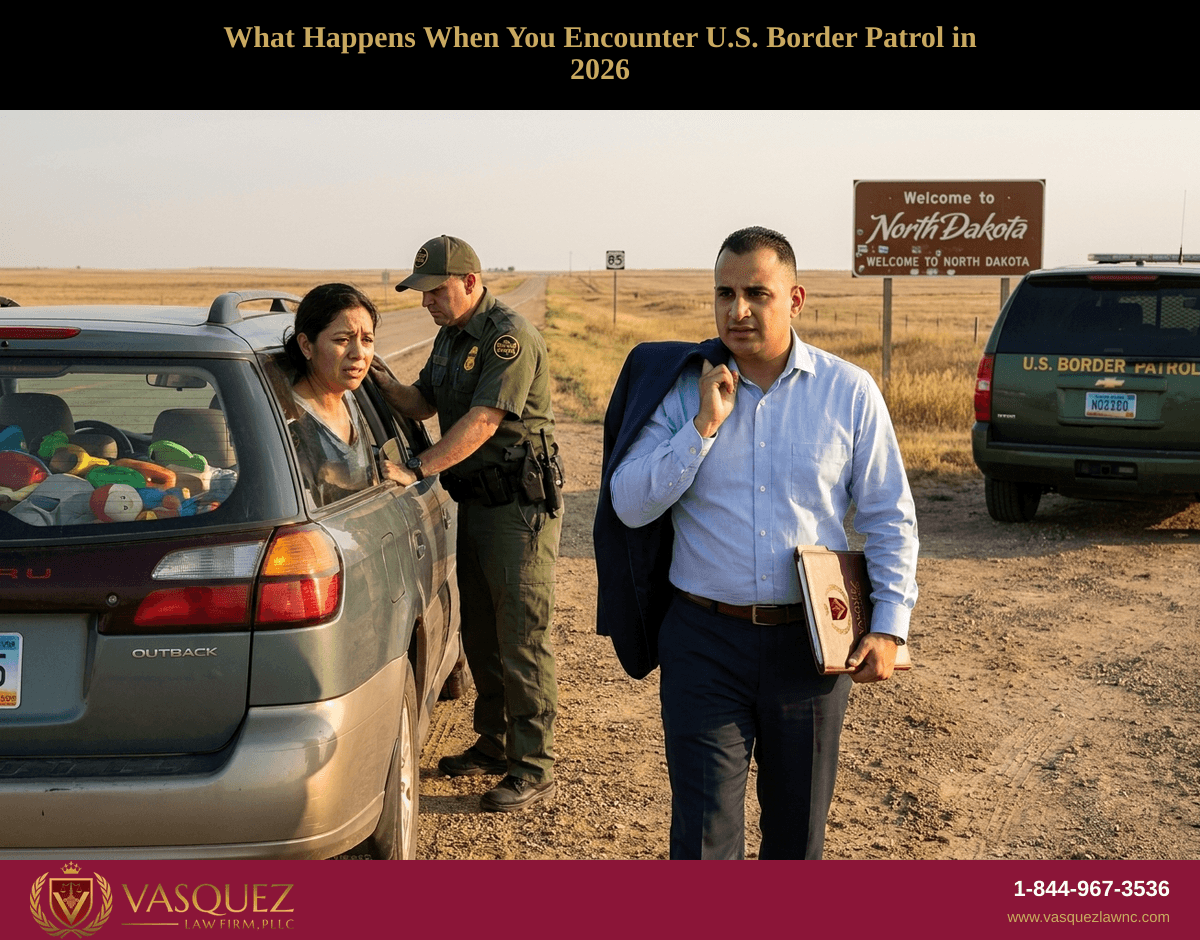
Understanding your rights during a Border Patrol encounter is vital. Agents have authority but also must respect constitutional protections. Knowing what to say and do can affect your legal outcomes.
What to Do if Stopped
Remain calm and respectful. You may be required to identify yourself, but you have the right to remain silent beyond basic identification. Avoid consenting to searches without a warrant. Ask if you are free to leave and remember details about the interaction.
When to Contact a Lawyer
If detained or arrested, request to speak with a lawyer immediately. Legal representation is crucial for immigration enforcement matters. U.S. immigration laws are complex, and early legal advice can prevent serious consequences.
Special Considerations for DACA Recipients
DACA recipients in Orlando and North Carolina have conditional protection from deportation but are not immune. It is essential to keep status current. Visit the USCIS DACA page for updates.
Don't wait to get the help you deserve. Call us now for immediate assistance. Se Habla Español.
Common Mistakes and How to Avoid Them
- Talking too much: Answer only the information requested without volunteering extra details.
- Agreeing to a search: Do not consent to searches without a warrant to protect your rights.
- Ignoring legal notices: Missing court or hearing dates can lead to deportation orders.
- Delaying legal help: Early consultation with immigration attorneys reduces risks.
- Assuming DACA is permanent: Renew regularly and stay updated on policies.
- Not documenting encounters: Write down details to help your legal case.
- Believing everyone is aware of your status: Limit sharing immigration information with others.
If you only remember one thing: contacting an immigration attorney after any Border Patrol interaction is critical to protect your rights.
Timeline and What to Expect When Working With the Border Patrol
- Immediate: If stopped, agents may detain for questioning or verification.
- Within days: Possible formal arrest and placement in immigration detention.
- Within weeks: Immigration court notice and hearing scheduled.
- Months ahead: Legal proceedings or release on bond.
- Long term: Resolution through immigration court or administrative relief.
Delays are common, and timelines vary widely by case and location. The agency’s enforcement actions directly influence these timetables.
Costs and Fees Related to Immigration Enforcement
- Attorney fees: Vary based on case complexity but are critical investments.
- Bond amounts: May range from a few thousand dollars upwards, depending on detention case.
- Application fees: USCIS fees for immigration relief or adjustment of status, found at USCIS official processing times.
- Other costs: Possible travel, document translation, and expert witness expenses.
Frequently Asked Questions
What is the $20,000 bonus for Border Patrol agents?
The $20,000 bonus is a federal recruitment incentive to fill critical Border Patrol jobs nationwide. It is offered to recruits who meet specific criteria, like relocation or passing academy training.
How much does a U.S. Border Patrol agent make?
Starting salaries range between $53,000 to $60,000, with potential increases for overtime and promotions. The bonus program also adds financial incentives.
What are the primary jobs of the U.S. Border Patrol?
Agents patrol borders and checkpoints, prevent illegal crossings, apprehend violators, and combat smuggling and trafficking.
How can I contact the U.S. Border Patrol?
Contact can be made through regional Border Patrol sector offices or the national operations center depending on the inquiry.
What are the requirements to join the Border Patrol?
US citizenship, passing physical and background checks, a high school diploma, and successful completion of academy training are essential.
What should I do if stopped by Border Patrol in Orlando or NC?
Stay calm, provide ID if requested, remain silent beyond basic info, and seek legal counsel quickly.
Why did the Border Patrol chief resign in 2026?
Chief Michael Banks stepped down amid shifting policies and internal challenges affecting enforcement nationwide.
Can Border Patrol ask me to unlock my phone?
They can request it, but you have rights to refuse without a warrant. Consulting a lawyer before consenting is advisable.
About Vasquez Law Firm
At Vasquez Law Firm, we combine compassion with aggressive representation. Our motto "Yo Peleo®" (I Fight) reflects our commitment to standing up for your rights.
- Bilingual Support: Se Habla Español — Spanish-speaking attorneys and staff available
- Service Areas: North Carolina, Florida, and nationwide immigration services
- Experience: Over 30 years helping clients navigate complex legal matters
- Results: Thousands of successful cases across multiple practice areas
Attorney Trust and Experience
William J. Vásquez is admitted to the North Carolina State Bar (2011) and to the U.S. Courts of Appeals for the 4th, 5th, 6th, and 11th Circuits. Florida-jurisdiction matters at the firm are handled by Florida Bar attorney Alekssandra Lopez. The firm has provided dedicated legal representation since 2011, with personalized attention to each client's case.
Take the first step toward justice today. Our team is standing by to help. Se Habla Español.
Start Your Free Evaluation Now
Call us: 1-844-967-3536
Se Habla Español - Estamos aquí para ayudarle.
Sources and References
- U.S. Citizenship and Immigration Services
- Executive Office for Immigration Review
- Legal Information Institute
If you need legal assistance, learn more about speak with an immigration lawyer, or call us at 1-844-967-3536 for a free evaluation.


William Vasquez
Founder & CEO, Vasquez Law Firm, PLLC
William Vasquez is the founder and CEO of Vasquez Law Firm, PLLC, a results-driven firm specializing in immigration, criminal defense, personal injury, and workers' compensation. A U.S. Air Force veteran and recipient of the Joint Service Achievement Medal, William is dedicated to fiercely fighting for his clients' rights.
Related Legal Services
Need legal help? Learn more about speak with an immigration lawyer, or contact us for a free evaluation.
You can also visit immigration lawyers serving all of North Carolina for more information.