What Happens to DWI Offenders in North Carolina in 2026?
Wondering what happens to DWI offenders in North Carolina? Learn about penalties, sentencing, and legal options in 2026. Contact Vasquez Law now.
Published on May 13, 2026
Fight your ticket
Free review to keep points off your record.
Free & confidential · Se habla espanol · 24/7
Have questions? Talk to an attorney - free evaluation.
Call 1-844-967-3536Fight Your Ticket, Protect Your License
A review that can keep points off your record.
What Happens to DWI Offenders in North Carolina in 2026?
DWI offenders in North Carolina face a complex legal process that can affect their lives deeply. In 2026, with evolving laws and proposals like ignition interlock devices for all offenders, understanding your rights and options is crucial. This comprehensive guide explains NC DWI sentencing, criminal penalties, and practical steps for anyone charged. Whether it is a first offense or a felony-level charge, the risks and consequences can be serious. Smithfield residents and surrounding areas should know how local laws impact offenders and what legal help is available. Avoid common mistakes and get clarity on how a North Carolina traffic violations attorney can assist you.
Need help with your case? Our experienced attorneys are ready to fight for you. Se Habla Español.
Or call us now: 1-844-967-3536
Quick Answer
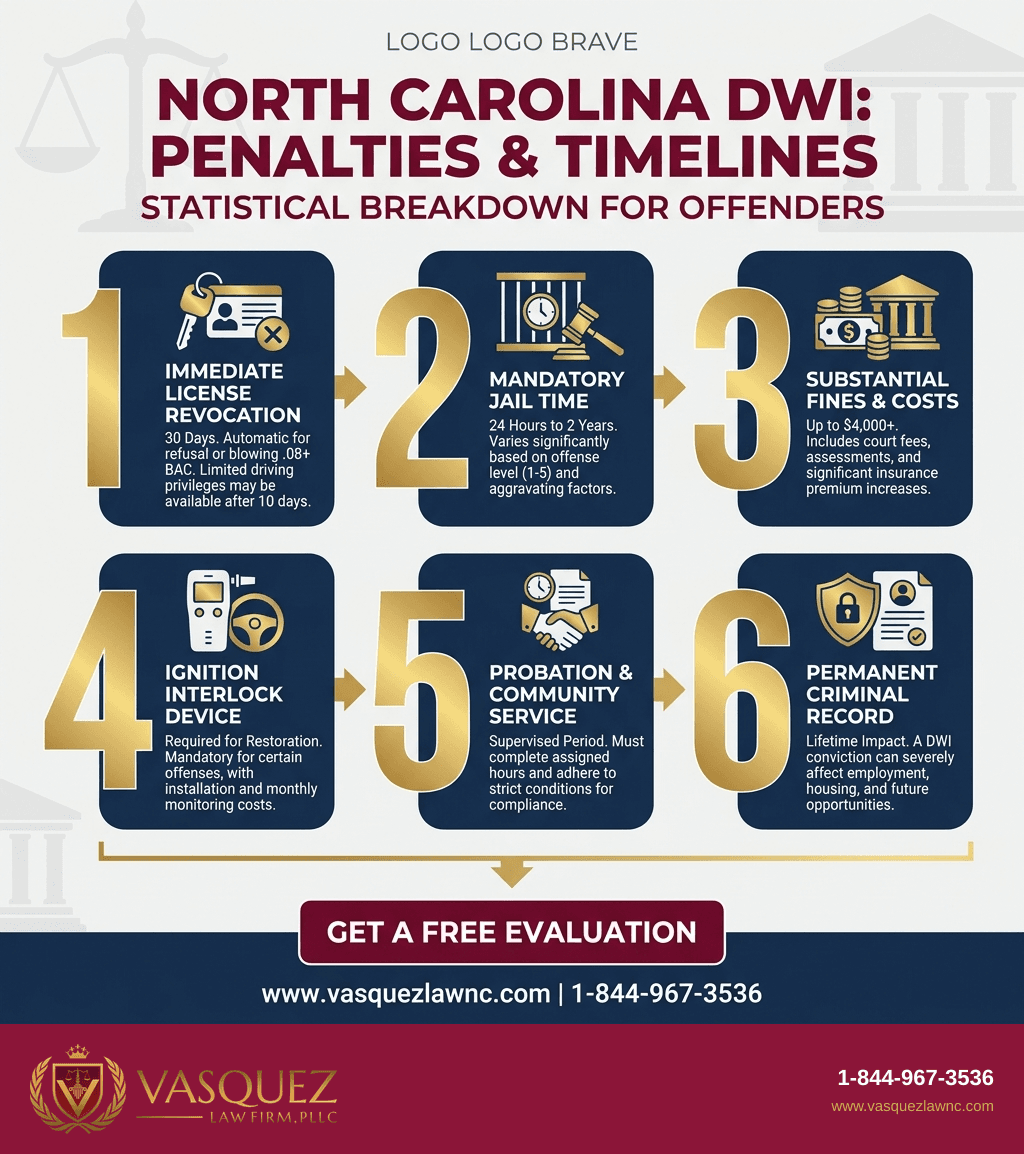
DWI offenders in North Carolina face penalties ranging from fines and license suspensions to felony charges and imprisonment. Legal outcomes depend on offense level, prior records, and compliance with new laws such as ignition interlock requirements.
- First offenses may be misdemeanors with fines and probation
- Repeat offenses can result in felony charges with jail time
- Ignition interlock devices may become mandatory for all offenders
- Legal defense options include plea bargains and sentence reductions
- Seek immediate legal advice to protect your rights
Understanding DWI Offenders in NC
In 2026, North Carolina continues to classify Driving While Impaired (DWI) as a criminal offense under N.C. Gen. Stat. § 20-138.1. A DWI offense occurs when a person operates a motor vehicle with blood alcohol concentration (BAC) over 0.08%. The law recognizes various levels of offenses from Level 1 through Level 5, each with increasing severity based on the offender's history and circumstances.
DWI Levels and Penalties
Level 1 DWI offenses are typically first-time offenses involving BAC slightly over the limit. These are misdemeanors with penalties including fines up to $2000, possible jail time, and license suspensions. More serious levels, such as Level 5, may involve felony charges, particularly if injury or death results from the impaired driving.
For example, a Level 2 offense might involve a higher BAC or a prior DWI within a ten-year period, resulting in increased fines and mandatory jail time. Offenders at this level may also be subject to longer license revocations and community service requirements. Practical scenarios include an individual stopped during a routine traffic stop with a BAC of 0.15 and a previous conviction within five years, leading to enhanced penalties.
Meanwhile, Level 3 offenses often involve repeat offenders or those caught driving with a BAC significantly over 0.15. These cases frequently result in more severe punishments, including longer jail stays and extended use of ignition interlock devices. For instance, a driver arrested for a third DWI within seven years with a BAC of 0.18 would likely face Level 3 charges and corresponding penalties.
North Carolina lawmakers are currently considering requirements that all DWI offenders use breathalyzer ignition locks to improve road safety, as reported by NC Newsline. This would impact sentencing and post-offense monitoring for all offenders.
Implementing ignition interlock devices for all offenders aims to reduce repeat offenses by physically preventing impaired driving. This measure could particularly affect those who might otherwise attempt to drive after their license suspension, providing a technological safeguard. For example, a first-time offender previously exempt from interlock requirements would now be mandated to install such a device before regaining driving privileges.
Felony vs. Misdemeanor
A key question many ask is whether a DWI is a criminal offense and when it escalates to a felony. By law, all DWI offenses are criminal but not all are felonies. Felony charges typically arise after multiple offenses or when aggravated circumstances like injury occur. For example, a Level 5 DWI is classified as a felony in North Carolina.
Felony DWIs carry significantly harsher penalties, including longer incarceration and permanent criminal records that can affect employment and housing opportunities. For instance, a driver causing serious injury while impaired, even on a first offense, may face felony charges under Level 5 classification. This underscores the importance of understanding how circumstances and prior history influence charge severity.
Moreover, the distinction between misdemeanor and felony impacts not only sentencing but also post-conviction consequences such as parole eligibility, probation terms, and driver's license restrictions. Consider a driver with two prior misdemeanors who is charged with a DWI causing bodily harm; this may elevate the case to a felony, resulting in more complex legal proceedings and longer-term repercussions.
Smithfield and Local Enforcement
Smithfield residents charged with DWI will face the same North Carolina state laws. Local courts may administer penalties but adhere to the state sentencing guidelines documented in the NC DWI sentencing chart. Understanding local court procedures and available plea bargains can influence the outcome tremendously.
Local law enforcement in Smithfield may adopt specific enforcement strategies, such as sobriety checkpoints during holidays or weekends, which impact arrest rates and case volumes. For example, an individual stopped at a Smithfield checkpoint during a holiday weekend may experience immediate arrest and expedited legal proceedings due to increased local enforcement focus.
Furthermore, Smithfield's court system might offer diversion programs or alternative sentencing options for certain offenders, such as first-time offenders or those enrolled in treatment programs. Familiarity with these local provisions can help defendants and their attorneys negotiate better outcomes, such as reduced charges or shortened license suspensions.
Learn how our traffic violations services assist clients in Smithfield and beyond with their DWI cases.
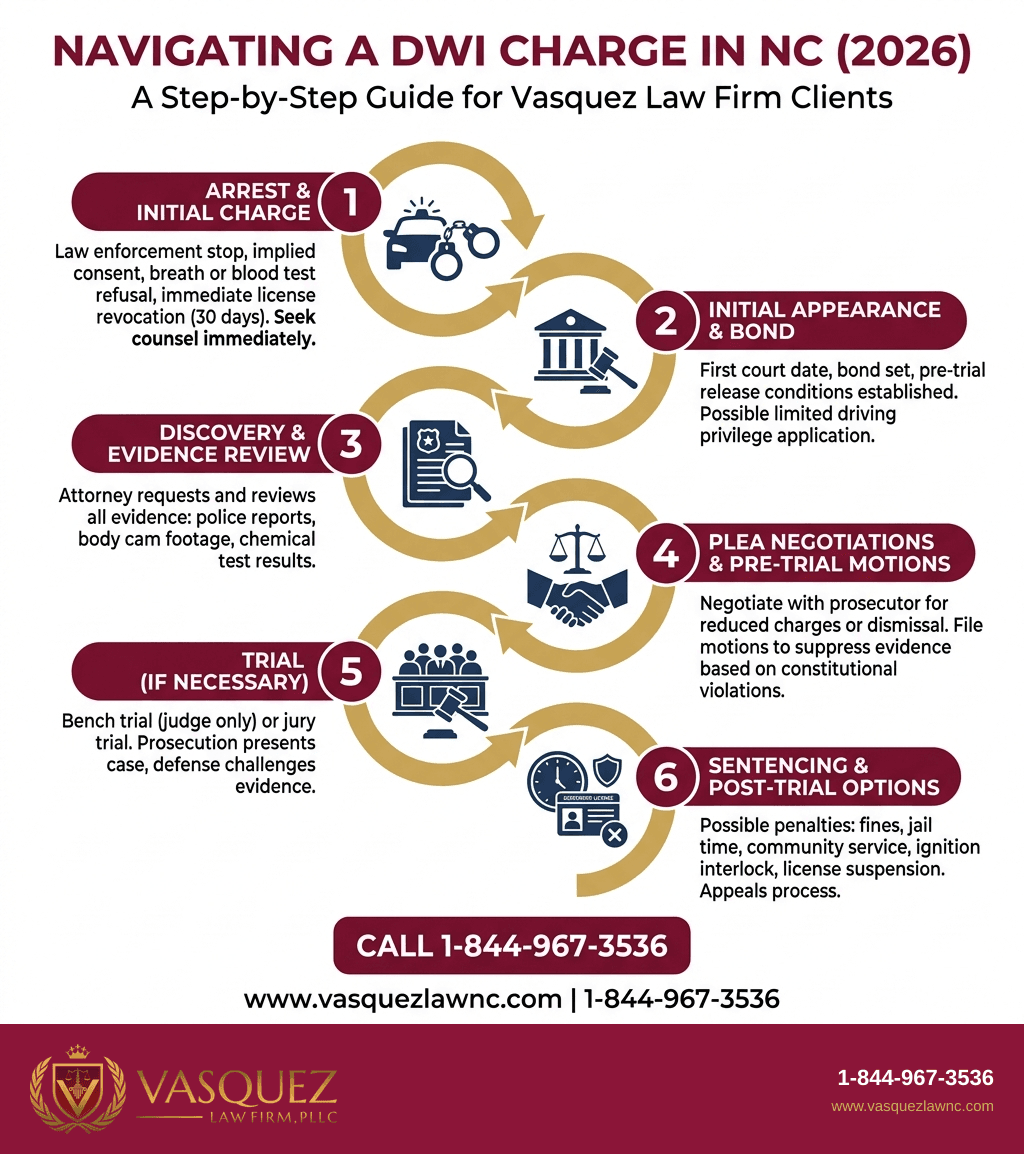
Step-by-Step: What to Do if Charged
Getting charged as a DWI offender can be overwhelming. Knowing clear, legal steps can safeguard your rights and improve your case outcomes.
1. Cooperate but Do Not Admit Guilt
If stopped, cooperate with law enforcement by providing identification but avoid confessing or giving unnecessary statements. Anything you say may be used against you.
For example, saying “I had a couple of drinks but I’m fine” during a traffic stop can be interpreted as an admission of impairment, which might strengthen prosecution evidence. Instead, politely respond to officers without volunteering details that could complicate your defense.
Remaining calm and respectful can influence how officers treat you but remember that cooperation does not require self-incrimination. Refusing to answer questions beyond identification is within your rights and often advisable to protect your case.
2. Request an Attorney Immediately
Ask for an attorney as soon as possible. Your right to legal counsel is protected, and early legal advice is critical, especially with complex issues like plea bargains or sentencing negotiations.
For example, after arrest, requesting an attorney before any questioning can prevent inadvertent statements that might be used against you. Early legal counsel can also help in evaluating evidence such as breathalyzer calibration or field sobriety test administration, which could be challenged in court.
Having an attorney involved early often leads to better outcomes, including reduced charges or alternative sentencing. An experienced lawyer can also advise on your rights concerning license suspension hearings and help navigate administrative penalties.
3. Understand Breathalyzer and Field Tests
You may be subjected to breathalyzer or field sobriety tests, but you have rights concerning refusal and the consequences involved. Knowing the penalties for refusal under state law can affect your options at this stage.
For example, refusing a breathalyzer test can lead to automatic license suspension under implied consent laws, but it may also prevent the prosecution from using the test result as evidence. Balancing these consequences requires careful consideration with legal input.
Field sobriety tests, such as walking a straight line or standing on one leg, are subjective and can be challenged based on the testing environment or the officer’s administration. For instance, uneven pavement or poor lighting may affect performance and constitute grounds for challenging results in court.
4. Attend All Court Appearances
Failing to appear can result in additional penalties and warrants. Attend all scheduled hearings and comply with court conditions including bail and required programs.
Missing a court date can escalate your legal troubles by triggering bench warrants, which may lead to arrest and further charges. For example, a defendant who misses an arraignment may be detained until the case is resolved, complicating defense efforts.
Consistently attending court also demonstrates responsibility and respect for the legal process, which can positively influence judges during sentencing. Additionally, attending required DUI education or treatment programs as ordered is critical to avoiding harsher penalties or extended probation.
Our Attorney Vasquez has helped many DWI offenders in North Carolina understand these steps and develop defense strategies.
Don't wait to get the help you deserve. Call us now for immediate assistance. Se Habla Español.
Common Mistakes to Avoid
- Ignoring the Charges: Not responding to court notices can lead to license suspension and arrest warrants. Always engage promptly.
- Talking Too Much to Police: Unintended admissions or inconsistent statements can hurt your defense.
- Failing to Hire Legal Counsel: Attempting to navigate complex DWI laws alone risks harsher penalties.
- Not Understanding Plea Bargain Options: Many offenders miss chances to reduce charges or minimize sentences.
- Ignoring Ignition Interlock Requirements: New 2026 laws may require devices after any conviction; noncompliance is punishable.
- Driving Before Full License Reinstatement: Can cause further fines or criminal charges.
- Missing Treatment or DUI Programs: Courts often mandate these; skipping may worsen your case.
If you only remember one thing: act quickly and consult a knowledgeable traffic violations attorney to protect your rights and options.
For instance, a common mistake is assuming that pleading guilty quickly will lead to a lighter sentence. Without proper legal counsel, this can result in accepting harsher penalties than necessary. Additionally, some offenders fail to track deadlines for administrative hearings, potentially losing valuable rights to challenge license suspensions.
Another example includes neglecting ignition interlock mandates, which may result in further criminal charges or extended suspension periods. Compliance with court-ordered programs like substance abuse evaluation and treatment is also vital; failure to attend can lead to probation violations and increased penalties.
Timeline: What to Expect
- Within 24-48 Hours: Arrest and booking; possibly bail or release conditions.
- 1-2 Weeks After Arrest: Preliminary hearing or arraignment where charges are read.
- 1-3 Months: Pretrial conference; discovery and negotiations including plea offers.
- 3-6 Months: Possible trial date or resolution by plea bargain.
- Post-Conviction: Sentencing, license suspension, ignition interlock installation, and completion of court programs.
The timeline can vary based on case complexity, court schedules, and whether the offense involves aggravating factors like injury or prior convictions. For example, a straightforward first offense might resolve within three months, while a Level 5 felony DWI could take over a year to conclude due to extended trials and appeals.
During the initial arrest and booking, defendants may be required to post bail or comply with release conditions such as no driving or drug/alcohol testing. Failure to adhere to these conditions can lead to revocation of bail and detention pending trial.
Post-conviction, offenders often face multi-stage processes including administrative license suspensions by the DMV, mandatory ignition interlock device installation, and attendance at court-ordered substance abuse programs. Each stage requires careful compliance to avoid compounding legal consequences.
Frequently Asked Questions
Is a Level 5 DWI a felony in NC?
Yes, a Level 5 DWI in North Carolina is classified as a felony. It is typically charged when the offender has multiple previous DWI convictions or caused serious injury. This class of offense carries significant fines, prison sentences, and longer license suspensions. For example, a person with three prior DWIs who causes an accident resulting in injury would likely face Level 5 felony charges, including possible years in prison and permanent criminal records.
Is a DWI considered a criminal offense?
Yes. In North Carolina, all DWI charges are criminal offenses. They can be misdemeanors or felonies depending on the case facts and prior convictions. Criminal penalties include fines, jail, probation, and license restrictions. For instance, a first-time offender may face misdemeanor charges with fines and probation, while a repeat offender or one involved in injury-causing accidents may be charged with a felony and face incarceration.
What happens to first time DWI offenders in North Carolina?
First-time offenders generally face misdemeanor charges with fines up to $2000, probation, possible jail time, and license suspension. Courts may also order DUI education or treatment programs. For example, a driver arrested for a first offense with a BAC slightly over 0.08 might be sentenced to probation and required to attend alcohol education classes, along with a license suspension period typically lasting several months.
What is a plea bargain for DWI in NC?
A plea bargain is a negotiated agreement where the offender pleads guilty to a lesser charge or receives reduced penalties. This option can help avoid harsher felony charges and lengthy jail sentences. For example, a defendant facing a Level 3 DWI charge might negotiate a plea to a Level 1 misdemeanor with reduced fines and probation instead of jail time, helping to mitigate long-term consequences.
What is the NC DWI sentencing chart?
The NC DWI sentencing chart outlines penalties based on offense level, prior convictions, and aggravating factors. It helps predict fines, jail time, and license actions. For example, a second offense with a high BAC may result in a longer jail sentence and extended license suspension as indicated by the chart, guiding offenders and attorneys in understanding likely outcomes.
Can DWI charges impact immigration status?
Yes, DWI convictions can affect immigration status and applications. Being charged or convicted may create criminal grounds for deportation or inadmissibility under federal laws. For instance, non-citizens convicted of felony-level DWIs may face removal proceedings or difficulty obtaining visas, making legal counsel essential for navigating these complex consequences.
What new DUI laws have taken effect in North Carolina in 2026?
In 2026, lawmakers have proposed ignition interlock devices for all DWI offenders. This requires offenders to pass breathalyzer tests before driving to enhance public safety. The law also includes stricter penalties for noncompliance and repeat offenses, aiming to reduce impaired driving incidents statewide.
How can an attorney help DWI offenders?
An experienced traffic violations lawyer can review case details, negotiate plea bargains, challenge evidence, and guide offenders through license reinstatements and court procedures. For example, an attorney may identify procedural errors in breathalyzer administration or negotiate reduced charges based on mitigating factors, ultimately protecting clients from the full severity of DWI penalties.
About Vasquez Law Firm
At Vasquez Law Firm, we combine compassion with aggressive representation. Our motto "Yo Peleo®" (I Fight) reflects our commitment to standing up for your rights.
- Bilingual Support: Se Habla Español — Spanish-speaking attorneys and staff available
- Service Areas: Traffic violations in 11 North Carolina counties; immigration nationwide, including Florida
- Experience: Over 30 years helping clients navigate complex legal matters
- Results: Thousands of successful cases across multiple practice areas
Attorney Trust and Experience
William J. Vásquez is admitted to the North Carolina State Bar and brings 15 years of dedicated experience helping clients facing traffic violations. His thorough knowledge of NC DWI laws ensures careful case preparation and strong defense strategies.
Attorney Vásquez’s hands-on approach includes personalized consultations and aggressive advocacy tailored to each client's circumstances. His familiarity with local courts, including those in Smithfield, enables him to craft effective defenses and explore all legal avenues, from pretrial motions to post-conviction relief.
Clients benefit from his bilingual capabilities and comprehensive understanding of both state and federal legal systems, particularly in cases involving immigration consequences linked to DWI charges.
Take the first step toward justice today. Our team is standing by to help. Se Habla Español.
Start Your Free Evaluation Now
Call us: 1-844-967-3536
Sources and References
- North Carolina DMV
- National Highway Traffic Safety Administration
- Legal Information Institute


William Vasquez
Founder & CEO, Vasquez Law Firm, PLLC
William Vasquez is the founder and CEO of Vasquez Law Firm, PLLC, a results-driven firm specializing in immigration, criminal defense, personal injury, and workers' compensation. A U.S. Air Force veteran and recipient of the Joint Service Achievement Medal, William is dedicated to fiercely fighting for his clients' rights.
Related Legal Services
Need legal help? Learn more about traffic ticket help in Mecklenburg County, or contact us for a free evaluation.
You can also visit traffic violation services in Johnston and Mecklenburg counties for more information.