What Happens After an Out-of-State Car Accident in 2026
Wondering what happens after an out-of-state car accident? Learn your rights, next steps, and how to protect yourself. Contact Vasquez Law for help.
Published on April 20, 2026
Injured? Get what your case is worth
Free review.
Free & confidential · Se habla espanol · 24/7
Have questions? Talk to an attorney - free evaluation.
Call 1-844-967-3536Get What Your Injury Is Worth
Schedule your consultation.
What Happens After an Out-of-State Car Accident in 2026
Experiencing an out-of-state car accident can leave you feeling overwhelmed and uncertain. In 2026, understanding what to expect and how to protect your rights is crucial. Whether the crash occurs near Orlando or elsewhere, knowing the key steps for reporting, insurance claims, and handling different state laws helps survivors safeguard their interests. This guide covers important details about uninsured drivers, admitting fault, timeline expectations, and when to get legal help.
Need help with your case? Our experienced attorneys are ready to fight for you. Se Habla Español.
Or call us now: 1-844-967-3536
Quick Answer
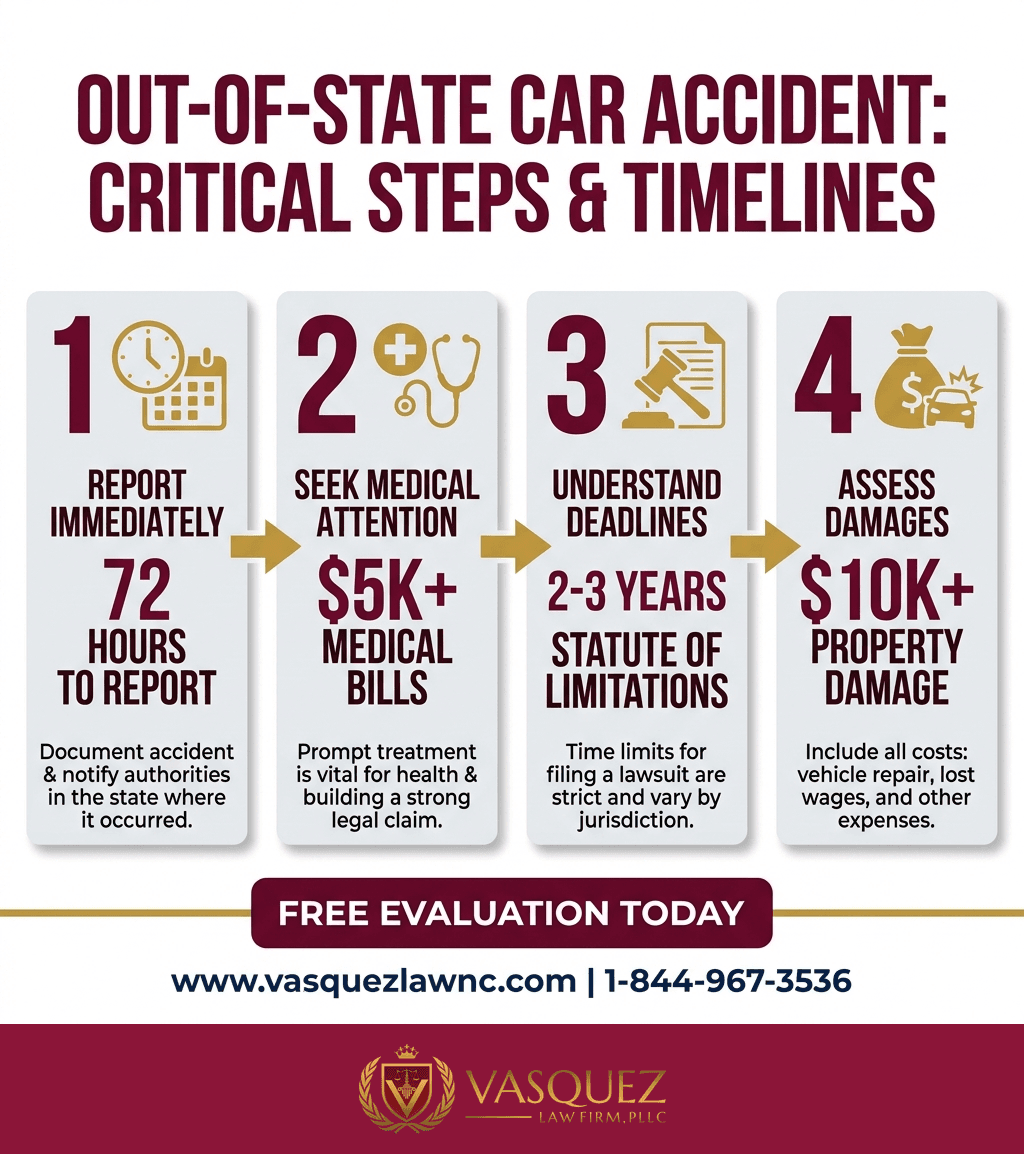
If you're involved in an out-of-state car accident, the laws of the state where the accident happened will usually apply. You must report the crash to local authorities, notify your insurance, and gather evidence. Never admit fault at the scene. Timely legal help can protect your rights and help you navigate different state rules.
- Each state's accident laws differ
- Report the accident promptly
- Collect photos and witness info
- Avoid admitting fault or blame
- Contact a personal injury lawyer early
What Happens After an Out-of-State Car Accident
Imagine driving your car near Orlando when another driver causes a collision. Since this accident happened in Florida but you live in North Carolina, different state laws apply. You will have to follow Florida’s accident reporting requirements and insurance procedures. Your insurance company will generally handle claims according to Florida regulations, not North Carolina’s.
Out-of-state car accidents add complexity because multiple states’ rules might influence your claim, including differences in fault and insurance minimums. These cases require careful documentation and prompt reporting to the police and insurance carriers. A personal injury attorney experienced with out-of-state crashes can explain what happens and guide you through the process.
For example, Florida requires you to report accidents involving injuries or property damage over $500 to the Department of Highway Safety within ten days. North Carolina has different thresholds and rules. Understanding these differences can mean the difference between a smooth claim or one denied on technical grounds.
Our personal injury services help victims in North Carolina and Florida navigate these challenges efficiently.
Step-by-Step: What to Do If You’re in Another State
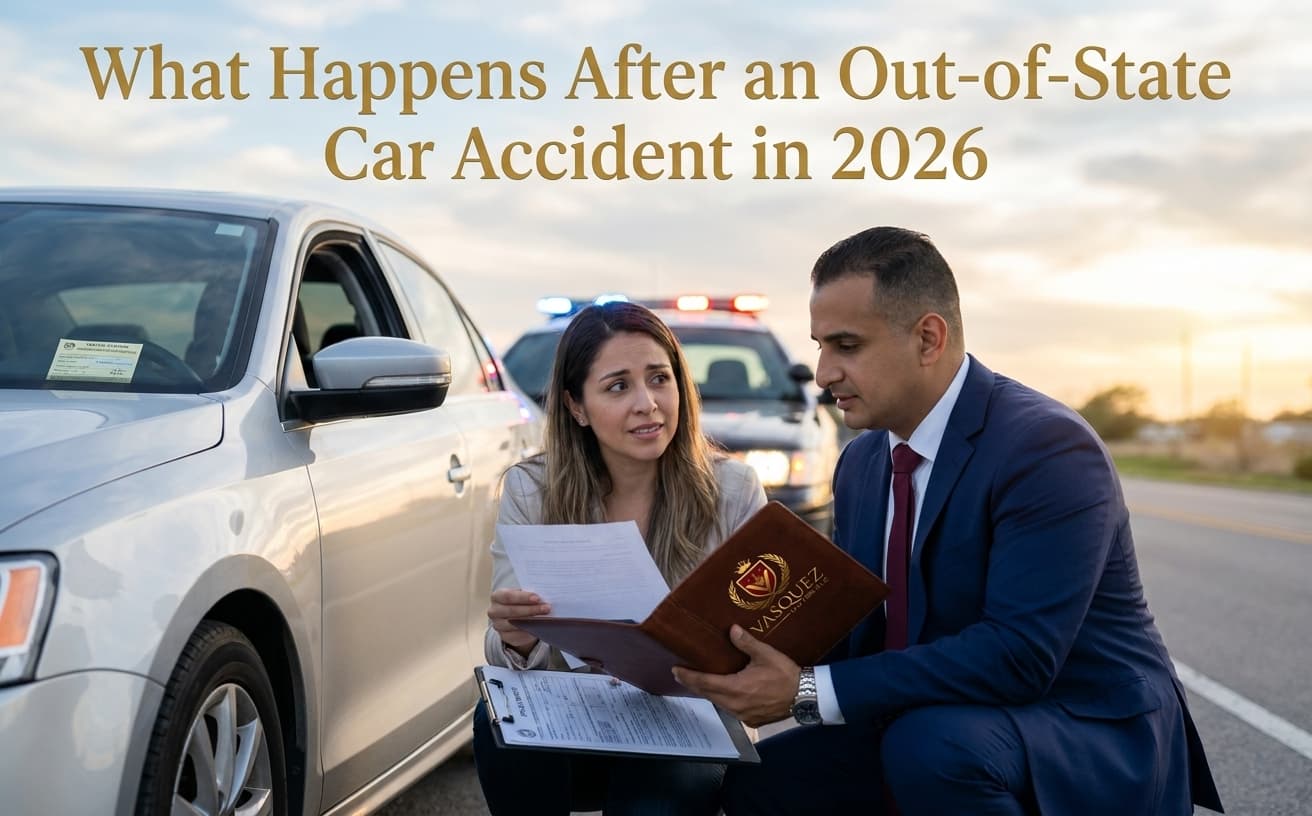
- Ensure Safety and Call 911: The first priority after any car accident is to check for injuries and call emergency services. This applies regardless of the state.
- Report to Local Authorities: File a police report if the accident meets state reporting requirements. Obtaining an official report is crucial evidence for your claim.
- Exchange Information: Get names, phone numbers, driver’s licenses, insurance details, and vehicle info from all involved parties and witnesses.
- Document the Scene: Use your phone to take clear photos of the vehicles, damage, road conditions, and any visible injuries.
- Notify Your Insurance Company: Report the accident promptly per your policy terms. Provide all collected information without admitting fault.
- Seek Medical Attention: Even if you feel fine, visit a doctor to document possible injuries, which might show symptoms later.
- Consult a Lawyer: Contact a North Carolina or Florida personal injury attorney, such as Attorney Vasquez, to understand your rights and possible claims.
Documents and Evidence You Must Collect
- Police and accident reports
- Contact and insurance info from all drivers involved
- Medical records and treatment documentation
- Photos of the accident scene, damages, and injuries
- Witness statements and contact details
- Insurance correspondence and claim numbers
- Repair estimates or invoices
- Any surveillance or dashcam footage, if available
Keeping a well-organized file prevents delays in your claim process and strengthens your case. You can use this checklist to make sure you have all relevant details needed for insurance or legal proceedings.
Timeline: How the Process Usually Unfolds
- Within 24 hours: Call 911, report the accident, seek medical care, and notify your insurance company.
- First 1-2 weeks: Obtain police and medical records, start treatment, document losses, and possibly contact a lawyer.
- 1-3 months: Your insurance adjuster investigates, injuries stabilize, and you get repair estimates or treatment plans.
- 3-6 months: Settlement negotiations usually begin; your attorney helps ensure a fair offer based on damages and liability.
- Beyond 6 months: If no agreement is reached, a lawsuit may be filed to pursue compensation through the courts, extending the timeline further.
Understanding this typical timeline reduces uncertainty and prepares you for what to expect. Timely action at each stage is essential to avoid losing rights or evidence.
Common Mistakes to Avoid After an Out-of-State Accident
- Admitting Fault: Avoid saying you’re sorry or responsible at the scene; fault must be legally established through evidence.
- Not Reporting the Accident: Failure to report to police or insurance can lead to claim denial.
- Delaying Medical Care: Waiting to see a doctor can mask injuries and hurt your claim for damages.
- Ignoring Insurance Deadlines: Most policies have deadlines for reporting and filing claims.
- Neglecting to Collect Evidence: Without photos, witness info, or police reports, proving your case gets harder.
- Accepting the First Settlement Offer: Early low offers rarely reflect full damages; consult an attorney first.
- Not Hiring an Experienced Lawyer: Out-of-state cases involve complex law; an attorney protects your rights and maximizes recovery.
If you only remember one thing: Do not admit fault and get legal guidance before making important decisions.
North Carolina and Nationwide Notes
North Carolina Notes
North Carolina requires reporting accidents with injury or property damage over $1,000 to the local police or sheriff’s office. The North Carolina Department of Transportation (NCDOT) also requires a report if any injury or death occurs. North Carolina is a contributory negligence state, meaning you cannot recover damages if you are even 1% at fault. This impacts how out-of-state accidents involving NC residents are handled legally.
Nationwide Concepts (General only, rules vary)
Every state handles accident claims differently, especially with fault systems ranging from no-fault, pure comparative, modified comparative, to contributory negligence. Insurance minimums, reporting requirements, and time limits vary. If injured in an out-of-state accident, consulting a local attorney familiar with the state’s laws and rules is critical.
When to Call a Lawyer Immediately
- If you sustained serious injuries requiring hospitalization.
- If the other driver is uninsured or underinsured.
- If fault is being denied by the other party or insurance company.
- If you face a complex or multi-party accident claim.
- If insurance offers appear insufficient to cover your damages.
- If you need help understanding out-of-state laws and procedures.
- If the accident involved DUI or criminal charges.
- If you are unsure how to protect your rights after the crash.
About Vasquez Law Firm
At Vasquez Law Firm, we combine compassion with aggressive representation. Our motto "Yo Peleo" (I Fight) reflects our commitment to standing up for your rights.
- Bilingual Support: Se Habla Español - our team is fully bilingual
- Service Areas: Personal injury in North Carolina; immigration nationwide, including Florida
- Experience: Over 30 years helping clients navigate complex personal injury legal matters
- Results: Thousands of successful cases across multiple practice areas, including out-of-state accidents
Attorney Trust and Experience
Attorney Vasquez holds a Juris Doctor degree and is admitted to practice in both the North Carolina State Bar and Florida Bar. With over 15 years of dedicated legal experience, he has built a reputation for providing personalized attention and helping clients recover from difficult injuries and accidents, including those involving different state jurisdictions.
Don't wait to get the help you deserve. Call us now for immediate assistance.
Se Habla Español
Frequently Asked Questions
What happens if you have a car accident in a different state?
When you have a car accident in a state different from your residence, you usually must follow that state’s traffic laws and reporting requirements. Your insurance company also typically follows the laws of the accident state. Promptly reporting the accident and gathering evidence protects your legal rights.
What age group speeds the most?
Drivers aged 16 to 24 are statistically the most frequent speeders and more likely to cause speeding-related accidents. This reality influences legal fault and insurance coverage in injury claims.
Who pays when you are hit by an uninsured driver?
If the at-fault driver is uninsured, your uninsured motorist coverage may cover your losses. Otherwise, you may need to pursue legal action directly against the driver. State laws differ on how this is handled.
Why should you never admit fault after a car accident?
Admitting fault can be held against you in insurance claims or court. Fault must be proven with evidence. Protect your rights by not admitting blame at the scene and consulting a lawyer before making statements.
How do different states handle out-of-state car accidents?
Each state has unique accident laws and insurance requirements. The state where the crash occurs governs investigation and claims. Understanding the applicable laws in North Carolina and Florida is essential.
Can you file a claim if the other driver is uninsured or underinsured?
Yes, your uninsured/underinsured motorist coverage can protect you if the other driver lacks insurance. An attorney can help clarify your options based on your policy and state laws.
What should you never do immediately after a car accident?
Never admit fault, leave without exchanging information, or delay seeking medical treatment. Document the accident scene and avoid making detailed statements until you consult an attorney.
How does an attorney help after an out-of-state car accident?
An experienced attorney helps you understand state-specific rules, collects evidence, handles insurance negotiations, and protects your right to fair compensation.
Sources and References
- North Carolina Courts
- North Carolina Department of Transportation
- National Highway Traffic Safety Administration
Take the first step toward justice today. Our team is standing by to help.
Start Your Free Evaluation Now
Call us: 1-844-967-3536
Se Habla Español - Estamos aquí para ayudarle.

William Vasquez
Founder & CEO, Vasquez Law Firm, PLLC
William Vasquez is the founder and CEO of Vasquez Law Firm, PLLC, a results-driven firm specializing in immigration, criminal defense, personal injury, and workers' compensation. A U.S. Air Force veteran and recipient of the Joint Service Achievement Medal, William is dedicated to fiercely fighting for his clients' rights.
Related Legal Services
Need legal help? Learn more about personal injury case consultation, or contact us for a free evaluation.
You can also visit personal injury legal services throughout NC for more information.