What You Need to Know About the NC Pedestrian Crossing Law Fines and Your Rights
North Carolina has tightened pedestrian crossing laws with fines up to $1,000 and license suspension. This guide covers penalties and defense strategies.
Published on December 18, 2025· Updated February 9, 2026
Fight your ticket
Free review to keep points off your record.
Free & confidential · Se habla espanol · 24/7
Have questions? Talk to an attorney - free evaluation.
Call 1-844-967-3536Fight Your Ticket, Protect Your License
A review that can keep points off your record.
What You Need to Know About the NC Pedestrian Crossing Law Fines and Your Rights
Introduction to NC Pedestrian Crossing Law
Got a Speeding Ticket?
Points add up fast. We can often get tickets reduced or dismissed entirely.
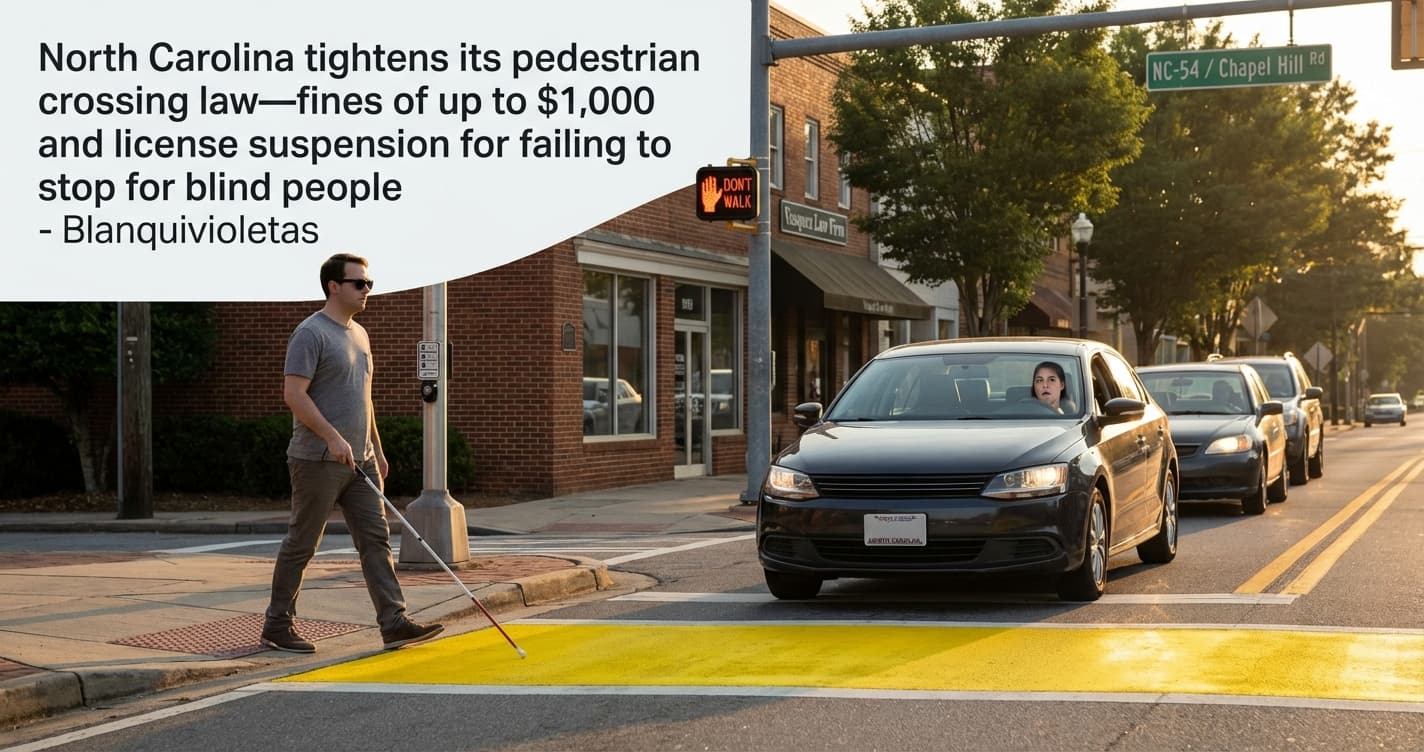
In 2026, significant updates have been made to the NC pedestrian crossing law to enhance pedestrian safety North Carolina-wide. These changes are designed to reduce traffic violations NC related to pedestrian incidents and better protect vulnerable road users, including blind pedestrians. With increasing urban growth in cities such as Charlotte, Raleigh, Durham, and Greensboro, these laws play a crucial role in ensuring safer streets for everyone.
The new laws emphasize stricter requirements for drivers to yield to pedestrians at crosswalks and impose harsher penalties for violations. Understanding these changes is essential for both drivers and pedestrians to avoid traffic ticket defense NC issues and potential license suspension pedestrian cases.
Have questions about recent changes to the NC pedestrian crossing law? Contact our experienced attorney Jessica Vasquez for expert guidance and a free case evaluation today.
Key Changes in 2026 NC Pedestrian Crossing Law
The 2026 amendments to the NC pedestrian crossing law introduce several important modifications aimed at improving pedestrian safety North Carolina-wide. One of the most critical updates is the enhanced obligation for drivers to yield to pedestrians not only at marked crosswalks but also at unmarked intersections.
Previously, drivers could legally pass without yielding if a pedestrian was crossing at an unmarked intersection, but the new law closes this loophole. Additionally, the law now explicitly requires drivers to come to a complete stop when a pedestrian is waiting to cross, rather than merely slowing down.
Another significant change relates to the blind pedestrian law NC. Drivers must now exercise extra caution and yield immediately when encountering a pedestrian with a white cane or guide dog, in line with federal ADA requirements. Failure to comply results in increased penalties, including potential license suspension pedestrian cases.
Violations of these updated rules are classified under traffic violations NC with harsher fines and points added to the driver’s record, impacting insurance and driving privileges.
Legal Reference
The changes are codified in N.C. Gen. Stat. § 20-174, which governs pedestrian rights and driver duties in North Carolina.
Pedestrian Safety North Carolina Initiatives
North Carolina has undertaken numerous pedestrian safety North Carolina initiatives to reduce accidents and fatalities involving pedestrians. The NC Department of Transportation (NCDOT) has increased funding for safer pedestrian infrastructure like improved crosswalks, pedestrian signals, and traffic-calming devices in urban areas.
NCDOT’s latest strategic plan prioritizes education campaigns to raise awareness about pedestrian rights and responsibilities for both drivers and pedestrians. These efforts complement the NC pedestrian crossing law changes by promoting safer behavior on roads.
Municipalities such as Charlotte and Raleigh have also launched localized programs focused on high-risk areas with frequent pedestrian crashes. These programs include enhanced street lighting, visible signage about pedestrian crossings, and community outreach.
For a detailed overview of state pedestrian safety programs, visit the NCDOT Pedestrian Safety page.
Understanding Failing to Yield Pedestrian Violations NC
One of the most common traffic violations NC related to pedestrian safety is failing to yield pedestrian. This violation occurs when a driver does not stop or slow down to allow a pedestrian to safely cross the road at a crosswalk or intersection.
Under the updated NC pedestrian crossing law, the definition of failing to yield has broadened to include instances where the pedestrian is waiting to cross or is already in the crosswalk. Drivers must now stop completely and cannot proceed until the pedestrian has cleared the roadway.
Penalties for failing to yield pedestrian violations include fines ranging from $100 to $500, points on the driver’s license, and potential mandatory traffic school. Repeat offenses increase the risk of license suspension pedestrian actions.
Drivers charged with failing to yield often seek traffic ticket defense NC strategies. This can include challenging the circumstances of the stop, visibility issues, or pedestrian behavior. Having an experienced attorney like Jessica Vasquez can be critical in such cases.
Blind Pedestrian Law NC Protections and Obligations
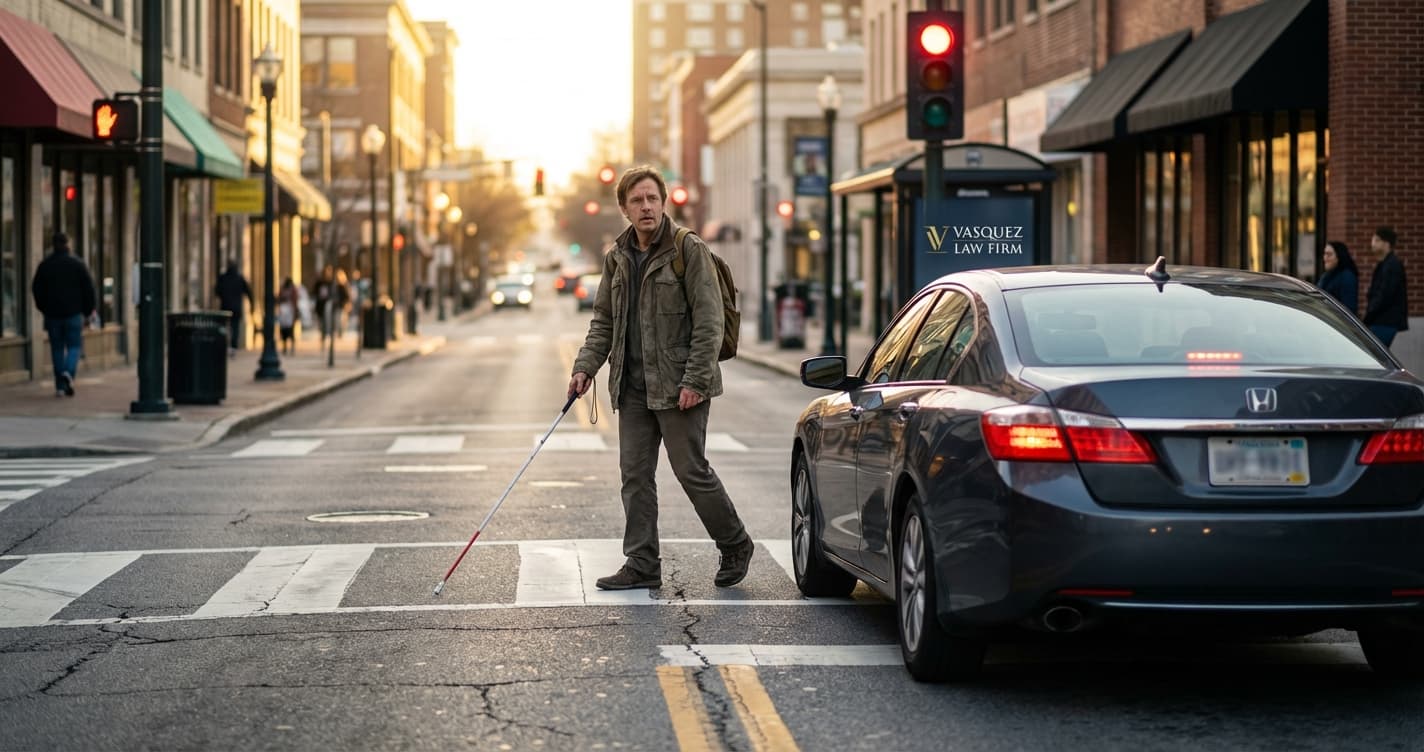
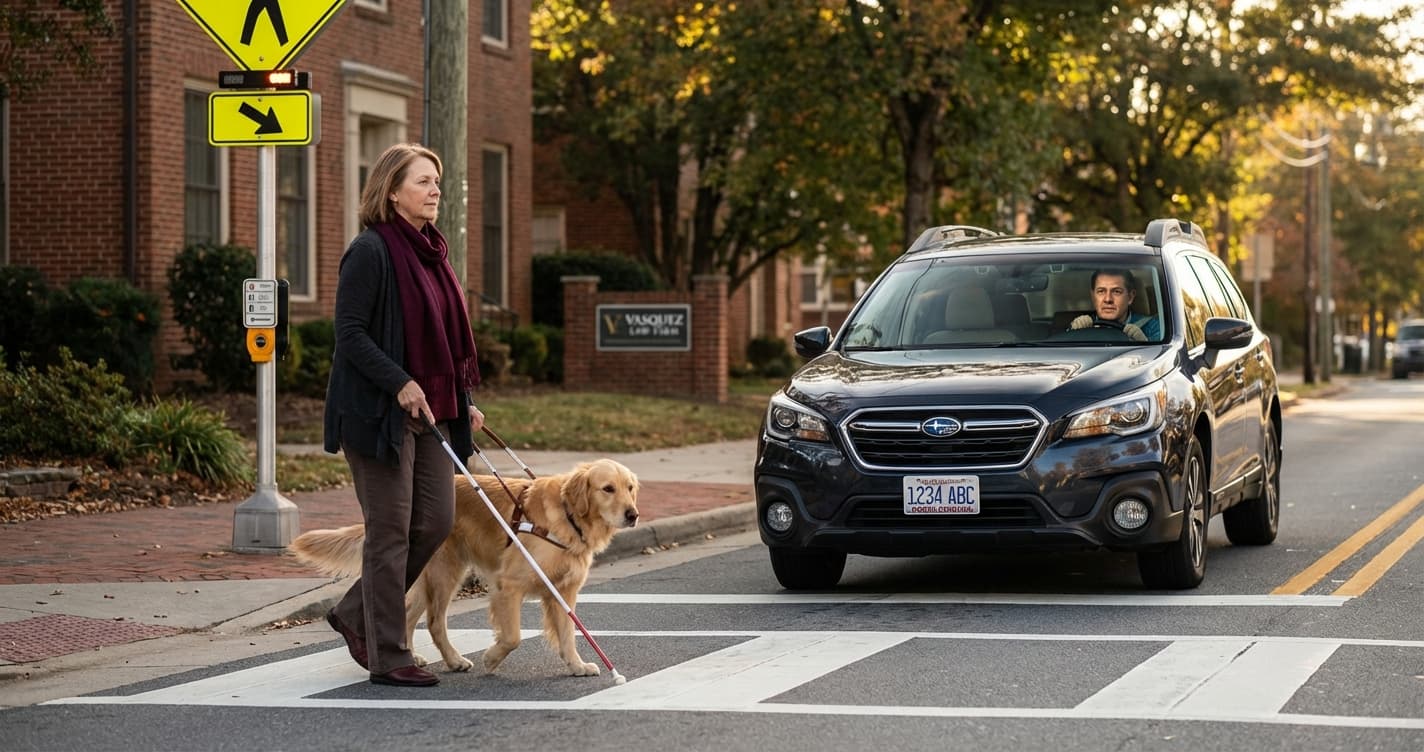
The blind pedestrian law NC is a vital component of North Carolina’s pedestrian safety framework. It requires drivers to yield the right of way immediately and completely to any blind pedestrian using a white cane or guide dog.
Under this law, failing to stop for a blind pedestrian is a strict liability offense, meaning intent is not required for a conviction. Violations carry severe penalties, including higher fines and points, and may result in license suspension pedestrian proceedings.
Drivers must remain stopped until the blind pedestrian has fully crossed or safely reached the sidewalk. This law aligns with federal accessibility standards and ensures that visually impaired individuals can navigate public roads safely.
For more information on the rights of blind pedestrians, refer to the NCDOT Blind Pedestrian Safety Guide.
Traffic Ticket Defense NC for Pedestrian Violations
When charged with traffic violations NC involving pedestrian safety, mounting an effective traffic ticket defense NC is essential. Drivers should not assume guilt automatically, as many cases can be contested or mitigated with the right legal support.
Should I Fight My Traffic Ticket?
Find out if it's worth fighting
Question 1 / 3
What were you cited for?
Common defenses include disputing the pedestrian’s location (e.g., jaywalking), visibility conditions, or the driver’s ability to stop safely. In some cases, technicalities such as improperly marked crosswalks or malfunctioning signals may also be relevant.
Consulting with skilled legal counsel like Jessica Vasquez can help reduce penalties, avoid license suspension pedestrian outcomes, and preserve your driving record.
If you receive a ticket, it is important to act quickly. Scheduling a free case evaluation can provide clarity on your options and next steps.
Facing a traffic violation NC charge for failing to yield pedestrian or related offenses? Call 1-844-967-3536 now for trusted advice from Vasquez Law Firm. Se Habla Espanol.
License Suspension Pedestrian and Other Penalties in NC
Severe violations of the NC pedestrian crossing law, such as repeated failing to yield pedestrian offenses or causing injury, can lead to license suspension pedestrian consequences. The North Carolina DMV has the authority to suspend or revoke driving privileges based on points accumulated from traffic violations NC.
Keep Reading
License suspension durations vary depending on the severity and frequency of offenses. In some cases, reinstatement requires completing defensive driving courses or providing proof of insurance.
Besides suspension, drivers may face fines, community service, or even criminal charges if their actions result in serious injury or death. Understanding the potential legal consequences underscores the importance of compliance with the NC pedestrian crossing law.
For detailed information on license suspension policies, visit the NCDMV License Suspension page.
Pedestrian Safety Tips for Drivers and Pedestrians
Alongside legal compliance, practical safety tips benefit drivers and pedestrians alike in North Carolina. Drivers should always be alert near crosswalks, reduce speed in pedestrian-heavy areas, and avoid distractions such as mobile devices.
Pedestrians are advised to use marked crosswalks whenever possible, obey pedestrian signals, and make eye contact with drivers before crossing. Wearing bright or reflective clothing during low-light conditions also enhances visibility.
Communities including Greensboro and Durham have implemented pedestrian safety education programs to reinforce these habits. Awareness and mutual respect between drivers and pedestrians are key to reducing traffic violations NC and accidents.
Need help with a pedestrian-related traffic ticket or want to understand your rights? Reach out to Vasquez Law Firm at 1-844-967-3536. Contact us today for personalized assistance. Se Habla Espanol.
Frequently Asked Questions
What are the main requirements of the NC pedestrian crossing law?
The NC pedestrian crossing law requires drivers to yield the right of way to pedestrians at both marked and unmarked crosswalks. Drivers must stop completely if a pedestrian is waiting to cross and remain stopped until the pedestrian has safely crossed. This includes special protections for blind pedestrians.
What penalties exist for failing to yield to a pedestrian in North Carolina?
Penalties for failing to yield pedestrian violations include fines from $100 to $500, points on your driver’s license, and possible requirement to attend traffic school. Repeated violations can lead to license suspension pedestrian actions by the DMV.
How does the blind pedestrian law NC protect visually impaired individuals?
The blind pedestrian law NC mandates that drivers must stop immediately and yield the right of way to pedestrians using a white cane or guide dog. Failure to comply carries strict penalties regardless of intent, ensuring safer road access for blind pedestrians.
Can I contest a traffic ticket for failing to yield to a pedestrian?
Yes. Many traffic violations NC involving pedestrians can be contested using defenses such as questioning the pedestrian’s behavior, visibility conditions, or crosswalk markings. Consulting an attorney experienced in traffic ticket defense NC is advisable.
Will a pedestrian-related traffic violation affect my insurance rates?
Most likely, yes. Traffic violations NC that involve failing to yield or causing pedestrian accidents can increase insurance premiums due to added points on your driving record and elevated perceived risk by insurers.
What should I do if I receive a license suspension pedestrian notice?
If you receive a license suspension notice due to pedestrian-related violations, contact an attorney promptly to discuss your options. You may be able to request a hearing, take defensive driving courses, or negotiate terms to minimize suspension length.
Are there special pedestrian crossing rules in cities like Charlotte or Raleigh?
While the NC pedestrian crossing law applies statewide, cities like Charlotte and Raleigh may have additional local ordinances or enhanced crosswalk features. Drivers should always stay updated on both state and local pedestrian safety regulations.
Where can I learn more about pedestrian safety programs in North Carolina?
You can visit the NCDOT Pedestrian Safety page for comprehensive information, resources, and updates on pedestrian safety initiatives across North Carolina.
Contact Vasquez Law Firm for Pedestrian Crossing Law Help
If you have been charged with a traffic violation NC related to the NC pedestrian crossing law or need assistance navigating the complexities of pedestrian safety regulations, the attorneys at Vasquez Law Firm are here to help. We provide knowledgeable and compassionate legal representation tailored to your needs.
Call us today at 1-844-967-3536 for a free case evaluation. Our team, including Jessica Vasquez, has extensive experience handling traffic ticket defense NC and license suspension pedestrian cases in North Carolina’s major cities.
Don’t wait — protecting your driving privileges and legal rights starts with expert advice.
Disclaimer: This blog post is for informational purposes only and does not constitute legal advice. Laws and regulations can change. For personalized legal advice regarding the NC pedestrian crossing law or traffic violations NC, please consult a qualified attorney.
Got a traffic ticket? Our traffic violation attorneys can help.
Related Topics

William Vasquez
Founder & CEO, Vasquez Law Firm, PLLC
William Vasquez is the founder and CEO of Vasquez Law Firm, PLLC, a results-driven firm specializing in immigration, criminal defense, personal injury, and workers' compensation. A U.S. Air Force veteran and recipient of the Joint Service Achievement Medal, William is dedicated to fiercely fighting for his clients' rights.
Related Legal Services
Need legal help? Learn more about our traffic violation legal services, or contact us for a free evaluation.
You can also visit traffic attorneys serving Pitt and Cumberland counties for more information.