What Mass Incarceration Means for Raleigh Residents in 2026
Explore what mass incarceration means in 2026. Learn impacts in Raleigh and how Vasquez Law Firm can help you. Contact us for a free consultation.
Vasquez Law Firm
Published on March 12, 2026
Have questions? Talk to an attorney — free evaluation.
Call 1-844-967-3536What Mass Incarceration Means for Raleigh Residents in 2026
Mass incarceration continues to shape the social and legal landscape in Raleigh in 2026. Its effects extend beyond prisons, impacting families and communities. This article clarifies what mass incarceration means, its causes, legal consequences, and steps you can take if affected. Vasquez Law Firm provides trusted criminal defense services with bilingual support to help individuals navigate these challenges.
Need help with your case? Our experienced attorneys are ready to fight for you. Se Habla Español.
Charged with a Crime?
Protect your freedom. Our criminal defense attorneys are available 24/7 for emergencies.
Schedule Your Free Consultation
Or call us now: 1-844-967-3536
Quick Answer
Mass incarceration is the high rate of imprisonment in the U.S., driven by policies like the war on drugs and sentencing laws. It disproportionately affects communities in Raleigh and creates social and economic challenges.
- Over 2 million people incarcerated nationwide
- High racial disparities in incarceration rates
- Influenced by drug laws and sentencing policies
- Impacts families and community stability
- Legal options exist to challenge or mitigate effects
Understanding Mass Incarceration
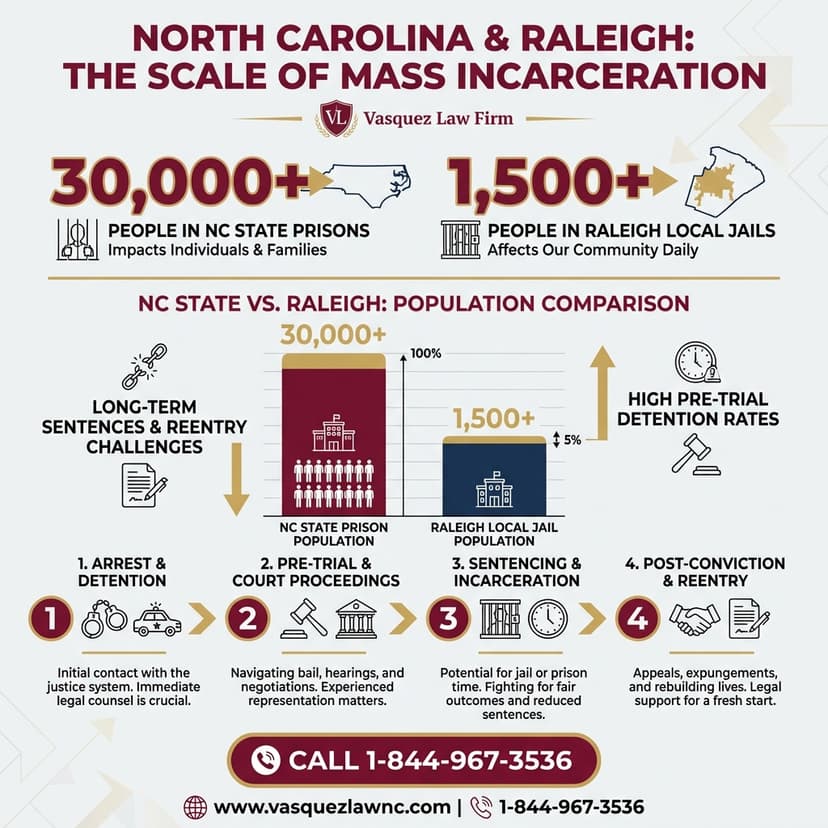
Over 2.3 million people in the United States are incarcerated currently, making it the highest imprisonment rate worldwide. This phenomenon is called mass incarceration. It involves the rapid expansion of the prison population due to tough-on-crime policies, especially since the 1980s. In Raleigh and North Carolina, these trends parallel national data, with significant local impacts.
What Mass Incarceration Means Practically
Mass incarceration means large segments of the population, particularly from minority groups, are jailed at disproportionate rates. This affects entire neighborhoods, disrupts families, and burdens social services. It raises questions about justice fairness and the goals of criminal punishment in modern society.
Statistics Highlighting the Issue
North Carolina incarcerates approximately 450 people per 100,000 residents, slightly below the national average but still very high. Racial minorities are disproportionately represented, with Black individuals incarcerated at nearly five times the rate of white individuals. These disparities fuel ongoing debates about systemic racism and reforms.
Mass Incarceration and Community Impact
The social impacts include increased poverty, reduced economic opportunities, and family instability. Children of incarcerated parents face higher risks of emotional and behavioral problems, affecting Raleigh’s community health and safety.
Causes of Mass Incarceration in Raleigh
The high incarceration rate stems from multiple factors related to criminal law and policy. Understanding these root causes can help you identify options if facing charges or imprisonment in Raleigh.
War on Drugs and Drug Laws
The most significant cause is the war on drugs initiated in the 1980s. Harsh drug laws, mandatory minimum sentences, and three-strikes rules greatly increased prison populations. Despite changes, drug offenses remain the largest group behind bars in North Carolina.
Sentencing Laws and Mandatory Minimums
Mandatory minimum sentences restrict judges' discretion, often leading to longer prison terms regardless of circumstances. This contributes to overcrowding and less individualized justice in Raleigh courts.
Racial Inequality and Policing Practices
Racial profiling and disparities in arrests and convictions contribute heavily. Black and Latino residents in Raleigh face higher policing rates, resulting in disproportionate incarceration. These systemic issues continue despite some reforms.
Probation and Parole Violations
Many inmates return to prison for violating probation or parole, often due to minor or technical infractions. This cycle perpetuates high incarceration numbers without addressing underlying social issues.
Step-by-Step: What to Do if Affected
- Get a Skilled Criminal Defense Lawyer – Contact Vasquez Law Firm promptly for an experienced advocate in Raleigh.
- Understand Your Charges – Learn the specific laws and potential penalties involved.
- Gather Relevant Documents – Collect police reports, court records, and evidence.
- Comply With Court Orders – Stay on top of hearings, probation terms, and deadlines.
- Explore Alternatives – Ask your lawyer about diversion programs, plea options, or sentence reductions.
- Support Your Well-being – Incarceration affects mental and physical health — maintain support networks.
- Prepare for Reentry – If incarcerated, work with your attorney on plans for release and reintegration.
Common Mistakes to Avoid
- Ignoring early legal advice: Early representation is crucial to avoid harsh sentences.
- Missing court dates: Can lead to warrants and additional penalties.
- Violating probation terms: Simple violations can cause reincarceration.
- Not understanding rights: Know your Miranda rights and court procedures.
- Speaking without a lawyer: Anything said to police can be used against you.
- Failing to gather evidence: Documentation can support your defense.
- Underestimating the impact: Incarceration affects more than freedom; it impacts jobs and family.
If you only remember one thing: early, knowledgeable legal help is essential to protect your rights and future.
Costs and Legal Fees to Know
- Attorney Fees: Vary depending on case complexity, charges, and defense strategy.
- Court Costs: Filing fees, fines, and assessments may apply during trial or sentencing.
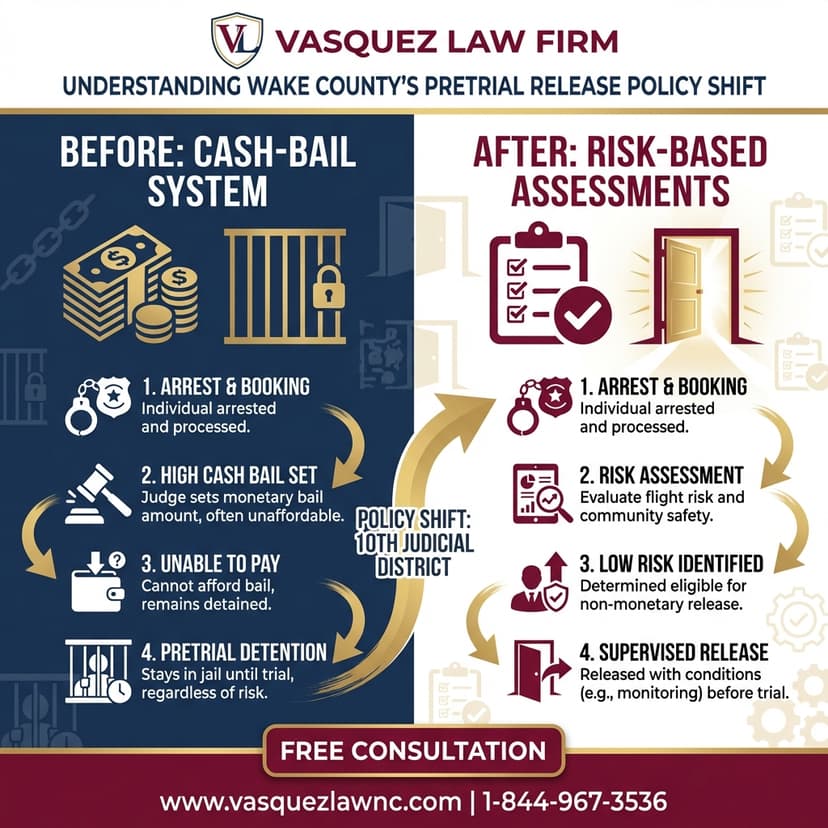
- Bail or Bond: Often required to release from custody before trial.
- Alternative Programs: Drug treatment or diversion may have related costs but can reduce jail time.
- Hidden Costs: Lost income, travel expenses, and childcare can accumulate during legal proceedings.
Timeline: What to Expect
- Day 1-7: Arrest, booking, and first court appearance.
- Week 2-4: Preliminary hearings and bail hearings.
- Month 1-3: Discovery phase, legal consultations, plea negotiations.
- Month 4-6: Trial or plea agreement if applicable.
- Month 6-12: Sentencing and possible appeals or motions.
- Post-Trial: Sentencing compliance, probation, or incarceration.
NC and FL Legal Notes on Incarceration
North Carolina Notes
North Carolina uses structured sentencing that considers prior record and offense class. Probation is commonly used. Recent reforms address some mandatory sentences but many cases still face significant prison terms. Local courts in Raleigh implement these laws under state guidelines.
Florida Notes
Florida has strict sentencing laws with mandatory minimums for many crimes. The state has enrolled in early release programs and alternative sentencing but incarceration remains high. Florida criminal defense attorneys must navigate these complex statutes to advocate effectively.
Nationwide Concepts
Federal laws impact drug sentences, and large disparities exist between federal and state systems. Federal prisoners often serve longer sentences. Nationwide, there is growing advocacy to reform sentencing laws and offer alternatives to incarceration.
When to Call a Lawyer Now
- If you are arrested or charged with a crime in Raleigh
- When facing felony drug or violent crime allegations
- If probation violation is suspected or alleged
- After a denied bail or parole hearing
- If you need help understanding your sentencing options
- When police question you or request statements
- If you experience delays or procedural errors in your case
- To plan for reentry after incarceration
About Vasquez Law Firm
At Vasquez Law Firm, we combine compassion with aggressive representation. Our motto "Yo Peleo" (I Fight) reflects our commitment to standing up for your rights.
- Bilingual Support: Se Habla Español - our team is fully bilingual
- Service Areas: North Carolina, Florida, and nationwide immigration services
- Experience: Over 15 years helping clients navigate complex legal matters
- Results: Thousands of successful cases across multiple practice areas
Attorney Trust and Experience
Attorney Vasquez holds a Juris Doctor degree and is admitted to practice in both the North Carolina State Bar and Florida Bar. With over 15 years of dedicated legal experience, he has built a reputation for providing personalized attention and achieving favorable outcomes for his clients.
Don't wait to get the help you deserve. Call us now for immediate assistance.
Se Habla Español
Frequently Asked Questions
What does mass incarceration mean?
Mass incarceration refers to the large number of people imprisoned in the United States due to laws and policies that expanded prison sentences. It often disproportionately affects minority communities, contributing to social and economic challenges beyond the prison walls.
What is the biggest cause of mass incarceration?
The war on drugs and resulting harsh drug laws with mandatory minimum sentences are the biggest factors driving mass incarceration. These policies led to increased arrests and longer sentences, especially in communities of color.
Is mass incarceration still happening?
Yes, mass incarceration remains a major reality in 2026, with the U.S. maintaining one of the highest incarceration rates globally despite some reforms and efforts to reduce prison populations.
What country has the highest incarceration rate?
The United States has the highest incarceration rate in the world, exceeding 600 inmates per 100,000 people, reflecting persistent sentencing and systemic challenges.
How Serious Are My Charges?
Find out what you're facing and your options
Question 1 / 3
What are you charged with?
Keep Reading
How does racial inequality relate to mass incarceration?
Racial inequality shows in the overrepresentation of Black and Latino individuals in prisons, driven by discriminatory policing, prosecution, and sentencing practices.
What are common legal mistakes people make regarding incarceration?
Failing to seek early legal advice, missing court dates, misunderstanding charges, and violating probation terms are common errors that worsen outcomes in incarceration cases.
Can mass incarceration be reduced in North Carolina?
Reforms in sentencing, expanded diversion programs, and addressing racial disparities are key to reducing mass incarceration in North Carolina.
What should I do if a loved one faces incarceration in Raleigh?
Contact a criminal defense lawyer immediately, stay informed on their case, and provide support throughout the legal process to protect their rights and future.
Sources and References
Take the first step toward justice today. Our team is standing by to help.
Start Your Free Consultation Now
Call us: 1-844-967-3536
Se Habla Español - Estamos aquí para ayudarle.
Vasquez Law Firm
Legal Team
Our experienced attorneys at Vasquez Law Firm have been serving clients in North Carolina and Florida for over 30 years. We specialize in immigration, personal injury, criminal defense, workers compensation, and family law.
Related Legal Services
Need legal help? Learn more about our criminal defense law practice, or contact us for a free evaluation.
You can also visit North Carolina criminal defense lawyers for more information.