Kentucky Tuition Policy: What Dreamers Should Know in 2026
Learn about the Kentucky tuition policy changes in 2026 and how recent appeals impact Dreamers. Get guidance and start your case with Vasquez Law today.
Published on April 6, 2026
Talk to an immigration attorney
Free call. A clear plan for your case.
Free & confidential · Se habla espanol · 24/7
Have questions? Talk to an attorney - free evaluation.
Call 1-844-967-3536Worried how the latest immigration news affects you?
Get a free, confidential case review with an immigration attorney - know exactly where you stand.
Kentucky Tuition Policy: What Dreamers Should Know in 2026
The Kentucky tuition policy affects many Dreamers seeking affordable access to higher education. In 2026, recent court rulings blocked in-state tuition for undocumented students, prompting appeals by Latino civil rights groups. This article explains the current policy landscape, the ongoing legal battles, and what students in Smithfield and beyond need to know. If you or your family is affected, understanding these changes is critical to protect your rights and educational future.
Need help with your case? Our experienced attorneys are ready to fight for you. Se Habla Español.
Schedule Your Free Consultation
Or call us now: 1-844-967-3536
Quick Answer
The Kentucky tuition policy blocks undocumented students, including many Dreamers, from qualifying for in-state tuition, increasing their education costs. Latino civil rights groups have filed appeals against this order blocking access. If you are a Dreamer in Smithfield, staying informed and seeking legal advice is essential to protect your educational opportunities.
- Recent court ruling blocks in-state tuition
- Latino civil rights groups filed appeals
- Policy affects undocumented and Dreamer students
- Smithfield students impacted
- Knowing your rights helps protect access
Understanding Kentucky Tuition Policy
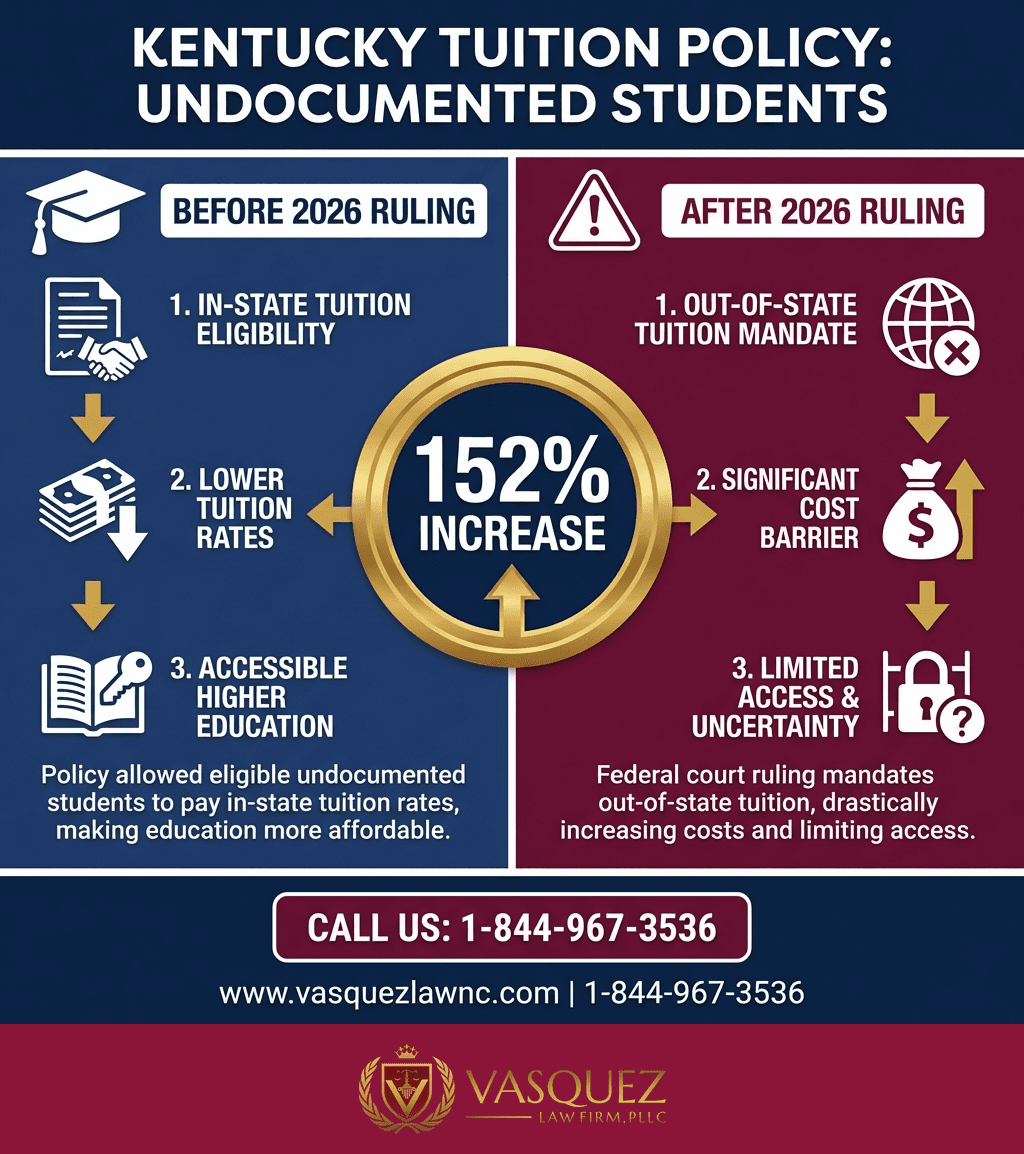
Imagine you are a Dreamer attending college in Kentucky and suddenly find that you no longer qualify for in-state tuition rates. This scenario became reality in recent months following an order blocking undocumented students from paying lower tuition fees. The Kentucky tuition policy traditionally allowed certain undocumented students who met residency criteria to pay in-state tuition. However, in 2026, a federal court issued a ruling reversing this, which means many students now face significantly higher costs.
These changes come as a result of legal challenges brought by opponents of the policy. Latino civil rights groups have noted the impact on students pursuing higher education under uncertain immigration circumstances. These groups argue that overturning the tuition policy could increase the number of students unable to attend college due to cost barriers.
Students in Smithfield and across the state must navigate this shifting regulatory environment. It is important to understand both the legal background and practical effects of the Kentucky tuition policy changes. For more on immigration and tuition issues, visit our immigration services page to learn how we support Dreamers and their families.
Historically, Kentucky's tuition policy was designed to provide a pathway for undocumented students who had established residency and demonstrated academic commitment to access higher education affordably. This approach aligned with broader state efforts to promote educational attainment and workforce development. Many Dreamers who had grown up in Kentucky relied on this policy to pursue degrees without incurring prohibitive costs, enabling them to contribute meaningfully to their communities.
For example, a student from Smithfield who graduated from a local high school and lived in Kentucky for several years was previously eligible for in-state tuition. The policy acknowledged their ties to the community despite their immigration status. With the recent court ruling, however, this student now faces out-of-state tuition rates that can be double or triple the in-state fees, potentially forcing them to reconsider their educational plans or take on significant debt.
In practical terms, this shift has ripple effects beyond tuition fees. Many students face housing and transportation challenges that are compounded by increased financial burdens. The loss of in-state tuition eligibility can lead to delayed graduations, reduced enrollment, and even dropout, which in turn impacts workforce diversity and economic growth in Kentucky. Understanding these nuances helps students and families prepare and seek appropriate support.
Legal Challenges and Appeals
Following the order blocking in-state tuition for undocumented students, Latino civil rights groups quickly filed appeals hoping to reverse the ruling. For example, maldef, a prominent legal advocacy organization, stated their intention to challenge the order, citing its harmful effects on student access and fairness.
A previous filing from these groups outlined arguments that the regulation violates equal protection principles and undermines education rights. They emphasize that overturning the Kentucky tuition policy could increase educational disparities and limit opportunities for the students most in need.
As of 2026, the appeal process is ongoing. Dreamers in Smithfield and elsewhere should pay close attention to this legal battle because it directly affects their tuition fees and access to affordable education.
Attorney Vasquez and the Vasquez Law Firm team provide personalized guidance to those impacted. You can contact our office for help understanding the latest legal developments and how they might affect your specific situation.
Key Arguments in the Appeals
The appeals filed by Latino civil rights organizations hinge on several critical legal points. One major argument is that denying in-state tuition to undocumented students who have met residency requirements constitutes discrimination based on immigration status, which conflicts with established equal protection laws. Advocates assert that education should be accessible regardless of immigration status, especially when students have contributed to their communities.
Another important contention is that the policy reversal disproportionately impacts minority students and widens educational inequities. The groups argue that the policy change undermines Kentucky’s commitment to diversity and inclusion within its public institutions. They also highlight the broader social and economic benefits of educating all residents, regardless of status.
In addition, the appeals address procedural concerns, claiming that the sudden policy change lacked sufficient public input and failed to consider the hardship imposed on students. These legal challenges aim to restore in-state tuition benefits while promoting fairness and educational equity.
Practical Impact of the Appeals Process
While the appeals are underway, the uncertainty around tuition eligibility creates confusion for students and families. Some colleges have paused enrollment decisions or implemented temporary measures to assist affected students. For example, certain institutions in Kentucky have started offering emergency financial aid or partial tuition waivers to mitigate the burden during this interim period.
Students in Smithfield have organized community meetings and advocacy efforts to raise awareness and support for the appeals. These grassroots initiatives emphasize the importance of collective action and staying informed about legal developments. The ongoing litigation serves as a reminder that education policies are subject to change and that legal recourse is a vital tool for protecting rights.
Step-by-Step: What Dreamers Should Do
- Stay Informed: Monitor news and legal updates on Kentucky tuition policy, including any changes resulting from appeals.
- Gather Documents: Collect proof of residency, enrollment, and immigration status to support your eligibility.
- Consult an Immigration Attorney: Speak with an experienced lawyer familiar with tuition laws and immigration, like Attorney Vasquez.
- Submit Appeals if Eligible: If affected, explore options to participate in or support ongoing appeals filed by Latino civil rights groups.
- Consider Alternative Resources: Research scholarships, grants, or out-of-state tuition options while legal challenges proceed.
Following these steps helps you proactively protect your educational goals amid legal uncertainties.
Detailed Guidance for Each Step
Stay Informed: Regularly check official university websites, local news outlets, and legal advocacy organizations for updates. Join email lists or social media groups focused on Dreamer rights in Kentucky to receive timely alerts. Staying informed helps you avoid missing critical deadlines and opportunities.
Gather Documents: Important documents include proof of continuous residency in Kentucky (such as utility bills or leases), high school transcripts, enrollment verification, and any immigration paperwork. Organize these documents carefully, as they will be essential for appeals or scholarship applications.
Consult an Immigration Attorney: Legal experts can evaluate your case, explain eligibility criteria, and assist with appeals or alternative options. An attorney can also help you understand how federal and state laws interact in your situation.
Submit Appeals if Eligible: If you meet criteria to challenge the tuition decision, work with legal counsel and advocacy groups to file appeals timely. Participation can increase your chances of regaining in-state tuition status or influence policy changes.
Consider Alternative Resources: Explore scholarship programs designed for undocumented students, such as private foundations or community organizations. Additionally, research out-of-state tuition reciprocity agreements or online degree programs that might offer cost savings.
Scenario Example
Maria, a Dreamer from Smithfield, recently learned her in-state tuition eligibility was revoked. By following these steps, she gathered her residency records, consulted Attorney Vasquez, and joined a community appeal effort. Meanwhile, she applied for scholarships through local nonprofits and enrolled in a hybrid online program to manage costs. This proactive approach allowed her to continue her education despite policy changes.
Common Mistakes to Avoid in Tuition Cases
- Failing to Seek Legal Help: Many affected students try to navigate changes alone. Legal guidance saves time and stress.
- Missing Important Deadlines: Appeals and applications have strict timelines. Missing these can limit your options.
- Not Keeping Updated Records: Accurate documentation supports your case and tuition claims.
- Assuming State Policy Applies Nationwide: Tuition regulations vary; understand Kentucky-specific rules.
- Ignoring Alternate Funding Sources: Overlooking scholarships can increase financial strain unnecessarily.
- Overlooking Local Advocacy Groups: Community organizations often provide critical support and information.
- Believing the Policy Changes Are Final: Appeals could change the outcome; staying hopeful and engaged matters.
If you only remember one thing: Don’t delay consulting an immigration attorney to explore your rights and options under the Kentucky tuition policy.
Expanded Explanation of Common Mistakes
Failing to Seek Legal Help: Attempting to handle tuition disputes without legal counsel can lead to missed opportunities and misunderstandings of complex laws. Attorneys specializing in immigration and education laws can clarify your rights and guide you through appeals or alternative avenues.
Missing Important Deadlines: Legal actions and financial aid applications often have non-negotiable deadlines. Missing these can result in losing eligibility for tuition relief or scholarship programs. Keep a calendar and set reminders to stay on track.
Not Keeping Updated Records: Continuously updating and safeguarding important documents is crucial. Incomplete or outdated records weaken your case and delay processes.
Assuming State Policy Applies Nationwide: Every state has different tuition and immigration policies. Relying on information from other states can lead to confusion. Always verify Kentucky-specific regulations and consult local experts.
Ignoring Alternate Funding Sources: Many students overlook scholarships or grants targeted at undocumented or immigrant students. Researching these resources early can reduce financial burdens significantly.
Overlooking Local Advocacy Groups: Local organizations often offer workshops, legal clinics, and advocacy efforts that provide valuable support. Engaging with these groups can connect you with resources and community allies.
Believing the Policy Changes Are Final: Legal challenges and appeals can result in policy reversals or modifications. Staying engaged in the process and informed about developments can empower you to act promptly when changes occur.
Example Case
Juan, a Dreamer student, thought the tuition ruling was final and did not seek legal help. As a result, he missed the appeal deadline and lost access to in-state tuition benefits. After consulting an attorney later, he learned that timely legal action could have preserved his eligibility. This illustrates the importance of early and informed intervention.
Timeline and What to Expect
A typical timeline following the blocking of Kentucky's tuition policy includes:
- Initial Court Order (Early 2026): The order blocking tuition was issued.
- Appeal Filing (Spring 2026): Latino civil rights groups officially filed appeals.
- Court Hearings (Summer to Fall 2026): Multiple hearings review the appeal arguments.
- Potential Interim Policy Updates: Temporary measures may be implemented affecting tuition fees.
- Final Court Decision (Late 2026): A ruling may confirm or reverse the blocking policy.
Students in Smithfield should plan for potential fluctuations in tuition costs and eligibility during this period. Staying connected to legal advisors ensures you receive timely advice on what to expect.
Additional Considerations in the Timeline
During the appeal process, universities and state agencies may issue guidance or temporary policies to assist affected students. For example, some institutions might honor previous residency determinations for the current academic year or offer deferred payment plans. However, these interim solutions are subject to change based on court rulings.
Students should also prepare for the possibility that the final court decision may not be favorable. In such cases, alternative pathways such as transferring to institutions in other states, enrolling in community colleges with lower tuition, or utilizing online programs may be necessary. Planning ahead can reduce disruption to educational progress.
Community advocacy and legislative efforts may also continue alongside the legal process. State lawmakers could introduce bills aimed at restoring in-state tuition eligibility for Dreamers, which might impact future policies. Staying engaged with advocacy groups can provide updates on such developments.
Scenario: Planning for Uncertainty
Elena, a Dreamer from Smithfield, learned about the timeline and began budgeting for possible tuition increases. She consulted with her attorney to understand appeal progress and reached out to the financial aid office to explore emergency funding. By preparing for multiple outcomes, she minimized stress and maintained focus on her studies.
Frequently Asked Questions
What is the Kentucky tuition policy for undocumented students?
The Kentucky tuition policy previously allowed eligible undocumented students to pay in-state tuition if they met residency and other criteria. Recent court decisions have blocked this, meaning many undocumented students now must pay higher out-of-state tuition fees. This change significantly increases financial barriers and affects students’ ability to attend college affordably. The policy shift has sparked legal challenges and ongoing appeals aimed at restoring in-state tuition eligibility for Dreamers and other undocumented students.
Who filed the appeal against the order blocking in-state tuition?
Latino civil rights groups, including maldef (Mexican American Legal Defense and Educational Fund), have filed appeals challenging the federal court order. These groups argue that blocking in-state tuition violates equal protection rights and harms Dreamers’ access to education. They emphasize the importance of fair educational opportunities regardless of immigration status and are actively advocating for policy reversal through legal channels. Their efforts include community outreach, legal filings, and collaborating with affected students.
How does this policy affect Dreamers living in Smithfield?
Dreamers in Smithfield may no longer qualify for in-state tuition under the blocked policy, making college admission and attendance significantly more expensive. This financial impact can limit access to higher education and force students to make difficult decisions about their academic futures. Dreamers should seek legal advice to explore options such as appeals, alternative funding, or enrollment in programs that may offer reduced rates. Staying informed about ongoing legal developments is also critical for Smithfield residents.
Can Dreamers still receive financial aid if the tuition policy is blocked?
Financial aid eligibility varies by program and immigration status. Some scholarships and private grants are available regardless of immigration status, while many state-based aid programs require in-state tuition eligibility or legal residency. Blocking the tuition policy may reduce access to state-funded aid but does not eliminate all financial assistance options. Consulting a legal expert or financial aid advisor can help Dreamers identify available resources and understand application requirements to maximize support.
What steps should Dreamers take after the tuition policy change?
Dreamers should gather documentation proving residency and prior enrollment, consult an immigration attorney experienced with tuition laws, and monitor appeal progress to adjust plans accordingly. Additionally, exploring scholarships, grants, and alternative education options can help mitigate financial challenges. Staying connected to community advocacy groups and legal experts provides valuable support during this uncertain time. Proactive planning and seeking guidance are essential to protect educational opportunities.
Is the appeal likely to succeed in restoring in-state tuition?
The appeal is ongoing, and its outcome remains uncertain. Courts will evaluate arguments related to equal protection and educational access, but no guarantees exist regarding success. The legal process can be lengthy and complex. Staying informed about court developments and consulting with an attorney can help Dreamers prepare for various outcomes. Advocacy efforts and community support may also influence future policy changes, emphasizing the importance of engagement.
How does this tuition policy change relate to federal immigration laws?
Federal immigration laws, such as those outlined in 8 U.S.C. § 1255, govern the legal status and adjustment of status for immigrants, including Dreamers. However, states have authority to regulate tuition policies for public institutions. Conflicts arise when states impose restrictions based on immigration status that may clash with federal protections or principles of equal treatment. These tensions lead to legal challenges aiming to reconcile state educational policies with federal immigration frameworks, impacting Dreamers’ rights and access.
Where can Dreamers get help understanding these changes?
Organizations like Vasquez Law Firm offer bilingual legal assistance and guidance on how immigration and tuition policy changes affect Dreamers in Smithfield and nationwide. Local advocacy groups, community centers, and university resource offices may also provide information and support. Accessing expert advice early can clarify rights, eligibility, and options, helping Dreamers navigate complex legal and educational landscapes effectively. Contacting reputable legal and community resources is strongly recommended.
About Vasquez Law Firm
At Vasquez Law Firm, we combine compassion with aggressive representation. Our motto "Yo Peleo" (I Fight) reflects our commitment to standing up for your rights. We understand how tuition policies impact Dreamers and undocumented students, and we are here to guide you through every step.
- Bilingual Support: Se Habla Español - our team is fully bilingual
- Service Areas: North Carolina, Florida, and nationwide immigration services
- Experience: Over 30 years helping clients navigate complex legal matters
- Results: Thousands of successful cases across multiple practice areas
Attorney Trust and Experience
Attorney Vasquez holds a Juris Doctor degree and is admitted to practice in both the North Carolina State Bar and Florida Bar. With over 30 years of dedicated legal experience, he has built a reputation for providing personalized attention and achieving favorable outcomes for his clients.
His expertise includes immigration law, education law, and civil rights advocacy, making him a valuable ally for Dreamers facing challenges related to tuition policies. Attorney Vasquez and his team emphasize clear communication, cultural understanding, and strategic legal approaches tailored to each client's unique circumstances.
Clients appreciate the firm’s responsiveness and commitment to fighting for just outcomes in often complex and emotionally charged cases. Whether you need assistance with tuition appeals or broader immigration issues, Vasquez Law Firm offers trusted support.
Don't wait to get the help you deserve. Call us now for immediate assistance. Se Habla Español.
Sources and References
- U.S. Citizenship and Immigration Services (USCIS)
- Executive Office for Immigration Review
- 8 U.S.C. § 1255 - Adjustment of Status
Take the first step toward justice today. Our team is standing by to help. Se Habla Español.
Start Your Free Consultation Now
Call us: 1-844-967-3536
Se Habla Español - Estamos aquí para ayudarle.


William Vasquez
Founder & CEO, Vasquez Law Firm, PLLC
William Vasquez is the founder and CEO of Vasquez Law Firm, PLLC, a results-driven firm specializing in immigration, criminal defense, personal injury, and workers' compensation. A U.S. Air Force veteran and recipient of the Joint Service Achievement Medal, William is dedicated to fiercely fighting for his clients' rights.
Related Legal Services
Need legal help? Learn more about how our immigration attorneys can help, or contact us for a free evaluation.
You can also visit our North Carolina immigration practice for more information.