Juvenile Criminal Defense Attorney Near Me | North Carolina
Need a juvenile criminal defense attorney near me? Learn your child’s rights and next steps. Call 1-844-967-3536 for help (Se Habla Español).
Published on January 25, 2026· Updated February 11, 2026
Have questions? Talk to an attorney - free evaluation.
Call 1-844-967-3536Protect Your Record and Your Freedom
A free, confidential case review - available 24/7 for emergencies.
Juvenile Criminal Defense Attorney Near Me | Charlotte
Searching for a juvenile criminal defense attorney near me can feel urgent and scary—especially when your child has been questioned by police, cited at school, or taken to juvenile detention. The juvenile system is different from adult court, but the stakes are still high: school discipline, probation, driver’s license issues, and long-term records. This guide explains how juvenile cases work in North Carolina, what to do right away, and how to protect your child’s future.
Need legal help?
Free 15-minute consultation. We handle immigration, traffic, criminal, and personal injury matters in NC and FL.
Worried about your child’s case? Talk to a defense lawyer before your child answers more questions. Call 1-844-967-3536 or request a free consultation. Se Habla Español.
What This News Means for Charlotte Families
Why a DUI story still matters in juvenile cases
Recent legal commentary about DUI defense highlights a key point: early legal guidance can change the outcome of a case. Even though the article focuses on DUI, the same lesson applies in juvenile court—whether the allegation is underage drinking, vaping, assault, shoplifting, or drug possession.
A reminder to act early (and carefully)
Media coverage like this news report about defense strategy is a good reminder: what you say to police, a school resource officer, or even a friend can be used later.
Local impact: school incidents and police referrals
In charlotte, juvenile charges often begin with a school report, a police referral, or a parent calling for help during a family conflict. A defense plan should consider the court case and the real-life impact on school, sports, and home rules.
How Juvenile Court Works in North Carolina (Plain English)
Juvenile court is different from adult court
North Carolina juvenile court focuses on rehabilitation, not punishment. But “rehabilitation” can still involve strict supervision, treatment programs, community service, curfews, and detention in serious cases.
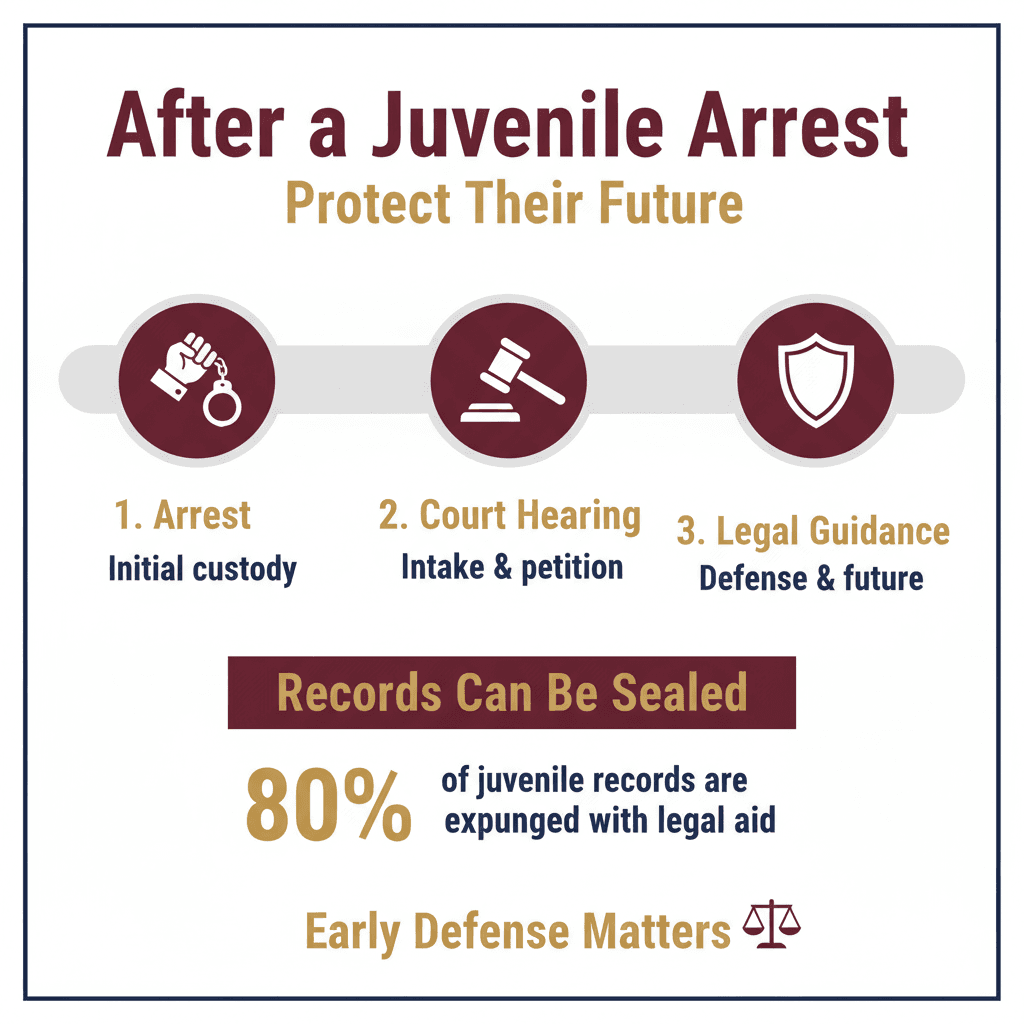
The juvenile process usually includes:
- Complaint/referral (from police, school, or a victim)
- Intake with a juvenile court counselor
- Petition (the formal charging document)
- Detention hearing (if the child is held)
- Adjudication (similar to a trial)
- Disposition (similar to sentencing)
Age, jurisdiction, and when a case can become adult
North Carolina generally treats most offenses committed under age 18 in juvenile court, but some offenses can lead to transfer to superior court (adult court) depending on the child’s age and the charge. This is one reason parents often search “juvenile criminal defense attorney near me” immediately—because early steps can affect where the case is heard and how it ends.
Who is involved: counselors, prosecutors, and judges
Juvenile cases may involve a juvenile court counselor, a prosecutor, a judge, and sometimes school officials. Each has a role, but none is responsible for protecting your child’s rights the way your defense lawyer is.
Your Child’s Rights During Questioning and Arrest
Miranda and juvenile custody rules (why it’s complicated)
Juveniles have constitutional rights, including the right to remain silent and the right to counsel. The U.S. Supreme Court has recognized that a child’s age matters when deciding whether they are “in custody” for Miranda purposes. In J.D.B. v. North Carolina, 564 U.S. 261 (2011), the Court held that a child’s age is relevant to the custody analysis—important for school-based questioning.
North Carolina’s Juvenile Code protections
North Carolina law provides specific protections for juveniles in delinquency proceedings, including the right to counsel in many situations and rules about how juveniles may be questioned. A commonly cited statute is N.C. Gen. Stat. § 7B-1501 (rights of juveniles), which outlines key procedural rights.
What parents should do immediately
If your child is questioned or arrested, take these steps:
- Stay calm and gather facts (who, what, where, when).
- Tell your child not to discuss the case with anyone but you and your attorney.
- Ask if your child is free to leave and request legal counsel.
- Save evidence (texts, social media, video, witness names).
Parents often look for a “juvenile criminal defense attorney near me” because the first 24–48 hours can shape the whole case—especially if the child is held for a detention hearing.
Common Juvenile Charges and Real-World Consequences
School-based allegations (vaping, fights, threats)
Many juvenile cases start at school. Common allegations include simple assault, communicating threats, possession of controlled substances, vaping products, or weapons-related accusations. School discipline can move fast, so legal advice should consider both the court case and school consequences.
Theft, shoplifting, and drug allegations
Shoplifting and drug possession charges can trigger court supervision, restitution, and treatment requirements. Even when diversion is possible, it often comes with conditions that must be completed on time.
Will this “follow” my child?
Juvenile records are not the same as adult criminal records, but they can still matter for:
- School discipline and alternative placements
- College applications and scholarships
- Military eligibility
- Future court exposure if there are new allegations
An effective defense focuses on reducing charges, protecting privacy when possible, and positioning the child for the best long-term outcome.
Need guidance right now? If you’re searching for a juvenile criminal defense attorney near me, call 1-844-967-3536 to speak with our team. You can also message us here. Se Habla Español.
How Vasquez Law Firm, PLLC Builds a Strong Juvenile Defense
Experience, credentials, and bilingual support
Vasquez Law Firm, PLLC defends clients in criminal and juvenile matters with a focus on practical solutions and clear communication. Attorney Vasquez, JD has 15 years of experience and is admitted to the North Carolina State Bar and the Florida Bar. Se Habla Español, and we welcome Spanish-speaking families who want answers they can understand.
What we look at first: evidence, procedures, and options
A juvenile defense is not one-size-fits-all. We often evaluate:
- Legality of the stop, search, and questioning (including at school)
- Witness reliability and surveillance video
- Digital evidence (texts, social posts, device searches)
- Alternatives to court like diversion, counseling, or community programs
When appropriate, we push for outcomes that avoid detention, reduce the charge level, or resolve the case without a lasting stigma.
Local knowledge matters in juvenile court
Serving charlotte residents means understanding how cases typically move through local courtrooms, how juvenile intake may operate, and how detention decisions are often made. If your child’s matter is connected to the Mecklenburg County Courthouse area or involves a school incident, local context can help shape the defense approach.
Learn more about our Criminal Defense services and meet our team on the Attorney Vasquez page.
How to Choose the Right “Juvenile Criminal Defense Attorney Near Me”
How Serious Are My Charges?
Find out what you're facing and your options
Question 1 / 3
What are you charged with?
Keep Reading

Questions to ask before you hire
When you’re comparing lawyers, ask direct questions like:
- How many juvenile cases have you handled?
- What is the plan for the first hearing or intake meeting?
- Will you look for diversion or fight the petition?
- How do you communicate with parents and the child?
Red flags to avoid
Be cautious if a lawyer:
- Promises a guaranteed result
- Does not explain juvenile court steps in simple terms
- Does not ask for documents, timeline details, or witness info
- Pushes a quick plea without reviewing evidence
Why “near me” is more than convenience
Parents search “juvenile criminal defense attorney near me” because they need someone who can appear quickly, knows local procedures, and can help coordinate with counselors, schools, and courts. Proximity can also help with last-minute hearings and tight deadlines.
Frequently Asked Questions (Juvenile Defense)
1) Do I need a lawyer for a juvenile case if it’s “just” school trouble?
Often, yes. School issues can lead to court referrals, and statements made at school may be used later. A lawyer can advise your child on silence, help gather evidence, and work toward diversion or dismissal when possible.
2) Can my child be detained (held) before court?
Yes. In certain cases, a juvenile can be held for a detention hearing. The decision may depend on the allegation, prior history, and perceived safety risks. A defense attorney can argue for release, propose supervision plans, and challenge weak evidence.
3) What is “diversion,” and is my child eligible?
Diversion can allow a juvenile to complete conditions (like counseling, community service, restitution, or classes) instead of going deeper into court. Eligibility depends on the charge, prior record, and the juvenile counselor’s assessment. Legal guidance helps families choose options that truly protect the child.
4) Can the case be moved to adult court?
Some serious allegations and age ranges can trigger transfer considerations. Transfer is a major risk because adult convictions carry harsher penalties and more public records. Early defense work can be critical in fighting transfer and reducing exposure.
5) Should my child talk to police to “clear things up”?
Usually, no—not without a lawyer. Juveniles can misunderstand questions, feel pressure to agree, or try to protect friends. Because age affects how courts view custody and questioning, it is safer to request counsel and get advice first.
6) I’m in Charlotte—what should I bring to the first meeting?
Bring any paperwork (citation, petition, intake letters), the timeline of events, school records related to the incident, names of witnesses, and copies of any video or messages. If you’re searching for a juvenile criminal defense attorney near me in charlotte, having these items ready can speed up the strategy.
Helpful resources: You can find general court information and court locations through the North Carolina Judicial Branch. For statutory text, see the North Carolina General Assembly site for Chapter 7B (Juvenile Code).
Protect your child’s future today. If you need a juvenile criminal defense attorney near me, contact Vasquez Law Firm, PLLC. Call 1-844-967-3536 or schedule your free consultation. Se Habla Español.
Disclaimer: This article is for general information only and does not create an attorney-client relationship. Every juvenile case is different, and outcomes depend on the facts and evidence.

William Vasquez
Founder & CEO, Vasquez Law Firm, PLLC
William Vasquez is the founder and CEO of Vasquez Law Firm, PLLC, a results-driven firm specializing in immigration, criminal defense, family law, personal injury, and workers' compensation. A U.S. Air Force veteran and recipient of the Joint Service Achievement Medal, William is dedicated to fiercely fighting for his clients' rights.
Related Legal Services
Need legal help? Learn more about learn about our criminal defense practice, or contact us for a free evaluation.
You can also visit criminal defense services throughout NC for more information.