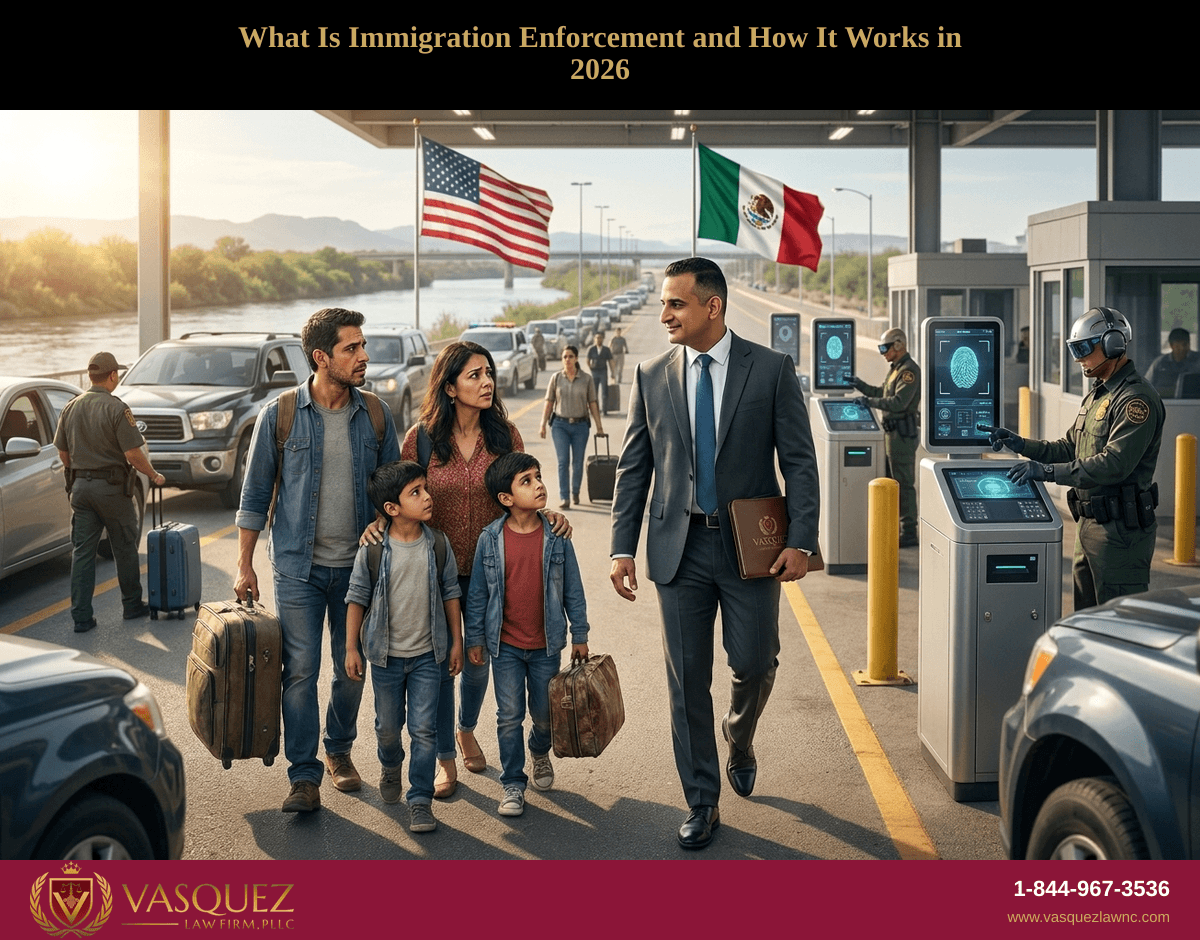
What Is Immigration Enforcement and How It Works in 2026
Wondering what immigration enforcement means in 2026? Learn how ICE operates, your rights, and when to seek help. Contact Vasquez Law for a free consultation.
Published on May 8, 2026
Talk to an immigration attorney
Free call. A clear plan for your case.
Free & confidential · Se habla espanol · 24/7
Have questions? Talk to an attorney - free evaluation.
Call 1-844-967-3536Worried how the latest immigration news affects you?
Schedule a confidential case review with an immigration attorney - know exactly where you stand.
USCIS Case Status
Check your USCIS case status
Enter your receipt number and get the official status. Free, no registration.
What Is Immigration Enforcement and How It Works in 2026
In 2026, immigration enforcement remains a critical and often complex part of U.S. immigration law. Understanding what immigration enforcement entails, how agencies like ICE operate, and what legal rights immigrants have is essential, especially in Orlando and North Carolina where federal immigration actions are regularly present. This article explains immigration enforcement definition, the role of enforcement agents, deportation statistics, and the legal framework guiding actions by immigration authorities. Whether you are facing an enforcement action or want to protect your family, knowing your rights and proper steps can make all the difference.
Need help with your case? Our experienced attorneys are ready to fight for you. Se Habla Español.
Or call us now: 1-844-967-3536
Quick Answer
Immigration enforcement involves federal agencies like ICE enforcing immigration laws by detaining and deporting individuals without legal status. Understanding your rights and legal options is vital if you face enforcement in Orlando or North Carolina.
- ICE and other agencies enforce immigration laws nationwide.
- Enforcement agents can detain individuals suspected of immigration violations.
- You have rights during enforcement, including the right to remain silent.
- Facing enforcement, immediate legal advice can protect your status.
- Recent deportation numbers show active enforcement in 2026.
Understanding Immigration Enforcement
Imagine receiving a knock on your door from an Immigration enforcement agent in Orlando. They represent the federal government tasked with enforcing immigration laws, such as arresting, detaining, or investigating individuals suspected of violating immigration rules. This enforcement includes agencies like Immigration and Customs Enforcement (ICE), Customs and Border Protection (CBP), and the Department of Homeland Security (DHS).
Immigration Enforcement Definition
Immigration enforcement legally refers to the federal government's actions to ensure compliance with immigration statutes (8 U.S.C. §§ 1101 et seq.). It covers identifying unauthorized immigrants, detaining those subject to removal, conducting raids, and initiating deportation proceedings. Enforcement agents operate under federal authority, and their primary goal is to uphold immigration regulations.
Role of Immigration Enforcement Agents
Immigration enforcement agents are officers empowered to investigate, detain, and apprehend individuals violating immigration laws. Agents from ICE conduct interior enforcement, while CBP focuses on border security. In Orlando, ICE primarily handles detentions and removals. Agents must follow protocols, but enforcement practices sometimes raise legal and civil rights concerns.
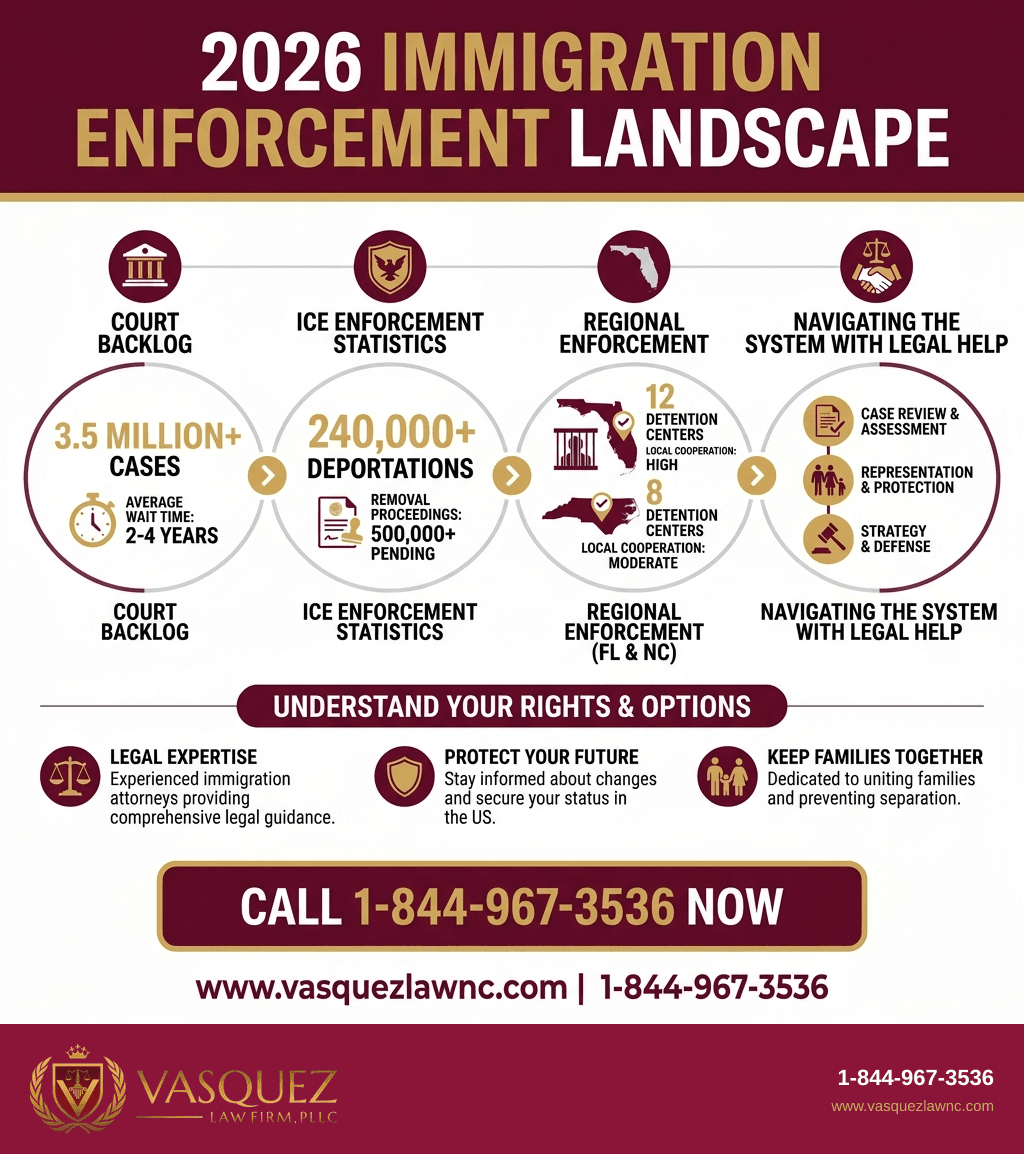
ICE Deportation Numbers as of 2026
Data from ICE reveal that approximately 45,000 deportations occur yearly in Florida and North Carolina combined. This number reflects ongoing enforcement despite political debates over immigration policy. The sustained enforcement efforts make understanding your rights and possible defenses crucial in these states.
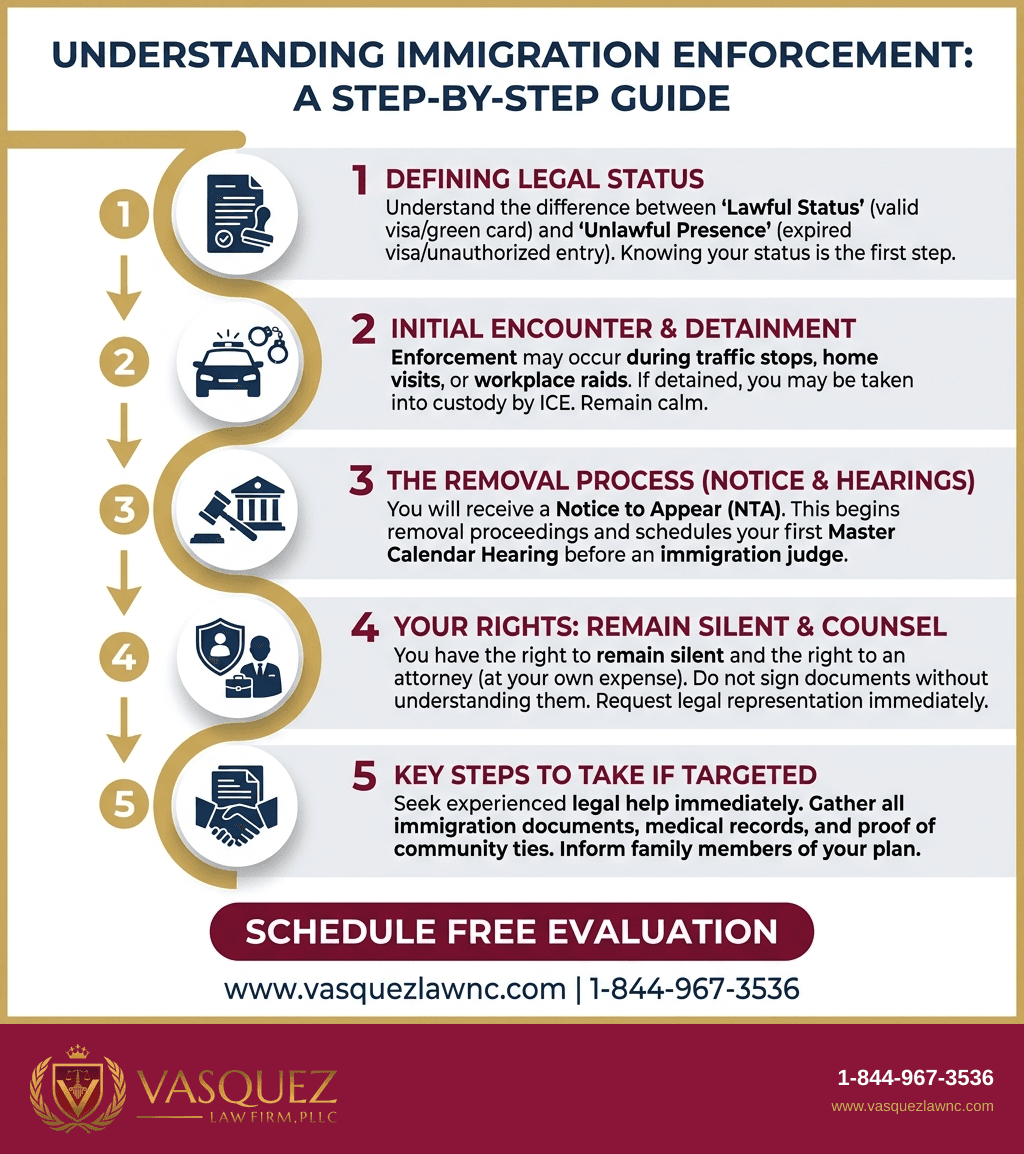
Key Steps to Take if Facing Enforcement
If you are approached by an immigration enforcement agent in Orlando, knowing your rights helps protect your case. Acting quickly can influence your outcome significantly.
Step 1: Stay Calm and Don't Resist
Do not run or resist an immigration enforcement agent. Cooperation in a calm manner may avoid escalation, but remember you have the right to remain silent.
Step 2: Ask If You Are Free to Leave
If a federal agent stops you, ask if you are free to leave. If they say yes, you may leave. If detention is imminent, try to understand the reason and remain silent until consulting a lawyer.
Step 3: Do Not Provide False Information
Never give false documents or lie about your identity. False statements can lead to deportation. Instead, politely say you want to speak with an attorney.
Step 4: Contact an Immigration Attorney
Contact an immigration lawyer immediately. Our immigration attorneys in Orlando can help protect your rights and guide you through detention or removal proceedings.
Common Mistakes to Avoid
- Not knowing your rights during an ICE encounter: Always remember you can remain silent.
- Signing documents without legal advice: Officers may pressure you to waive rights.
- Failing to keep your contact information updated with your attorney and family.
- Ignoring a Notice to Appear from immigration court can lead to automatic removal.
- Assuming local police will not cooperate with ICE; inter-agency cooperation varies.
- Providing misleading social media posts that could be used against you.
- Failing to seek legal counsel quickly, reducing your ability to present defenses.
If you remember one thing, know your legal rights and seek immediate legal help.
Timeline and What to Expect
Immigration enforcement processes vary, but a general timeline can help. For example, after detention in Orlando, ICE may hold a detention hearing within 48 hours. Removal proceedings often begin within weeks or months unless deferred by bond or relief qualifying cases.
- Day 1-3: Detention and initial custody review.
- Week 1-4: ICE files Notice to Appear initiating removal proceedings.
- Month 1-3: Immigration court hearings on bond and detention.
- Month 3-12: Removal hearings, pleading, and motions.
- After 12 months: Potential appeal or application for relief like asylum or cancellation.
These timelines can vary based on individual circumstances and jurisdiction. For official processing times, refer to the USCIS processing times page.
NC, FL, and Nationwide Enforcement Notes
North Carolina Notes
In North Carolina, immigration enforcement is conducted by federal agents working with some local law enforcement, though policies vary by county. Individuals detained in North Carolina face proceedings in immigration courts such as the Charlotte Immigration Court under EOIR jurisdiction.
Florida Notes
Florida, including Orlando, has a high level of immigration enforcement activity. ICE’s detention centers in Florida are major hubs, and enforcement agents conduct raids, investigations, and enforcement actions regularly. Florida courts often see numerous removal proceedings given the state's immigrant population.
Nationwide Concepts
Immigration enforcement is federally regulated under statutes like 8 U.S.C. §§ 1225, 1226, and 1229a, with detention and removal decisions administered through the immigration court system overseen by the Executive Office for Immigration Review. Enforcement policies and priorities may shift with federal administration changes but consistently hinge on federal law.
When to Call a Lawyer Now
- After any encounter with ICE or other immigration enforcement agents.
- If you receive a Notice to Appear in Immigration Court.
- If you are detained or arrested for immigration-related charges.
- When facing potential deportation or removal proceedings.
- If questioned or pressured to sign immigration or legal documents.
- If unsure about your legal status or eligibility for relief.
- If family members face immigration enforcement actions.
- To prepare defenses before any immigration interview or hearing.
About Vasquez Law Firm
At Vasquez Law Firm, we combine compassion with aggressive representation. Our motto "Yo Peleo®" (I Fight) reflects our commitment to standing up for your rights.
- Bilingual Support: Se Habla Español — Spanish-speaking attorneys and staff available
- Service Areas: North Carolina, Florida, and nationwide immigration services
- Experience: Over 30 years helping clients navigate complex legal matters
- Results: Thousands of successful cases across multiple practice areas
Attorney Trust and Experience
William J. Vásquez is admitted to the North Carolina State Bar (2011) and to the U.S. Courts of Appeals for the 4th, 5th, 6th, and 11th Circuits. Florida-jurisdiction matters at the firm are handled by Florida Bar attorney Alekssandra Lopez. The firm has provided dedicated legal representation since 2011, with personalized attention to each client's case.
Don't wait to get the help you deserve. Call us now for immediate assistance. Se Habla Español.
Frequently Asked Questions
Can ICE legally ask for ID in Orlando?
Yes, ICE agents may ask for identification during immigration enforcement. You have rights including the right to remain silent and to request an attorney. It is best not to provide false information and consult a lawyer immediately.
What does immigration enforcement mean?
It means federal efforts to identify and remove people violating immigration laws through actions like arrests and deportation. Agencies like ICE and CBP conduct enforcement nationwide according to federal statutes.
How can I report someone to immigration authorities?
You can report suspected immigration violations to ICE via their online tip line or by phone, ensuring to provide accurate and factual information to assist enforcement efforts.
Can I sue ICE for detaining me as a U.S. citizen?
Yes, wrongful detention of a U.S. citizen by ICE might permit legal action. Proving citizenship and improper detention requires a lawyer's help to pursue a claim.
What rights do I have during an immigration enforcement encounter?
You have the right to remain silent, refuse searches without a warrant, and request an attorney before answering questions or signing documents.
What is the ICE deportation number as of 2026?
ICE reports around 45,000 deportations annually in Florida and North Carolina combined as of 2026, reflecting continuous enforcement in these areas.
What does ICE mean and what is its government role?
ICE stands for U.S. Immigration and Customs Enforcement. It enforces immigration laws and investigates criminal activities related to border security across the U.S.
How do immigration enforcement agents operate in Orlando?
Agents conduct detentions, investigations, and raids under ICE authority, often coordinating with local authorities while adhering to federal enforcement protocols and legal guidelines.
Sources and References
- U.S. Citizenship and Immigration Services
- Executive Office for Immigration Review
- Legal Information Institute
Take the first step toward justice today. Our team is standing by to help. Se Habla Español.
Start Your Free Evaluation Now
Call us: 1-844-967-3536
Se Habla Español - Estamos aquí para ayudarle.

William Vasquez
Founder & CEO, Vasquez Law Firm, PLLC
William Vasquez is the founder and CEO of Vasquez Law Firm, PLLC, a results-driven firm specializing in immigration, criminal defense, personal injury, and workers' compensation. A U.S. Air Force veteran and recipient of the Joint Service Achievement Medal, William is dedicated to fiercely fighting for his clients' rights.
Related Legal Services
Need legal help? Learn more about learn about our immigration practice, or contact us for a free evaluation.
You can also visit statewide immigration legal services for more information.