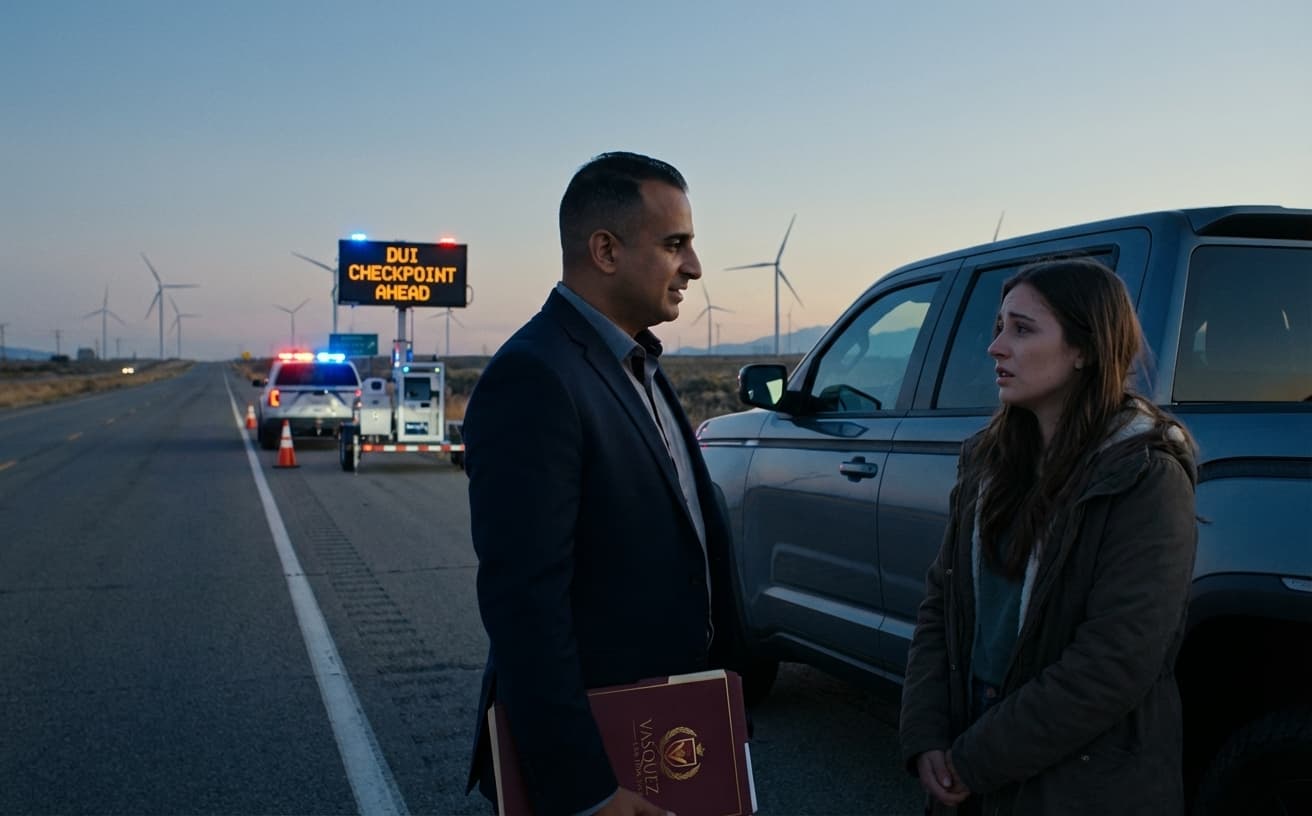
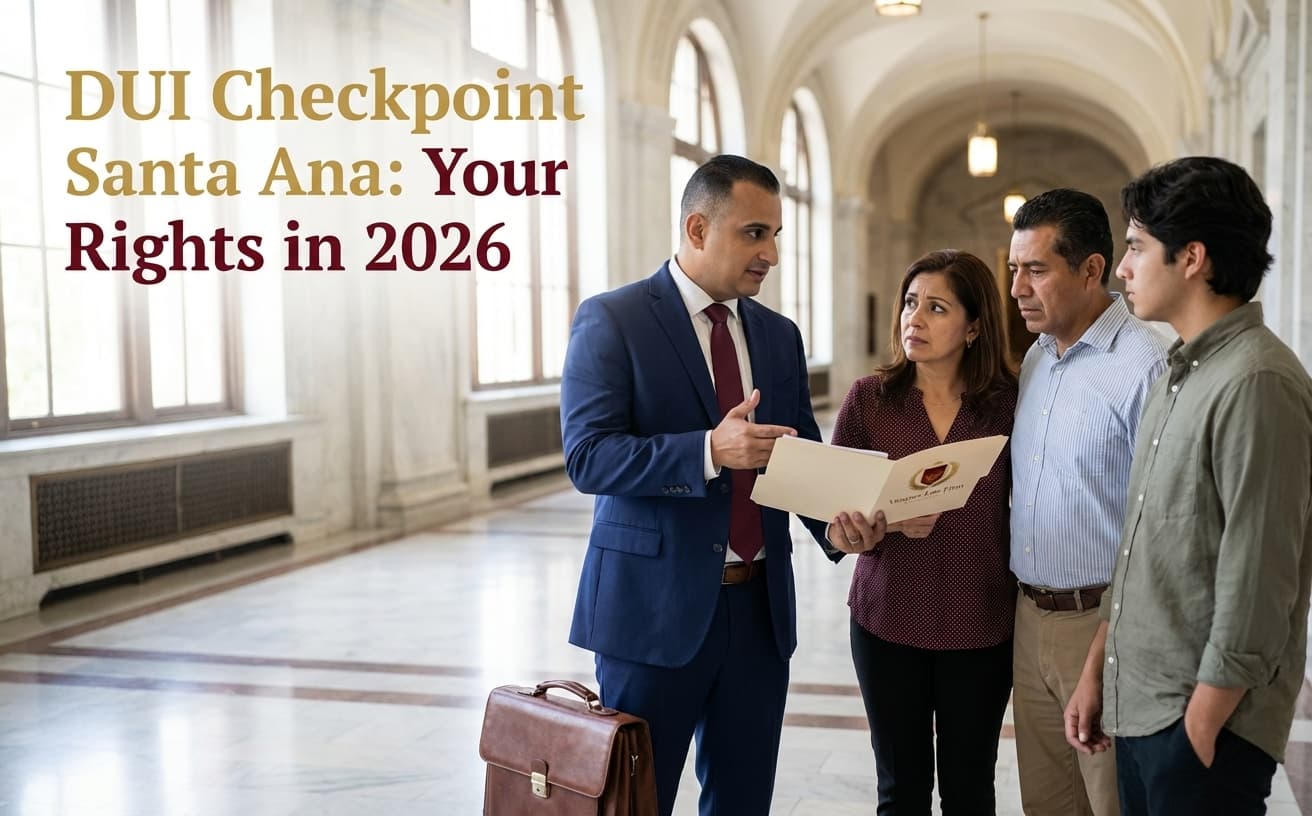
What Are Your Rights at a DUI Checkpoint in Santa Ana
Facing a DUI checkpoint in Santa Ana? Know your rights and how to protect them in 2026. Contact Vasquez Law for a free consultation today.
Vasquez Law Firm
Published on March 6, 2026
Have questions? Talk to an attorney — free evaluation.
Call 1-844-967-3536What Are Your Rights at a DUI Checkpoint in Santa Ana
Encountering a DUI checkpoint in Santa Ana can be a stressful experience, especially if you are unsure of your legal rights. Understanding what to do and what to expect at these checkpoints is crucial for protecting yourself and avoiding potential charges. As of 2026, law enforcement agencies regularly conduct these checkpoints to deter impaired driving, making it essential for every driver to be prepared. Knowing your rights can significantly impact the outcome of an encounter with police.
Need help with your case? Our experienced attorneys are ready to fight for you. Se Habla Español.
Got a Traffic Ticket?
Don't let points pile up. Our traffic attorneys can help protect your license.
Schedule Your Free Consultation
Or call us now: 1-844-967-3536
Quick Answer: Navigating a DUI Checkpoint in Santa Ana
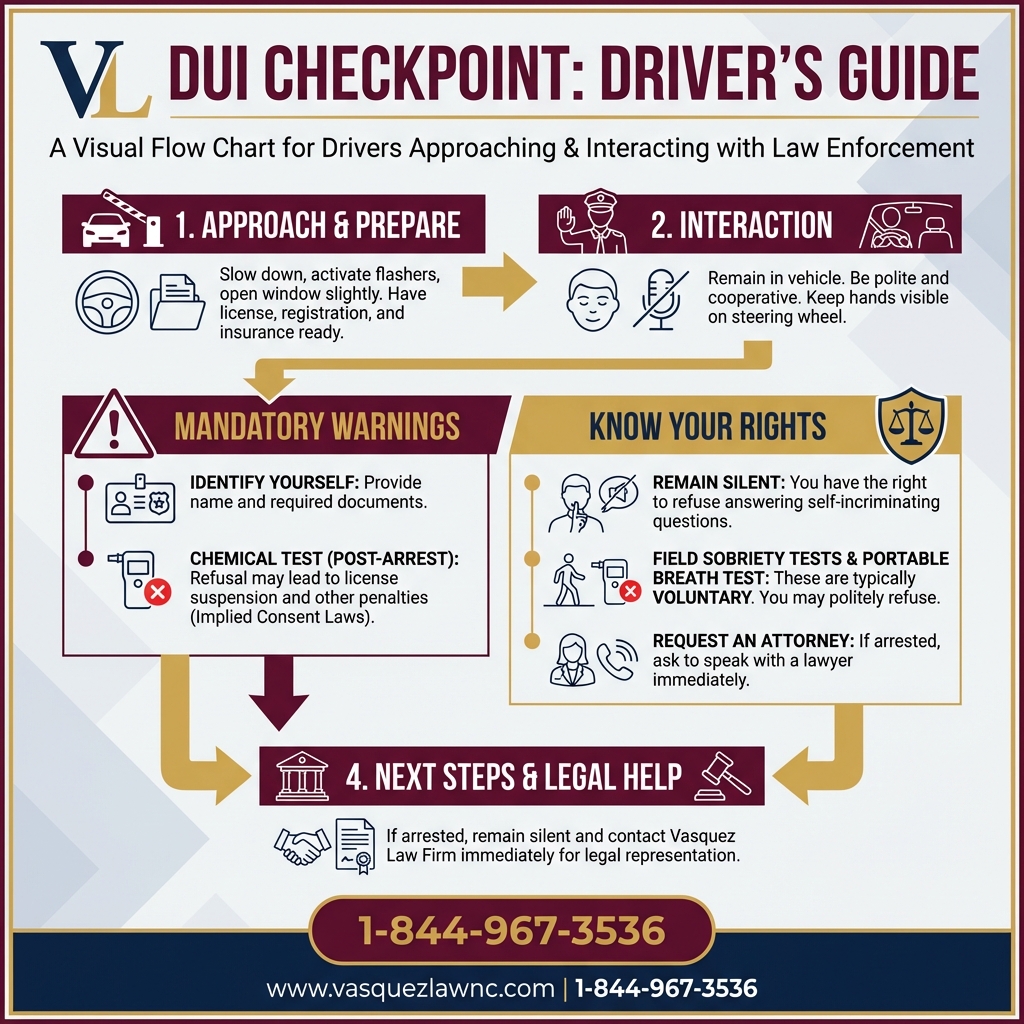
If you encounter a DUI checkpoint in Santa Ana, you are generally required to stop and provide your license and registration. You have the right to remain silent and refuse field sobriety tests, but refusing a breathalyzer after arrest can lead to automatic license suspension. Always be polite, do not argue, and contact an attorney if you are arrested.
- Stop when directed and provide required documents.
- You can refuse field sobriety tests (FSTs).
- You can refuse a preliminary alcohol screening (PAS) test.
- Refusing a chemical test after arrest results in automatic license suspension.
- You have the right to remain silent.
- Contact a lawyer immediately if arrested for DUI.
Understanding DUI Checkpoints in Santa Ana
DUI checkpoints are a common law enforcement tool used to identify and apprehend impaired drivers. In Santa Ana and across North Carolina, these checkpoints are legal, provided they follow strict guidelines to ensure constitutional rights are not violated. These guidelines typically require public notice of the checkpoint, a neutral formula for stopping vehicles, and supervision by a commanding officer. The primary goal is to enhance public safety by reducing the number of drivers operating under the influence of alcohol or drugs.
While the goal is noble, the experience of being stopped can be intimidating. Police officers at a DUI checkpoint are looking for signs of impairment, such as slurred speech, the smell of alcohol, or fumbling for documents. They may ask you questions, but remember that you have specific rights that protect you during these encounters. Knowing these rights beforehand can help you navigate the situation calmly and effectively. Vasquez Law Firm is here to help you understand your options if you face a DUI charge.
What Police Look For at a Checkpoint
Officers at a DUI checkpoint are trained to observe specific indicators of impairment. This includes not only obvious signs like the smell of alcohol or marijuana but also more subtle cues. They might note bloodshot eyes, slurred or slow speech, confusion, or difficulty following instructions. The way you interact with them, how quickly you produce your documents, and even your demeanor can all be part of their assessment. It's important to be aware that their observations start from the moment you approach the checkpoint.
Your Rights at a DUI Checkpoint in 2026
Knowing your rights is your strongest defense at a DUI checkpoint. While you must comply with lawful orders, you are not obligated to incriminate yourself. You have the right to remain silent, meaning you do not have to answer questions beyond providing your identification and vehicle registration. You also have the right to refuse certain tests, such as field sobriety tests (FSTs) and a preliminary alcohol screening (PAS) device, which is often a handheld breathalyzer.
However, it is critical to understand the difference between these voluntary tests and mandatory chemical tests after a lawful arrest. In North Carolina, implied consent laws mean that by driving on public roads, you implicitly agree to chemical testing (blood, breath, or urine) if you are lawfully arrested for DUI. Refusing this post-arrest test can lead to an automatic one-year license suspension, even if you are later found not guilty of the DUI charge. This is a crucial distinction to remember when facing a DUI checkpoint in Santa Ana.
Can You Legally Turn Around at a DUI Checkpoint?
Yes, in many jurisdictions, including North Carolina, you can legally turn around or avoid a DUI checkpoint if you do so before reaching the actual checkpoint and before an officer has probable cause to stop you. Police cannot set up a checkpoint in a way that prevents drivers from legally turning around. However, if you make an illegal turn, commit a traffic violation, or if an officer observes signs of impairment before you turn, they can still pull you over. Always ensure any maneuver you make is legal and safe.
Step-by-Step: What to Do at a DUI Checkpoint
Navigating a DUI checkpoint can be less stressful if you follow a clear set of steps. Being prepared can help you remain calm and protect your rights. This guidance applies to any DUI checkpoint in Santa Carolina, including those in Smithfield or other parts of North Carolina.
- Be Prepared: Have your driver's license, vehicle registration, and proof of insurance readily accessible. Keep them in a consistent, easy-to-reach spot, like your visor or glove compartment.
- Comply with Lawful Orders: Stop your vehicle when directed. Roll down your window only enough to communicate and pass documents.
- Provide Documents: Hand over your license, registration, and insurance as requested.
- Remain Silent: You are not required to answer questions about where you're going, where you've been, or if you've been drinking. A polite "I prefer not to answer any questions" or "I invoke my right to remain silent" is sufficient.
- Refuse Field Sobriety Tests (FSTs) and PAS: You can politely decline FSTs (e.g., walk-and-turn, one-leg stand) and the preliminary alcohol screening (PAS) breath test. Say, "I politely decline to perform any field sobriety tests."
- Do Not Argue: Be respectful and cooperative, but firm in asserting your rights. Arguing or being confrontational will not help your situation.
- If Arrested: If an officer has probable cause and arrests you, you are then subject to implied consent laws. Refusal of a chemical test (blood, breath, or urine) after arrest will lead to automatic license suspension in North Carolina.
- Contact an Attorney: As soon as you are able, contact a qualified DUI attorney. They can advise you on your rights and begin building your defense.
Common Mistakes and How to Avoid Them at a Checkpoint
Many drivers make common errors at DUI checkpoints that can complicate their situation or even lead to an arrest. Avoiding these pitfalls is key to protecting your rights and minimizing potential legal issues. Being aware of these mistakes beforehand can make a significant difference in how your encounter with law enforcement proceeds at a DUI checkpoint in Santa Ana.
- Being Overly Talkative: Providing more information than necessary can inadvertently give officers reasons to suspect impairment. Stick to providing required documents and politely declining to answer questions.
- Failing to Have Documents Ready: Fumbling for your license and registration can be misinterpreted as impairment or nervousness. Keep these items easily accessible.
- Refusing to Provide Documents: You are legally required to provide your driver's license, vehicle registration, and proof of insurance. Refusing these can lead to additional charges.
- Admitting to Drinking: Any admission of alcohol consumption can provide probable cause for further investigation or arrest. Remain silent regarding consumption.
- Performing FSTs or PAS Tests: These tests are designed to be difficult to pass and are subjective. Politely declining them is within your rights and generally advisable.
- Being Disrespectful or Argumentative: While asserting your rights, always maintain a respectful demeanor. Confrontation can escalate the situation and lead to further scrutiny.
- Making Illegal Maneuvers to Avoid a Checkpoint: While you can legally turn around before a checkpoint, doing so illegally (e.g., U-turn over a double yellow line) can give officers a reason to pull you over.
- Not Knowing Implied Consent Laws: Refusing a chemical test AFTER arrest in North Carolina triggers an automatic license suspension, regardless of the DUI case outcome. Understand this distinction.
If you only remember one thing: Be polite, provide your documents, and politely refuse all voluntary tests and questions beyond identification. Then, contact a lawyer if you are arrested.
Don't face your legal challenges alone. Our team is here to help you every step of the way.
Call today: 1-844-967-3536 | Se Habla Español
North Carolina Traffic Law Considerations
Traffic laws, including those pertaining to DUI checkpoints and DUI charges, are primarily state-specific. While the general principles of constitutional rights apply nationwide, the specifics of implied consent, penalties, and procedural rules vary significantly. For drivers in North Carolina, it is essential to understand the unique aspects of state law that govern these situations.
North Carolina DUI Laws and Penalties
North Carolina has strict laws regarding driving while impaired (DWI), which is the state's term for DUI. A DWI conviction carries severe penalties, including hefty fines, jail time, license suspension, and mandatory substance abuse assessments. The specific penalties depend on the level of impairment, prior convictions, and aggravating factors. Understanding these potential consequences underscores the importance of protecting your rights at a DUI checkpoint and seeking legal counsel if arrested. The implied consent law (N.C. Gen. Stat. § 20-16.2) is particularly relevant, as it dictates the consequences of refusing a chemical test after a lawful arrest for DWI.
NC DMV Violations and Your Driving Record
Any traffic violation, including a DWI, can have a significant impact on your North Carolina driving record and insurance rates. The North Carolina Division of Motor Vehicles (NC DMV) assigns points for various offenses, and accumulating too many points can lead to license suspension. A DWI conviction, however, carries its own set of administrative penalties from the DMV, separate from criminal court proceedings. These can include immediate license revocation. Protecting your driving record starts with understanding your rights and acting wisely during encounters with law enforcement, such as at a DUI checkpoint in Santa Ana.
When to Call a Lawyer Now After a Checkpoint Encounter
The aftermath of a DUI checkpoint encounter, especially if it leads to an arrest, is not the time to navigate the legal system alone. Prompt legal action can significantly influence the outcome of your case. An experienced attorney can review the circumstances of your stop, assess the evidence against you, and identify any potential violations of your rights. Waiting too long can jeopardize your defense and limit your options.
- You were arrested for DUI/DWI at a checkpoint.
- You refused a chemical test after being arrested.
- You believe your rights were violated during the stop or arrest.
- You are facing charges for a traffic violation in addition to a potential DUI.
- You have questions about the implied consent law or license suspension.
- You want to understand the potential impact on your driving record and insurance.
- You need help navigating the court system and DMV administrative hearings.
- You are unsure of the steps to take to protect your future.
About Vasquez Law Firm
At Vasquez Law Firm, we combine compassion with aggressive representation. Our motto "Yo Peleo" (I Fight) reflects our commitment to standing up for your rights. We understand the stress and uncertainty that come with legal challenges, especially those involving traffic violations and DUI charges. Our team is dedicated to providing personalized attention and unwavering support to each client.
- Bilingual Support: Se Habla Español - our team is fully bilingual and ready to assist you in your preferred language.
- Service Areas: We proudly serve clients across North Carolina, including Smithfield and surrounding areas, for traffic violations, personal injury, workers' compensation, criminal defense, and family law. We also offer nationwide immigration services.
- Experience: With over 15 years of dedicated legal experience, our firm has a proven track record of helping clients navigate complex legal matters and achieving favorable outcomes.
- Results: We have successfully handled thousands of cases, always prioritizing our clients' best interests and fighting vigorously for their justice.
Attorney Trust and Experience
Attorney Vasquez holds a Juris Doctor degree and is admitted to practice in both the North Carolina State Bar and Florida Bar. With over 15 years of dedicated legal experience, he has built a reputation for providing personalized attention and achieving favorable outcomes for his clients. His commitment to justice and his deep understanding of state and federal laws make him a formidable advocate for those facing legal challenges, including those stemming from a DUI checkpoint in Santa Ana.
Frequently Asked Questions About DUI Checkpoints
Can I refuse a breathalyzer at a DUI checkpoint in North Carolina?
You can refuse a preliminary alcohol screening (PAS) test, which is often a handheld breathalyzer given before arrest. However, if you are lawfully arrested for DWI, North Carolina's implied consent law requires you to submit to a chemical test (blood, breath, or urine). Refusal after arrest leads to an automatic one-year license suspension by the NC DMV, even if you are later acquitted of the DWI charge.
What documents do I need to provide at a DUI checkpoint?
At a DUI checkpoint, you are legally required to provide your valid driver's license, vehicle registration, and proof of insurance. Having these documents readily accessible and presenting them promptly can help facilitate a smoother interaction with law enforcement. Failing to provide these can result in additional citations or charges.
Do I have to answer questions from police at a checkpoint?
No, you have the right to remain silent and are not legally obligated to answer questions beyond providing your identification. You can politely state that you prefer not to answer any questions or invoke your Fifth Amendment right to remain silent. This protects you from inadvertently providing information that could be used against you.
Is there an app that shows DUI checkpoints?
While there are apps that attempt to identify DUI checkpoint locations, their accuracy can vary, and relying solely on them may not be advisable. Law enforcement agencies often announce checkpoints in advance, but locations can change. It's more important to know your rights and how to act responsibly, regardless of whether you anticipate a checkpoint.
What happens if I refuse field sobriety tests?
You have the right to politely refuse field sobriety tests (FSTs). These tests are voluntary and often subjective, designed to assess impairment. Refusing them cannot be used as evidence of guilt in court. However, officers may still use other observations to establish probable cause for an arrest, so refusal does not guarantee you won't be detained.
Should I Fight My Traffic Ticket?
Find out if it's worth fighting
Question 1 / 3
What were you cited for?
Keep Reading
Can a DUI checkpoint be set up anywhere in Santa Ana?
DUI checkpoints must adhere to strict legal guidelines to be constitutional. This includes being set up in a location where they are effective in apprehending impaired drivers, with proper signage, and a neutral selection process for vehicles. They cannot be placed arbitrarily or used as a pretext for general searches. Public notice is also typically required.
What if I'm a passenger in a car stopped at a checkpoint?
As a passenger, you generally have fewer obligations than the driver. You are not required to provide identification unless an officer has reasonable suspicion that you are involved in a crime. You also have the right to remain silent and are not subject to implied consent laws. However, always be respectful and avoid interfering with the officer's duties.
How do I know if a DUI checkpoint is legal?
Legal DUI checkpoints typically have visible police presence, proper signage, and are publicly announced in advance by law enforcement agencies. Officers must follow a predetermined, non-discriminatory stopping pattern for vehicles. If you suspect a checkpoint is illegal, cooperate but make note of details, and contact an attorney immediately after the encounter.
What are the penalties for a DUI in North Carolina in 2026?
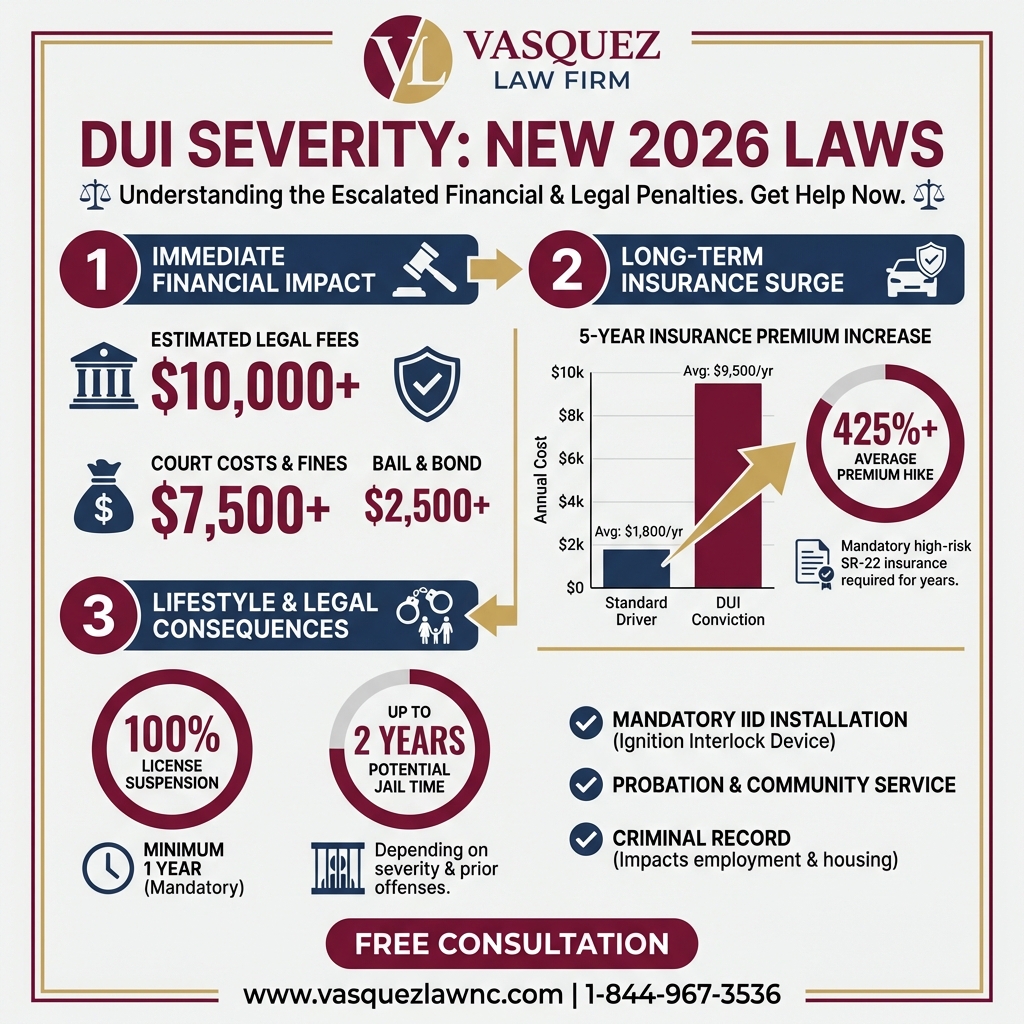
In North Carolina, a DWI conviction in 2026 carries a range of penalties, including fines, jail time, and license suspension, which vary based on the level of impairment and prior offenses. Even a first offense can result in significant fines and a license suspension. Additionally, you will likely face increased insurance premiums and mandatory substance abuse treatment.
Do I have to roll down my window at a DUI checkpoint?
You should roll down your window enough to communicate and provide your documents. While you don't have to roll it all the way down, officers need to be able to interact with you and observe you for signs of impairment. Obstructing their view or refusing to open your window sufficiently could lead to further scrutiny or suspicion.
Sources and References
- North Carolina Division of Motor Vehicles (NCDMV)
- North Carolina Judicial Branch
- Cornell Law School Legal Information Institute - Implied Consent
Ready to take the next step? Contact Vasquez Law Firm today for a free, confidential consultation. We're committed to fighting for your rights and achieving the best possible outcome for your case.
Start Your Free Consultation Now
Call us: 1-844-967-3536
Se Habla Español - Estamos aquí para ayudarle.
Vasquez Law Firm
Legal Team
Our experienced attorneys at Vasquez Law Firm have been serving clients in North Carolina and Florida for over 30 years. We specialize in immigration, personal injury, criminal defense, workers compensation, and family law.
Related Legal Services
Need legal help? Learn more about speak with a traffic violation lawyer, or contact us for a free evaluation.
You can also visit North Carolina traffic law firm for more information.